
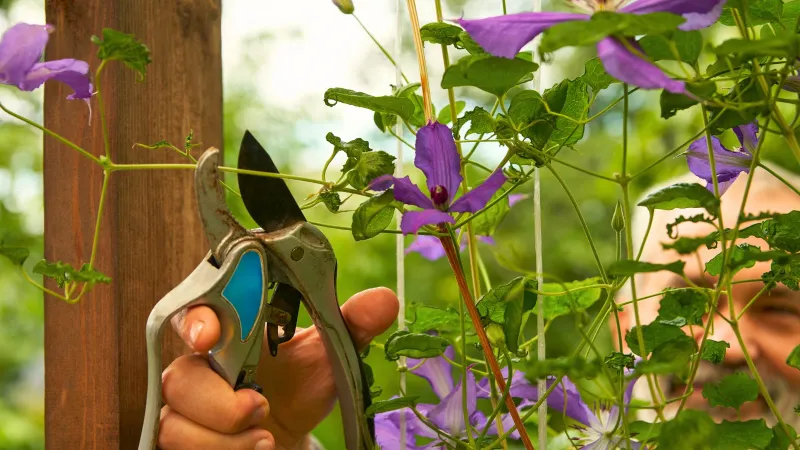
A clematis that covers your fence with lush green growth but refuses to flower is one of the more frustrating puzzles in the Southern garden. The vine looks healthy, even vigorous, yet the blooms never come.
For many gardeners, the answer may come down to one overlooked pruning habit – but only if the plant belongs to the right group. Understanding which type of clematis you have is the first and most important step toward fixing the problem.
A top-heavy vine may point to missed Group 3 pruning
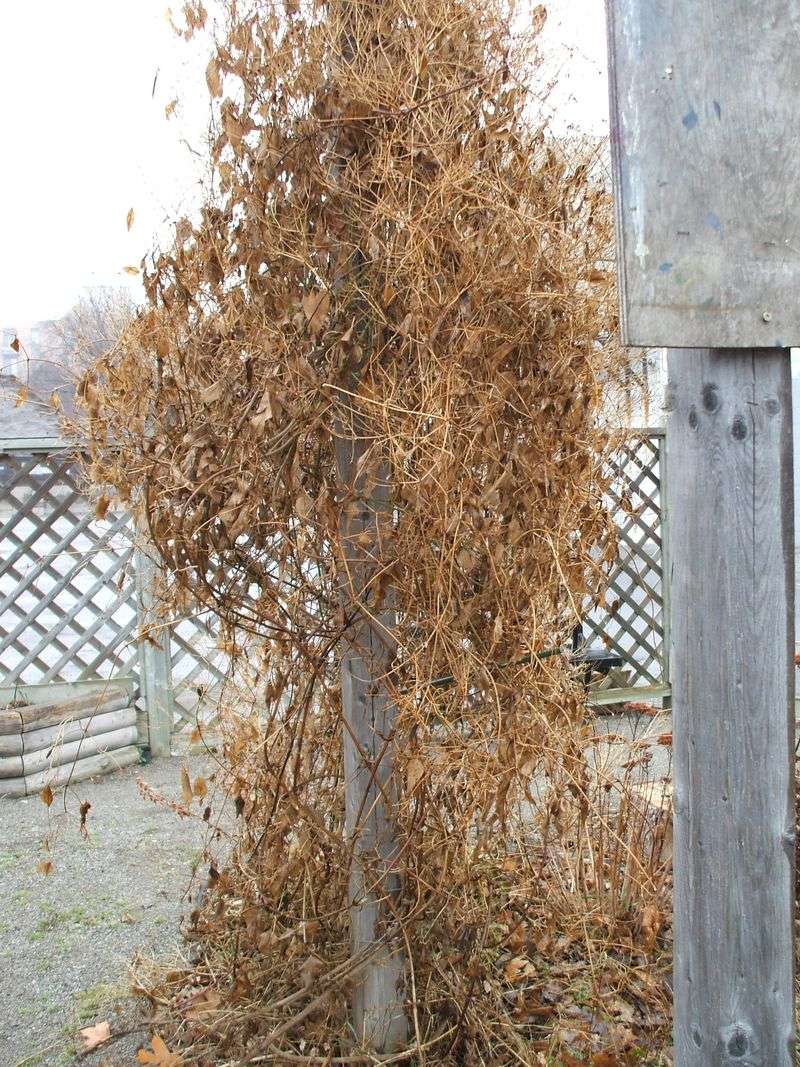
Picture a clematis that has taken over an entire section of fence: thick, tangled stems massed near the top, a nearly bare lower framework, and whatever flowers appear clustered at the very ends of last year’s growth. That visual pattern is worth paying attention to, though it cannot tell you the full story on its own.
The top-heavy vine may suggest a pruning pattern consistent with an unpruned Group 3 clematis, a type that flowers on new growth each season.
When a late-flowering, new-wood clematis goes uncut year after year, it keeps extending from wherever the previous season ended. RHS pruning guidance explains that Group 3 types need a hard annual cut to reset the starting framework for fresh flowering stems.
Without that cut, the vine climbs higher while the productive zone moves further from reach and the lower stems become bare and woody.
Still, appearance alone cannot confirm the pruning group or prove that a missed cut caused the sparse bloom. Iowa State Extension notes that low light, excessive nitrogen, poor watering, immaturity, winter damage, and other growing problems can produce a similar look.
Before reaching for the shears, check the plant’s tag, cultivar name, or bloom history to confirm what you are actually working with.
Identify the pruning group before you cut
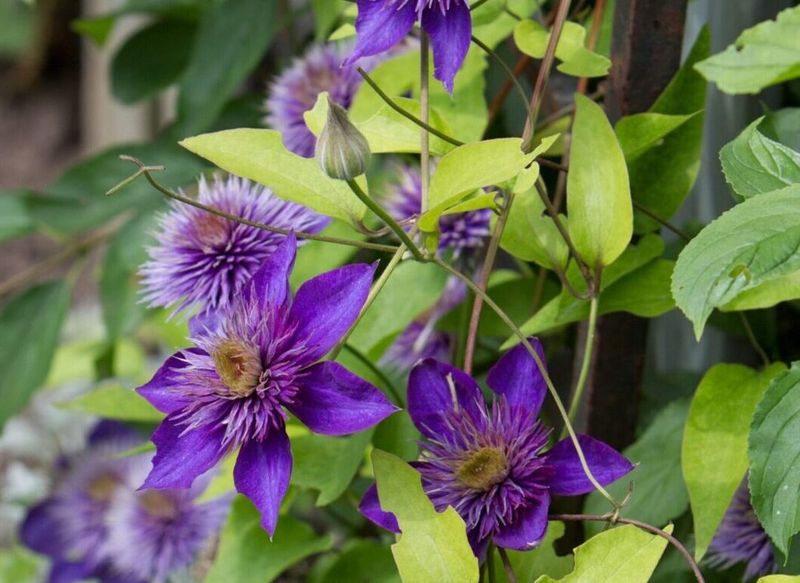
Clematis pruning is not one-size-fits-all. The three commonly used categories – Group 1, Group 2, and Group 3 – are based on when the plant flowers and whether those flowers form on old wood, new wood, or both.
Getting this right before you cut is the single most protective step you can take for your plant.
Group 1 types, such as Clematis montana, C. alpina, C. macropetala, and C. armandii, flower on previous-season wood, often in early spring. RHS clematis pruning guidance recommends that these plants receive cleanup or light shaping only after flowering, not a hard cut in winter.
Group 2 types typically produce a first flush on old wood and may rebloom on new wood later in the season; they need light, selective pruning rather than a deep cut.
Group 3 types – including Clematis viticella, C. texensis, ‘Jackmanii,’ ‘Ernest Markham,’ and ‘Hagley Hybrid’ – flower on current-season growth in summer or fall. NC State Extension confirms these are the candidates for the low annual cut.
A plant tag or cultivar name is the most reliable identification method; use bloom timing as a backup clue.
One important caution: winter damage can cause a Group 2 plant to lose its early-spring flush and appear to bloom only later in the season, mimicking a Group 3 pattern. Iowa State Extension advises that bloom timing provides useful evidence rather than a definitive identification.
When the group is genuinely uncertain, delay the cut and observe another full season before deciding.
Prune a confirmed Group 3 clematis low and cleanly
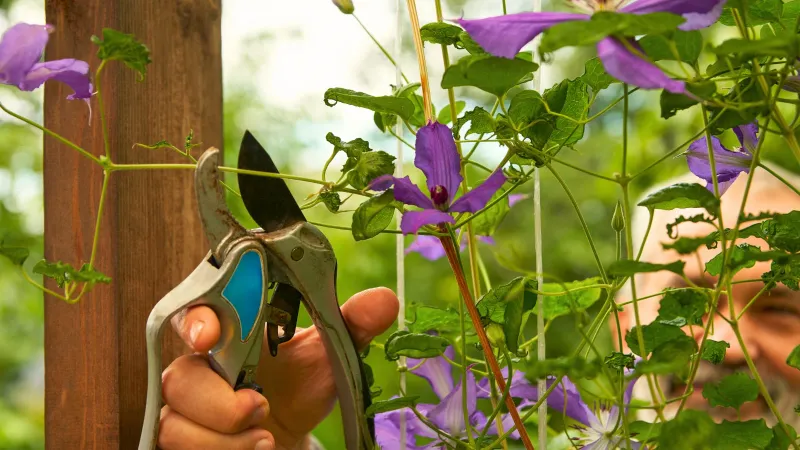
Once you have confirmed that your plant is a Group 3 clematis, the corrective method is straightforward. These plants produce all of their flowers on new growth, which means the old tangled stems from previous seasons serve no flowering purpose going forward.
Mississippi State Extension recommends cutting Group 3 cultivars to about 12 inches above the ground, removing the previous season’s growth entirely.
Work through the vine stem by stem. Remove the tangled old growth and cut each stem back to the lowest pair of strong, healthy buds you can find, typically somewhere between 6 and 12 inches above the soil.
Iowa State Extension describes this as resetting the plant’s starting framework for new flowering stems – the goal is not simply to shorten the vine, but to give it a fresh, low base from which productive new shoots can emerge this season.
Tool care matters here. NC State Extension advises using clean, sharp tools and removing cut stems from the garden rather than leaving them on the ground.
Clematis stems are notably fragile, so handle them gently to avoid snapping healthy growth you intend to keep. UMass Extension also recommends sanitizing pruning tools between cuts to reduce the risk of spreading disease, a small step that protects the plant through the season ahead.
Use the plant’s growth stage to time the cut
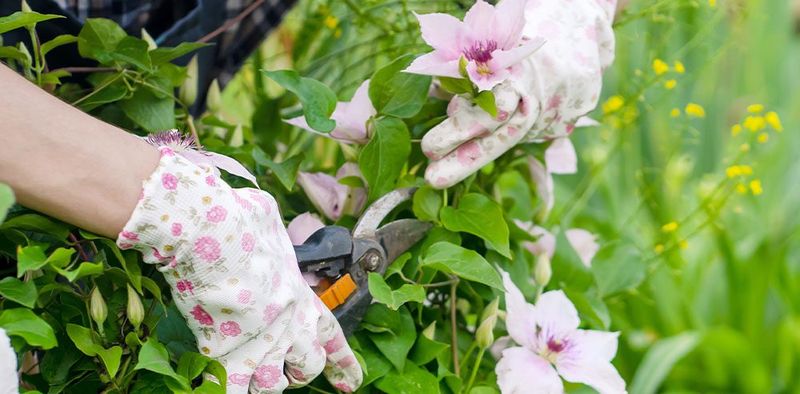
Timing the Group 3 cut is less about picking a calendar date and more about reading the plant and the local weather. In the Southern United States, late winter arrives earlier and more variably than it does in northern states.
Mississippi State Extension places hard pruning for new-wood types in late winter or early spring, with the understanding that Southern gardeners need to watch their own conditions rather than follow a fixed national calendar.
The practical rule is to complete the cut before strong new growth begins. Look at the stems: if buds are just beginning to swell but new shoots have not pushed out significantly, that is the right window.
Once new growth advances substantially, you are working against the season rather than with it. Clemson Extension places this pruning window in late winter or early spring for South Carolina conditions, which translates to an earlier start for gardeners in central and south Florida compared to those in Tennessee or the Texas Panhandle.
Check local temperatures and recent frost history before cutting. A mild Southern winter can push clematis into early growth weeks ahead of schedule, and cutting too late means the plant is already spending energy on new stems that will be removed.
Aim to act while the plant is still near dormancy, using the visible bud stage as your guide rather than the month on the calendar.
Avoid a hard cut on Group 1 and Group 2 plants
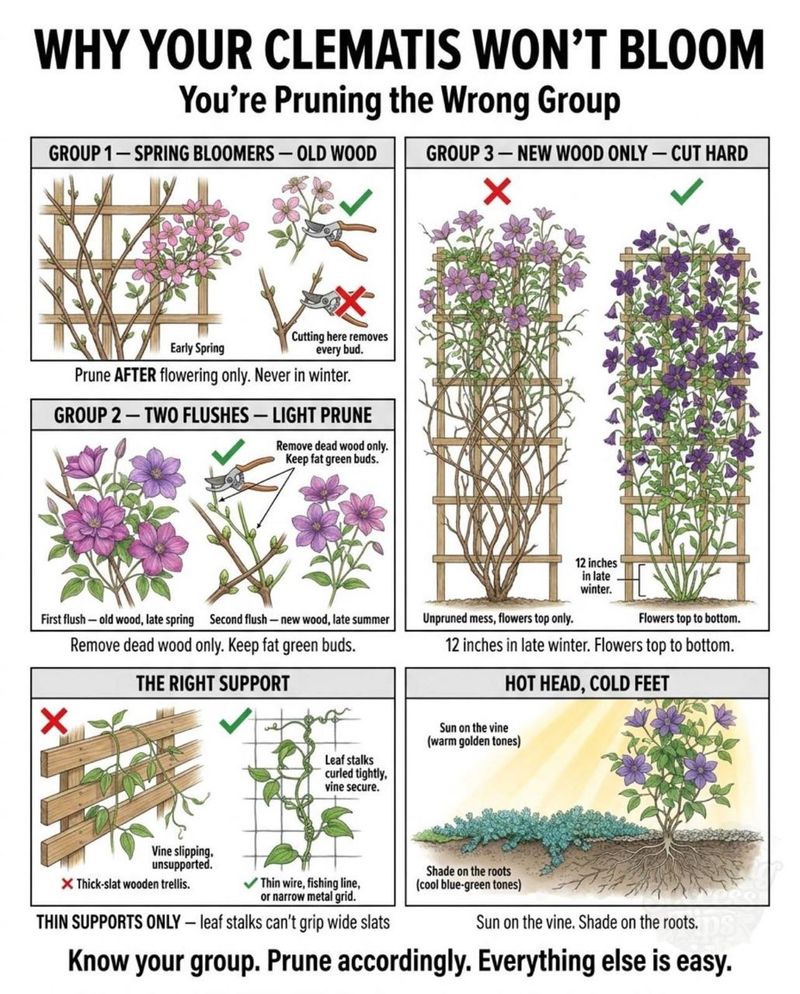
Hard pruning is the right move for a confirmed Group 3 clematis, but applying that same cut to a Group 1 or Group 2 plant can set your bloom season back significantly. Group 1 clematis carry their flowers on old wood – the stems that grew during the previous season.
RHS guidance is clear that these plants generally need only cleanup or light shaping, done after flowering rather than before it. Cutting them back hard in late winter removes exactly the wood that would have produced spring blooms.
Group 2 plants use both old and new wood, producing a first flush on previous-season stems and sometimes a second flush on new growth. NC State Extension recommends light, selective pruning for these types – removing dead or weak stems and trimming lightly in late winter or early spring, then following up with selective trimming after the first flush if a second bloom is the goal.
A deep cut in late winter would sacrifice the first and often most impressive round of flowers.
Mississippi State Extension reinforces that hard pruning is not a universal bloom fix. If you are unsure which group your clematis belongs to, the safer path is to hold off on any aggressive cut, observe the plant through one full bloom cycle, and use what you learn to make a confident pruning decision next season.
Guessing wrong with a hard cut can cost you a full year of flowers.
Check growing conditions before blaming pruning
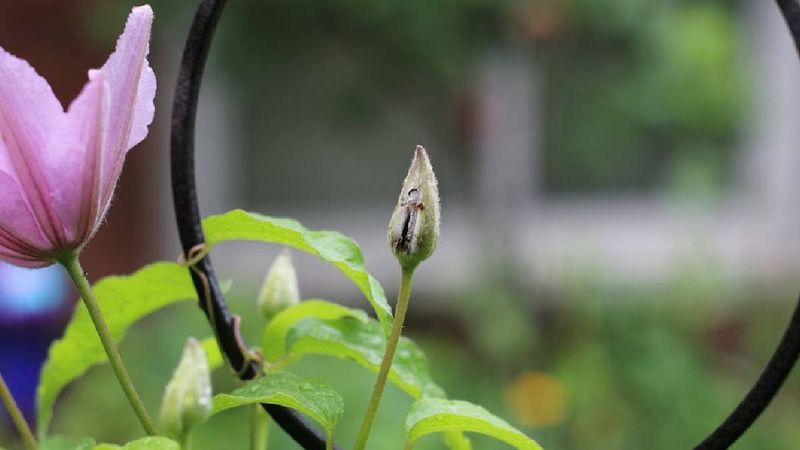
A clematis that grows vigorously but flowers poorly is not always a pruning problem. Several common growing conditions can produce the same frustrating result, and correcting them may matter as much as any cut you make.
Running through this checklist before blaming the shears is worth the time.
Light is often the first place to look. Iowa State Extension lists insufficient light as a leading cause of poor flowering in clematis.
Most types perform best with around six hours of direct sun per day, though Southern gardeners should note that hot afternoon exposure can stress some cultivars and fade flower color. Clemson Extension recommends protecting the root zone from intense heat with a layer of mulch, keeping it away from the stems themselves.
Fertilizer is another common culprit. Excess nitrogen pushes leafy growth at the expense of flowers – adding more fertilizer to a non-blooming clematis can make the problem worse rather than better.
NC State Extension recommends a low-nitrogen, slow-release fertilizer rather than a high-nitrogen product. Consistent moisture and good drainage also matter: clematis roots prefer moist, well-drained soil, and both waterlogged and drought-stressed plants tend to bloom poorly.
Age and winter damage round out the checklist. Iowa State Extension notes that some clematis may take up to three years to establish before blooming reliably.
A plant that suffered cold damage during the winter may have lost the stems it needed for early flowering, even if it looks vigorous by spring. Cultivar-specific bloom timing is also worth checking – some types simply flower later in the season than others, and what looks like failure may just be patience required.
Match regional clematis advice to the actual plant
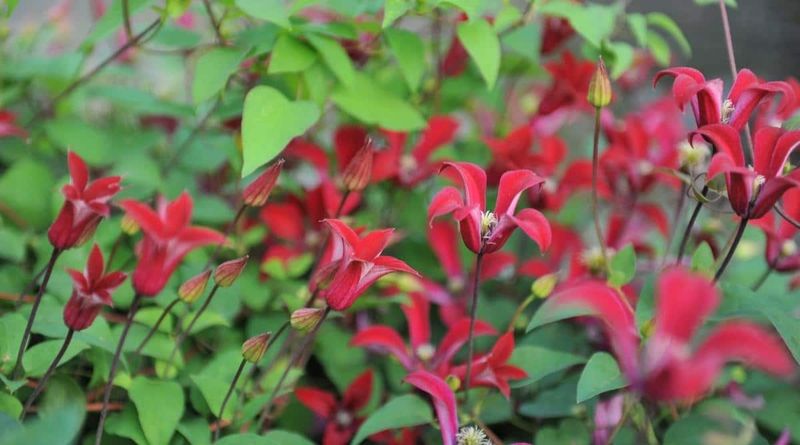
Southern gardeners have access to some excellent regionally adapted clematis, but regional advice only helps when it is matched to the right plant. Two species in particular deserve attention from Texas and Florida gardeners.
Texas clematis, Clematis texensis, is a native new-wood bloomer that produces its distinctive red, urn-shaped flowers from summer through frost. NC State Extension describes C. texensis as a vigorous climber well suited to Group 3 pruning logic.
That means it can receive the low late-winter cut that resets the framework for new flowering stems. However, Texas gardeners should resist applying that same treatment to every clematis sold at local garden centers – the pruning group must be confirmed for each plant individually before any hard cut is made.
Florida gardeners face a different regional concern. UF/IFAS identifies Clematis terniflora – commonly called sweet autumn clematis or Japanese clematis – as invasive throughout Florida and recommends against planting it.
This species can escape cultivation and spread aggressively in Florida’s warm climate. UF/IFAS invasive plant guidance notes that native Clematis virginiana is sometimes confused with it; toothed leaf margins help distinguish the native species from the invasive one.
A final safety note applies to all gardeners regardless of region. NC State Extension lists clematis as poisonous to cats, dogs, and other animals.
Handle fragile stems with gloves, use clean and sharp tools for every cut, and keep prunings away from children and pets. UMass Extension also recommends disposing of removed stems rather than leaving them accessible in the garden.
Let the bloom cycle determine the pruning answer
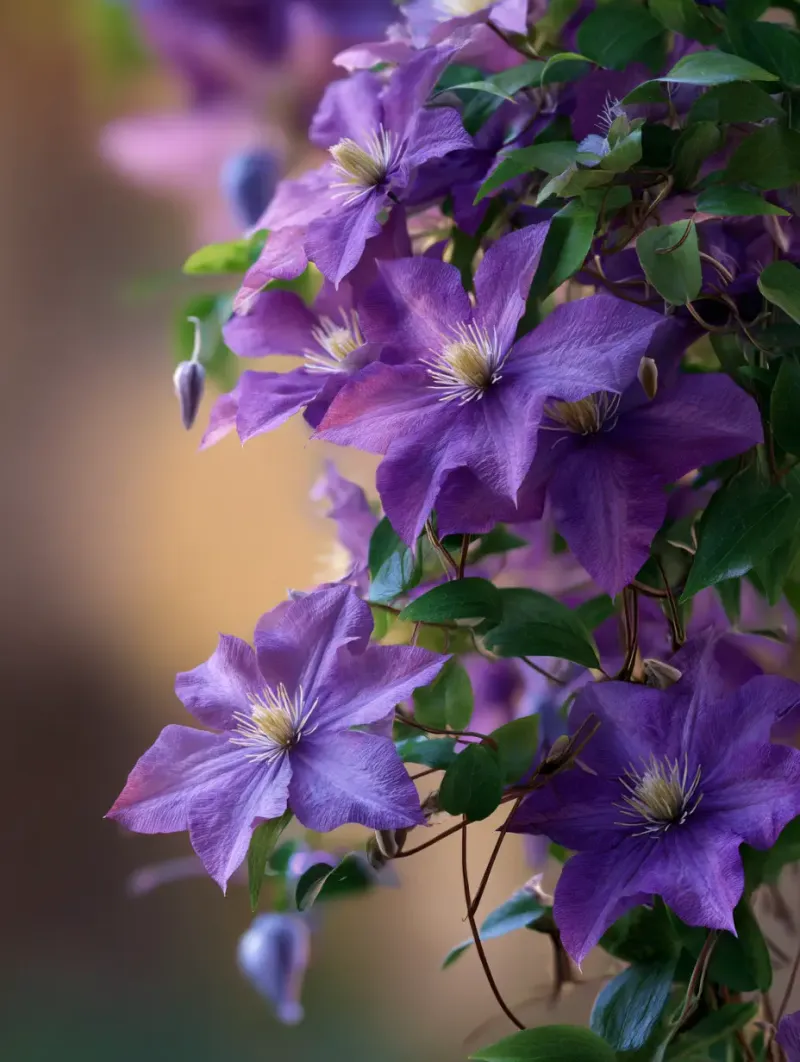
The low late-winter cut is the right move for a confirmed or strongly supported Group 3 clematis – one that flowers on current-season growth in summer or fall, matches a known cultivar in that category, or has a well-documented bloom history that fits the pattern. Make the cut to the lowest pair of healthy buds, complete it before strong new growth begins, and give the plant the light, moisture, and low-nitrogen nutrition it needs to respond well.
When the bloom cycle or plant identity does not fit that profile, the hard cut is the wrong answer. RHS pruning guidance and Iowa State Extension both emphasize that pruning group determines the appropriate treatment – and that light, fertilizer, water, age, winter damage, and other growing conditions deserve equal investigation when flowers are scarce.
A wall of vines with blooms only at the tips may suggest missed pruning, but only conditionally – the bloom cycle is what confirms it.