
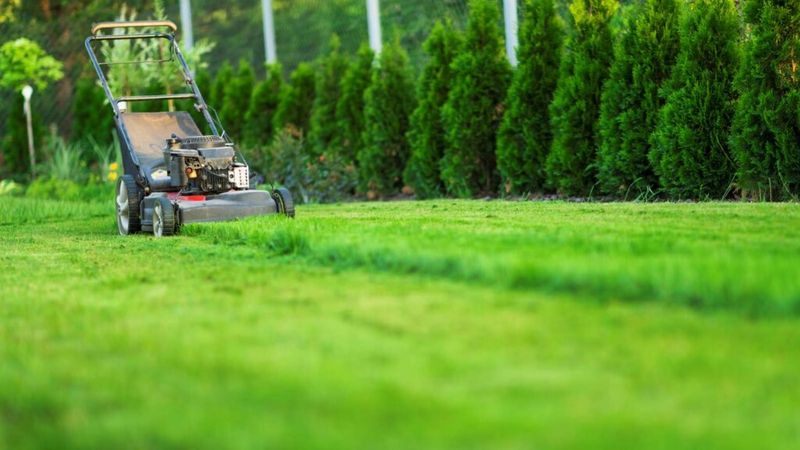
Most Southern homeowners mow whenever they find a free hour, but that habit can quietly work against the thick, healthy lawn they want. Wet grass, scorching midday heat combined with drought stress, and dull blades can all leave your turf worse off than before you started.
Choosing the right conditions, not just the right clock time, makes a real difference for warm-season grasses like St. Augustinegrass, bermudagrass, and bahiagrass across Florida and Texas.
Choose a dry mowing window, not a magic hour
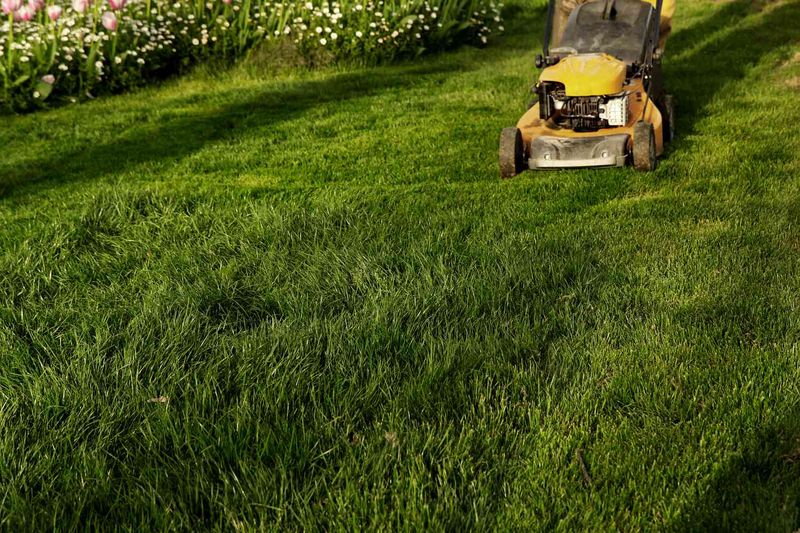
Forget the idea that one specific hour on the clock will grow you thicker grass. The real rule is simpler and more useful: check the turf before you start the mower.
If the grass blades and soil surface are dry, you have a workable window. If they are wet from dew or a recent irrigation cycle, wait.
For most Southern lawns, that dry window arrives in midmorning, after overnight dew has burned off but before the hottest part of the afternoon. A UGA Extension turf specialist points to midmorning, after dew dries, and late afternoon around 5:30 to 6 p.m. as two reasonable options for most lawns in the Southeast.
Iowa State Extension similarly recommends mowing during cooler morning or evening temperatures after dew has dried.
A dry late-afternoon or early-evening cut can also work well, provided dew has not yet started forming and you can finish before the lawn becomes wet again. Texas A&M AgriLife advises avoiding damp grass and using caution during peak summer heat.
The point of choosing a good window is to improve cut quality and reduce avoidable stress, not to trigger some biological clock that magically thickens grass.
Wet turf turns dawn mowing into a poor choice
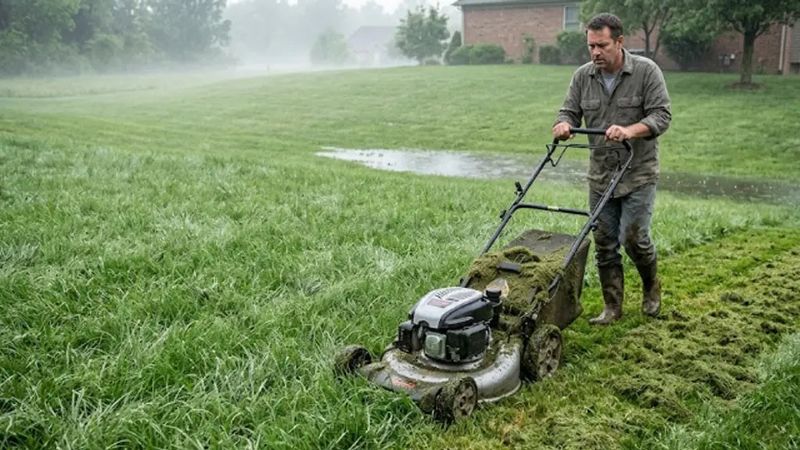
Early morning sounds appealing, especially in Texas and Florida summers when afternoon heat is brutal. The problem is that dawn almost always means wet turf, whether from overnight dew or a pre-dawn irrigation cycle.
Mowing wet grass creates a cascade of problems that most homeowners do not connect back to their timing choice.
Wet clippings clump together and land in thick piles on the lawn surface rather than filtering down evenly. Those piles shade the turf beneath them and can mat down, creating patchy, stressed areas.
UF/IFAS guidance on mowing Florida lawns stresses cutting only dry turf to avoid these outcomes. Beyond clumping, wet conditions mean softer soil, which increases the chance of ruts from mower wheels and slipping hazards for the operator.
Disease spread is another concern worth knowing. UF/IFAS lawn disease guidance notes that mowing through a wet canopy can move pathogens from one part of the lawn to another.
Texas A&M’s St. Augustinegrass management guide reinforces the recommendation to avoid mowing wet grass. Dawn is not forbidden by definition, but if the turf is wet, the cut will be worse, the equipment will work harder, and the lawn will carry the cost.
When peak heat makes mowing more stressful
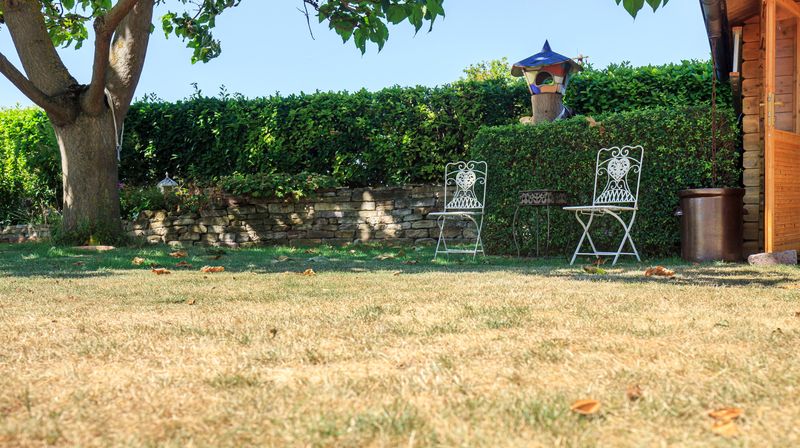
Midday mowing in July across Florida or Texas is not automatically a disaster, but it can push a lawn that is already struggling toward a harder recovery. The concern is not sunlight itself.
A healthy, adequately watered lawn can handle daylight just fine. The issue arises when intense heat stacks on top of existing drought stress, dry soil, or visible wilt.
Texas A&M AgriLife warns that peak summer hours can increase wilt and foot-traffic stress on warm-season turf. Purdue Extension advises avoiding midday mowing above 90 degrees Fahrenheit when soil is dry.
The practical decision rule is straightforward: if the lawn looks wilted, the soil is dry to the touch, and temperatures are extreme, postpone the cut until conditions improve.
NC State TurfFiles notes that turfgrass under severe heat and drought stress may need less frequent mowing because growth slows considerably. UF/IFAS drought management guidance supports raising the mowing height and reducing mowing frequency when turf is drought-stressed.
A lawn that shows no visible stress and has adequate soil moisture can be mowed during daylight hours without dramatic harm, as long as the turf is dry and the blade is sharp.
Mowing height affects density more than the clock
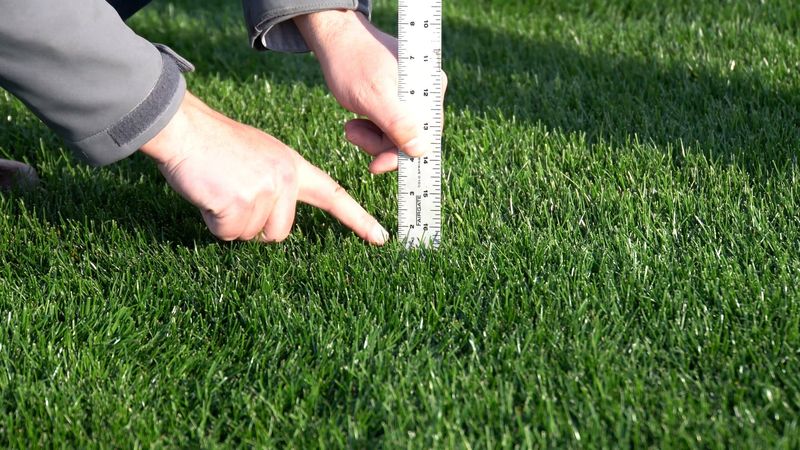
Timing matters for cut quality, but mowing height has a far more direct influence on how thick and stress-tolerant your lawn becomes over time. Cutting grass too short is one of the most common and damaging habits in Southern lawn care, and it happens in broad daylight at perfectly reasonable hours of the day.
The one-third rule is the foundation of healthy mowing: never remove more than one-third of the leaf blade in a single mowing session. UF/IFAS homeowner best management practices and Texas A&M AgriLife’s mowing guide both state this rule clearly.
Removing more than that in one pass, commonly called scalping, exposes the soil, reduces leaf area available for photosynthesis, weakens root systems, and opens the turf to weed pressure, pest damage, and drought vulnerability.
Mowing within the upper part of the species-appropriate height range generally supports deeper roots and better drought tolerance where the research supports it. EPA WaterSense guidance on turfgrass connects appropriate mowing height with water efficiency and lawn resilience.
Oklahoma State Extension’s thatch management guidance also reinforces that proper mowing height supports long-term turf health. If grass has grown too tall, raise the mower deck and lower the height gradually over several mowings rather than cutting it all the way down in one pass.
Match the mower height to your grass species
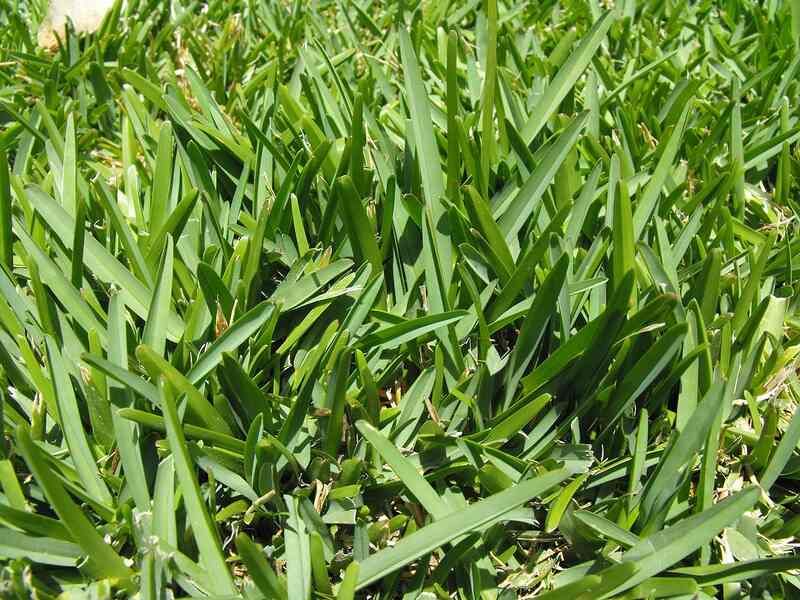
One of the most common mistakes Southern homeowners make is applying a single height setting to every lawn on the block. St. Augustinegrass, bermudagrass, centipedegrass, zoysiagrass, and bahiagrass all have different recommended mowing ranges, and using the wrong height for your species can undermine everything else you are doing right.
UF/IFAS mowing guidance for Florida lawns lists approximate ranges of 3 to 4 inches for bahiagrass, 2.5 to 4 inches for standard St. Augustinegrass cultivars, 1.5 to 2 inches for centipedegrass, 0.5 to 1.5 inches for bermudagrass, and 2 to 2.5 inches for coarse-textured zoysiagrass. These are starting points, not fixed rules, because cultivar and mower type both matter.
Texas A&M AgriLife’s mowing recommendations for warm-season turf include approximately 2.5 to 4 inches for St. Augustinegrass, 1 to 3 inches for common bermudagrass, 1.5 to 2.5 inches for centipedegrass, and roughly 1 to 2.5 inches for many zoysia types. Hybrid bermudagrass cultivars maintained with reel mowers can be cut significantly shorter than common bermudagrass with a rotary mower.
During summer heat or drought, lean toward the upper end of the appropriate range for your species. That extra leaf area shades the soil, slows moisture loss, and gives the root system a better chance of staying active through the stress period.
Use sharp blades and mow according to growth
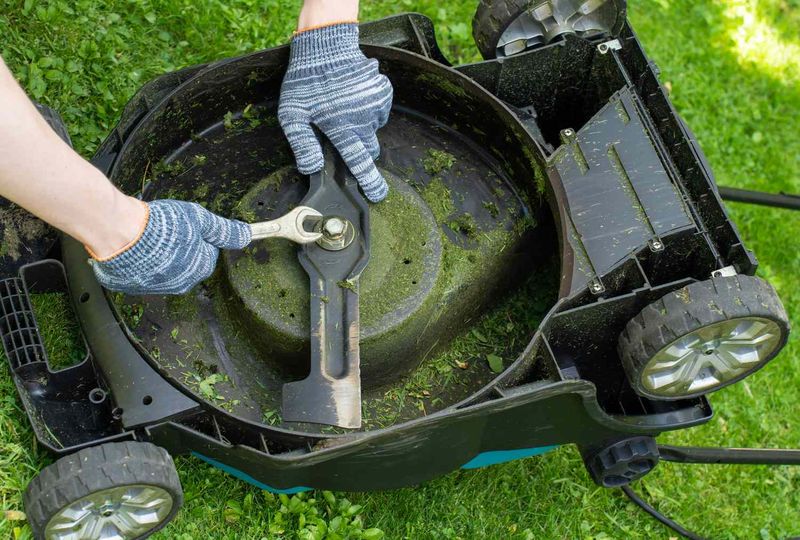
A dull mower blade does more harm than most homeowners realize. Rather than slicing cleanly through grass blades, a dull edge tears and shreds the tissue, leaving ragged brown tips across the lawn.
That visible browning is not just cosmetic: torn tissue creates larger entry points for pathogens and adds unnecessary stress to the plant during an already demanding growing season.
UF/IFAS and University of Missouri Extension both recommend keeping mower blades sharp as a basic component of sound turf management. Texas A&M’s St. Augustinegrass guide reinforces this, noting that sharp blades produce cleaner cuts that reduce plant stress.
Mowing frequency is another habit worth reconsidering. A rigid once-a-week schedule ignores the reality of warm-season turf growth.
Texas A&M AgriLife’s mowing recommendations and their bermudagrass management calendar both tie mowing frequency to actual growth rate. During warm, wet periods, bermudagrass or St. Augustine can grow fast enough to need cutting twice a week.
During drought or dormancy, the same lawn may go two weeks without needing a trim. For clippings, leave short, evenly distributed pieces on the lawn where they will decompose and return nutrients to the soil.
UF/IFAS best care practices confirm that clippings do not ordinarily cause thatch when they are fine and spread evenly. Thick clumps are the exception: redistribute or remove them so they do not shade and smother the turf beneath.
Handle diseased turf and equipment carefully
Ordinary mowing does not spread lawn disease by default. Most healthy lawns can be mowed routinely without any special precautions.
When an active disease is present, though, the rules shift, and ignoring them can turn a contained problem into a lawn-wide outbreak.
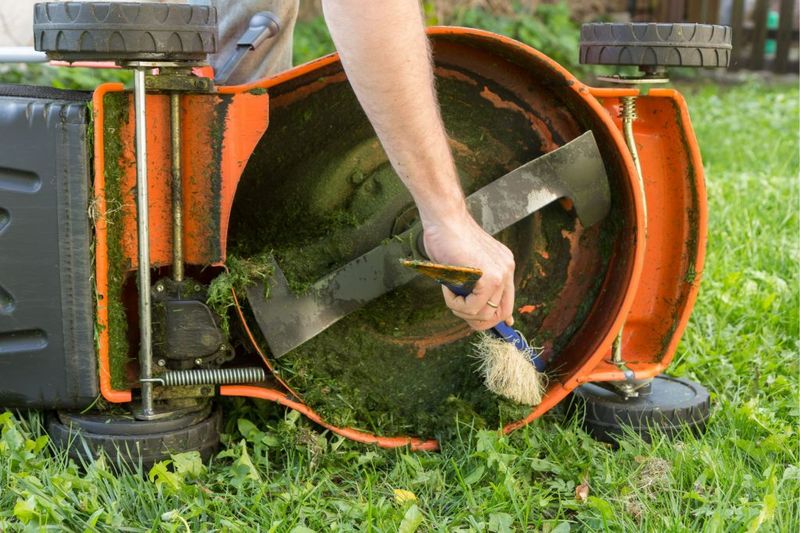
UF/IFAS lawn disease guidance recommends avoiding mowing when the canopy is wet if disease is active, mowing affected areas last, and cleaning the mower thoroughly afterward. UF/IFAS turfgrass disease management reinforces that equipment can carry fungal spores or bacteria from one area to another when turf is moist and disease is present.
Wet, clumped clippings left sitting on diseased turf compound the problem by extending canopy moisture and giving pathogens a favorable environment. UF/IFAS best care practices and Texas A&M’s St. Augustinegrass guide both advise removing or redistributing thick clumps rather than letting them sit.
These precautions are specific to active disease situations. On a healthy lawn with no visible disease, leaving fine, evenly distributed clippings is the right call and requires no special handling.
Protect the lawn with a simple condition-based checklist
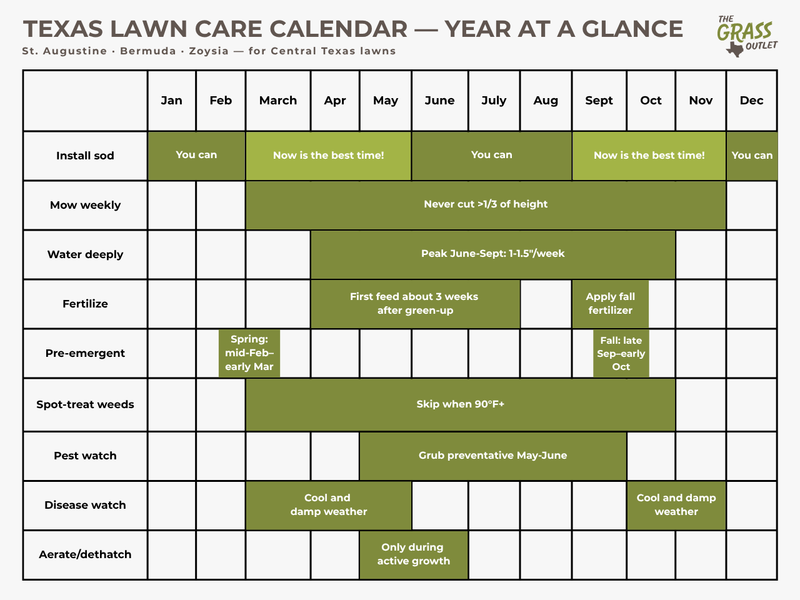
Before each mowing session, run through a short mental checklist. Confirm the turf is dry, not just that the clock says midmorning.
Choose a midmorning window after dew has cleared, or a dry late-afternoon period before dew returns, as Iowa State Extension and Texas A&M AgriLife both recommend.
Postpone the cut if peak heat coincides with visible wilt or dry soil. Set the mower deck to the correct height for your grass species, following UF/IFAS species-specific ranges and the Texas A&M mowing guide.
Keep blades sharp, remove no more than one-third of the leaf blade per session, and base your mowing schedule on how fast the grass is actually growing.
These habits together give your lawn the best chance of staying dense and resilient through a Southern summer. Mowing time shapes cut conditions and helps limit avoidable stress, but no single hour on the clock grows thicker grass on its own.
Healthy turf is built by consistent, species-aware care, and good timing is just one part of that foundation.