
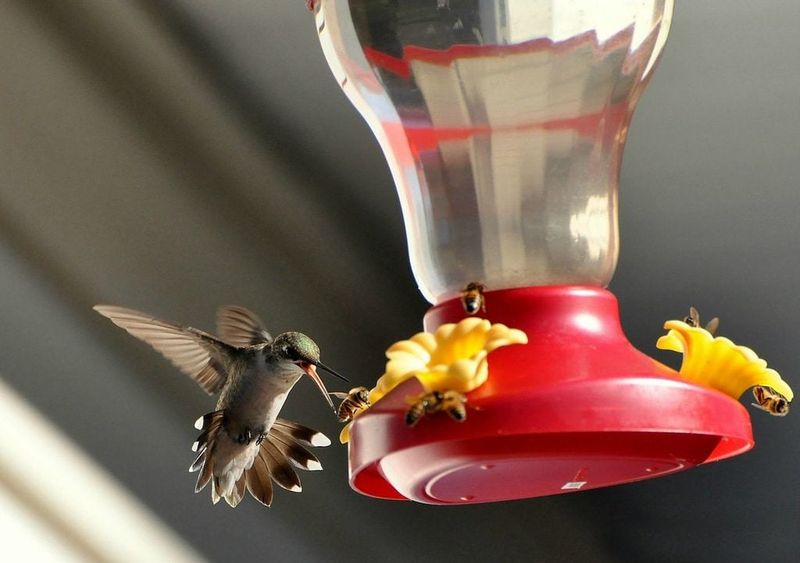
If you’ve noticed fewer hummingbirds at your feeder lately, a swarm of ants, bees, or wasps crowding the ports may be part of the problem. Heavy insect activity can contaminate nectar, block feeding spots, and make hummingbirds reluctant to stick around.
The good news is that a few practical changes, like fixing leaks, using a water-filled ant moat, and switching feeder styles, can make a real difference. No single fix is permanent, but the strategies here can help Southern gardeners reduce insect pressure and keep nectar fresh and accessible through migration season.
When insects interfere with a hummingbird feeder
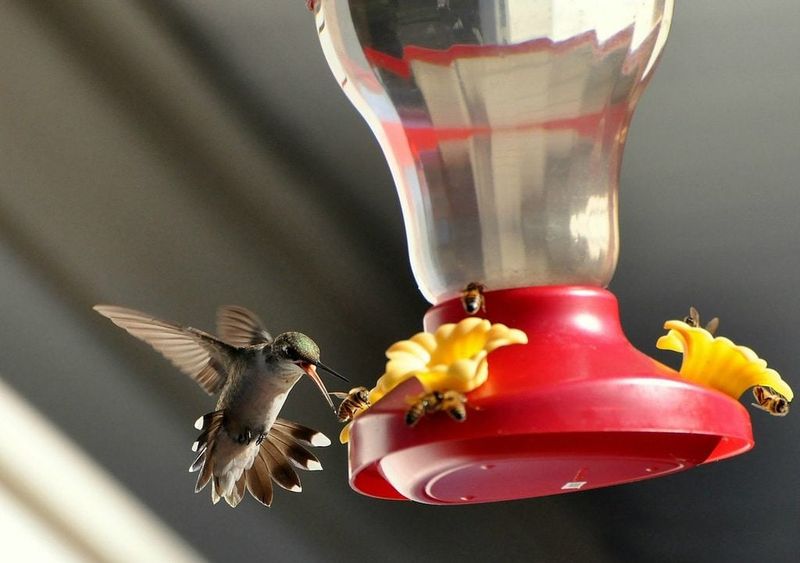
Heavy clusters of ants, bees, or wasps at a hummingbird feeder can cause real problems. When insects pack the feeding ports, they may contaminate the nectar, physically block access, or simply make the feeder feel too risky for a small bird to approach.
Published research on wasp and hummingbird interactions at feeders confirms that some wasp species can substantially interfere with hummingbird visits when numbers are high enough.
A few insects visiting the feeder is a different situation. One or two bees investigating a port rarely stops a determined hummingbird.
The practical concern is persistent clustering, where insects dominate the feeder long enough to discourage birds from returning at all.
Insects may be one reason hummingbird visits slow down, but they are not the only reason. Cornell Lab guidance on changes in feeder activity points out that territorial behavior between hummingbirds, nearby predators, weather shifts, window strikes, and the natural availability of wild food can all change how often birds show up.
Migration timing adds another layer, especially in Florida and Texas where multiple species move through on different schedules.
The practical goal here is not to eliminate every insect from the yard but to reduce accessible nectar, make the feeder less convenient for insects to dominate, and keep the setup working for hummingbirds. No single method guarantees permanent exclusion, but the combination of fixes described in the following sections can meaningfully reduce insect pressure.
Identify the insects before choosing a response
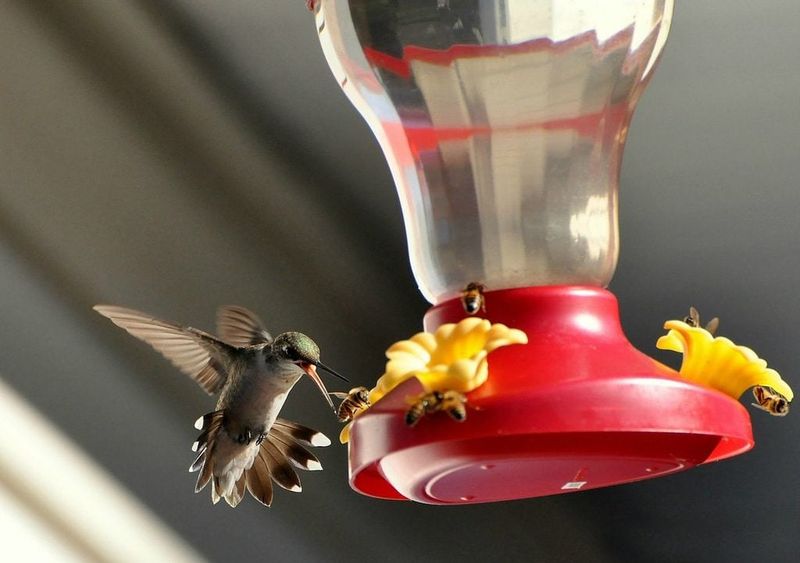
Before reaching for any solution, take a closer look at what is actually visiting the feeder. Crawling insects traveling up the hanger or pole are almost certainly ants.
Flying insects hovering around the ports are a more mixed group, and correctly reading what you are seeing matters for choosing the right response.
The word “wasp” gets used loosely in backyards. What a homeowner calls a wasp might be a paper wasp, a yellowjacket, a solitary hunting wasp, a honey bee, or even a bee-mimicking hover fly.
Their behavior differs considerably. Yellowjackets tend to be aggressive defenders of food sources, while many solitary wasps are focused on hunting other insects and rarely bother with feeders at all.
Hover flies look convincingly wasp-like but cannot sting. Knowing the difference helps you respond proportionately rather than treating every flying insect as an equal threat.
Many wasps are genuinely useful in the garden. University of Florida IFAS Extension research on native wasps describes several species as beneficial biological-control agents that prey on caterpillars and other garden pests.
Treating the feeder as the problem, rather than trying to eliminate wasps from the entire yard, keeps that ecological balance intact.
The practical goal is protecting feeder access, not running a wasp-eradication campaign. Focus your attention on the feeder itself, the nectar it holds, and the routes insects use to reach it.
That narrow target is where the following fixes will have the most effect.
Remove leaks, spills, and exposed nectar
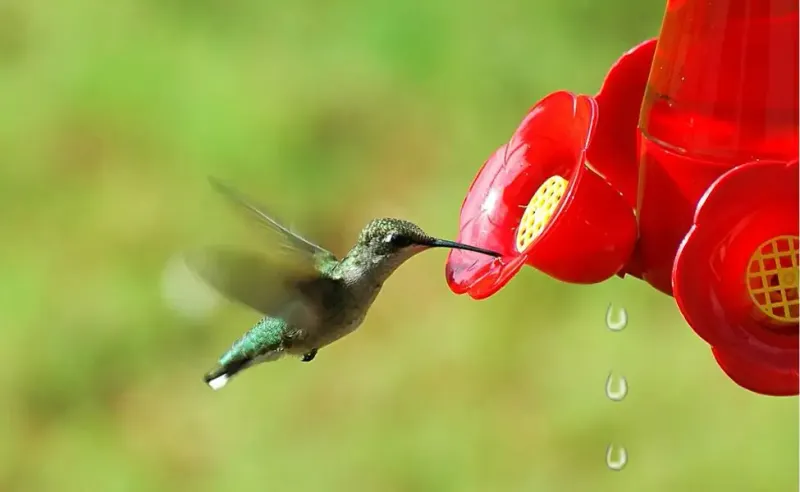
Accessible nectar is the most direct reason insects gather at a feeder, so the first practical fix is cutting off what they can easily reach. Start with a hands-on inspection.
Check the feeder body, lid, and feeding ports for cracks, loose seals, or worn gaskets. Even a slow drip along the outside of the feeder creates a sugar trail that ants and wasps will follow reliably.
Bottle-style feeders are especially prone to leaking in hot weather. As the air inside the reservoir warms and expands, it pushes nectar out through the ports.
Cornell Lab of Ornithology’s guide to managing feeder pests recommends moving the feeder to a sheltered, partly shaded location to slow that thermal expansion and reduce dripping. A spot that gets morning light but stays shaded during the hottest afternoon hours is a reasonable target in Florida and Texas yards.
Saucer-style feeders hold nectar in a shallow dish below the feeding ports rather than in a hanging reservoir above them. They tend to drip less than bottle feeders because the design does not rely on air pressure to hold the liquid in place.
If leaking has been a recurring problem, switching feeder styles is worth considering alongside the other fixes.
After tightening or repositioning the feeder, wipe down the exterior with a damp cloth to remove any sticky residue. Dried sugar on the outside of the feeder is just as attractive to insects as fresh nectar, and cleaning it off removes one more reason for them to linger around the ports.
Block crawling ants with a plain-water moat
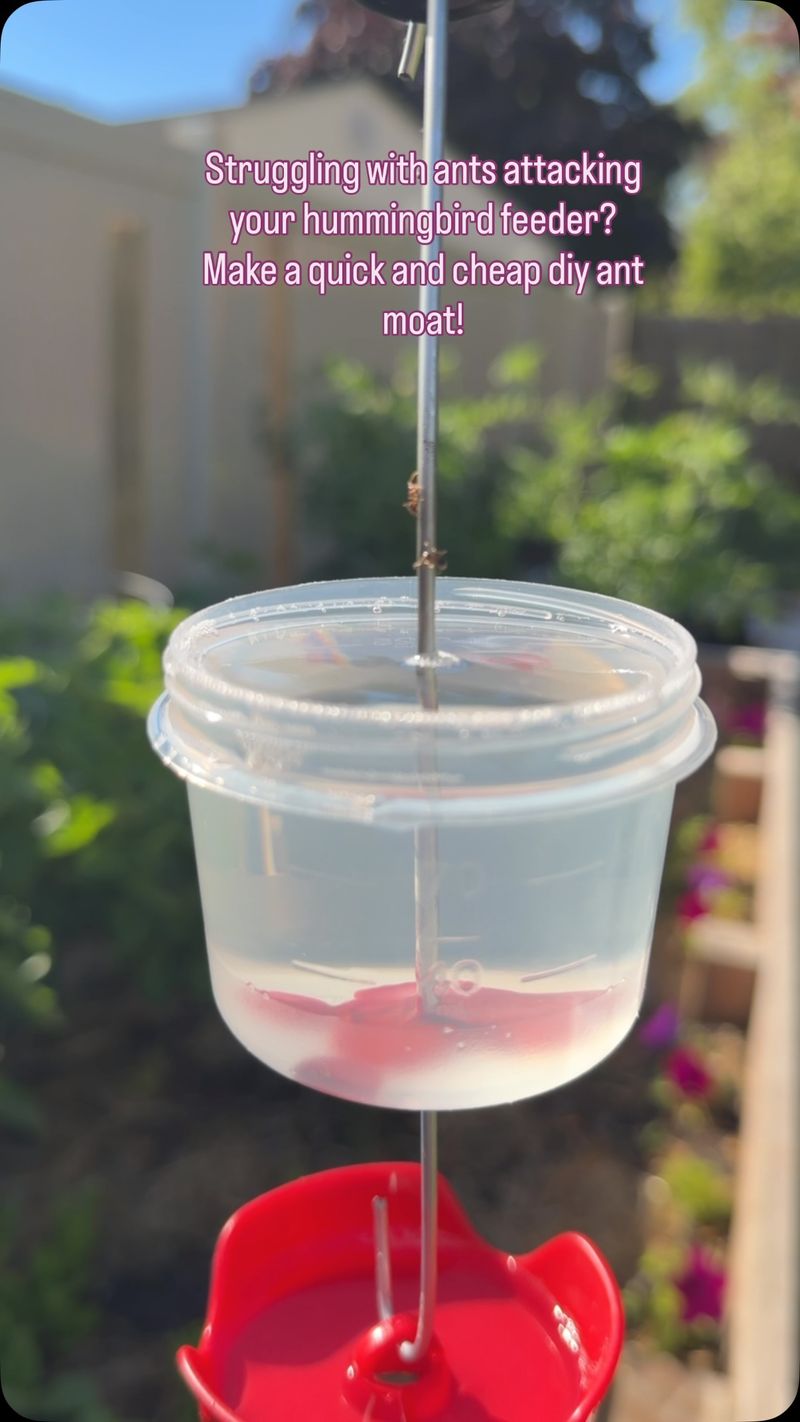
Ants reach a feeder by crawling down the hanger, pole, or any surface connected to it. A water-filled moat interrupts that path by placing a small cup or reservoir that ants cannot cross between the hanging point and the feeder itself.
Many feeders come with a built-in moat at the top; if yours does not, a separate moat that clips onto the hanger is easy to find at garden centers and online.
Fill the moat with plain water and check it regularly, especially during hot Southern summers when evaporation is fast. An empty moat provides no protection at all.
Cornell Cooperative Extension’s guide to bird feeder pests specifically warns that oil and grease can damage the insulating structure of feathers if a bird contacts them. Plain water is the safe default, and it works well when the moat stays full.
A moat works as a physical barrier, not an absolute guarantee. Ants are resourceful.
If the feeder touches a wall, a plant stem, a window screen, or any nearby surface, ants can bypass the moat entirely by taking an alternate route. After installing the moat, trace every part of the hanging setup, including the wire, pole, bracket, and any decorative elements, and make sure none of them create an ant bridge around the water barrier.
Inspect the moat every day or two. Refill it when the water level drops, and clean out any debris, dead insects, or algae that accumulate.
A well-maintained moat is a reliable first-line fix for crawling ants, even if it does nothing to address the flying insects covered in the next section.
Make nectar harder for many flying insects to reach
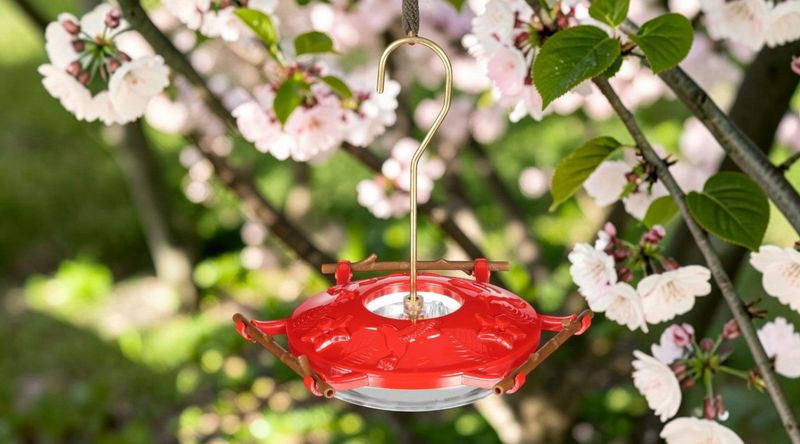
Saucer-style feeders offer a structural advantage over bottle feeders when flying insects are the main problem. Because the nectar sits in a shallow dish below the feeding ports rather than pooling right at the opening, many bees and wasps have a harder time reaching it.
Cornell Lab’s feeder pest guidance recommends saucer-style designs specifically for reducing flying insect access. That said, no feeder design excludes every insect, and a saucer feeder with a leak or sticky residue on the outside can still draw a crowd.
Bee guards are small mesh or plastic covers that fit over individual feeding ports. They can reduce access for some insects in some situations, but they are not foolproof.
One detail worth knowing: yellow guards or yellow decorations on any feeder can actually attract bees, since yellow is a color bees associate with flowers. If bee pressure is a problem, avoid feeders and accessories with yellow components.
When a wasp colony has established the feeder as a regular food source, physical design changes alone may not be enough to break the habit quickly. University of Maine Cooperative Extension guidance on feeder insects suggests moving the feeder to a new location or taking it down for one to two days to disrupt the insects’ search pattern.
Wasps rely on location memory to return to food sources; moving the feeder even a few feet can cause them to lose track of it, while hummingbirds tend to relocate to the feeder more readily than wasps do.
After the feeder has been down or relocated and insect activity drops, rehang it in its new spot and monitor for a few days. This is a disruption tactic rather than a permanent solution, but combined with leak prevention and a clean exterior, it can restore usable feeder access for hummingbirds within a short window.
Maintain fresh nectar in Southern heat
Southern heat is hard on sugar water. Nectar that sits in a feeder through a hot August afternoon in Texas or Florida can begin to ferment or grow mold within a day, and cloudy or contaminated nectar is both unhealthy for hummingbirds and more likely to attract insects looking for an easy sugar source.
The standard recipe is simple: one part plain white sugar dissolved in four parts water. Skip red food coloring, honey, artificial sweeteners, and any other additives.
Cornell Lab’s hummingbird feeding guide is clear that red dye is unnecessary and that honey and other sweeteners can promote harmful bacterial growth.
Make smaller batches so you are not storing large amounts of nectar that will sit unused. In moderate warm weather, inspect the feeder daily and plan to replace the nectar every two to three days.
When temperatures climb into the upper 90s, daily replacement is the safer choice. If the nectar looks cloudy, smells off, or has visible particles floating in it, replace it immediately regardless of when it was last changed.
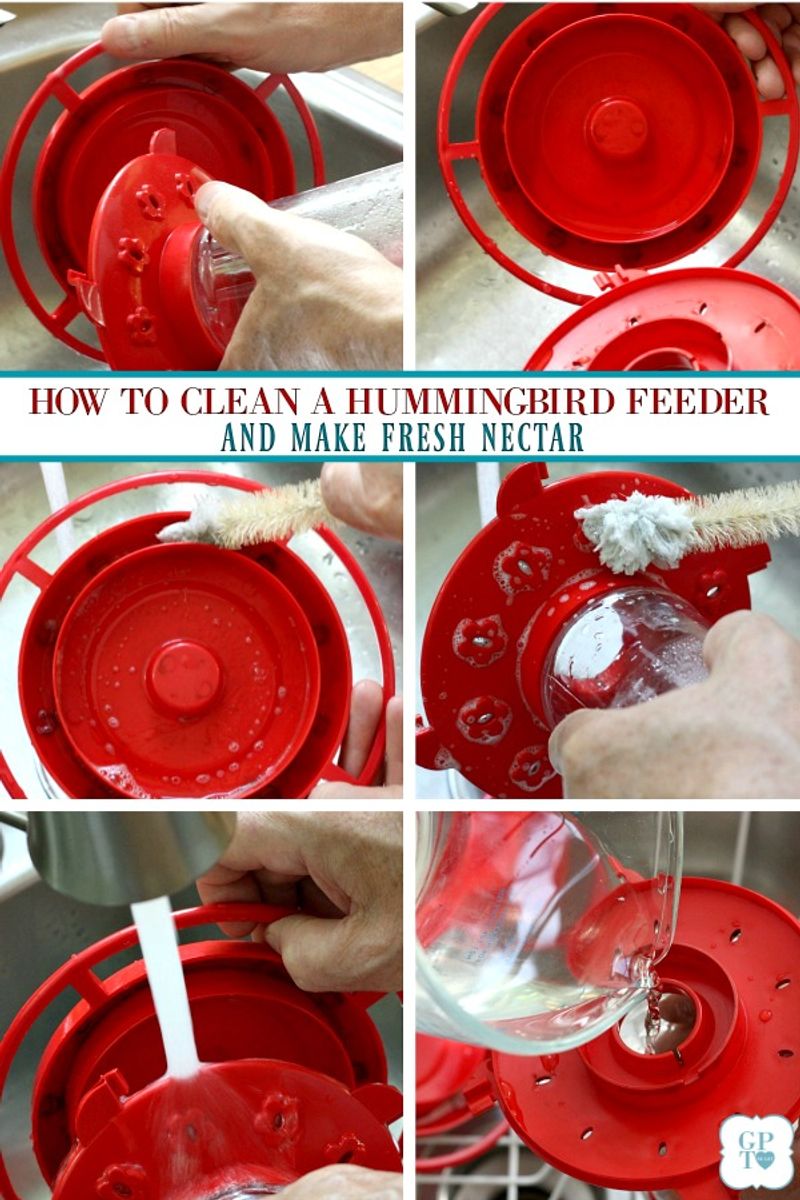
Cleaning the feeder thoroughly at each refill removes the sugar film, mold spores, and bacterial residue that build up inside the reservoir and ports. A bottle brush and hot water handle most buildup; a dilute white vinegar rinse can address stubborn mold, followed by a thorough water rinse before refilling.
Rinse all parts completely so no cleaning residue reaches the nectar.
Frequent cleaning protects hummingbird health and removes the sticky residue that draws insects, but it does not guarantee that ants or wasps will leave the feeder alone. Think of a clean feeder as necessary maintenance rather than a standalone insect deterrent.
Pair it with the leak prevention and physical barriers described in earlier sections for the best overall result.
Avoid pesticides and keep feeding through migration
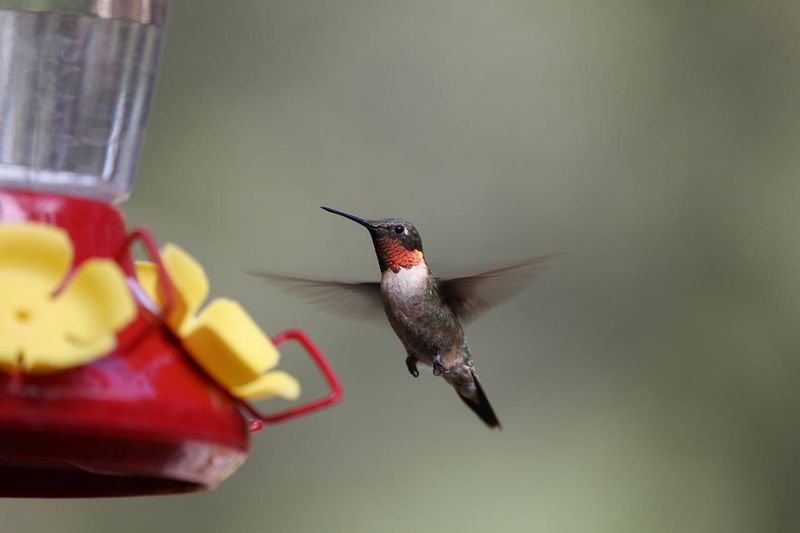
Spraying insects near a hummingbird feeder is one of the more tempting responses when wasp pressure feels out of control, but it creates serious risks for the birds you are trying to help. University of Maine Cooperative Extension’s insect feeder guidance specifically warns against using pesticides around hummingbird feeders.
EPA guidance on reducing pesticide impacts to wildlife advises minimizing pesticide use overall, treating only the necessary area, and keeping birds and pollinators away from any treated surfaces. Do not spray the feeder itself, the nectar, the hanging wire, nearby flowers, or insects congregating around the ports.
Hummingbirds are not purely nectar feeders. Audubon’s hummingbird habitat guidance notes that hummingbirds also eat small insects and spiders for protein.
A yard treated with broad-spectrum insecticides to clear the feeder area may eliminate part of the birds’ natural food supply along with the pests.
On the question of timing, some gardeners worry that leaving a feeder up will prevent hummingbirds from migrating when they should. Cornell Lab’s migration and feeding research is reassuring on this point: migration is driven by day length and other seasonal cues, not by feeder availability.
Taking a feeder down for a day or two to disrupt wasp activity is a reasonable tactic, but removing it permanently to trigger migration is not supported by the evidence and may deprive late migrants and stragglers of a useful energy stop.
For Florida and Texas gardeners specifically, migration timing varies by species and location. Keep the feeder clean, stocked with fresh nectar, and physically maintained while hummingbirds are still visiting your yard.
The feeder that served them well through summer can do the same job through fall, right up until the birds are genuinely gone for the season.