
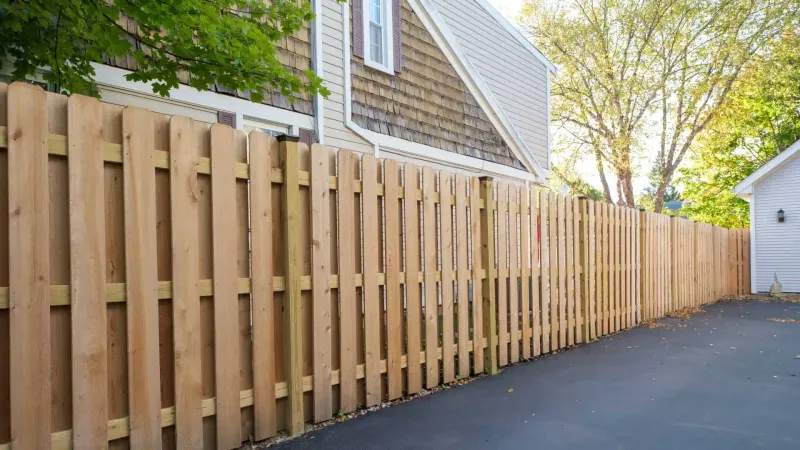
Most neighbors assume the other person is on the hook when a dividing fence falls apart, and California law tends to surprise both of them. The state has a specific rule about who pays for fence repairs and replacements between adjoining private properties, and it rarely points the finger at just one side.
Understanding that rule before you call a contractor or knock on your neighbor’s door can save you money, a legal headache, and a friendship.
California usually treats the dividing fence as a shared responsibility

California Civil Code § 841 sets the starting point for any fence dispute between adjoining private landowners: when a fence divides two neighboring properties, the law creates a rebuttable presumption that both owners receive equal benefit from that fence and share the reasonable costs of its construction, maintenance, or necessary replacement. That presumption typically defaults to an equal split, but calling it a guaranteed 50-50 bill misreads the statute.
California Civil Code § 841 is precise: it creates a presumption of shared responsibility, not an unconditional debt that attaches the moment one neighbor decides to act.
A rebuttable presumption means the equal-sharing rule applies unless someone successfully argues against it. A court can reduce one neighbor’s share or eliminate it entirely if the evidence shows that equal responsibility would produce an unjust result.
So the law’s answer to “who pays?” is usually “both of you,” but that answer comes with real conditions attached.
The statute also draws a firm boundary around who it covers. It applies to adjoining private landowners, meaning owners whose properties are actually contiguous and divided by the fence in question.
Cities, counties, public agencies, and public corporations are explicitly excluded. A fence next to a park, a public easement, or a government-owned strip does not automatically fall under this rule, and the analysis for those situations is different.
Practically speaking, the law’s shared-responsibility framework exists because a fence typically benefits both sides: it marks the boundary, provides privacy, keeps children and pets contained, and adds to the appearance of both properties. That mutual benefit is the foundation of the presumption.
Still, recognizing that both owners usually share the cost is only the first step. The project itself has to qualify, the process has to be followed correctly, and the fence has to actually divide the two adjoining properties for the statute to apply.
The project must be reasonable before equal sharing makes sense
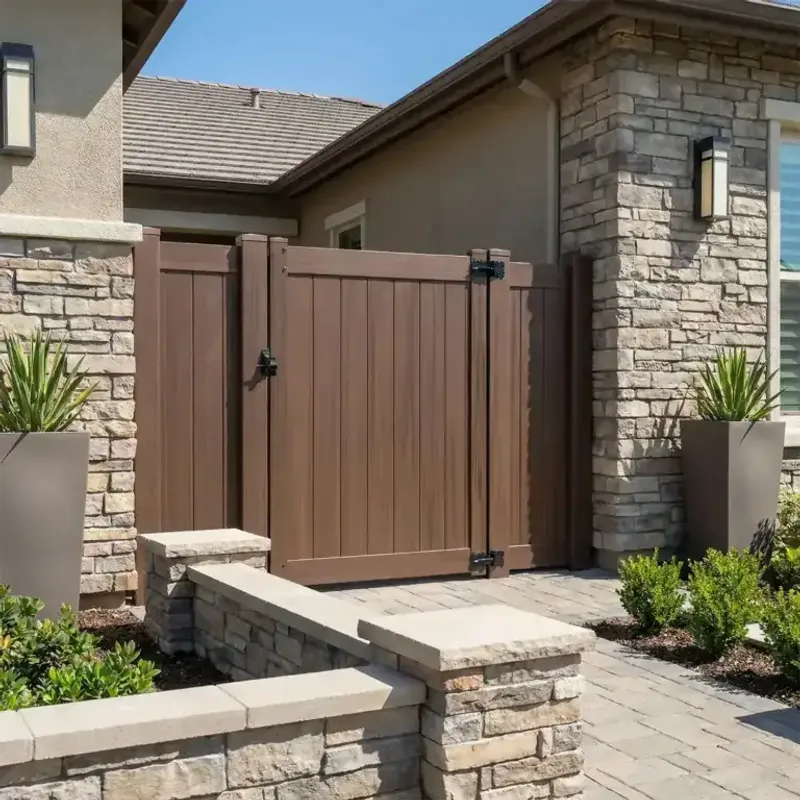
Equal cost sharing under California law is not a blank check for whatever fence a homeowner prefers. The statute ties shared responsibility to the reasonable costs of construction, maintenance, or necessary replacement.
That phrase does real work: a rotten, structurally failed, storm-damaged, or genuinely unsafe fence is a strong candidate for shared cost. A serviceable fence being torn out because one neighbor wants cedar instead of pine, or a taller design, or a privacy upgrade, is a much harder case to make.
California Civil Code § 841 expressly directs courts to consider whether costs are unnecessary, excessive, or driven by personal aesthetic or architectural preferences. If one owner wants a six-foot redwood privacy fence when a four-foot cedar replacement would restore the boundary adequately, the neighbor is not automatically obligated to fund the upgrade.
The statute permits a court to look at what was genuinely needed versus what was preferred and to reduce the contribution accordingly.
Disproportionate benefit is another factor the law recognizes. Suppose the fence primarily serves one property because of how the lots are arranged, or because one owner is adding features that benefit only their side.
A court can treat that imbalance as a reason to depart from an equal split. Undue hardship is also a recognized rebuttal: a neighbor facing serious financial difficulty can present that as evidence that equal responsibility would be unjust.
A practical way to think about this before approaching a neighbor: ask whether a reasonable person looking at the fence would agree it needs work now, and whether the proposed solution is the most cost-effective way to fix the actual problem. Choosing the most expensive contractor, selecting a premium material when a standard one would do the same job, or adding decorative elements that serve no structural purpose all create arguments the neighbor can raise later.
Keeping the project tied to what the fence actually needs, supported by two or three written estimates, puts the paying owner in a much stronger position if a dispute ends up in front of a judge.
Before work begins, the paying owner must give written notice
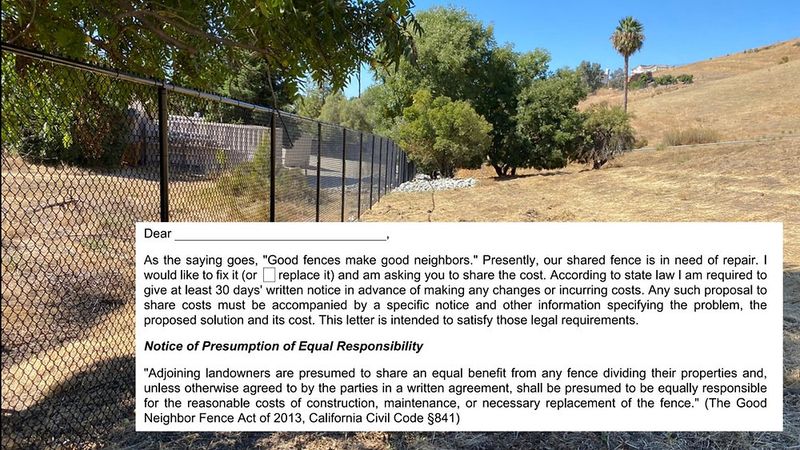
Skipping the notice step is one of the most common ways a homeowner undercuts an otherwise valid cost-sharing claim. California Civil Code § 841 requires the owner planning to incur the expense to give each affected adjoining owner at least 30 days’ prior written notice before the work begins.
That 30-day window is not a suggestion; it is a statutory requirement, and a project started without it can complicate any later attempt to recover costs.
The notice has to cover specific subjects: what is wrong with the fence, the proposed solution, the estimated costs, the proposed cost-sharing arrangement, and the planned timeline. A casual text message saying “I’m fixing the fence next week, you owe half” does not reliably satisfy those requirements.
The statute specifies what information the notice must contain, and informal messages may not hold up if the dispute becomes a legal matter. A dated written letter or email that includes all the required information and is sent with some form of delivery confirmation is a safer approach.
When a dispute is already hostile, getting legal advice on how to deliver the notice properly is worth considering.
Strengthening the notice with supporting materials makes a real difference. Dated photographs of the damage, one or more written contractor estimates, the proposed fence specifications including materials and dimensions, each owner’s expected dollar share, and the planned construction start date all turn a bare-minimum notice into a documented record.
That record matters if the neighbor later claims they were not properly informed or that the project was more than they agreed to.
One important distinction: giving notice is not the same as getting approval. The statute requires the neighbor to receive advance written notice and creates a cost-sharing presumption from that point.
It does not require the neighbor to sign the contractor’s agreement, approve every design detail, or consent to the project in writing before work can proceed. The neighbor has 30 days to respond, raise concerns, or propose alternatives, but the notice requirement does not hand them veto power over a necessary repair.
Is the fence actually on the legal boundary?
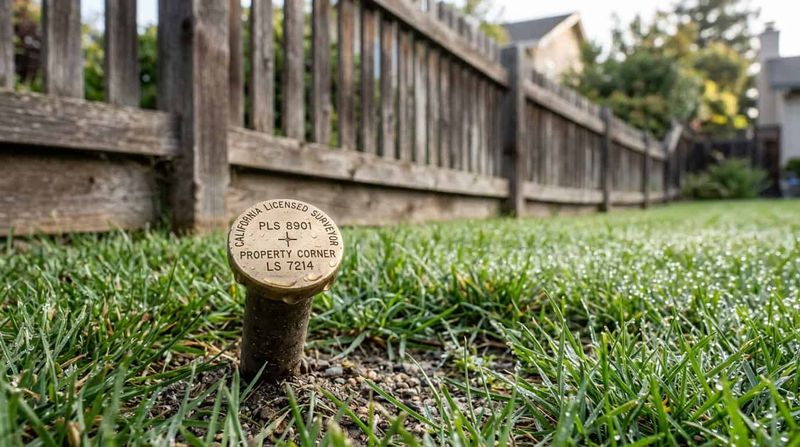
Before any demolition or replacement work begins, the most important practical question is whether the existing fence is actually sitting on the legal property line. Many homeowners assume the fence marks the boundary because it has been there for years.
California case law shows that assumption can be wrong, and acting on it without verification can turn a straightforward repair project into a far more complicated legal situation.
In Mesnick v. Caton, the California Court of Appeal rejected the argument that a fence automatically established the property line.
The court emphasized that reliable legal descriptions and actual evidence of a boundary agreement are required, not just the physical presence of a fence. A fence can be misplaced by inches or by several feet, and the legal line is what the deed and recorded documents say it is, not where someone built a fence decades ago.
The flip side of that principle appears in McCormick v. Appleton, where the court upheld an agreed boundary based on evidence that earlier owners had intentionally treated a particular line as the boundary over time.
That kind of agreed-boundary doctrine means a survey alone may not resolve every dispute. If earlier owners struck a deal, even informally, about where the boundary ran, that history can matter legally even if a modern survey points to a different line.
For a homeowner planning to replace a fence, this creates a two-part checklist. First, pull the property deed and any recorded plat or survey on file with the county.
Second, if there is any doubt about whether the fence matches the legal line, hire a licensed surveyor before the old fence comes down. Removing a fence that turns out to be on the neighbor’s property, or that covers a disputed strip of land, can trigger trespass claims and complicate the boundary question further.
When the disagreement appears to involve land rather than just repair costs, a qualified real-estate attorney is the right professional to consult, not just a fence contractor.
Some fence disputes are not ordinary cost-sharing disputes
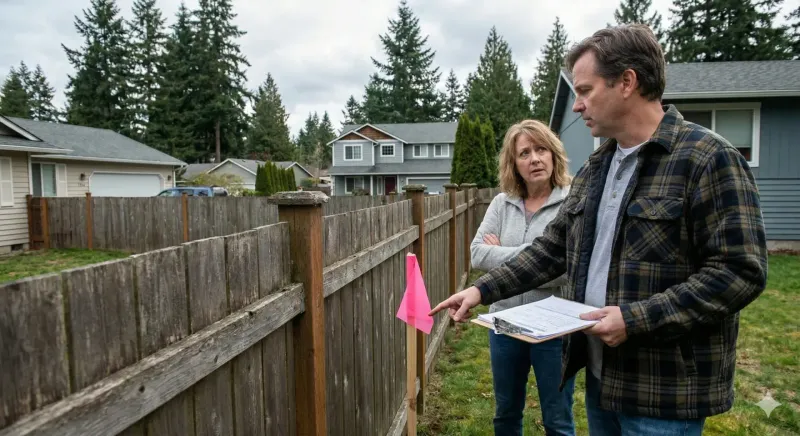
California Civil Code § 841 works well for the typical scenario: a fence between two private homeowners is deteriorating, and both sides need to figure out who pays for the fix. Not every fence situation fits that mold, and pushing a non-standard dispute into the standard cost-sharing framework can produce the wrong result.
Wrongful or intentional removal of a preexisting boundary fence is one clear example of a situation that falls outside ordinary equal-sharing analysis. In McCormick v.
Appleton, the California Court of Appeal found that Civil Code § 841 did not limit recovery to one-half when one party wrongfully removed the fence. The case involved trespass and damages, and the court’s analysis treated the removal as something more than a routine maintenance disagreement.
If a neighbor tears down a shared boundary fence without notice, agreement, or legal justification, the remedy available to the other owner may be broader than simply requesting half the replacement cost.
The statute’s scope also has explicit limits. Civil Code § 841 applies to adjoining private landowners and excludes public entities, including cities, counties, districts, and public agencies.
A fence adjoining a city park, a public right-of-way, or a government-owned parcel does not fall under this rule, and the analysis for those situations requires a different approach entirely.
Additional complexity arises when the property involves an HOA, a common-interest development, or a rental arrangement. Homeowners associations often have governing documents, CC&Rs, or architectural guidelines that control fence materials, heights, and replacement procedures independently of the state statute.
A landlord-tenant relationship may also shift who has authority to authorize fence work and who carries the financial responsibility under a lease. These situations can require reading through the governing documents, the lease, or both before assuming that the standard equal-sharing presumption applies.
A permit answers a construction question, not a payment question
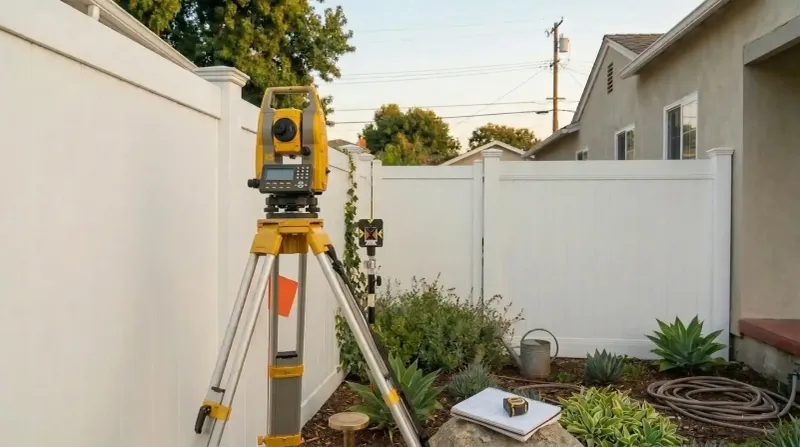
Getting a building permit for a fence replacement is a separate matter from deciding who pays for it. Many homeowners conflate the two, assuming that pulling a permit somehow settles the question of financial responsibility or establishes ownership of the fence.
It does neither. A permit is a construction authorization from a local government agency, and it speaks to whether the project complies with local building and zoning codes.
It says nothing about Civil Code § 841 or about what a neighbor owes.
Permit requirements vary considerably across California cities and counties. The California Contractors State License Board advises property owners to check with their local building department because rules differ from one jurisdiction to the next.
What requires a permit in one city may be exempt in another, and the consequences of skipping a required permit can include fines, a stop-work order, or a requirement to tear out completed work.
A concrete example of how local rules vary: San Jose specifies that fences exceeding its height limits require both building and planning permits, with different height thresholds for front yards, side yards, rear yards, and corner lots. That is a San Jose rule, not a statewide standard.
Applying San Jose’s specific requirements to a property in Sacramento or Fresno would be a mistake.
Local rules can also regulate fence setbacks from the property line, materials, sight-line visibility at intersections, retaining walls attached to or near fences, and pool barriers. None of those local requirements automatically determine what a neighbor owes under the state cost-sharing statute.
A permit does not establish the property line, prove that one owner has a legal claim against the other, or force a neighbor to contribute money. Treat permitting as a construction compliance issue and handle the cost-sharing question separately under Civil Code § 841.
Put the deal in writing before the contractor arrives
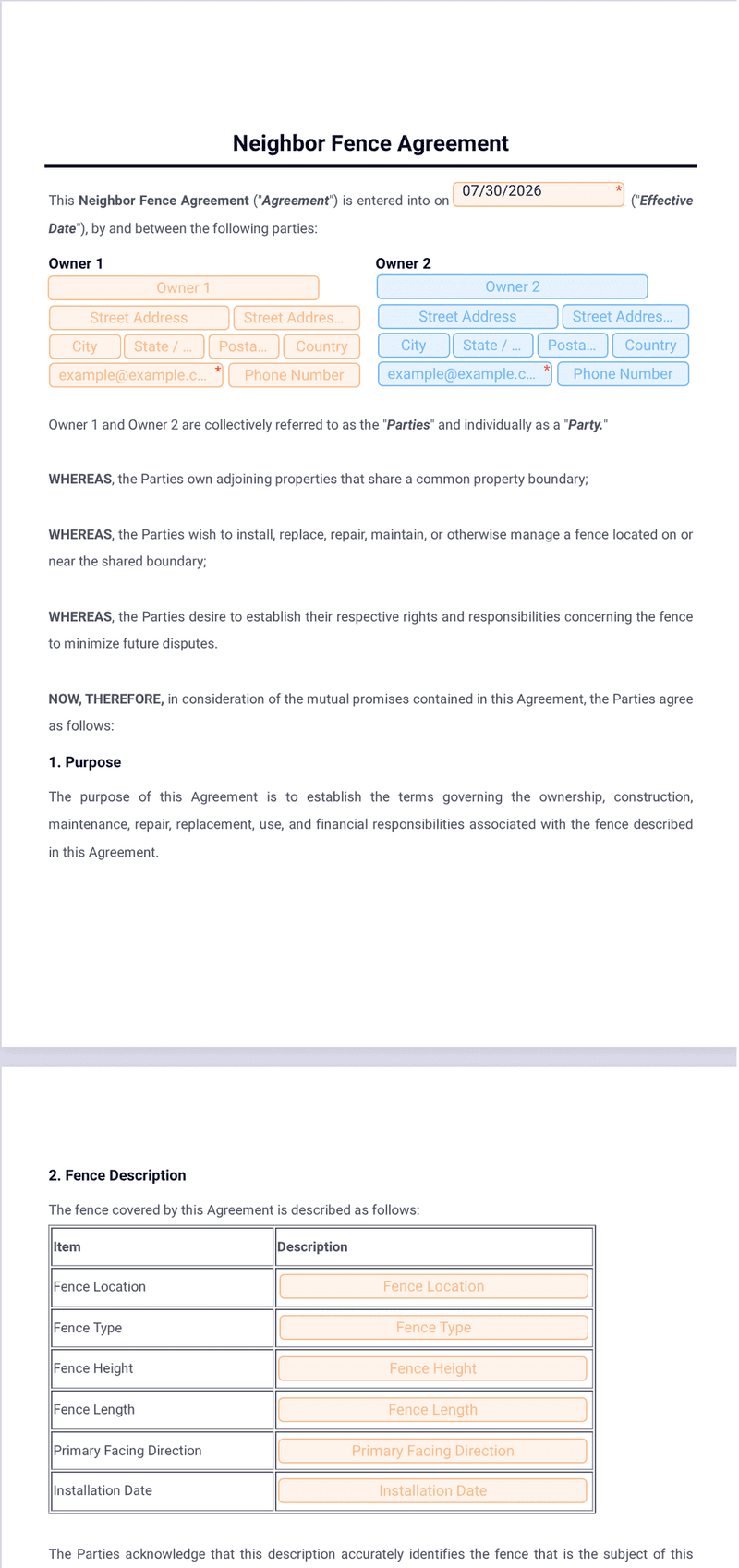
A handshake agreement about splitting the fence bill has a way of becoming a source of argument once the invoices arrive. Putting the arrangement in writing before any work begins is the most reliable way to prevent a second dispute after the first one is resolved.
California Civil Code § 841 expressly recognizes written agreements between neighbors, and a properly drafted document can replace the statutory presumption entirely, substituting the terms both parties actually agreed to for whatever a court might otherwise infer.
A useful written agreement covers more than just the dollar split. At minimum, it should identify the scope of work clearly, naming the specific fence sections being replaced or repaired.
It should name the contractor, describe the materials and specifications, state the total project price, and spell out each owner’s exact share as a dollar amount rather than just a percentage. A payment schedule that says when each owner pays and to whom reduces confusion about timing.
Property access is another detail worth addressing in writing. If the contractor needs to enter the neighbor’s yard to complete the work, documenting that permission in advance avoids a last-minute problem on installation day.
The agreement should also address who owns the finished fence and who is responsible for future maintenance, since those questions tend to resurface years later when the fence needs painting or a post replacement.
A written agreement does not automatically resolve unrelated issues. If there is an open boundary dispute, an unresolved permit question, or a disagreement about whether the fence is actually on the legal line, a private cost-sharing agreement between neighbors does not fix those problems.
Each issue needs its own resolution. The written agreement is a practical tool for the payment side of the project, and keeping its scope clear prevents it from being used as evidence of something it was never meant to settle.
When a neighbor refuses, resolve the money dispute in the right order
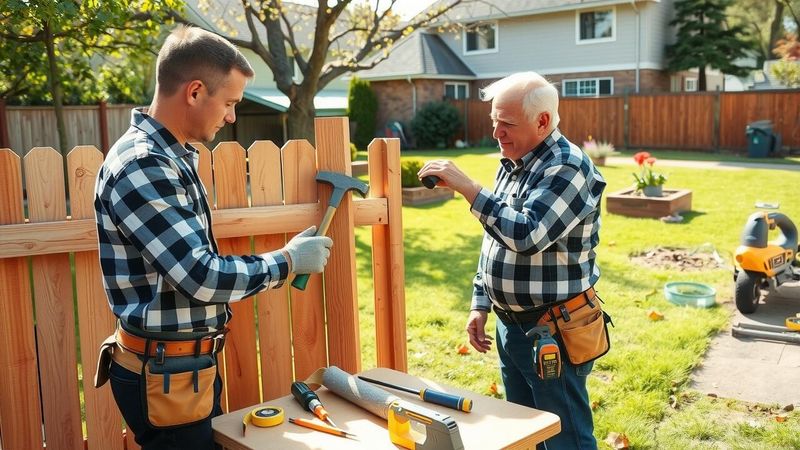
A neighbor who ignores the notice, refuses to pay, or disputes the entire project does not automatically mean a lawsuit. Working through a proportionate escalation path usually produces a better outcome and costs less than jumping straight to court.
Start with a documented conversation: a follow-up letter that references the original 30-day notice, summarizes the fence condition, and proposes a specific payment arrangement gives the neighbor a clear record to respond to and gives you a paper trail if the matter escalates.
Mediation is often the most practical next step when direct conversation stalls. California Courts note that mediation can resolve disagreements creatively, may be available free or at low cost through county dispute-resolution programs, and can produce a written agreement without requiring a court judgment.
Mediation is not inherently less final than a judgment when it results in a signed agreement; the key advantage is that it often preserves the neighbor relationship and allows both sides to shape the outcome rather than leaving the decision to a judge.
If mediation does not work and the dispute is primarily about money, small claims court may be an option for qualifying amounts. California’s small claims process currently describes a limit of $12,500 for an individual claimant and $6,250 when a business files a claim, based on California Courts guidance on starting a small claims case.
Small claims is a money-recovery process. It generally does not produce an order requiring a neighbor to build, repair, or remove a fence, so it fits best when the core question is reimbursement for costs already incurred or clearly owed.
Whatever path you choose, the strength of your position depends heavily on the documentation assembled before and during the project. Proof that the 30-day written notice was sent, evidence that the fence genuinely needed replacement, two or three written estimates showing the project was reasonably priced, payment records, and any boundary information supporting the fence’s location will all matter.
Civil Code § 841 creates a presumption in your favor, but the presumption still has to be supported by facts when a neighbor challenges it.
Document the shared problem before spending

A clear action sequence can prevent the most common fence-dispute mistakes. Start by confirming that the fence actually divides two adjoining private properties, because Civil Code § 841 applies to that specific situation.
If the boundary location is in question, investigate it before any demolition begins, and consider a licensed surveyor when the deed and the fence do not obviously match.
Define the work in terms of what the fence actually needs, not what you would prefer. Check with your local building department about permit requirements before finalizing the project scope.
Send the required 30-day written notice with photographs, estimates, the proposed specification, each owner’s expected share, and the planned start date. Preserve copies of everything.
When both sides agree, sign a written cost-sharing agreement that covers the scope, contractor, materials, price, payment schedule, access, and future maintenance before the first post is pulled. California’s usual starting point is shared reasonable cost, not an automatic bill to whichever neighbor acts first.
Boundary disagreements, wrongful fence removal, or disputes involving HOA rules or public property call for professional advice from a licensed surveyor or a qualified real-estate attorney. The fence between you and your neighbor is rarely just about wood and nails; handled right, the process of fixing it can be just as neighborly as the fence itself.