
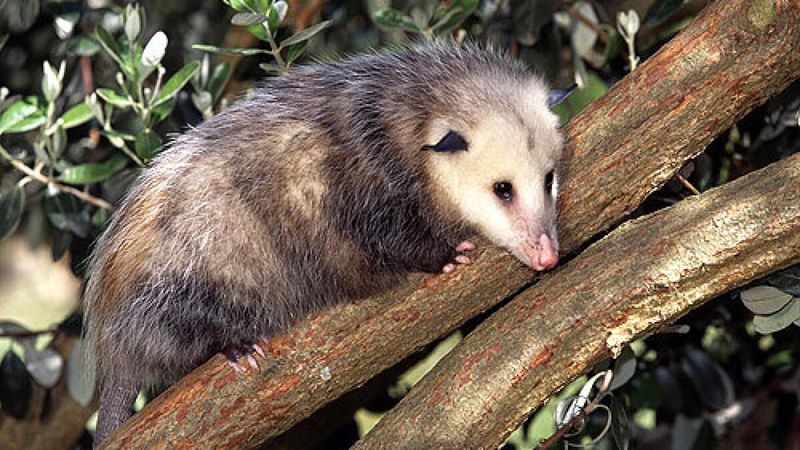
Spotting a pale, pointy-faced animal shuffling through your yard after dark is enough to make most people reach for a flashlight and back slowly away. That creature is almost certainly a Virginia opossum, and while it looks like something out of a Halloween decoration, it is usually far less dangerous than it appears.
Before you try to run it off, there are a few things worth knowing about what it actually does while it is out there in the dark.
That nighttime visitor is usually a scavenger, not a garden invader
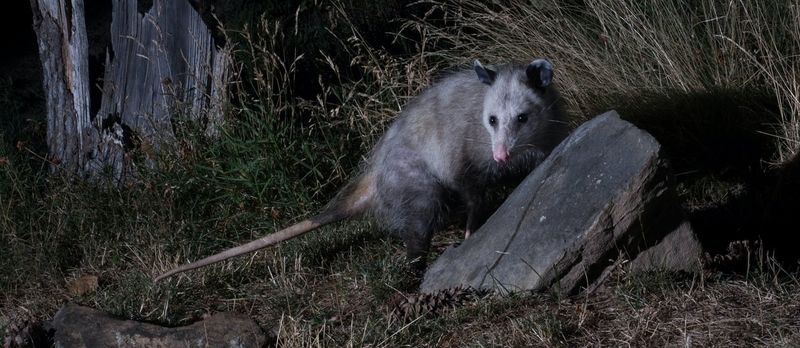
America’s only native marsupial, the Virginia opossum, has quietly made itself at home in backyards across Florida and Texas. Florida Fish and Wildlife describes it as an adaptable animal drawn to garbage, pet food, cultivated fruit, and vegetables, which explains why it keeps turning up in suburban neighborhoods.
A brief nighttime appearance on your lawn usually means the animal is passing through in search of whatever happens to be available, not staging a raid on your tomato plants.
Calling it a garden threat is an overstatement. The opossum is an opportunistic scavenger, and while that foraging habit can occasionally work in a gardener’s favor, no research has shown that a single visiting opossum will reliably improve a home garden.
Texas A&M AgriLife Extension is clear that the animal can also become a nuisance by raiding accessible food sources around sheds and garages.
The sensible response when one appears is to keep your distance, move pets and children inside, and watch it go. Treating it as an automatic enemy misses the point, but so does treating it as a dependable garden ally.
Somewhere between pest and protector is a more honest place to put it.
What does an opossum actually eat?
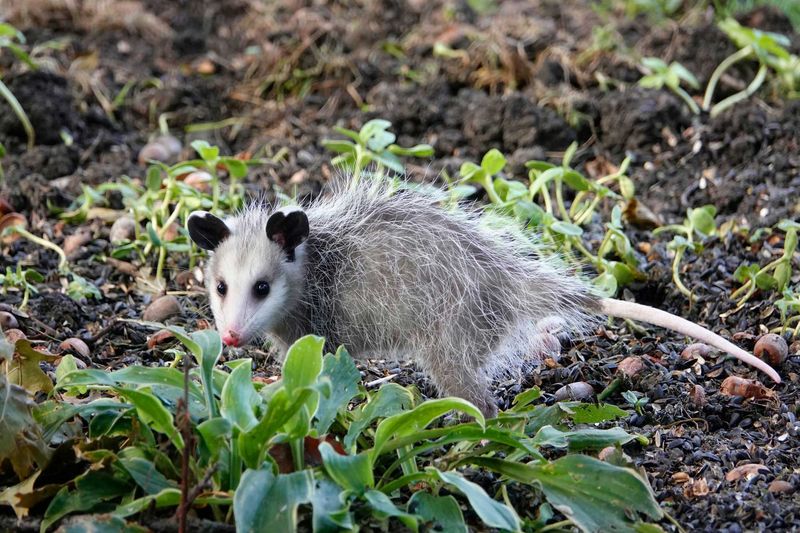
Opossum menus are impressively long. Published diet research documents insects, earthworms, mollusks including slugs and snails, small reptiles, amphibians, birds, small mammals, carrion, fruit, grasses, and plant material.
What ends up on the menu on any given night depends heavily on season, location, and whatever happens to be easiest to find.
That opportunistic quality is the key to understanding what an opossum does and does not do in your yard. University of Georgia Extension notes that opossums consume a wide range of organisms, which makes them generalist scavengers rather than precision hunters targeting a specific pest.
An individual animal moving through your yard might eat a few slugs that were headed for your lettuce, or it might spend the whole visit investigating a fallen peach near the fence.
That unpredictability matters. Gardeners sometimes imagine that a visiting opossum will clean up the insects causing damage to their cucumber vines or pepper plants.
Because the animal eats whatever is most available, that kind of targeted help is not something you can count on. The benefit, where it exists, is incidental rather than directed, and it comes alongside the animal’s interest in pet food bowls, garbage cans, and other accessible food around the yard.
The garden benefit may be small—and remains unmeasured
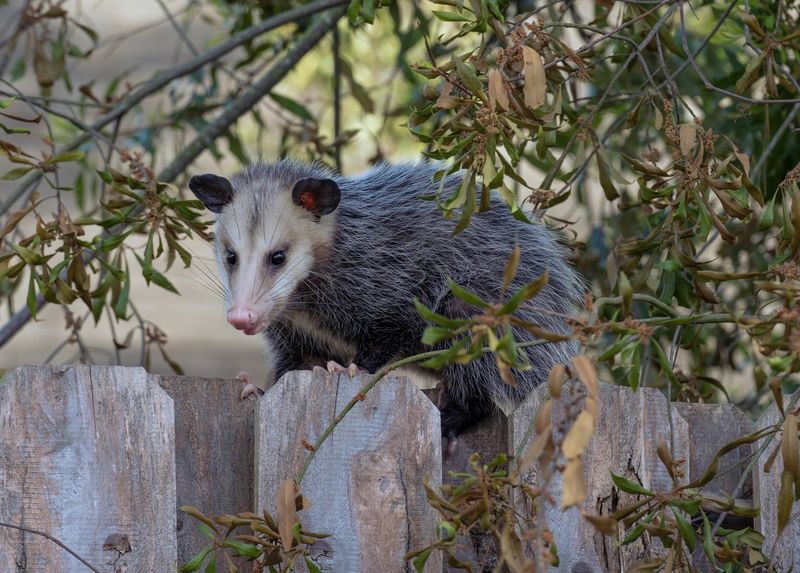
Eating some pests is not the same as controlling a pest population. A gardener who finds aphids smothering a pepper plant or caterpillars working through squash leaves needs crop monitoring, physical barriers, sanitation, and integrated pest management strategies, not the hope that a passing animal will handle the problem overnight.
Georgia Extension acknowledges the opossum’s broad dietary habits as a plausible source of local benefit while stopping well short of calling it a reliable pest suppressor.
The indirect benefit is real in concept. An opossum that moves through a garden and consumes some snails, a few ground-dwelling insects, a small rodent, or some carrion is removing organisms that might otherwise cause trouble.
Diet data confirms that these food types are genuinely part of what opossums consume. Whether any of that translates into fewer pest problems for a specific vegetable bed has not been measured.
Texas A&M AgriLife frames opossums as animals that can cause their own damage, so weighing the possible benefit against the nuisance risk is part of a realistic assessment. Treating a visiting opossum as a bonus rather than a replacement for your regular garden care is the most practical position the evidence supports.
Why the famous tick-eating claim took hold
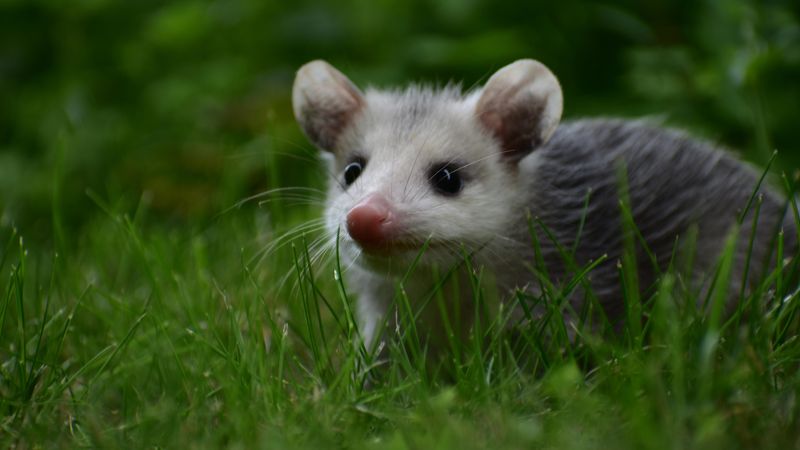
A 2009 study from the Cary Institute of Ecosystem Studies became the unlikely source of one of the internet’s most repeated wildlife facts. Researchers placed blacklegged tick larvae on opossums in controlled laboratory conditions and found that 83 to 96 percent of those larvae died, largely because opossums are meticulous groomers and consume what they remove.
The study modeled opossums as possible ecological traps for ticks, meaning hosts that ticks seek out but then fail to survive on.
From there, the story grew quickly. Journalists and social media posts translated the laboratory finding into a claim that a single opossum eats thousands of ticks every week.
That figure is an extrapolation built from captive experiments and observed tick burdens, not a field measurement of what a typical suburban opossum actually consumes while moving through a backyard in Florida or Texas.
The original research also focused specifically on blacklegged tick larvae, the species and life stage most associated with Lyme disease transmission in the northeastern United States. Lone star ticks, which are far more common across the South, were not part of the experiment.
Applying the laboratory result to every tick species in every yard treats a carefully controlled finding as a universal rule, and the science does not support that leap.
Field evidence does not support dependable tick control
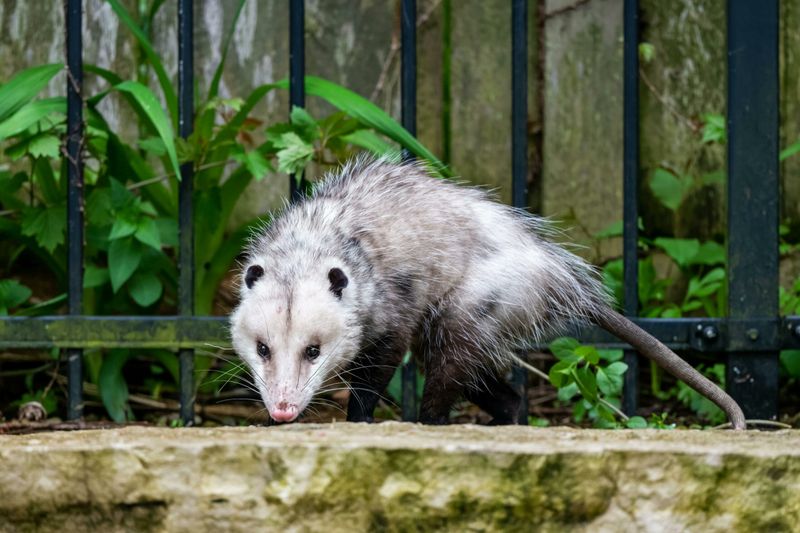
Laboratory results and backyard reality can be very different things. A 2021 field-grounding study examined the stomach contents of 32 wild Virginia opossums and found no ticks or tick parts in any of them.
The same study reviewed 23 earlier diet studies covering stomach contents, digestive-tract analyses, and scat samples from wild opossums, and found no documented ticks across all of that data. The authors concluded that ticks are not a preferred food item and that the laboratory grooming results should not be generalized into a reliable backyard tick-control benefit.
The broader picture of tick and disease systems adds more caution. A 2021 review of wildlife hosts notes that even if opossums function as ecological traps for some tick species under some conditions, evidence that they broadly reduce Lyme disease risk remains limited.
Tick populations involve deer, rodents, raccoons, and many other hosts, and outcomes vary by location, tick species, and landscape.
Opossums can also carry ticks themselves. An East Texas field study collected 82 ticks from 29 opossums, averaging nearly three ticks per animal.
Other urban wildlife research has found opossums among hosts for Asian longhorned ticks. A yard visited by an opossum is not a tick-free yard, and the animal itself is not a tick-free animal.
Keeping that in mind matters when evaluating what a nighttime sighting actually means for your family’s outdoor risk.
The best response is tolerance without an invitation
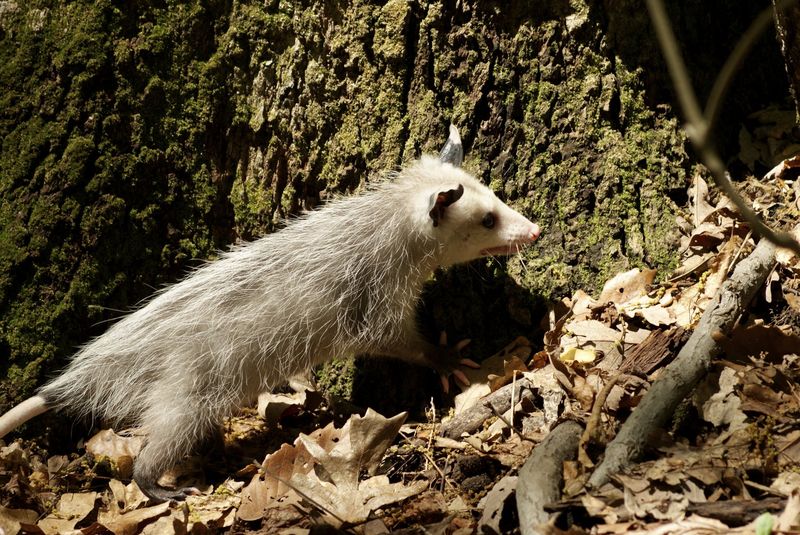
When an opossum passes through without causing damage, the simplest and safest response is to leave it alone. Keep children and pets inside while it is in the yard, turn off any bright lights that might freeze it in place, and let it move on at its own pace.
Most opossums are solitary and nomadic, so the same animal is unlikely to become a permanent resident unless your yard is consistently offering food.
That food supply is the part you can control. Texas A&M AgriLife Extension recommends bringing pet food indoors at night, securing garbage cans with tight-fitting lids, and cleaning up fallen fruit from under trees.
Blocking access to sheds, garages, and crawl spaces removes sheltered spots where an opossum might decide to stay. These steps reduce the chance that a passing visitor becomes a recurring nuisance.
Deliberately leaving out food to attract opossums is a different matter entirely. AgriLife research on feeding wildlife explains that supplemental feeding can concentrate animals, attract predators, spread disease, and increase human-wildlife conflicts.
University of Georgia Extension guidance on nuisance wildlife draws the same line: tolerating a passing animal and intentionally feeding one are two very different decisions with very different consequences. CDC rabies prevention guidance reinforces the point by advising people to avoid contact with wild animals and never feed them.
What actually lowers tick exposure around the home
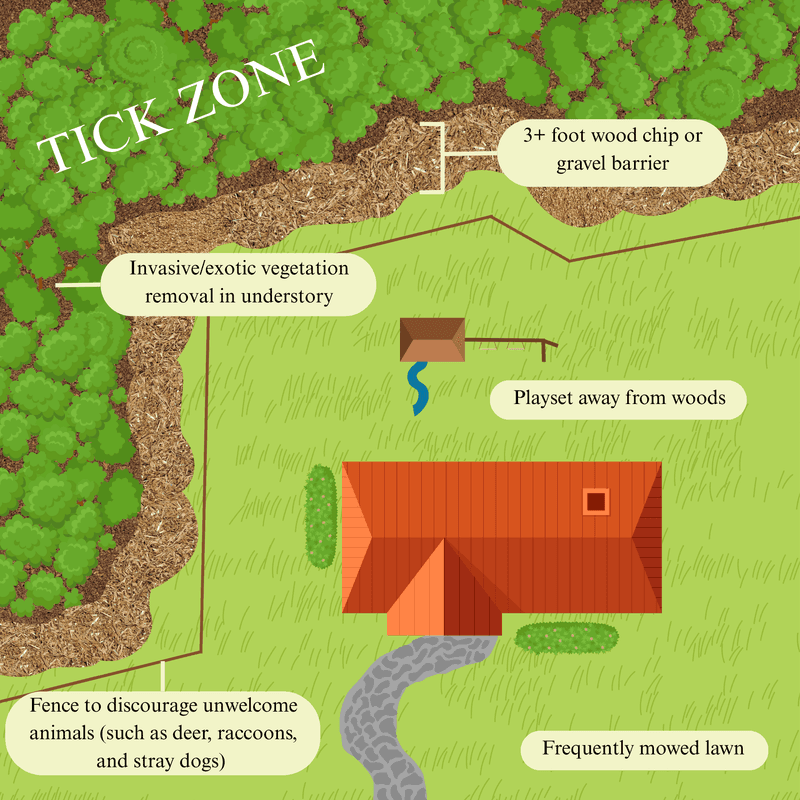
Yard structure matters more than wildlife visitors when it comes to reducing tick encounters. CDC tick prevention guidance recommends clearing leaf litter, cutting back tall grass and brush near the house, mowing the lawn regularly, and keeping woodpiles stacked neatly in dry, sunny spots.
Creating a roughly three-foot-wide barrier of wood chips or gravel between your lawn and any wooded or brushy area can reduce the movement of ticks into spaces where people and pets spend time.
Personal protection is just as important as yard management. Use EPA-registered repellents according to label directions; EPA guidance on tick repellents lists products registered for use against ticks and explains how to apply them safely.
After any time outdoors in tick habitat, check your skin and clothing carefully, inspect children from head to toe, and shower within two hours when possible to help remove unattached ticks before they can bite.
Pets need attention too. Talk to your veterinarian about tick-prevention products appropriate for your animals, and check pets after outdoor activity.
CDC Lyme disease prevention resources provide additional guidance on reducing exposure across all age groups. None of these steps eliminate ticks entirely or guarantee protection against tick-borne illness, but together they address the actual sources of exposure rather than depending on an animal that may or may not be grooming ticks at all.
Know when a visitor has become a wildlife problem
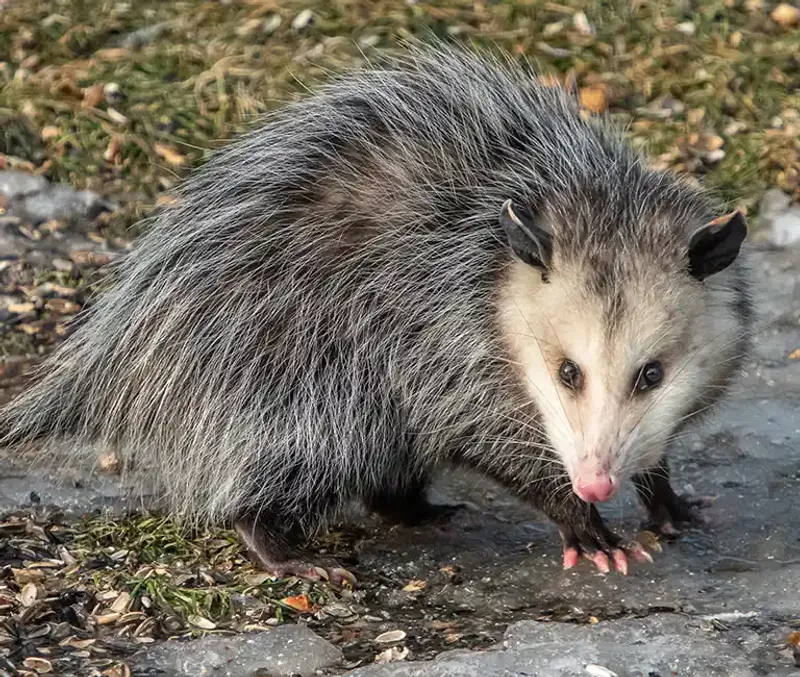
Most opossum encounters end with the animal shuffling off into the dark and not returning. When the situation is different, it pays to know your limits.
Never approach, corner, or attempt to handle an opossum that appears sick, injured, unusually aggressive, or dead. Bites and scratches from any wild animal require prompt attention: contact a medical provider, your veterinarian, local animal control, or your state wildlife agency as soon as possible.
Rabies is uncommon in Virginia opossums, but uncommon is not impossible. CDC rabies prevention guidance advises treating any wild animal bite or scratch as a potential exposure and seeking medical evaluation without delay.
A documented case of naturally acquired rabies in an opossum species in Brazil is a reminder that assuming any wild mammal is disease-free based on appearance alone is not safe practice.
For repeated property damage or an animal that has moved into a structure, contact your local wildlife agency or a licensed wildlife control professional rather than attempting removal yourself. Trapping, relocation, release sites, permits, and euthanasia rules differ by state and locality.
Florida Fish and Wildlife’s nuisance-wildlife FAQ illustrates how specific those rules can get: live-captured animals must meet particular conditions for release or humane handling within defined time limits. What is legal in one county may not be legal in another, so a quick call to the right agency protects both you and the animal.
Let the opossum pass—and let your yard do the real work
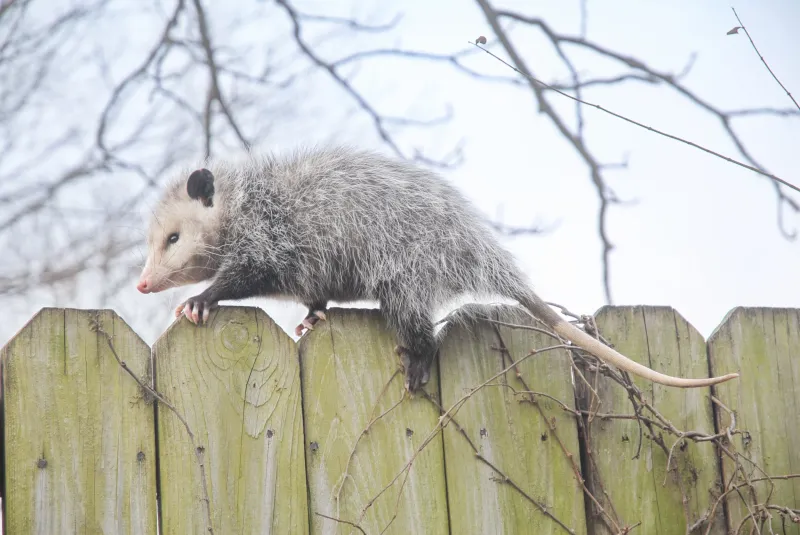
A Virginia opossum moving through your yard at night is most likely an opportunistic scavenger doing what it has always done: looking for insects, snails, scraps, and carrion wherever they happen to be. That habit may occasionally remove something a gardener would rather not have around, making the animal more useful than alarming.
What it cannot do is serve as a dependable garden protector or a reliable substitute for tick management. Texas A&M AgriLife and field research on opossum diets both point toward the same practical conclusion.
The right sequence is straightforward: do not feed it, remove accessible food sources, keep people and pets at a safe distance, and handle your tick-exposure risk with proven yard and personal precautions. The opossum gets to pass through unmolested, and your garden stays yours.