
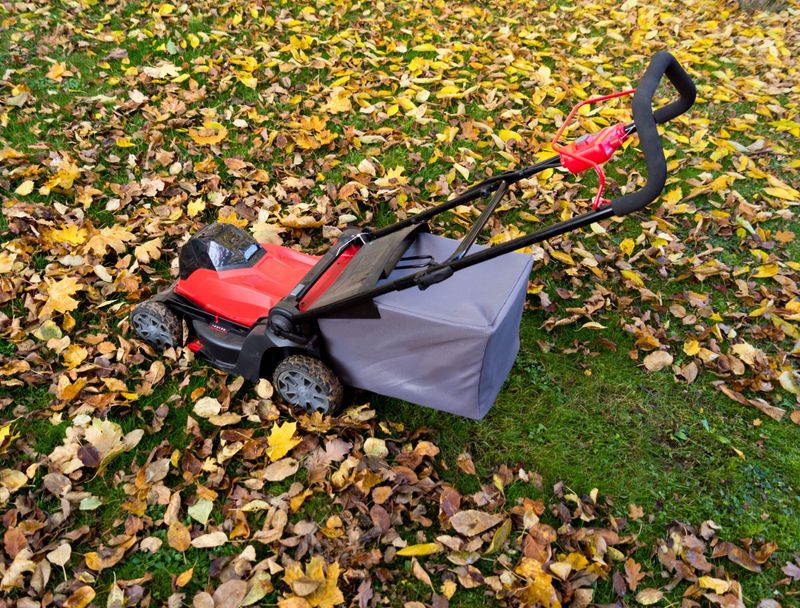
Raking leaves every fall is one of those chores that feels non-negotiable, but for many Southern homeowners, it does not have to be. Under the right conditions, running a mower over a light layer of fallen leaves can replace raking entirely and may even feed the soil in the process.
The catch is knowing when mowing works and when a thick leaf blanket will hurt your lawn more than help it. This guide breaks down exactly what happens to your grass when you mow leaves in, and how to keep the process safe for warm-season turf in Florida, Texas, and the rest of the South.
When mowing can replace raking
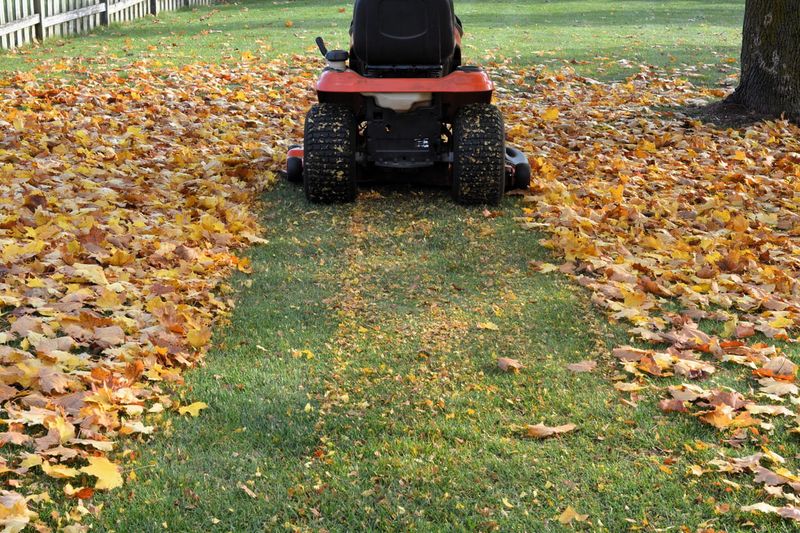
Mowing can replace raking when three conditions line up: the leaves are relatively dry, your mower can chop them into small fragments, and the resulting layer stays thin enough that you can still see the grass underneath. Penn State Extension guidance describes this as a practical alternative to raking, provided the chopped material does not accumulate into a dense mat.
The key distinction is between leaf mulching and simply leaving whole leaves on the lawn. Whole, intact leaves lying flat on the turf reduce light and airflow, trap moisture against the grass blades, and can smother the turf beneath them.
Finely chopped fragments behave differently: they fall between grass blades, allow air and light to pass through, and begin breaking down relatively quickly.
The decision is not a blanket one. Mississippi State Extension is clear that leaf quantity and lawn condition both matter.
A light covering of dry leaves on a healthy, well-drained lawn is a reasonable candidate for mow-in mulching. A heavy accumulation on a shaded, wet, or already stressed lawn is not.
University of Minnesota Extension also recommends switching to collection when the leaf layer becomes too thick, treating visible grass as the go or stop signal rather than applying a one-size rule to every yard.
What finely chopped leaves add to the lawn
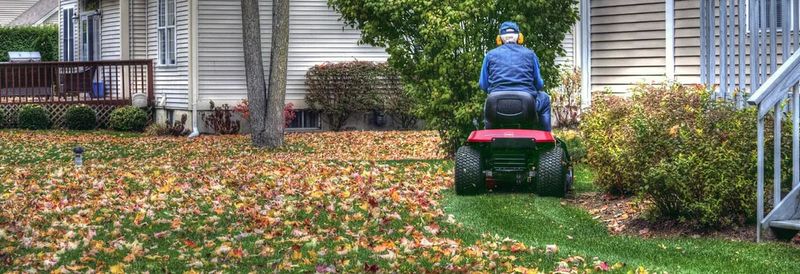
Size matters more than most homeowners realize. Whole leaves act like a tarp; finely chopped fragments act more like a loose blanket with plenty of gaps.
Those small pieces settle down into the grass canopy, decompose over time, and return organic matter and some nutrients to the soil without cutting off the light and air the turf needs.
A multiyear turfgrass study published in 2024 found that mulch-mowing leaves improved certain soil-health and turf-tolerance measures without increasing disease, nutrient problems, or tick habitat under suitable conditions. Earlier Michigan State research, referenced by the University of Minnesota Turfgrass Science program, found no harmful effects on turf quality, soil pH, thatch levels, or several common diseases when leaves were regularly mowed into the lawn at manageable quantities.
Those results are promising, but they come with real limits. The benefits are possible and context-dependent, not guaranteed for every lawn or every season.
Nutrient release from mowed leaves is gradual and depends on soil moisture, temperature, particle size, and microbial activity. University of Minnesota Extension notes that leaf mulch returns less nitrogen than grass clippings, and the EPA composting guidance describes leaves as slow-decomposing carbon-rich material, not finished compost or a complete fertilizer substitute.
Treat any soil improvement as a possible bonus, not a reliable replacement for a soil-test-based fertilizer program.
Mow for a fine, even layer
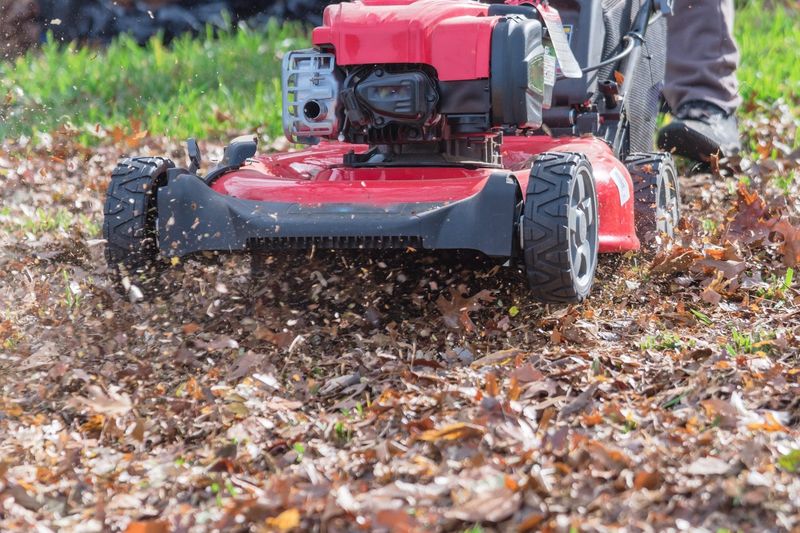
Before the mower starts, walk the lawn and remove stones, sticks, and any branches that could become projectiles. Follow your mower manufacturer’s safety instructions throughout, and confirm that both the grass and the leaves are reasonably dry.
Wet leaves clump rather than shred, making it much harder to spread a thin, even layer. Penn State Extension specifically recommends mowing dry material for this reason.
A mulching mower with a sharp blade does the cleanest job, circulating clippings and leaf fragments until they are finely cut before dropping them back onto the turf. A conventional rotary mower can also work, but plan on at least two passes.
University of Minnesota Extension recommends making a second pass at a right angle to the first, which produces smaller fragments that settle into the canopy more easily and break down faster.
Blade sharpness is not optional. University of Georgia Extension and UF/IFAS lawn care guidance both note that dull blades tear grass rather than cut it cleanly, leaving frayed tips more vulnerable to stress and infection.
While processing the leaves, continue following the one-third rule for the grass itself: never remove more than one-third of the grass blade in a single mowing. Texas A&M AgriLife Extension’s bermudagrass calendar emphasizes this rule especially when warm-season turf is under heat, drought, or seasonal stress heading into fall dormancy.
Stop before the leaf layer becomes a blanket
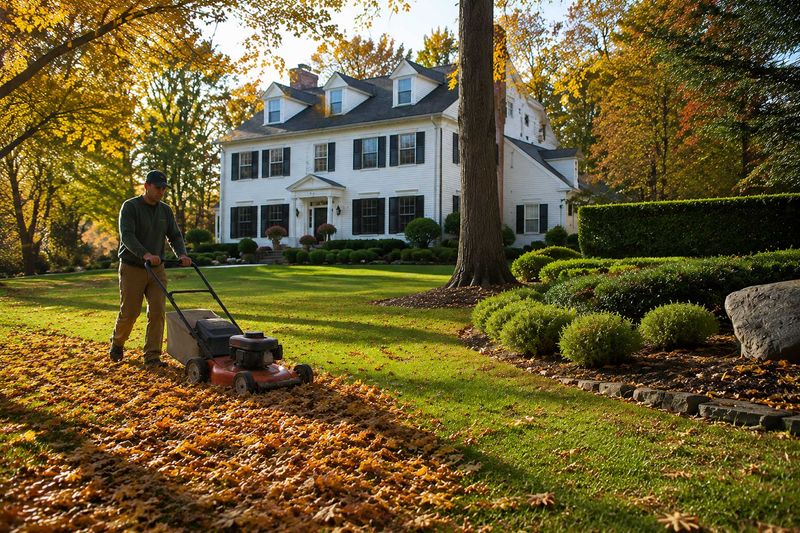
Frequency matters as much as technique. Mowing repeatedly during leaf drop, rather than waiting for a deep blanket to build up, keeps each session manageable and reduces the risk of blocking light and air.
A light covering is far easier to shred into safe fragments than a week’s worth of accumulated leaves piled several inches thick.
Penn State Extension puts the target layer at roughly one-half inch, and Illinois Extension advises that you should still be able to see grass beneath the chopped material. University of Minnesota Extension recommends switching to collection when less than roughly half of the lawn surface remains visible.
These are practical stopping points, not hard scientific thresholds, but they reflect real risk.
The counter-evidence is worth taking seriously. A 2025 turfgrass study found that both heavy whole-leaf coverage and a substantial 3-5 cm chopped-leaf treatment caused turf damage, including areas of turf death, in cool-season grass plots.
The researchers themselves emphasized limiting the amount of mulch. Collect or relocate leaves whenever the grass is no longer readily visible, fragments are forming a mat, or the lawn stays wet and shaded after mowing.
Shaded lawns, poorly drained yards, and turf already under stress from drought, compaction, or disease have much less margin for error. Mississippi State Extension notes that leaf type, turf type, and local drainage all influence how much leaf material a lawn can safely handle.
When in doubt, collect the excess rather than risk a spring recovery project.
Adjust the routine for Southern warm-season lawns
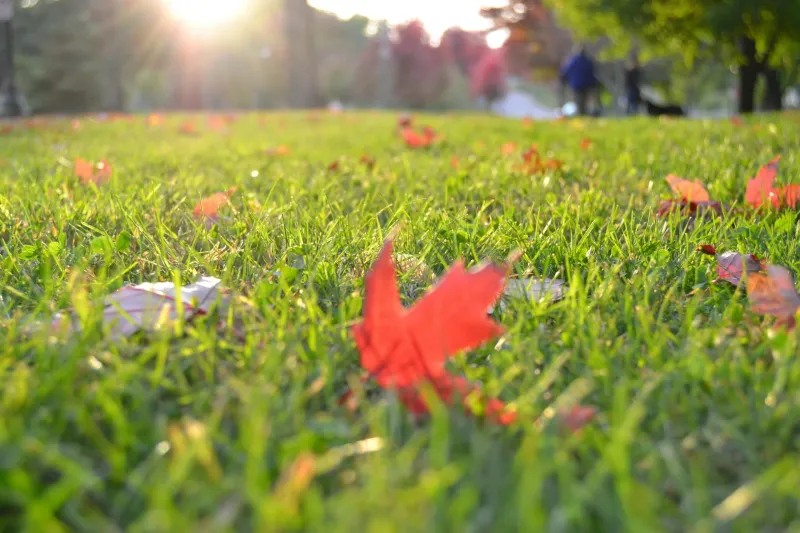
Warm-season grasses such as bermudagrass, St. Augustine, zoysia, and centipede behave differently from the cool-season turf used in most Midwest and Northeast studies. As temperatures drop and daylight shortens in late fall, these grasses slow their growth and begin moving toward dormancy.
UF/IFAS winter lawn guidance explains that Florida homeowners should focus on protecting the turf through the cooler months rather than pushing growth or expecting quick responses to added nutrients.
For Florida yards, UF/IFAS Hillsborough County fall lawn care guidance recommends using fallen leaves as landscape mulch in beds and around trees rather than mowing large volumes into slowing turf. Large leaves such as live oak or magnolia may need shredding first to prevent matting.
In areas beneath trees where turf already struggles because of shade and root competition, UF/IFAS guidance on landscape mulching suggests allowing a self-mulching zone rather than fighting to keep grass alive in a spot where it was never going to thrive.
Texas homeowners working with bermudagrass or other warm-season turf can mow light leaf cover in place during fall, but Texas A&M AgriLife’s leaf management plan recommends collecting larger accumulations and directing them to beds, compost, or other landscape uses rather than leaving them on the lawn. The Texas A&M bermudagrass calendar reinforces the point that fall management for warm-season lawns is primarily about preventing damage and setting the turf up for a healthy spring green-up, not about stimulating growth during a natural slowdown period.
Give excess leaves a better destination
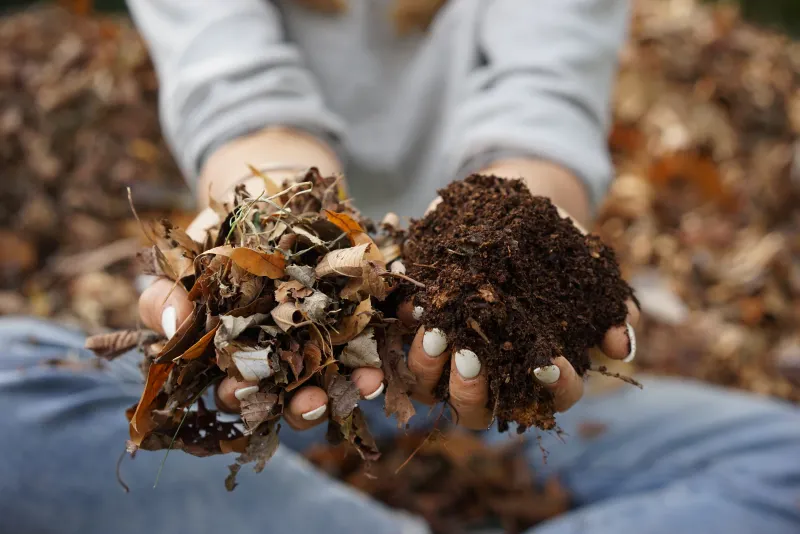
Even with regular mowing sessions, some yards simply produce more leaves than the turf can safely absorb. That surplus does not have to go to the curb.
Texas A&M AgriLife’s EarthKind leaf management guidance encourages using leaves rather than sending them to the landfill, directing excess material to compost piles, shrub beds, tree rings, and vegetable garden areas where organic matter is always welcome.
Shredded leaves work particularly well as landscape mulch. UF/IFAS mulching guidance for Florida notes that shredded leaves help retain moisture, moderate soil temperature, and reduce weed pressure in beds and around trees, making them a practical alternative to purchased bark mulch.
Whole or large leaves should be shredded before use to prevent them from matting into a water-shedding layer.
Two safety exceptions apply before you move any leaf material off the lawn. EPA composting guidance advises against composting or mulching plant material that has been treated with herbicides or pesticides, or that shows signs of disease or pest infestation, without first consulting product labels or local extension recommendations.
Fresh black walnut and butternut leaves are a separate concern: they contain juglone, a compound that can injure or kill sensitive nearby plants. University of Wisconsin composting guidance identifies composting as the safer option for black walnut leaves rather than using them directly as mulch around ornamentals or edible plants.
Make the final call with the visible-grass test
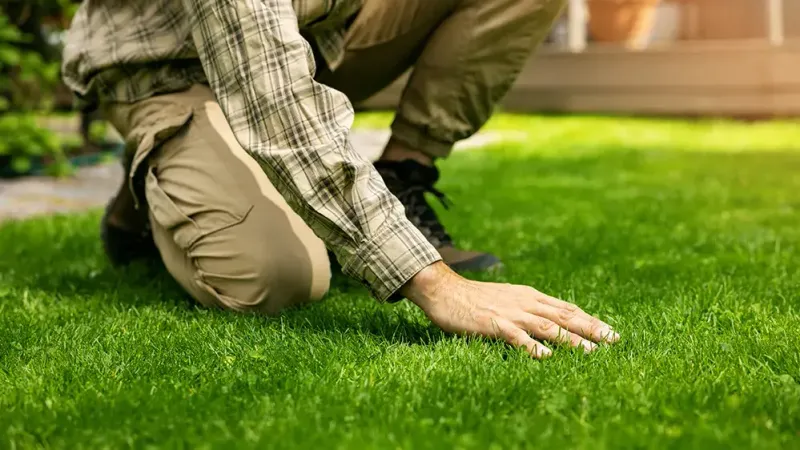
The simplest decision rule for any Southern yard comes down to one question: can you still see the grass? Illinois Extension and University of Minnesota Extension both use grass visibility as the practical threshold.
If the answer is yes, the layer is likely thin enough to leave in place. If fragments are forming a mat, the grass has disappeared from view, or the lawn feels damp and shaded after mowing, collect the excess and redirect it to a bed or compost pile.
Mowing light, dry leaf cover into fine fragments can reduce the time you spend on fall cleanup and may return some organic matter to the soil over the season. What it cannot do is fix shade, compaction, drainage problems, drought stress, poor turf selection, or existing disease.
UF/IFAS lawn selection and care guidance is clear that underlying site problems require their own solutions; leaf management is a maintenance practice, not a corrective one.
The visible-grass test keeps the whole routine honest: when the grass disappears, the benefit stops and the risk starts.