
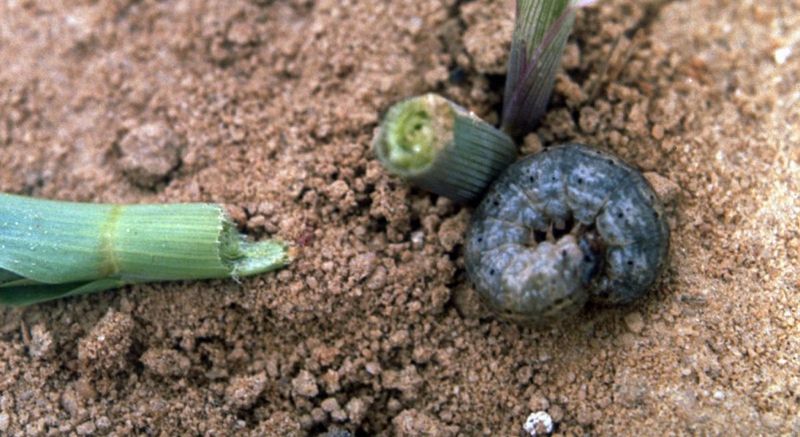
You walk out to your fall bean bed in the morning and find young seedlings lying on the ground, their stems cut clean through right at the soil line. Something worked through your garden overnight, and now you have gaps where healthy plants were standing the day before.
Getting to the bottom of this quickly matters, because fall planting windows in the South are short and every seedling counts. The good news is that a few targeted clues can point you toward the most likely cause and help you protect whatever is left.
A clean stem cut makes cutworms the leading suspect
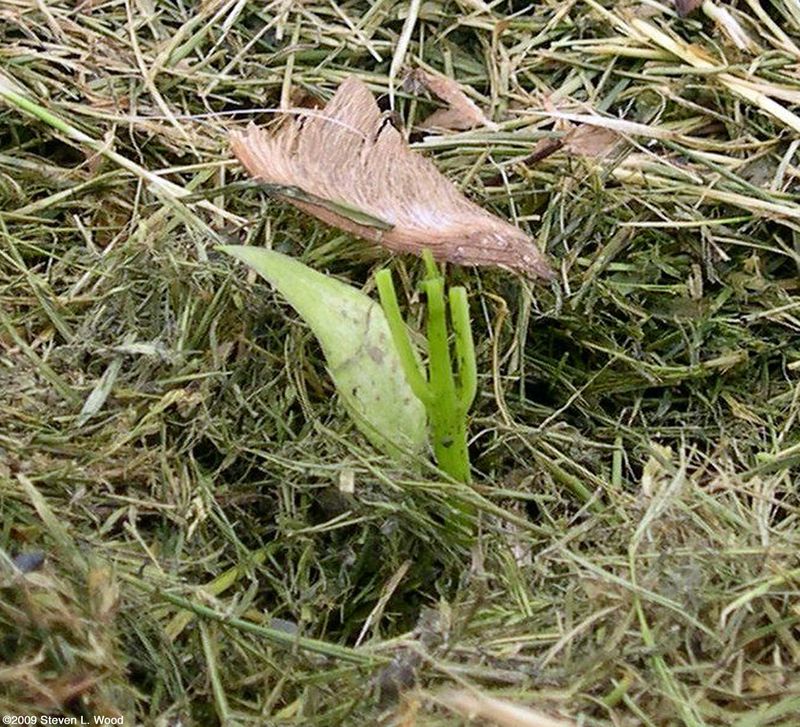
Young bean seedlings toppled with their stems cut cleanly at or just below the soil line is one of the more recognizable injury patterns in a home vegetable garden. The pest most commonly linked to that exact symptom is a cutworm: a moth larva that spends its days hidden in the soil or tucked under plant debris and emerges after dark to feed.
Several cutworm species attack garden vegetables, and beans are a frequent target.
Cutworms sever tender stems near ground level because that zone is easy to reach and the tissue is still soft. University of Minnesota Extension’s plant diagnosis tool lists cutworms as a primary cause when vegetable seedlings are found cut at the soil line, alongside a small number of other possibilities.
The larvae are typically smooth, dull-colored caterpillars that curl into a C-shape when disturbed, and they range from about an inch to nearly two inches long depending on species and age.
Treating this as a confirmed identification based only on the overnight symptom would be a mistake, though. The pattern is strongly suggestive, but it is not proof on its own.
UMN Extension’s cutworm guide makes clear that scouting is needed to confirm activity. Think of the clean stem cut as a working hypothesis that directs where you look next, not a verdict that closes off other explanations.
Inspect after dark to test the cutworm hypothesis
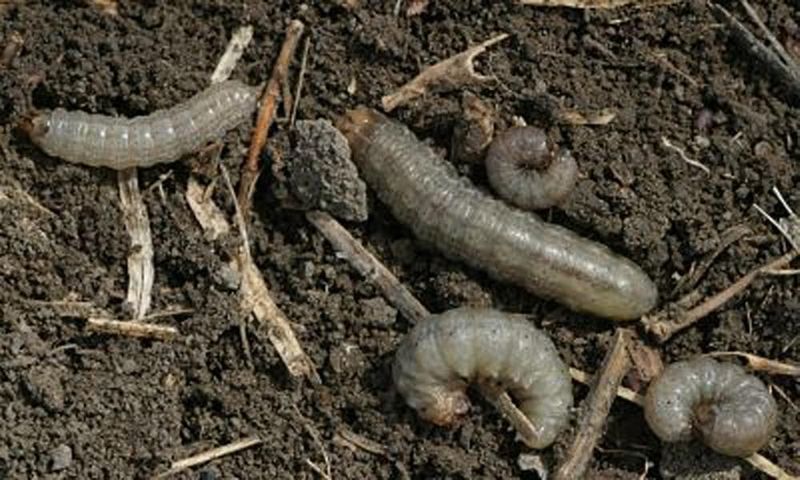
Waiting until morning to check the damage is understandable, but the most useful window for testing the cutworm hypothesis is shortly after dark or very early at dawn before the larvae retreat. Bring a flashlight and look methodically within about a foot of each damaged stem.
Cutworms feed at night and hide by day, so UMN Extension recommends checking under soil clods, loose debris, and mulch near the injury site to locate them.
While you scout, pay attention to more than just severed plants. Fresh chewing on stems that are partially girdled but still standing, seedlings that look wilted or leaning without obvious cause, and small dark droppings near the base of plants are all clues worth noting.
Purdue Extension’s field crop insect guide describes fresh stem chewing near the ground and nearby wilted seedlings as signs consistent with active cutworm feeding.
Finding an actively feeding larva near the wound and correctly identifying it as a cutworm species provides strong support for the hypothesis. However, the absence of a larva does not rule cutworms out, since they can move several inches through the soil between feedings.
Equally, finding a generic C-shaped caterpillar without confirming its identity is not conclusive on its own. Minnesota’s plant diagnosis resource notes that other pests can produce overlapping symptoms, which is why the inspection is meant to strengthen or challenge your working theory rather than automatically confirm it.
Compare the damage with rabbits, slugs, and damping-off
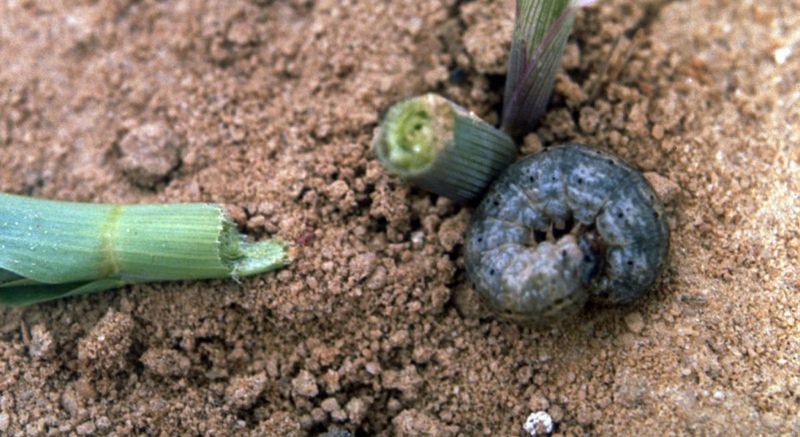
Before committing to a cutworm response, rule out the other causes that can produce a similar scene. Rabbits are a frequent misidentification when seedlings disappear overnight.
They can clip stems sharply and remove entire leaves or the whole top of a young plant, which looks a lot like cutworm work at first glance. Minnesota Extension’s diagnosis tool points out that rabbit damage is more likely when the top growth is completely gone and there are no chewed stem remnants, caterpillar frass, or other insect signs nearby.
Rabbit activity also tends to affect multiple plants across a wider area and may include tracks or droppings in the bed.
Slugs can kill young seedlings, particularly in cool, wet beds with heavy mulch or plant residue. Their damage pattern is usually different from a cutworm’s clean cut: look for ragged or scraped leaf tissue, irregular holes, and the shiny slime trails they leave behind.
Penn State Extension notes that slugs are mollusks, not insects, which matters practically because many common insecticides will not control them. Reaching for a general-purpose spray before confirming the cause could waste time and money without solving the problem.
Damping-off is a different category of problem entirely. It is caused by soil-borne pathogens that girdle or rot the lower stem, causing seedlings to collapse at the soil line without any chewing involved.
The key distinction is the appearance of the stem near the ground: damping-off typically leaves a discolored, water-soaked, or shriveled zone rather than a clean cut. Oregon State University Extension’s seedling disease resource explains that the condition is worsened by overwatering and poor drainage.
No insecticide will fix a pathogen problem, so matching the symptom to the right cause before acting is worth the extra few minutes of inspection.
Southern fall conditions can point to another stem pest
Fall bean production is genuinely feasible across much of the South, but the timing and conditions vary enough by state and even by county that a single planting calendar cannot cover everyone. UGA Cooperative Extension’s snap bean production guide lists a fall planting window of roughly July 15 through September 15 for south Georgia as one regional example, with a typical direct-seeding depth of about 1 to 1.5 inches depending on seed size and soil conditions.
Gardeners in Florida or Texas should check their local extension calendars and account for local heat and frost constraints before assuming those dates apply to them.
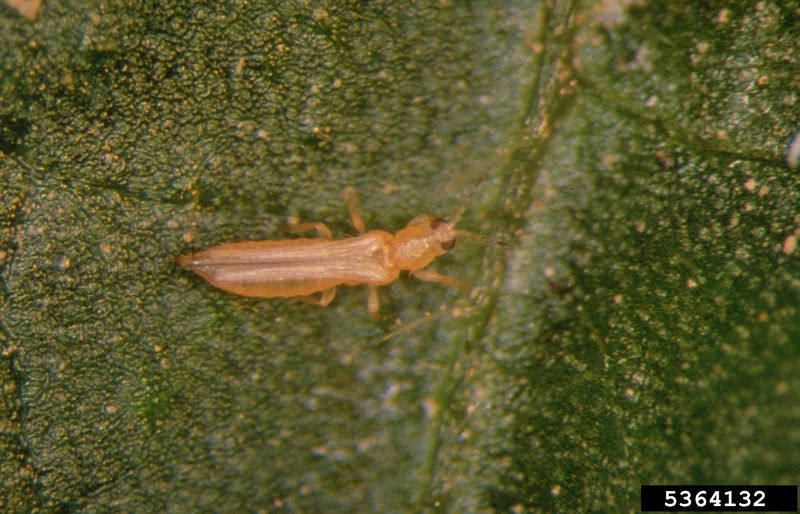
In the South specifically, one pest that can be mistaken for cutworm damage during late-summer and early-fall plantings is the lesser cornstalk borer. This pest is more likely in sandy soils during hot, dry weather, and the damage pattern differs from a cutworm’s clean cut.
Rather than a severed stem, lesser cornstalk borer injury often involves boring into the stem at or below the soil line, sometimes accompanied by silken webbing or a sandy tube around the feeding site. UGA’s snap bean guide identifies it as a fall pest concern in sandy-soil conditions and notes that sprays are often ineffective once larvae are protected inside their webbed feeding site, making early detection more important than reactive treatment.
Seedcorn maggot is another possibility worth keeping in mind, particularly in beds where fresh organic matter was recently incorporated or where cool, wet conditions slowed germination. Local soil type, recent crop history, weather patterns, and the specific appearance of the damage should all feed into your diagnosis.
When the stem shows boring or webbing rather than a clean cut, the cutworm hypothesis moves down the list and a different investigation is needed.
Hand-pick confirmed larvae before considering pesticides
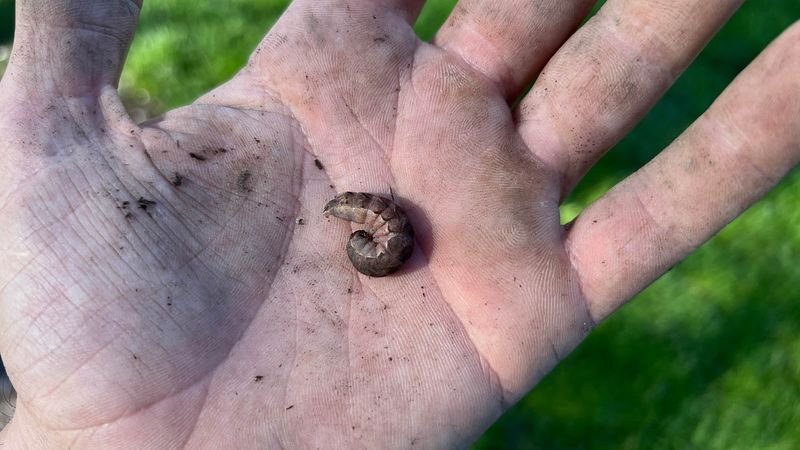
Once nighttime scouting finds an actively feeding, correctly identified cutworm near fresh damage, hand-picking is a reasonable and effective first response for a small home garden. Pick the larvae by hand, wearing gloves if preferred, and drop them into a container of soapy water.
UMN Extension recommends hand removal as a practical approach that avoids unnecessary pesticide exposure and works well when the infestation is limited to a manageable number of plants.
Automatic soil treatment before confirming the pest is not a sound starting point. UMN Extension notes that pesticides are usually unnecessary in home gardens when damage is limited, and UGA’s snap bean guide does not support preventive insecticide applications for inconsistent soil pest problems.
Reaching for a product before you know what you are targeting risks applying the wrong chemistry, spending money on something ineffective, and creating unnecessary exposure for yourself, beneficial insects, and the surrounding environment.
If hand-picking proves insufficient and damage continues at a level that threatens the crop, a pesticide may be worth considering. Any product used must specifically list beans and the target pest on its label.
The EPA is clear that pesticide labels are legally enforceable, and following the label is not optional. Pay close attention to application rates, required protective equipment, reentry intervals, harvest intervals, and any restrictions on use near pollinators.
EPA guidance on pollinator protection recommends avoiding applications to blooming plants or nearby flowering weeds where bees are active. Also, UF/IFAS specifically notes that Bt var. kurstaki is not reliably effective against cutworms, so do not count on it as a primary control.
Household remedies like coffee grounds or wood ash are not established controls in any authoritative source reviewed here.
Use collars, sanitation, and repeated scouting
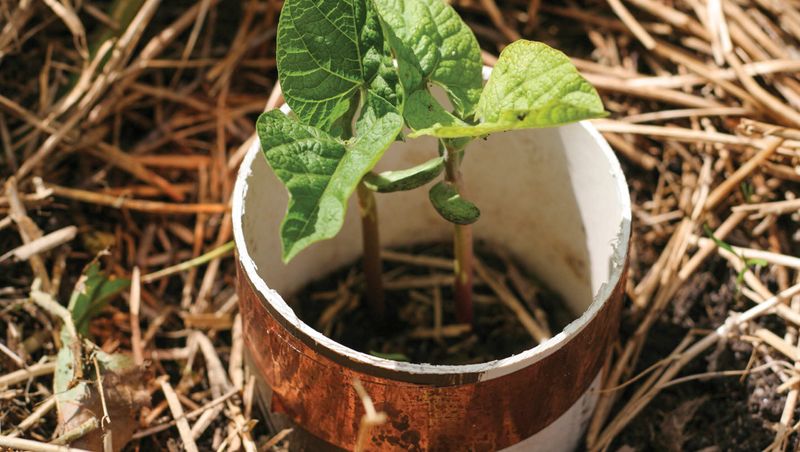
Physical barriers can reduce the risk of cutworm damage to seedlings that are still standing and to any new plants you put in. Cardboard tubes, toilet paper rolls, or aluminum-foil cylinders work as collars when placed around individual seedlings.
For them to be useful, they need to extend several inches above the soil surface and be pushed at least an inch or two into the ground so a larva cannot crawl underneath. UMN Extension describes collars as a practical physical barrier for protecting individual plants, while also noting that poorly seated collars or species that climb or drop from above can bypass them.
Think of them as a helpful layer of protection rather than a guarantee.
Sanitation around the bed removes some of the conditions that make cutworm activity more likely. Clearing weeds, excess plant debris, and thick mulch from the area immediately around your bean rows eliminates potential egg-laying sites and daytime hiding spots.
Maintaining a dry, bare-soil buffer around the planting is recommended by UMN Extension as a cultural tactic that reduces favorable habitat. UC IPM notes that cutworms commonly move into young crops from surrounding weeds or infested vegetation, so if your bed recently followed grass, pasture, or a weedy fallow area, that history raises the likelihood of pressure from soil-dwelling larvae.
Removing weeds and debris reduces that risk but does not eliminate it entirely.
Repeated scouting through the seedling stage is more reliable than a single inspection. Cutworm damage tends to be most intense when plants are small and the stem is still soft and easy to cut; pressure generally eases as plants grow larger and stems become tougher.
Check the bed every evening or early morning while seedlings are young, and keep notes on where damage appears so you can focus your hand-picking efforts efficiently.
Replant the gaps and let new evidence guide the next step
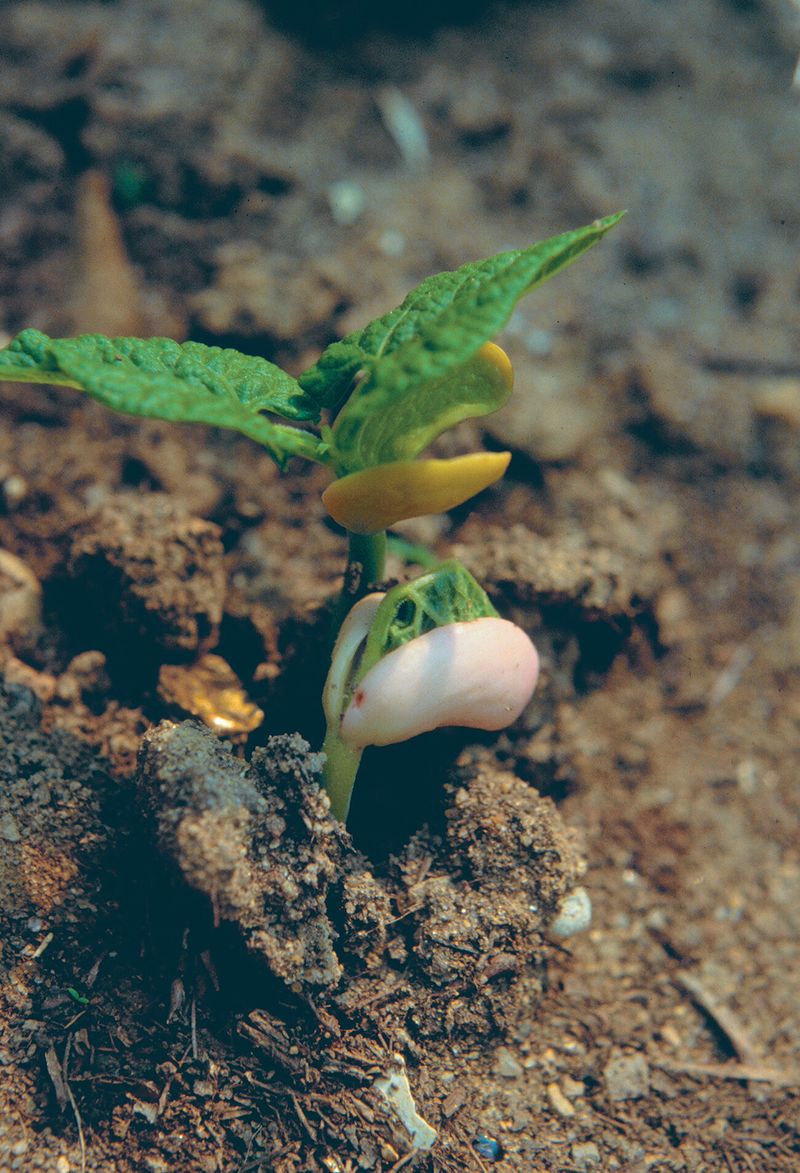
Once you have addressed the most supported cause – whether that means hand-picking confirmed larvae, installing collars, improving drainage for a damping-off problem, or fencing against rabbits – go ahead and fill the gaps. Beans are normally direct-seeded, so replanting is straightforward.
UGA Cooperative Extension’s snap bean guide gives a typical planting depth of about 1 to 1.5 inches as a Georgia-specific reference depending on seed size and soil conditions. Gardeners in other Southern states should check their local extension office for depth and spacing guidance suited to their soil type and remaining season length.
Replanting without continuing to scout is a common mistake. One round of hand-picking or one set of collars does not guarantee the problem is over.
UMN Extension recommends scouting repeatedly throughout the seedling stage rather than treating once and moving on, because new larvae can be present even after you have removed others. Keep checking the bed each evening or at dawn until the seedlings have grown past the most vulnerable stage.
The cutworm hypothesis is a useful starting point because it directs your attention toward nighttime inspection, the right search zone, and the right type of physical protection. But if the damage pattern shifts – if stems show boring instead of clean cuts, if slime trails appear, or if the problem continues despite confirmed removal of cutworms – let that new evidence redirect your diagnosis.
Staying observant through the whole seedling stage is the most reliable tool you have.