
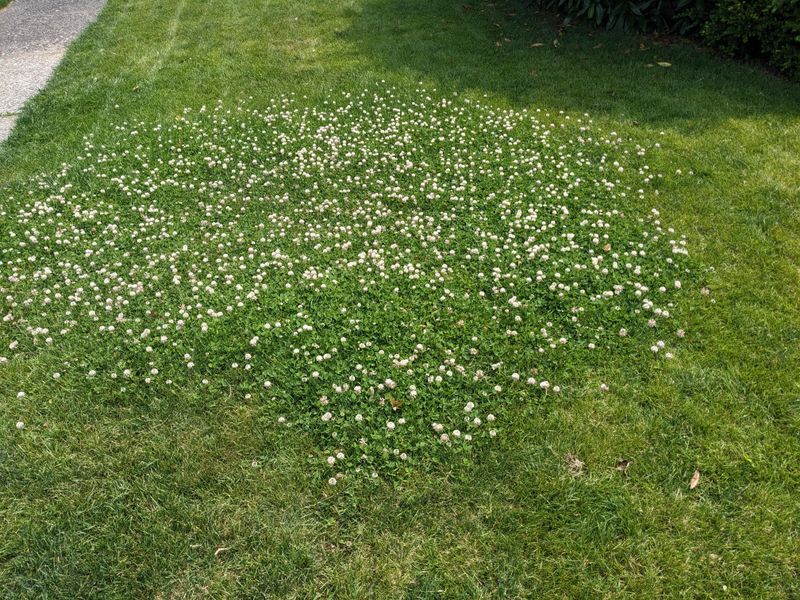
Clover creeping through your lawn can feel like it appeared out of nowhere, but the real story starts below the surface. Something in the soil or turf has shifted, giving clover the opening it needs to spread.
Understanding what that shift actually is, rather than assuming a single hidden cause, puts you in a much better position to fix it. This guide walks Southern homeowners through how to diagnose what is really happening and what to do about it.
The headline’s one-cause explanation needs a correction
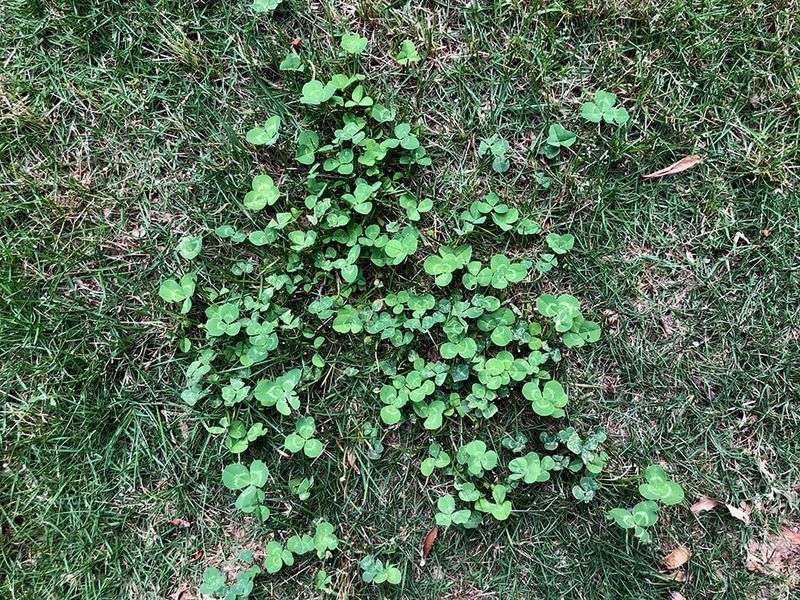
Clover does not spread through every fall lawn because of one underground problem. The real picture is messier and more useful: expanding clover commonly reflects a combination of open or weakened turf, limited available nitrogen, drought stress, compaction, shade, foot traffic, a mismatch between the grass species and the site, or management habits that reduce turf vigor over time.
Any one of those conditions, or several at once, can tip the balance in clover’s favor.
The seasonal framing also needs a qualifier. “Fall” is not one universal treatment window across the Southern U.S. In areas where cool-season grasses grow, autumn can bring renewed turf activity and a window for certain weed controls.
Florida lawns are a different situation. Warm-season grasses such as St. Augustinegrass, centipedegrass, and zoysiagrass follow their own seasonal patterns, and UF/IFAS guidance on weeds as soil indicators makes clear that weed presence reflects multiple interacting conditions rather than a single trigger.
According to University of Minnesota Extension on white clover, clover can indicate compaction, drought stress, or low nitrogen, not just one. Penn State Extension similarly ties white clover to low fertility and poor turf density.
The practical answer is to diagnose the plant and the turf system before reaching for any treatment, because the right correction depends entirely on what is actually happening in your yard.
Confirm the plant before you treat the lawn
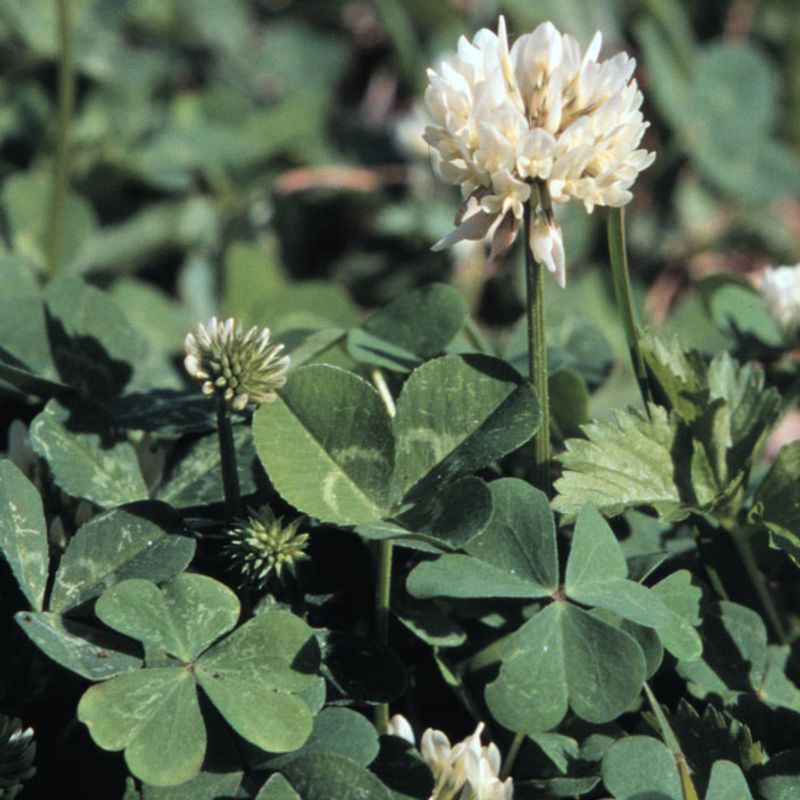
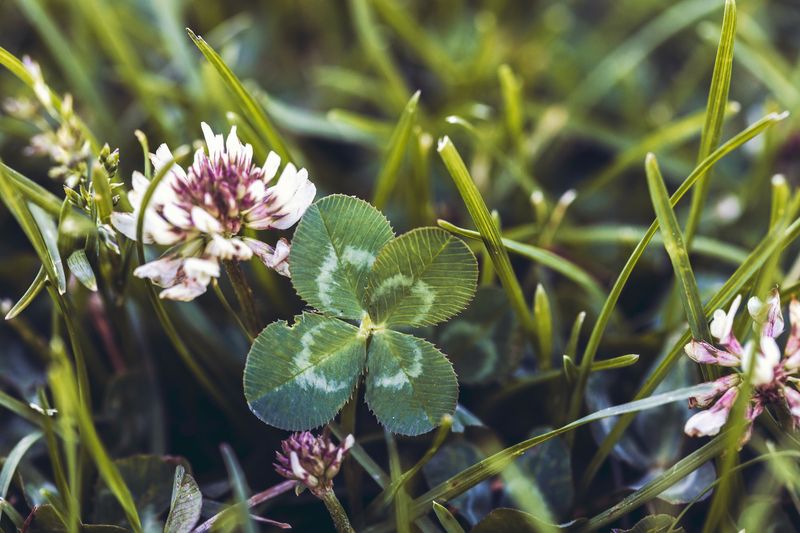
White clover has a few recognizable features that can help you get started: three rounded leaflets, often marked with a pale chevron or V-shape, small globe-shaped white to pinkish flower heads, and low creeping stems that spread outward along the soil surface. Those stems, called stolons, can root at their nodes and anchor new growth as they move laterally through thin turf.
University of Minnesota Extension notes that this stolon-rooting habit is what allows patches to widen steadily once turf thins out enough to give them room.
Treat those visual clues as a starting point rather than a complete identification. Florida homeowners in particular run into a common mix-up.
Plants like Florida pusley and black medic can look enough like clover to cause confusion, and UF/IFAS guidance on pusley biology and management warns specifically that misidentification is a real risk in Florida turfgrass settings. Applying the wrong herbicide for the wrong plant can injure your grass without solving the problem.
Before selecting any control product, take a sample or a clear photo to your county’s Cooperative Extension office or submit it through your state’s Extension plant identification service. A confirmed ID protects your grass, your budget, and your time.
Spending a few extra days on identification is almost always faster than recovering from an herbicide application made on a wrong guess.
Clover often signals open or weakened turf
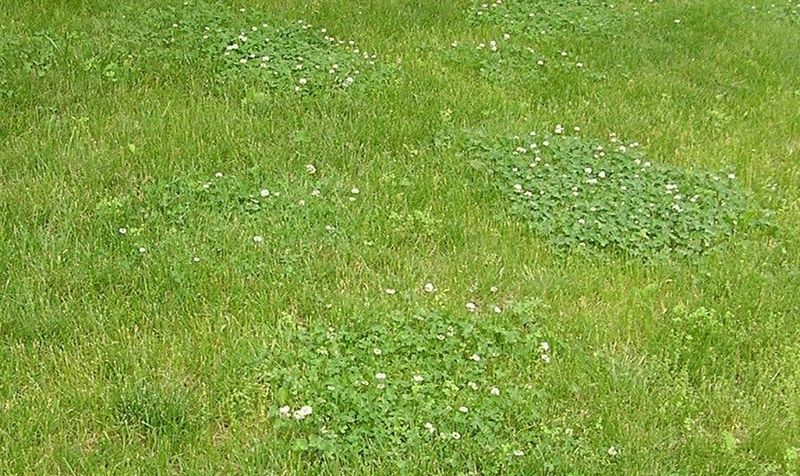
The most consistent pattern across extension research is that clover becomes more noticeable where grass density has declined and soil has become exposed. Bare or sparse areas give clover’s creeping stolons exactly the room they need to root and spread.
Penn State Extension on white clover in turfgrass connects larger clover patches directly to inadequate nitrogen and poor turf density, while noting that correcting fertility and stand density is central to long-term management.
Part of why clover holds its ground in low-nitrogen turf comes down to biology. Clover forms a partnership with soil bacteria called rhizobia, which can convert atmospheric nitrogen into a form the plant uses.
That process, known as nitrogen fixation, means clover can keep growing even when available soil nitrogen is limited. Grass, which lacks that ability, may slow down and thin out under the same conditions, giving clover a competitive edge.
That biological advantage does not mean clover is immediately feeding the surrounding grass or draining all of its nitrogen. A 2025 greenhouse study published in the International Turfgrass Society Research Journal found that nitrogen fertilization affected turfgrass nitrogen status more strongly than the presence of clover in a mixed system, suggesting the nitrogen dynamic is more complex than a simple transfer.
As UF/IFAS weed management guidance for Florida lawns notes, weed establishment is generally a result of declining turf density, not the cause of the original decline. Clover is a signal worth reading, not the root problem itself.
Inspect the site for other conditions that favor spread
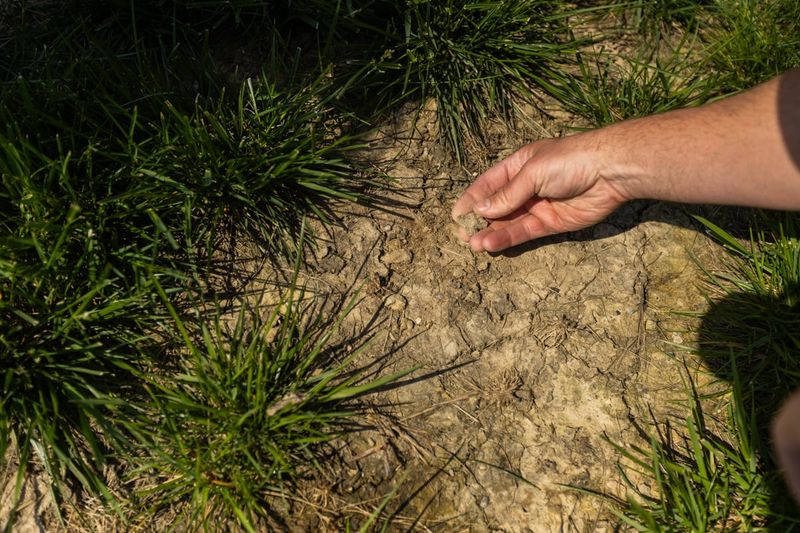
Labeling every clover situation as a nitrogen problem skips a step that matters. Before reaching for fertilizer or herbicide, walk the area and look for the physical conditions that may have weakened the turf in the first place.
A practical checklist helps: look for worn or bare areas from foot traffic, spots where irrigation does not reach or where water pools, zones under heavy tree shade, and sections where the grass species simply does not perform well in that microclimate.
Compaction deserves a look too, especially in high-traffic areas or spots where clay soil is common. Compacted ground limits root depth and water infiltration, both of which stress grass and can open the door for opportunistic plants.
UF/IFAS guidance on weeds as soil condition indicators explains that weeds can reflect moisture, pH, light, fertility, and compaction at the same time, so a single explanation rarely covers the full picture.
Mowing height and frequency matter as well. Cutting grass too short reduces its ability to photosynthesize and compete, while irregular watering can stress roots and slow recovery after wear or drought.
Penn State Extension and University of Minnesota Extension both emphasize that site-adapted grass managed at the right height and watered appropriately is far more resistant to clover encroachment. Identifying what weakened the grass matters just as much as reducing the clover you can already see, because the clover will return if the underlying conditions stay the same.
Use soil testing as one part of the diagnosis
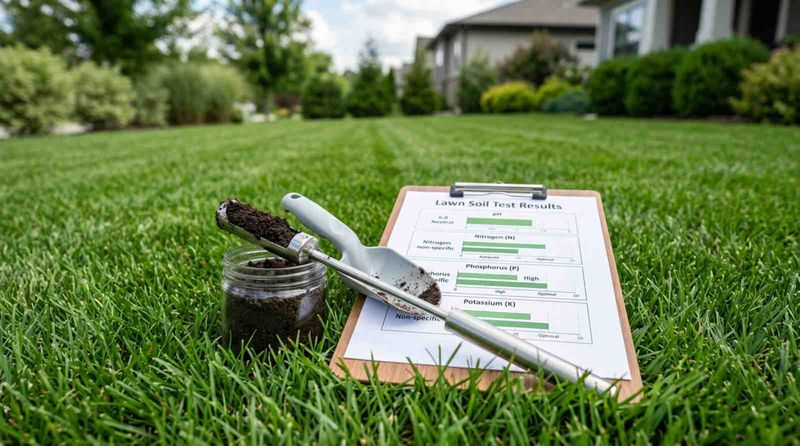
A soil test gives you real data to work from instead of guesswork. For pH, phosphorus, potassium, and certain micronutrients, a lab result tells you whether a problem actually exists and how significant it is.
Texas A&M AgriLife’s Soil Testing Laboratory offers analysis with nutrient recommendations tailored to turf and landscape uses, and UF/IFAS recommends testing before making pH or fertility amendments for Florida lawns.
Nitrogen is a different story. Because it moves through the soil quickly and is taken up or lost rapidly, it may not appear as a simple, reliable number on a standard soil test report.
That means your test result needs to be read alongside visible turf symptoms, the grass species you are growing, your fertilization history, and local extension recommendations for your region. Texas A&M AgriLife nutrient recommendations account for these factors in their guidance.
Do not apply lime or fertilizer simply because clover appeared. Lime corrects excessive soil acidity, and adding it when pH is already adequate can create new nutrient imbalances.
UGA Cooperative Extension on soil testing for home lawns is clear that pH amendments should follow test results, not assumptions. Soil testing is a valuable diagnostic tool, but it does not replace assessing shade, traffic damage, irrigation problems, or turf density on the ground.
Rebuild dense grass to reduce the opening clover uses
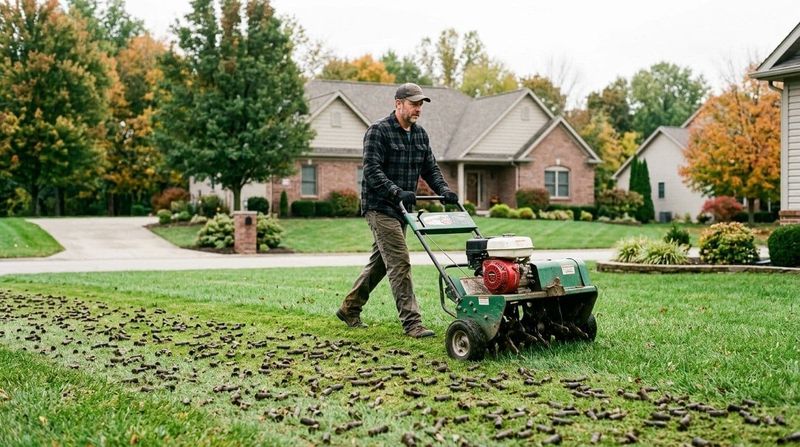
Dense, well-adapted turf is the most reliable long-term defense against clover. Clover needs open, exposed soil or sparse grass to get a foothold, so the goal is to eliminate those openings by addressing whatever weakened the stand.
That means matching the repair to the specific problem found during your site inspection.
If irrigation is uneven, adjust or repair the system so the entire lawn receives consistent moisture without waterlogging. If foot traffic is compacting a path through the yard, redirect it or use a ground cover suited to heavy use.
Manageable compaction in smaller areas can be addressed with core aeration, which improves root penetration and water movement. Shaded sections that cannot support a sun-loving grass may need a shade-tolerant variety or a different ground cover entirely.
UF/IFAS weed management guidance for Florida lawns reinforces that open spaces and declining turf density are the primary reason weeds establish, so rebuilding density addresses the problem at its source.
When a soil test or local extension recommendation indicates nitrogen is needed, a properly timed and appropriately dosed fertilizer application can support grass recovery and reduce clover’s competitive advantage. UF/IFAS guidance on nitrogen in the home landscape warns clearly that excessive nitrogen raises runoff risk, increases mowing demand, and can contribute to disease pressure and water quality problems.
Follow the label rate for your grass species and stay within local regulations. A dense, site-adapted stand closes the gaps that allow clover to keep returning, regardless of whether you remove every existing plant.
Remove small patches before they form a larger mat
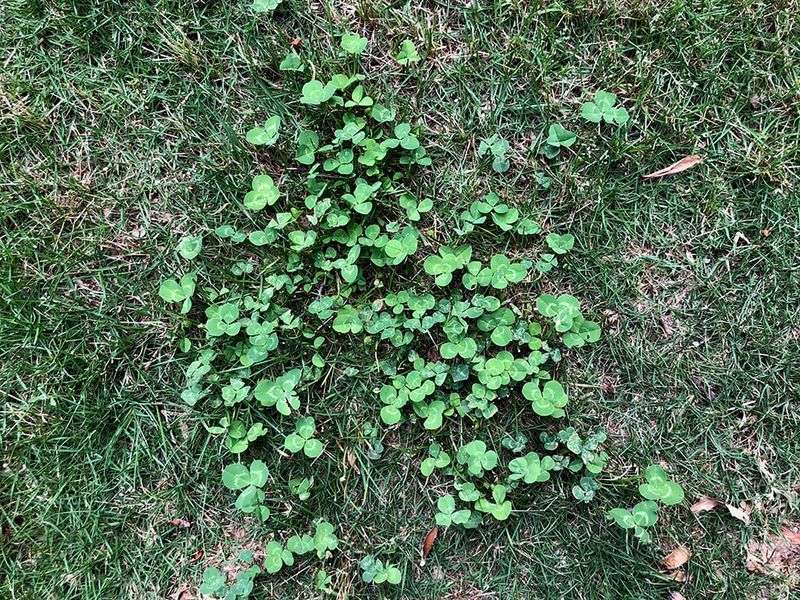
Hand removal works best when clover has not yet spread into a dense, interconnected mat. Catching a patch while it is still small, maybe a foot or two across, makes the job practical and keeps it from becoming a bigger project later.
Pull the visible plant and trace the creeping stolons back through the soil, removing as many rooted nodes as you can reach. Those nodes are what allow clover to regrow after the above-ground portion is gone, so thorough removal matters more than speed.
University of Minnesota Extension’s lawn weed control resource lists hand-pulling among the practical management options for white clover, particularly before a large mat forms.
Once a patch has spread and stolons have rooted at dozens of points across a wide area, hand removal becomes much less efficient. At that stage, the physical effort rarely keeps up with regrowth.
More importantly, pulling the plants does not fix the thin turf or stressed soil that gave clover its opening. University of Minnesota Extension is clear that long-term control also depends on improving turf density, so removal and turf repair need to happen together for the results to last.
Choose chemical control only for the identified turf and region

A selective broadleaf herbicide can be a useful option for clover control, but it should come after identification and basic turf diagnosis, not before. Using the wrong product on the wrong grass at the wrong time can injure your lawn without solving the underlying problem.
Active ingredients, application rates, timing restrictions, and temperature limits all vary by product and by grass species. Penn State Extension on white clover in turfgrass lists combinations containing dicamba, clopyralid, fluroxypyr, and quinclorac as options for cool-season turf, with fall timing often effective in those settings.
That guidance applies to cool-season lawns in the Mid-Atlantic and Northeast, not automatically to Florida or Texas warm-season grasses.
Florida homeowners face additional restrictions that make region-specific guidance essential. The UF/IFAS Florida Turfgrass Pest Control Guide notes, for example, that fluroxypyr should not be applied to St. Augustinegrass, and that clopyralid-containing products may not be appropriate for residential turf in certain situations.
Warm-season grasses may also be seasonally stressed or semi-dormant when northern fall application windows are typically recommended, which changes the risk profile entirely.
The herbicide label is a legally enforceable document. EPA guidance on pesticide labels requires users to follow approved turf species, rates, timing, reentry intervals, and precautions for people, pets, ornamentals, and nearby water.
Even a well-chosen product may not permanently stop clover if stolons survive or seed remains in the soil, so herbicide use works best as part of a broader plan that includes turf repair.
Decide whether removal fits the lawn you want
Working through the full process puts you in a position to make a clear-eyed decision. Confirm the plant with an Extension resource, assess what weakened the turf, run a soil test before amending anything, correct the confirmed problems, and then choose whether hand removal or a label-approved selective herbicide fits your situation and your grass species.
White clover is not automatically a problem that demands removal. University of Minnesota Extension describes white clover as a plant that supports pollinators and can function in lower-input lawn mixtures and bee lawn plantings.
Whether it belongs in your yard depends on how you use the space, what it looks like, and whether pollinators are a priority for you. Removal is a landscape-goal choice, not a universal horticultural requirement.
If a clover-free lawn is what you want, the path there runs through a healthier and denser turf, not just a single treatment. UF/IFAS weed management guidance is consistent on this point: weeds keep returning to lawns that stay thin and open.
A dense, well-managed stand adapted to your specific site conditions is what makes lasting results possible, because it removes the invitation that clover accepted in the first place.