
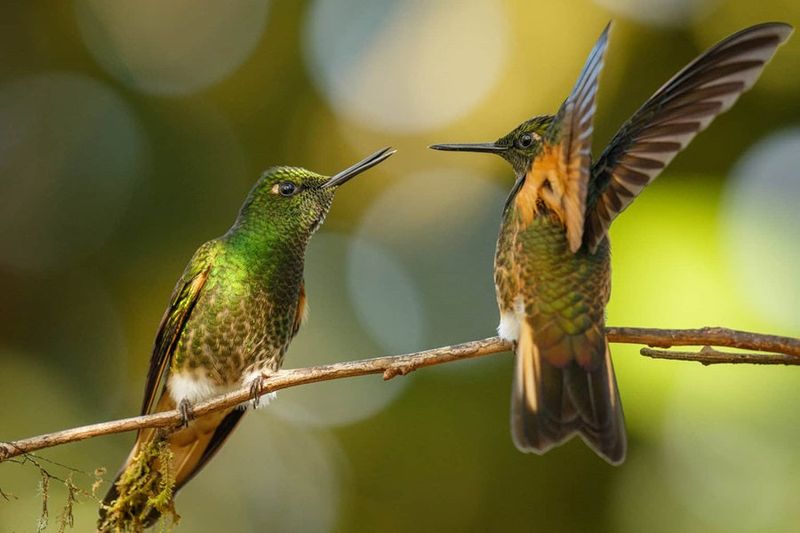
Watching hummingbirds disappear right after you add a new feeder is genuinely puzzling, and it’s easy to blame the new setup. But the timing alone doesn’t tell the whole story, and the real cause might be closer to home than you think.
A territorial bird, possibly another hummingbird, could be quietly running the show at your nectar station. Understanding what’s actually happening is the first step toward getting more visitors back to your yard.
A new feeder does not prove the birds abandoned your yard
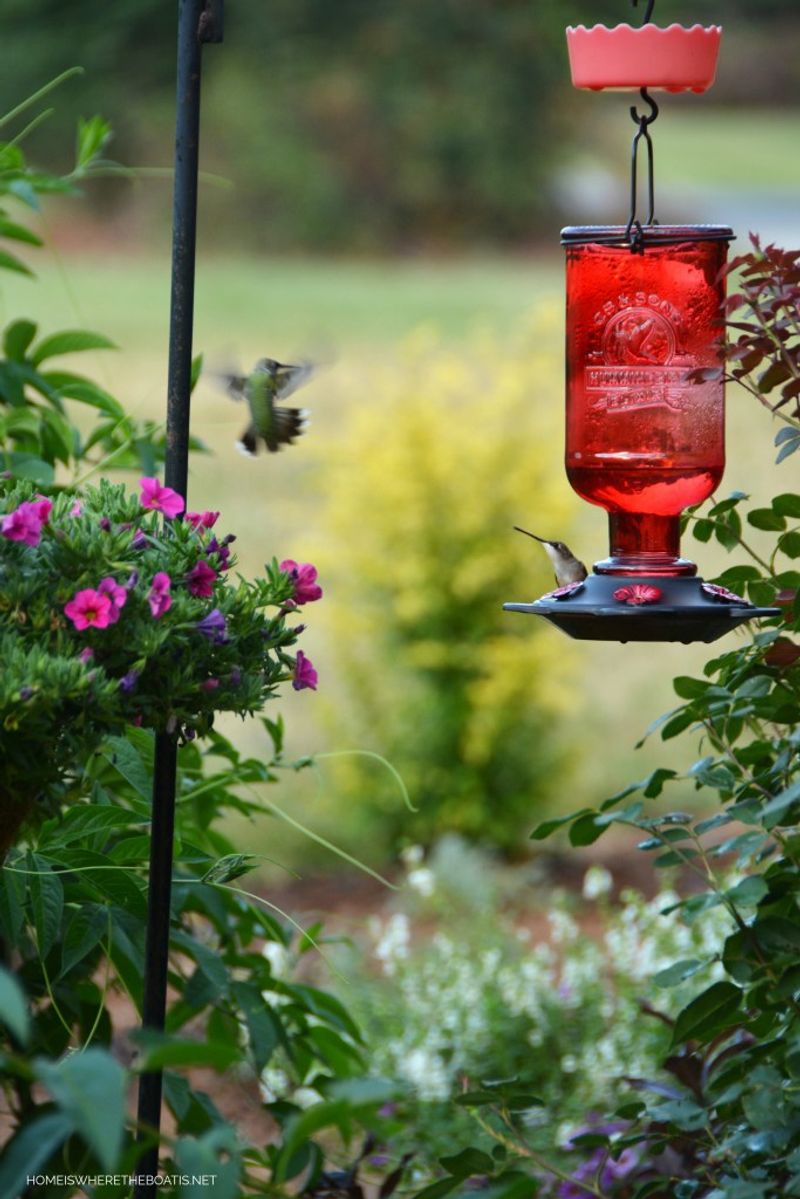
Fewer hummingbirds at the feeder after a change can feel like clear evidence that something went wrong, but the timing of a decline and its cause are two different things. Cornell Lab of Ornithology notes that a drop in feeder visits can reflect migration, shifting flower availability, weather changes, predator pressure, or spoiled nectar, none of which have anything to do with adding a second feeder nearby.
Hummingbird activity at a feeder is not a precise count of how many birds live in your area. One bird visiting frequently can look like several, and several birds sharing a territory may go unnoticed if they cycle through at different times of day.
A new feeder changes the visual landscape of your yard, which can temporarily alter where birds feel comfortable landing.
Regional patterns matter here too. Ruby-throated Hummingbirds, common across Florida and eastern Texas, follow migration schedules that can cause noticeable gaps in feeder activity even during otherwise active seasons.
Texas can also host Black-chinned, Buff-bellied, and Rufous Hummingbirds depending on location and time of year, so the same feeder in two different Texas counties may behave very differently. Before rearranging anything, spend a few days watching and ruling out natural causes first.
A territorial hummingbird may be guarding the nectar
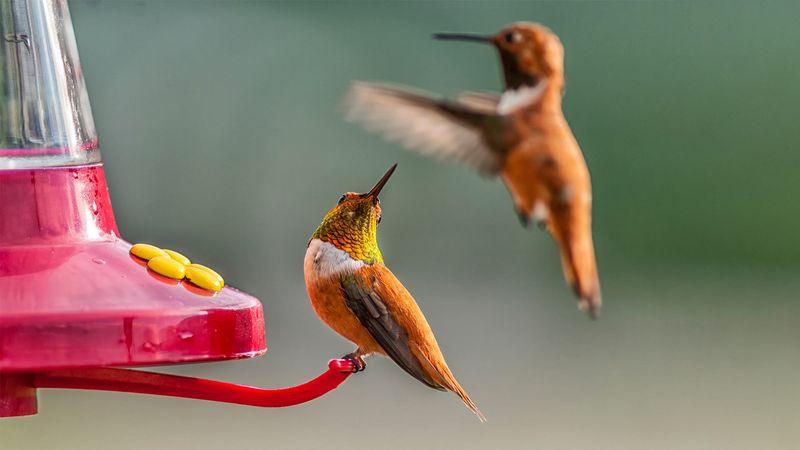
Hummingbirds are not the gentle, sharing creatures their tiny size might suggest. They defend concentrated nectar sources aggressively, and a single dominant bird can effectively claim an entire feeder as its own.
Cornell Lab explains that this behavior is rooted in energy economics: a reliable sugar source is worth fighting for, and the cost of chasing rivals away is often lower than the cost of sharing.
Adult males are often the most aggressive defenders, but females and juveniles can also stake out a feeder and hold it against competitors. Audubon describes the same pattern, noting that hummingbirds will chase, dive-bomb, and vocalize to keep rivals away from a valued food source.
The bird doing the chasing is not necessarily starving or harming others in any lasting way; territorial defense is simply normal hummingbird behavior.
What this means practically is that the “bully” at your feeder may not be a larger songbird at all. Texas Parks and Wildlife acknowledges the territorial nature of hummingbirds and the way one individual can dominate a feeding station.
A feeder that appears to have lost its visitors may simply have one very effective guard bird that is harder to spot than the rivals it has driven off. Research summarized by Cornell shows that the broader costs of defending a resource influence how aggressively a bird patrols it, meaning a plentiful feeder can actually attract more intense defense, not less.
Watch or record the feeder before changing the setup
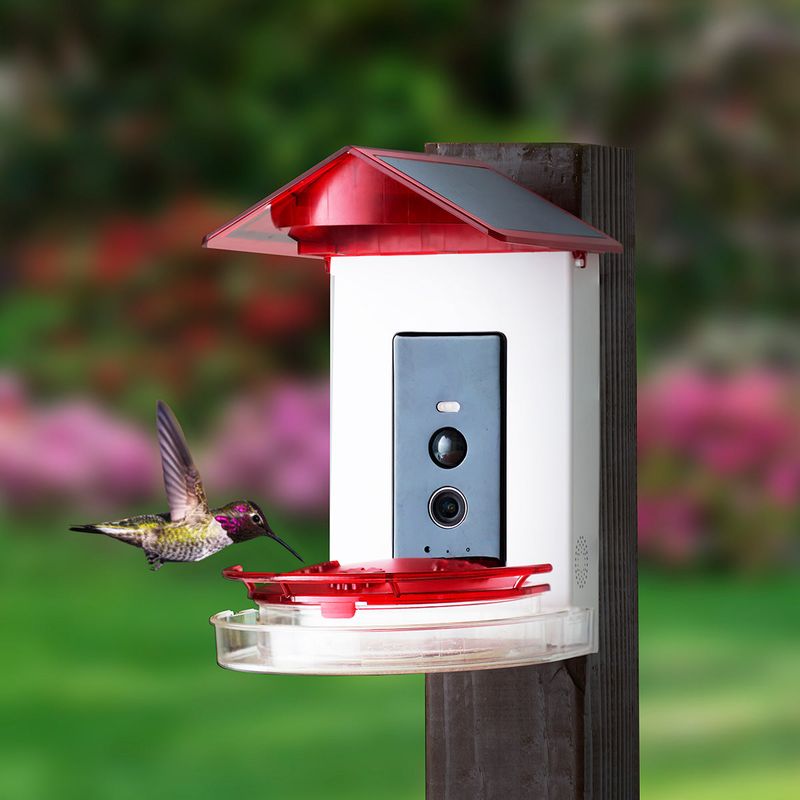
The most useful thing you can do before moving feeders or buying new equipment is simply observe. Set up a chair at a comfortable distance, or mount a wildlife camera near the station, and watch for a bird that repeatedly returns to the same perch near the feeder, chases away approaching hummingbirds, and resumes its post after each confrontation.
That repeating pattern, perch, chase, return, is a reliable sign of active territorial defense rather than random competition.
Audubon notes that this kind of perch-and-patrol behavior is characteristic of a bird actively defending a resource. A camera is especially helpful if you cannot watch during the early morning hours when hummingbird activity tends to peak.
Cornell’s feeding guidance also recommends observation as a practical starting point before making changes to a feeding station.
Pay attention to the size of any bird you see near the feeder. Orioles, woodpeckers, and other larger nectar-seeking birds can visit hummingbird feeders and may cause smaller hummingbirds to wait out of sight until the coast is clear.
Audubon’s feeder pest guidance acknowledges that larger birds can be a real disruption at nectar stations, though no single species is the universal culprit in every Southern yard. What you see at your specific feeder is what matters, and a few days of honest watching will tell you far more than any general rule.
Several separated feeders can reduce monopolization
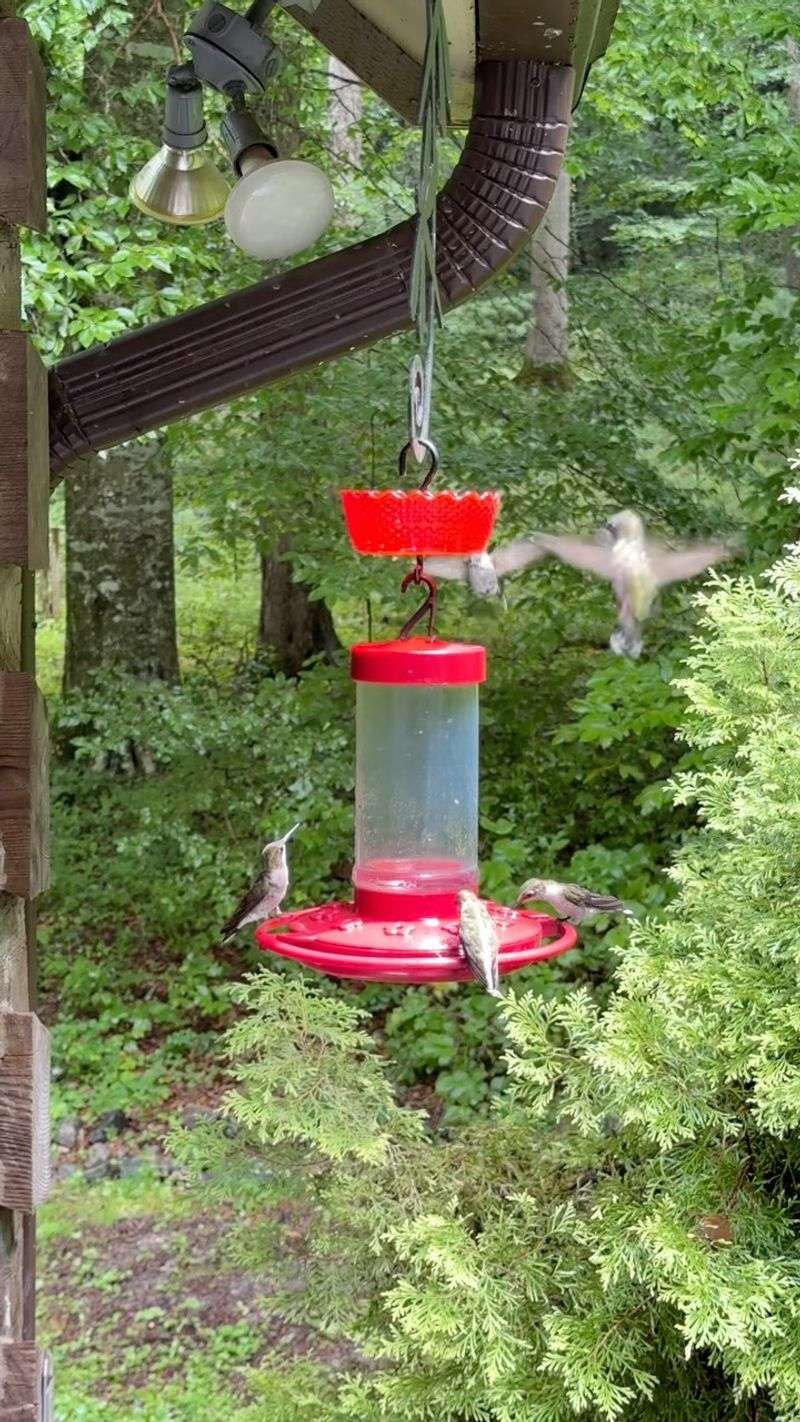
Once you have confirmed that a territorial bird is controlling the feeder, the most practical response is to spread the resource out. Adding several smaller feeders around the yard gives other hummingbirds access points that a single guard bird cannot easily cover.
Cornell’s hummingbird feeding guide specifically recommends using multiple small feeders rather than upgrading to one large one, because size alone does not change the territorial dynamic.
The placement matters more than the number. Two feeders hanging side by side on the same porch post may still fall within a single bird’s patrol range.
Audubon’s hummingbird yard guidance specifically advises spacing feeders so that hummingbirds cannot see one another from the feeding ports, which means visual separation is the goal, not a fixed number of feet between stations. A feeder on the front porch, one on the back fence, and one tucked beside a shrub on the side yard creates genuinely different patrol zones.
The honest expectation here is reduced monopolization, not an immediate flood of new visitors. Cornell’s overview of hummingbird fighting behavior makes clear that territorial instincts are strong and persistent.
A determined bird may shift its patrol to cover a second feeder once it discovers it. What the distributed setup does is lower the odds that one individual can successfully block every access point at once, giving rival hummingbirds a better chance to feed without a direct confrontation every time.
Separate larger visitors from the hummingbird station
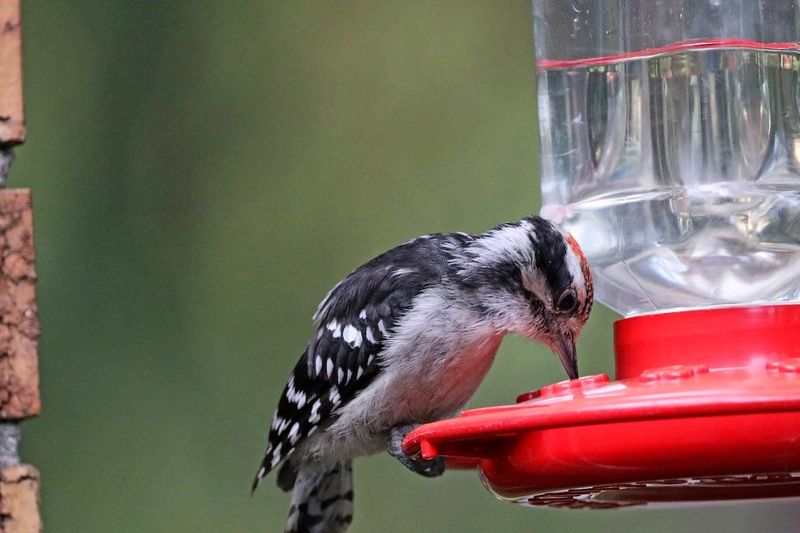
If your observation reveals orioles, woodpeckers, or other larger birds at the nectar station, a different kind of adjustment can help. Moving the hummingbird feeder away from seed trays, suet cages, or platform feeders reduces the chance that larger birds will stumble onto the nectar while visiting the broader feeding area.
Audubon’s guidance on feeder pests recommends exactly this kind of spatial separation as a management strategy.
That same Audubon guidance is also honest about the limits: no reliable method exists for completely excluding every non-target bird from a hummingbird feeder. Orioles in particular are attracted to the same sugar-water concentration that hummingbirds prefer, and a feeder with exposed ports wide enough for a hummingbird’s bill may also admit a determined oriole.
Cornell’s feeding advice treats the separation of feeder types as a reasonable trial rather than a guaranteed fix.
The goal with larger visitors is to reduce conflict and create some breathing room for hummingbirds, not to harm or permanently exclude birds that are simply following their natural feeding behavior. If orioles are a regular presence, consider offering them a dedicated oriole feeder with nectar or fruit at a separate location.
That approach gives the larger birds their own station to defend and may reduce their interest in the hummingbird setup without creating a confrontation you cannot control.
Fresh nectar and clean feeders protect returning birds
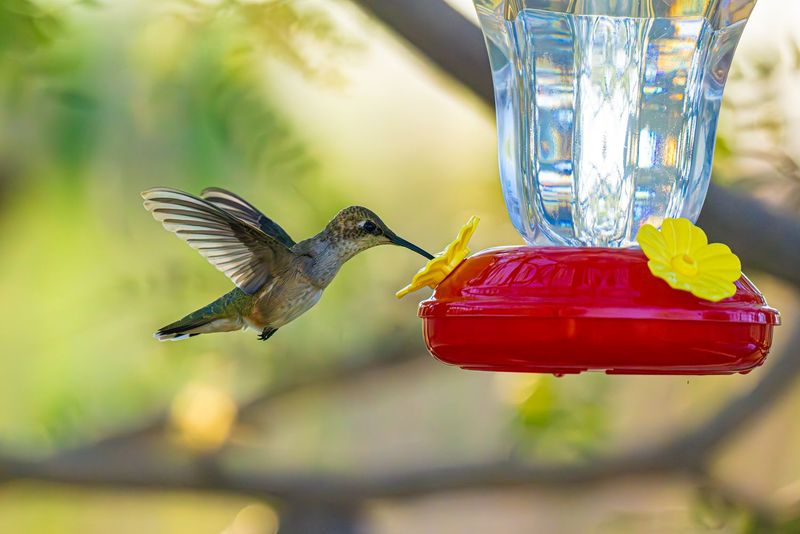
Territorial competition gets most of the attention when hummingbirds disappear, but a feeder filled with spoiled nectar is a separate and more immediate problem. Fermented sugar water can harm birds, and in Southern heat it can go bad faster than most people expect.
Texas Parks and Wildlife recommends the standard formula: one part plain refined white sugar dissolved in four parts water, nothing else added. Honey, artificial sweeteners, brown sugar, molasses, and red food coloring are all off the list, and a stronger syrup concentration is not an improvement.
Cornell advises replacing nectar every two to three days under normal conditions, and daily when temperatures climb into the upper ranges common across Florida and Texas summers. If the nectar turns cloudy or shows any sign of mold, replace it immediately regardless of when you last changed it.
Audubon’s yard guidance echoes this schedule and adds that cleaning frequency should increase during hot weather.
Choose a feeder that comes apart completely so you can scrub every port, reservoir, and gasket. Published research on feeder-associated pathogen transmission underscores why thorough cleaning matters beyond just keeping nectar fresh.
For ants and bees, fix any leaks first, then try moving the feeder to a different spot. Audubon explicitly warns against applying oil, petroleum products, sticky substances, or insecticides around feeding ports; purpose-made ant moats and bee guards are the safe alternatives.
Cornell’s troubleshooting guide reinforces that sticky deterrents near ports can contaminate nectar and damage birds’ feathers.
Build a yard that offers more than sugar water
Feeder placement affects both nectar quality and bird safety in ways that go beyond competition. Cornell’s feeder placement guide recommends a mostly shaded, sheltered spot that slows nectar spoilage in summer heat.
Shade also reduces feeder visibility to outdoor cats, and positioning feeders either very close to windows or well away from them, rather than at middle distances, can lower the risk of window strikes.
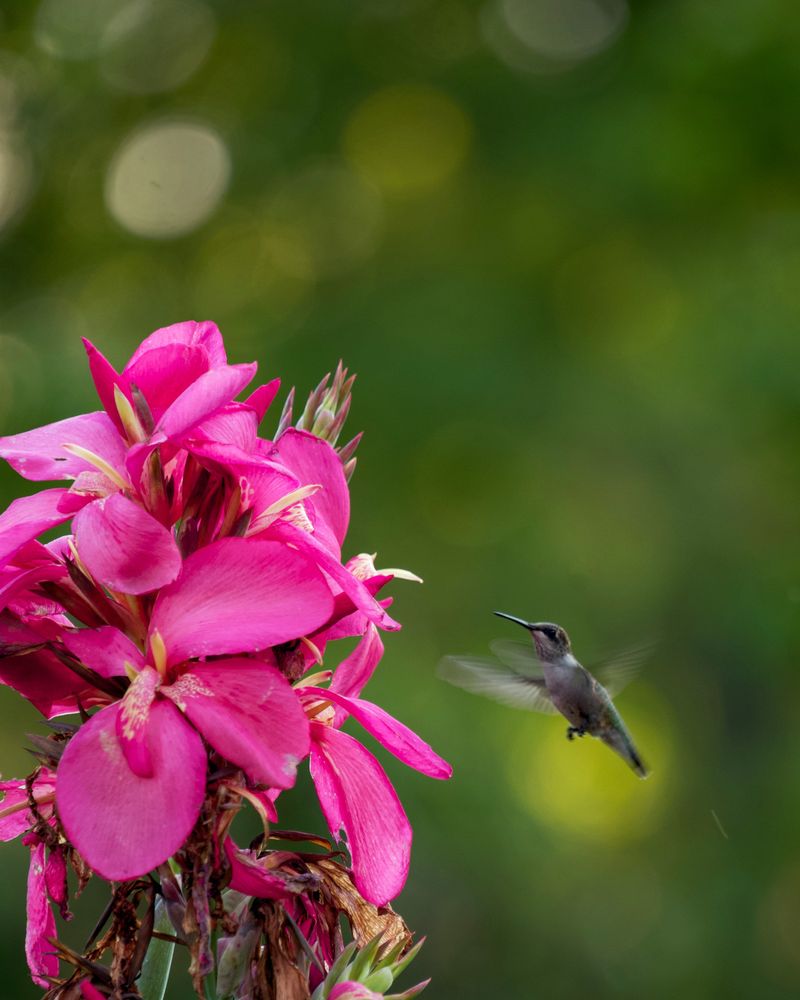
A feeder provides sugar, but hummingbirds need considerably more than that to thrive. Audubon’s Ruby-throated Hummingbird profile notes that insects and spiders are a critical protein source, especially during nesting season when adults are feeding young.
Audubon’s yard habitat guide recommends flowering plants, cover, water, and insect-friendly areas alongside any supplemental feeder setup.
Texas Parks and Wildlife’s hummingbird habitat publication describes feeders as supplemental, meaning they add to a habitat rather than define it. Additional Texas Parks and Wildlife guidance points to native flowering plants as both a nectar source and a way to support the insect populations hummingbirds depend on.
A yard with layered plantings, a shallow water source, and reduced pesticide use gives hummingbirds reasons to stay that no feeder alone can provide.
Use evidence, distribute the food, and allow for natural changes
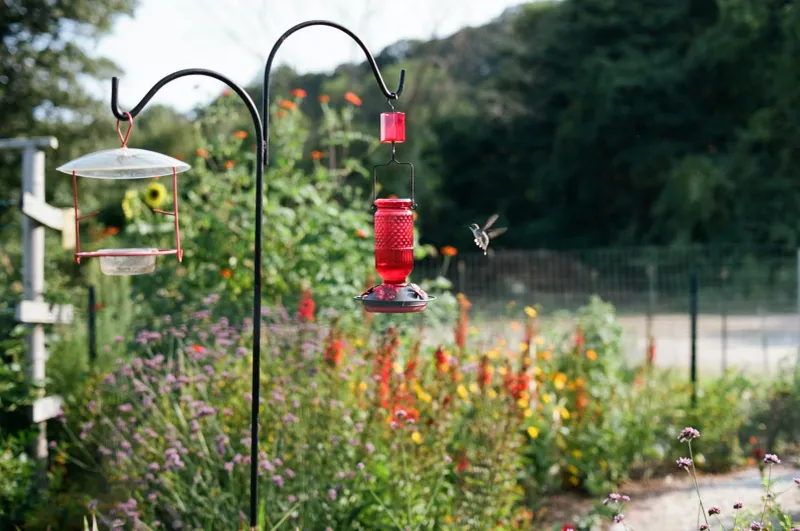
The practical path forward starts with what you can actually see. Watch the feeder or use a camera to confirm whether a territorial hummingbird, a larger visitor, or something else entirely is behind the decline.
Cornell’s troubleshooting guide reminds readers that migration, weather, and natural flower cycles can all reduce visits without any bird conflict involved at all.
If territorial behavior is confirmed, add several small feeders positioned so one bird cannot easily patrol all of them from a single perch. Separate hummingbird nectar from other feeder types when larger birds are part of the picture.
Keep nectar fresh on the schedule that fits your local summer heat, and maintain a feeder you can fully disassemble and clean. Audubon’s yard habitat guidance and Cornell’s feeding recommendations both support this distributed, habitat-minded approach as the most reasonable way to reduce monopolization and give more hummingbirds a chance to feed.
No setup change can override migration timing, a cold front, or a yard full of blooming native flowers that pull birds away from supplemental feeders. A cleaner, safer, more distributed feeding station gives hummingbirds more opportunities to use your yard, and that is the honest, evidence-supported promise worth keeping.