
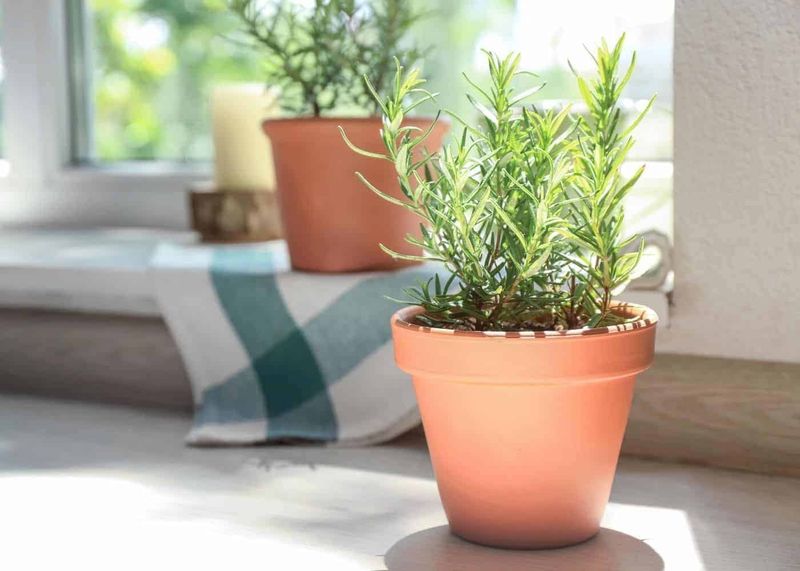
Every fall, gardeners across the South face the same question: does rosemary need to come inside before cold weather hits? The short answer is that it depends on your plant, your location, and what your forecast is actually saying.
Moving a vulnerable rosemary at the right time can mean the difference between a healthy plant next spring and a woody, struggling one. Getting the timing and indoor conditions right matters far more than most gardeners realize.
Use the forecast as your moving deadline
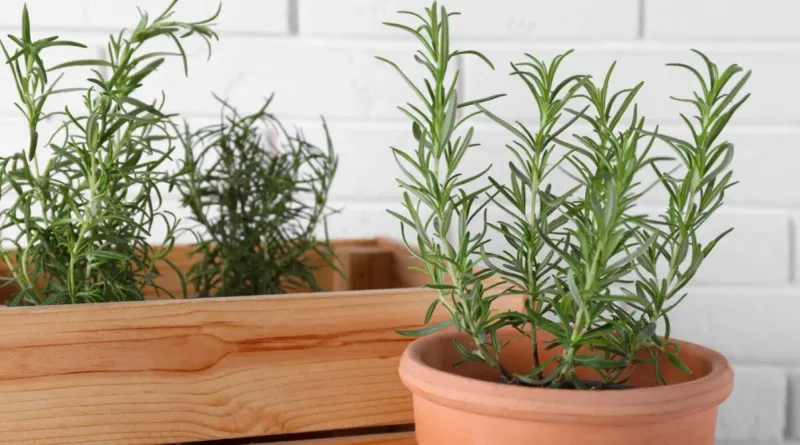
Watching your local forecast is the most reliable way to decide when a potted rosemary needs to come inside. Average frost dates give you a useful planning window, but they are not predictions.
The date your area typically sees its first frost is based on historical averages, not a guarantee of what this particular November will bring.
Penn State Extension’s rosemary guidance recommends moving nonhardy rosemary indoors two to three weeks before the average local first-frost date. That window is meant for planning, not for waiting.
If your forecast calls for frost or freezing temperatures before that window closes, move the plant before the cold arrives.
Container roots are the reason timing matters so much. Unlike an established in-ground plant surrounded by insulating soil, a pot exposes roots on all sides to air temperature.
Texas A&M AgriLife guidance on protecting plants from frosts and freezes notes that container roots can sustain damage at temperatures that might not harm a well-established in-ground plant of the same species.
Acting before visible damage appears is the point. Once foliage is frost-burned, the plant has already spent energy it will need to recover.
Move vulnerable containers when the forecast calls for it, not after the fact.
Decide whether this rosemary needs indoor protection
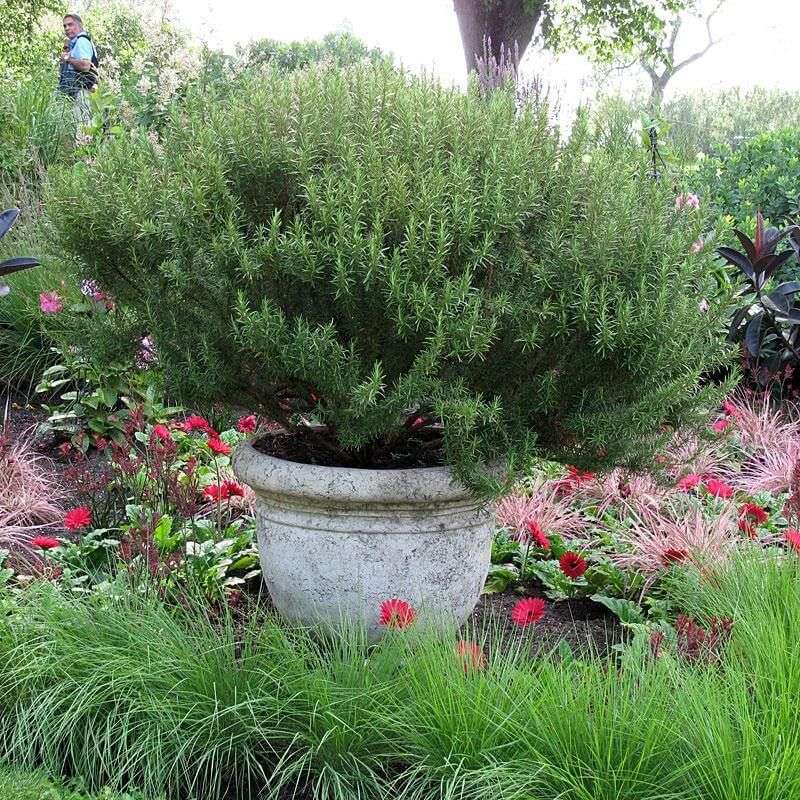
Not every rosemary plant needs to come inside for winter. The decision depends on several factors working together: whether the plant grows in a container or in the ground, which cultivar it is, how severe and prolonged the expected cold will be, and what your local conditions actually look like.
Container-grown rosemary is more vulnerable than an established in-ground plant. NC State Extension’s container plant guidance explains that pots provide far less root insulation than surrounding ground soil, making the roots more susceptible to rapid temperature drops.
A small plastic or terracotta pot sitting on a concrete patio loses heat quickly when temperatures fall.
Established in-ground rosemary in warm Southern locations is a different situation. UF/IFAS Extension lists rosemary as a full-sun perennial suited to USDA zones 8 through 10, and Texas A&M AgriLife describes rosemary as a hardy evergreen shrub across much of Texas, while noting that severe cold can still cause damage.
An in-ground plant in a protected, well-drained spot in central Florida or South Texas may come through a typical winter without any intervention.
Cultivar choice changes the math too. Illinois Extension and University of Nebraska Extension both point to ‘Arp’ and ‘Madalene Hill’ (sometimes sold as ‘Hills Hardy’) as selections with stronger cold tolerance than many common rosemary varieties.
Even so, cold tolerance is not a guarantee. Drainage, wind exposure, plant age, and the length of a freeze all affect whether any rosemary survives a hard winter.
Prepare rosemary before you bring it inside
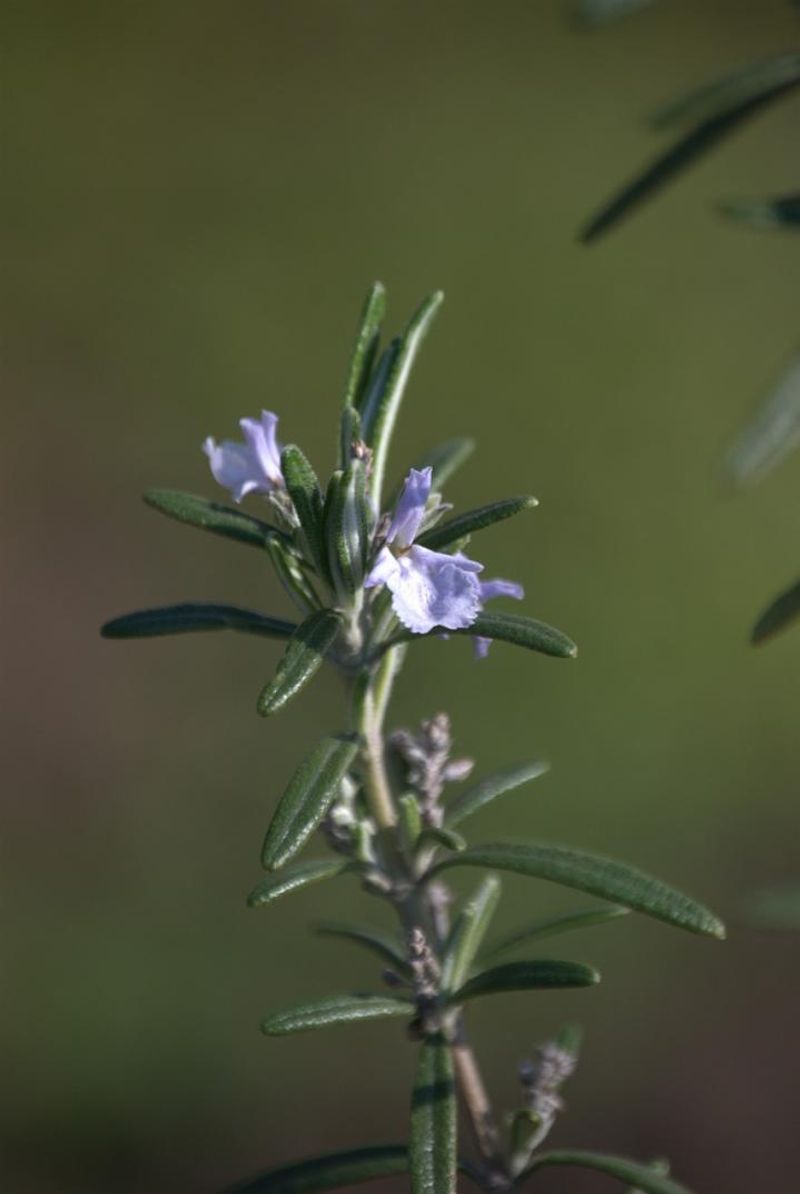
Rushing a rosemary plant from the patio directly to the living room is one of the easiest ways to create problems. A few minutes of preparation before the move can prevent pests from spreading to other houseplants and reduce the shock the plant experiences when its environment changes suddenly.
Start with a thorough inspection. Check the stems, undersides of leaves, and the soil surface for aphids, spider mites, whiteflies, or mealybugs.
Remove any dead or yellowing foliage, and brush away obvious debris from the soil surface. If you spot pest activity, address it before the plant comes inside using a product labeled for outdoor use, and allow time for it to work before making the move.
Penn State Extension recommends isolating any plant brought in for winter for approximately three weeks before placing it near other houseplants. That quarantine period lets you catch hitchhiking pests before they spread, and it gives the plant time to adjust to lower indoor light levels.
Isolation is not a guarantee that the plant is pest-free, but it keeps a potential problem contained while you keep watching.
Gradual acclimation also helps when your schedule allows. University of Minnesota Extension notes that abrupt environmental changes can cause yellowing, wilting, or dieback in plants moved suddenly indoors.
If frost is not imminent, try moving the pot to a shaded porch or garage for a few days first so the transition from full sun to indoor light is less jarring.
Give rosemary bright light and cool conditions
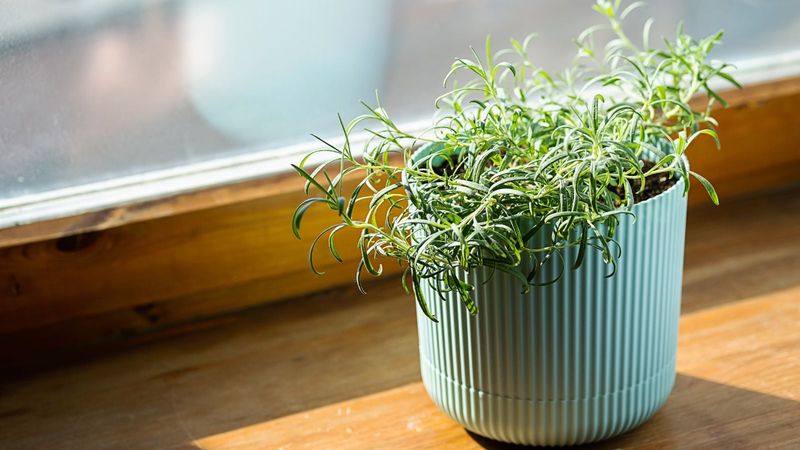
Rosemary is a full-sun plant, and that does not change just because it moved inside. Weak winter light is the single biggest reason rosemary struggles indoors, and placing the plant in a dim corner or away from windows almost guarantees decline over the course of a few months.
A south-facing window is the best starting point. Penn State’s indoor herb guidance recommends roughly six hours of direct sunlight daily, with supplemental grow lighting as an alternative when natural light falls short.
During winter in most of the South, even a south window may deliver weaker light than the plant received outdoors, so a simple grow light on a timer can make a real difference for a plant you want to keep productive.
Temperature matters alongside light. Illinois Extension recommends keeping rosemary in a cool, sunny location rather than a warm interior room.
Placing the pot near a heat vent or on top of a radiator creates dry, warm air that works against the plant’s natural preference for cool, bright conditions. A spot near a bright window in an unheated or lightly heated room, such as a sunroom or enclosed porch that stays above freezing, often works better than a central living room.
Expect the plant to look different indoors than it did outside. Rosemary may grow more slowly, become slightly sparse, or develop a less compact shape over winter.
Those changes reflect reduced light intensity, not proof that indoor placement is harmful. Keeping the plant alive through winter so it can return to full outdoor vigor in spring is a reasonable and realistic goal.
Control water and drainage before problems spread
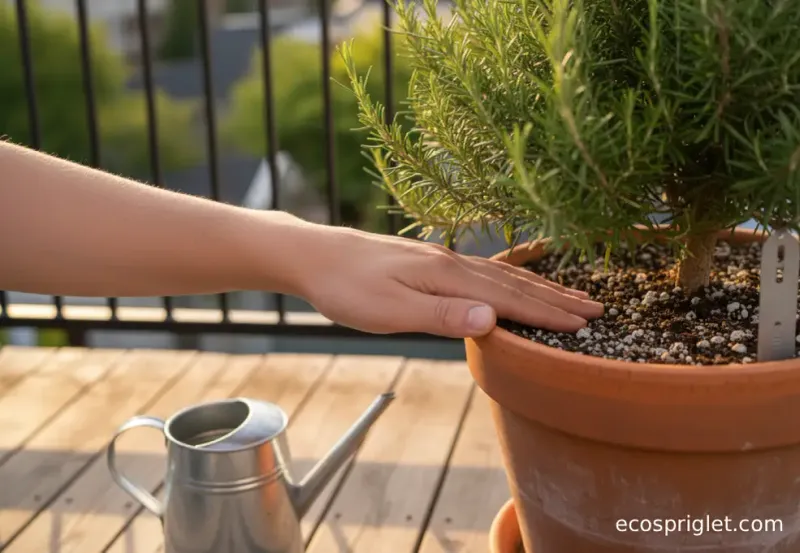
Watering is where most indoor rosemary care goes wrong. The instinct to water more when a plant looks stressed is understandable, but rosemary indoors needs far less water than it did outside in summer heat, and wet soil in a poorly draining container is a direct path to root rot.
The container itself matters first. Every pot that holds a rosemary plant through winter should have drainage holes, and the growing medium should drain quickly rather than hold moisture.
Penn State Extension identifies root rot as a significant risk for indoor rosemary, and a dense, moisture-retaining mix makes that risk worse. A mix designed for cacti or succulents, or a standard potting mix amended with perlite, gives roots the air they need between waterings.
The watering routine should follow the soil, not the calendar. Penn State’s indoor herb guidance lists rosemary among herbs that should dry out somewhat between waterings.
Check the top inch or two of the mix before adding water. When it begins to dry, water thoroughly, then let the excess drain completely before setting the pot back in place.
Never let the plant sit in standing water in a saucer.
Brown leaf tips sometimes push gardeners toward more water, but that response can backfire. Illinois Extension warns that brown tips often reflect dry indoor air rather than drought, and increasing water to fix them can push already borderline soil into the wet range where root rot develops.
Dry air is a separate problem that better air circulation or occasional misting around the plant (not soaking the soil) can help address.
Diagnose pests and winter decline separately
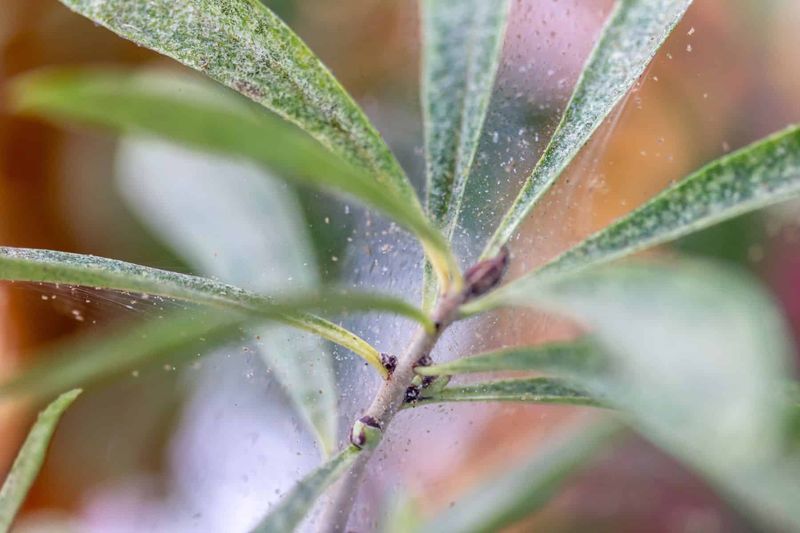
Brown tips, dropping needles, and yellowing stems can have several different causes, and guessing wrong leads to the wrong fix. Before reaching for water, fertilizer, or a spray bottle, spend a few minutes actually looking at the plant to figure out what is happening.
Pests are a real possibility for any plant that spent the summer outdoors. Aphids, spider mites, whiteflies, and mealybugs can all accompany rosemary inside, often going unnoticed until the population grows large enough to cause visible damage.
Penn State Extension’s guidance on indoor plant pests recommends regular inspection of stems and leaf undersides, and continued isolation of newly brought-in plants while monitoring continues. Catching a pest problem early, before it spreads to nearby houseplants, is much easier than treating an established infestation.
When treatment is needed, the product must match both the pest and the setting. Colorado State University Extension’s houseplant pest guidance makes clear that many outdoor pesticides are not labeled for indoor use.
Always read the label and confirm the product is approved for use inside and for the specific pest you have identified before applying anything.
Environmental causes are just as common as pest damage. Weak light, excessive indoor warmth, dry air from heating systems, overwatering, and poor drainage each produce symptoms that can look similar to pest injury or cold damage.
Illinois Extension and Penn State’s indoor herb resource both emphasize that light and watering are the primary indoor challenges. A sparse, brown-tipped rosemary may simply be a plant surviving a difficult winter environment, not a plant on the verge of death from one fixable cause.
Protect vulnerable plants without overprotecting every rosemary
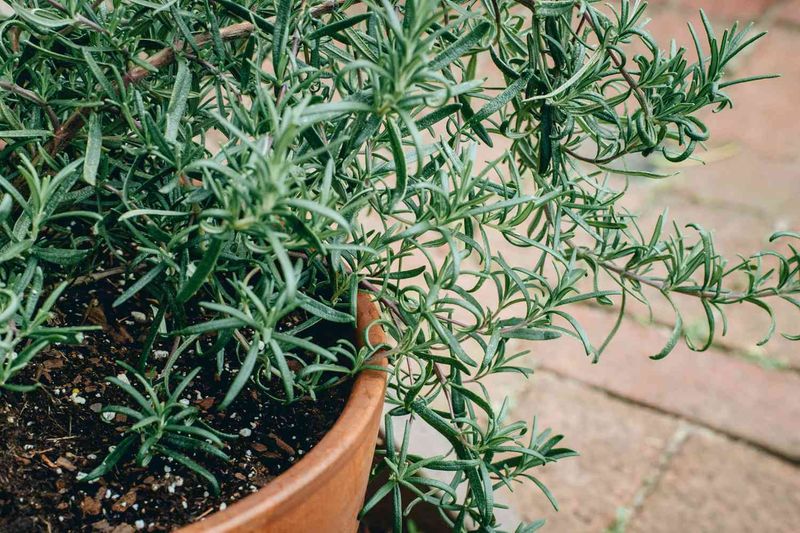
A clear, simple decision process makes winter rosemary care easier. Check your local forecast regularly as temperatures begin to drop in fall.
If freezing weather is on the way and you have a container-grown rosemary or a tender cultivar in a marginal spot, move it before the cold arrives, not after you see damage.
Once the plant is inside, the job shifts to maintaining conditions that give it a real chance: a bright south-facing window or supplemental lighting, a cool location away from heat vents, a well-draining container, and restrained watering that lets the mix dry somewhat between sessions. Keep checking for pests and deal with them using products labeled for indoor use.
Established in-ground rosemary in warm parts of the South often does not need any of this. UF/IFAS Extension places rosemary as a suitable perennial across Florida’s zones 8 through 10, and University of Georgia Extension describes rosemary as a hardy evergreen that can thrive year-round across much of the South.
Cold-tolerant selections like ‘Arp’ or ‘Hills Hardy’ planted in a well-drained, sheltered spot may come through a typical Southern winter without any special treatment, though cultivar and site conditions always affect the outcome.
Indoor overwintering is not inherently harmful to rosemary. Penn State Extension recommends it as a standard approach for nonhardy rosemary, and the plants that struggle indoors almost always do so because of avoidable conditions: too little light, too much water, poor drainage, or undetected pests.
The plant can survive winter inside a house; the key is giving it the right environment to do so.