
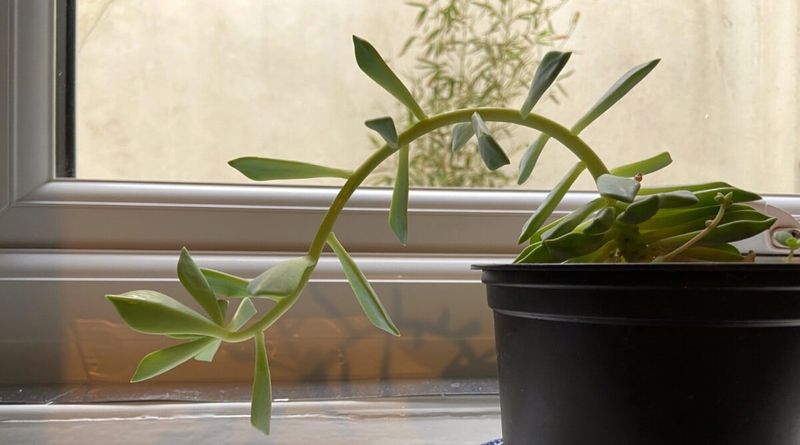
If your ZZ plant has started sending up long, spindly fronds that lean toward the window or space out so much the pot looks half empty, you are not alone. Many indoor gardeners in Florida, Texas, and across the South notice this exact pattern and assume something has gone seriously wrong.
The good news is that the most common driver of genuinely stretched or one-sided growth has a straightforward first response: more indirect light. The less obvious news is that brighter light works as a forward-looking correction, not an instant makeover, and understanding that difference will save you a lot of frustration.
Tall and arching does not automatically mean leggy
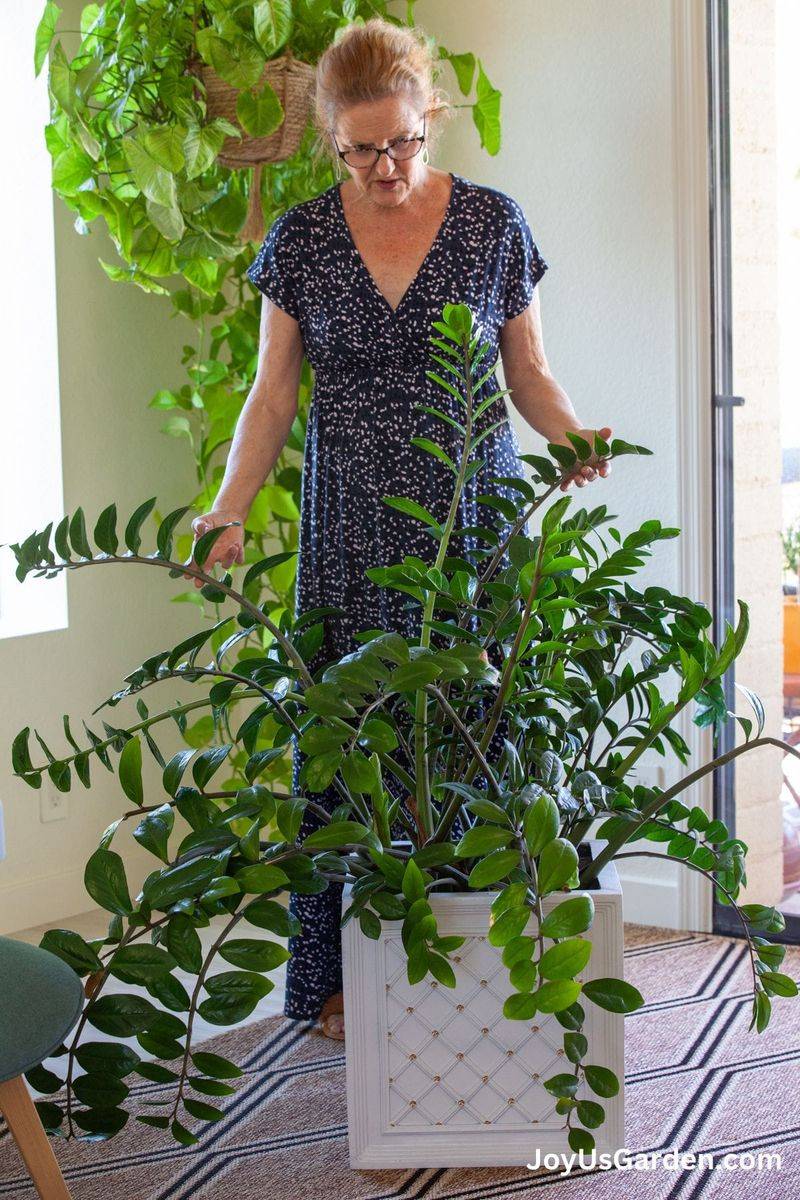
ZZ plants are built to be tall. NC State Extension’s plant profile notes that Zamioculcas zamiifolia can reach two to four feet in both height and spread, with fronds that naturally arch outward as they mature.
A plant that stands upright, curves gracefully away from center, and fills a corner with glossy leaves is doing exactly what the species does. Height and arching alone are not warning signs.
The more telling signals show up when you notice a recent shift in the plant’s behavior. Genuine legginess looks like new fronds that come up noticeably thinner than older ones, leaves spaced so far apart along the stem that the frond looks sparse, growth that leans hard toward one window and ignores the rest of the room, or new shoots that feel weak and flop rather than standing on their own.
Illinois Extension’s guide to indoor lighting identifies a thin, spindly appearance and elongated growth as classic indicators that a houseplant is not receiving enough light.
Before adjusting anything, take a close look at when the change happened. A plant that has always been tall and arching is probably healthy.
A plant that recently started producing noticeably thinner, more widely spaced, or strongly one-sided growth is giving you a useful diagnostic clue worth acting on.
Brighter indirect light is the best first adjustment
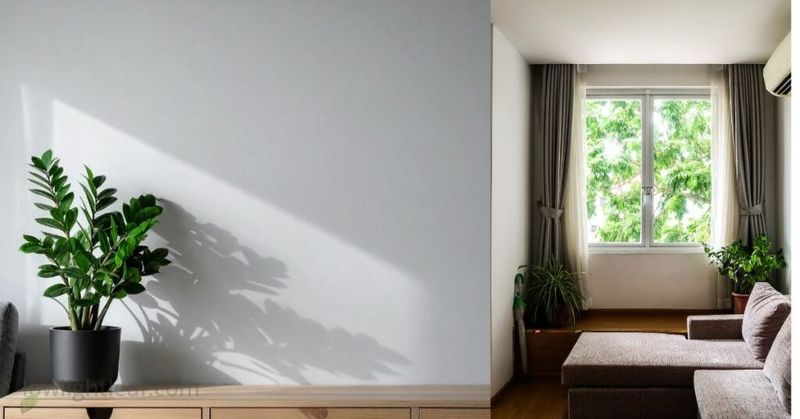
ZZ plants earned their reputation as low-light survivors because they genuinely can persist in dim corners where most houseplants give up. But tolerating low light and thriving in it are two different things.
The Missouri Botanical Garden’s plant profile recommends bright, indirect light for best performance, and multiple university horticulture sources consistently point to stronger growth when the plant receives more filtered light than a typical interior hallway or back-bedroom corner provides.
When a ZZ is genuinely stretching, leaning, or producing widely spaced foliage, moving it toward better indirect light is the most defensible first correction. UF/IFAS cultural guidelines for ZZ document that the plant can survive at very low interior light levels, but the same research makes clear that rhizome size and overall plant vigor strongly influence how well new growth develops.
Giving the plant more light supports the conditions that allow stronger future shoots to emerge.
Trying to fix a sparse appearance by watering more often, applying heavy fertilizer, or cutting across the middle of a frond will not produce a fuller plant. Sustained wet soil risks rhizome rot.
Excessive fertilizer cannot reverse an already elongated frond. And cutting across a ZZ stem does not trigger branching the way it might on a vine or shrub.
The light adjustment is not a magic cure, but it is the one change with the clearest practical support for reducing further stretching.
Improve exposure gradually and rotate the pot
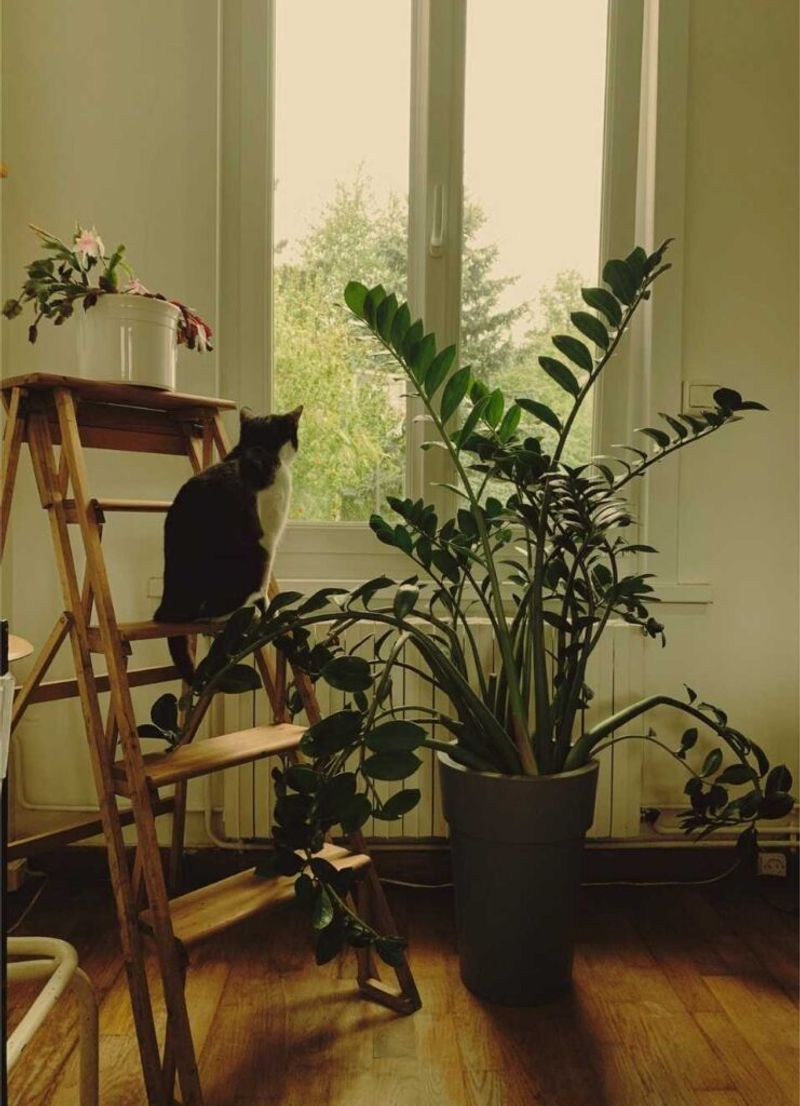
Moving a ZZ plant from a dim interior directly into strong sunlight is one of the fastest ways to damage foliage that has adapted to low light. University of Minnesota Extension’s spring houseplant care guidance warns that plants shifted abruptly from low-light conditions to bright or direct sun can develop scorched, browned leaves.
The fix is to move gradually, giving the plant a week or two at each new position before moving it closer to the light source.
A practical starting point for most Southern homes is a spot near an east- or west-facing window, where light is bright but not intense for most of the day. If only a south-facing window is available, positioning the plant several feet back from the glass, or filtering the light with a sheer curtain, provides brightness without the harshest midday intensity.
Monitor the leaves as you move the plant: pale or bleached patches suggest too much direct exposure, while continued thin or widely spaced new growth suggests the plant still wants more light. Missouri Botanical Garden notes that avoiding harsh direct sun helps prevent leaf scorch on this species.
Rotation matters too, especially if the plant has already started leaning. Illinois Extension recommends rotating houseplants so that all sides receive reasonably even light exposure.
A quarter turn every couple of weeks is enough to keep new growth from consistently favoring one direction. For rooms where natural light is genuinely limited year-round, a grow light used for 14 to 16 hours per day can supplement, though Illinois Extension’s houseplant lighting resource cautions that plants still need a dark period each night and that fixture distance should be adjusted based on how the plant responds rather than a fixed rule.
Better light cannot reshape an existing frond
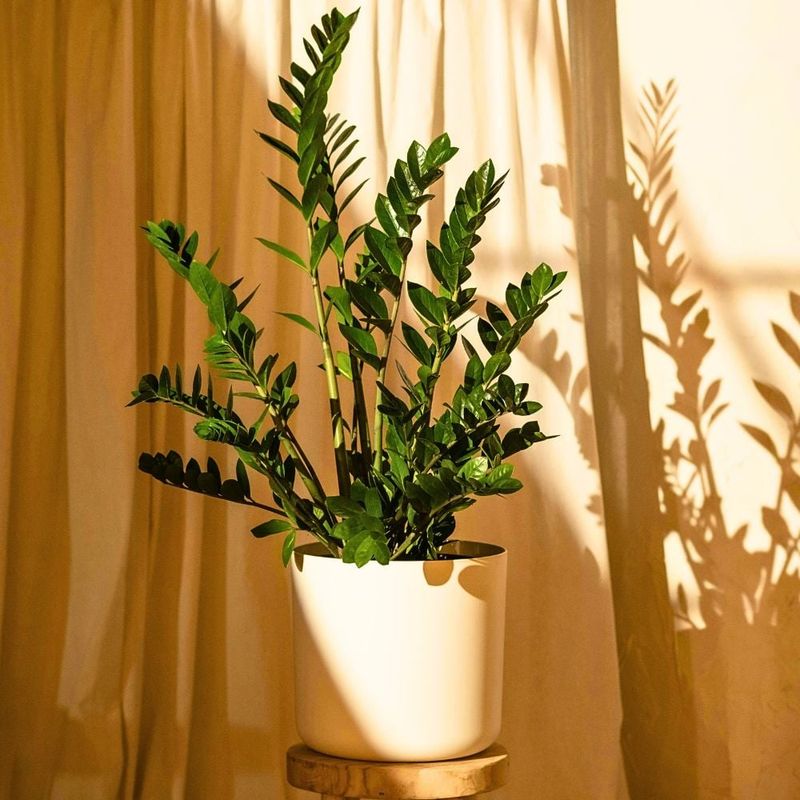
One of the most common disappointments after moving a ZZ plant to a brighter spot is looking at it two weeks later and noticing that the long, stretched fronds look exactly the same. That outcome is expected, not a sign the change is failing.
ZZ plants produce new shoots from underground rhizomes rather than from conventional branching stems above the soil. UF/IFAS commercial production guidelines for ZZ document this rhizome-based growth structure, and it has a direct practical implication: a frond that already grew long and widely spaced will stay that way.
Better light supports the conditions for stronger future shoots to emerge from those underground rhizomes. It cannot shorten an already elongated frond, compact the leaf spacing along an existing stem, or cause old growth to fill in.
Think of the existing fronds as fixed records of the conditions they grew in. Improvement shows up in new shoots, not in old ones.
This conclusion is a practical inference from the plant’s documented growth structure rather than the result of a direct experiment on every possible frond, but it holds up consistently with what growers observe.
If the current silhouette bothers you, selective removal is a reasonable option. The Royal Horticultural Society’s ZZ plant profile notes that routine pruning is unnecessary but that faded or unwanted fronds can be removed cleanly.
For ZZ plants specifically, the right approach is a clean cut at the soil line rather than trimming across the middle of a stem. Cutting across a frond will not trigger branching and leaves an unattractive stub.
Remove only fronds that are faded, damaged, or so sparse they undermine the plant’s overall look, and let the rhizomes handle the rest over time.
Avoid overwatering and heavy feeding
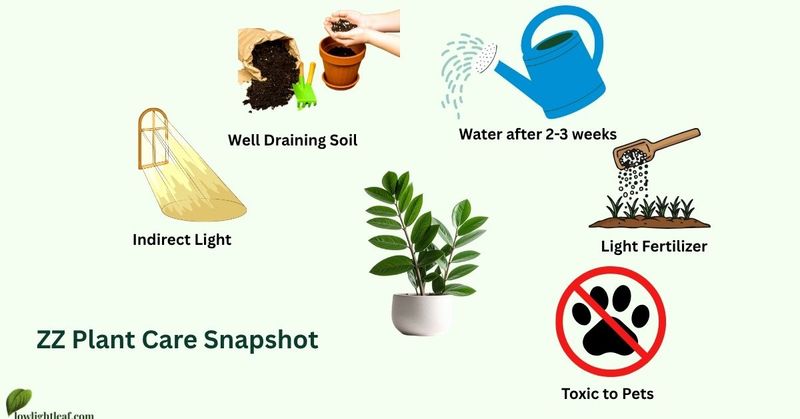
A sparse-looking ZZ plant can tempt gardeners into thinking the plant needs more of everything, including water. That instinct tends to backfire.
ZZ plants store water in their thick underground rhizomes, which means the soil surface drying out between waterings is normal and expected, not a sign of neglect. Missouri Botanical Garden recommends using a well-drained potting mix and allowing it to dry between waterings, noting that overwatering can cause yellowing and root problems.
Sustained wet soil is one of the more reliable ways to damage a ZZ plant. Root and rhizome rot can develop when the growing medium stays moist for extended periods, and a plant dealing with rot will produce even weaker growth than one simply sitting in low light.
The practical standard is to check the soil before watering rather than following a fixed calendar. If the top inch or two still feels damp, wait.
Illinois Extension’s ZZ plant spotlight reinforces that this species prefers to dry out between waterings and is far more forgiving of drought than of soggy conditions.
Fertilizer deserves the same restraint. UF/IFAS production research on ZZ emphasizes that the plant grows slowly and that rhizome size and number strongly influence overall development.
Feeding more heavily cannot reverse an elongated frond or speed up structural fullness. Applied excessively, fertilizer can damage roots and set the plant back further.
If you choose to fertilize, do so cautiously and only during active growing periods, following product label rates rather than doubling up in hopes of faster results.
Judge success by new growth over the coming months
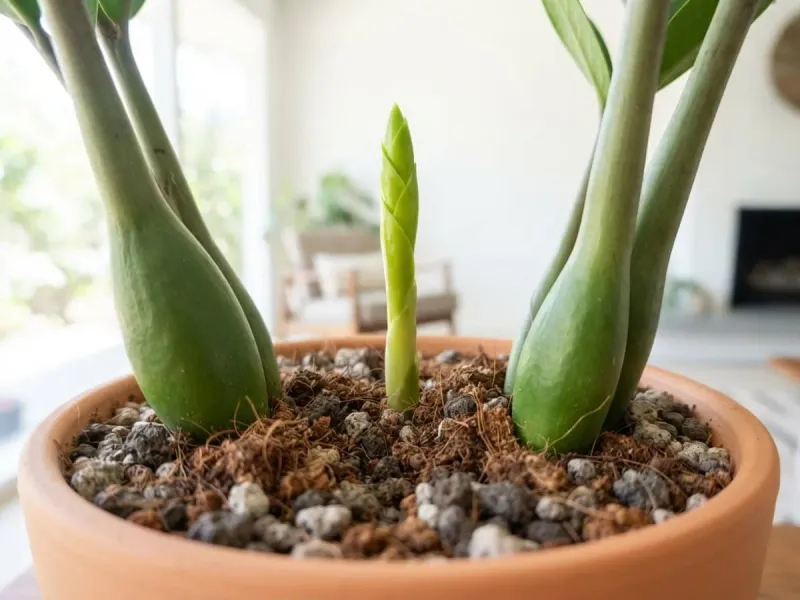
Patience is not optional with ZZ plants. UF/IFAS research notes that rhizome size and number directly influence how quickly a ZZ produces new shoots, and that development after propagation can be slow even under favorable conditions.
For a plant recovering from a dim environment, visible improvement in the form of new, healthier shoots may take several months rather than a few weeks. That timeline is not a sign the changes are failing; it is simply how this species works.
Redefine what success looks like before you start measuring. The goal is not a compacted, suddenly bushy plant.
The goal is new fronds that emerge stronger, with leaves more closely and evenly spaced, growing from a plant that is no longer reaching hard toward one light source. Once you see that kind of new growth, the adjustment is working.
The forward plan is straightforward: confirm the plant is showing genuine stretching rather than natural arching, move it gradually into brighter indirect light, rotate the pot every few weeks, remove only faded or unwanted fronds at the soil line, and keep the soil from staying wet between waterings.
For readers in Florida or Texas considering moving the plant outdoors during warm months, Missouri Botanical Garden advises protection from temperatures below about 60 degrees Fahrenheit, and University of Minnesota Extension reinforces that any transition outdoors requires gradual acclimation, filtered or shaded light, and protection from harsh direct sun. A ZZ plant that finally gets the right amount of indirect brightness, indoors or out, will not transform overnight, but it will quietly get better, one new frond at a time.