
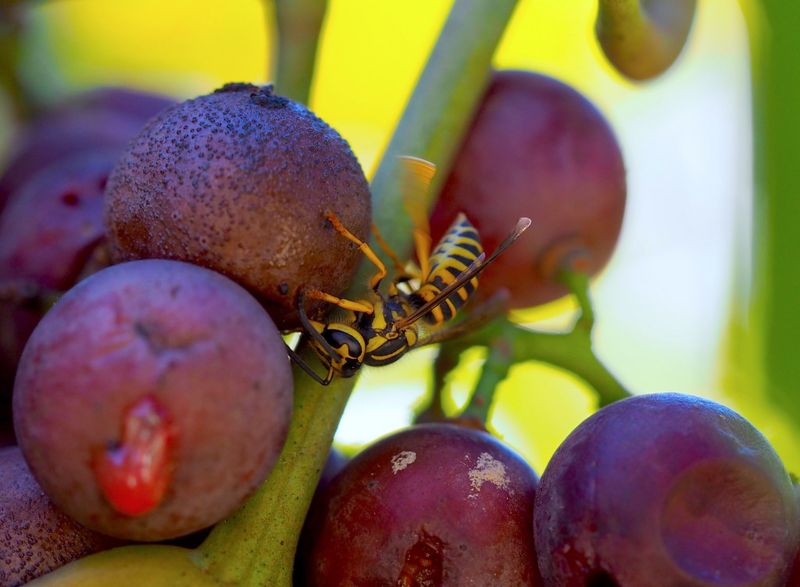
If you grow grapes in your backyard, spotting a cloud of striped insects around your clusters during ripening season can feel like a race you are already losing. Yellowjackets and other social wasps may feed on ripe, split, or injured berries, and the damage can add up fast when a colony is foraging nearby.
The good news is that a layered plan built around timely harvesting, cleanup, physical barriers, and smart trap placement can meaningfully reduce your losses. Understanding why the wasps showed up in the first place is the best place to start.
Why wasps may gather around ripening grapes
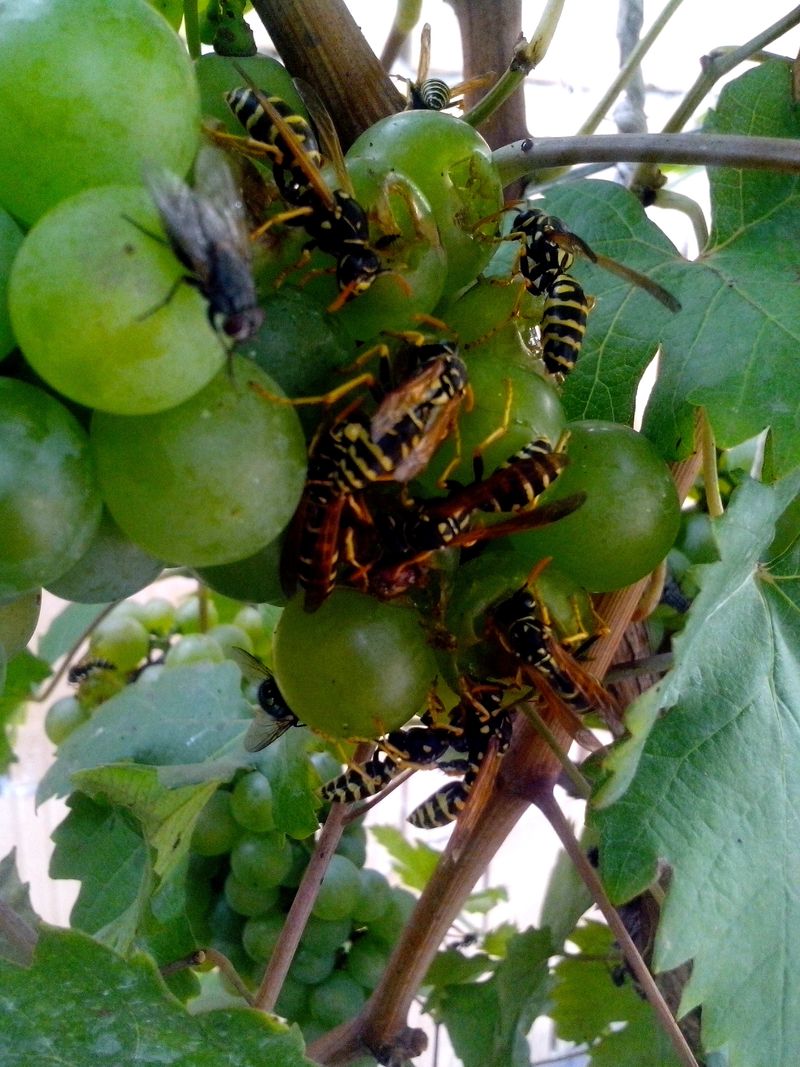
Social wasps spend the first half of the growing season hunting caterpillars, flies, and other soft-bodied insects to feed developing larvae back at the nest. By late summer and into fall, larval production winds down and workers shift their attention toward sugary, high-energy foods.
Ripening grapes fit that profile almost perfectly, and University of Minnesota Extension notes that yellowjacket numbers commonly peak toward the end of summer, when workers become noticeably more active around fruit, fallen fruit, and outdoor food.
The insects are especially drawn to berries that are already open. A split skin from rain-driven cracking, a peck mark left by a bird, or a small lesion from disease all release the sugary juice and fermentation odors that attract foraging wasps from a distance.
Some yellowjacket species can puncture intact fruit, but in many cases the wasps arrive at a wound that something else created first. Recognizing that distinction matters because the fix for bird damage is not the same as the fix for a nearby wasp colony.
Harvest timing also shifts across the South. UF/IFAS grape production guidance for Florida describes some bunch grape varieties maturing as early as late June or July, while muscadine windows can extend into September.
Whatever your local ripening window, the pattern is similar: wasp pressure tends to build as sugar content rises and berries soften, and it varies with species present, colony size, nearby nest location, weather, and the overall condition of the fruit.
Inspect the berries before blaming the wasps
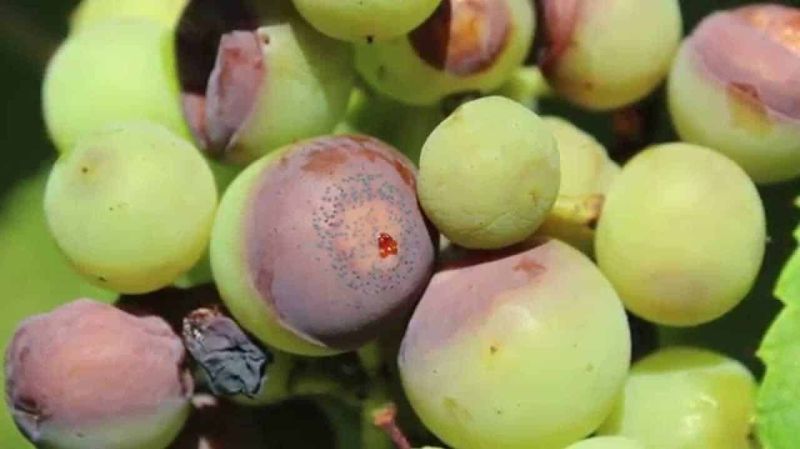
Before treating the wasps as the root cause, spend a few minutes with a cluster and look closely at the damaged berries. Bird pecks leave clean, rounded punctures, often on the sun-exposed side of the cluster.
Rain-induced cracking typically splits berries along their equator or at the stem end, and the splits may be uniform across a cluster that swelled quickly after a dry spell. Oklahoma State Extension’s berry-splitting alert explains how sudden water uptake after drought stress can rupture grape skins before any insect arrives.
Disease symptoms look different from mechanical wounds. Powdery mildew leaves a dusty white coating on the berry surface.
Botrytis bunch rot produces gray fuzzy growth inside a cluster. Open wounds from any of these sources create entry points for vinegar flies, yeasts, and acetic-acid bacteria, and that combination can lead to sour rot.
Cornell research on berry damage and fruit flies shows that sour rot develops through a chain of events involving injured tissue, microbial activity, and insect feeding together, not from a single cause.
Wasps may arrive at any of these open wounds and enlarge them, but their presence does not prove they started the damage. Penn State Extension’s sour-rot guidance emphasizes that keeping berries intact is the central principle in managing the disease cascade.
Once you identify what opened the berry in the first place, you can address that problem directly alongside any wasp management steps.
Harvest ripe clusters and remove damaged fruit
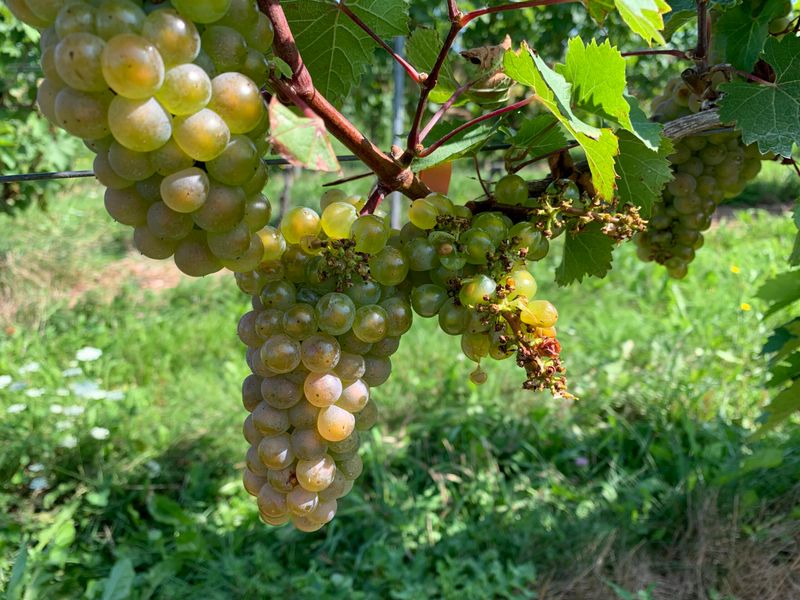
The fastest way to reduce wasp activity around your vines is to remove what they are eating. Pick clusters as soon as they reach full ripeness rather than leaving them on the vine for an extra week hoping for a sweeter flavor.
Iowa State Extension’s grape pest guidance lists prompt harvest as a primary step for reducing wasp feeding, and the reasoning is straightforward: ripe and overripe fruit hanging in warm weather is a continuous food signal that keeps drawing foragers back to the same spot.
After each picking session, walk beneath the vine and collect any dropped or split berries from the ground. Fallen fruit ferments quickly and releases the same volatile compounds that attract wasps and vinegar flies from a wider radius.
Bag or compost the damaged material away from the garden area rather than leaving it in a pile nearby. Removing that ground-level food source is especially useful during the weeks when you still have clusters ripening above.
Sanitation alone will not eliminate a colony that has already found your grapes, but it consistently reduces the intensity of foraging. Think of it as turning down the signal your vines are broadcasting.
At the same time, address whatever opened the berries originally. If birds are the primary source of punctures, bird netting or reflective tape over the canopy reduces new wounds and, as a result, reduces the number of entry points available to wasps and other insects.
Use netting as a physical exclusion option
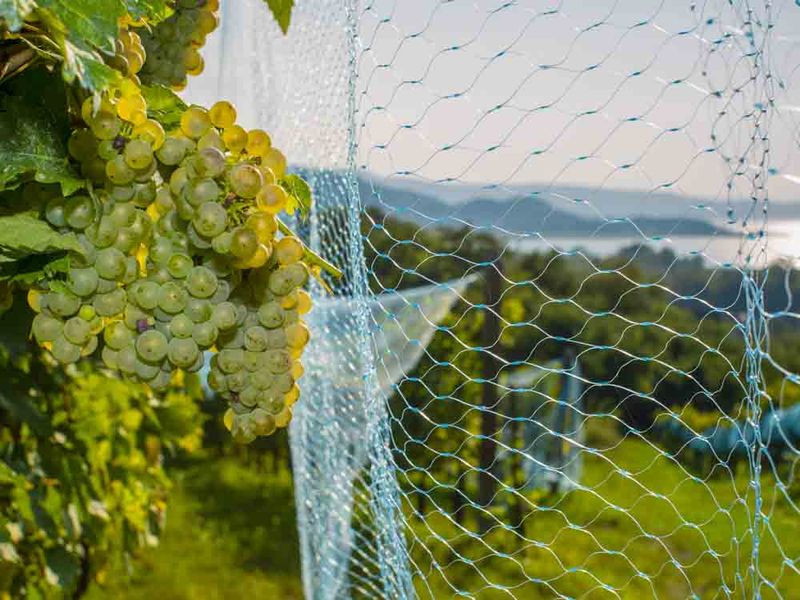
Physical exclusion gives ripening clusters a barrier that wasps cannot cross without finding a gap. Small-mesh netting placed around individual clusters or draped over a trellis section can block feeding access while still allowing air circulation.
Cornell’s 2025 grape pest management guide reports that side netting in 2023 and 2024 vineyard trials reduced yellowjacket feeding damage, making it one of the better-supported exclusion options currently available to growers.
That said, vineyard results do not transfer automatically to every backyard situation. A commercial trial uses consistent trellis systems, uniform spacing, and trained crews who can monitor and adjust netting quickly.
A home gardener working alone on an irregular trellis may find gaps harder to seal, especially once clusters are large and heavy. Netting works as an exclusion tool, not as a repellent, and it does not address a colony nesting nearby or insects already inside the canopy when netting goes on.
For the best result, install netting before berries reach full color and before wasps have established a regular foraging route to the vine. Fine-mesh bags slipped over individual clusters and secured at the stem can be a practical option for smaller plantings.
Check the netting regularly for tears or gaps, and remove it promptly at harvest so you can inspect clusters and catch any damage that developed underneath. Netting used alongside timely harvesting and sanitation gives you a stronger combined defense than any single step alone.
Use perimeter traps only as a limited supplement
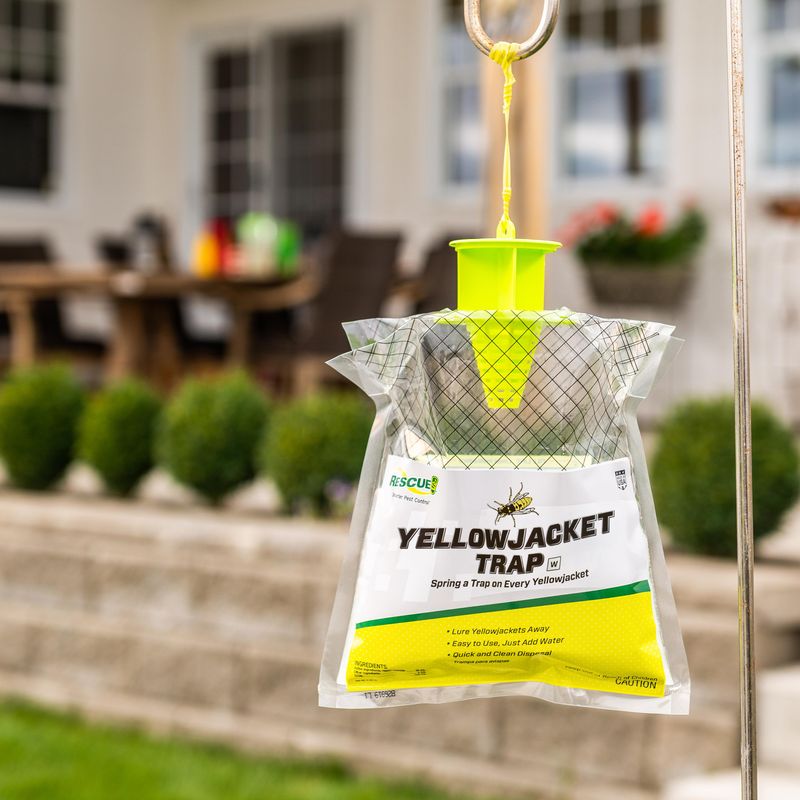
Traps can be a useful addition to your wasp management plan, but their placement and timing determine how much they actually help. Place commercial or homemade traps around the outside edge of your planting, away from the grape canopy and away from areas where people sit or walk.
Putting a trap directly in the vine draws wasps into the area you are trying to protect, which is the opposite of what you want. UC IPM’s yellowjacket management guidance recommends perimeter placement specifically to intercept foragers before they reach the target area.
Timing matters more than most gardeners expect. Iowa State Extension advises setting traps before berries ripen, because once yellowjackets have discovered ripe fruit, the food reward from the grapes will outcompete most trap baits.
Early deployment catches foragers while they are still searching and before a consistent feeding route is established.
Bait preferences shift by species and season. Protein-based baits such as meat or fish may attract more scavenging workers in some situations, while sweet liquid baits appeal to others.
A Michigan Extension response on grape wasp management noted that traps placed 10 to 20 feet from vines and maintained regularly can reduce localized forager pressure. Replace bait before it rots, keep traps clean, and follow the manufacturer’s instructions.
Traps can catch a meaningful number of workers and reduce activity in a localized area, but they do not eliminate a mature colony or guarantee that feeding will stop. Treat them as one layer of a broader plan rather than a standalone fix.
Handle nests, insect identification, and pesticides safely
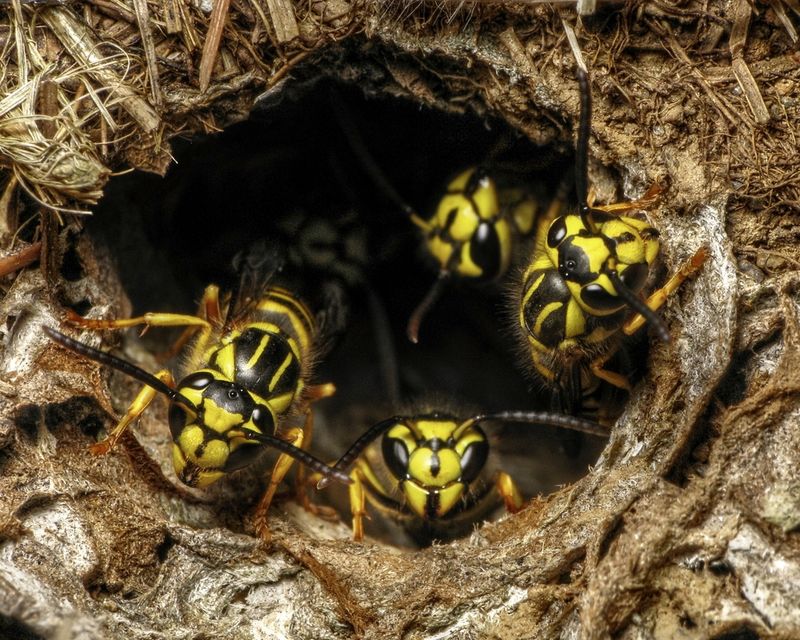
Not every striped, stinging insect flying near your grapes is a yellowjacket. Paper wasps build open, umbrella-shaped combs under eaves and on trellises.
Bald-faced hornets construct large gray paper nests in shrubs or trees. Honey bees are noticeably hairier than wasps, have a more rounded abdomen, and carry pollen baskets on their hind legs.
Texas A&M AgriLife guidance on honey bees around buildings recommends contacting a local beekeeper before taking any control action if you suspect a honey bee swarm or colony, since managed bees can often be relocated.
When a nest poses a real sting hazard, the safest approach depends on where it is located. Underground nests, wall-void nests, and large or hard-to-reach colonies are best left to a licensed pest professional, especially if children, pets, or people with sting allergies are nearby.
Penn State Extension’s stinging-insect guide recommends professional help for underground and wall-void nests and advises that any homeowner treatment be done after dark when wasps are less active, using a product labeled specifically for that nest type and location.
Never spray grape clusters with a structural wasp aerosol. Those products are not labeled for edible crops, and applying a pesticide to food in a way that is not permitted by its registered label is both unsafe and potentially illegal.
The EPA pesticide label search tool lets you confirm what a specific product is registered for before you use it. Pouring gasoline into a nest is dangerous and environmentally harmful and should never be attempted.
Severe allergic reactions to stings require immediate emergency care. If you or anyone nearby develops trouble breathing, swelling of the lips, tongue, or throat, dizziness, or symptoms affecting more than one part of the body after a sting, call 911 right away.
CDC guidance for outdoor workers confirms that anaphylaxis can progress rapidly. Anyone with a known severe sting allergy should carry their prescribed epinephrine and follow their physician’s emergency plan without delay.
Follow a layered plan and leave harmless wasps alone
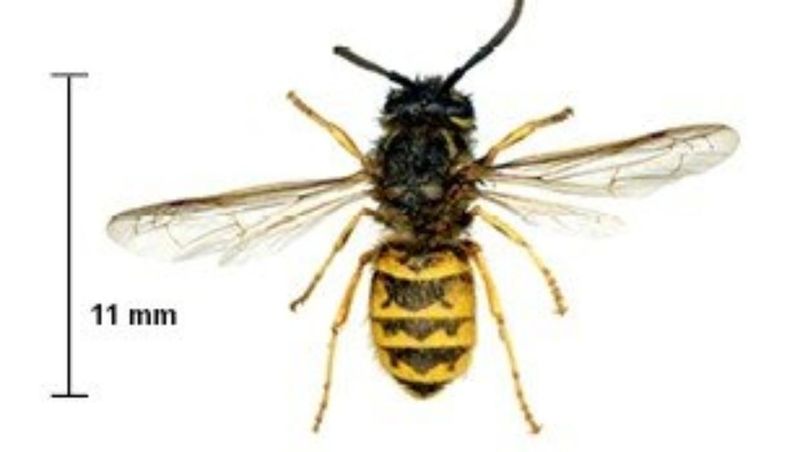
Pulling all of these steps together into a clear sequence makes the plan easier to follow when harvest pressure is building. Start by watching the insects carefully before assuming what you have.
A smooth-waisted, narrow-bodied wasp behaves and responds differently from a honey bee, and the right action depends on a correct identification. Once you know what you are dealing with, inspect the damaged clusters for the original source of injury before reaching for a trap or a spray.
From there, the practical order runs like this: pick ripe clusters without delay, remove split and fallen fruit from beneath the vine, and address whatever cracked or pecked the berries open in the first place. If clusters are still ripening and you have time before wasps establish a feeding routine, cover them with fine-mesh netting.
Add perimeter traps as an optional supplement, placing them away from the canopy and seating areas, and deploy them early for the best chance of catching foragers before they find the fruit. UGA Extension’s organic wasp management overview reminds gardeners that many wasps spend most of the season as beneficial predators, suppressing caterpillars and other garden pests.
Control is most justified when wasps are actively damaging fruit or posing a genuine sting hazard near people. A wasp foraging quietly on a single overripe cluster at the edge of your property rarely needs a response beyond cleaning up the damaged fruit.
Oklahoma State Extension notes that unnecessary nest removal eliminates a predator that was helping control other insects all season long. Work through the layered steps consistently, and you are likely to reach harvest with fewer losses and a safer yard, even if a few wasps are still flying.