

A row of crape myrtles looks tidy and promising the day you plant it, but give those trees a few growing seasons and the picture can change fast. When trunks are placed too close for the cultivar’s eventual canopy, overlapping crowns and crossing branches can turn a clean landscape line into a crowded, hard-to-manage tangle.
The culprit is almost always a planning step that gets skipped: spacing by the nursery container size instead of the plant’s mature width. Getting that one detail right before you plant makes the difference between a row that holds its shape and one that demands constant damage control.
The planning mistake that turns a young row into a tangled one

Crape myrtles are sold in containers that give almost no hint of what the plant will eventually become. A tree-form cultivar that will one day spread 15 feet across might sit in a five-gallon pot, looking compact and manageable on the nursery shelf.
When gardeners space a row based on that container size, or simply pick an arbitrary interval like four or five feet, the layout can look perfectly fine for the first two or three seasons.
The trouble arrives gradually. Young plants develop their canopies outward, and trunks that seemed well-separated at planting start to feel closer every spring.
Eventually the crowns overlap, branches from neighboring plants begin to cross, and what was intended as a clean row of distinct specimens starts to look like a single tangled mass. The problem is not that branches touch; it is that a large cultivar was placed as though it would stay small.
As University of Maryland Extension guidance on crapemyrtle problems makes clear, choosing a cultivar whose mature size fits the available space is the foundation of any sound planting plan. Spacing that ignores mature canopy width sets up a mismatch between the plant’s genetic potential and the room it actually has to grow.
The organizing principle for the rest of this article is mature canopy width. That single measurement, taken from a reliable cultivar description rather than from the container in front of you, is the planning baseline that keeps a row looking intentional instead of accidental.
Everything else, trunk-to-trunk distance, clearance from a wall, and the gap between mature branch tips, flows from that starting point.
Mature width, not nursery size, sets the planning baseline

The plant tag is the most underused tool in the garden center. Most shoppers check the flower color and maybe the height, then choose based on how the plant looks sitting in the pot.
The measurement that matters most for row planning, mature canopy width, is often printed right on the tag but rarely consulted before spacing decisions are made.
Crape myrtle cultivars vary enormously in their final size. Dwarf types may stay roughly 2 to 4 feet wide, shrub forms commonly reach about 5 to 10 feet, and tree-like cultivars can spread anywhere from about 15 to 25 feet at maturity.
University of Maryland Extension specifically recommends choosing a cultivar whose mature size fits the available space without depending on pruning to shrink the canopy. That advice reflects a straightforward reality: a genetically large plant will keep pushing toward its natural dimensions regardless of how often you cut it back.
The NC State Extension Gardener Plant Toolbox lists Lagerstroemia cultivars ranging from about 3 feet to more than 20 feet in height and width, which shows just how wide the range is. Picking a cultivar by bloom color alone and then hoping it fits is what creates spacing problems down the road.
All size estimates deserve a margin of caution. Mature dimensions listed on tags and in catalogs can shift depending on climate, soil quality, irrigation, pruning history, and whether the plant is grown as a multi-trunk shrub or trained into a tree form.
Clemson Cooperative Extension notes that cultivars range from small shrubs to large shrubs or small trees, and that selection should match the site. Use the best available cultivar-specific description as a starting point, then build in a reasonable margin rather than planting at the absolute minimum distance.
Use mature width as a starting point for separate crowns

Once you know the cultivar’s listed mature width, you have a practical starting point for trunk-to-trunk spacing in a row designed to keep each plant looking like a distinct specimen. For that kind of layout, beginning near the listed mature canopy width as your planning baseline is a reasonable approach.
A cultivar described as 15 feet wide, for example, suggests starting around 15 feet between trunks, then adjusting based on the site, the growth habit, and how much crown overlap you find acceptable.
That is a design interpretation of extension guidance, not a universal horticultural minimum. Extension spacing guidance consistently connects trunk placement to mature size and adequate airflow, but no single number applies to every cultivar or every site.
The 15-foot example is illustrative; your actual number depends on which cultivar you choose and what the finished row should look like.
A broad reference range from an NC State Trees and Shrubs planning guide lists common crape myrtle spacing at 12 to 24 feet alongside mature heights and widths of roughly 6 to 30 feet. That range underscores the point: there is no single magic number, and the spread from 12 to 24 feet exists precisely because cultivars differ so dramatically.
Three measurements are easy to confuse during planning, and mixing them up leads to errors. Trunk-to-trunk spacing is the center-to-center distance between adjacent plants.
Distance from a wall or structure is a separate clearance concern. The gap between mature branch tips is a third measurement, and it will be smaller than trunk spacing when crowns have grown toward each other.
Planning for separate crowns means thinking about all three, not just the distance that looks comfortable on planting day. Adjust your baseline for growth habit, site limits, and the amount of overlap you actually want, rather than treating any starting number as a fixed rule.
Closer spacing works when the design calls for a hedge or mass
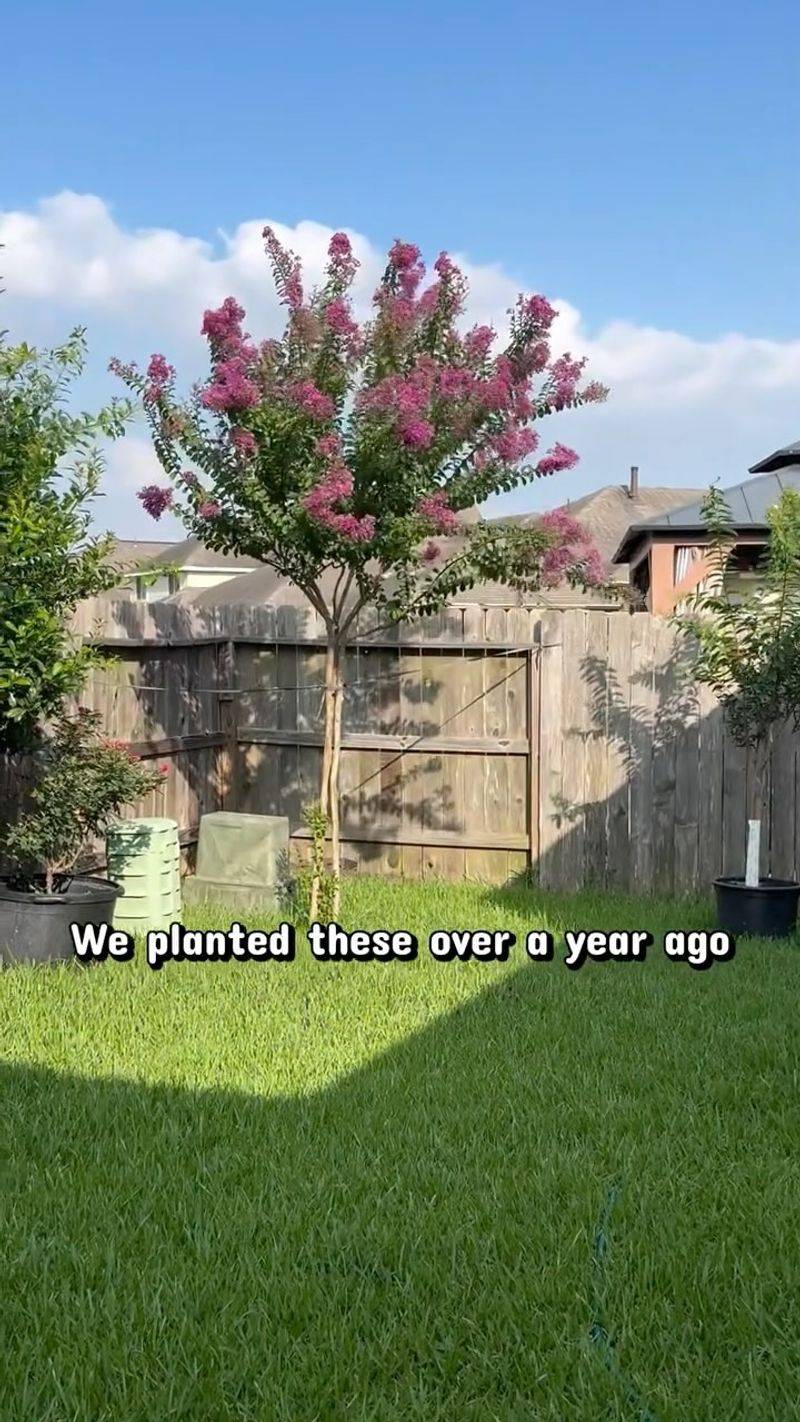
Not every row of crape myrtles is meant to show off individual silhouettes. A privacy screen along a property line, a continuous flowering hedge beside a fence, or a massed shrub border along a foundation all call for plants that grow together rather than apart.
In those situations, overlapping crowns are the point, not the problem.
The distinction that matters is whether the overlap is intentional or accidental. Deliberate hedge plantings use cultivars and spacing chosen to produce a continuous canopy.
Accidental crowding happens when a large tree-form cultivar is planted as though it will behave like a compact shrub. One is a design decision; the other is a planning gap.
Dwarf cultivars illustrate why spacing is always cultivar-specific. According to NC State Extension, the dwarf ‘Pocomoke’ is suited to close spacing in shrub plantings, a very different situation from a broad tree-form selection.
The U.S. National Arboretum’s profile of ‘Pocomoke’ describes it as a compact, mounding shrub that stays quite small, making tight spacing appropriate for a low hedge or mass planting where a large-canopy cultivar would quickly overwhelm the space.
Describing the design honestly before you plant keeps expectations aligned with outcomes. If the goal is a privacy hedge, choose a cultivar whose mature size and density support that purpose, then space accordingly.
If the goal is a row of distinct, open-crowned trees, treat the mature canopy width as your planning reference and give each trunk enough room to develop without forcing its branches into a neighbor. Mixing up those two design intentions is where rows go wrong, regardless of how carefully the plants are installed on planting day.
Overlapping crowns affect airflow, appearance, and maintenance
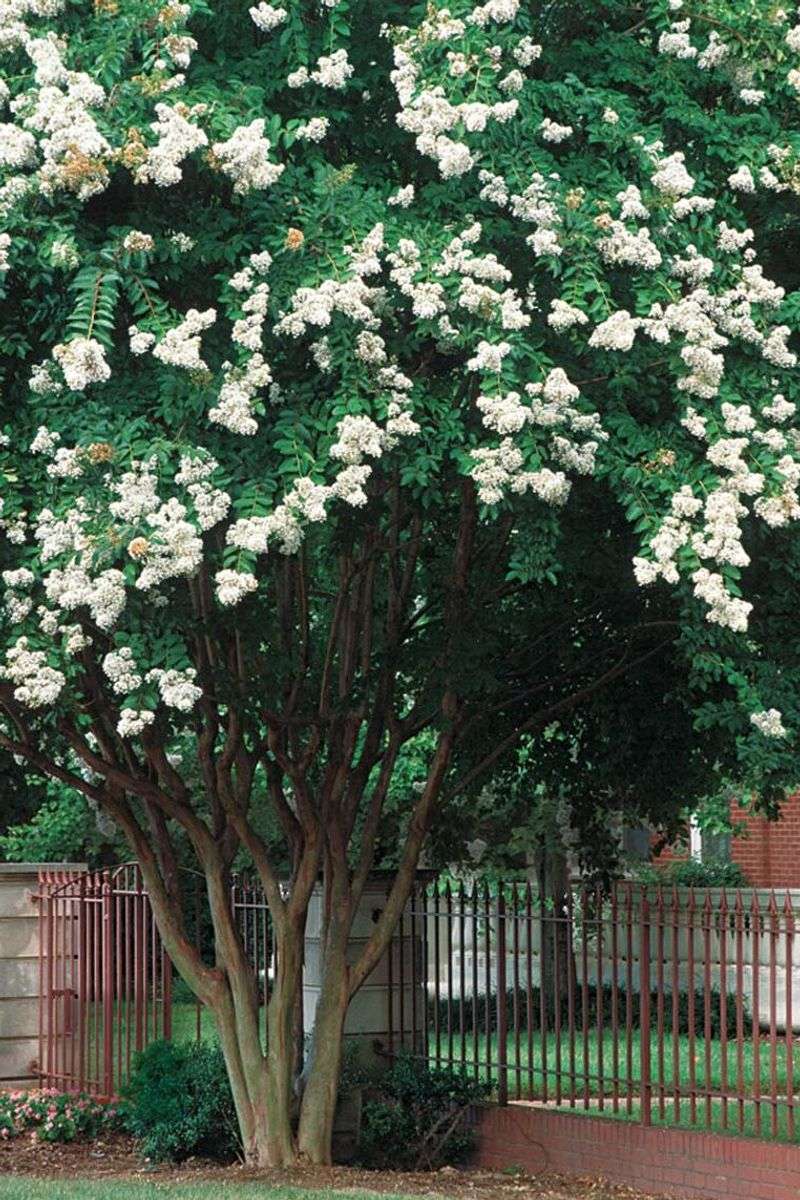
When crape myrtle crowns grow into each other without a deliberate design reason, the consequences show up in several ways at once. The most visible is structural: crossing and competing branches create a tangled silhouette that looks nothing like the clean, vase-shaped form these trees can develop when given adequate room.
Pruning becomes harder too, because you cannot reach the interior of one plant without working around its neighbor.
Reduced airflow through overlapping foliage is a real concern in North Carolina’s warm, humid summers. University of Maryland Extension connects poor air circulation and dense planting conditions with greater risk of powdery mildew and Cercospora leaf spot, both of which are fungal diseases that can affect crape myrtles.
Crowding is one contributor to that risk, but it is not the only factor. Cultivar resistance, sun exposure, irrigation habits, and seasonal weather all influence whether disease actually develops, so a crowded row should not be assumed to be a diseased one.
Full sun and good air circulation are the conditions crape myrtles prefer for strong flowering and overall health. Clemson Cooperative Extension notes that shade and dense planting can reduce bloom production and increase susceptibility to problems.
A row where crowns overlap significantly will shade interior branches, which reduces flowering on those portions of the plant and can make the whole row look patchy or uneven over time.
Maintenance costs go up when spacing is too tight. Inspecting for pest or disease problems is harder when branches interlock.
Removing a dead or damaged limb requires working in a confined space. Structural pruning, which should open the canopy and improve branch angles, becomes a tangle-management exercise instead.
None of those outcomes are inevitable in a slightly overlapping row, but they become more likely as the canopy closes in and access to individual plants decreases.
Choose the right-sized cultivar instead of planning to top it

Foundation borders, narrow fence lines, utility corridors, and tight entry walks all share a common challenge: the available width is fixed, but plants keep growing. The temptation is to buy a cultivar that looks attractive at the nursery and plan to keep it small through annual pruning.
That plan rarely works the way gardeners hope.
Severe topping, cutting every main stem back to stubs each year, does not shrink a cultivar’s genetic size. It produces a burst of fast, weak shoots from the cut points, creates knobby growths called topping stubs that look unnatural year-round, and can increase suckering from the base.
NC State Extension’s guidance on crape myrtle pruning is direct on this point: selecting a cultivar that naturally matures to the desired size is far preferable to repeatedly cutting a large one back. Pruning cannot permanently override the plant’s growth potential.
UGA Cooperative Extension reinforces that aggressive pruning damages natural form, generates weak regrowth, and can worsen pest and disease problems over time. For a narrow site, the better path is to select a dwarf or compact cultivar whose listed mature width fits the space comfortably, then let it develop its natural shape.
When pruning is genuinely needed, late winter or early spring is generally the right window, just before new growth begins. The goal should be selective structural cuts: removing broken limbs, branches that cross and rub, growth that points back toward the center of the canopy, or poorly positioned stems that disrupt the overall form.
Clemson Cooperative Extension describes this kind of targeted pruning as the approach that keeps crape myrtles healthy and well-shaped without sacrificing their natural character. Treating it as a substitute for adequate spacing, though, is where the cycle of annual topping begins.
Thin, remove, or replace a row that has outgrown its site

Rows that have already outgrown their intended space require an honest assessment before any work begins. The first question is whether the planting was ever meant to function as a hedge.
If the answer is yes, the overlapping crowns may simply need selective thinning to improve branch structure and airflow while preserving the continuous screen. If the answer is no, and the goal was always a row of separate specimen trees, then the site has a fundamental mismatch that selective pruning alone cannot permanently fix.
Structural pruning can improve the appearance and health of an overcrowded row in the short term. Removing crossing branches, clearing deadwood, and opening the interior of each plant to better light and air movement are all worthwhile steps.
What pruning cannot do is create lasting space where the site is genuinely too narrow for the cultivar’s mature canopy. The branches will grow back toward each other, and the cycle repeats.
For rows where the mismatch is severe, thinning by removing every other plant is one option. Replacing the entire row with a smaller cultivar is another.
University of Maryland Extension identifies replacement with properly sized cultivars as a legitimate remedy when a planting has outgrown its space.
Relocating established crape myrtles is possible in some cases but should not be treated as a routine fix. UMD Extension’s tree and shrub planting guidance notes that established plants can suffer significant root loss and transplant stress during relocation.
UGA Cooperative Extension recommends dormant-season timing for any transplanting work, but large specimens should be evaluated case by case. For major removals or significant structural work on established trees, consulting a certified arborist gives you the most reliable assessment of what is feasible and what the risks are.
Plan the row around the mature canopy and intended design

Before any crape myrtle goes in the ground, a short decision sequence can prevent years of corrective work. Start by identifying the cultivar’s expected mature width from a reliable tag or extension source.
Then decide what the finished row should look like: separate crowns with visible space between them, or a continuous hedge that fills in completely. That design choice determines how close the trunks should be, and it should be made before the first hole is dug.
Measure the available site carefully and compare it against the spacing your chosen cultivar requires. Leave a reasonable margin beyond the minimum, because mature-size estimates can vary with soil, irrigation, and local growing conditions.
University of Maryland Extension and extension spacing guidance both point toward matching the cultivar to the site rather than adjusting the site to fit whatever plant looked good at the nursery.
The tangled appearance that gives this article its subject is not a crape myrtle problem; it is a planning mismatch between plant size and available space. These trees hold their form beautifully when the cultivar fits the layout.
A deliberate spacing plan, built around mature canopy width and a clear design intention, is what turns a row of young plants into something that keeps looking right season after season rather than something that demands constant intervention to stay manageable.