
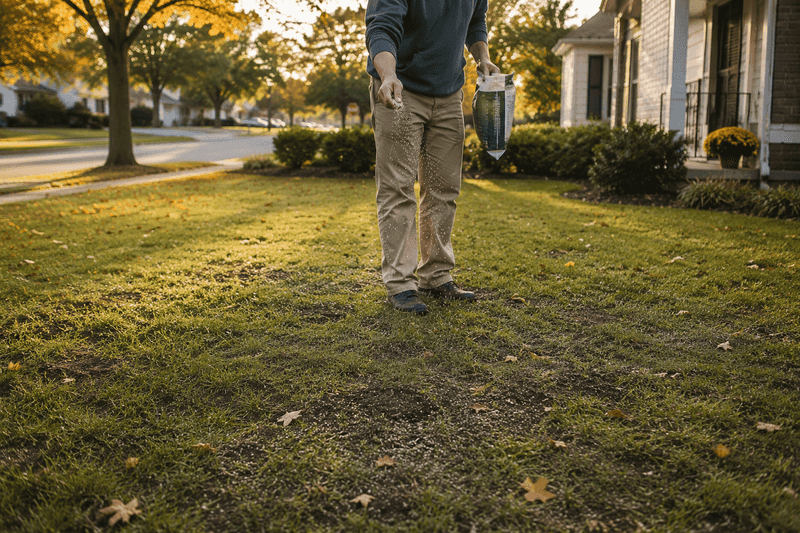
Spreading grass seed over your lawn in fall feels like a smart move, but watching bare patches stay bare a week or two later is genuinely frustrating. Poor seed-to-soil contact is one important possibility worth checking first: seed that lands on thick turf, thatch, or loose clippings may never reach moist ground, leaving it to dry out or get yanked up during mowing.
That said, temperature, timing, species choice, seed quality, and irrigation habits can all produce the same disappointing result, so the fix depends on figuring out which problem you actually have.
Start With Seed-to-Soil Contact, Not a Single-Cause Verdict
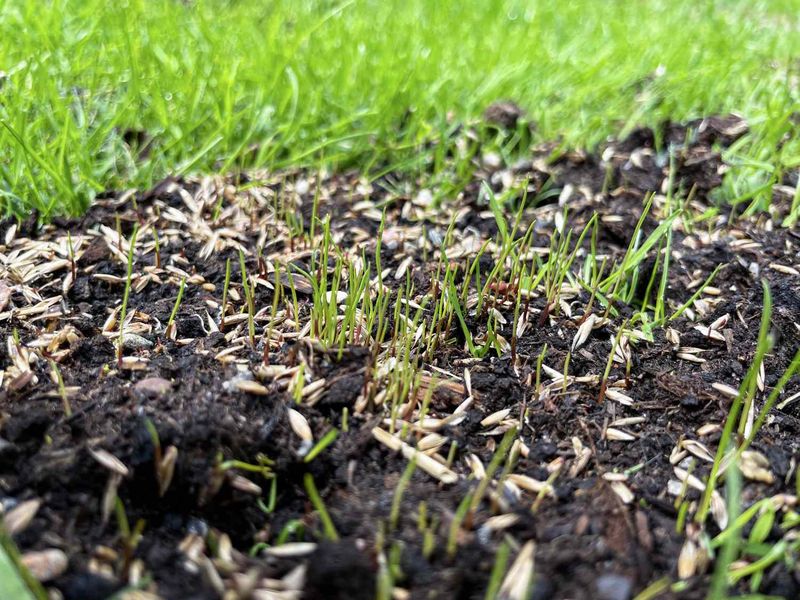
Seed resting on top of a thick, leafy turf canopy faces a rough start. When broadcast seed lands on dense grass blades, matted thatch, or a layer of loose clippings, it can stay suspended above the soil surface rather than reaching the firm, moist ground where roots need to anchor.
That seed is exposed to sun and wind, dries out quickly, and may germinate weakly or not at all. As University of Georgia Extension guidance on managing overseeded grasses explains, seed must get below the existing canopy and onto the soil to establish reliably.
Mowing before the canopy fully dries can also pull seedlings that germinated in the turf mat rather than in soil, so the timing of your first post-seeding mow matters too. Poor contact is a real and fixable explanation worth investigating, but labeling it the single cause of every failed overseeding would be an overreach.
Several other conditions can produce the same bare result. Soil temperatures that are still too warm or have dropped too low for the species you planted, repeated surface drying between irrigations, seed buried too deeply, a grass variety that does not suit your region, a seed lot with low germination or purity, and disease developing under persistently wet conditions are all documented reasons that UF/IFAS guidance on establishing a Florida lawn identifies as factors in failed grass establishment.
Checking contact first is a logical starting point, not a guaranteed verdict.
Open the Turf Without Damaging the Permanent Lawn
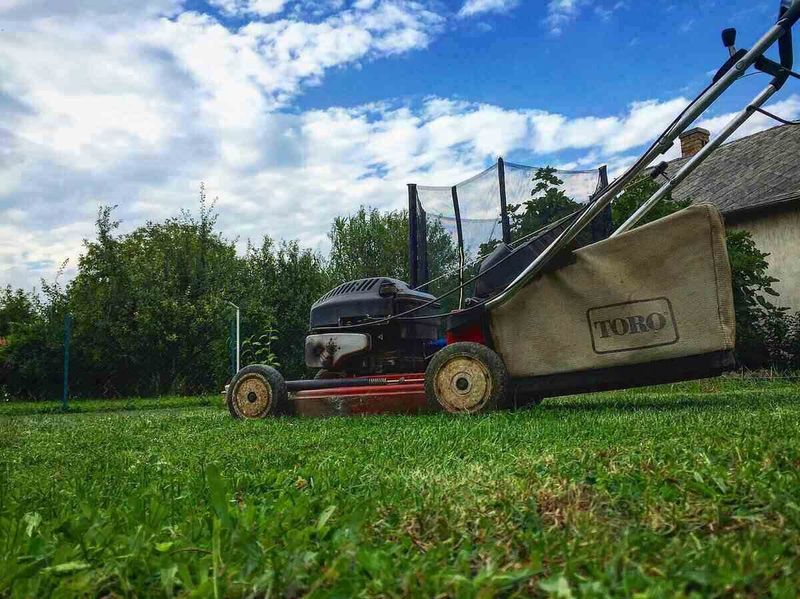
Before broadcasting a single seed, the existing turf surface needs to be prepared so seed has a realistic path to soil contact. The first step is mowing the lawn closer than your normal height, within the safe range for whatever warm-season grass you have, then removing the clippings along with any accumulated debris.
Bermudagrass can typically handle a lower cut than St. Augustinegrass, so follow the mowing guidelines for your specific turf rather than cutting everything as short as possible.
Aggressive scalping that stresses the permanent lawn is not the goal here. Texas A&M AgriLife Extension overseeding guidance recommends mowing the existing turf short to reduce competition and improve seed-to-soil contact, but the cut should remain within the safe tolerance for your grass so it can survive winter and recover in spring.
Once mowing is done, rake, sweep, or blow away loose clippings, dried leaf matter, and any thatch that came up during mowing. A blower or stiff rake works well for this step.
The objective is to expose enough of the soil surface that seed can fall through the canopy and make contact with firm ground below, not to strip the lawn bare. Georgia Extension’s overseeding management recommendations reinforce this approach: remove debris so seed can reach the soil, but keep the permanent grass intact enough to anchor the surface through the season.
Place Seed Shallowly and Improve Contact Gently
Broadcasting seed evenly across a prepared surface is straightforward, but what happens next often determines whether any of it germinates. Seed left sitting loosely on top of the soil or in the grass canopy dries out fast and stays vulnerable to wind, birds, and irrigation washout.
Seed pushed too far down, on the other hand, may not have enough energy to push through to light. Shallow, firm placement is the target.
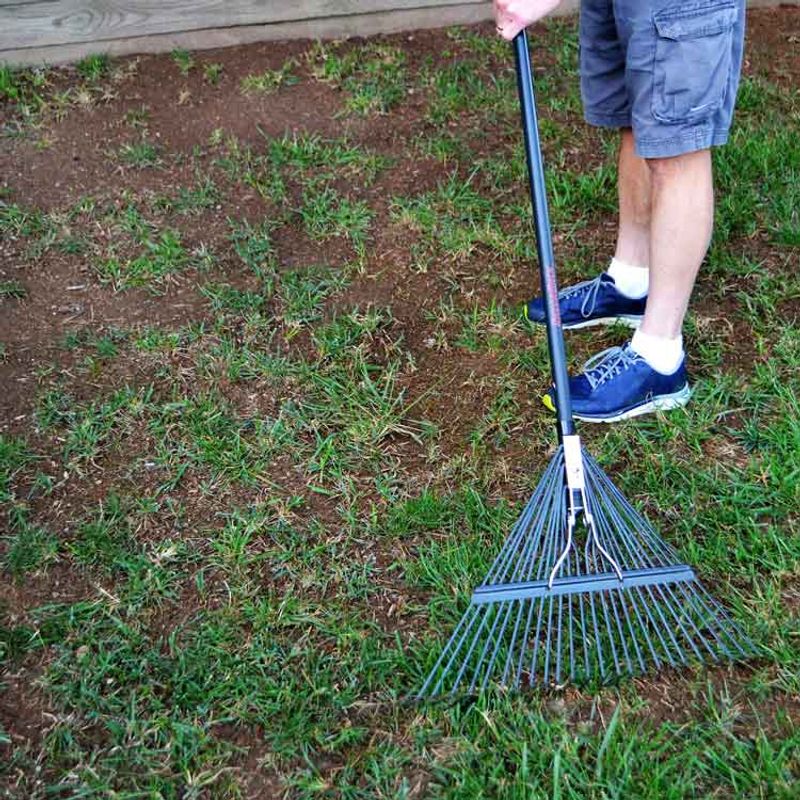
UF/IFAS Extension Marion County’s overseeding guide recommends lightly raking the seed into the surface after broadcasting to improve soil contact. A stiff broom, a light drag, or a roller can accomplish a similar result depending on your turf type and surface condition.
The key word is lightly: any of these tools can bury seed too deeply if used aggressively, and deep burial is its own cause of failed emergence.
For general context on why placement depth matters, Penn State Extension’s forage-seeding guidance notes that firm, shallow contact with the soil surface supports more consistent emergence than seed left loose above the ground. That principle applies broadly, though the specific tools and techniques for a residential lawn differ from a pasture setting.
Avoid creating furrows or channels in the soil surface, since those can concentrate water during irrigation or rain and move seed away from where you placed it.
Keep the Seedbed Moist Without Keeping It Saturated
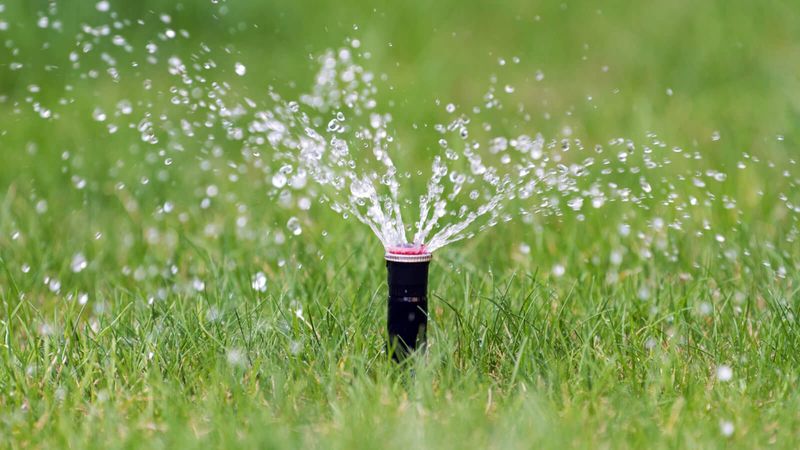
Newly placed seed needs consistent surface moisture to germinate, but the amount and frequency of irrigation should match your actual conditions rather than follow a rigid calendar schedule. Soil type, shade cover, sprinkler output, daily temperatures, and how quickly your surface dries all affect how often you need to water.
The goal is to keep the top inch or so of soil moist without letting it puddle, saturate, or stay wet enough to encourage disease.
UF/IFAS guidance on Florida lawn establishment describes watering two to three times daily in small quantities for roughly two weeks during germination, and recommends using a gentle spray rather than coarse or high-pressure output that can move seed. Georgia Extension suggests three to five light irrigations per day when needed, with no puddling allowed.
Treat both of those as examples of what frequent-light irrigation looks like in practice, not as fixed schedules that apply to every lawn everywhere.
Two failure modes are worth understanding side by side. If the surface dries out after seeds have absorbed water and begun to swell, the seedlings can die before roots develop, and that damage is often permanent.
Conversely, standing water, repeated saturation, and persistently wet foliage create conditions where seed can wash away, oxygen in the soil drops, and fungal disease becomes a real risk. Georgia Extension’s overseeding management notes flag both extremes as problems to avoid.
Adjust your irrigation up or down based on what you observe at the surface, not what the clock says.
Decide What Fall Seeding Means for Your Region
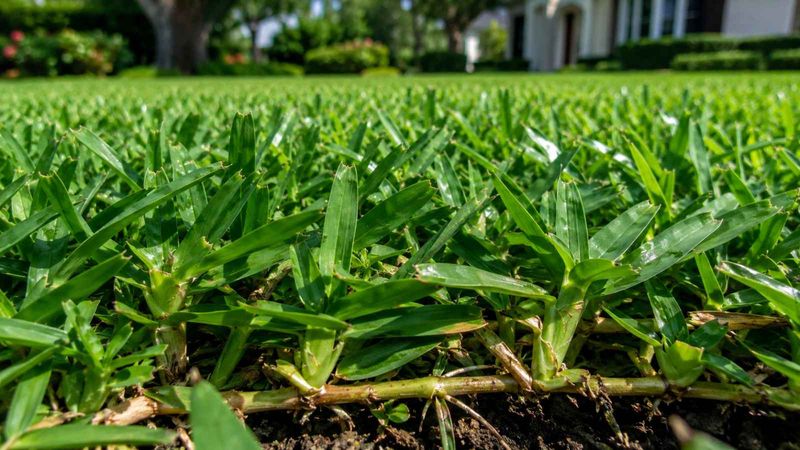
Fall overseeding is not one single practice. The goals, grass species, timing windows, and long-term trade-offs differ significantly depending on where you live and what kind of turf you already have.
Getting clear on which situation applies to your lawn before you reseed can prevent a repeat of the same failure.
In Texas, bermudagrass lawns are commonly overseeded with annual or perennial ryegrass for temporary winter color. Texas A&M AgriLife Extension’s overseeding guidance places the window roughly in early October for North Texas and late October for Central Texas, and warns that seeding too early or too late increases failure risk.
The same source notes that ryegrass, particularly perennial ryegrass, can delay bermudagrass spring recovery, and if the ryegrass dies back suddenly after a hard spring, the underlying lawn can be left thin. For St. Augustinegrass, the guidance is more cautious still: Texas A&M generally discourages overseeding home St. Augustine lawns and, when it is done, recommends annual ryegrass over perennial because it grows more vertically through the turf and exits faster in heat.
Florida is a different situation. UF/IFAS guidance on Florida lawns in winter identifies low- to mid-70s daytime temperatures as a trigger for ryegrass overseeding and gives October through mid-November as a general North Florida window.
South Florida lawns often remain green through winter without any overseeding at all. Texas A&M’s ecological turf tips reinforce that ryegrass is temporary winter cover, not a permanent solution for bare warm-season turf.
Tall fescue establishment in adapted areas is a genuinely different fall-seeding situation. University of Georgia Extension’s tall fescue seeding guidance identifies September and October as favorable months in Georgia’s adapted zone, where the goal is permanent turf rather than seasonal color.
Treating ryegrass overseeding and tall fescue establishment as interchangeable practices leads to the wrong seed, wrong timing, and wrong expectations.
Check Timing, Seed Quality, and Other Failure Clues
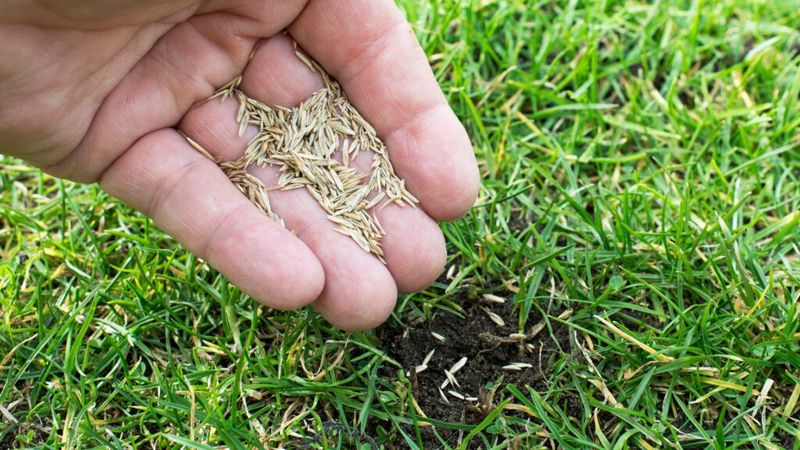
When seed-to-soil contact looks adequate but the lawn still shows no new growth, a few other variables deserve a close look before you reseed. Soil temperature is often the culprit that gets overlooked.
Ryegrass germinates best when soil temperatures are in the 50s to low 60s Fahrenheit; if the ground is still warm from a long Southern summer, germination may be slow or inconsistent even with good contact and moisture.
The seed bag itself can tell you a lot. UF/IFAS lawn establishment guidance recommends looking for turf seed with at least 90% purity and 85% germination for Florida conditions, and notes that the label should clearly identify the species or cultivar, weed-seed content, and the date of the germination test.
An old test date or a low germination percentage does not automatically mean the seed will fail, but it does lower your odds in the field.
Label numbers also come with an important caveat. Penn State Extension’s seed and seedling biology resource explains that germination percentages are measured under controlled lab conditions, and field emergence can fall short because of temperature swings, moisture variation, placement depth, insects, disease, and other real-world stresses.
A bag labeled 90% germination does not mean 90% of seeds will produce visible grass in your yard.
Patience matters here too. UF/IFAS Clay County Extension notes that ryegrass can emerge in roughly 7 to 10 days under suitable conditions, but cooler temperatures, imperfect contact, or inconsistent moisture can push that timeline out.
One week without visible growth is not proof that the seeding failed. Wait, keep the surface moist, and reassess after two full weeks before drawing conclusions or reseeding.
Protect Seedlings After Emergence
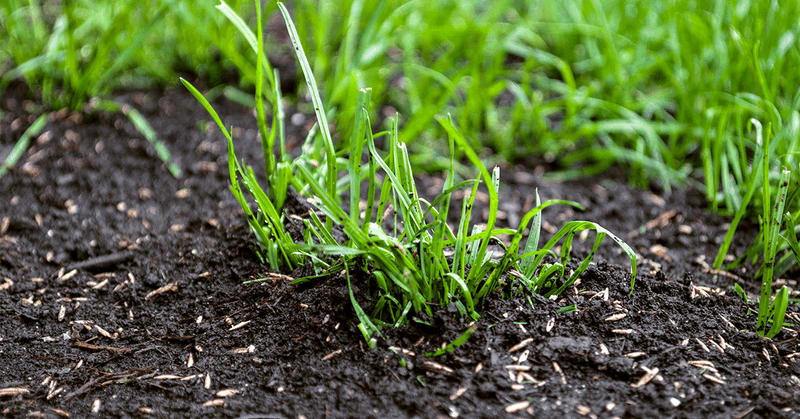
Seeing green shoots emerge is a good sign, but new seedlings are fragile and easy to damage before they develop a proper root system. Two practices that seem routine, mowing and applying lawn products, can undo germination that took weeks to achieve if they happen at the wrong time or in the wrong way.
Hold off on mowing until the new seedlings are visibly taller than your target height, roughly 30% above the height you plan to maintain. Georgia Extension’s overseeding management guidance recommends mowing with sharp blades on dry turf and waiting until seedlings are established enough to handle the stress.
Seedlings that germinated in the turf mat rather than in firm soil are especially vulnerable to being pulled out by a mower, which is one reason good seed-to-soil contact matters all the way through to the mowing stage.
Herbicide timing is just as critical. UF/IFAS weed management guidance for Florida lawns specifically warns against applying preemergence herbicides before or immediately after seeding ryegrass, bermudagrass, bahiagrass, or centipedegrass, because those products can interfere with grass establishment just as effectively as they stop weed seeds.
If weeds appear among new seedlings, identify them before reaching for any product, and check that any treatment is labeled for your grass type, your region, and the specific weed you are targeting. Automatic pesticide applications after a seeding setback can make the problem worse rather than better.
Use a Diagnostic Reset Before You Reseed
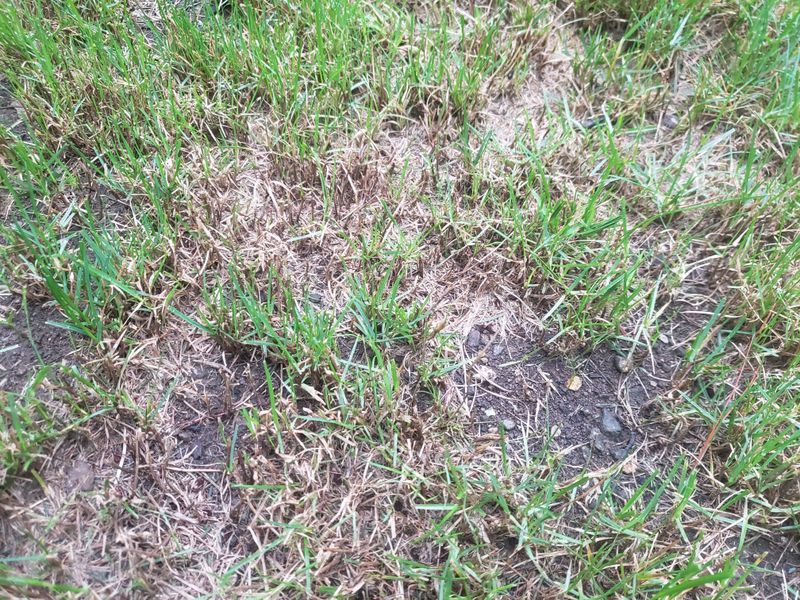
Before spreading another bag of seed over a lawn that did not respond, run through a short checklist. Did the seed actually reach bare soil, or did most of it stay in the canopy?
Was the surface moist consistently during the germination window, or did it dry out between irrigations? Was the species suited to your region and the timing right for your soil temperature?
Is the seed still within a reasonable shelf life, with label purity and germination numbers that meet a basic standard?
Improving seed-to-soil contact, as outlined in Georgia Extension’s overseeding management recommendations, may be enough to turn a failed seeding into a successful one. But if contact was adequate and emergence still did not happen, the next step is to revisit timing, species suitability, and seed quality before assuming more seed is the answer.
UF/IFAS guidance on Florida lawns in winter is a useful reminder that overseeding is not the right move for every Southern lawn in every season.
The right correction depends on what actually went wrong. A lawn that failed because of poor contact needs a better surface preparation.
One that failed because of species mismatch or off-season timing needs a different plan entirely. Getting the diagnosis right the first time saves seed, water, and the permanent turf underneath.