
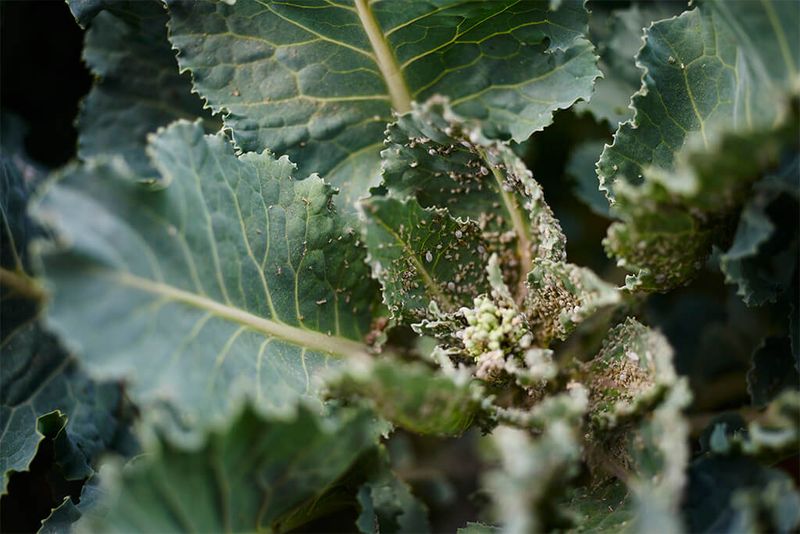
Curling kale leaves and a sticky, tacky film on the foliage can stop a Southern gardener cold, especially when fall was supposed to be the season these plants finally thrived. Before reaching for any spray, it helps to know whether aphids are actually the cause or whether something else entirely is stressing your crop.
A quick look at the undersides of those curled leaves can tell you more than the symptoms alone ever will. Getting that answer right is what separates a targeted, safe fix from a treatment that does more harm than good.
Check the undersides before calling it an aphid problem
Curled, sticky kale leaves can point toward a foliage aphid infestation, but the symptoms alone do not confirm it. Leaf distortion, a tacky surface, and visible insect clusters on the undersides together make a much stronger case, so the first step is always to look closely rather than assume.
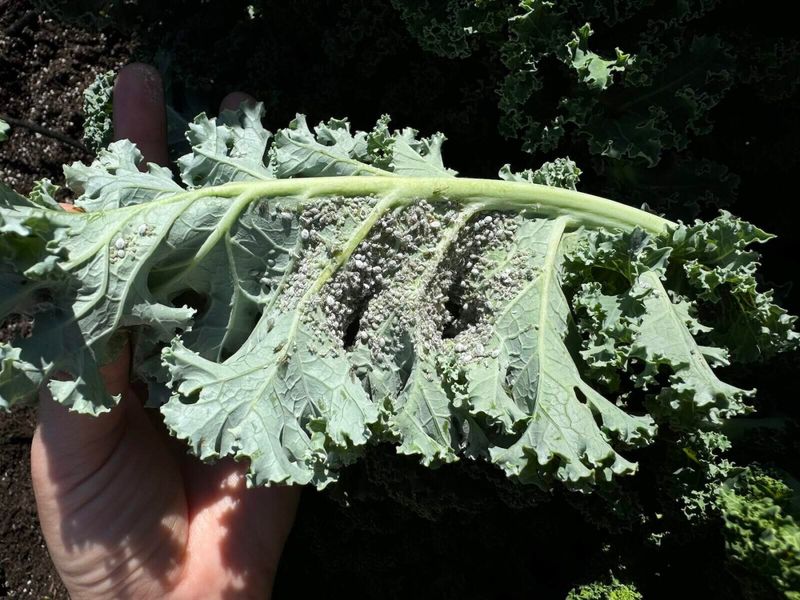
Turn the leaves over and check the undersides, especially on young leaves and new growth near the growing tip. Run your eyes along the stems too.
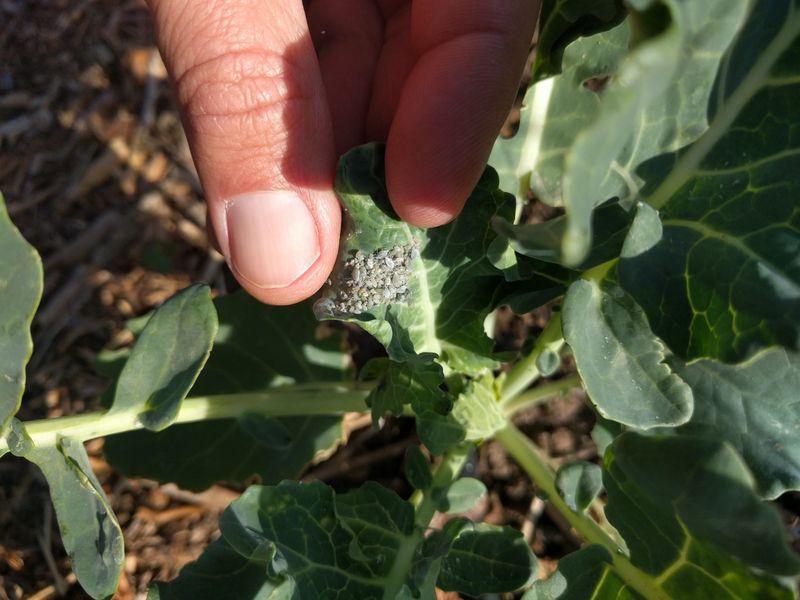
You are looking for live insects, shed skins that look like pale hollow shells, or a shiny sticky residue called honeydew, which aphids produce as a waste product after feeding. UC IPM’s cole crop aphid guidance notes that cabbage aphids are gray-green and often coated with a whitish waxy powder, making them look almost dusty when colonies build up on brassicas.
Aphids feed with piercing-sucking mouthparts, drawing sap from plant tissue. Heavy feeding on young kale can cause leaves to curl inward or downward, yellow, twist, or look stunted.
According to University of Minnesota Extension’s aphid resource, honeydew itself does not usually injure the plant directly, but it can attract ants and support the growth of black sooty mold.
Established kale plants often survive moderate aphid pressure without permanent damage. Young transplants and heavily colonized plants face more serious stress.
If you flip the leaves and find no live aphids, no cast skins, and no honeydew, the curling may have another cause entirely, and that distinction matters before you do anything else.
Why fall conditions can favor aphid buildup
Fall is not automatically aphid season, but conditions during autumn in parts of the South can line up in ways that help aphid populations build on brassicas. Cool, dry weather in particular tends to favor rapid aphid development, and UGA’s commercial leafy greens production bulletin identifies green peach aphids as especially destructive on late-fall plantings of kale, collards, mustard, and turnips in Georgia.
Tender new growth that kale puts out during cooler temperatures is exactly what aphids prefer. When leaves curl early in the season, those curled edges can create sheltered pockets where colonies establish and expand before gardeners notice.
That does not mean every fall planting will have an outbreak. Weather variability, the age and vigor of the plants, local predator populations, and planting date all shape whether a few scouts turn into a damaging colony.
Timing also differs across the region. UGA’s fall vegetable gardening guide lists specific Georgia planting windows for kale, while UF/IFAS’s Florida vegetable gardening guide and Texas A&M AgriLife’s fall gardening resource reflect the substantially different planting calendars in those states.
Applying one date or one outbreak pattern to all of the South will lead you astray. Check your local extension office for timing that fits your specific region and climate.
Separate aphids from other causes of curling and stickiness
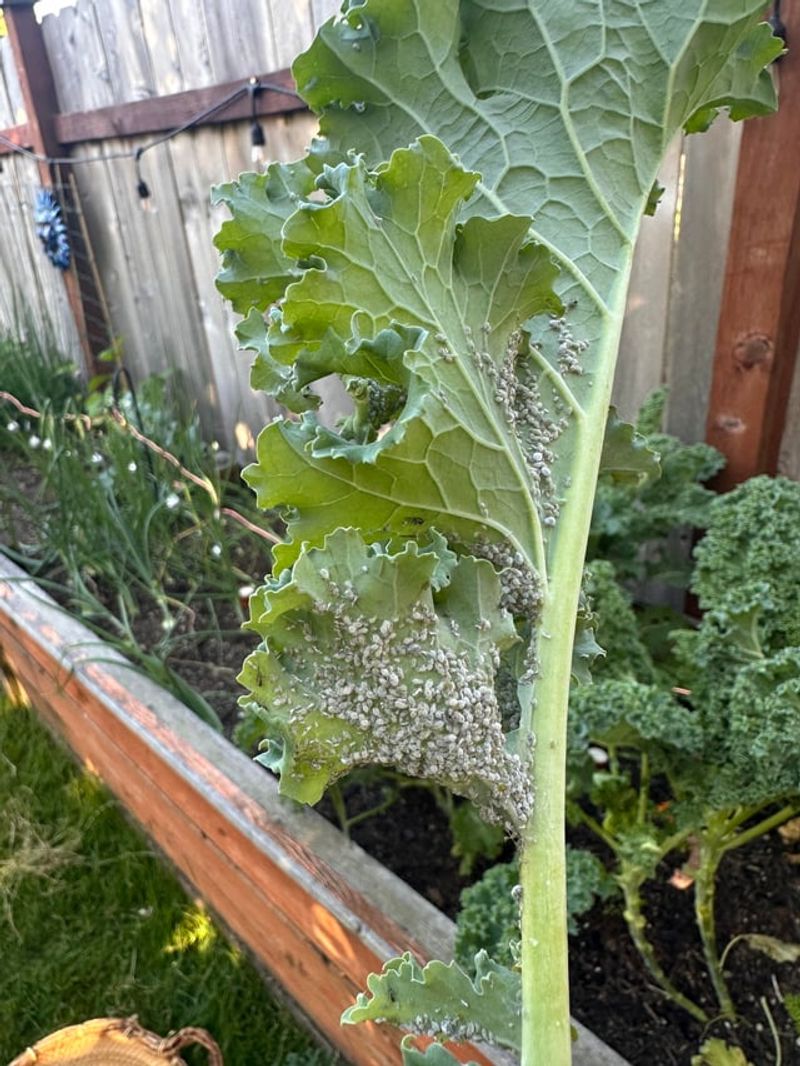
Sticky leaves and curled foliage are not exclusive to aphid infestations. Whiteflies, soft scales, and other sap-feeding insects also excrete honeydew, so the presence of a tacky film without visible colonies should prompt a closer look rather than an immediate aphid treatment.
The insects themselves, not the stickiness alone, confirm the diagnosis.
When you do find live colonies, the most common culprits on fall kale are cabbage aphids, turnip aphids, or green peach aphids. Each looks a little different, but all produce honeydew and can cause leaf distortion with heavy feeding.
UC IPM’s cabbage aphid page explains that leaves may stay curled even after aphids have been removed because the distortion reflects earlier feeding damage rather than an active infestation. So finding no aphids after a wash does not mean they were never there.
If aphids were never confirmed at all, or if symptoms keep progressing after you have addressed the insects, consider other possibilities. Drought stress, heat damage, herbicide drift, nutrient deficiencies, and viral infections can all cause similar-looking leaf distortion.
Aphids can transmit certain plant viruses, but not every curled kale leaf is a virus case, and removing aphids does not guarantee virus prevention.
One more distinction worth making: UGA’s cabbage root aphid fact sheet describes a separate pest that attacks roots underground rather than forming visible clusters on leaf undersides. Root aphid damage may look like wilting or nutrient stress, and it requires a completely different diagnostic path from foliage aphid management.
Start with water and selective pruning
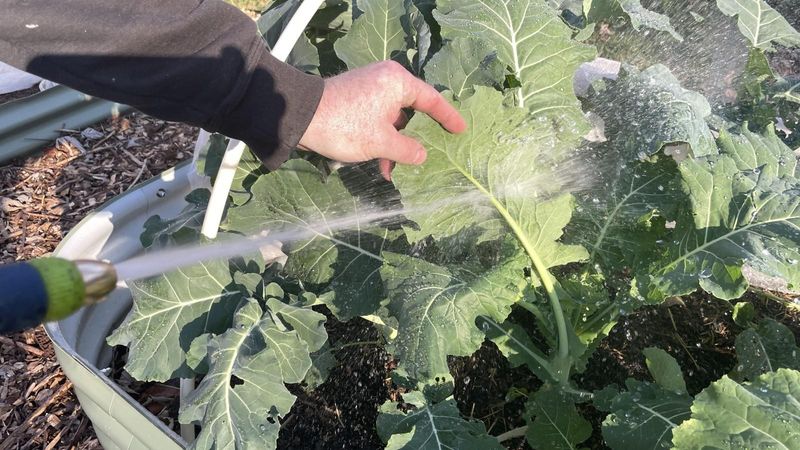
Once you have confirmed live aphids, the first response does not require a product at all. A firm stream of water aimed at the leaf undersides, stems, and growing tips can dislodge large numbers of aphids quickly.
The goal is to knock them off without bruising the plant, so adjust the nozzle to a strong but not punishing setting.
University of Minnesota Extension notes that water sprays are a legitimate first-line tool, but they may need to be repeated because the wash does not eliminate every insect and does not prevent aphids from returning. Plan to check the undersides again a day or two later and repeat the rinse if colonies are rebuilding.
Acting early matters for a specific reason: once leaves curl tightly around a colony, the curled tissue itself shelters the insects from water and from natural enemies that might otherwise find them. Catching the problem before leaves close up gives both the water spray and beneficial insects a better shot at the population.
After washing, look at each affected leaf honestly. Heavily colonized leaves or those that are badly distorted and unlikely to recover can be removed and discarded.
Pruning that damaged tissue reduces the number of insects on the plant and eliminates some of the sheltered pockets where aphids hide. That said, not every affected leaf needs to go, and a mature kale plant does not need to be pulled just because some outer leaves showed damage.
Check the plant again after a few days. Lingering leaf curl at that point may be a scar from earlier feeding rather than a sign that the problem is ongoing.
Let beneficial insects influence the decision
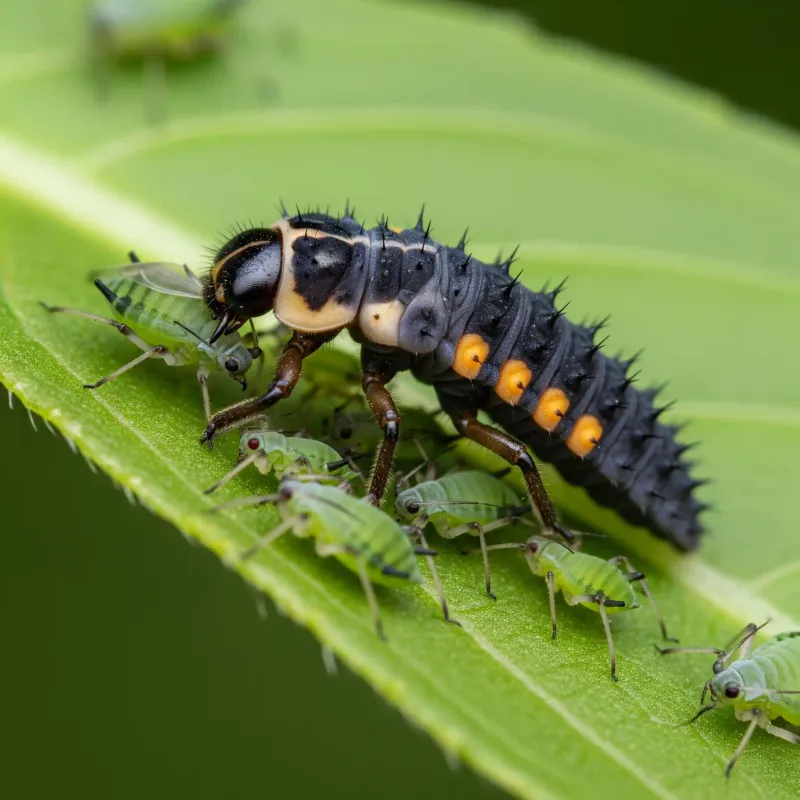
Before reaching for any spray, spend a few minutes watching the plant. Lady beetles, lacewing larvae, syrphid fly larvae, and tiny parasitic wasps are all common predators and parasitoids that target aphids in Southern vegetable gardens.
Their presence near a colony is a reason to slow down and monitor rather than treat immediately.
Natural enemies can bring aphid populations down meaningfully, but they work on their own timeline. UF/IFAS’s natural products pest management guide and UF/IFAS’s cabbage aphid fact sheet both acknowledge that predator populations sometimes lag behind a fast-growing aphid colony, so the presence of beneficials is not a guarantee of quick control.
A colony that is doubling rapidly on a young transplant may outpace what predators can handle before harvest quality suffers.
The practical question is not whether beneficials are present but whether they appear to be gaining ground. If the colony is shrinking or holding steady and the plant is not badly distorted, continuing to monitor while avoiding sprays gives predators the best environment to work in.
Broad-spectrum insecticides can kill lady beetles, lacewings, and parasitic wasps along with the aphids, which can make a follow-up infestation harder to control naturally.
Flowering plants near the garden support adult syrphid flies and lacewings, which need nectar and pollen. Removing all nearby flowers to tidy the garden can reduce the habitat that sustains these beneficial populations.
UC IPM’s cole crop guidance frames the control decision around plant age, colony size, leaf distortion severity, and predator activity rather than any fixed aphid-per-plant count, which is a more useful framework for home gardeners than a single numerical threshold.
Use a labeled contact treatment only when needed
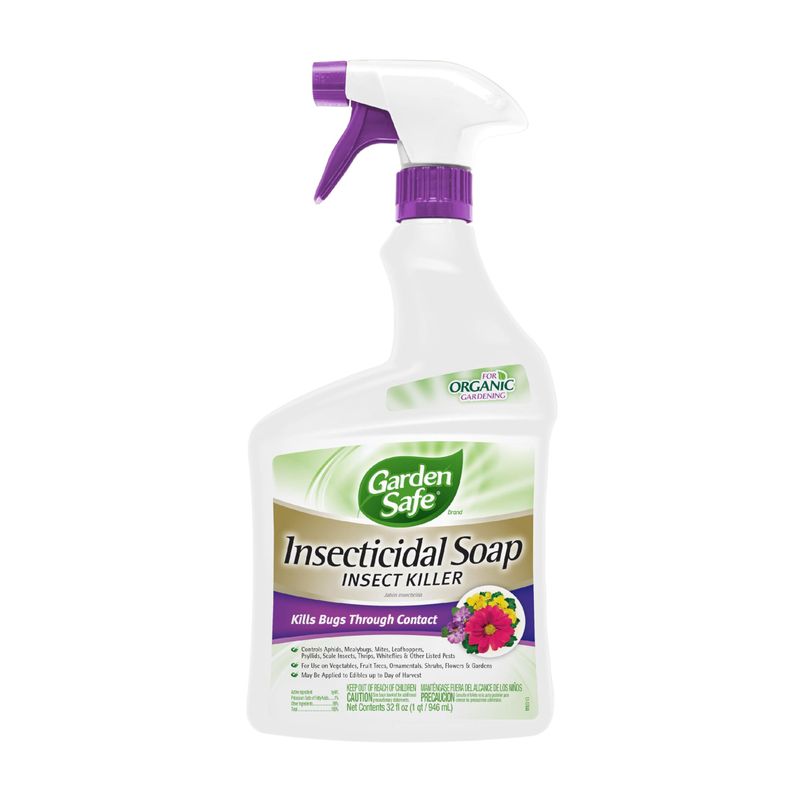
If water sprays and pruning have not brought the colony under control, and beneficial insects are not keeping pace, a contact spray may be the next step. The key phrase is “labeled for aphids on kale or leafy vegetables.” Products such as insecticidal soap or horticultural oil can be effective options where the label permits their use on edible greens, but the label is the legal and practical authority on crop, pest, rate, and timing.
Both insecticidal soap and horticultural oil work through direct contact, meaning the product must actually wet the aphid’s body to be effective. UF/IFAS’s natural products guide is clear that dried residues generally do not continue killing insects after the spray dries, so thorough coverage of leaf undersides, stems, and curled leaf edges is essential.
Missing a sheltered colony means the problem continues.
UF/IFAS’s cabbage aphid fact sheet advises spraying a small test area first and waiting about a day before treating the whole plant. Soap and oil products can cause phytotoxicity, especially on drought-stressed plants, in hot conditions, or on sensitive varieties.
UF/IFAS specifically cautions against applying horticultural oil above 90 degrees Fahrenheit.
If neem-based products are an option you are considering, understand that azadirachtin-containing neem products tend to work by discouraging feeding and disrupting insect development rather than by delivering a fast knockdown. Expect slower results than with insecticidal soap, and still follow the label on rate, interval, and preharvest timing.
Ordinary dish detergent is not a safe substitute for labeled insecticidal soap. Penn State Extension’s home remedy caution explains that household detergents and improvised mixtures can burn foliage, have not been tested at reliable rates, and are not labeled for use as pesticides on edible crops.
Stick to products designed and tested for this purpose.
Prevent new colonies and monitor the plant
After the initial response, consistent monitoring matters more than any single treatment. Recheck the undersides of leaves and the new growth at the growing tip every few days.
Aphid populations can rebuild from a small number of survivors, and catching a resurgence early keeps the options simple.
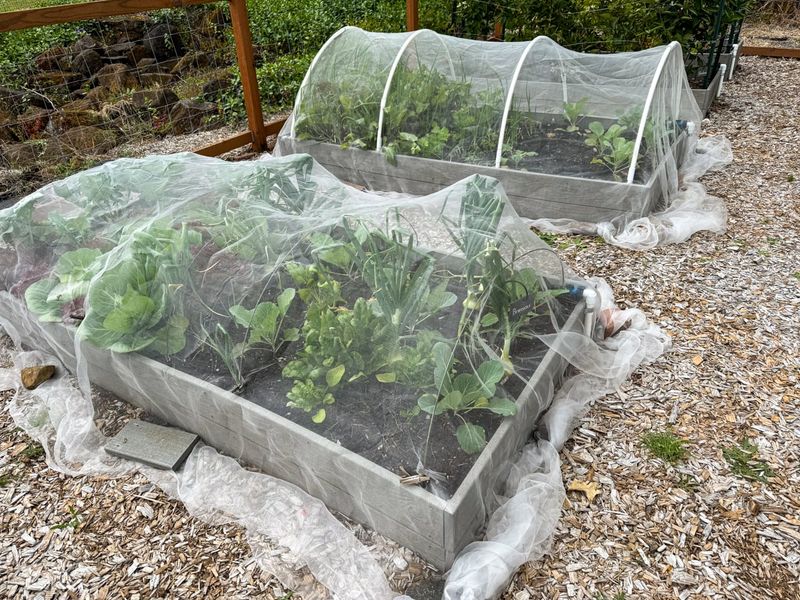
Row covers installed over young fall vegetable transplants before any infestation appears can physically block aphids from reaching the plants. Texas A&M AgriLife’s fall vegetable gardening guide recommends covers as a preventive technique for fall gardens.
The important caveat is that covers prevent exposure rather than cure an existing colony, and they require attention to heat buildup and ventilation, especially during the warmer stretches of fall in the South.
Plant stress can also make kale more vulnerable to aphid buildup. Keeping plants adequately watered and avoiding excessive nitrogen fertilizer, which pushes out the soft, tender growth aphids prefer, helps reduce conditions that favor rapid colony establishment.
For planting timing, use local guidance rather than a single regional date. UGA’s fall vegetable guide, UF/IFAS’s Florida vegetable guide, and Texas A&M’s resources each reflect the different planting windows across the South.
Timing that works in Georgia may be too early or too late for central Florida or South Texas.
Finally, reassess the diagnosis if aphids were never confirmed by direct inspection, if symptoms continue to worsen after appropriate aphid control, or if the leaf distortion shows signs that point to other causes. UC IPM’s cabbage aphid guidance makes the useful point that leaves can remain distorted long after aphids are gone, so a later inspection finding no insects is not evidence that the original problem was something else entirely.
Protect the harvest while you solve the problem
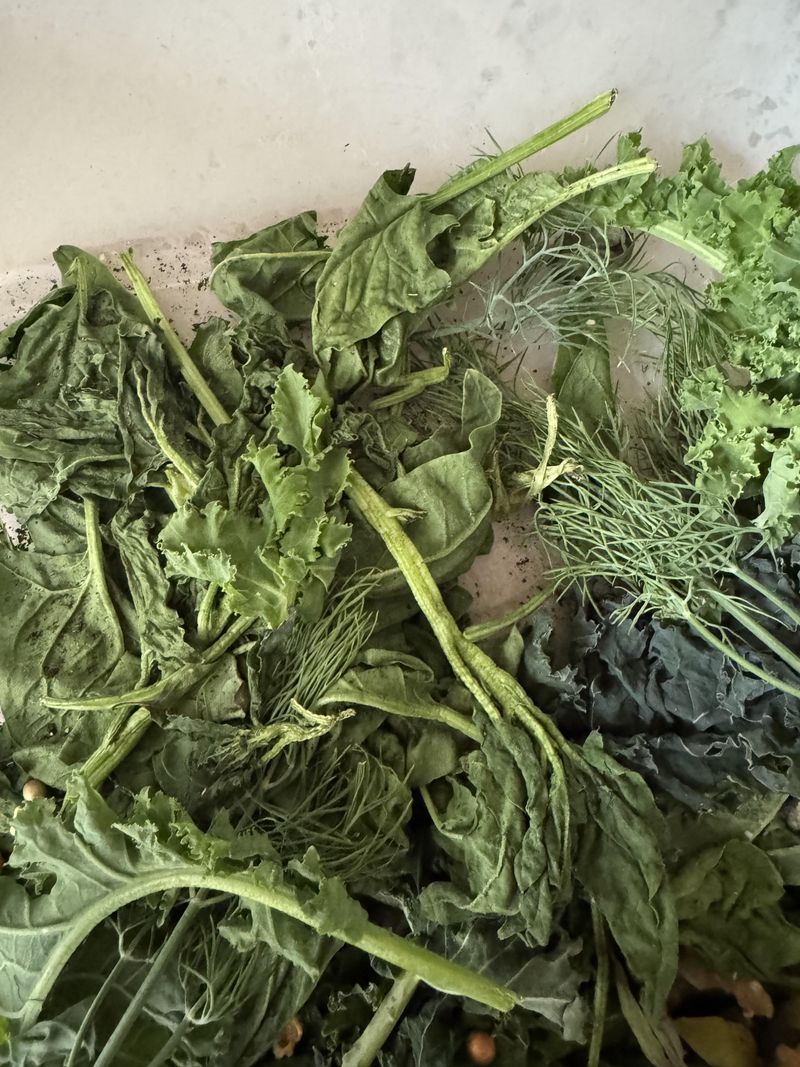
Working through an aphid problem on edible kale means keeping harvest safety in mind at every step. Confirm the insects before treating, wash them away with water first, remove the worst foliage, and let beneficial insects work where they can.
Escalate to a labeled contact product only when monitoring shows the colony is not responding to those earlier steps.
When you do use a product, follow the label’s preharvest interval, which is the number of days you must wait between the last application and eating the leaves. After that interval has passed, rinse harvested kale with clean running water.
University of Minnesota Extension’s produce washing guidance is explicit that soap, detergent, bleach, and pesticide should never be used as a produce wash. Running water is the right tool for the job.
Sticky, curled kale is a signal worth taking seriously, but it describes a manageable situation for most established plants, not an automatic death sentence. Let what you actually find on those leaf undersides, not the season or the symptoms alone, tell you what to do next.