
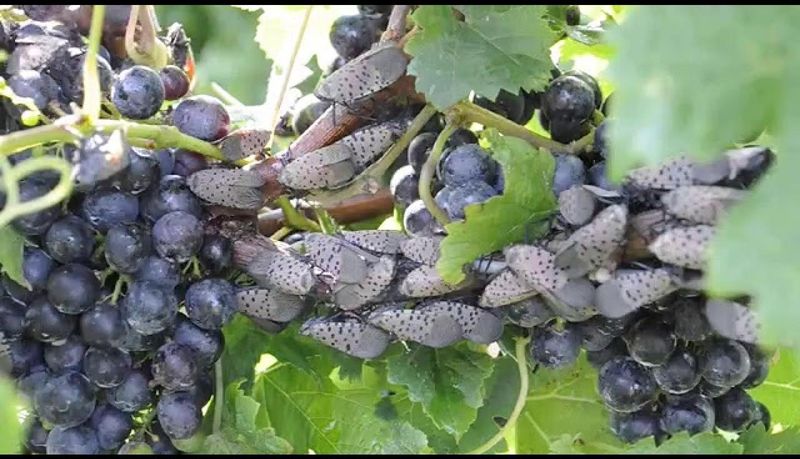
Something colorful and unwelcome may be clinging to your backyard grapevines right now, and it is not a native butterfly. The spotted lanternfly has established itself in parts of North Carolina, and September is when adults become the most active and damaging stage of their life cycle.
Knowing what to look for, where to report it, and how to respond can make a real difference for your vine’s health heading into winter.
September changes the spotted lanternfly question
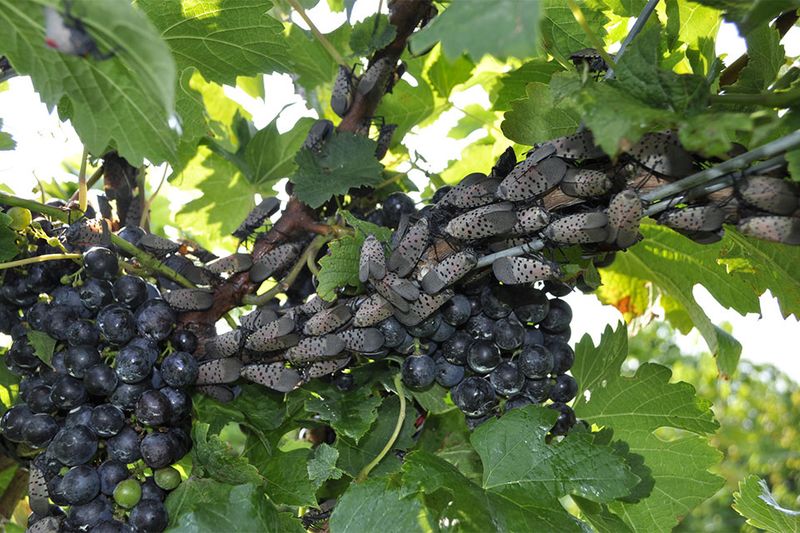
Headlines about spotted lanternfly nymphs swarming grapevines make for alarming reading, but the seasonal biology tells a different story in mid-September. By this point in North Carolina, adults are the life stage demanding attention, not nymphs.
NC State Extension’s integrated pest management calendar places nymph activity mainly from spring through early summer, with adults emerging by August and adult aggregations commonly peaking from mid-September into mid-October.
That timing matters because adults and late-season nymphs behave differently, cause damage differently, and require slightly different responses. The more productive question for a September afternoon is not whether nymphs are swarming your vine but whether adults are feeding on it now, how heavily, and whether egg masses will appear on your property this fall.
Grapes are a documented high-risk host. NC State Extension’s spotted lanternfly resource confirms that extensive or repeated feeding can reduce vine carbohydrate reserves, fruit sugar concentration, yield, and winter hardiness, and that severe infestations can contribute to vine decline.
A few insects on a healthy vine are not automatically a crisis, but persistent heavy feeding through September and October is worth taking seriously.
The official county count is also worth understanding correctly. As of February 10, 2026, the North Carolina Department of Agriculture and Consumer Services had confirmed established populations in seven counties: Forsyth, Guilford, Rockingham, Caldwell, Davidson, Rowan, and Caswell.
That figure is a dated snapshot, not a complete September map, and it does not mean grapevines statewide are under equal pressure. Your first task is to find out what is actually on your vine.
Confirm the insect before you treat the vine
Reaching for a spray bottle before you know what you are looking at is one of the most common mistakes backyard growers make. North Carolina has several moths and planthoppers that can fool even careful observers, so a photograph taken before any treatment or removal is your single most useful first step, especially if your property sits outside one of the seven counties where established populations have been confirmed.
NC State Extension’s spotted lanternfly identification guidance describes the life stages clearly. Early nymphs are small and black with white spots.
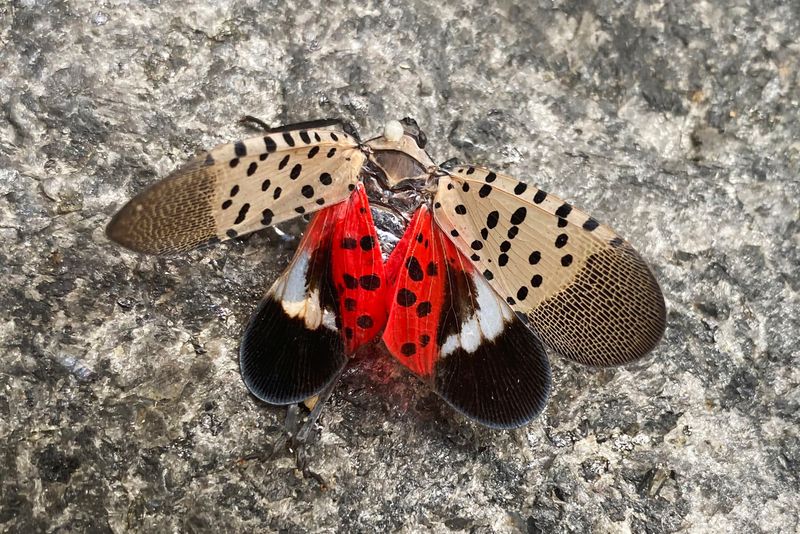
Later nymphs develop patches of red alongside the white spots, making them easier to distinguish from other small insects. Adults are roughly an inch long with gray-brown forewings covered in black spots.
The detail that clinches the identification is the hindwing: when the wings open, a vivid red panel with black spots and a white band is visible. At rest with wings folded, the red is hidden, and the insect can resemble a dull moth.
Photographing the insect from multiple angles takes seconds and gives you something concrete to share. The NCDA&CS spotted lanternfly page provides the state’s current reporting route for suspected finds, particularly valuable when the insect turns up in a county without a confirmed established population.
A report from your backyard contributes to the state’s ability to track spread and respond early.
Keep identification separate from damage assessment. A single insect on a leaf, a small smear of sticky honeydew on a trellis post, or a patch of black sooty mold does not automatically mean your vine is under threat serious enough to justify treatment.
Confirm the insect, document it, report if appropriate, and then assess what you are actually dealing with before deciding on a next step.
Inspect the vine and its surrounding hosts
Once you have a confirmed or strongly suspected identification, a methodical inspection tells you how serious the situation actually is. Work outward from the vine itself.
Check the undersides and tops of grape leaves for live insects, and look along stems and trellis supports for honeydew – a clear, sticky liquid that drips from feeding insects and accumulates on surfaces below. Honeydew that has been sitting for a few days often turns into black sooty mold, which coats leaves and reduces the plant’s ability to photosynthesize.
USDA APHIS spotted lanternfly guidance notes that egg masses can appear on bark, posts, outdoor furniture, vehicles, equipment, and other smooth surfaces. In September, adults are feeding and mating but egg laying typically intensifies in October and November, so a thorough inspection now sets you up to find and scrape masses later.
Look at fence posts, the wooden parts of your trellis, the trunks of any nearby trees, and even lawn furniture or vehicles parked nearby.
Tree-of-heaven is a preferred host and an invasive plant common along roadsides and forest edges in North Carolina. Its presence near your yard increases local spotted lanternfly pressure, but NC State Extension confirms that the insect can use many other plants and does not require tree-of-heaven to complete its life cycle.
Black walnut, maple, willow, apple, and stone fruits are among the other documented hosts. If any of these grow close to your grapevines, include them in your inspection route.
Note where insects are clustering and whether feeding signs are light or heavy. A handful of adults resting on a trellis post is a different situation from dozens feeding simultaneously on the same canes.
USDA Forest Service spotted lanternfly mitigation research underscores that infestation intensity, duration, and vine health together determine how much damage accumulates, which is why a count and location record from your inspection is more useful than a single worried glance.
Start with removal and wildlife-safe monitoring
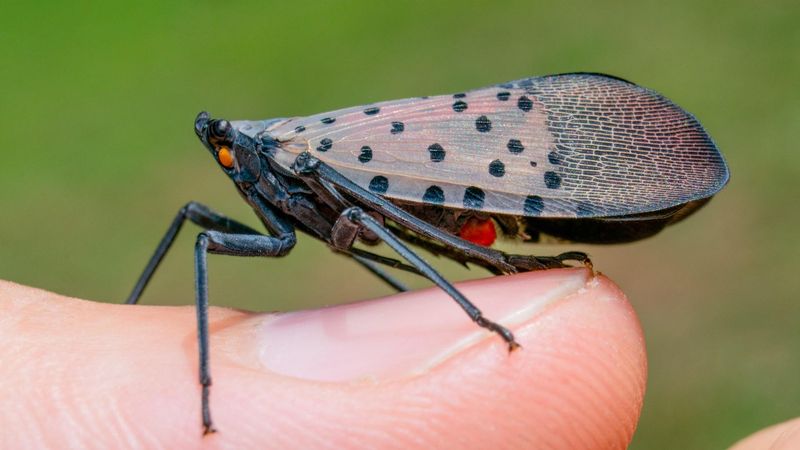
For a small backyard grapevine, the lowest-risk first response is direct physical removal. Spotted lanternfly adults can be knocked into a container of soapy water or crushed.
The insects do not bite or sting, so removing a manageable number by hand is straightforward and carries no risk of chemical injury to the vine, pollinators, or nearby wildlife. University of Maryland Extension’s home garden guidance notes that many residential landscapes do not need insecticide treatment unless plant damage is substantial, and that physical removal is a reasonable starting point when insect numbers are modest.
After the initial removal, keep checking the vine every few days. Judge whether escalation is warranted by whether feeding damage is growing, persisting, or causing visible vine stress, not by whether you see any insects at all.
A vine that was lightly visited once and then clear for two weeks is in a different situation from one with heavy sooty mold and wilting canes after repeated feeding.
Trapping is sometimes discussed as a monitoring tool, but it fits a backyard grapevine situation only in a limited way. Standard trunk traps are designed to intercept insects climbing up a substantial tree trunk.
Grapevines and low shrubs generally lack the trunk diameter and structure needed for effective installation. If you have suitable trees nearby – a large maple, black walnut, or any substantial trunk – those are better candidates for a circle or funnel trap.
Do not wrap bare sticky tape or glue directly around any tree. Penn State Extension’s management guide documents bycatch involving birds, pollinators, lizards, squirrels, bats, and other animals caught in unprotected sticky bands.
If you choose to use sticky material, a properly fitted wildlife barrier is required, and the trap must be checked daily. Penn State’s wildlife barrier instructions walk through how to construct a barrier that shields non-target animals from the adhesive surface.
A circle or funnel trap that physically captures insects without exposed glue is a safer alternative where practical.
Use fall sanitation without promising eradication
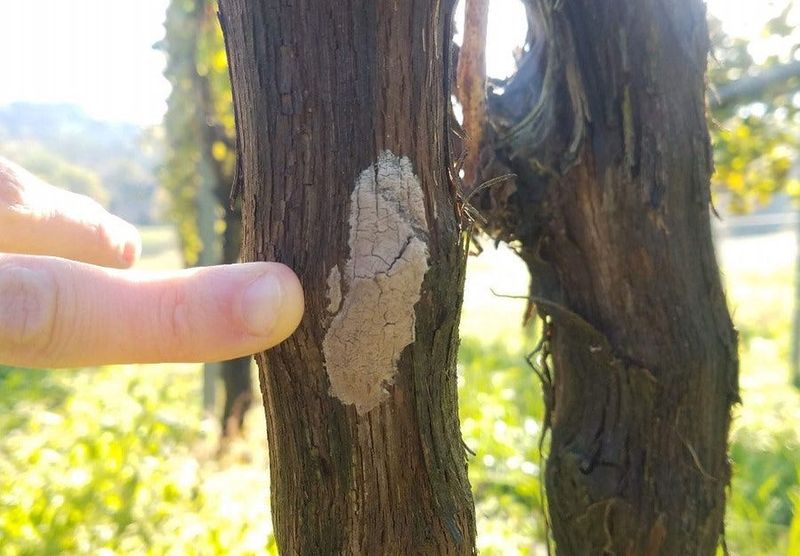
September is the pivot point between the adult feeding season and the egg-laying season. Adults are actively mating now, and egg masses begin appearing in earnest through October and into November.
Getting into the habit of checking surfaces during this window gives you the best chance of reducing next year’s starting population on your property.
Egg masses look like smears of dried gray mud, roughly an inch long, with rows of seed-like eggs beneath a waxy coating. USDA APHIS guidance confirms they can appear on tree bark, fence posts, trellises, outdoor furniture, vehicles, equipment, and almost any smooth outdoor surface.
Scraping is simple: use a stiff card, putty knife, or similar tool to dislodge the mass into a sealed bag or container of hand sanitizer or rubbing alcohol, then dispose of it in the trash. The egg stage runs roughly from September through March, so there is time to check repeatedly through winter.
NC State Extension’s nursery IPM guidance is clear that sanitation reduces local pressure but cannot guarantee a pest-free spring. USDA ARS dispersal research shows that adult spotted lanternflies are mobile and can quickly move from surrounding wild and cultivated hosts into a yard or vineyard, meaning reinvasion from neighboring properties or roadside vegetation remains possible even after thorough egg scraping.
Tree-of-heaven near your property is worth addressing carefully. It is an invasive plant and a preferred spotted lanternfly host, and reducing its presence can lower local insect pressure.
However, USDA Forest Service mitigation research makes clear that removing tree-of-heaven alone is not a complete control program, since the insect uses many other plants. Large-tree removal and herbicide treatment require appropriate care and, where applicable, label compliance, so consult a qualified arborist or extension professional before tackling mature trees.
Make pesticide decisions from the grape label
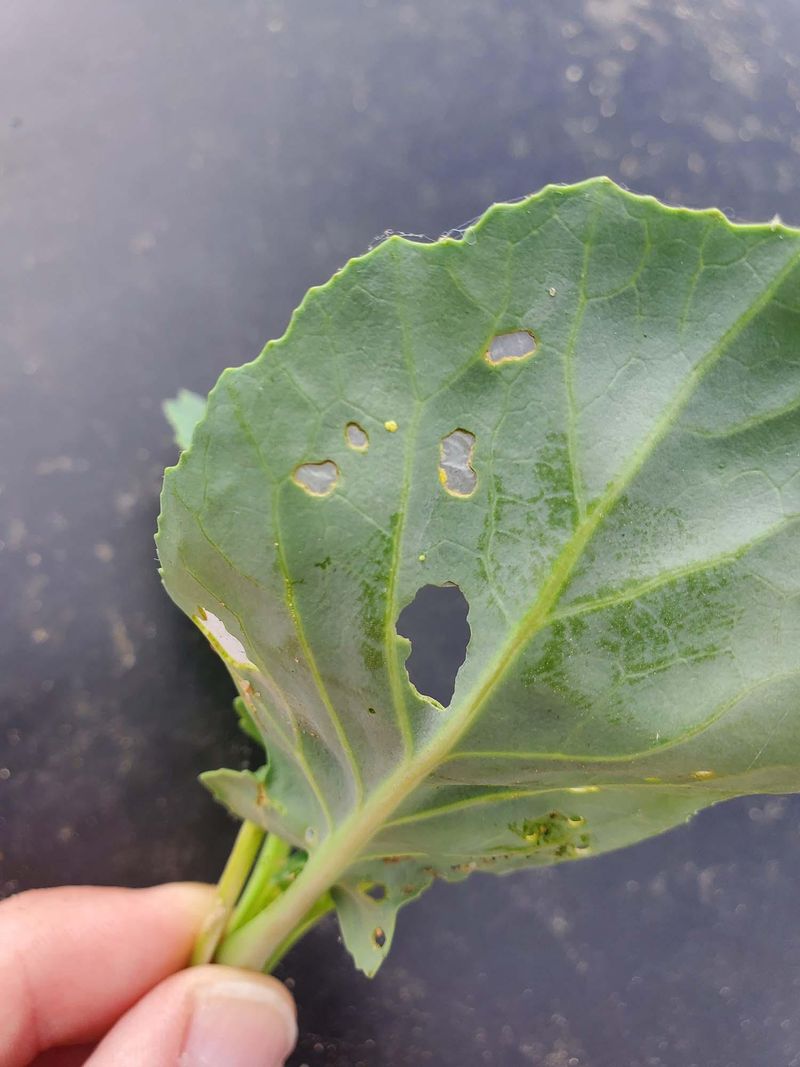
Pesticide decisions for a bearing grapevine are more constrained than most backyard gardeners expect. A product must be currently labeled for spotted lanternfly, for use on grapes, for the specific application site, and for use within the harvest interval before the expected picking date.
The EPA’s guidance on reading pesticide labels is direct: the label is a legal document, and it controls where, how much, and how a product may be used. Using a pesticide in a way that contradicts the label is illegal and potentially unsafe.
Agricultural vineyard tables list products and preharvest intervals developed for commercial production. Penn State Extension’s vineyard management guidance notes that commercial thresholds, rates, and application methods are designed for professional growers with appropriate equipment and training.
Borrowing those numbers as casual backyard instructions without checking the current product label is not a reliable or safe shortcut.
The often-referenced figure of ten to twenty insects per vine comes from Penn State vineyard research as a consideration for treatment timing, not a universally validated homeowner rule. Injury depends on infestation intensity, how long feeding continues, vine health, weather, and other stressors.
A single threshold number does not substitute for observing your specific vine over time.
Homemade sprays are not a safe workaround. Extension guidance on vinegar and homemade spotted lanternfly sprays warns that vinegar, bleach, gasoline, glass cleaner, salt, and similar substances can injure plants, people, pets, wildlife, and beneficial insects.
Household dish soap is also not automatically formulated or labeled for use on edible crops and may cause foliar damage. These substances are not approved spotted lanternfly pesticides.
Unnecessary or poorly timed spraying carries its own costs. Broad insecticide applications can harm pollinators and natural enemies while doing little to prevent reinvasion by mobile adults arriving from surrounding hosts.
University of Maryland Extension’s home garden resource recommends consulting current extension guidance or a qualified professional when damage is substantial or when the label decision is unclear rather than defaulting to a spray as a first response.
A realistic September action plan
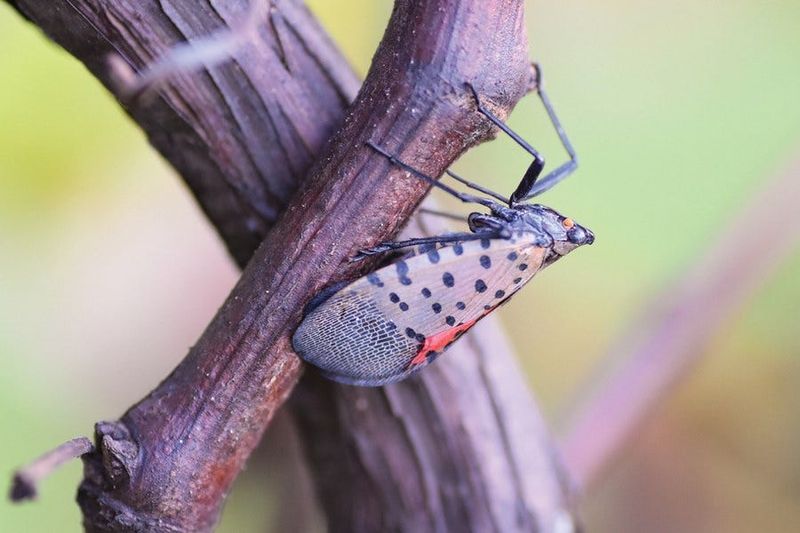
A practical September response for a North Carolina backyard grape grower comes down to a clear sequence of steps, none of which requires panic or a spray tank. Start by photographing whatever is on or near the vine.
A sharp photo from multiple angles is your confirmation tool and your reporting evidence if the find turns out to be outside a known established area.
After identification, report a suspected find through the NCDA&CS spotted lanternfly reporting system when appropriate, especially outside the seven currently confirmed counties. Then inspect the vine, the trellis, and nearby trees and hard surfaces for live insects, honeydew, sooty mold, and early egg masses.
Remove a manageable number of reachable adults by hand. Choose only wildlife-safe monitoring methods if you add a trap to a nearby tree, and check it daily.
Through October, November, and into winter, shift attention to egg masses. Scrape any you find into a sealed bag and dispose of them in the trash.
NC State Extension’s IPM calendar places egg-laying activity in October through November, so repeated checks through that window are worth the time. USDA ARS dispersal research is a useful reminder that mobile adults can arrive from neighboring properties and roadside vegetation regardless of how thorough your sanitation has been.
Success this season looks like a vine that finishes the growing season with manageable stress, a property with fewer egg masses than it would otherwise have had, and a clearer picture of local spotted lanternfly pressure going into next year. Protecting your vine from cumulative damage is an achievable goal; guaranteeing that no adult will ever return is not.