
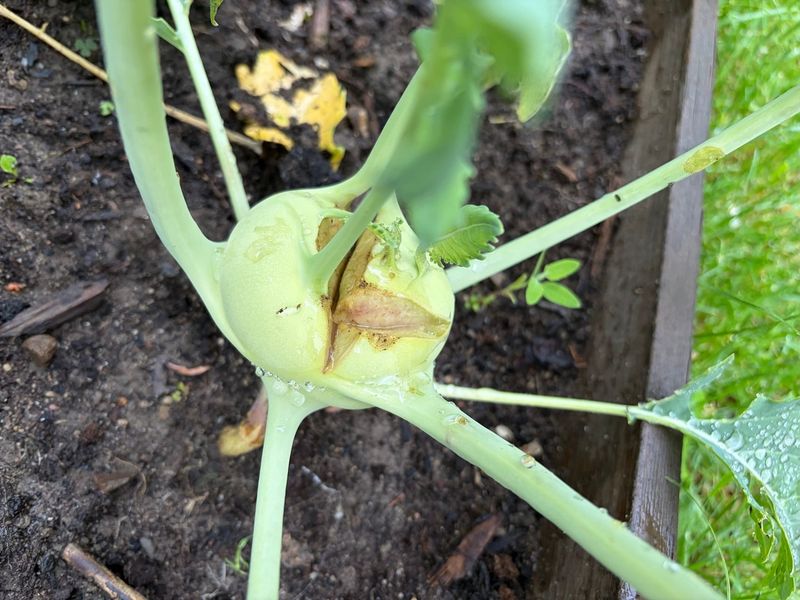
Pull a kohlrabi from your fall garden and find a cracked, fibrous mess instead of a crisp, tender bite, and it is easy to blame your watering schedule. That frustration is understandable, but the real picture is more complicated than a single missed irrigation.
Uneven moisture is one reasonable factor to investigate, yet overmaturity, lingering Southern heat, rapid growth, and cultivar differences can all play a role too. Understanding what is actually happening gives you a much better shot at a clean, tender harvest from your next planting.
Treat a woody or cracked swollen stem as a clue, not a diagnosis
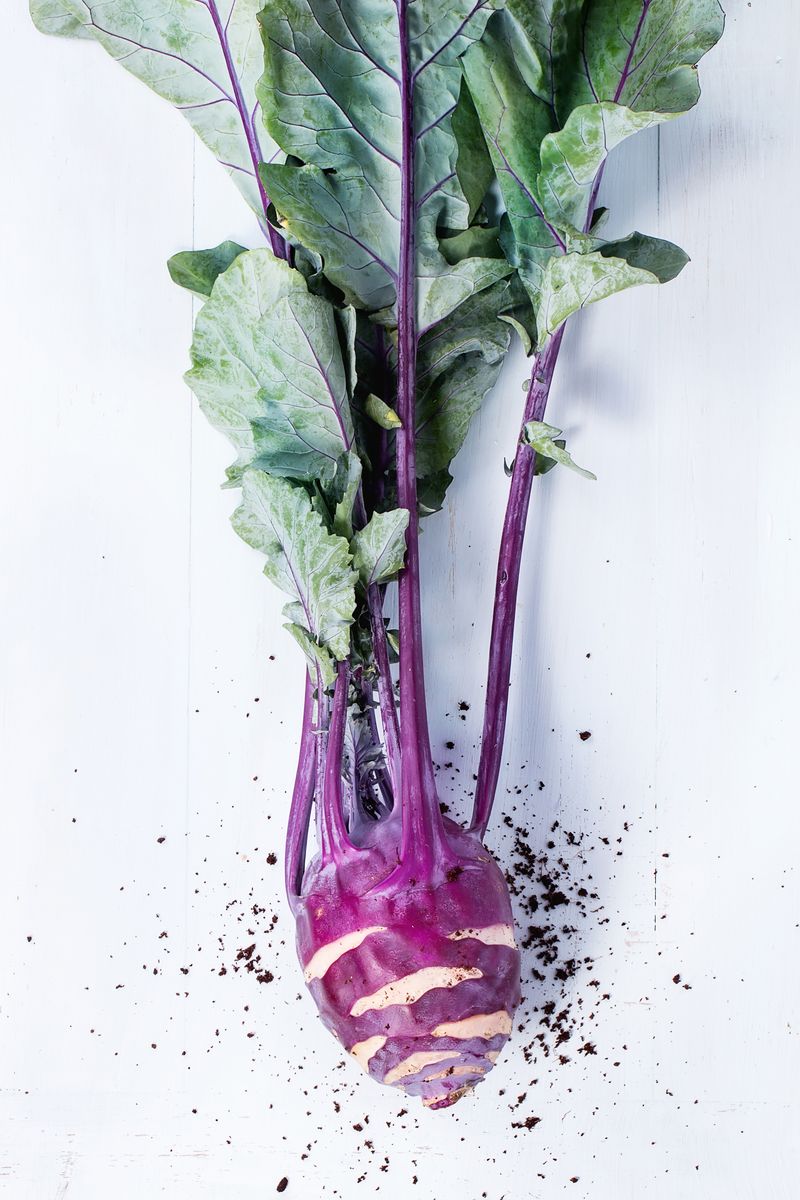
Kohlrabi produces an enlarged edible stem that swells above the soil line, and most gardeners call it a bulb out of habit. Botanically speaking, it is not a true bulb at all, but the shorthand is so common that you will see it in seed catalogs and Extension guides alike.
The distinction matters here because understanding what you are growing helps explain why it fails.
When that swollen stem comes out of the ground tough, stringy, or split, the temptation is to point at one watering event and call it solved. Utah State University Extension guidance links moisture fluctuations to woody stems and poor texture, so inconsistent watering is a reasonable place to start your investigation.
But it is not the whole story.
Woodiness and cracking do not necessarily share a single cause. Overmaturity is a frequent culprit for tough texture, while rapid growth and cultivar differences contribute more directly to splitting.
Heat, timing, and even a specific pest can produce symptoms that look similar at first glance. Treat the damaged stem as a clue that points toward several possibilities rather than a confirmed verdict, and you will be better equipped to fix the actual problem.
Fluctuating moisture can contribute while the stem enlarges
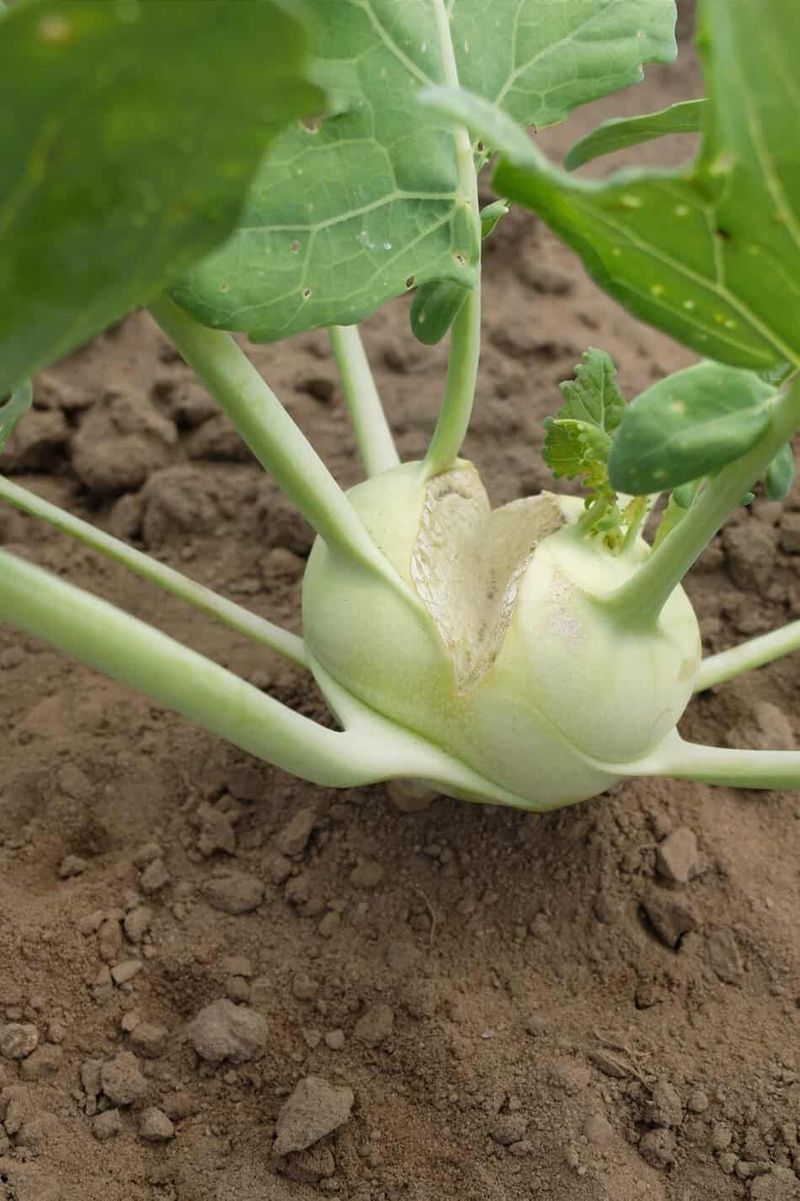
Kohlrabi roots sit relatively close to the soil surface, which means the plant can lose access to moisture faster than deeper-rooted crops during a dry stretch. When the soil dries out severely and then receives a heavy irrigation or a drenching rain, the rapid shift in available water can contribute to poor texture or cracking as the swollen stem is actively enlarging.
USU Extension connects this kind of moisture fluctuation to tough, woody results.
One important clarification: watering thoroughly after the soil surface has dried out moderately is normal and appropriate. The concern is repeated, severe drying followed by heavy irrigation or rainfall, not a single thorough watering after a couple of dry days.
Utah State’s vegetable water recommendations support a steady approach rather than an extreme boom-and-bust cycle.
Published research on kohlrabi cracking also points to rapid growth and cultivar-level differences as important contributors, meaning that moisture fluctuation is one factor among several rather than a proven, exclusive mechanism. Framing it as a cause to investigate rather than the definitive answer keeps your diagnosis honest and your corrective steps more targeted.
Keep the root zone moist without keeping it saturated
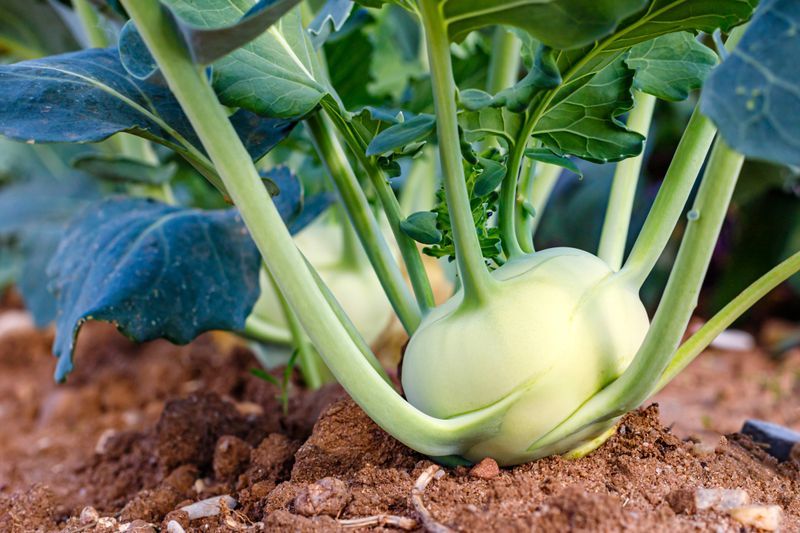
The practical target for kohlrabi is moderately and consistently moist soil that drains freely between waterings. Virginia Cooperative Extension is direct about this: keep soil moist but not waterlogged, because dry soil produces woody, strong-flavored stems.
Saturated soil brings its own problems, including root stress and disease, so the goal is the middle ground.
A starting reference of roughly 1-2 inches of water per week is commonly cited, but that number changes with almost every variable in your garden. Rainfall, temperature, wind, soil texture, mulch depth, plant size, and whether you are growing in a container or in the ground all push that figure up or down.
UGA Cooperative Extension’s fall vegetable guide emphasizes adjusting irrigation based on actual conditions rather than following a fixed calendar.
Newly seeded or transplanted kohlrabi needs more frequent attention to stay consistently moist during establishment. Once plants are settled and growing, shift toward deeper, less frequent irrigation guided by what the soil is actually telling you.
UF/IFAS guidance on efficient irrigation for edible landscapes specifically advises adjusting both duration and frequency as plants mature, which is a useful reminder that your watering routine should evolve with the crop.
Check the soil before you decide to water
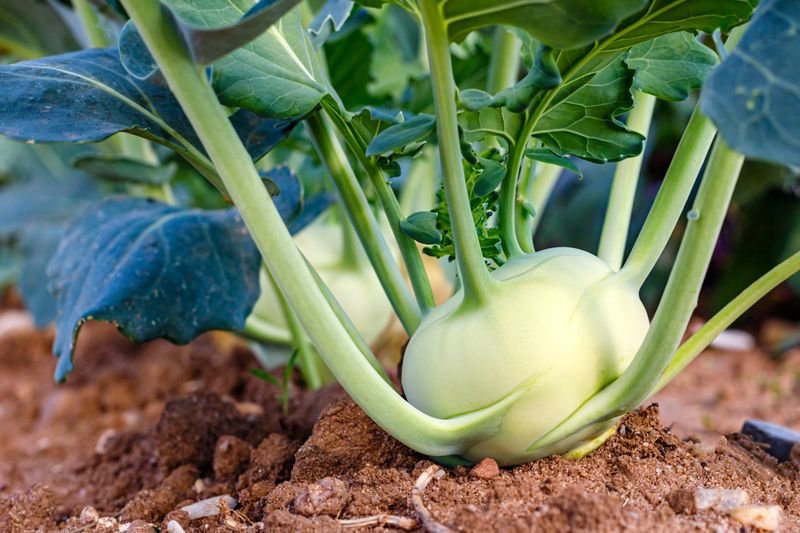
A rigid watering schedule is less reliable than a quick soil check. Texas A&M AgriLife Extension recommends scratching about 1 inch below the surface; if that layer feels dry, water thoroughly enough to wet the soil to roughly 6 inches deep.
That depth reaches the root zone where kohlrabi actually draws moisture, rather than just wetting the surface.
Sandy soils, common across many parts of Florida and coastal Texas, drain faster and warm up quickly, so they need more frequent checks than heavier clay or loam. Always subtract recent rainfall from your irrigation decision.
If your area received a solid inch of rain two days ago and the soil still feels moist an inch down, hold off and check again the next day rather than watering on schedule.
Drip irrigation and soaker hoses are preferable to frequent light sprinkling because they deliver water directly to the root zone and keep foliage dry, which can reduce conditions that favor foliar disease. UGA Extension’s fall gardening guidance highlights these methods as effective ways to target root-zone moisture.
Keep in mind that drip lines and soaker hoses stabilize your watering approach but do not eliminate cracking risk from heat, overmaturity, or cultivar factors.
Use mulch to soften moisture and temperature changes
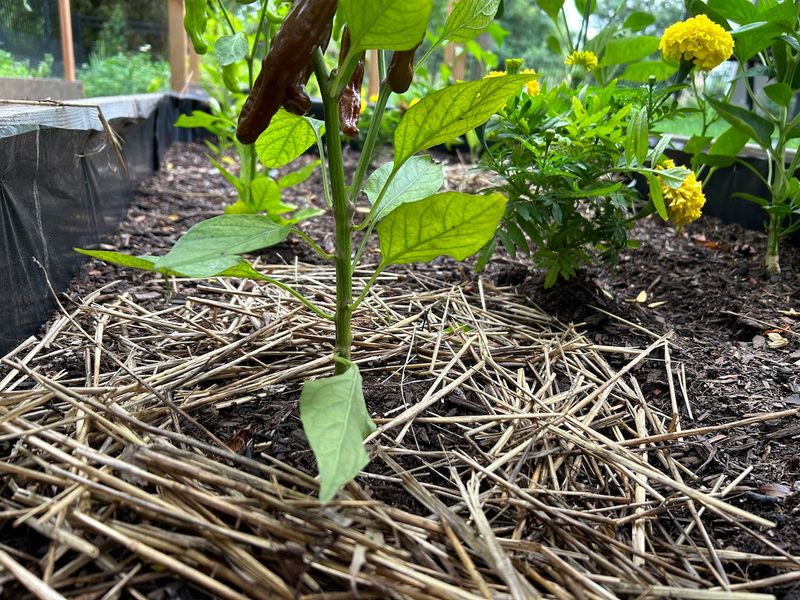
A 2-3 inch layer of organic mulch around your kohlrabi plants can help conserve soil moisture between waterings and moderate the temperature swings that shallow roots are especially vulnerable to. Iowa State University Extension’s kohlrabi guide recommends this depth and notes that mulch should be kept away from direct contact with the plant crown to reduce the risk of rot at the base.
Straw, shredded leaves, and wood chips are practical choices for fall vegetable beds. Apply the layer after the soil has been watered so you are locking in moisture rather than sealing out a dry layer.
In Southern gardens where early fall temperatures can still be quite warm, mulch also helps prevent the soil from heating up rapidly after a rain or irrigation, which matters for a cool-season crop like kohlrabi.
Mulch works best as a supporting measure alongside sound watering decisions, not as a standalone fix. It cannot compensate for severely inconsistent irrigation, correct overmaturity, or address cultivar-related cracking.
Think of it as a buffer that gives your soil-moisture management more breathing room between checks.
Harvest size strongly affects tenderness
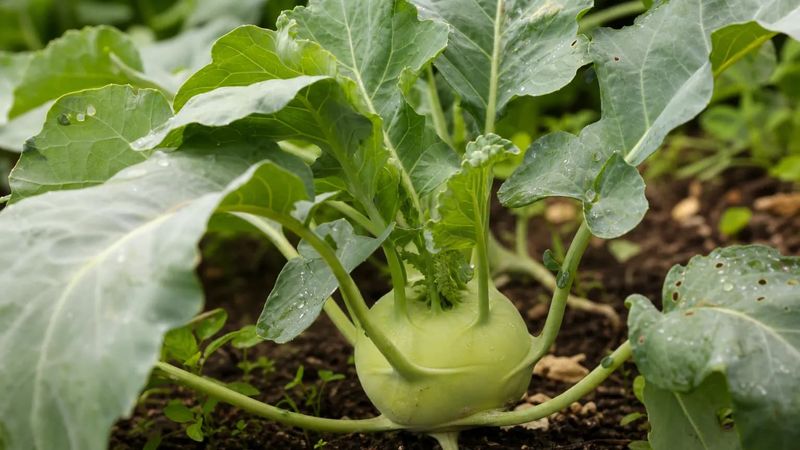
Leaving kohlrabi in the ground past its prime is one of the most reliable ways to end up with a tough, woody, or bitter stem. Illinois Extension notes that overgrown kohlrabi becomes fibrous and loses the mild, crisp quality that makes it worth growing in the first place.
For many standard varieties, harvesting around 2-3 inches in diameter keeps the texture where you want it.
That size guideline is a starting point, not a universal rule. Cultivar, season, temperature, moisture, and growth rate all influence when a particular stem is at its best.
University of Wisconsin Extension’s kohlrabi guide points out that some fall-grown varieties and large-fruited cultivars like Gigante or Kossak can remain tender at 4-5 inches or even larger, staying less woody than standard types would at the same size.
The most reliable approach is to read your seed packet and harvest promptly when the stem reaches the recommended size for that variety, rather than waiting for maximum bulk. Iowa State University Extension’s harvest guidance reinforces that waiting too long is the more common mistake.
Harvest size strongly affects tenderness, but it does not determine it alone, which is why matching your timing to the specific variety matters more than chasing a single diameter number.
Heat and cultivar can change the outcome
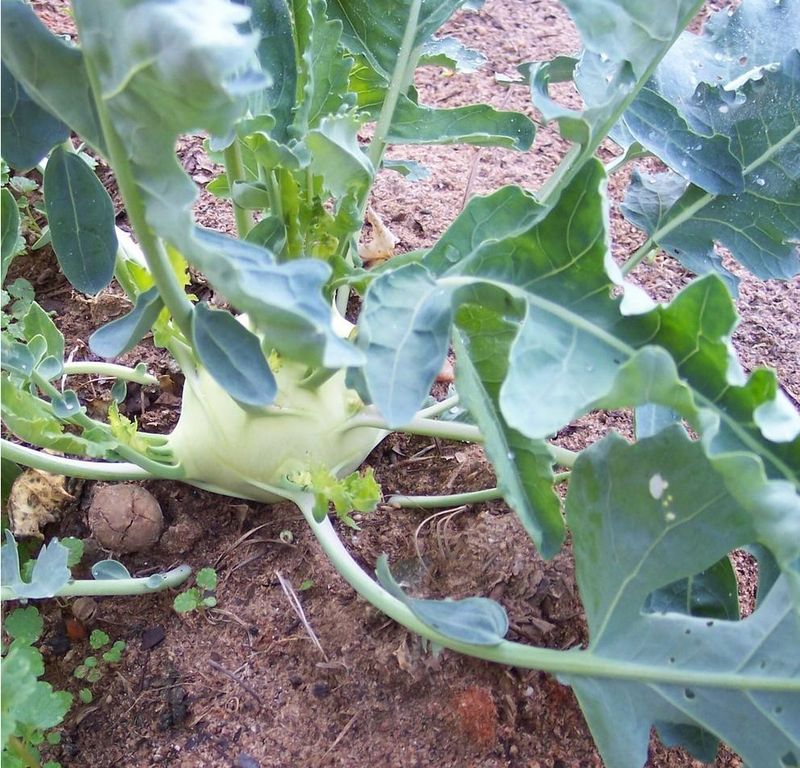
Southern fall gardens in Texas and Florida often carry lingering heat well into what most gardeners think of as cool-season territory. Kohlrabi is a cool-season crop that performs best when temperatures stay moderate, and high heat during stem enlargement can reduce quality and push the texture toward tough and woody even when watering is managed carefully.
USU Extension flags heat as a meaningful quality risk for this crop.
Cultivar selection adds another layer of variability. Wisconsin Extension’s kohlrabi resource reports substantial differences among cultivars in cracking susceptibility and acceptable harvest size, meaning that two plants grown side by side under identical conditions can produce noticeably different results.
Choosing a variety described as heat-tolerant or slow-to-bolt in the seed catalog is a meaningful decision for Southern growers.
Planting timing also varies considerably across the region. Texas A&M AgriLife Extension lists kohlrabi sowing dates that range from mid-August in some Texas regions to November 1 in others.
Florida windows differ again by zone. Rather than relying on a single national date, check your local Extension service for the planting window that fits your specific county and climate.
Distorted growth may point to swede midge
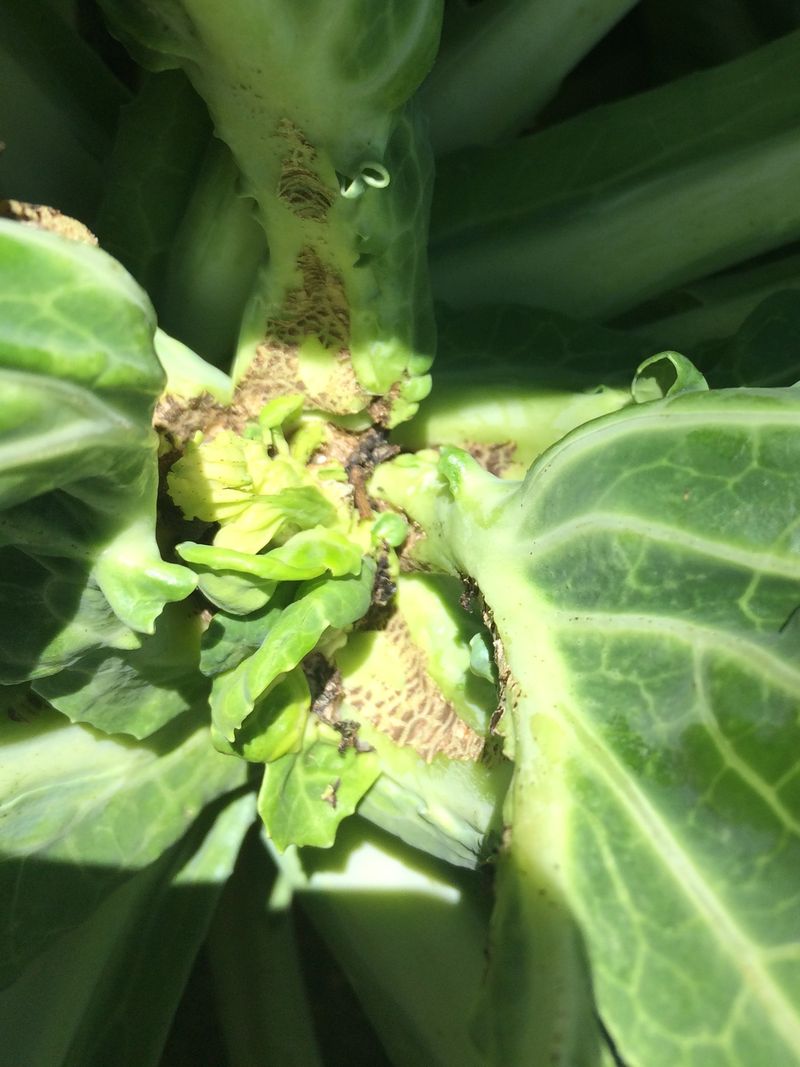
Most cracked or tough kohlrabi in Southern fall gardens comes down to moisture, maturity, heat, or cultivar factors. A pest explanation becomes more plausible when you notice specific distortion clues alongside the damage.
Cornell’s Swede Midge Information Center describes the characteristic signs: puckered or crinkled leaves, damaged or blind growing tips, brown corky scarring on the stem, swollen petioles, and sometimes multiple growing points forming where only one should be.
Swede midge is a small fly whose larvae feed inside the growing points of brassica crops. Cornell’s distribution records place confirmed U.S. populations mainly in the Northeast and upper Midwest, so it should not be the first explanation you reach for in a Texas or Florida garden.
If the distortion clues above are present, contact your local Extension office or a diagnostic lab for confirmation before taking any action.
Do not add boron, fertilizer, or pesticides as a routine response to cracked or woody kohlrabi without a confirmed diagnosis and a label-compliant product recommendation. UMass Extension notes that boron deficiency is often blamed for brassica stem problems, but field evidence is inconsistent and routine boron applications are not a general management recommendation.
Misidentifying the cause and applying an unnecessary input wastes money and can create new problems.
Salvage what you can and correct the next crop
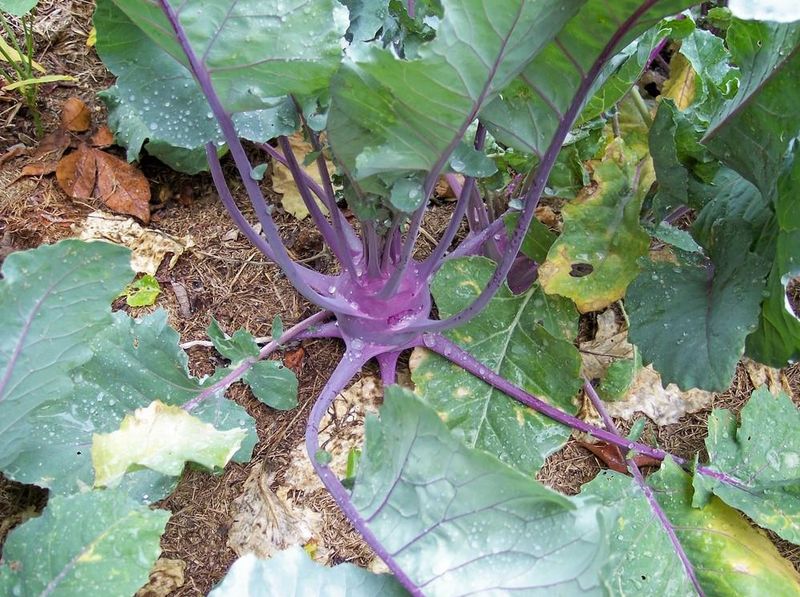
Once a kohlrabi stem is established as woody, no amount of extra watering will reverse the fibrous texture. Illinois Extension points out that an overgrown stem may still have some usable tender tissue near the top and toward the interior, so peeling away the tough outer layer is worth trying before composting the whole thing.
Discard any tissue that is rotten, slimy, or moldy rather than eating around obvious deterioration, but a surface crack alone does not make the stem unsafe.
The more useful investment is setting up the next planting for better results. Check the soil with a finger test before each irrigation, water the root zone thoroughly when that top inch is dry, and stop before the soil becomes waterlogged.
Apply 2-3 inches of organic mulch and keep it away from the crown. Iowa State Extension’s kohlrabi guide reinforces mulching and consistent moisture as the practical foundation for a healthy crop.
Monitor heat during early fall, choose a cultivar suited to your region and season, and harvest at the size your seed packet recommends rather than waiting for the stem to bulk up further. A cracked or woody harvest is a useful piece of diagnostic information: it tells you where to look and what to adjust, which is exactly the kind of feedback that improves the next round.