
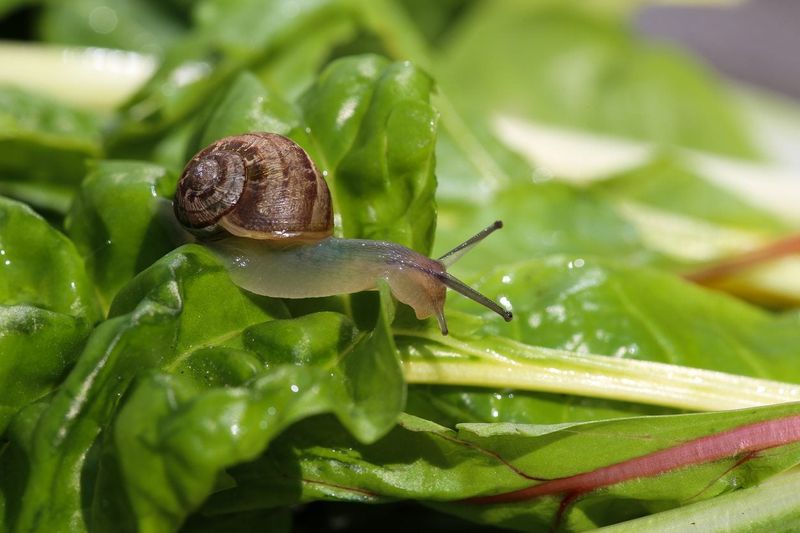
Walking out to your fall garden and finding Swiss chard leaves riddled with holes can feel alarming, especially when the plants looked fine the evening before. The most likely culprit is slugs or snails, but holes alone do not tell the whole story.
Knowing what to look for, and when to look, can help you figure out what is actually happening and respond in a way that protects your crop without wasted effort.
Do the holes and trail fit slugs or snails?
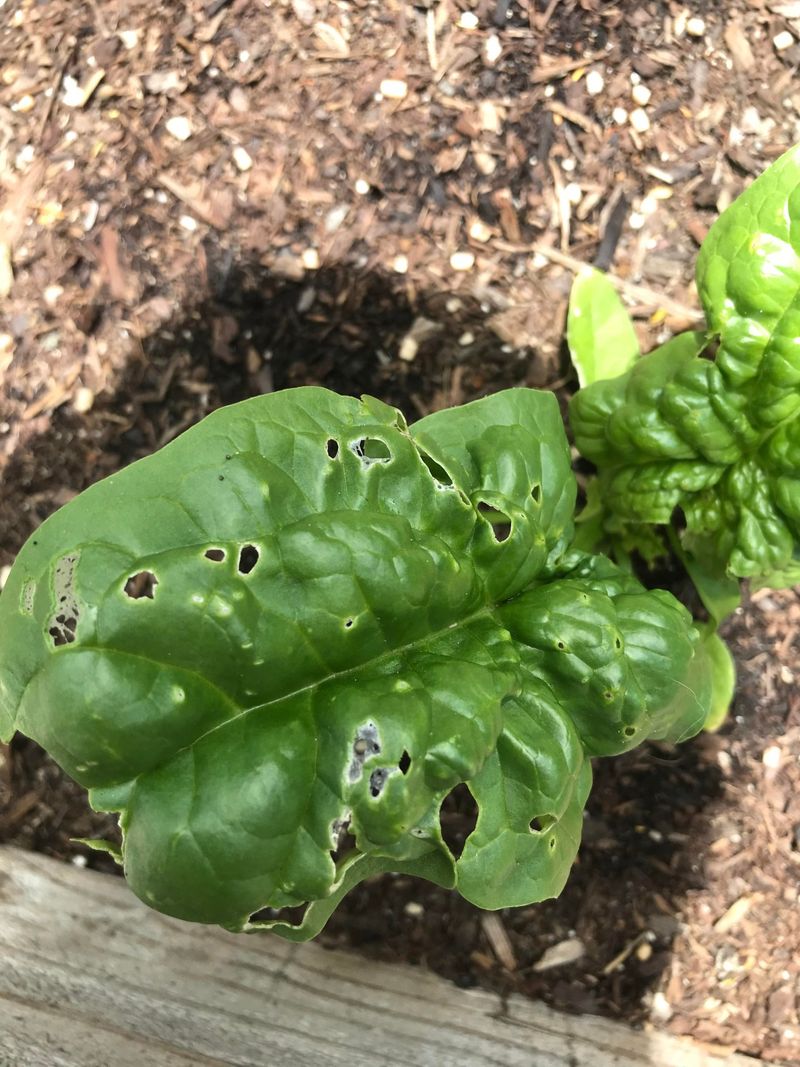
Irregular holes scattered across a Swiss chard leaf, with edges that are relatively smooth rather than ragged or perfectly round, are one of the more recognizable signs of slug or snail feeding. According to University of Maryland Extension guidance on slugs and snails in vegetables, Swiss chard is among the edible crops that slugs commonly target, and the feeding pattern tends to appear both inside the leaf blade and along its margins.
The combination of those irregular holes plus a shiny or dried silvery trail on the leaf itself, on the nearby soil surface, or on another outdoor surface nearby is what moves the diagnosis from possible to likely. That kind of trail, left by the mucus slugs and snails produce as they move, is the key clue that separates their feeding from other chewing pests.
Without a trail in one of those locations, holes alone could point to caterpillars, flea beetles, earwigs, or several other insects that also feed on leafy greens.
One important qualifier: a trail found only in potting mix is not strong enough evidence on its own. UC IPM notes that fungus gnat larvae can also leave silvery trails on growing media, so the location of the trail matters.
Trails on the chard leaf, surrounding soil, or a nearby hard surface carry far more diagnostic weight than trails found only in a container’s potting mix.
Why fall damage may appear overnight
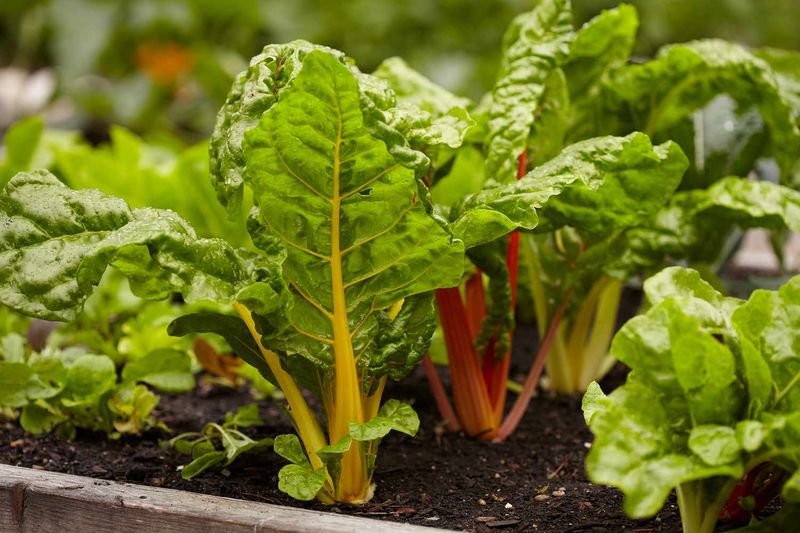
Slugs are nocturnal animals that spend daylight hours hiding in cool, moist places. When conditions shift in their favor, a population that seemed invisible can produce noticeable feeding damage in a single night.
University of Minnesota Extension explains that slugs become most active during cool, cloudy, and damp conditions, which is exactly what fall rain events, irrigation, mulch, shaded beds, and moist soil can create.
Hot, dry weather suppresses slug activity, so the symptom will not appear equally in every Southern garden every fall. A garden in central Texas during a dry October may see little or no slug pressure, while a shaded, irrigated bed in coastal Florida or a recently rained-on Georgia plot can experience a sudden uptick.
Penn State Extension points out that moisture is the single most important environmental factor driving slug movement and feeding.
Fall chard is a legitimate crop across parts of the South. University guidance covers fall planting windows for chard in Georgia and Texas, and Florida grows leafy greens including chard primarily during cooler months.
That overlap between a prime chard season and the moisture conditions slugs prefer helps explain why fall damage can feel sudden, even if the slugs have been present for a while.
Inspect the bed after sunset
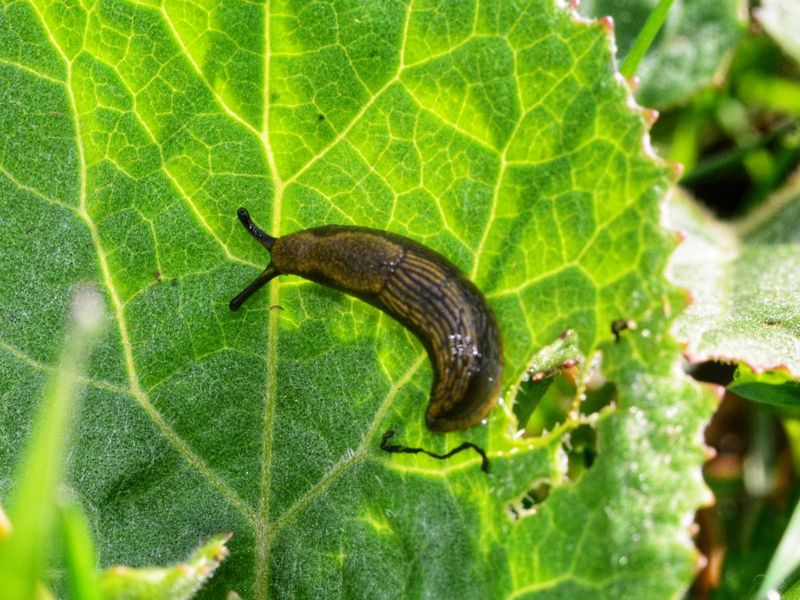
Going out after dark with a flashlight is the most reliable way to confirm whether slugs or snails are actually responsible for the damage. A single daytime walk through the garden will rarely reveal them, because slugs hide during daylight in leaf litter, under boards, beneath stones, inside dense mulch, and along the undersides of pots.
UC IPM recommends inspecting plants and their surroundings at night, when slugs are actively feeding and far easier to spot.
Start by checking the undersides of chard leaves, then work outward to the soil surface, any mulch layer, boards or bricks near the bed, and dense clumps of plant debris. Note where trails appear and whether you find live slugs or snails actually on or near the plants.
Recording what you find and where helps you decide whether the evidence is strong enough to act on.
One nighttime search is a start, not a conclusion. Repeating the inspection on two or three nights, especially after rain or irrigation, gives a much clearer picture of how many slugs are present and where they are concentrated.
Finding the pest itself or its hiding spot before you choose a response is worth the extra effort, because it keeps you from treating for the wrong problem.
Rule out other hole-makers
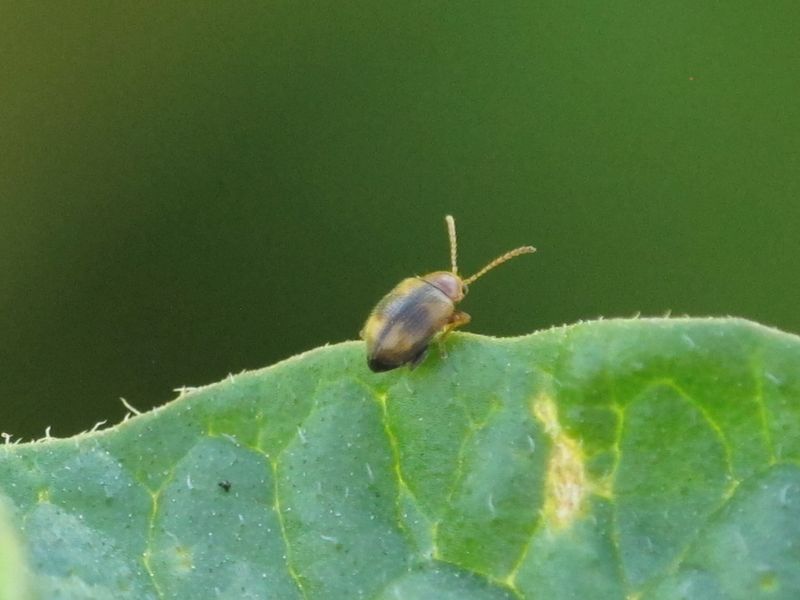
Slugs and snails are not the only pests that chew holes in Swiss chard, and misidentifying the cause leads to mismatched responses. University of Minnesota’s Swiss chard diagnostic tool lists several possible causes for holes in chard leaves, so working through the differences matters before you commit to any control strategy.
Flea beetles punch many small, roughly circular holes that gardeners often describe as “shot holes.” The holes are typically smaller and more uniform than slug damage, and flea beetles are active during the day, so you may see the tiny dark beetles jumping when you disturb the plant. Caterpillars can create larger, irregular holes similar to slug feeding, but they often leave behind frass, which looks like small dark pellets, and visible larvae are usually present on or near the plant if you look carefully.
Leaf miners work differently: they tunnel inside the leaf tissue rather than eating through it, producing winding pale trails or blisters within the leaf rather than open holes. Earwigs also chew irregular holes and feed at night, making them easy to confuse with slugs.
UC IPM notes that a silvery trail on the leaf or nearby soil provides strong evidence for slugs or snails, but that evidence is strongest when the trail appears on the leaf or surrounding outdoor surfaces. Holes without any convincing trail should prompt a closer look for these alternative culprits before assuming slugs are responsible.
Start with nighttime removal and habitat changes
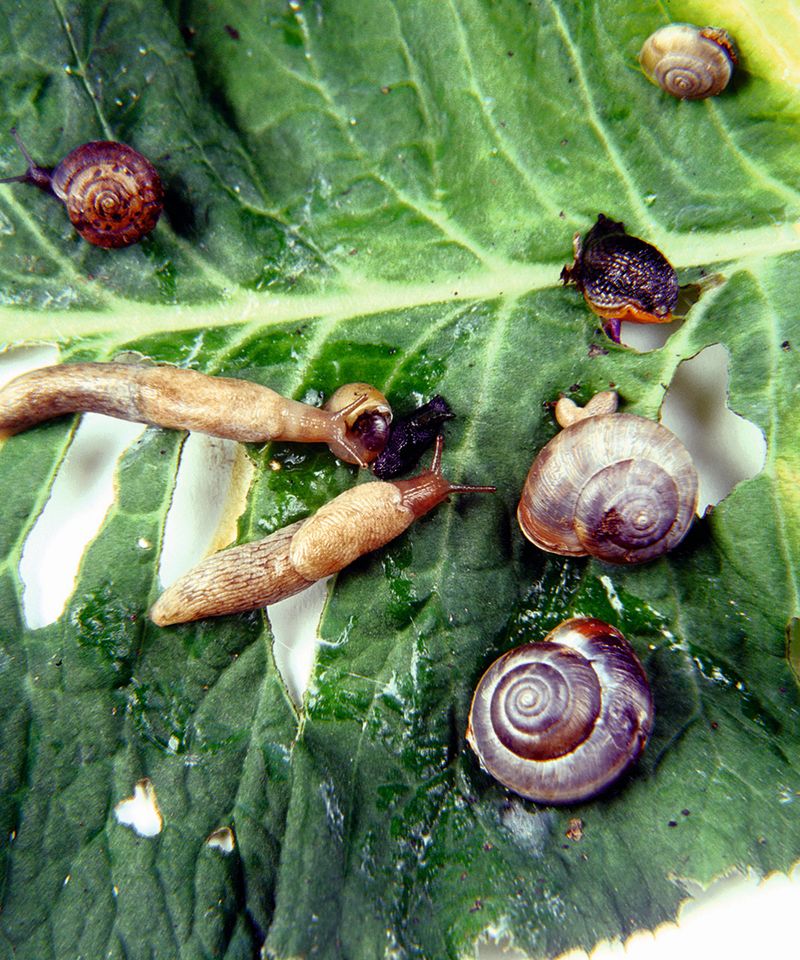
Hand-picking is the lowest-risk first step for a small chard planting, and it works best when you do it after dark, when slugs are actively feeding. Wear gloves, carry a container of soapy water, and drop slugs directly into it.
Oregon State Extension’s slug control guide recommends repeated nighttime removal rather than a single search, because one pass rarely captures the full population.
Alongside removal, changing the habitat near the chard bed can make the area less welcoming to slugs. Remove unnecessary boards, weeds, thick plant debris, and other cool, damp objects close to the bed.
These are the daytime hiding spots slugs rely on, and reducing them forces the population to travel farther and stay more exposed. UC IPM’s quick-tip card on snails and slugs lists sanitation and shelter reduction as foundational steps in any integrated approach.
Moisture management is the other side of habitat control. Water the garden in the morning rather than late in the afternoon or evening, so the soil surface and foliage have time to dry before nightfall.
Drip irrigation delivers water directly to the root zone and keeps the surface and leaves drier than overhead watering does, which can reduce the surface moisture that slugs need to move comfortably. Improving air movement through the bed and trimming back excess shade can also help, though none of these steps guarantees eradication on their own.
Use shelters, traps, and barriers selectively
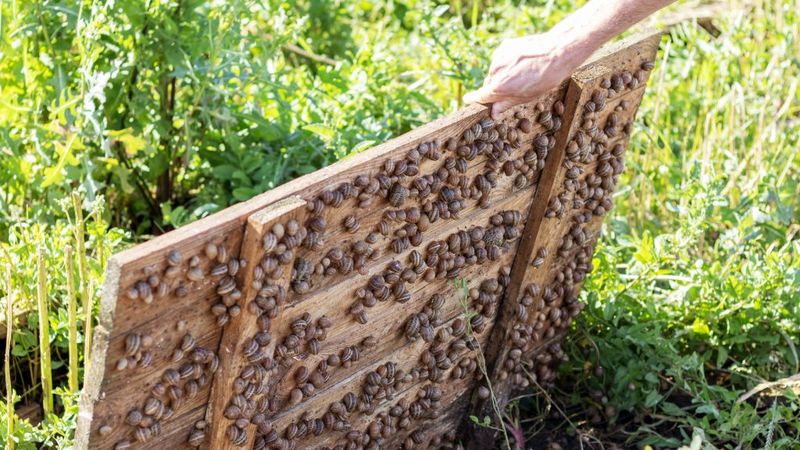
Shelter traps turn slug behavior against them. Place a flat board, a shingle, or a piece of damp cardboard near the chard bed in the evening, then check underneath it the next morning.
Slugs that sheltered there overnight can be collected and dropped into soapy water. University of Minnesota Extension recommends this technique as a practical way to concentrate slugs for removal without any chemical input.
Beer or yeast-water traps are another option. Sink a shallow container into the soil near the chard so the rim sits at ground level, then fill it partway with beer or a mixture of water, sugar, and yeast.
Slugs are attracted to the fermentation smell, fall in, and drown. Penn State Extension describes these traps as a useful supplemental tool, not a complete control strategy.
They need to be emptied and refreshed every day or two, and you should cover or position them so that pets cannot drink from them.
Copper strips or bands installed as a continuous barrier around a raised bed may help exclude slugs, because slugs reportedly find copper contact uncomfortable and tend to avoid crossing it. UC IPM includes copper barriers among available tools but notes that any gap in the band, or any branch or vine that bridges the barrier, can defeat it entirely.
Installation needs to be thorough and continuous for the barrier to have a realistic chance of working.
Put bait safety before convenience
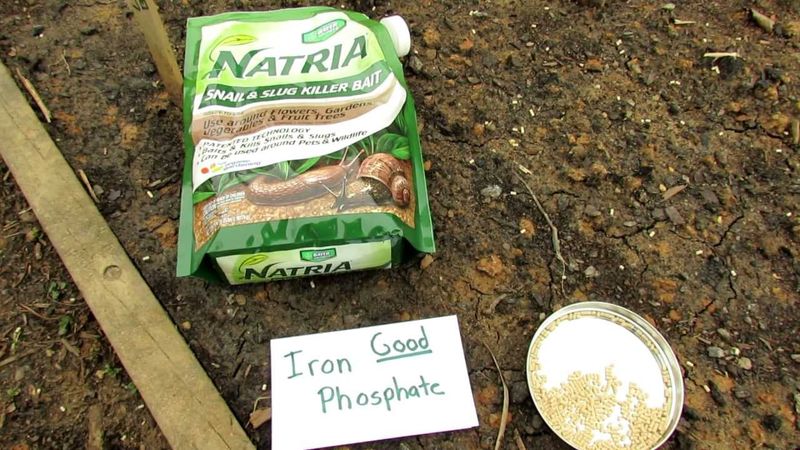
Bait should come after scouting, hand-picking, and habitat changes have been tried, not before. Reserve it for situations where damage remains serious, young plants face significant risk, or a harvest is genuinely threatened.
When you do consider bait, the product label is the controlling document: use only a product whose label specifically permits use on the food crop you are protecting, and follow every direction for application rate, timing, storage, and pre-harvest intervals.
Iron-phosphate baits are generally considered less hazardous to pets and wildlife than metaldehyde products. The National Pesticide Information Center’s overview of snail and slug bait explains the difference between these two active ingredients and notes that “less hazardous” does not mean harmless.
Animals can still be harmed by ingesting iron-phosphate bait, and formulations vary, so the label remains the only reliable guide to safe use around a food garden. UF/IFAS guidance also notes that product formulations differ and that label directions must be followed for food-crop applications.
Metaldehyde baits are a different matter. NPIC’s snail bait fact sheet documents that metaldehyde can seriously poison dogs and other animals that eat it, sometimes fatally.
Keep pets and children away from any treated area, store products in a secure location, and contact a veterinarian immediately if a pet may have ingested bait. Metaldehyde should not be treated as a casual or default option around a food garden where animals or children have access.
Salt is not a safe slug treatment near edible plants. Penn State Extension warns that salt can injure plants and raise soil salinity, creating a longer-term problem in the bed.
Diatomaceous earth, coffee grounds, and crushed eggshells also lack dependable support as outdoor slug controls, particularly in humid Southern conditions where wet weather quickly renders dry barriers ineffective.
Protect the crop without panicking
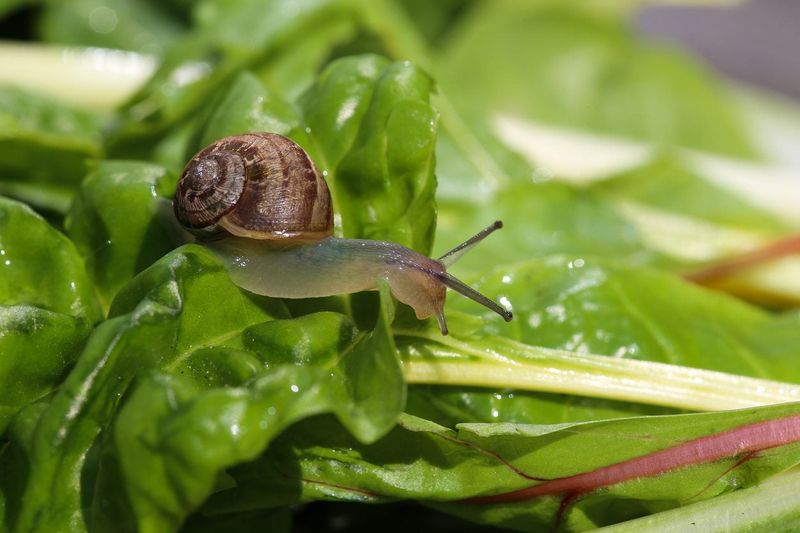
Established chard plants can tolerate some leaf loss without serious harm to the harvest. Seedlings and very young plants are more vulnerable, since slug feeding can remove a significant portion of a small plant quickly.
Utah State University Extension notes that severe feeding can reduce yield and damage young plants significantly, while moderate damage on mature plants is often manageable.
The right response scales with what you actually find. Confirm the damage pattern, look for a trail on the leaf or nearby surface, then scout after dark on multiple nights before choosing a response.
Remove slugs by hand, reduce shelter near the bed, shift watering to the morning, and add traps or a copper barrier where they fit your setup. Reserve labeled bait for cases where damage stays severe after those steps.
UC IPM’s integrated approach consistently puts environmental and physical controls ahead of chemical ones for exactly this reason.
Irregular holes plus a trail on the leaf or surrounding surfaces call for a flashlight after sunset, not an immediate spray or an untested home remedy. Matching the response to what you actually confirm keeps your chard safer and your garden in better shape for the rest of the season.