
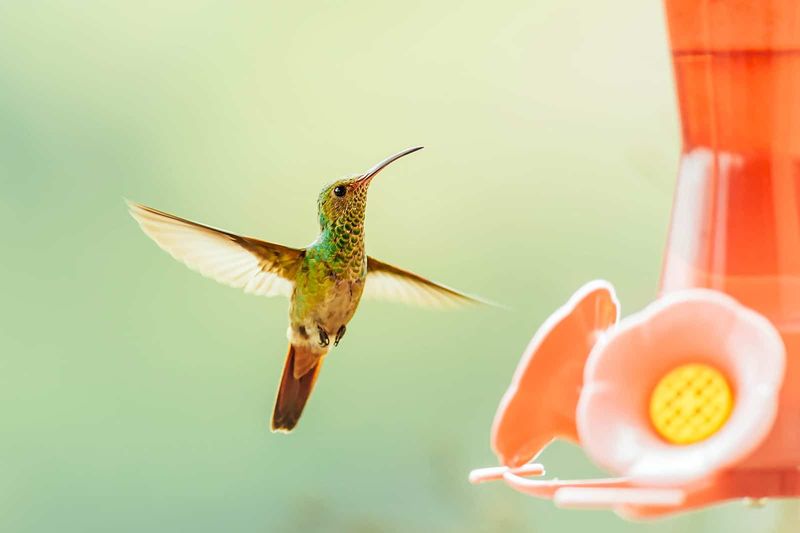
Plenty of backyard gardeners in Florida and Texas hang a hummingbird feeder, fill it up, and then wait – and wait – wondering why the birds never seem to show. The problem usually isn’t that hummingbirds don’t like your yard.
More often, it comes down to what’s in the feeder and how fresh it is. Getting the recipe right and keeping things clean can make a real difference, and the fix is simpler than most people expect.
Red nectar is not a proven bird repellent
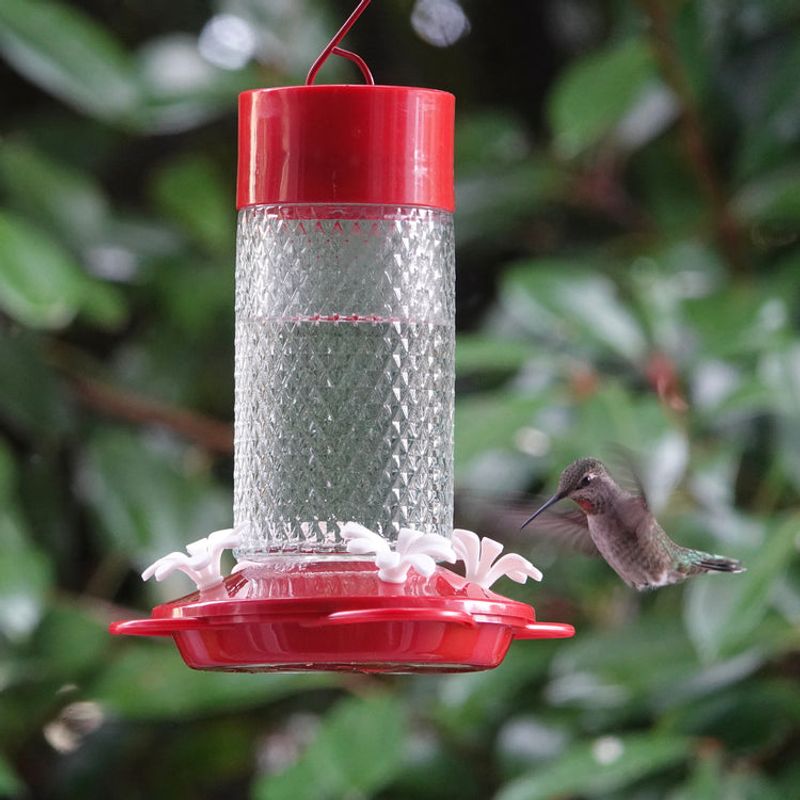
Many gardeners assume that red-dyed nectar is what’s keeping hummingbirds away from their feeders. That assumption is understandable given how widely it circulates online, but Audubon’s review of the available research makes clear that no scientific studies have directly tested whether artificial dyes are toxic or routinely repellent to hummingbirds.
Red dye is unnecessary and best skipped as a precaution, but calling it a proven bird repellent goes further than the evidence allows.
What can create real problems at a feeder are unsuitable ingredients like honey, artificial sweeteners, or brown sugar; nectar left too long in summer heat; and a feeder that hasn’t been properly cleaned between fills. Those are feeder-care and freshness issues worth taking seriously, even though none of them is guaranteed to be the single reason your feeder sits empty.
An empty feeder can also mean something simpler: hummingbirds may not be moving through your area yet, may be focused on natural flowers nearby, or may be blocked by a territorial bird that chases others off. Cornell Lab of Ornithology guidance on feeding hummingbirds notes that local species presence, habitat, and seasonal timing all factor into whether birds visit.
Feeder contents matter, but they’re one piece of a larger picture.
Mix the clear 1:4 nectar recipe
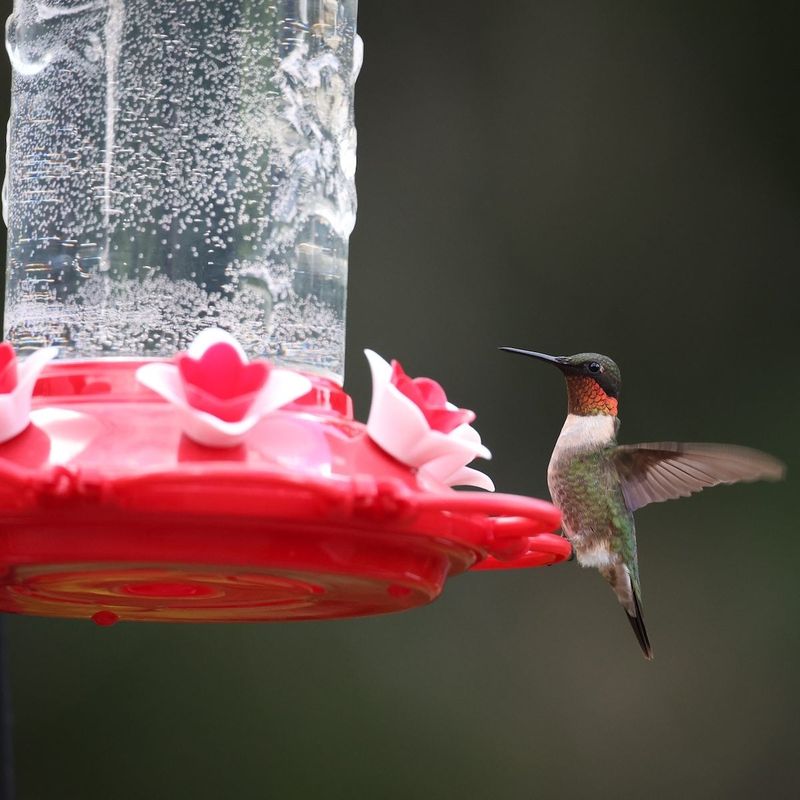
The recipe recommended by Cornell Lab, Audubon, Texas Parks and Wildlife, and UF/IFAS is the same across all four sources: mix one part refined white table sugar with four parts water. In practical terms, that’s 1/4 cup of plain granulated sugar stirred into 1 cup of water.
Cornell’s feeding guide confirms this ratio and recommends keeping the nectar clear, with no colorings or additives of any kind.
Stir the mixture until the sugar dissolves completely before filling the feeder. Undissolved sugar can settle and ferment faster, so patience here pays off.
Always let the nectar cool to room temperature before pouring it in, since warm liquid can warp some plastic feeders and may speed up spoilage once it’s outside in the heat.
Boiling guidance varies a bit by source. Audubon suggests a brief boil to help dissolve the sugar and reduce initial contamination; Cornell notes that boiling is not strictly necessary for small batches made every day or two.
Either way, boiling does not sterilize the feeder itself and does not eliminate the need for regular cleaning and timely replacement. Any nectar you don’t use right away can be stored in a sealed container in the refrigerator for up to a week.
Audubon’s hummingbird yard guide supports refrigerating extra batches rather than leaving unused nectar at room temperature.
Leave questionable ingredients out
Honey is probably the most common substitute people reach for, reasoning that it’s natural and therefore better. The problem is that diluted honey creates a hospitable environment for bacteria and fungi.
Audubon’s hummingbird yard guidance warns against honey specifically because contaminated or honey-based nectar can lead to health problems in hummingbirds, including a yeast-related mouth condition that makes it difficult for them to feed.
Artificial sweeteners, molasses, brown sugar, raw sugar, and any products marketed as “special” hummingbird nectar mixes should also stay out of the feeder. These are not equivalent to refined sucrose.
Brown and raw sugars contain molasses residue and other compounds that plain table sugar doesn’t have, and artificial sweeteners provide no usable energy for the birds at all. Cornell’s feeding resource recommends plain granulated white sugar and water without any additives, vitamins, flavorings, or protein powders.
Red food coloring deserves its own mention. Natural flower nectar is clear, and hummingbirds are drawn to the red parts of the feeder itself, not to tinted liquid.
Audubon’s review of hummingbird attraction and dye safety explains that a red feeder or a red decorative element is sufficient to catch the birds’ attention. Skipping the dye is a reasonable precaution even without proof of harm, and it keeps the nectar as close to what flowers naturally offer as possible.
Keep nectar fresh with cleaning and timely changes
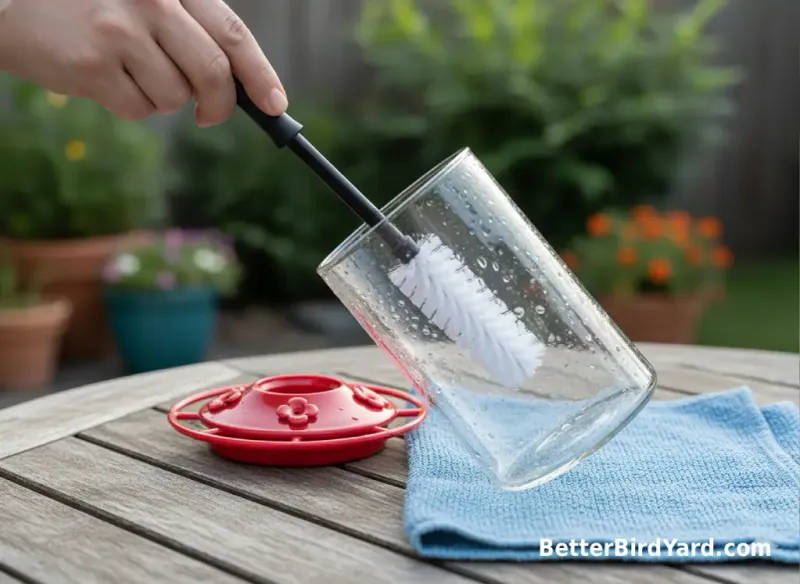
Replacing nectar on a regular schedule matters as much as the recipe itself. Cornell Lab’s feeding guidance recommends changing nectar every two to three days and daily during very hot weather.
That’s a practical baseline, not a rigid rule – if the nectar looks cloudy, smells off, or shows any sign of mold or fermentation, discard it immediately regardless of when you last filled the feeder. Waiting for visible mold to appear means the nectar has already been unsafe for a while.
Clean the feeder every time you refill it, not just occasionally. Take it apart completely and scrub every port, seam, and reservoir with a bottle brush.
Rinse thoroughly so no cleaning residue is left behind, since soap or other cleaning agents can contaminate the next batch of nectar. Audubon’s yard guide recommends hot water and a brush as a reliable cleaning method; some sources suggest diluted vinegar as an alternative.
Whatever you use, the rinse step is non-negotiable.
Microbes do grow in feeder sugar water. A UC Davis study on hummingbird feeder microbes found high densities of bacteria and fungi in sampled feeders, though most organisms detected were not known to pose a major health hazard and the researchers noted that health consequences require more study.
That finding is a reason to stay on top of cleaning and replacement schedules, not a reason to panic – but it does confirm that a feeder left too long without attention is not a neutral object.
Protect the feeder from Southern heat
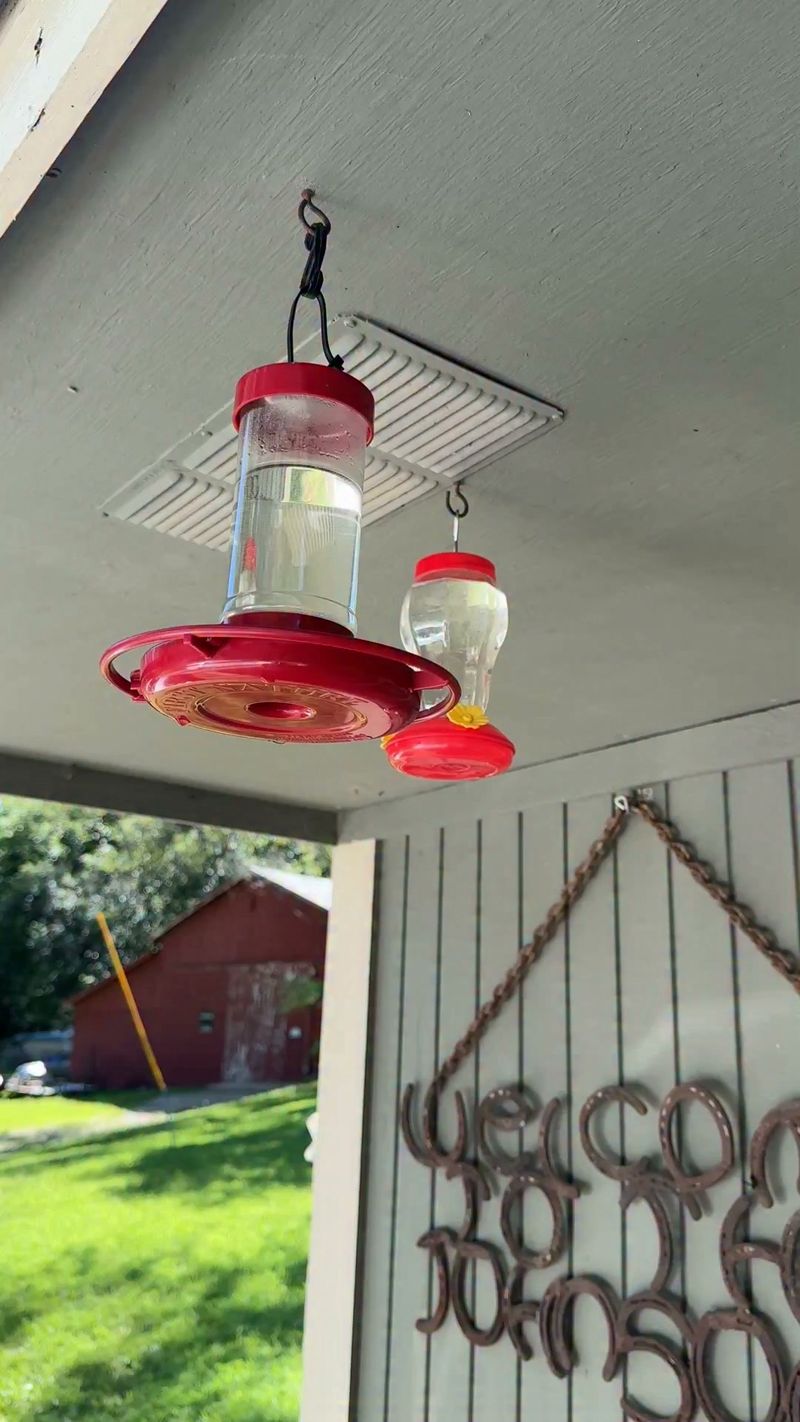
Southern summers are hard on feeder nectar in ways that gardeners in cooler climates don’t have to think about as much. UF/IFAS guidance on hummingbirds in Florida warns that Florida’s heat accelerates bacterial growth in nectar and recommends changing the solution every three to five days.
That interval is longer than the every-two-to-three-day schedule recommended by Cornell and Audubon, so the conservative approach is to follow the shorter window when conditions are especially hot, when the feeder sits in full sun, or when the feeder sees little bird activity and nectar sits longer between visits.
Placing the feeder in a spot that gets morning light but shade during the hottest afternoon hours is one of the most practical adjustments a Southern gardener can make. Cornell’s feeding resource also notes that some bottle-style feeders may drip or leak as trapped air warms inside them, which wastes nectar and can attract insects.
Choosing a feeder with a simple design that comes fully apart for cleaning makes the whole maintenance routine easier to keep up with.
Shade slows spoilage but does not stop it. Even a feeder kept out of direct sun still needs to be inspected, cleaned, and refilled on schedule.
Cloudiness, an unusual smell, or visible particles in the liquid are all signs to empty and clean the feeder right away, no matter how recently it was filled.
Troubleshoot an empty feeder without blaming the recipe
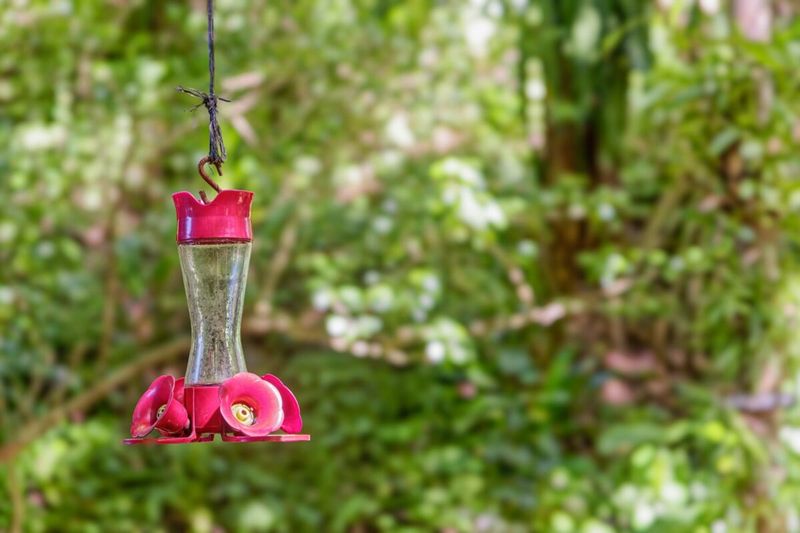
A feeder filled with fresh, correctly mixed nectar can still go completely untouched, and that doesn’t necessarily mean anything is wrong with what you’ve done. Texas Parks and Wildlife’s nongame wildlife FAQ directly addresses the assumption that hanging a feeder guarantees visitors – it doesn’t.
Whether hummingbirds appear depends on whether they are present in your area, what season it is, and what other food sources are available nearby.
Migration timing is a major variable. Ruby-throated hummingbirds move through Texas and Florida on predictable schedules, but they aren’t present year-round everywhere in the South.
If you put a feeder out during a window when birds aren’t actively moving through, you may wait a long time regardless of nectar quality. Natural flower availability also matters: when gardens are full of blooming salvias, trumpet vines, or coral honeysuckle, hummingbirds may prefer those over a feeder entirely.
Feeder placement and territorial behavior are worth checking too. A feeder positioned in an exposed or high-traffic area may be avoided, while one placed too close to another feeder can become the target of a dominant bird that guards both.
Texas Parks and Wildlife’s Flyway Newsletter and UF/IFAS hummingbird guidance both recommend using several smaller feeders spread at least ten feet apart when one bird seems to be controlling access. Spreading feeders out reduces the advantage a single territorial bird has and gives more birds a chance to feed.
The 1:4 recipe is the right thing to put in those feeders, but it is not a guarantee that birds will arrive.
Support hummingbirds beyond the feeder
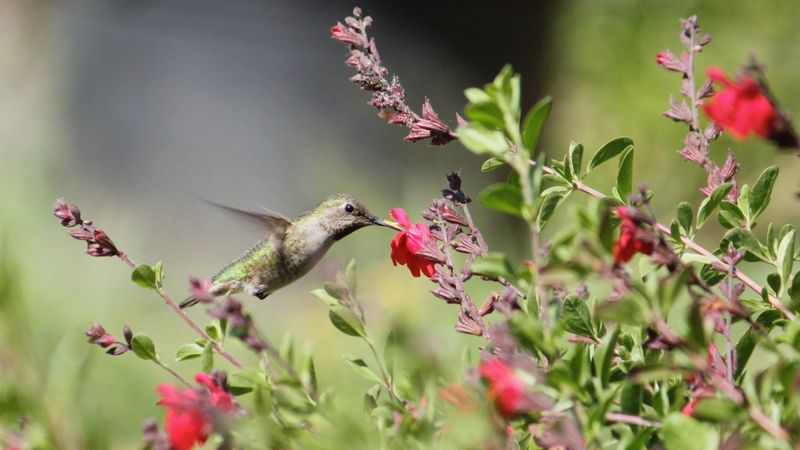
Sugar water gives hummingbirds a quick burst of energy, but it covers only part of what they need. Cornell Lab’s feeding resource explains that hummingbirds also eat insects and spiders for protein, which means the health of your broader yard matters as much as what’s in the feeder.
A yard with few insects offers hummingbirds a limited diet no matter how well-stocked the feeder is.
Pesticide use is one of the quickest ways to reduce that insect population. Gardeners who want to support hummingbirds consistently are better served by reducing or eliminating insecticide applications near flowering plants and relying on native plantings that naturally attract insects.
Red salvia, coral honeysuckle, trumpet vine, and native penstemons are among the flowering plants that hummingbirds visit regularly in Florida and Texas gardens.
Texas Parks and Wildlife notes that a feeder alone may not draw many birds without flowers, water, shelter, and adequate open space nearby. A shallow water feature, dense shrubs for perching and cover, and a yard that isn’t stripped of vegetation all contribute to making the space genuinely hospitable.
A feeder works best as one part of that environment, not as a standalone solution.
Use the simple feeder checklist
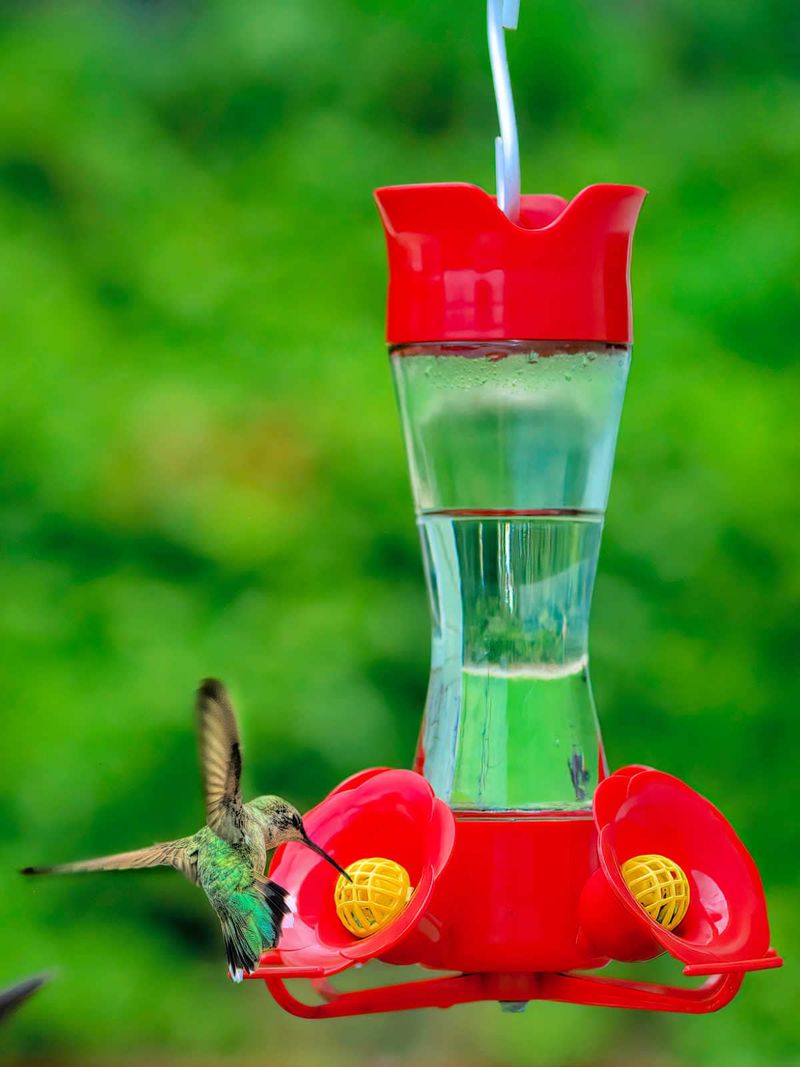
Keeping a hummingbird feeder in good shape comes down to a short, repeatable routine. Mix 1/4 cup of refined white table sugar with 1 cup of water, stir until fully dissolved, and let it cool before filling.
Skip red dye, honey, artificial sweeteners, brown sugar, and every other additive – Cornell Lab’s feeding guidance and Audubon’s dye safety review both support clear nectar made with plain white sugar as the standard.
Before each refill, clean the feeder thoroughly, scrub every port and reservoir, and rinse away all residue. Replace nectar every two to three days, or daily when temperatures are extreme, and discard it sooner if it looks or smells off.
Keep the feeder out of prolonged direct sun to slow spoilage.
These steps improve feeder safety and freshness, but they cannot tell you why birds haven’t appeared or guarantee that they will. A clean, well-maintained feeder stocked with the right nectar gives hummingbirds a reliable, safe option – whether they take it depends on where they are and what else your yard has to offer.