
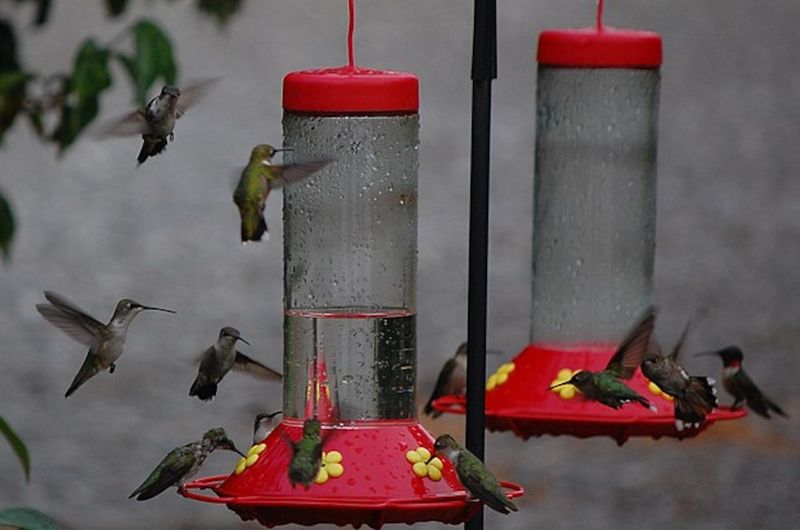
One day your feeder is buzzing with tiny wings, and the next it sits untouched for a week. Before you blame something you did wrong, know that a fall slowdown in hummingbird visits is one of the most common concerns Southern gardeners have every year.
The answer is rarely as simple as one feeder mistake, and understanding what is actually happening can save you a lot of worry.
A fall slowdown often reflects migration, not feeder rejection
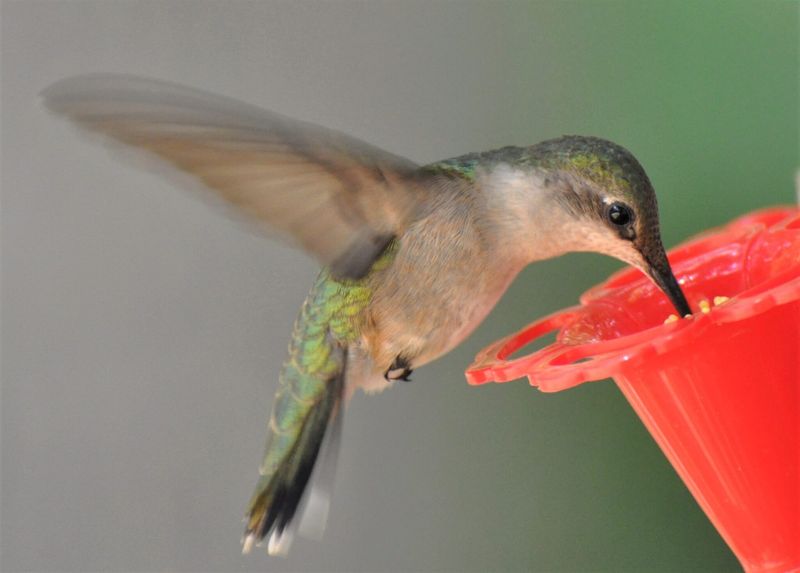
Many Southern gardeners notice a sharp drop in hummingbird activity sometime between late summer and October, and the instinct is to search for something they changed. The more likely explanation, especially for Ruby-throated Hummingbirds, is that the birds are simply following their seasonal schedule.
Texas Parks and Wildlife fall migration guidance notes that movement in Texas can begin as early as mid-July, surge through September, and wind down by early November.
Ruby-throated Hummingbirds are the dominant species across much of the eastern U.S. and a large part of the Texas migration story, and nearly all of them leave North America each fall. That said, some birds do linger along the Gulf Coast, in Florida, and in other parts of the South beyond the main departure window.
Timing varies enough by location that a gardener in central Florida may still see birds well after a Texas yard has gone quiet.
Species composition also matters. Texas Parks and Wildlife’s Ruby-throated Hummingbird profile points out that Texas and Gulf Coast yards can host Rufous, Black-chinned, and other hummingbirds outside the main Ruby-throated migration pattern.
A sudden quiet at the feeder may simply mean the regulars have moved on, while other species could still pass through. Migration is a leading explanation for fall declines, though flowers, weather, territorial behavior, and local bird movement can all play a role too.
Check nectar quality without assuming it caused the decline
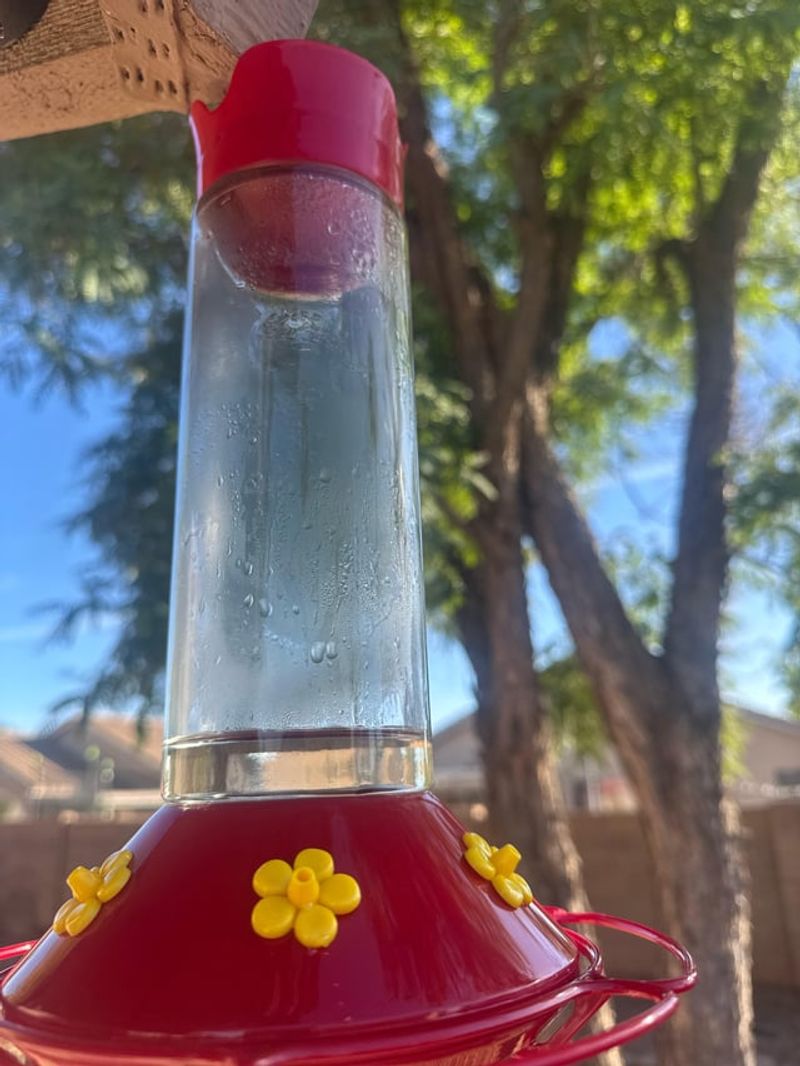
Nectar quality is one of the first things worth checking when visits drop, not because bad nectar is always the culprit, but because contaminated solution is a legitimate health concern for any birds that do stop by. Inspect the feeder for nectar that looks cloudy, has changed color, smells fermented, or shows any sliminess or mold.
Published microbial research on hummingbird feeders has documented distinct microbial communities that develop in feeder nectar, and extension guidance is clear that contaminated solution can be dangerous to birds.
Discard any compromised nectar and clean the feeder before refilling. That step is about bird safety, not about diagnosing why visits dropped.
The available research does not establish that every case of stale or improperly prepared nectar causes birds to avoid a feeder, and a fall disappearance has several plausible explanations beyond nectar condition.
The state of a feeder, whether full or empty, does not settle the question either. Cornell Lab’s guidance on feeder slowdowns notes that migrating birds may drain a feeder quickly during a passing surge, while at other times birds may be feeding on nearby flowers, using a neighbor’s yard, or simply traveling a different route.
A full feeder is not proof that the nectar is the problem, and an empty one is not proof that everything is fine.
Use the recommended 1:4 nectar recipe
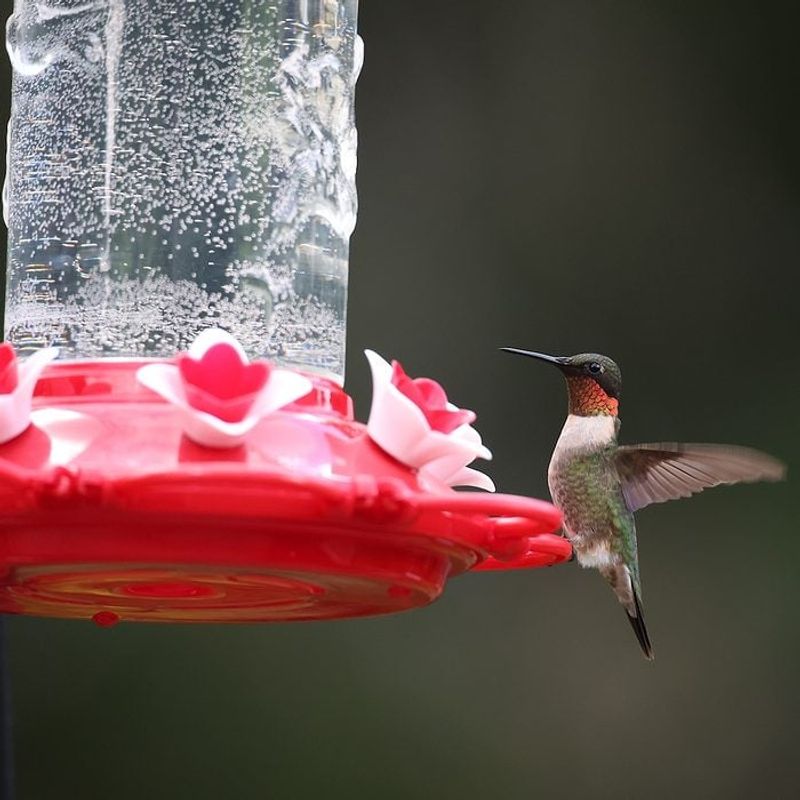
Getting the mixture right is straightforward: combine 1 part refined white granulated sugar with 4 parts water. UF/IFAS guidance on hummingbirds in Florida recommends this ratio, and it aligns with what Audubon and Cornell also advise.
Stir or gently boil to dissolve the sugar fully, then let the solution cool before filling the feeder.
Several common additions should be left out entirely. Red food coloring is unnecessary because the feeder itself or nearby flowers already provide color cues, and Cornell Lab’s guidance on red dye in hummingbird food warns it may be harmful.
Honey can encourage fungal and bacterial growth. Artificial sweeteners, brown sugar, molasses, and other sugar substitutes may contain compounds that are unsuitable for hummingbirds and should be avoided.
Some gardeners wonder whether making nectar sweeter in fall could help retain migrating birds or attract more of them. Research on hummingbird nectar concentration preferences shows that birds respond differently to varying sugar levels, and related energy-use studies confirm that concentration affects feeding behavior.
Even so, that research does not justify arbitrarily concentrating home feeder nectar beyond the standard ratio, and bird-care guidance consistently supports the 1:4 mixture rather than a stronger blend.
Adjust replacement and cleaning for Southern heat
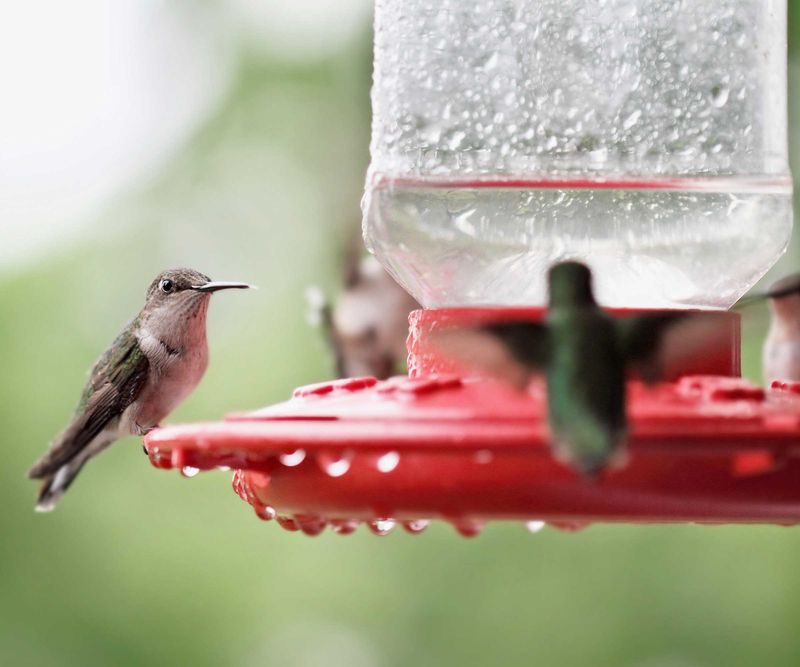
Heat is the biggest maintenance challenge for Southern gardeners keeping a feeder. Warm temperatures speed up fermentation and microbial growth, meaning nectar that might last several days in a cooler climate can turn in far less time during a Florida or Texas summer or a warm fall stretch.
UF/IFAS hummingbird guidance for Florida recommends replacing nectar every three to five days as a general rule, while Cornell and Audubon support daily or every-other-day replacement when temperatures are very high.
A practical approach for Southern yards: change nectar daily during extreme heat waves and at least every two to three days during ordinary warm weather. More importantly, empty and clean the feeder immediately whenever the nectar becomes cloudy, discolored, slimy, or smells off, regardless of how recently it was filled.
Topping off old solution without cleaning is not an acceptable substitute, because residue in ports, seams, and the reservoir can harbor bacteria and mold even when fresh nectar is added on top.
Shade placement helps slow spoilage. Moving a feeder out of direct afternoon sun reduces both temperature gain and the leakage that can occur with some bottle-style feeders when heat builds pressure.
For cleaning, follow the feeder manufacturer’s instructions: scrub all ports, seams, and the reservoir thoroughly, rinse completely, and make sure no cleaning residue remains before refilling. Guidance on specific cleaning agents varies among sources, so manufacturer instructions are the safest reference point.
Remove insect pressure and territorial bottlenecks
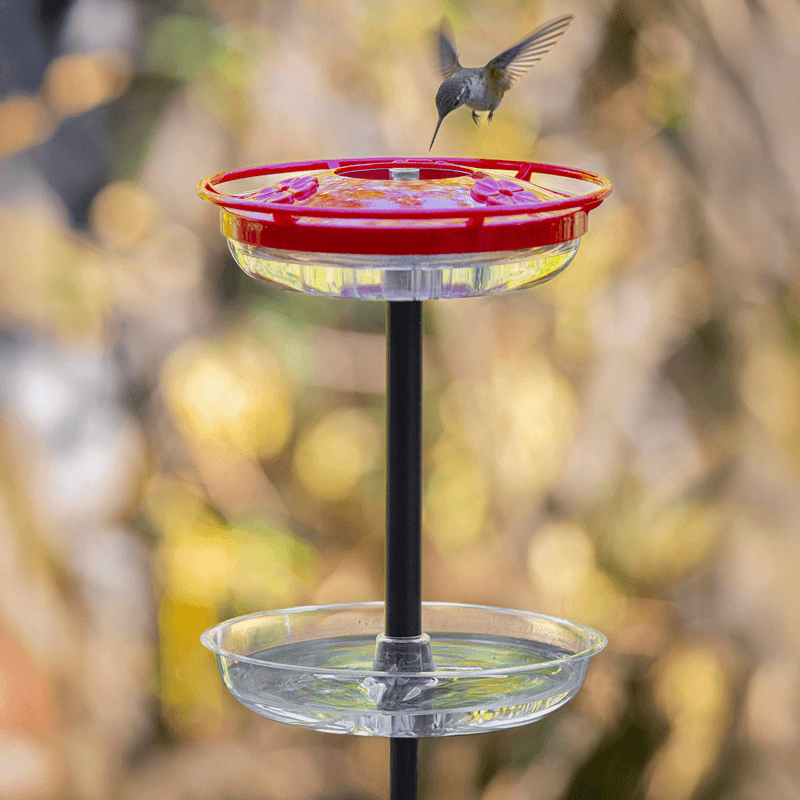
Ants, bees, and wasps can crowd a feeder and make it difficult for hummingbirds to feed comfortably. When insect pressure is high, the practical fix is to move the feeder to a different location or switch to a feeder design with insect-reducing features such as built-in ant moats or bee guards.
Cornell Lab’s feeder troubleshooting guidance specifically advises against applying oil, grease, petroleum products, or sticky substances around feeder ports, because those materials can contaminate the nectar or coat a bird’s feathers.
Territorial behavior is a separate but related problem. Hummingbirds are aggressive defenders of food sources, and a single dominant bird can perch near a feeder and chase away every other hummingbird that approaches.
From the gardener’s perspective, the yard may look quieter than it actually is, because only one bird is winning access.
Distributing several smaller feeders around the yard gives subordinate birds a better chance to feed without constant interference. UF/IFAS recommends spacing multiple feeders at least 10 feet apart, and Cornell similarly advises spreading feeders around different sides of the yard so one bird cannot guard all of them at once.
These steps improve access and reduce exclusion, but they do not prove that territorial behavior was the cause of any specific decline, and they cannot guarantee that more birds will appear.
Keep feeding while migration runs its course
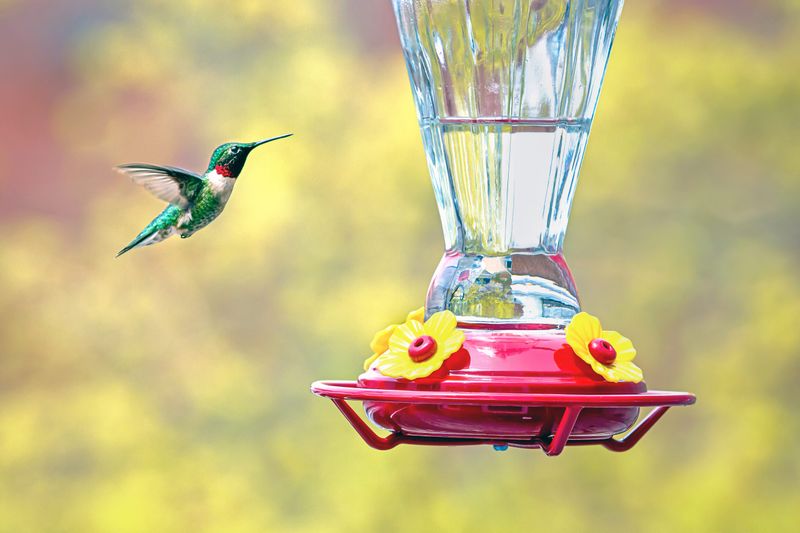
Pulling a feeder down the moment visits slow is a common reaction, but it is not necessary or particularly helpful. Cornell Lab’s guidance on fall feeding is direct on this point: hummingbirds migrate in response to changes in day length and other seasonal cues, and an available feeder does not trap them or delay their departure.
Removing it early only eliminates a food source that late migrants or, in some Southern locations, winter visitors might use.
Texas is a good example of why timing matters. Texas Parks and Wildlife notes that feeders may be left up year-round in Texas because some hummingbird species remain through winter and others pass through on a later schedule than Ruby-throated birds.
Florida and parts of the Gulf Coast can similarly see birds well beyond the main fall migration window.
Keeping a clean, correctly prepared feeder available through fall is a low-cost way to support any birds that are still moving through. That said, a maintained feeder cannot bring back birds that have already completed their migration or guarantee that the same individuals will return.
Audubon’s hummingbird feeding FAQ reinforces that a decline in visits may simply reflect completed migration or shifting local conditions, and that continued feeding is a reasonable response rather than a guaranteed fix.
Build habitat beyond the feeder
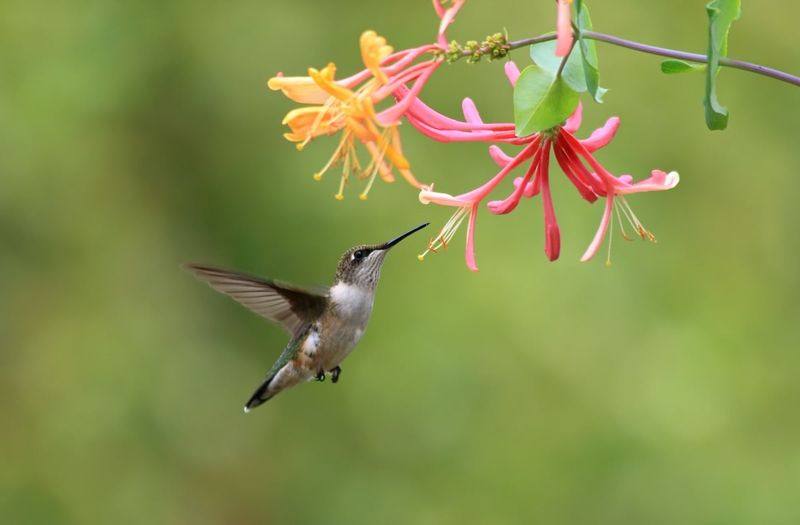
Sugar water alone does not meet a hummingbird’s full nutritional needs. Feeder nectar supplies supplemental energy, but hummingbirds also depend on natural flower nectar and small insects for a complete diet.
UF/IFAS specifically warns that sugar solution provides little nourishment beyond energy, making natural food sources essential rather than optional.
Planting native flowering species is one of the most practical steps a Southern gardener can take. Plants like salvia, trumpet vine, coral honeysuckle, and firebush produce natural nectar and also support the small insects that hummingbirds catch and eat.
The Audubon guide to attracting hummingbirds and orioles recommends native flowering plants as a long-term strategy for both food resources and habitat quality. Dense shrubs and layered vegetation also provide cover and perching spots that birds use for resting and territorial watching.
Better habitat does not work as a quick fix for a fall decline. Audubon’s hummingbird FAQ frames native planting as a long-term investment in yard quality rather than an immediate solution to seasonal movement.
A yard with good native plant diversity, reliable insect populations, and appropriate vegetation structure is more attractive to hummingbirds year after year, even if it cannot override the pull of migration in any given fall.
Use a short checklist before concluding the birds are gone
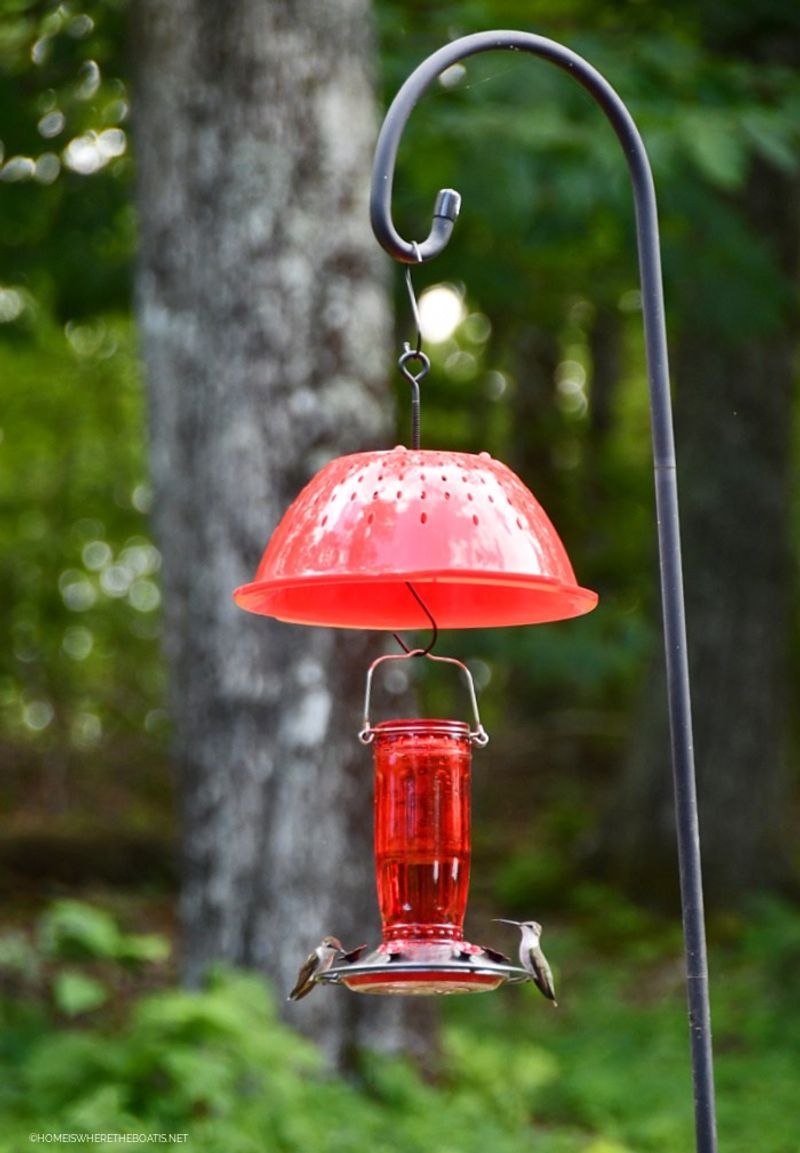
Before deciding the hummingbirds have left for good, run through a quick set of checks. Confirm the nectar is mixed at 1 part sugar to 4 parts water, that it has been replaced on schedule for the current temperature, and that the feeder has been fully cleaned rather than topped off.
Verify the feeder is in a shaded spot, that insects are not crowding the ports, and that you have more than one feeder available if a territorial bird could be blocking access. Cornell Lab’s feeder slowdown guide encourages gardeners to compare feeder activity with what is blooming nearby, current weather patterns, and whether migration timing fits the local calendar.
Also consider which species are expected in your area and when. A Texas yard in October may be past the Ruby-throated peak but still in range for Rufous or other late-season visitors.
A Florida yard may host birds well into winter. Cornell’s fall feeding guidance and UF/IFAS hummingbird guidance both support keeping a clean feeder available for several weeks after the last confirmed sighting.
Good feeder care removes preventable risks and keeps the option open for any bird that passes through. A well-maintained yard simply cannot compel a migrating hummingbird to stay, and that is a reasonable thing to accept.