
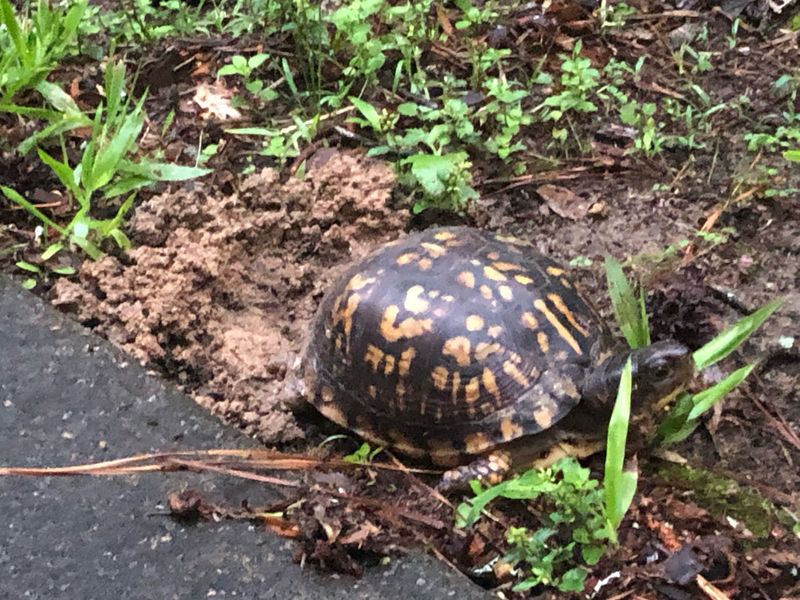
Fall is a great time to divide perennials and renovate garden beds, but it comes with a small risk most North Carolina gardeners never think about: disturbing a box-turtle nest that was laid months earlier. Eastern box turtles nest from late spring into early summer, and those shallow eggs may still be incubating or just beginning to hatch when you pick up your shovel in September or October.
Knowing when turtles actually nest, and what garden conditions to treat with extra care, can help you finish your fall projects without accidentally harming one of the state’s most familiar reptiles.
Fall brings hatching risk, not the usual laying season
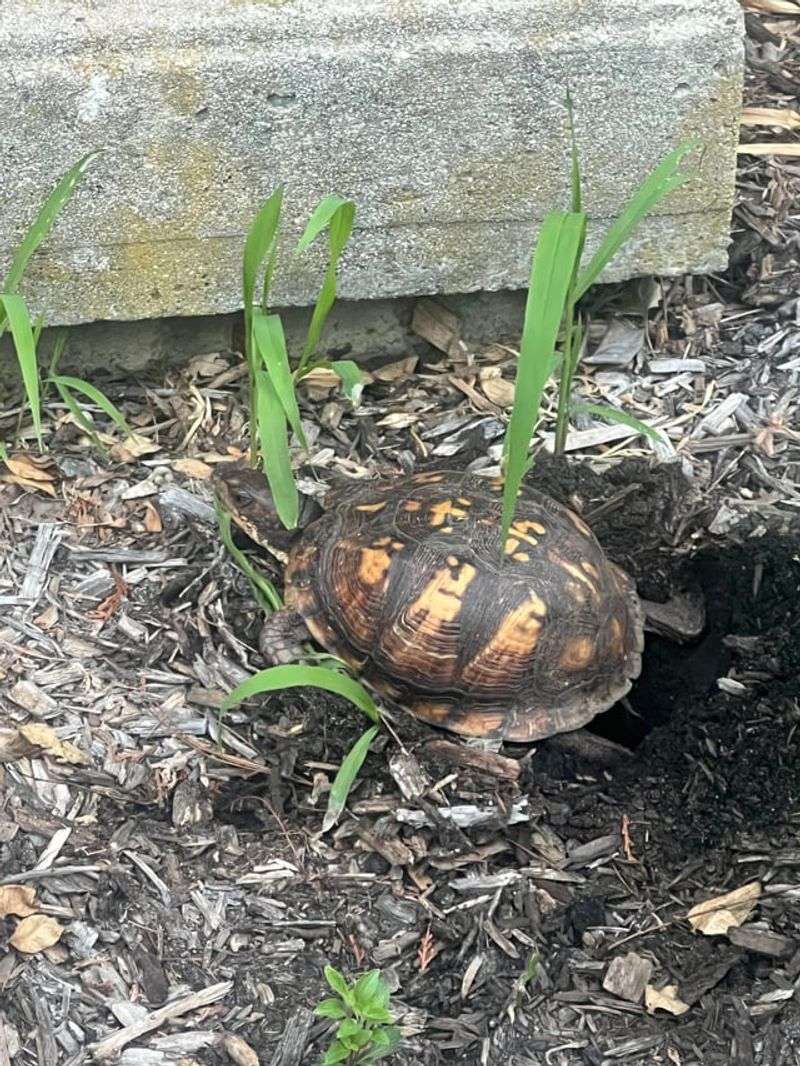
A lot of gardeners assume that if a box turtle is poking around the yard in September, it must be looking for a place to lay eggs. The timing does not work that way for North Carolina’s eastern box turtle.
North Carolina Natural Heritage Program records identify nesting as concentrated in early summer, with observations centered on June. May through July is the window when females are actively searching for sites, digging shallow holes with their hind legs, depositing several eggs, and covering the nest before moving on entirely.
Once the eggs are in the ground, incubation runs roughly 60 to 90 days under normal warm-season conditions. Do the math and fall lands squarely in the hatching window for nests laid at the later end of the season.
The NC Wildlife Resources Commission species profile notes that some hatchlings may stay inside the nest through winter rather than emerging immediately, so a nest can persist in the soil well past the moment eggs develop.
The practical upshot is that fall digging is worth slowing down not because females are laying eggs now, but because nests from earlier in the year may still be sitting just below the surface. A spade pushed into the wrong patch of soil can slice through eggs or injure a hatchling that is only days away from emerging on its own.
The goal of this article is to help you protect those earlier nests, not to send you searching for new ones.
A garden bed may resemble nesting habitat
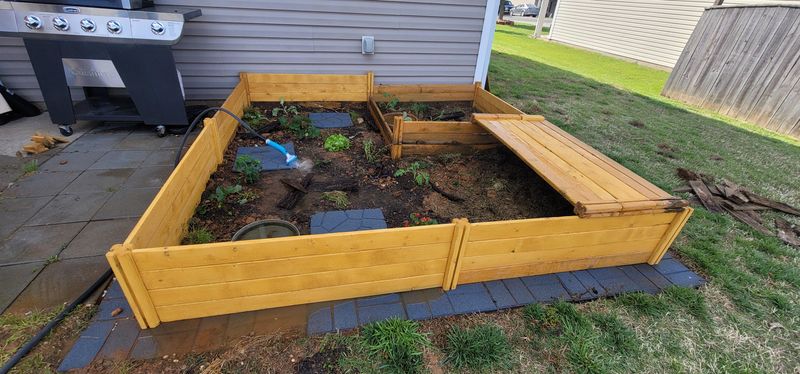
Understanding why a garden bed might matter at all starts with knowing what female box turtles look for when they choose a nest site. A U.S.
Forest Service species review describes nest sites as typically open, sunny, elevated, and well-drained, with loose sandy or loamy soil and relatively little overhead canopy. That description fits a lot of common garden features: a freshly turned vegetable bed, a cleared annual border, a compacted path edge, or a south-facing raised bed with thin mulch.
Research from outside North Carolina adds useful context without being directly transferable to local conditions. A University of Delaware nesting ecology thesis found that females in fragmented landscapes often selected disturbed or edge habitats, including areas near human infrastructure, when natural sites were limited.
A Frontiers in Ecology and Evolution study on nest success and hatchling survival reinforced that open, sunny microhabitats with loose substrate consistently appear in nesting records across the species’ range. Neither study was conducted in North Carolina, and neither establishes that garden beds are a common or predictable nesting location here.
The Forest Service review also notes that nests are shallow, typically around 2 to 4 inches deep. A standard garden fork, transplanting trowel, or bulb planter reaches that depth without any unusual effort.
That shallowness is what makes fall renovation genuinely risky in areas that share nesting-habitat characteristics, even if the odds of hitting a specific nest in any given bed are low. Treat the habitat features as a reason to slow down and look carefully, not as a guarantee that a nest is present.
A remembered digging site offers the best practical clue
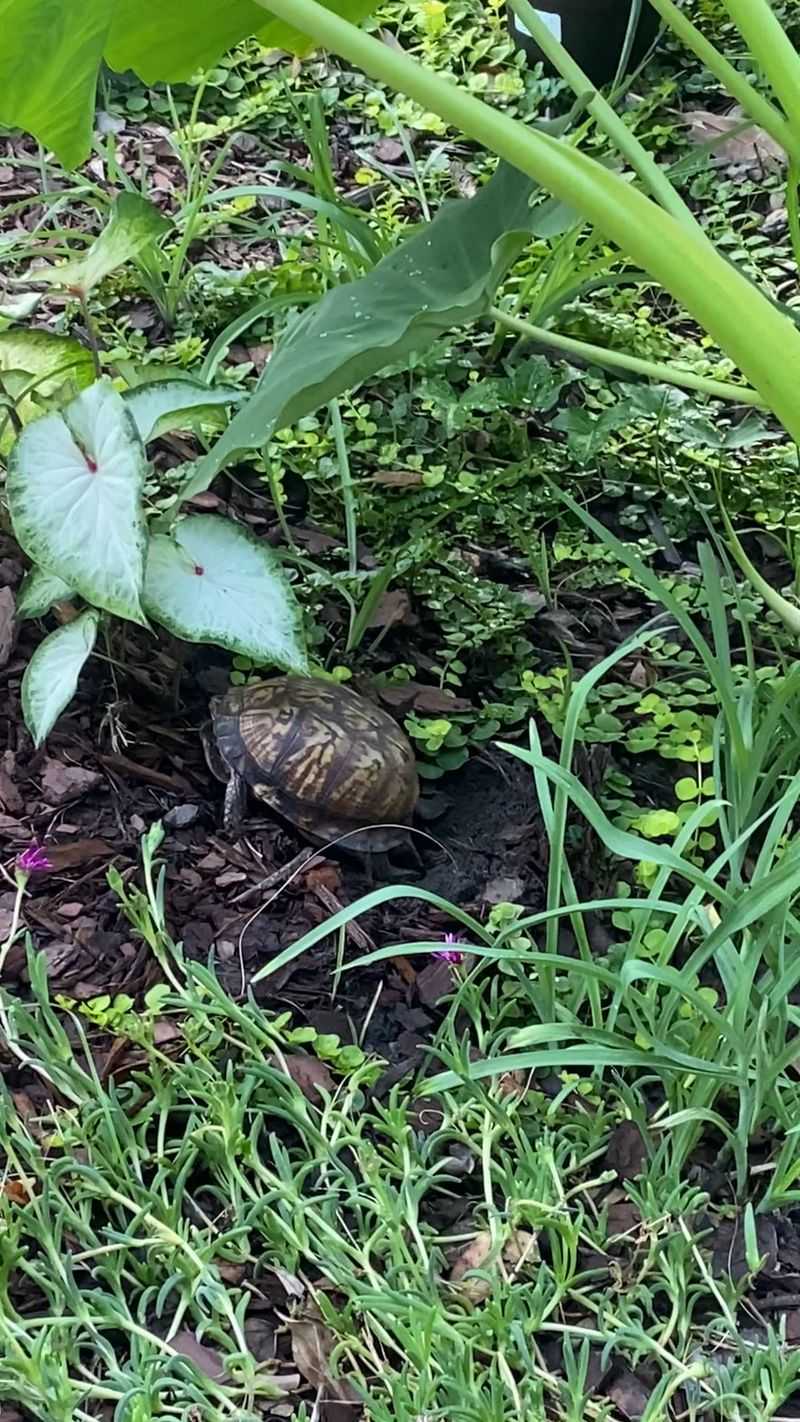
Of all the ways to figure out where to be careful this fall, memory is the most reliable tool available to a homeowner. If you watched a box turtle scraping and digging in a specific spot back in May, June, or July, that location deserves your attention now far more than any bare patch you happen to notice in September.
North Carolina Natural Heritage Program documentation confirms that nesting females use their hind legs to excavate shallow depressions before laying. If you saw that behavior and noted roughly where it happened, you have a meaningful data point.
Combine that memory with the site characteristics described in the previous section – sunny, open, loose soil, little overhead cover – and you have a reasonable basis for marking the area and working around it this fall.
A turtle simply walking through the garden does not provide the same information. An animal moving across a bed in September or October may be foraging, traveling between patches of habitat, looking for moisture, or participating in the general fall movement that NC Wildlife Resources Commission guidance associates with the active season winding down.
Seeing a turtle in fall does not mean a nest is nearby, and it does not mean the animal is about to lay eggs. The presence of a turtle is a reason to watch where you step, not a reliable nest indicator on its own.
A simple garden marker, a flag, or even a note in your phone with a rough location is enough to preserve the information you need. The Forest Service species review supports the general principle that observed nesting behavior at a site is a meaningful signal, while habitat features alone can only raise the possibility.
When both line up together, caution is clearly warranted.
Pause the work instead of probing the soil
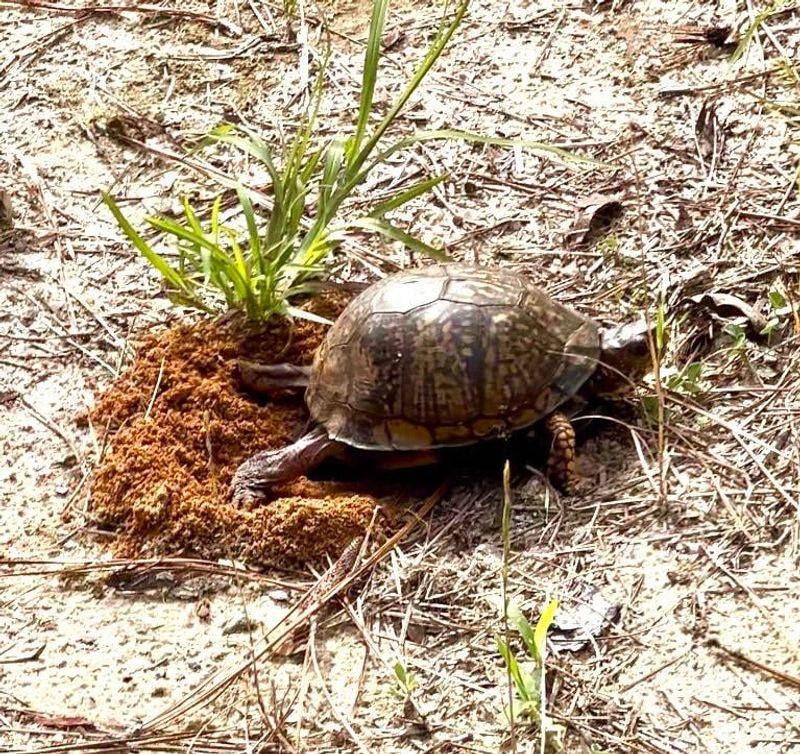
Suspecting a nest is present puts you at a decision point, and the right response is straightforward: stop digging in that area and leave the soil alone. NC Wildlife Resources Commission guidance consistently recommends leaving suspected nests undisturbed rather than investigating or relocating them.
That recommendation applies to the eggs, the surrounding soil, and any hatchlings that may be just below the surface.
Probing the soil with a finger, a stick, or a tool to confirm whether eggs are present is not a safe verification method. Eggs at 2 to 4 inches deep can be damaged by pressure or disruption even when you are trying to be careful.
Hatchlings that have already developed may be positioned near the surface, and a probe can injure them before they have any chance to emerge. There is no agency guidance suggesting that homeowners should excavate or sift soil to find eggs, and doing so can cause the exact harm you are trying to prevent.
The practical alternative is to work around the flagged area entirely or postpone that section of the project. Most fall bed renovation tasks – cutting back perennials, adding compost, dividing clumps – can be done in stages.
Leaving a 2- to 3-foot buffer around a suspected nest site costs very little in terms of the finished garden and protects something that cannot be put back once it is damaged. North Carolina Natural Heritage Program records reinforce the principle that once a nest is covered and the female has left, human intervention is more likely to cause harm than to help.
If your fall schedule is firm and a particular bed absolutely must be worked, shift the task to a different section of the bed and leave the flagged corner alone. Revisit it in late winter or early spring, after hatchlings that overwintered in the nest have had a chance to emerge on their own.
Leave an adult or hatchling where it is
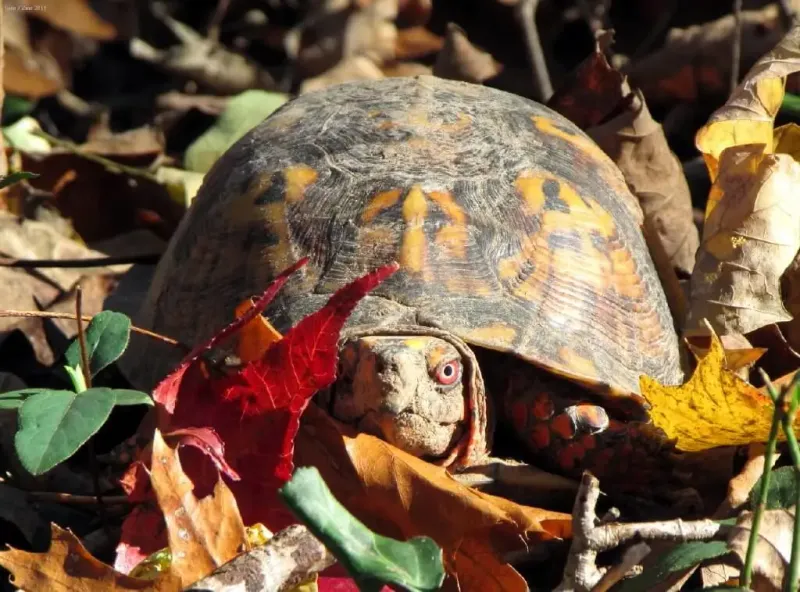
Finding a box turtle in the yard is genuinely exciting, and the instinct to do something helpful is understandable. Most of the time, the most helpful thing is nothing at all.
NC Wildlife Resources Commission guidance is clear: leave a box turtle where you find it unless it faces an immediate hazard. A turtle moving through your garden may be a local resident with a home range that overlaps your property, not a lost or displaced animal that needs rescuing.
Box turtles have strong site fidelity, meaning they return to the same patches of habitat year after year. Moving one away from your yard, even to nearby woods that look suitable, can disorient it and separate it from the specific area it knows.
The agency specifically advises against relocating box turtles or taking them home, because animals moved out of their home range often spend months trying to return and face serious survival risks in the process.
Road encounters require a slightly different response. If a turtle is crossing a road and you stop to help, move it only a short distance, ideally less than 50 feet, and set it down on the side of the road it was already heading toward.
Moving it backward or to a completely different location defeats the purpose and may send it back into traffic. Keep the move small and directional.
A hatchling found in the garden deserves the same hands-off treatment as an adult. Small turtles emerging from a nest are following instincts that have worked for this species for a long time, and they do not need to be placed in a container, fed, or relocated to a pond.
If a turtle, adult or hatchling, is visibly injured, contact a licensed reptile rehabilitator rather than attempting home treatment. The NC Wildlife Resources Commission can help connect you with a qualified rehabilitator in your area.
Use nest protection only briefly and monitor it
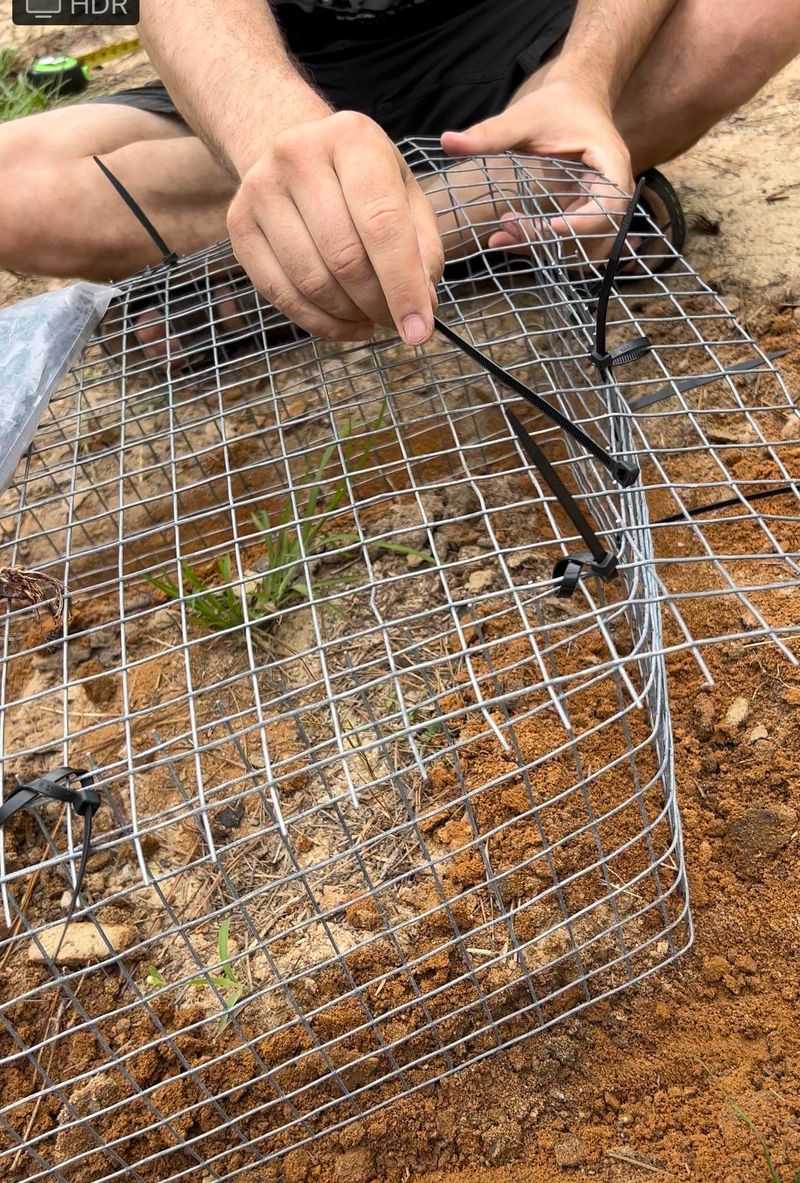
Temporary mesh protection is an option some homeowners ask about, and it is worth understanding exactly what it can and cannot do. According to NC Wildlife Resources Commission guidance, no action is required to protect a box turtle nest.
The agency does not recommend that homeowners routinely cover nests, and most nests hatch without any human intervention.
If a freshly identified nest is in a spot where predator digging is a serious and immediate concern, the agency says a homeowner may use chicken wire or hardware cloth secured with stakes or stones. The cover reduces the chance that a raccoon or skunk digs up the nest before the eggs develop.
That is the specific, limited job it is designed to do.
The removal timing matters more than most people realize. NC Wildlife recommends taking the mesh off after the ground settles, roughly one to two weeks after placing it.
Leaving a wire cover in place for weeks or months without daily monitoring creates a new set of problems. Hatchlings emerging from the nest can become trapped beneath a forgotten cover, unable to reach food or shelter, and may die before anyone notices.
A cover that was placed with good intentions becomes a hazard if it is not checked and removed on schedule.
Protecting a nest with mesh also does not guarantee that the eggs will hatch successfully or that the hatchlings will survive. Eggs face temperature-related risks, natural predation that a wire cover cannot fully prevent, and other mortality factors that are simply part of the species’ biology.
A temporary cover addresses one specific risk in one specific situation. If you use it, set a reminder to check and remove it within the recommended window, and do not assume that placing it means the nest is safe from that point forward.
A careful pause helps a local species persist

Eastern box turtles live throughout North Carolina, from the coastal plain to the Piedmont and into the mountains. A turtle that shows up in your yard regularly is quite possibly a member of a local population with a home range that overlaps your property, not a wanderer passing through once.
NC Wildlife Resources Commission and the agency’s species profile both describe the species as a priority conservation concern, facing pressure from habitat loss, road mortality, collection, and a naturally slow reproductive rate.
A statewide population study published through the Ecological Society of America documented long-term population-level concerns for eastern box turtles in North Carolina, reinforcing why each individual and each clutch of eggs carries real weight for local groups. The species does not bounce back quickly from losses, because females mature slowly and produce relatively few offspring each year.
None of that means every fall gardening project is a conservation crisis, or that your beds are full of nests waiting to be disturbed. The practical takeaway is straightforward: recognize that North Carolina turtles nest from May through July rather than in fall, understand that fall is when earlier nests may hatch or still be incubating, slow down in sunny open areas with loose soil where you observed digging earlier in the year, skip the probing, and leave any turtle or suspected nest exactly where you find it.
A two-minute pause before pushing a spade into a flagged corner costs almost nothing, and for a species that reproduces slowly and lives close to home, that small habit adds up over time.