
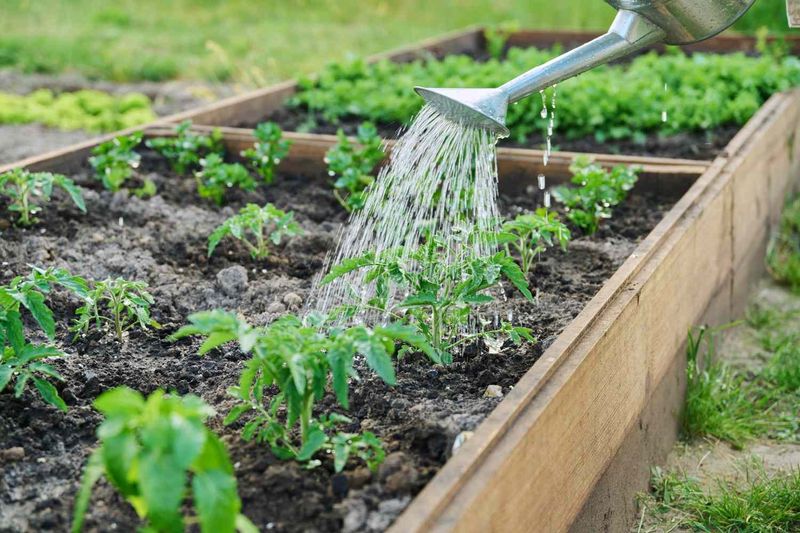
Most gardeners in Florida and Texas have heard some version of the rule: never water in the middle of the day or you’ll lose half your water. The real story is more useful than that shortcut suggests, and getting it right can protect your plants without wasting a drop more than necessary.
The best place to start is not the clock on the wall but the way water actually gets from your hose to your roots.
Correct the headline before changing the watering hour
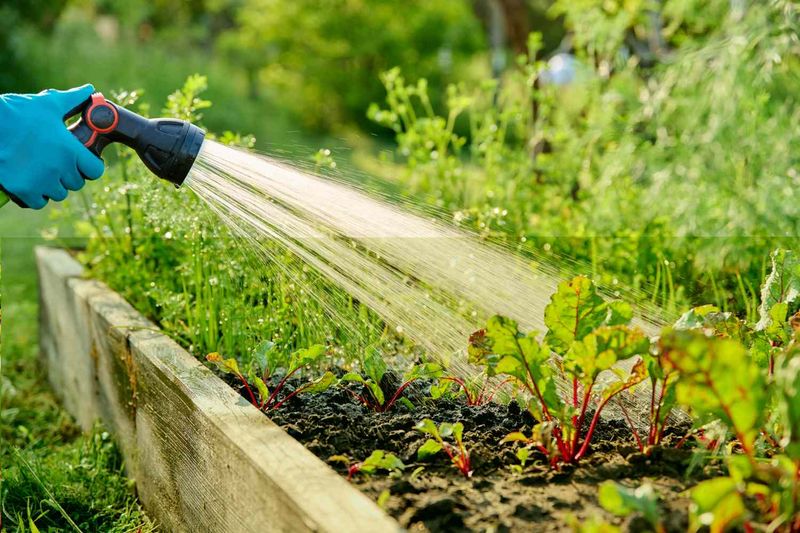
Headlines about watering often promise a single magic hour, but the evidence behind them is more complicated. EPA WaterSense estimates that as much as 50% of outdoor water use may be wasted, but that figure reflects a combination of overwatering, runoff, wind, evaporation, and inefficient equipment, not simply the result of turning on a sprinkler at noon.
Pinning all that loss on one unlucky hour misses most of what actually drains water from a yard.
That said, there is a clear, practical answer for anyone using overhead sprinklers or rotary heads: aim for early morning, roughly before or around sunrise and often somewhere in the 4 to 8 a.m. range. Minnesota Extension recommends this window specifically because atmospheric conditions are cooler, winds tend to be calmer, and water has a better chance of soaking into the soil before heat builds.
Midday overhead watering can add avoidable evaporation to your losses, and skipping it when you can is a reasonable habit. But it competes with leaks, misaligned heads, runoff, and chronic overwatering as causes of waste, and fixing those problems often delivers bigger savings than resetting the clock alone.
The sections below walk through each piece of the puzzle so you can decide which fix matters most in your garden.
Why midday overhead watering can lose water
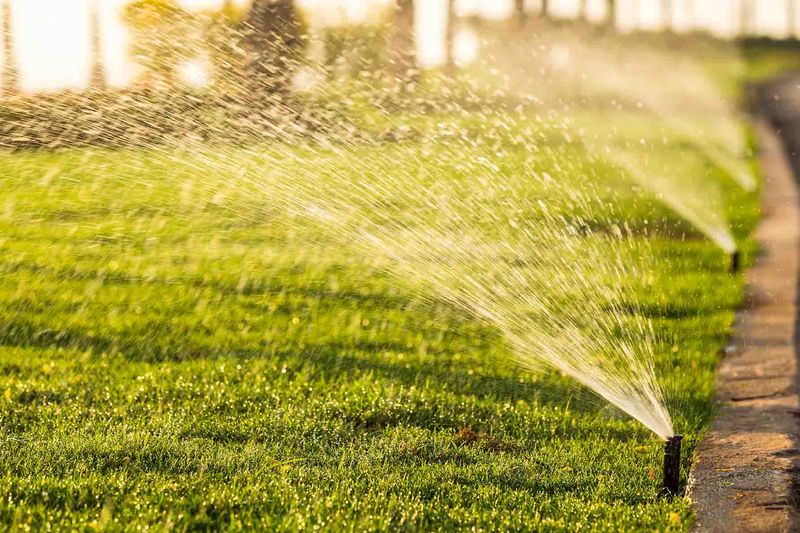
Running overhead sprinklers during the hottest part of the day creates real, if hard to measure, losses. Heat raises the atmosphere’s demand for moisture, direct sunlight warms water droplets in the air, and afternoon winds common across Florida and Texas can carry fine spray well away from the intended zone before it touches soil.
EPA WaterSense specifically advises avoiding midday watering for these reasons, identifying the combination of heat and wind as conditions that reduce how much applied water actually reaches the root zone.
Evaporation from the air is only part of the picture. Water that lands on hot pavement, runs off compacted soil, or pools on a slope before soaking in also counts as lost water, and those failures happen regardless of the hour.
EPA’s watering tips place inefficient equipment, runoff, and overwatering alongside evaporation as contributors to outdoor water waste, which is why the agency’s 50% figure cannot be traced back to timing alone.
Skipping midday overhead irrigation when you have a choice is a sensible, low-effort adjustment for Southern gardeners facing summer heat. What it will not do on its own is fix a leaking valve, straighten a head that is watering the driveway, or stop a controller from running a zone that already got two inches of rain.
Those problems need their own solutions, covered later in this article.
Early morning helps manage wet foliage
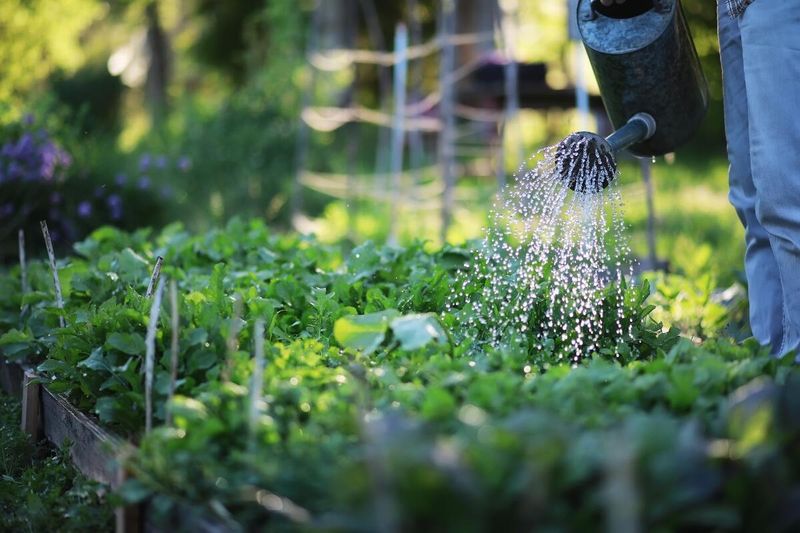
Foliage that stays wet for hours overnight creates conditions that favor certain fungal and bacterial diseases. Late-night overhead watering can leave leaves damp through the entire dark period, when humidity is already high and airflow tends to drop.
UF/IFAS turfgrass disease management guidance notes that prolonged leaf wetness, combined with humidity, plant susceptibility, and the specific pathogen present, is a key factor in many common lawn and garden diseases. Watering before sunrise means the sun rises and begins drying foliage within an hour or two of the irrigation cycle ending.
Morning timing may reduce some of those disease-favoring conditions compared with running sprinklers late at night, but it does not guarantee dry leaves or prevent disease outright. Plant spacing, airflow, cultivar choice, and sanitation all play roles too.
Penn State Extension notes that late-afternoon or early-evening watering can be acceptable when leaves have time to dry before nightfall, which means the stronger caution applies specifically to overhead irrigation that finishes close to bedtime.
A practical distinction worth keeping is the difference between late-night overhead watering and early-evening soil-directed watering. UF/IFAS Putnam County Extension points out that directing water to the soil rather than the canopy sidesteps much of the wet-foliage concern entirely, making the evening timing question less critical when you use a soaker hose or drip line instead of a sprinkler head.
Match the timing to the irrigation method
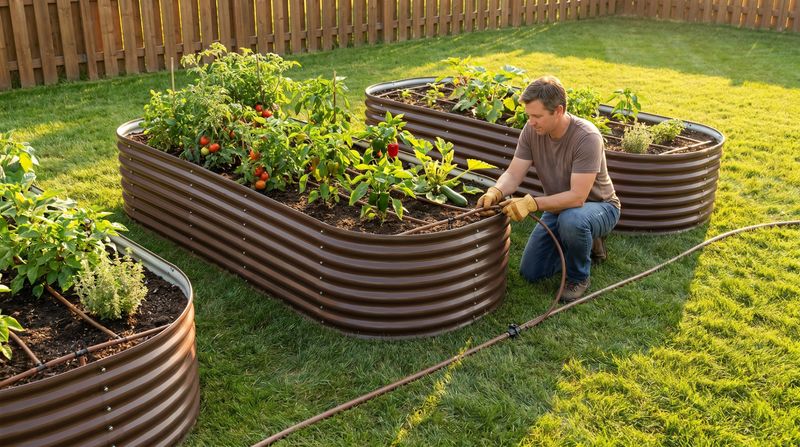
Overhead sprinklers and drip systems operate under different rules, and treating them the same way leads to unnecessary restrictions. For sprinkler heads, rotary nozzles, and other systems that spray water through the air, early morning is the sensible default because it limits mid-air evaporation and gives foliage time to dry.
For drip lines, soaker hoses, and microemitters that deliver water directly to the soil surface or root zone, the timing window is considerably more flexible.
Penn State Extension’s drip irrigation guidance states plainly that crops can be irrigated at other times when they need water, because the delivery bypasses foliage and the soil surface shields moisture from direct sun. The main goal shifts from “when” to “how much” and “how often,” with root-zone moisture serving as the primary guide rather than the clock.
EPA’s microirrigation page reports that properly designed and maintained microirrigation systems can use 20 to 50% less water than conventional sprinklers, largely because water goes directly where roots can reach it with minimal surface exposure. That advantage depends on correct installation, pressure regulation, and regular maintenance, so it is a potential gain for a well-managed system rather than an automatic result of switching equipment.
For vegetable beds and containers in particular, a low-flow wand aimed at the soil or a simple soaker hose loop can cut both water use and foliar disease risk without requiring a full system overhaul.
Water the active root zone, then test before watering again
Frequent, shallow watering is one of the most common habits that quietly drains both water and plant health. When only the top inch or two of soil gets wet, roots have little reason to grow deeper, and the surface dries fast enough that the cycle repeats every day or two.
A better approach is to wet the active root zone thoroughly and then wait until the soil at that depth has dried appropriately before running irrigation again.
UGA Cooperative Extension’s vegetable garden water guide offers roughly 6 to 8 inches as a general target depth for wetting vegetable beds, though the right amount still depends on the crop, soil type, weather, and how developed the root system is. Clay soils hold moisture longer than sandy ones, so a Florida gardener with sandy soil and a Texas gardener with heavy clay may need very different intervals even with identical plants.
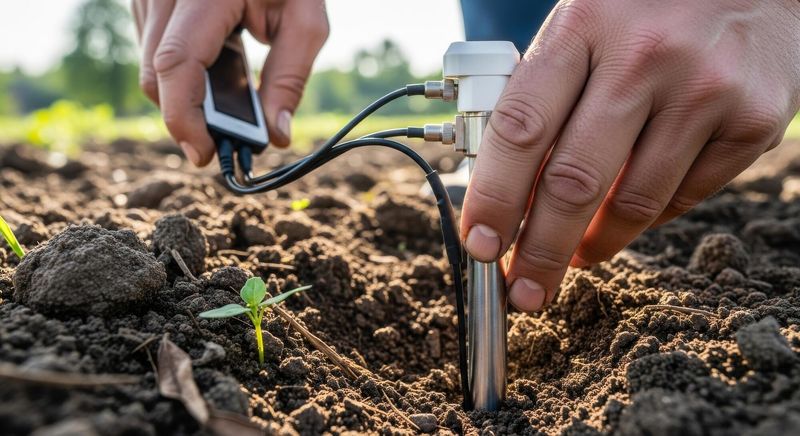
EPA recommends using catch cans to measure how much water a sprinkler system actually applies, and a simple finger or trowel check at root depth before each irrigation cycle can prevent unnecessary watering. A screwdriver pushed into the soil works too: if it slides in easily to 6 inches, the soil likely has enough moisture.
Penn State Extension also cautions against waiting for visible wilting as a universal trigger, because some crops experience stress well before leaves droop, while afternoon wilting in heat can reflect temporary stress even when soil moisture is adequate. Check the soil, not just the plant.
Repair leaks, runoff, and uneven coverage
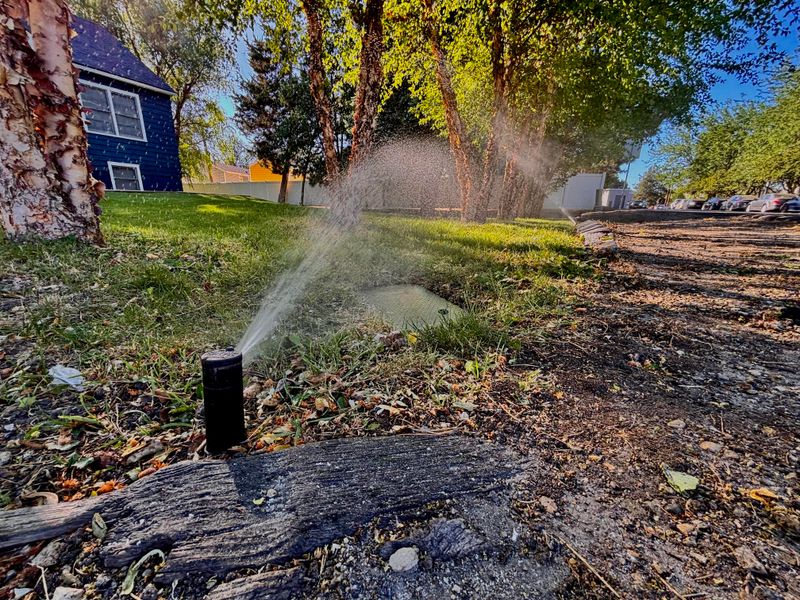
A sprinkler head that waters the sidewalk instead of the lawn, a valve that drips overnight, or a zone running at pressure so high it turns water into mist can waste far more water than the difference between watering at 7 a.m. and watering at noon. System problems like these operate around the clock, so fixing them often delivers more meaningful savings than any scheduling adjustment.
EPA’s WaterSense newsletter recommends inspecting irrigation equipment regularly and keeping water off sidewalks, driveways, and streets as a basic conservation step. EPA’s watering tips also point to catch cans as a practical way to check whether a sprinkler system distributes water evenly across a zone, since uneven output means some areas get too much while others stay dry.
Dividing a large zone into shorter cycles separated by time for absorption can reduce runoff on slopes or compacted soil without requiring new equipment.
Oklahoma State Extension’s lawn watering guidance emphasizes that soil type, shade, slope, and wind exposure should all factor into how a yard is zoned and scheduled, because a single setting rarely fits an entire property. Sandy soil under full Texas sun drains and dries faster than shaded clay near a Florida house foundation, and running both zones on the same timer wastes water in one spot while potentially underwatering the other.
Walking the yard after an irrigation cycle, looking for puddles, dry patches, and misdirected heads, takes only a few minutes and can reveal problems that no scheduling change alone would solve.
Let rainfall and local rules change the plan
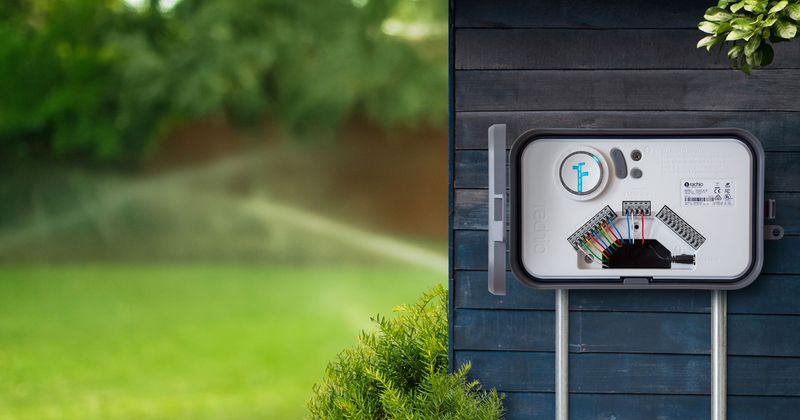
A fixed irrigation schedule set in spring and left untouched through hurricane season is one of the most reliable ways to waste water in Florida and Texas. Rainfall, temperature swings, humidity, and plant growth all change how much water a yard actually needs week to week, and a controller that ignores all of that will run whether the soil is dry or already saturated.
UF/IFAS irrigation research cautions specifically against the set-it-and-forget-it approach that leaves systems running on a calendar regardless of conditions.
EPA’s weather-based controller information explains that smart controllers using local weather data or soil-moisture sensors can automatically pause or reduce irrigation when rainfall or soil conditions make it unnecessary. Rain sensors are a lower-cost option that simply interrupt the controller when precipitation reaches a set threshold.
Either technology reduces the chance of watering a lawn that just received an inch of rain.
Some plants need closer attention than a fixed schedule can provide. Seedlings, containers, hanging baskets, and newly planted vegetables have smaller root zones that dry out quickly, especially during extreme Southern heat.
Penn State Extension advises checking these plants more often rather than applying one schedule to everything in the yard. Florida and Texas gardeners also need to factor in local water-management-district rules, municipal restrictions, or utility guidelines before programming any schedule.
UF/IFAS Putnam County Extension directs homeowners to verify current local restrictions, which can tighten significantly during drought conditions and vary from one county or utility district to the next.
Use early morning as a default, not a rigid rule
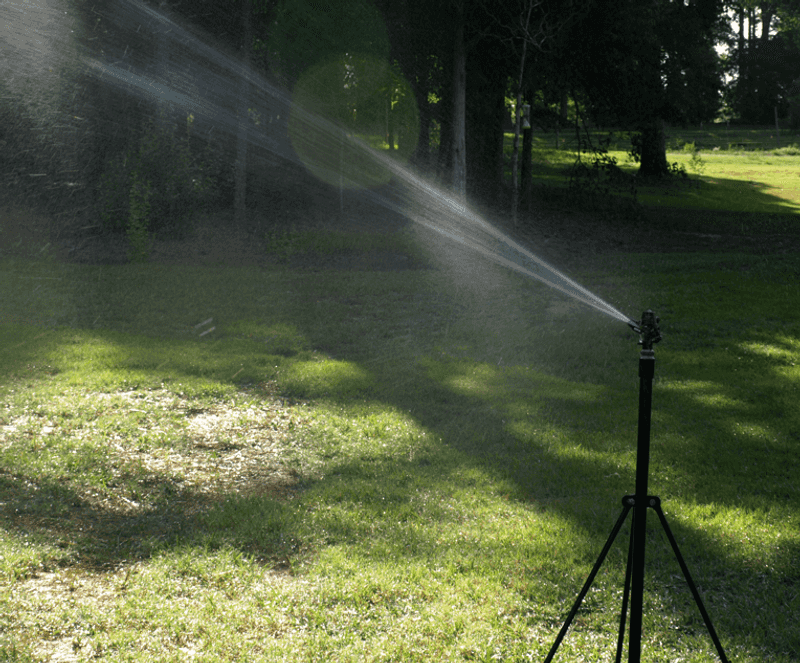
For overhead sprinklers, early morning remains the clearest, most practical default. Cooler air, lower wind, and the sun still rising all favor better water delivery to the soil, and foliage gets hours to dry before nightfall.
Minnesota Extension recommends roughly 4 to 8 a.m. as the preferred window, and EPA WaterSense echoes the guidance to avoid midday heat when using overhead systems. Avoiding the hottest hours is a reasonable habit, not an emergency measure.
The exceptions matter as much as the rule. Penn State Extension’s drip irrigation guidance confirms that soil-directed systems have considerably more timing flexibility because they bypass the foliage and air-evaporation concerns entirely.
Early-evening watering is not automatically harmful when water goes to the root zone and foliage dries before dark. Frequency, in every case, should follow root-zone moisture, plant needs, weather, and recent rainfall rather than a fixed number of days per week.
The largest water savings in most Southern yards come from fixing equipment problems, preventing runoff, improving coverage, and using weather-aware controls rather than from adjusting the hour by a few minutes. Get the timing roughly right, then focus on delivery.
A well-aimed drip line on a responsive controller will outperform a perfectly timed but leaking sprinkler system every time.