
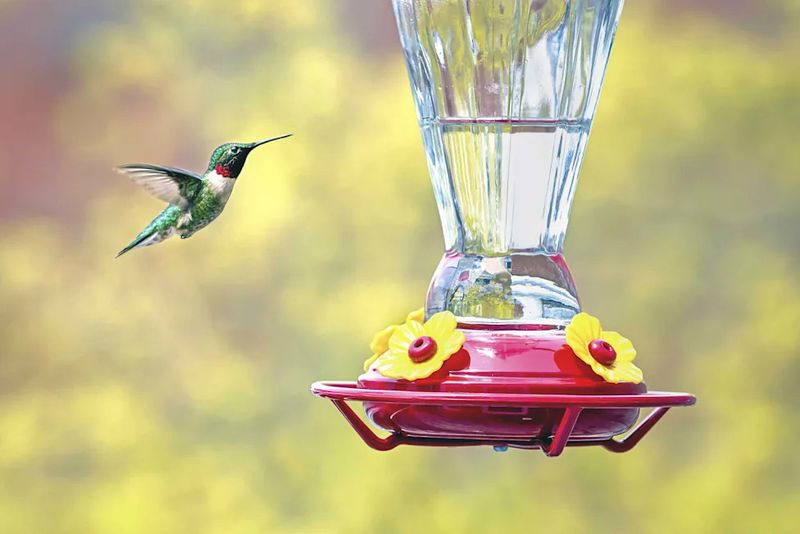
Refilling a hummingbird feeder every few days feels rewarding until the nectar keeps disappearing and you rarely spot a single bird. Before assuming something is driving them away, consider that an empty reservoir is a clue, not a verdict.
Insects, leaks, rain, and even birds feeding outside your line of sight can all drain a feeder, and each explanation calls for a different fix.
An empty feeder does not prove the birds are gone
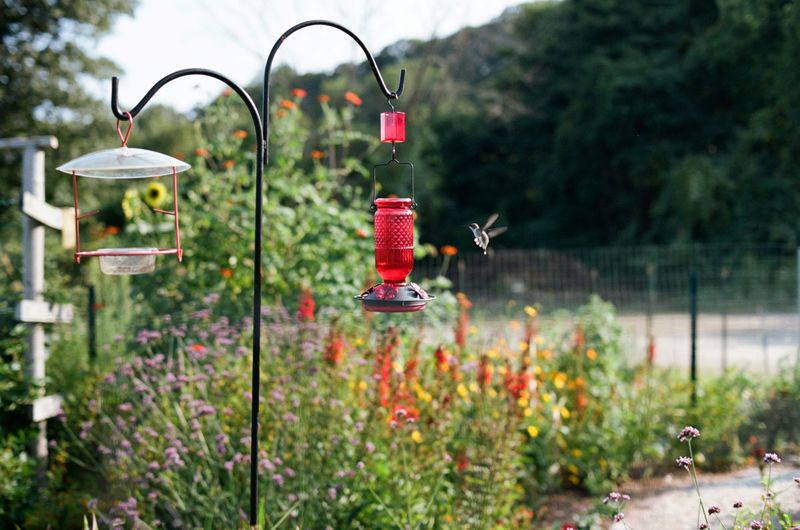
Nectar can vanish from a feeder for reasons that have nothing to do with whether hummingbirds are visiting. A slow drip from a cracked reservoir, insects working the ports overnight, rainwater diluting and overflowing the solution, or birds feeding at dawn before you check the feeder can all reduce the level without leaving obvious proof.
Jumping straight to “the birds left” skips several more likely explanations.
The better starting point is a physical inspection of the feeder itself. Look at the ports for sticky residue or clogging, examine the reservoir for cracks or discoloration, check the hanger and the hook where the feeder meets the wire for drip trails, and scan the ground directly beneath the feeder for wet spots, dead insects, or sugar crust.
Cornell Lab bird-feeding guidance recommends checking for insect pressure, leaks, and feeder design problems as the first step when something seems off.
Once the feeder checks out physically, the diagnostic sequence moves outward: assess nectar quality, then watch for bird behavior at different times of day, then consider the season and surrounding habitat. All About Birds notes that a feeder does not guarantee visits and that apparent absence often reflects observation gaps rather than a feeder problem.
Start with what you can see and touch before drawing conclusions about the birds themselves.
Insects and leaks are important first checks
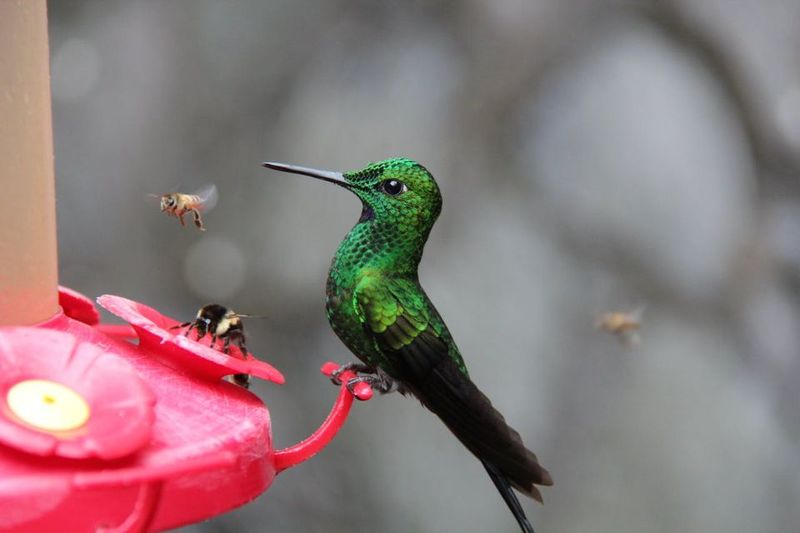
Ants, bees, and wasps are drawn to sugar solution, but they interact with a feeder in different ways and create different problems. Ants typically travel a fixed trail from a nearby colony to the feeder, arriving in a steady stream that can contaminate the nectar and clog ports.
Bees and wasps tend to cluster around the feeding holes in groups, and when they swarm a feeder, University of Florida guidance on hummingbirds notes they may discourage birds from approaching, though individual hummingbirds will sometimes feed near a single bee without much concern.
Leaks are a separate but related problem. Bottle-style feeders rely on a vacuum seal to hold nectar in place, and that seal can fail when the plastic warms in direct Southern sun.
A feeder that drips steadily through the afternoon can lose a surprising amount of nectar before evening, and the sweet residue on the ground below attracts even more insects. Check the reservoir for hairline cracks, inspect the rubber gasket or O-ring at the base, and look for wet soil or a sticky ring on the surface beneath the feeder.
Cornell Lab’s yard-visitor guidance treats insects and leaks as common possibilities worth ruling out early, not as the guaranteed explanation for every empty feeder. A leaking feeder that also draws insects can reduce nectar quickly, but that combination still does not confirm that hummingbirds stopped visiting.
Physical evidence, not an empty reservoir alone, is the relevant signal.
Spoiled nectar can deter birds and threaten their health
Nectar quality is a separate question from nectar quantity. A feeder can lose nectar to insects or a leak while still holding perfectly safe sugar water, and it can hold a full reservoir of fermenting solution that hummingbirds will refuse to touch.
Treating spoilage as a distinct diagnosis prevents readers from assuming that an empty feeder means the nectar was fine.
The safe mixture is straightforward: one part refined white sugar dissolved in four parts water, with no honey, molasses, artificial sweeteners, or red food coloring added. Audubon’s hummingbird feeding guidance is clear that honey can promote bacterial and fungal growth, and that red dye is unnecessary because the feeder’s own color is sufficient to attract birds.
Natural flower nectar is colorless, and Audubon’s review of red-dye safety recommends avoiding it entirely.
Southern heat accelerates spoilage considerably. In Florida and Texas summers, nectar left in direct sun can begin fermenting within a day or two.
UF/IFAS bird-feeder guidance warns that hot weather promotes rapid bacterial growth, so replace nectar every two to three days during heat waves, and immediately if it turns cloudy, smells sour, or shows any visible mold.
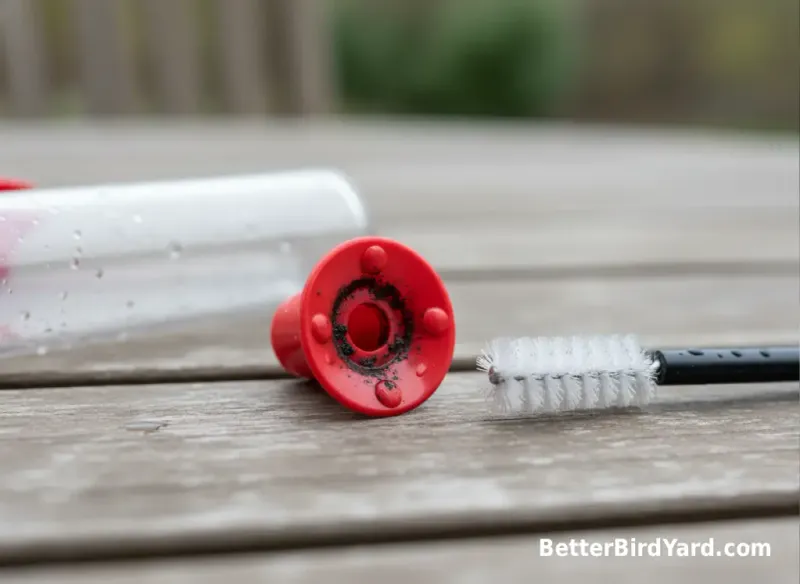
Cleaning matters as much as the recipe. Disassemble the feeder fully, scrub every surface with hot water and a bottle brush, and pay close attention to ports and seams where residue collects.
Guidance on disinfectants varies: UF/IFAS recommends hot water and mechanical scrubbing, while Audubon and the U.S. Fish and Wildlife Service allow a carefully diluted bleach rinse followed by thorough washing and complete drying.
Follow your feeder manufacturer’s instructions and rinse exceptionally well before refilling.
Match the feeder fix to the insect problem
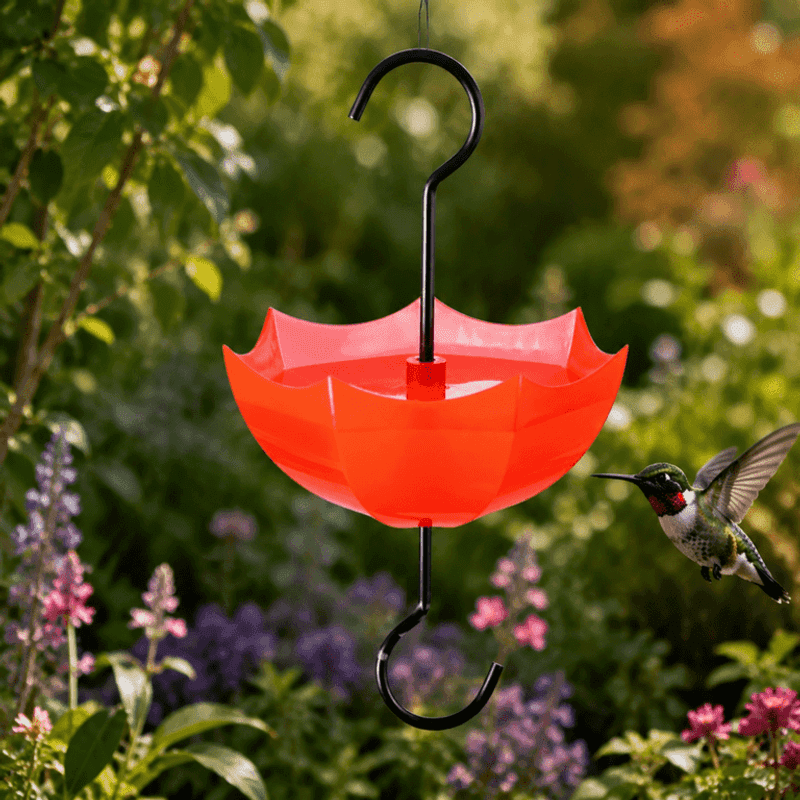
Ants and bees require different responses, and using the wrong fix wastes time while the real problem continues. For ants, the most reliable solution is a water moat placed between the hook and the feeder.
Cornell Lab’s ant-feeder guidance recommends either a feeder with a built-in moat or a separate moat added to the hanger, kept filled with plain water at all times. Never use petroleum jelly, cooking oil, grease, or any sticky substance around the ports or hanger wire.
These materials can mat feathers or contaminate nectar and create a genuine hazard for the birds you are trying to help.
Bees and wasps call for a different approach. A saucer-style feeder keeps nectar below the level of the feeding ports, making it harder for insects to reach while still accessible to a hummingbird’s long tongue.
An appropriately fitted bee guard over the ports can also reduce access. Moving the feeder to a shadier spot may make it less visible to foraging insects, since warm, sun-warmed nectar is more aromatic.
Cornell Lab suggests temporary removal for a day or two when insects swarm heavily, on the grounds that it may interrupt their search pattern. That said, it is not a guaranteed fix, and insects may return once the feeder goes back up.
Shade also helps with heat management. Florida hummingbird guidance recommends partial shade to slow nectar spoilage, and a shaded feeder is also less likely to build the pressure that causes bottle-style feeders to drip.
No single feeder design or location solves every insect problem, but matching the fix to the specific insect narrows the search considerably.
One territorial hummingbird can make a working feeder look abandoned
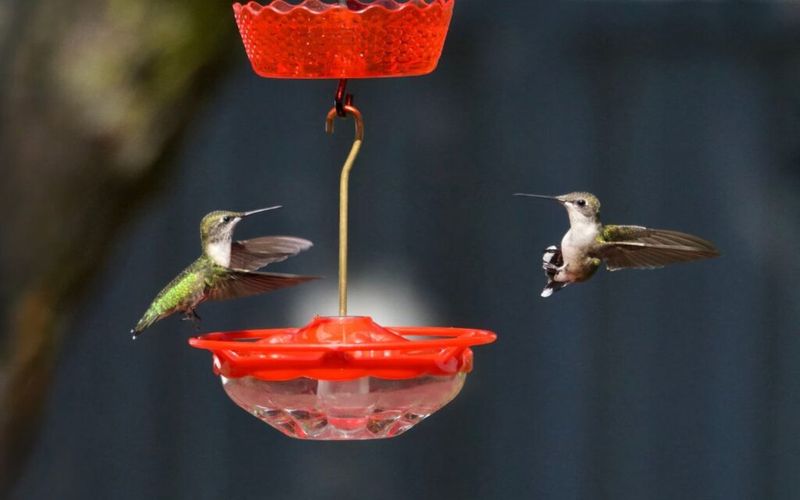
After ruling out insects, leaks, and nectar quality, territorial behavior deserves a look. A single dominant hummingbird, often an adult male, may stake out a feeder and chase off every other bird that approaches.
From a distance, or through a window, this can look like a feeder that nobody uses. The nectar level may drop slowly because only one bird feeds, or it may hold steady if the defender spends more time chasing rivals than actually drinking.
All About Birds points out that a dominant hummingbird can prevent others from feeding even when nectar is available, creating the impression that the feeder has been abandoned. The fix is to add more feeders and place them far enough apart that the defending bird cannot easily patrol all of them at once.
University of Florida hummingbird guidance recommends spacing multiple feeders at least 10 feet apart, and ideally around a corner or behind a visual barrier so birds cannot see one another between feeders. This does not eliminate territorial behavior entirely, since hummingbirds are instinctively competitive.
Watching the feeder at different times of day, particularly early morning and late afternoon when activity tends to peak, can reveal whether a single bird is controlling access and help you decide how many feeders to add and where to position them.
Season, flowers, and observation gaps can redirect visits
Sometimes a feeder works exactly as it should, and the birds simply are not around yet, or are feeding somewhere else in the yard. Observation gaps are more common than most people expect.
Hummingbirds can empty a small feeder in a series of quick visits spread across the early morning, and a homeowner who checks only at midday may never see a single bird despite steady daily use.
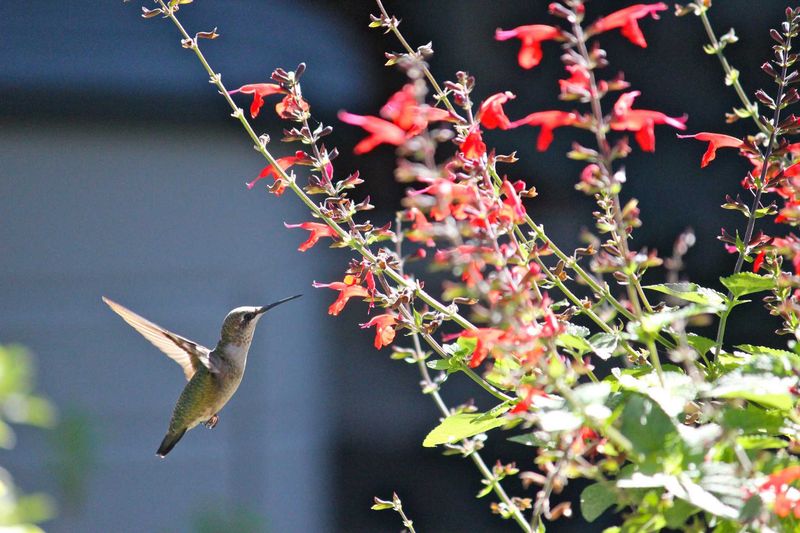
Nearby flowers can pull visits away from a feeder for a week or two when a patch blooms heavily. Audubon’s hummingbird garden guide notes that an attractive natural flower source may temporarily redirect hummingbirds, and this is not a sign that something is wrong with the feeder.
The visits typically return once the bloom fades.
Migration timing adds another layer of complexity, especially across Texas and Florida. Ruby-throated Hummingbirds pass through much of Texas during spring and fall migration and may overwinter along the Gulf Coast, but local presence varies by species, year, and exact location.
Range maps from Cornell Lab show how much that window shifts across the two states. A feeder that sits untouched in January in central Texas is not necessarily failing.
Leaving a feeder available does not delay migration. Audubon confirms that migration is governed primarily by day length and seasonal cues, not by whether nectar is available.
Before relocating or replacing a feeder, compare the nectar level with the local flowering calendar, the expected migration window, and observations made at several different times of day. All About Birds recommends this kind of repeated observation before drawing conclusions about feeder performance.
Safe placement and living habitat support continued visits
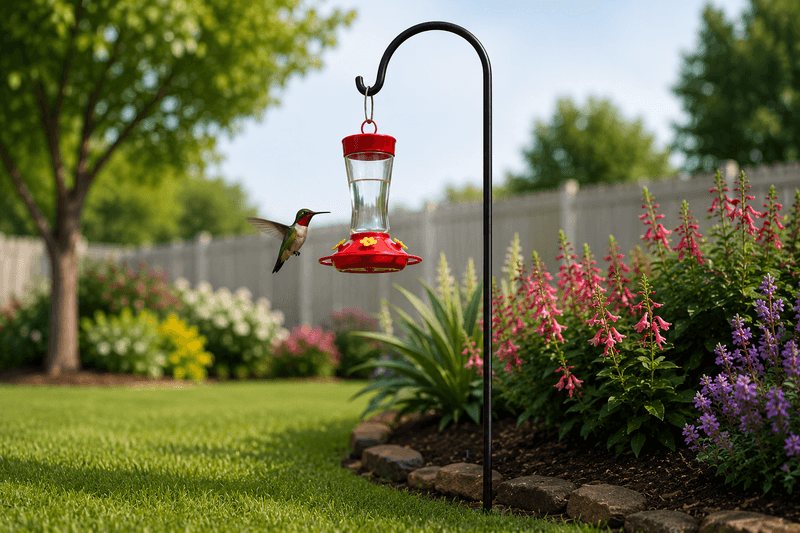
Where a feeder hangs matters almost as much as what is inside it. An open position gives hummingbirds a clear view of approaching threats, which makes them more willing to linger and feed.
At the same time, a nearby shrub or small tree gives birds a perch for resting between visits and a quick escape route if something startles them. Texas Parks and Wildlife feeder guidance recommends locations that balance visibility with nearby cover rather than placing feeders in completely exposed or completely enclosed spots.
Outdoor cats are a serious and underestimated threat to backyard birds. Texas Parks and Wildlife identifies free-roaming domestic cats as one of the most significant human-related threats to bird populations and recommends keeping cats indoors.
A feeder positioned low enough for a cat to ambush from nearby cover will eventually discourage visits, even if the nectar and feeder design are both correct.
Window collisions are worth addressing if a feeder sits near reflective glass. Bird-friendly building guidance from Texas Parks and Wildlife recommends exterior screens, closely spaced window decals, or patterned film to break up reflections when collisions occur.
Placement near a window is not automatically dangerous, but the feeder’s position should not send a startled bird directly toward reflective glass.
The yard around the feeder shapes long-term use. Native nectar-producing plants, a shallow water source, perching branches, and undisturbed nesting cover all contribute to a yard hummingbirds return to.
Audubon and Texas Parks and Wildlife both describe feeders as supplemental, not as substitutes for the natural resources hummingbirds need. Plant choices should fit local Florida or Texas conditions, and regional native plant lists are a practical starting point for matching flowers to your climate.
Follow the evidence before you move the feeder again
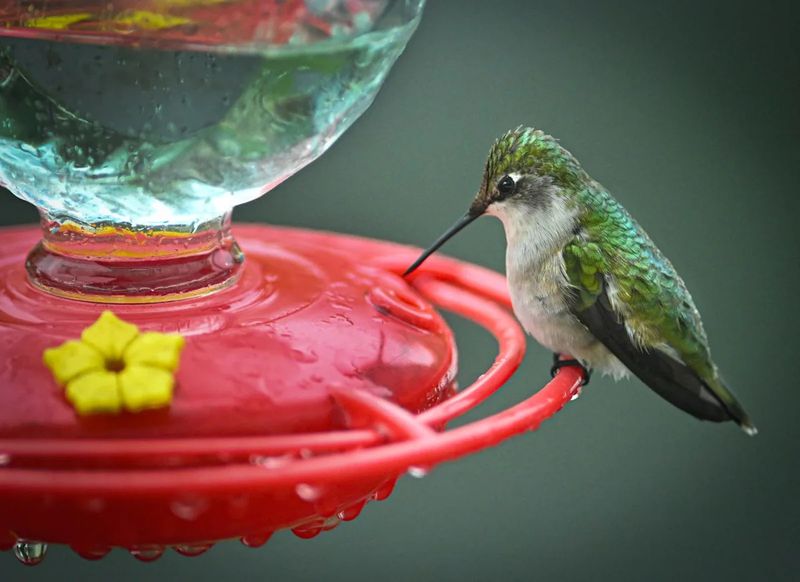
A practical diagnostic order saves time and keeps the feeder safe for birds. Start by inspecting the feeder physically: look for insects, sticky residue, drip trails, and cracks.
If physical evidence points to ants, add a water moat. If bees or wasps are clustering, try a saucer-style feeder, a shaded position, or a brief removal.
Cornell Lab’s visitor guidance frames these as important initial checks rather than universal answers.
Next, evaluate nectar quality independently of the nectar level. Cloudy, sour, or moldy nectar should be removed and replaced immediately regardless of how much is left.
After the feeder is clean and filled with fresh solution, observe it at different times of day before assuming the location is wrong. All About Birds recommends accounting for territorial behavior, migration timing, and nearby flowers before making a major placement change.
Make one adjustment at a time and give it a few days before moving to the next. An empty reservoir is a starting point for investigation, not proof that the feeder has failed.
The birds that find a clean, well-placed feeder in the right season tend to come back on their own schedule, not yours.