
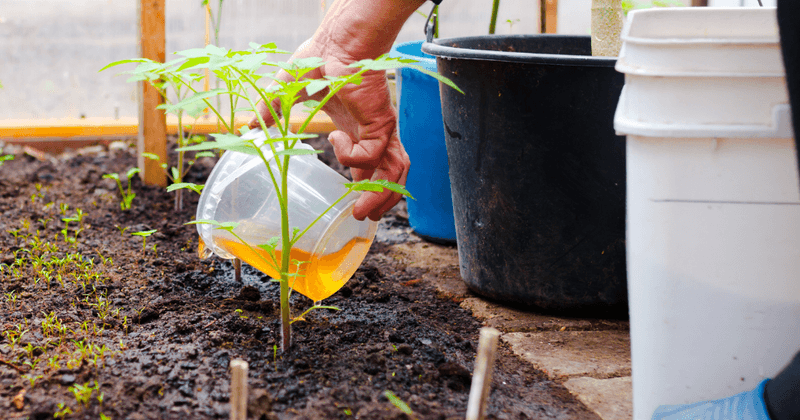
Every summer, Southern gardeners are on the hunt for that one trick that will turn their backyard vines into heavy-bearing, good-looking tomato plants. A mild compost tea made from finished plant-based compost is one of the more practical homemade options you can mix up at home, but it works as a modest soil supplement, not a guarantee of bigger fruit.
Tomato size depends on the variety you plant, how consistently you water, how well your soil is balanced, and whether heat lets your blossoms set fruit in the first place. Pair the recipe with sound soil, water, and variety choices, and you give your plants a real foundation to work from.
A homemade drench cannot guarantee giant tomatoes
Plenty of gardeners reach for a quick kitchen recipe the moment they want bigger, better-looking tomatoes, and the appeal is completely understandable. The honest starting point, though, is that no single homemade drench will reliably deliver large, juicy fruit every season.
Tomato size is shaped by a combination of forces: the cultivar you chose at planting time, whether pollinators and temperatures cooperated during bloom, how steady your soil moisture was, and whether your soil had the right nutrient balance to begin with.
UF/IFAS guidance on tomato nutrition in Florida makes clear that fertilizer decisions should account for soil-test results, fertilizer material, placement, and timing rather than a single universal recipe. Texas A&M AgriLife similarly points home gardeners toward soil preparation and a complete fertilizer program suited to their local soil type.
Genetics matter just as much: UGA Extension’s commercial tomato handbook categorizes varieties by fruit size, from cherry types to extra-large slicers, showing that cultivar choice is fundamental to what size tomato you can expect at harvest.
A mild compost tea made from finished plant-based compost is one of the more evidence-supported homemade options available to Southern gardeners. It provides small, variable amounts of organic nutrients as a soil drench.
The sections below give you the recipe, explain what it can and cannot do, and pair it with the soil, water, and variety practices that more broadly determine what ends up on your plate.
Choose finished plant-based compost
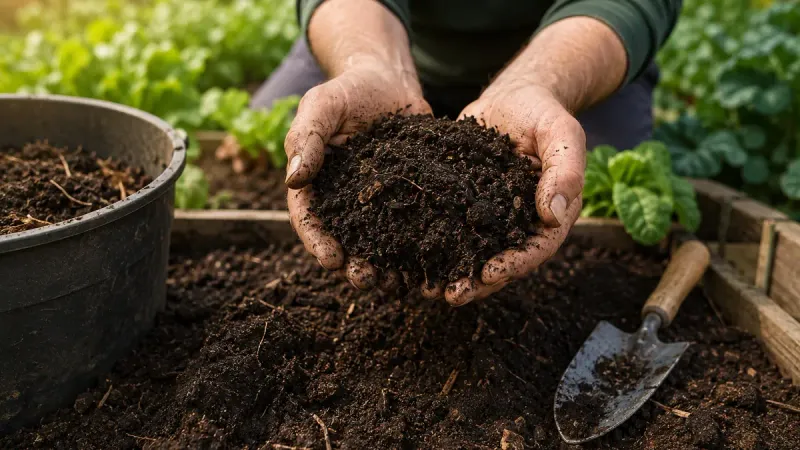
The quality of your compost tea starts entirely with what you put into the bucket. Finished plant-based compost or vermicompost are the right materials for this recipe.
Finished compost is easy to recognize: it should be dark and uniform in color, have a clean earthy smell rather than an ammonia or sour odor, and feel close to outdoor temperature rather than warm from active decomposition.
University of Maryland Extension’s composting guidance specifically advises against using farm-animal-manure compost in a compost-tea recipe. Fresh kitchen scraps are equally off-limits: raw food waste has not broken down enough to be safe or useful around edible crops, and the nutrient content is unpredictable.
Stick with mature, plant-based material, and you start with a far more consistent and appropriate input.
Food safety is worth treating seriously from the very first step. Penn State Extension’s home garden food-safety guidance recommends using properly managed compost, keeping raw manure away from edible crops during the growing season, washing your hands thoroughly after handling soil or compost, and washing all harvested produce before eating.
Those precautions cost nothing and protect you and your family every time you work in the garden.
Mix a mild compost tea in the supported ratio
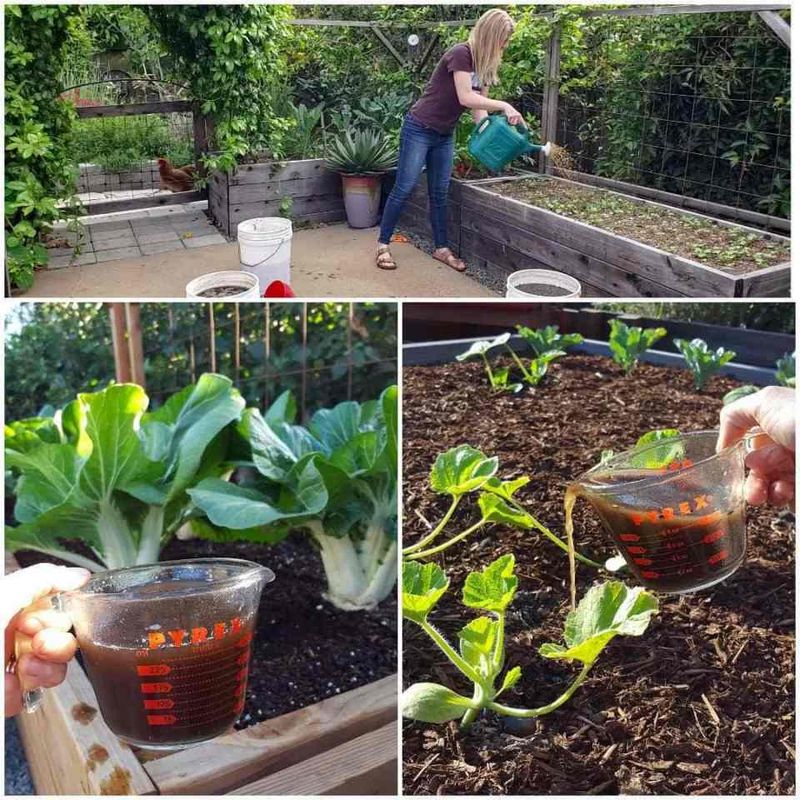
Once you have confirmed your compost is fully finished, the method is straightforward. Combine 1 part finished plant-based compost with 5 parts water in a clean bucket or container.
That ratio, 1 part compost to 5 parts water, is the recipe supported by University of Maryland Extension’s composting resource, which describes the resulting liquid as containing only small amounts of organic nutrients.
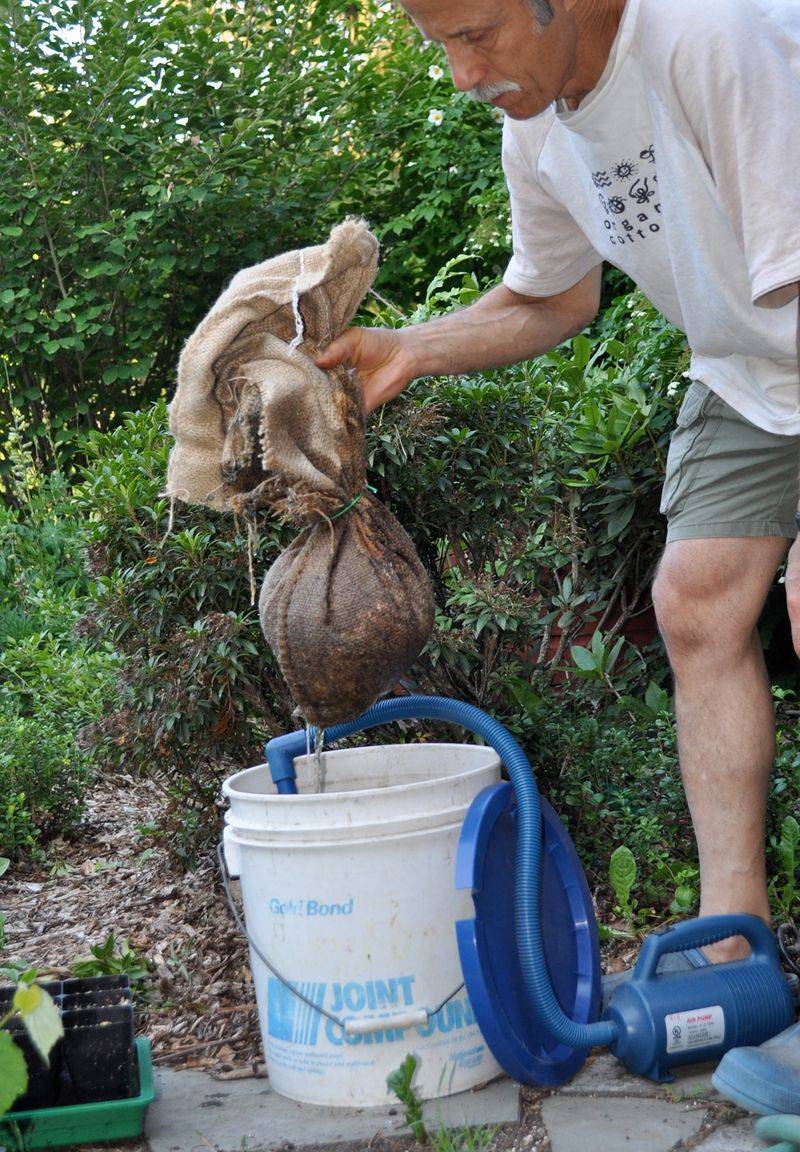
Let the mixture steep for 1 to 3 days, stirring occasionally if you can. After steeping, strain out the solid compost material so that only the liquid remains, then apply that liquid directly to the soil around the base of your tomato plants.
Keep the drench at the root zone and avoid soaking the foliage, since wet leaves in a Southern summer create conditions that can favor disease.
A few important limits apply here. Do not make the mixture stronger by using more compost or less water, because a more concentrated drench does not supply a measurably better nutrient dose and may not improve results.
The tea is not a measured complete fertilizer: it does not contain known, consistent amounts of nitrogen, phosphorus, potassium, or calcium the way a labeled product does. University of Maryland Extension does not establish that compost tea reliably increases tomato fruit size, and neither do other major Extension sources reviewed for this article.
Treat the tea as a mild, variable organic supplement that can contribute modestly to soil biology and low-level nutrient availability, not as the treatment that drives your harvest size.
Use the tea alongside soil-test-based nutrition
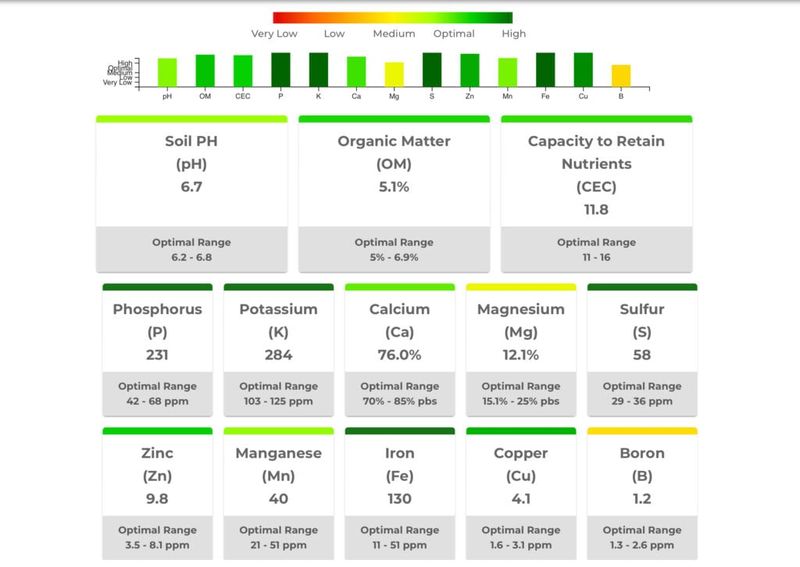
Compost tea works best when it is one part of a broader fertility plan, not the whole plan. Before you add any targeted nutrient, whether phosphorus, potassium, calcium, or magnesium, a soil test is the right first step.
Your county Extension office can direct you to a testing lab, and the results will tell you what your soil actually needs rather than what a general recipe assumes.
UF/IFAS research on tomato nutrition in Florida recommends reducing or even eliminating phosphorus and potassium applications when soil tests show the soil can already supply them. Applying nutrients your soil does not lack wastes money, can create imbalances, and does not produce larger tomatoes.
Fertilizer rates also depend on the specific product you are using and its composition, so a soil test result paired with a labeled fertilizer is far more reliable than an unmeasured homemade mixture.
Nitrogen deserves particular attention. Both University of Minnesota Extension and Penn State Extension caution that excess nitrogen pushes tomato plants to produce lush, leafy vines while delaying the flowering and fruiting you are actually after.
More feeding does not translate directly to more or bigger tomatoes. Apply the compost tea drench around the plant’s root zone as a mild supplement, note how your plants respond over time, and let your soil test guide any additional fertility decisions rather than guessing at what the plant might want.
Keep tomato soil evenly moist through flowering and fruiting
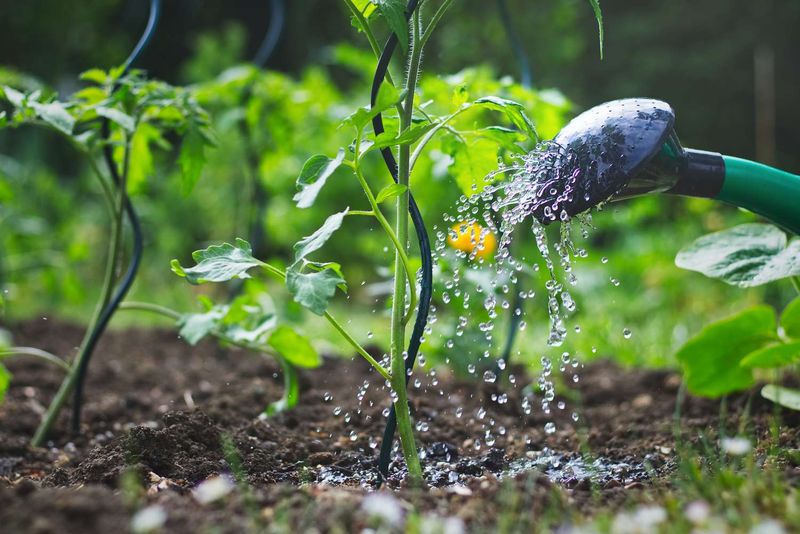
Water management is an important and often underappreciated part of growing attractive tomatoes, especially in the Southern heat. Tomatoes need consistent soil moisture from the time blossoms open through the period when fruit is sizing up.
Letting the soil swing between dry and saturated stresses the plant at exactly the moments when steady water delivery matters most.
UGA Extension’s watering guidance for tomatoes recommends deep, timely irrigation and the use of mulch to stabilize soil moisture between watering sessions. A 2- to 3-inch layer of straw or wood-chip mulch over the root zone slows evaporation noticeably in Southern summer conditions.
Drip irrigation or a soaker hose placed at the base of the plant directs water where the roots can use it while keeping the foliage dry, which reduces the risk of foliar disease.
Uneven water uptake is a frequent contributor to blossom-end rot, the flat, dark, leathery patch that appears on the bottom of developing fruit. UGA Extension’s publication on blossom-end rot and calcium nutrition explains that calcium uptake in tomatoes depends heavily on water movement through the plant, so irrigation consistency is often the most practical management step.
A separate UGA Extension post on blossom-end rot reinforces that point and notes that adding calcium without addressing water consistency may not solve the problem.
Southern heat adds another layer of challenge. UGA Extension’s home gardening guide notes that tomato blossoms perform poorly at very high temperatures common across the region, meaning that blossom drop during a heat wave is a temperature problem, not a fertilizer problem.
No drench or amendment corrects heat-related fruit-set failure; timing your planting to allow fruit development before peak summer heat arrives is a more effective strategy.
Avoid untested kitchen shortcuts and unsafe manure products
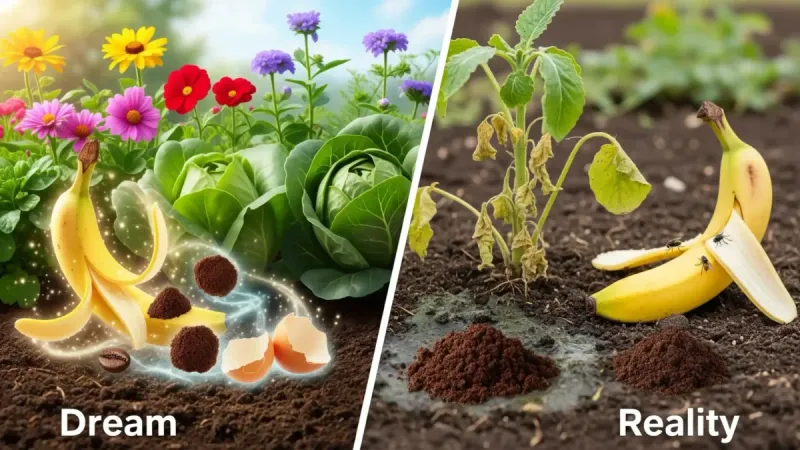
A number of kitchen-based fertilizer ideas circulate in gardening communities, and most of them fall short of what their advocates promise. Banana-peel water is primarily promoted as a potassium source, but a UF/IFAS Garden Scoop newsletter note on banana-peel fertilizer points out that boiling banana peels adds potassium only and cannot substitute for a complete nutrient program.
Even that limited potassium contribution depends on how much soluble potassium actually ends up in the water, which varies considerably.
Eggshell tea and raw eggshells are often suggested as quick fixes for blossom-end rot, but the logic does not hold up well in practice. UGA Extension’s blossom-end rot publication explains that calcium from eggshells becomes available very slowly, and UGA’s blossom-end rot post notes that foliar calcium sprays have not been shown to reliably correct the disorder.
Adding lime, gypsum, or calcium products without a soil test may alter soil chemistry in ways that create new problems rather than solving the original one.
Epsom salt is another popular recommendation, but extension experts are consistent: without a confirmed magnesium deficiency from a soil test, there is no established reason to apply it. Ask Extension’s Epsom salt for tomatoes response and a related Ask Extension answer on Epsom salt in the garden both advise soil testing first, since unnecessary magnesium can interfere with calcium uptake rather than help it.
Fresh or uncomposted coffee grounds are not a dependable immediately available nitrogen fertilizer. UC Agriculture and Natural Resources guidance on coffee grounds states that uncomposted grounds do not function as a nitrogen fertilizer, and adding excess nitrogen in any form can push tomato plants toward foliage at the expense of fruit.
Properly composted coffee material is a different matter and does not carry the same concern.
Fresh manure and manure tea carry food-safety risks that make them inappropriate around edible crops. Penn State Extension’s good agricultural practices guidance specifically warns against side-dressing with fresh manure or manure tea during the growing season.
Always wash your hands after working with soil or compost, and wash all harvested tomatoes before eating them.
Make compost tea one measured part of the tomato plan
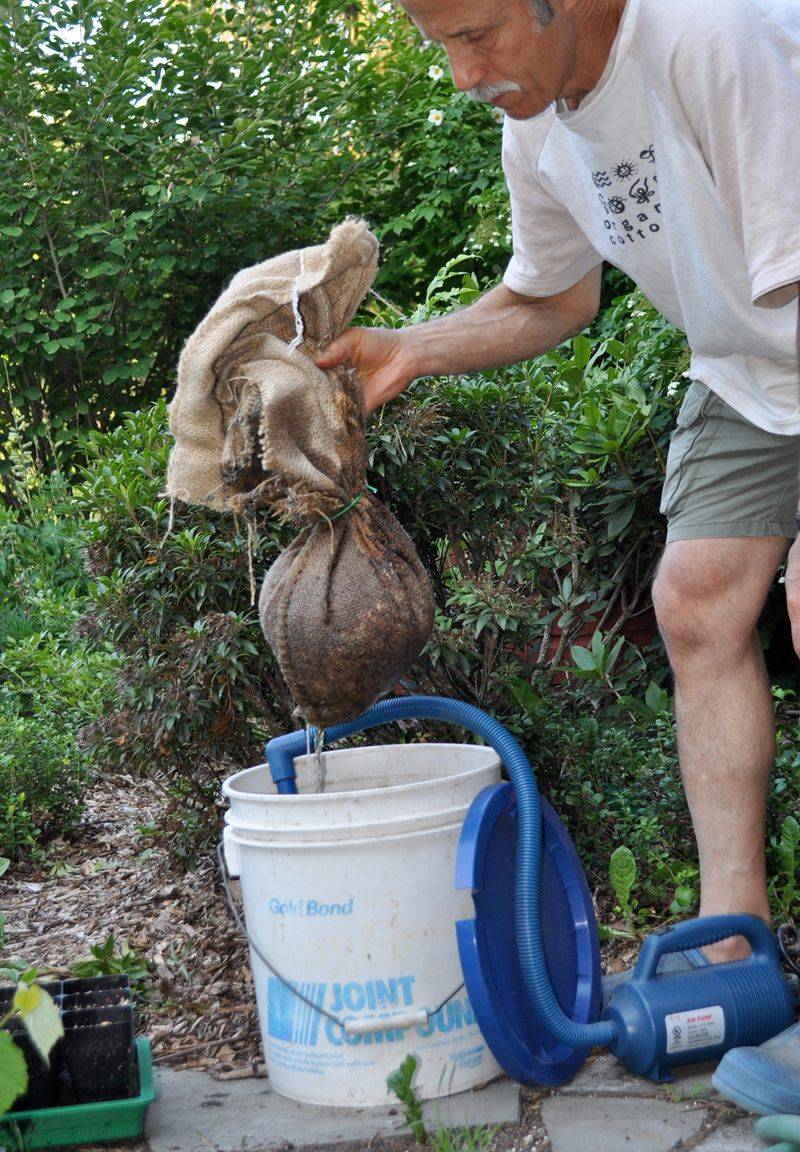
Compost tea earns its place in a tomato garden when it is treated honestly: a mild, variable organic soil drench that may contribute modest nutrient availability and support soil biology, not a treatment that overrides genetics, heat, pollination, or inconsistent watering. Use the measured recipe, 1 part finished plant-based compost to 5 parts water, steeped for 1 to 3 days, strained, and applied to the soil around the plant, and only with compost that is properly finished and plant-based.
Pair it with a soil test so that any additional phosphorus, potassium, calcium, or magnesium you apply is actually warranted. Choose a tomato variety whose listed fruit size matches what you want at harvest, since UGA Extension’s variety data makes clear that genetics set the ceiling.
Keep soil moisture steady with mulch and root-zone irrigation, and plan your planting dates to avoid the worst of Southern summer heat during fruit set. University of Maryland Extension’s compost guidance and UF/IFAS tomato nutrition research both support this supplemental role for compost-based inputs rather than a starring one.
Compost tea made from properly managed plant-based compost, handled with the food-safety steps outlined by Penn State Extension and their produce-safety guidance, is a more evidence-supported homemade option than most kitchen shortcuts. The gardeners who get the most from it are the ones who also get the other fundamentals right: good variety selection, tested soil, and steady water.
Those factors do the heavy lifting; the tea just comes along for the ride.