
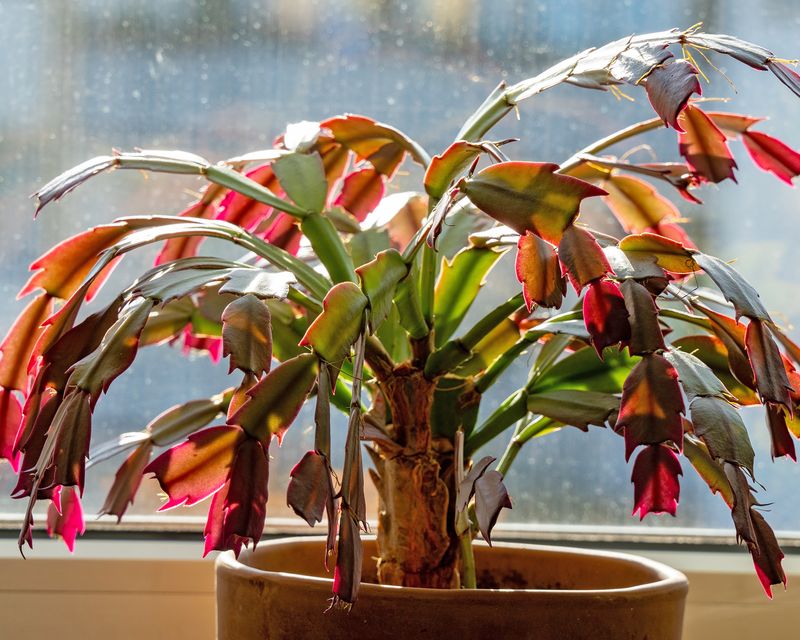
Spotting red or purple tints creeping across your Christmas cactus can send you straight to Google looking for answers. The good news is that color alone rarely tells the whole story, and a red plant is not automatically a dying plant.
What the color does tell you is that your plant is under some kind of stress, and figuring out which kind is the key to deciding what, if anything, needs to change. A quick look at light, water, temperature, and root health will get you much further than any single-cause explanation.
Red segments signal stress, not one diagnosis
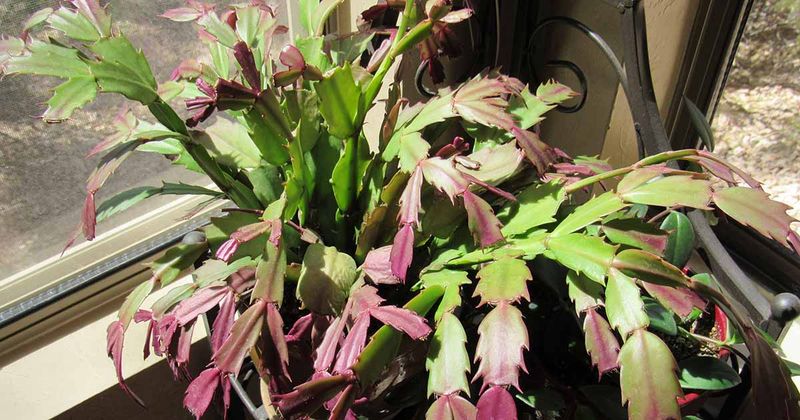
Calling reddish Christmas-cactus color a single-cause problem is a little like blaming every headache on one thing. According to Ask Extension’s Christmas cactus stress guide, red or purple pigmentation in these plants can stem from excessive light, drought, heat, cold exposure, nutrient imbalance, or declining roots, and color alone does not tell you which one is at work.
Excessive direct light is a leading suspect, but treating it as the only explanation can send you in the wrong direction.
First, a quick clarification on vocabulary. What most people call “leaves” on a Christmas cactus are actually flattened stem segments, and the plant itself belongs to a group of rainforest-derived holiday cacti that also includes Thanksgiving and Easter cacti.
The University of Connecticut’s holiday cactus factsheet notes that these plants are adapted to filtered forest light rather than strong, open sun, which matters when you start diagnosing a color change.
Red or purple pigmentation develops when the plant produces anthocyanins, a class of pigment that acts as a stress response. That response can happen without causing permanent damage.
What makes the situation more urgent is when color shows up alongside shriveled, limp, or falling segments, persistently wet soil, or tissue that looks dead or bleached. A firm plant with limited reddening and continued new growth is in a very different situation from one that is collapsing.
Check the light before reaching for fertilizer
Light is the most practical place to start your diagnosis, partly because it is easy to observe and partly because it is a well-documented trigger for stress pigmentation in holiday cacti. Think back to whether the reddening appeared after the plant moved to a sunnier spot, after you brought it outdoors for the summer, or after a seasonal shift changed how much direct afternoon sun reaches its current window.
Sun-facing segments that changed color after a brighter-light shift are a strong clue.
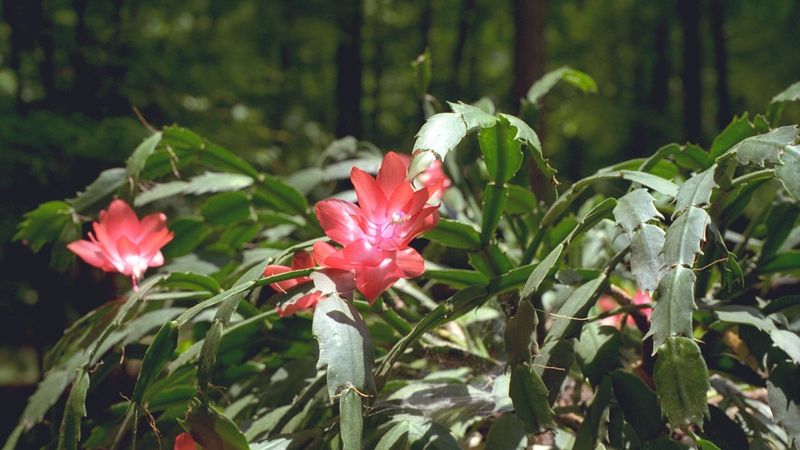
Holiday cacti evolved in the filtered light of Brazilian rainforest canopies, so they are not built for prolonged direct sun. Extension guidance on Christmas cactus stress specifically identifies bright light as a trigger for the anthocyanin pigments that can override normal green coloring.
For readers in Florida and Texas, where afternoon sun is intense for much of the year, even a “bright” indoor spot near unfiltered glass can be too much.
The fix is a move toward bright, indirect light rather than stronger direct exposure. University of Minnesota Extension recommends part shade and filtered sunlight for outdoor holiday cacti, and the same logic applies to Southern porches or patios.
A shaded porch, a spot under a tree canopy, or a window with a sheer curtain between the plant and the glass all work better than full afternoon sun. Moving a red plant into stronger direct light in hopes of restoring its color is the wrong direction, and fertilizing before you have addressed light and moisture is getting ahead of the diagnosis.
Let the potting mix guide the watering check
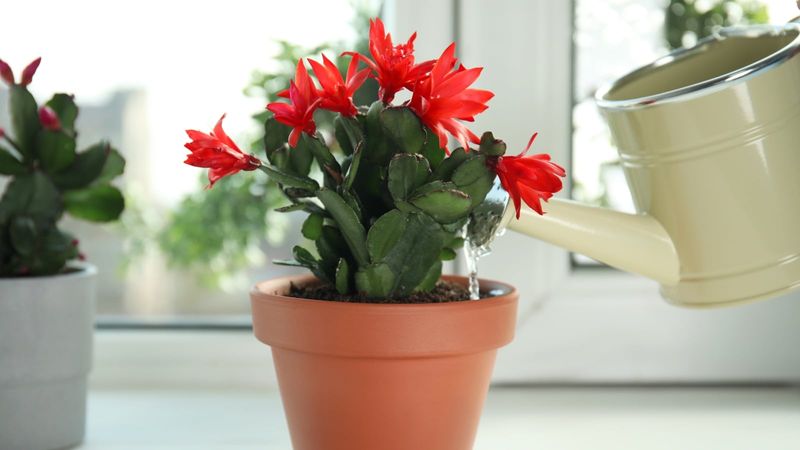
After light, moisture is the next variable to evaluate, and the potting mix itself is the most reliable guide. Push a finger an inch or two into the soil and notice what you find.
Has the mix started to dry out from the top down, or does it still feel wet several days after the last watering? That single observation separates two very different problems.
University of Connecticut’s holiday cactus guidance recommends watering thoroughly once the potting mix has begun to dry, then allowing excess water to drain completely, and never leaving the container sitting in standing water. Holiday cacti need more consistent moisture than desert cacti, but they are still vulnerable to root rot when the soil stays saturated.
Both extremes, too dry and too wet, can push the plant toward stress pigmentation and, in worse cases, physical decline.
Segments that are red and also shriveled or limp point more toward underwatering or root damage than toward light stress alone. A plant that was allowed to go very dry and was then heavily watered may have already lost some root function, which means it cannot absorb water efficiently even after you correct the supply.
University of New Hampshire Extension guidance on Christmas cactus watering supports a measured approach: avoid repeatedly flooding a badly wilted plant, since smaller and more careful waterings give damaged roots a better chance to recover than a sudden heavy dose.
Inspect the roots when decline points below the soil
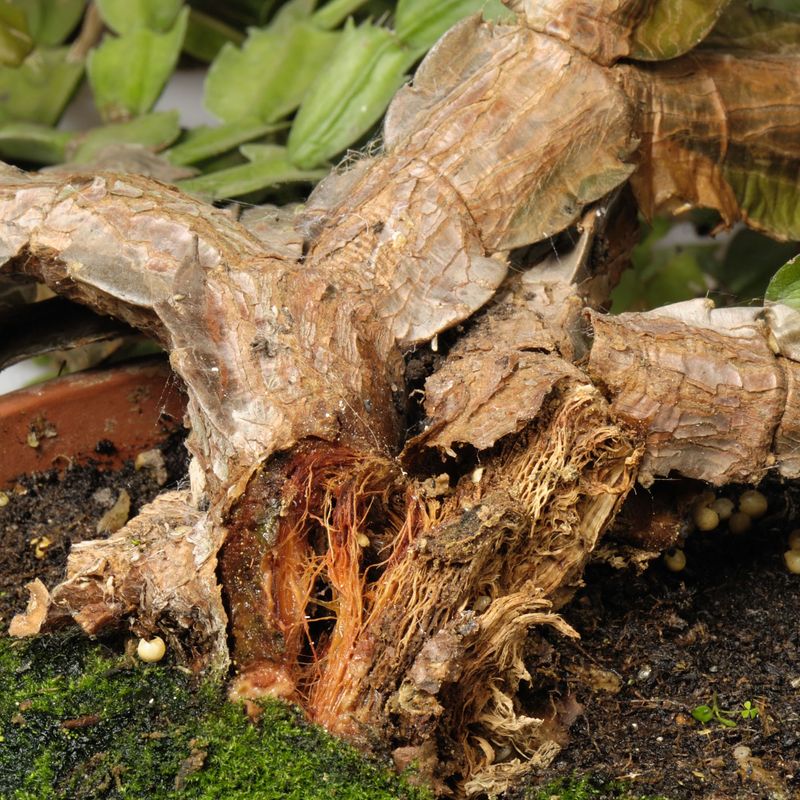
Most red Christmas-cactus segments do not call for a root inspection right away. But certain combinations of symptoms shift the attention below the soil line, and recognizing those combinations matters.
Soil that stays wet for an unusually long time after watering, continued physical decline despite reasonable moisture management, persistent shriveling that does not improve, or segments dropping off the plant without much provocation are all signals worth taking seriously.
University of Wisconsin-Madison Extension identifies prolonged moisture, root loss, and segment drop as recognized signs of serious root stress. When roots have been damaged by saturation, the plant loses its ability to move water and nutrients upward, which is why shriveling can persist even after watering is corrected.
Severe drought can cause a similar problem from the opposite direction, leaving roots too damaged to function once water returns.
One point worth separating from this: being somewhat pot-bound is normal for holiday cacti and can actually support flowering. University of Minnesota Extension notes that these plants often do well when slightly crowded in their containers.
Red segments alone are not a reason to repot. Consider repotting only when drainage is genuinely poor, when root health is visibly compromised, or when the physical symptoms above are present.
Repotting a stable plant, or one that is currently blooming, adds unnecessary stress to a situation that may only need lighter adjustments.
Use temperature and season to refine the diagnosis
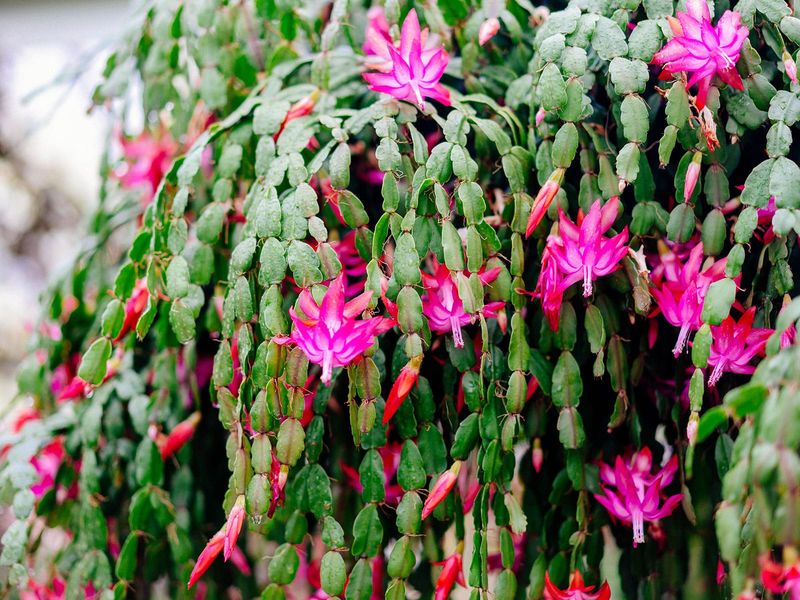
Temperature deserves a place in the diagnostic checklist, especially for gardeners in Florida and Texas where outdoor conditions can shift dramatically between seasons. Heat stress is a real contributor to pigmentation changes in holiday cacti, and a plant sitting on a sun-baked patio or near a heat-radiating wall during peak summer may be reacting to temperature as much as to light.
If the reddening appeared during a stretch of particularly hot weather, that context is worth noting alongside the light and moisture assessment.
Extension guidance on Christmas cactus stress lists heat alongside light and other factors as a possible trigger for color changes. For outdoor plants in the South, the combination of intense afternoon sun and high ambient temperatures can compound stress in ways that shade alone does not fully resolve, so moving the plant to a cooler, filtered location addresses both variables at once.
On the cold side, the picture is more nuanced. University of Minnesota Extension explains that cool nights in the mid-50s to mid-60s Fahrenheit can actually encourage flower-bud formation, so not all cool exposure is harmful.
The line to watch is frost and sustained temperatures approaching 50 degrees F. Outdoor holiday cacti should come inside before that threshold, since frost exposure causes real tissue damage that goes well beyond pigment-based stress coloration.
Knowing which direction the temperature recently moved helps you decide whether cool or heat is part of the story your plant is telling.
Separate a monitorable color change from a warning sign
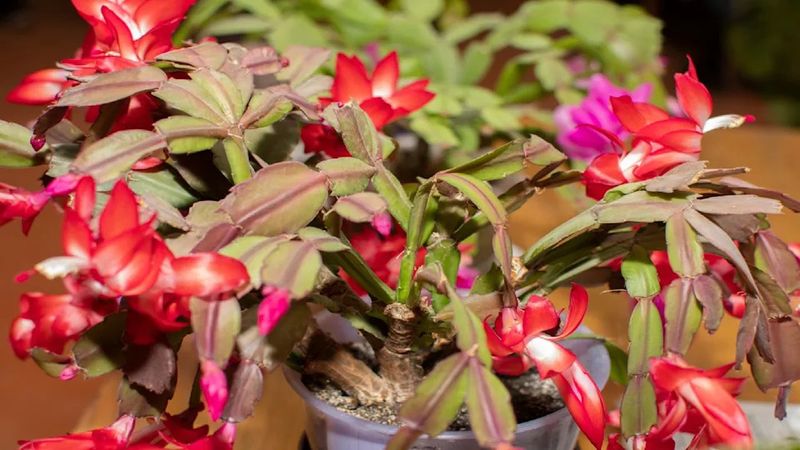
Not every red Christmas cactus needs the same level of response, and building a quick triage habit saves a lot of unnecessary intervention. The most useful dividing line is physical condition, not color intensity.
Pigment can develop as a stress response without causing structural damage, and a plant that remains firm to the touch, shows new segment growth, and has reddening limited to sun-facing or tip segments may only need a gentler light position and more consistent moisture management.
That said, treating this as a definitive safe zone rather than an inference is a mistake. Extension sources distinguish between pigment-based stress responses and more serious physical symptoms, but they do not promise that a firm-looking plant is free of developing problems.
The monitor-and-correct category is a starting point, not a clearance.
A plant in the action-needed category shows different signals. Limp or shriveled segments that do not firm up after watering, tissue that looks bleached, brown, black, or dead rather than red, segments falling off without being touched, soil that stays wet for days longer than usual, or a general worsening of the plant’s appearance despite corrective steps all call for closer attention.
Wisconsin Extension connects these physical symptoms to root stress and structural decline, which is a different problem from surface-level pigmentation. When those signs appear, the checklist in the next section should be used with root and drainage concerns at the front of the priority order.
Use a practical checklist instead of a universal rescue recipe
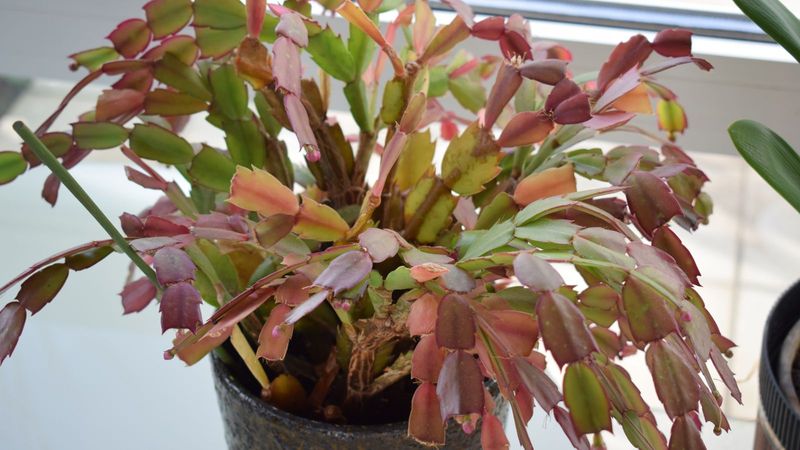
A step-by-step checklist works better than a single rescue prescription here, because the right priority depends on what the plant is actually showing. Start with the two variables that are easiest to adjust and most commonly involved: light and moisture.
Move the plant away from prolonged direct afternoon sun and toward bright, filtered, or indirect light. Then check the potting mix before the next watering and make sure excess water can drain freely rather than collecting at the bottom of the pot.
From there, review recent temperature history. If the plant has been exposed to intense heat or to temperatures approaching 50 degrees F outdoors, address that exposure before assuming light or water is the whole story.
University of Connecticut’s holiday cactus care guidance and Wisconsin Extension’s holiday cactus resource both support bringing outdoor plants in before frost and protecting them from sustained cold, while keeping them in filtered rather than full-sun outdoor positions during warm months.
Two things to avoid: adding phosphorus, magnesium, or other targeted nutrients based on color alone, and repotting a stable or currently blooming plant simply because segments have turned red. Extension guidance cautions that nutrient deficiency is only one of several possible explanations for color changes, and a fertilizer application in a plant already struggling with wet soil or root damage can add salt stress to an existing problem.
University of Minnesota Extension notes that holiday cacti often thrive slightly pot-bound, so repotting should be tied to actual drainage or root problems, not color. Judge the plant’s course by firmness, new growth, and whether physical symptoms improve or worsen.
A plant that stays firm, pushes new segments, and gradually stabilizes is telling you something more useful than any single color can.