
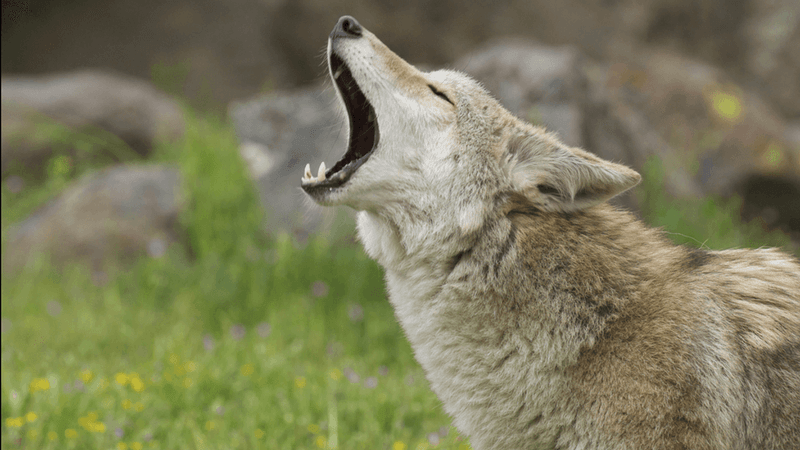
Hearing a coyote howl outside your window on a fall night can stop you cold, especially when it sounds like the animal is right at the fence line. Most North Carolina homeowners have no idea what that sound actually means or whether they need to worry about their pets, their kids, or their yard.
The good news is that howling usually tells you something about coyote communication, not about a threat unfolding in your backyard. Understanding what the sound really signals, and knowing how to check your yard for actual evidence, puts you in a much better position than just lying awake listening.
A howl is a message, not a warning siren
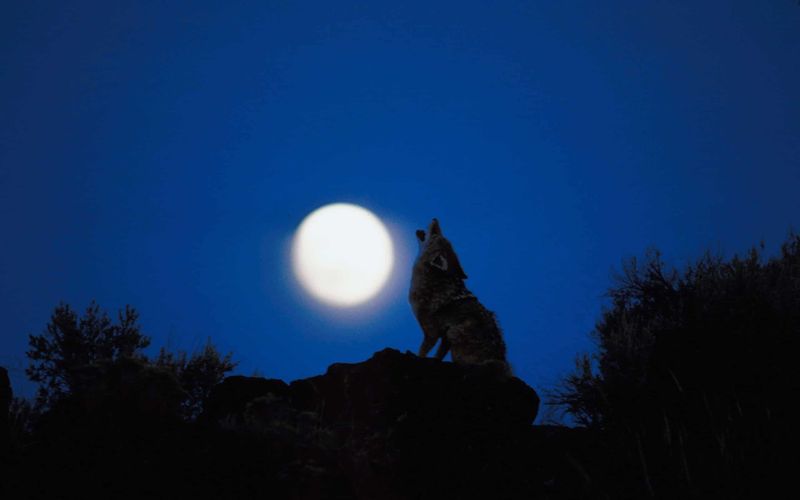
Coyotes are vocal animals, and that chorus outside your window is doing real communicative work. North Carolina Wildlife Resources Commission guidance identifies several reasons coyotes howl: locating other members of the group, establishing territory, distracting potential threats from a nearby den, and, during late summer, giving pups a chance to practice the adult calls they will rely on throughout their lives.
One of the most useful things to know is that two coyotes can sound like a much larger group. The hollow, echoing quality of a howl also makes the animals seem physically closer than they actually are.
Hearing what sounds like a pack right outside the fence does not mean a pack is right outside the fence.
The sound alone cannot tell you whether a coyote is in your yard, what it is doing, or what attracted it to the area. A howl is not a sign that an attack is forming, that a hunt is underway, or that an animal is sick.
Rabies does not cause howling, and a coyote vocalizing in the night is behaving normally for its species. Treating the sound as a communication signal rather than an alarm gives you a clearer starting point for deciding what, if anything, to do next.
Confirming that a coyote is actually using your yard requires direct evidence: a sighting, tracks in soft soil or mud, scat near a fence line, or footage from a trail camera. Until you have that kind of evidence, the howl is a reason to pay attention, not a reason to panic.
What fall facts can—and cannot—tell you
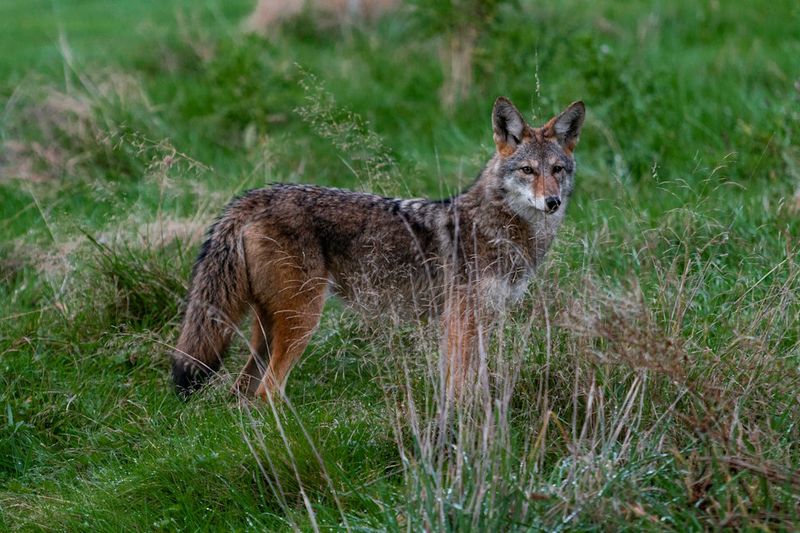
Fall brings a handful of seasonal coyote behaviors worth knowing, but none of them can explain exactly why you are hearing more howls on a particular night near your particular house. The available sources document three separate seasonal patterns, and keeping them distinct matters if you want an accurate picture.
First, late summer is when coyote pups begin mimicking adult vocalizations. This vocal practice can add unfamiliar voices to the usual nighttime sounds in your neighborhood, though it is a late-summer pattern rather than a strictly fall one.
Second, family groups in North Carolina commonly begin dispersing around November or December, when young coyotes leave to find their own territories. Movement during dispersal can bring animals through areas they do not typically frequent, which may account for some encounters near residential yards.
Third, a study of coyote diet at Fort Bragg, North Carolina, found that soft mast was the dominant food category in fall scat samples, with persimmons appearing in more than 95 percent of fall samples at that site. That is meaningful evidence of seasonal fruit use, but it comes from one military installation and does not establish the same pattern across the Piedmont, Coastal Plain, or mountains, or in every residential neighborhood.
None of these three seasonal points were designed to measure howling frequency. The diet study tracked what coyotes ate, not how much they vocalized.
The dispersal timeline describes movement patterns, not vocal output. Keeping the January-through-March mating season separate from these fall patterns is also important, since breeding behavior involves its own distinct cues.
The honest answer is that these seasonal facts give useful context without explaining why you specifically are hearing more howls this fall.
Read the yard for evidence, not conclusions
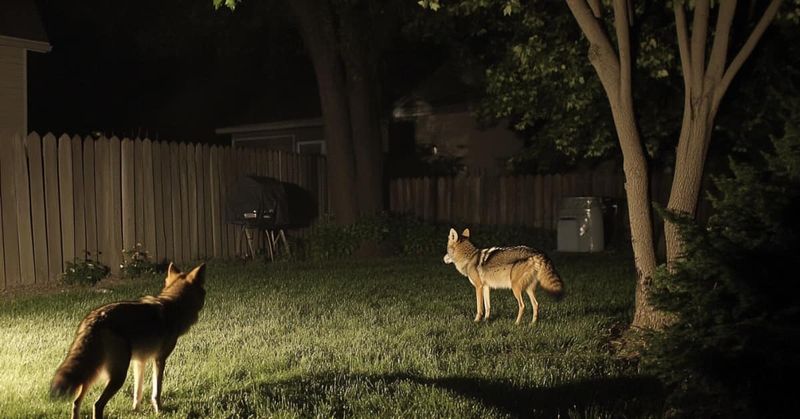
A howl in the night is worth treating as a prompt to look more carefully at your yard, but looking carefully means searching for actual evidence rather than assuming you already know what is happening. The first distinction to make is between hearing a coyote and confirming one has visited your property.
A sighting, a set of tracks in damp soil, scat near a gap in the fence, or a trail camera image are the kinds of evidence that tell you a coyote has been physically present.
Once you decide to inspect, NC Wildlife’s documented list of coyote food sources gives you a practical framework for what to look for. Garbage left out overnight, outdoor pet food bowls, fallen fruit under a tree, spilled birdseed on the ground, unsecured compost, and standing water are all possibilities worth checking.
Small prey, including rodents and rabbits that may be using dense brush or wood piles near the house, can also draw coyotes into a yard without any human-supplied food being involved at all.
Sheltered resting areas matter too. Gaps under porches, sheds, or decks, as well as thick brush close to the foundation, can make a yard attractive as a travel corridor or a quiet place to rest between movements.
Coyotes are adaptable, opportunistic animals that move through territories covering substantial ground, so a yard visit may reflect geography and habitat as much as a specific food reward.
Running through this inspection after hearing a howl gives you genuinely useful information. What it cannot do is diagnose why you heard the sound.
The yard may look perfectly clean and still have had a coyote pass through it. Finding a possible attractant is a reason to remove it, not proof that the attractant caused the howling.
Remove the easy rewards around the house
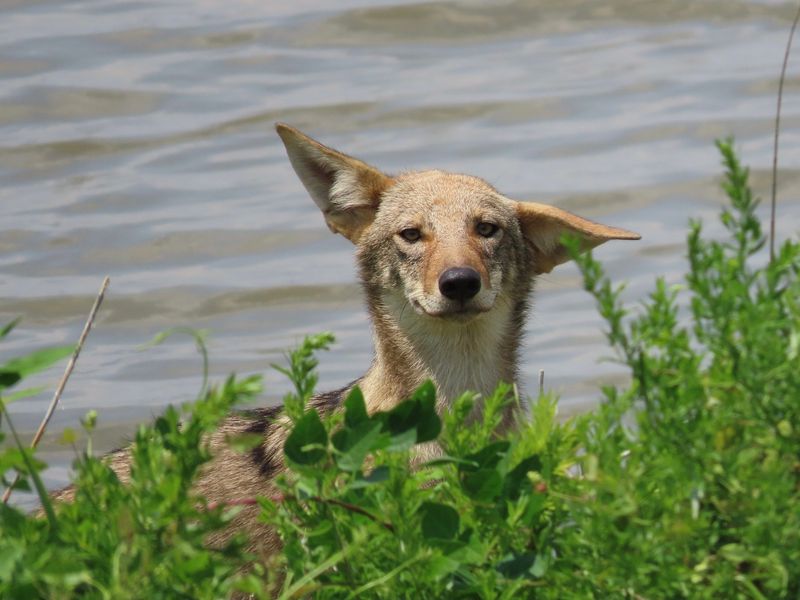
Reducing what draws wildlife close to the house is the most direct step a homeowner can take after noticing coyote activity nearby. No single change eliminates all wildlife visits, but removing accessible food and shelter makes your yard less rewarding to explore repeatedly.
Garbage is one of the most common unintentional food sources. Keep bins in tight-lidded containers and put them out the morning of collection rather than the night before.
Even a securely lidded can left out overnight gives a persistent animal time to work on it. Compost piles and food scraps should be secured in a covered bin rather than left in an open heap.
Pet food deserves its own attention. Feed dogs and cats indoors whenever possible, and if you feed outside, remove the bowl and any leftovers immediately after the animal finishes.
A bowl sitting on a back porch overnight is an open invitation. NC Wildlife’s guidance on feeding wildlife responsibly reinforces that leaving food accessible outdoors, even unintentionally, changes how wild animals relate to residential spaces.
Fallen fruit is easy to overlook, especially under a persimmon, fig, or apple tree in autumn. Picking it up regularly removes a food source that coyotes and many other animals will return to check.
Birdseed that has spilled from a feeder onto the ground can also draw wildlife; sweeping it up and considering a temporary feeder break during periods of frequent coyote sightings is a reasonable step.
Structural access is the other side of the equation. Close gaps under sheds, porches, and decks with hardware cloth or other durable material to remove sheltered resting spots.
Trimming dense brush or overgrown plantings close to the foundation reduces concealed travel corridors. Each of these changes makes the yard less convenient without requiring confrontation with any animal.
Pets need protection even when the howl is ordinary
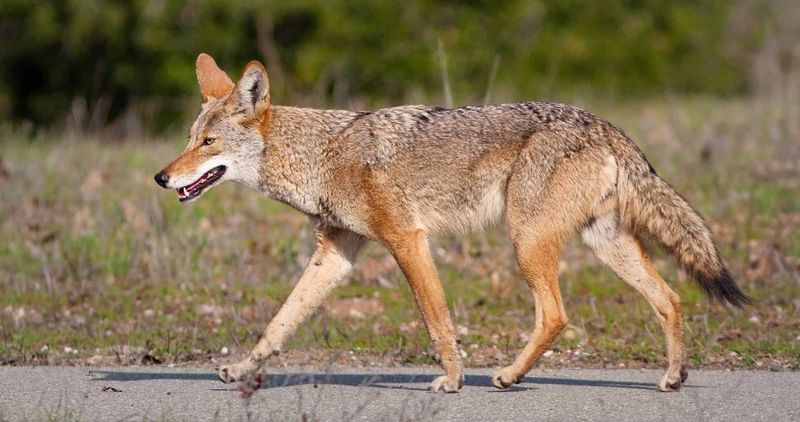
Hearing a coyote howl at a comfortable distance can feel routine after a while, but the risk to pets stays real regardless of how ordinary the sound has become. Small dogs and cats are the most vulnerable, because their size puts them in the range of prey that coyotes naturally pursue.
Leaving a small pet outside unattended at night, even in a familiar yard, removes the human presence that would otherwise discourage a coyote from approaching.
Larger dogs are not automatically safe. NC Wildlife guidance notes that bigger dogs can become involved in territorial conflicts with coyotes, which can turn aggressive even if neither animal intended a predatory encounter.
Keeping dogs on a leash when outside an unfenced area is the clearest way to maintain control over the situation.
Fencing adds a layer of protection, but it works best as part of a broader approach rather than as a standalone solution. The NC Wildlife coyote management plan describes coyote-resistant fencing as roughly six feet high, with measures to prevent digging underneath, such as a buried wire apron or a concrete footer along the base.
A fence at that height and with that kind of ground barrier is meaningfully harder for a coyote to breach than a standard four-foot privacy fence.
Even so, no fence fully replaces supervision or attractant removal. A yard with accessible food can motivate a determined animal to find a way through or under a barrier.
Supervising pets outside, especially after dark, and bringing them in before leaving them unattended are habits that reduce risk more reliably than any single physical barrier.
A calm, assertive response changes the encounter
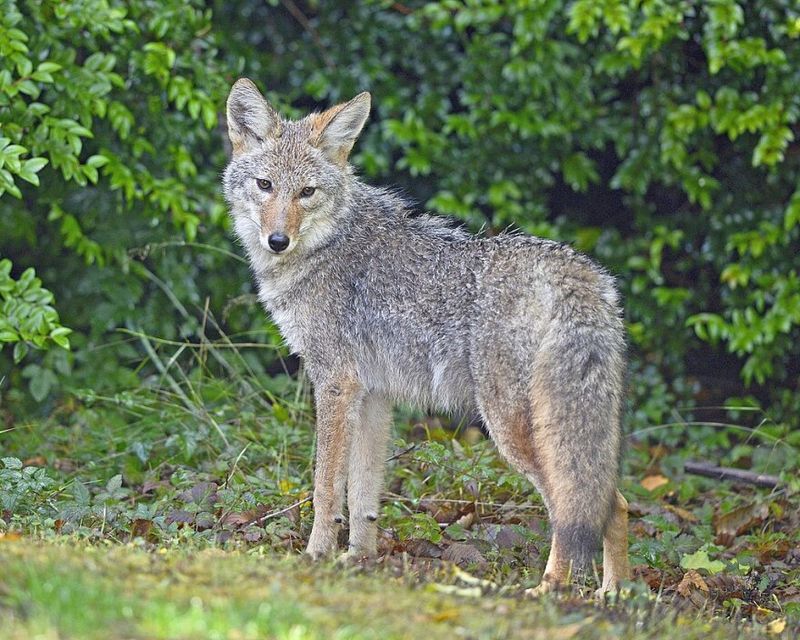
Spotting a coyote in or near your yard is a different situation from simply hearing one at a distance, and how you respond in that moment shapes how the animal learns to treat your property over time. The goal is to make the coyote uncomfortable enough to leave and to associate the area with an unpleasant experience rather than a neutral or rewarding one.
NC Wildlife recommends a set of straightforward hazing techniques: stand up straight and make yourself look as large as possible, make loud noises by shouting or banging objects together, wave your arms, throw small objects such as sticks or pebbles in the animal’s direction, or spray it with a garden hose if one is within reach. The key instruction that surprises many people is to not run.
Running can trigger a chase response, and it also signals to the animal that you are retreating rather than asserting your space.
Hazing works best when it is consistent. A coyote that is hazed firmly one time but ignored the next time it appears learns that the yard is sometimes safe to approach.
If multiple people in the household are likely to encounter a coyote, it helps for everyone to respond the same way rather than leaving it to chance.
Stop hazing immediately if you cannot do it safely from where you are standing, or if the animal is behaving in a way that seems abnormal, such as moving erratically, showing no response at all, or approaching rather than retreating. Chasing, trapping, feeding, or attempting to handle a coyote are not appropriate responses under any circumstance.
Relocation is both ineffective and illegal in North Carolina, so the practical options stay within the range of discouragement, prevention, and, when necessary, professional help.
Know when a sighting becomes a reportable problem
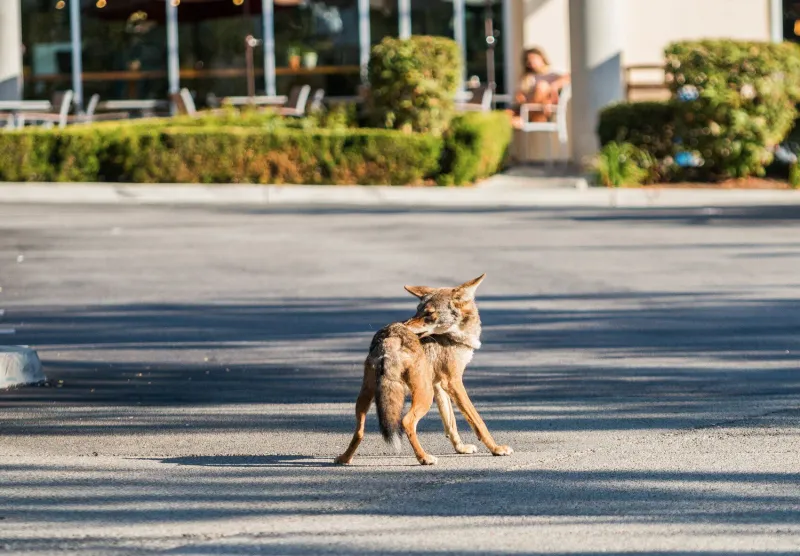
Most coyote encounters near North Carolina yards, including nighttime howling and occasional daytime sightings, fall within the range of normal wildlife behavior. Knowing where that line ends helps you avoid both under-reacting and calling for help when none is needed.
Contact local animal control or the NC Wildlife Helpline when a coyote fails to respond to direct, assertive hazing and continues to approach or linger. Unprovoked aggression, meaning a coyote acting threatening without an obvious reason such as a nearby den or cornered escape route, is another clear signal to seek professional involvement.
NC Wildlife’s guidance also identifies apparent illness as a reason to report, since an animal moving erratically, appearing disoriented, or approaching people without hesitation may be sick in a way that requires assessment. A normal sighting or a howl heard from a distance does not meet any of these thresholds.
Bites and scratches from any wild animal require a specific medical response. Wash the wound thoroughly with soap and water for at least 15 minutes, then contact a healthcare provider or public health professional promptly to discuss rabies exposure risk.
CDC guidance on rabies prevention is clear that the decision about post-exposure treatment should involve a medical professional rather than a judgment call at home.
Keeping pets current on their rabies vaccinations is one of the most straightforward protective steps available to any North Carolina homeowner. CDC’s healthy-pets wildlife guidance reinforces the importance of preventing pets from interacting with wildlife at all, since a vaccinated pet that still engages with a wild animal may require evaluation even if the vaccine is current.
Prevention, consistent vaccination, and prompt reporting of abnormal behavior form the practical safety net for households that share space with wildlife.
Use the howl as a prompt for a smarter fall check
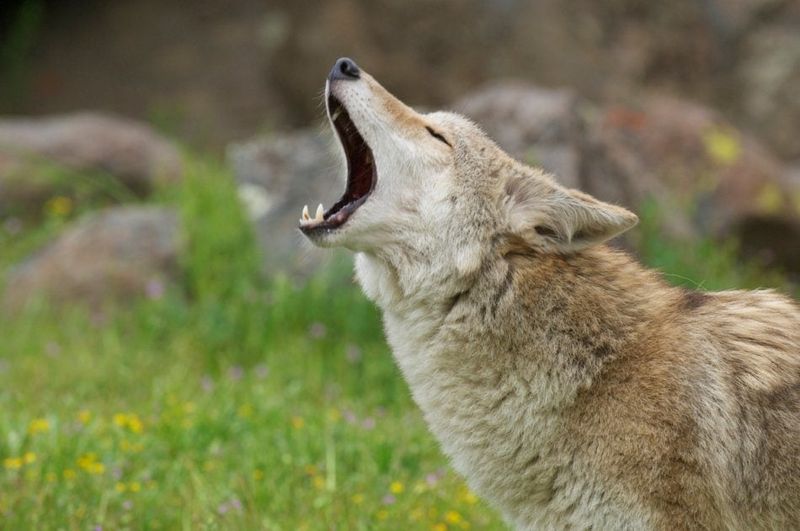
That sound outside your window has a practical use beyond unease. When coyotes vocalize near a North Carolina yard in fall, the most productive response is to treat it as a reminder to check what you may have let slide since summer ended.
Work through the sequence that actually reduces risk. Confirm whether a coyote has genuinely visited your yard by looking for tracks, scat, or camera footage rather than assuming the howl means one did.
If you find evidence of a visit, go through the yard and remove what made it worth stopping at: unsecured garbage, outdoor pet food, fallen fruit, spilled birdseed, open compost, and gaps under structures. Supervise pets outside, keep dogs leashed beyond the fence line, and make sure everyone in the household knows how to respond assertively to a sighting.
Report to animal control only when behavior crosses into aggression, apparent illness, or failure to respond to hazing. NC Wildlife and its coyote wildlife profile both point toward this same practical framework: remove opportunities, supervise pets, and respond to behavior rather than sound.
Coyotes have lived alongside North Carolina communities for decades, and adaptable animals are not going to disappear from the landscape. The distinction that matters is between a coyote passing through territory and one that has learned a yard reliably offers food, shelter, or an easy meal.
Keeping that difference in place, through consistent habits rather than a single seasonal cleanup, is what responsible coexistence with these animals actually looks like.