
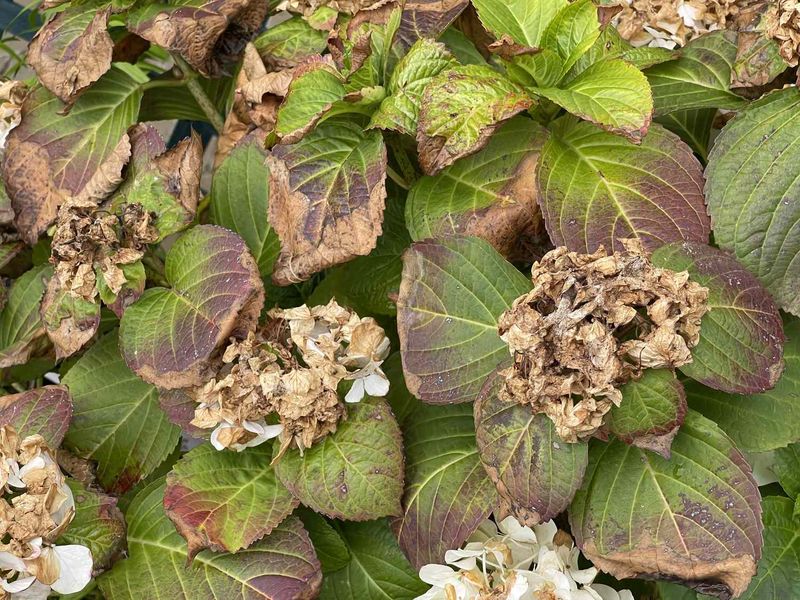
Watching your hydrangeas droop by midday is genuinely alarming, especially when you are sure you have been watering them. The frustrating truth is that afternoon wilting does not always mean your plant is thirsty.
Before you reach for the hose, knowing why hydrangeas wilt and what to check first can save you from making the problem worse.
Afternoon wilt can be a heat response, not a watering emergency
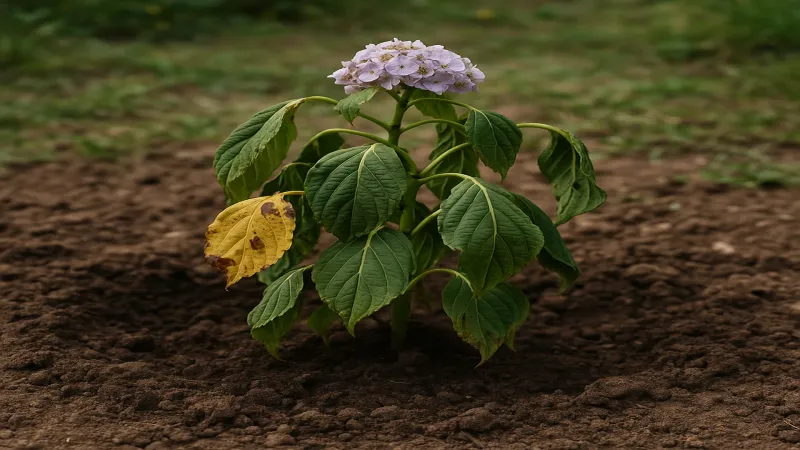
Hydrangeas have a reputation for drama, and bigleaf hydrangeas in particular can look genuinely alarming by two or three in the afternoon. What many gardeners do not realize is that this drooping can happen even when the root zone has plenty of moisture.
Large, soft leaves lose water through transpiration faster than roots can pull it up during hot, sunny, or windy conditions, and the plant temporarily wilts as a result.
Virginia Cooperative Extension guidance on bigleaf hydrangea describes this pattern specifically, noting that plants in full sun can wilt in the afternoon heat even with adequate soil moisture. University of Tennessee Extension confirms that midday wilting can occur because water loss through the leaves outpaces root uptake during peak heat hours.
A key clue: if the leaves perk back up as evening temperatures fall, the plant is most likely recovering from heat load rather than signaling a watering failure. That recovery pattern strongly suggests temporary heat stress rather than a root-zone moisture crisis.
Still, heat response alone does not rule out other causes, including dry soil, poor drainage, root damage, or a site that simply receives too much direct afternoon sun for the hydrangea type you are growing.
Check the root zone before you reach for the hose
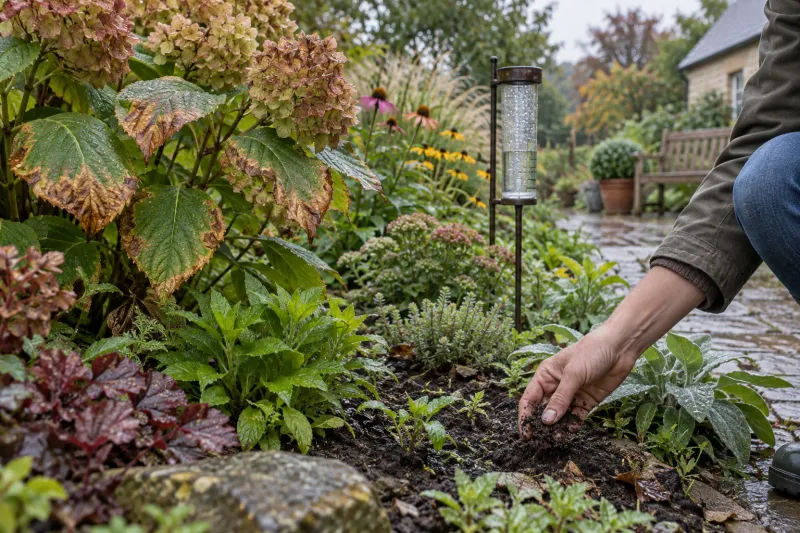
Leaf position is one of the least reliable indicators of whether a hydrangea actually needs water. A plant can droop because it is too hot, because the soil is dry, because the soil is waterlogged, or because roots are damaged.
Treating every afternoon wilt as a call to irrigate misses three of those four possibilities.
The more useful move is to push a finger or a trowel several inches into the soil near the outer edge of the plant’s root zone. University of Connecticut Extension and Oregon State University Extension both recommend checking soil moisture before making any watering decision.
If the soil feels dry or is beginning to dry out several inches down and the plant is still wilted, watering is appropriate. If the soil feels consistently moist and the plant recovers once the afternoon heat passes, adding more water is unlikely to help and may create new problems.
Saturated or poorly drained soil deserves special attention here. University of Missouri Extension warns against overwatering heat-stressed plants, pointing out that roots in waterlogged soil cannot take up oxygen or water efficiently, which produces wilting symptoms that look identical to drought stress.
A wilted plant sitting in wet ground should not receive routine additional irrigation.
When the plant needs water, apply it slowly at the base
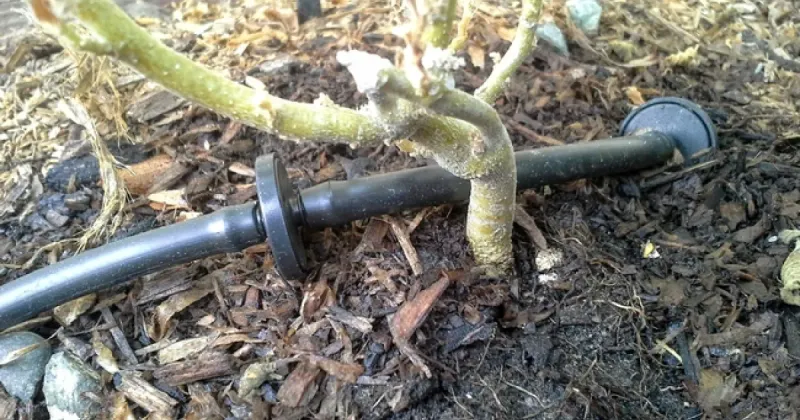
Once you have confirmed that the root zone is beginning to dry and the plant genuinely needs water, how you apply it matters as much as when. Spraying overhead may wet the foliage without delivering enough moisture where roots actually grow, and routine leaf wetting can promote certain foliar diseases, particularly in warm, humid conditions common across the South.
University of Georgia Extension guidance on ornamental landscape plants recommends directing water at the soil around the plant’s base rather than overhead, and UF/IFAS disease management guidance supports base-directed irrigation to limit the leaf wetness that can encourage fungal problems. A soaker hose or drip emitter placed around the root zone is practical for most home gardens and keeps water where it is needed.
Morning is the preferred default timing when irrigation is needed. Watering early in the day gives foliage time to dry if any spray does contact leaves, and it can improve application efficiency before peak heat evaporates moisture from the soil surface.
That said, morning timing is a useful default, not a substitute for checking the root zone first. A plant with dry soil at noon still needs water even if the ideal window has passed.
What matters most is getting the water to the root zone slowly and thoroughly rather than hitting the right hour on the clock.
Oregon State University Extension also emphasizes slow, thorough watering at the base as the standard approach for hydrangea care.
Deep watering works better than fixed daily doses
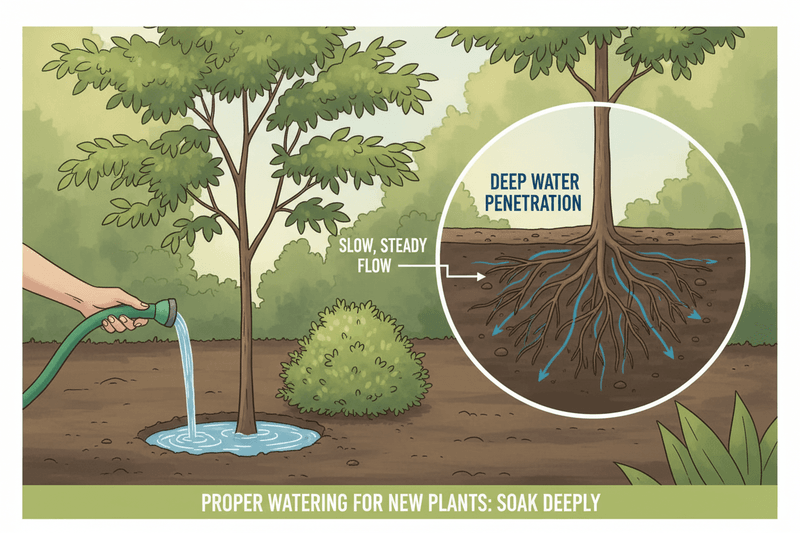
Frequent light sprinkling feels attentive, but it often does more harm than good. Shallow applications wet only the top inch or two of soil, which encourages roots to stay near the surface where they face the most heat and dry out fastest.
Over time, a hydrangea watered this way becomes more vulnerable to heat stress, not less.
Texas A&M AgriLife Extension advises against rigid calendar-based watering schedules for ornamental plants, noting that actual water needs shift with temperature, wind, rainfall, soil type, and plant establishment. Predetermined daily volumes can easily push moist soil into saturation, particularly after rain.
Texas A&M’s guidance on efficient landscape watering reinforces slow, deep applications as the more effective approach.
A broad benchmark sometimes cited for normal growing conditions is roughly 1 inch of water per week, including rainfall. UConn Extension and University of Tennessee Extension both reference this figure, but both also qualify it as a general starting point rather than a fixed prescription.
Hot, dry, or windy weeks may require more; rainy periods may require little or no supplemental irrigation at all. Plant size, soil drainage, sun exposure, and whether a hydrangea is newly planted or well established all shift the actual requirement.
The honest answer is that no single number applies to every garden, and checking the root zone regularly is more reliable than any weekly volume target.
Site exposure and hydrangea type can outweigh watering time
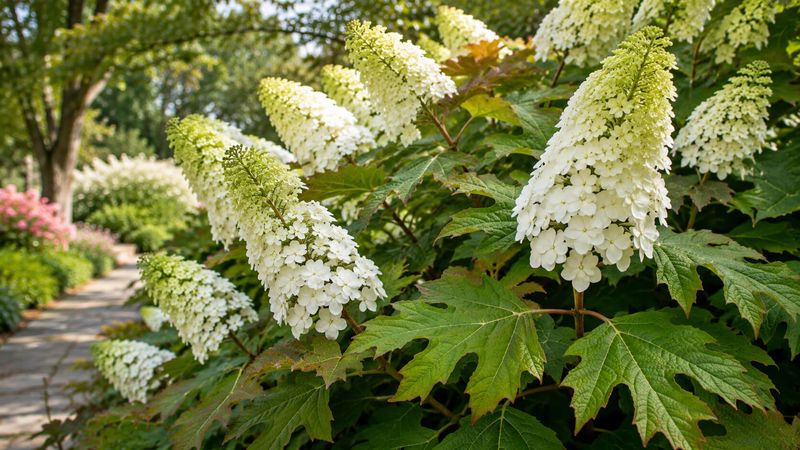
Changing when you water is one of the easiest adjustments a gardener can make, but it cannot compensate for a plant placed in the wrong spot. In Southern gardens where afternoon temperatures regularly climb into the upper 80s and 90s, site exposure often matters more than the hour shown on the clock.
Mississippi State University Extension’s guide to hydrangeas makes clear that different species have meaningfully different sun and moisture requirements. Bigleaf hydrangeas (Hydrangea macrophylla) and smooth hydrangeas (Hydrangea arborescens) generally perform best with morning sun and some protection from intense afternoon light, along with consistent moisture and well-drained soil.
Planting either of those types in a spot that bakes in full afternoon sun through July and August creates a heat problem that no watering schedule can fully solve.
Oakleaf hydrangea (Hydrangea quercifolia) is generally more tolerant of drier conditions and is considered better adapted to many Florida locations, according to UF/IFAS guidance on bigleaf hydrangea in Florida. Panicle hydrangeas (Hydrangea paniculata) handle more sun than bigleaf types and tend to be more forgiving of heat.
UF/IFAS St. Johns County horticultural guidance highlights oakleaf hydrangea as a strong choice for Florida landscapes precisely because of its greater adaptability. Knowing which type you are growing is the first step toward understanding what it actually needs from its site, not just from the hose.
Use mulch and drainage to protect the root zone
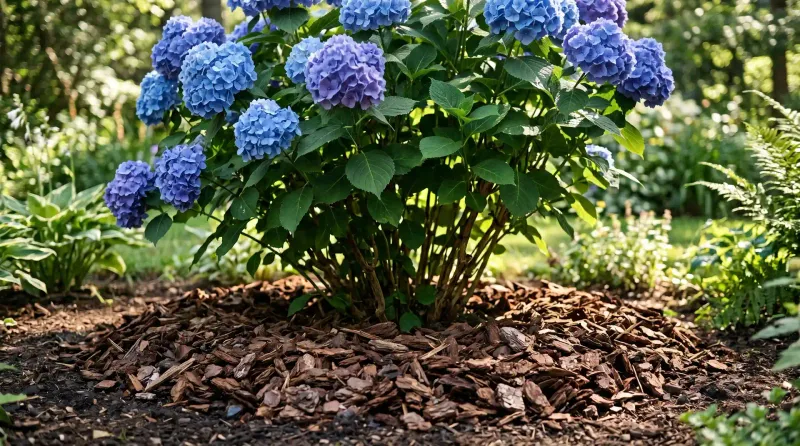
Mulch is one of the most practical tools available for reducing afternoon heat stress without changing a single watering habit. A layer of organic mulch spread around the plant moderates soil temperature, slows moisture evaporation from the surface, and reduces the swings between wet and dry that make root-zone management difficult during Southern summers.
Mississippi State University Extension and University of Georgia Extension guidance on growing bigleaf hydrangea both recommend approximately 2 to 3 inches of mulch around hydrangeas. Keep the mulch a few inches away from direct contact with the stems to avoid trapping moisture against the crown, which can invite rot and disease.
UF/IFAS guidance on landscaping in hot and dry conditions also highlights mulch as a key strategy for protecting root zones during extended heat.
Drainage deserves equal attention. A garden bed that holds standing water after rain or irrigation keeps the root zone saturated, cutting off the oxygen supply roots need to function.
UF/IFAS disease management guidance connects poor drainage with root and crown diseases that produce wilting identical in appearance to drought stress. A hydrangea wilting in consistently wet, poorly drained soil is not a candidate for more water.
Improving drainage through bed amendment, raised planting, or redirecting runoff is the appropriate response in that situation.
Persistent wilt needs a broader diagnosis
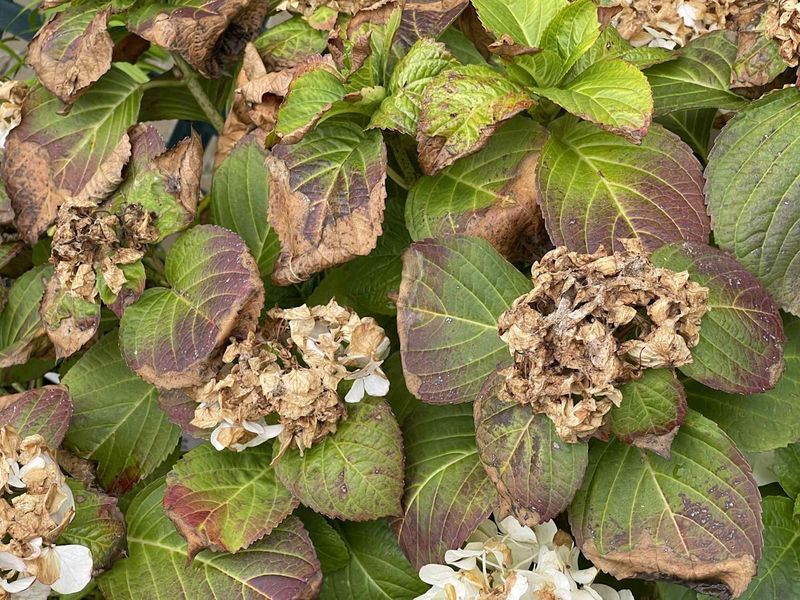
A hydrangea that slumps by two in the afternoon and stands back up by sunset is behaving normally for a hot Southern summer day. A hydrangea that stays wilted through the evening, fails to recover overnight, or shows browning edges, leaf drop, or stunted new growth is communicating something more serious.
University of Maryland Extension guidance on drought and heat stress distinguishes temporary wilting from sustained stress, noting that failure to recover after temperatures drop is a meaningful warning sign. University of Georgia’s CAES Field Report on wilted leaves reinforces that wilt alone does not confirm a plant needs water, and that other causes must be considered before irrigating.
Causes worth investigating when wilt persists include dry soil combined with browning or crispy leaf margins, saturated or compacted soil with poor drainage, root damage from digging or pests, crown or root disease, transplant stress in recently moved plants, and exposure to reflected heat from pavement or walls. University of Missouri Extension and University of Arizona Extension guidance on reading plant stress both caution that adding water to an already-stressed plant without identifying the actual cause can deepen the problem.
Soil moisture, recovery pattern, site conditions, and hydrangea type together point toward the right diagnosis more reliably than any single symptom.
Make the next watering decision from evidence
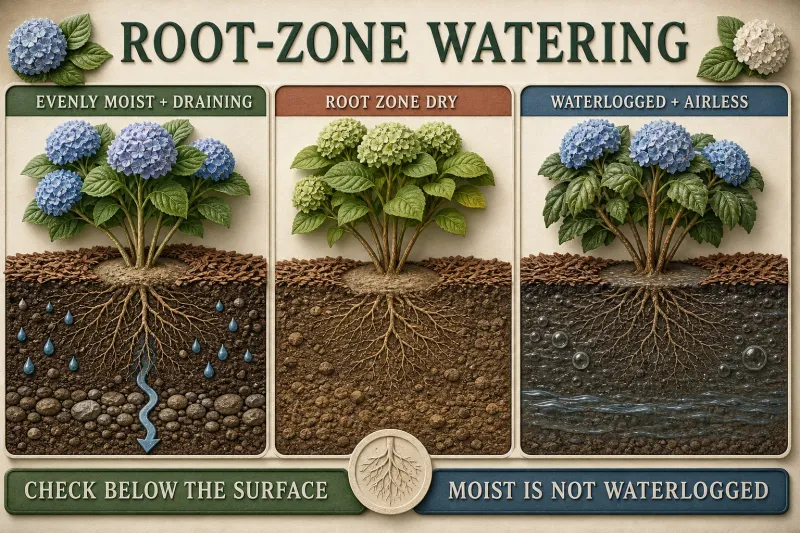
Good hydrangea care comes down to a short, repeatable sequence. Check the root zone several inches below the surface before doing anything else.
If the soil is beginning to dry and the plant needs water, apply it slowly at the base, preferably in the morning, using a soaker hose or drip method when you can.
If the soil remains moist and the plant recovers once afternoon heat passes, hold off on irrigation and look at reducing sun exposure instead. UConn Extension, Mississippi State University Extension, and Texas A&M AgriLife Extension all point to the same conclusion: consistent, site-appropriate moisture supported by shade, mulch, drainage, and the right hydrangea for the location beats any fixed watering rule.
A plant that wilts in the afternoon and recovers by morning is asking for a cooler spot more than a bigger drink.