
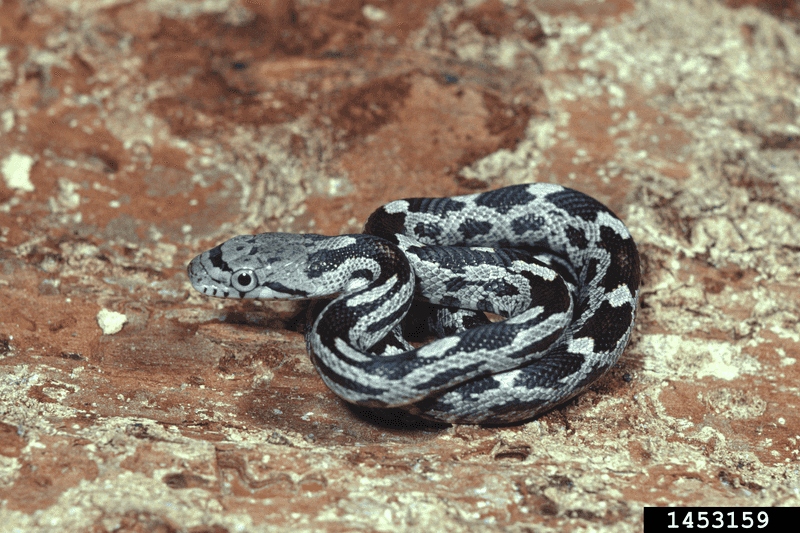
On a mild October afternoon in North Carolina, a copperhead might be the last thing on your mind as you reach for a piece of firewood or pull back a pile of leaves. These venomous snakes are the most common and widespread of North Carolina’s venomous species, and moderate fall temperatures can bring them into more visible spots around the yard.
Sheltered cover like wood piles, brush, logs, and deeply piled debris can all create situations worth a careful look before you reach in. Knowing what to check, and how to check it safely, makes all the difference.
Why fall can make copperheads easier to notice
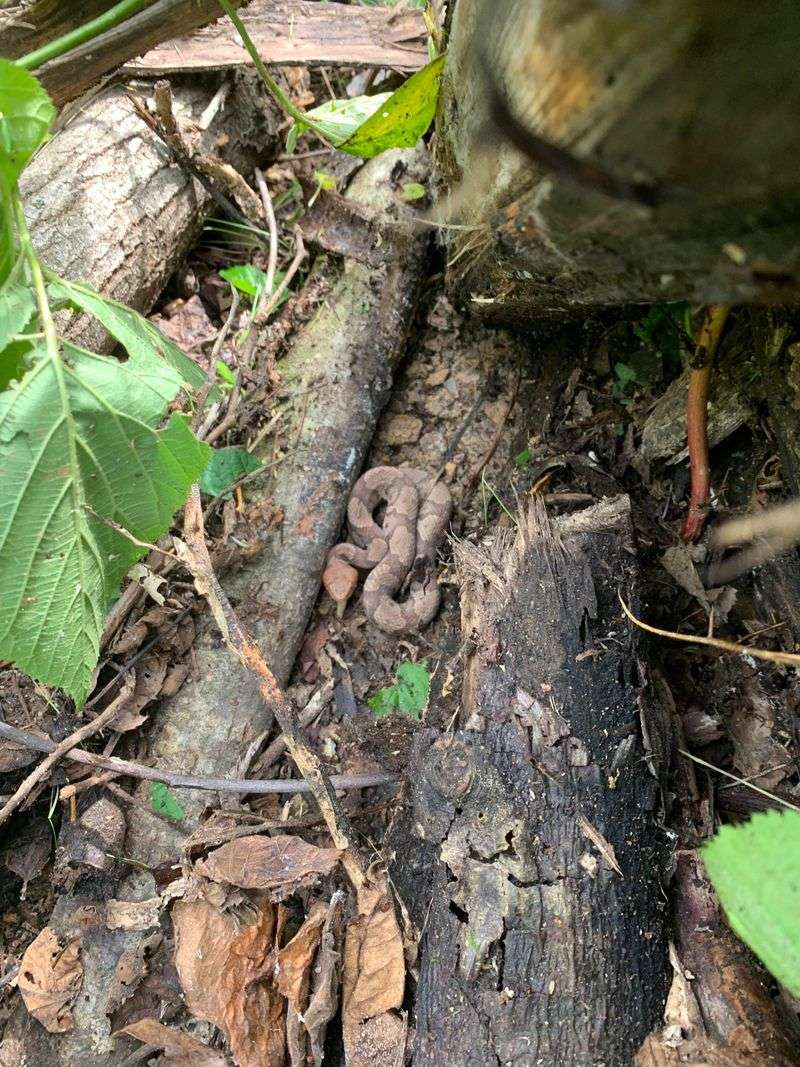
Copperheads run on environmental heat. As ectotherms, they cannot generate their own body warmth, so their activity levels shift with the temperature around them.
During the hottest weeks of a North Carolina summer, copperheads often become most active at dusk, at night, or in the early morning hours, when the ground has cooled enough to be comfortable. A warm fall day flips that pattern.
When daytime temperatures settle into a moderate range, copperheads may move, bask, and forage during daylight hours far more readily than they did in midsummer heat. NC Wildlife Resources Commission guidance on copperheads notes that fall is a period when these snakes can be more visible and active during the day.
That visibility is tied to temperature, not to a fixed statewide season that switches on every September.
Local conditions shape what any individual homeowner actually encounters. Elevation, nearby habitat, shading, and week-to-week weather all matter.
A mountain yard in western North Carolina may see cooler conditions that reduce activity well before a Piedmont yard does. A warm stretch in late October can bring movement to areas where a homeowner might not expect it.
What this means practically is that a mild fall afternoon is a reasonable moment to pay attention before disturbing outdoor materials. North Carolina Parks records for the eastern copperhead confirm that sightings concentrate in late summer and early fall.
That does not mean every wood pile or mulch bed holds a snake, but it does mean the season rewards a cautious look before you reach in.
Which yard features deserve a cautious visual check
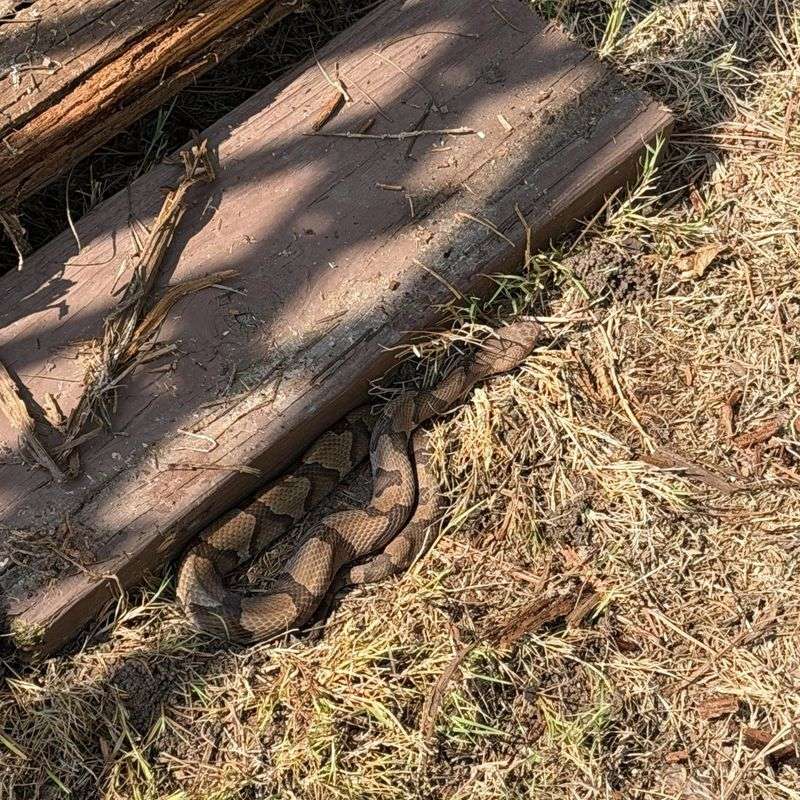
Not every corner of a yard carries the same level of concern. Copperheads are strongly associated with sheltered cover and habitat edges, and certain features are more worth inspecting than others before you disturb them.
NC Wildlife’s copperhead profile and NC Wildlife’s venomous snake field guide identify cover objects as key habitat features, including wood piles, brush piles, fallen logs, rocky areas, sawdust piles, slab piles, trash, dilapidated outbuildings, and artificial cover objects such as boards or metal sheeting left on the ground. These are the features most consistently documented in the literature as places a copperhead might rest, ambush prey, or seek temporary shelter.
Ordinary landscaped mulch beds are a lower priority than the items above, but they are not completely irrelevant. University of Florida IFAS guidance on snakes around homes lists ground-level wood piles, mulch piles, and compost bins as features that can offer cover or attract the rodents and other small prey that snakes follow.
A deeply piled mulch bed, a compost bin with active rodent activity, or a mulch pile heaped against a shed wall is worth a visual inspection even if it is less risky than a stacked cord of firewood.
University of Georgia Extension guidance on venomous snakes reinforces that edge habitat, where a sunny area meets dense cover, is exactly the kind of transition zone copperheads use. A wood pile at the edge of a tree line, or a brush pile beside a garden shed, fits that description well.
Before moving any of these materials, stop and look first. A slow visual scan from a comfortable distance takes seconds and costs nothing.
Read the surrounding yard before moving anything
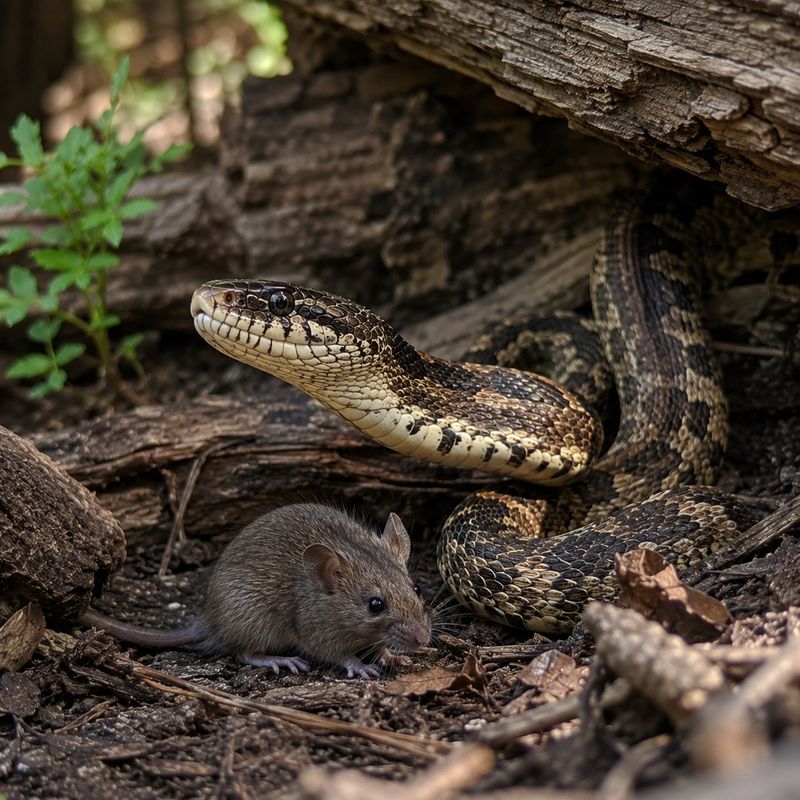
Before picking up a single piece of wood or pulling back any debris, take a moment to read the whole area around it. A pile does not exist in isolation.
The conditions surrounding it tell you whether extra caution is worth slowing down for.
Look for sun-warmed surfaces near sheltered cover. A log, flat rock, or board that has been sitting in a patch of afternoon sun on a mild day is exactly the kind of spot a snake might use to regulate its temperature.
New Jersey Division of Fish and Wildlife guidance on living with snakes recommends scanning the ground thoroughly before reaching into any low cover, a habit that applies equally well in North Carolina yards.
Pay attention to signs of rodent activity around or beneath a pile. Gnaw marks on wood, small burrows at the base of a pile, scattered seed hulls, or droppings near a compost bin all suggest prey animals are using the area.
Rodents can make a yard more attractive to snakes over time, though their presence does not prove a copperhead is hiding nearby right now. University of Florida IFAS guidance specifically connects rodent activity around wood piles and compost bins to increased snake interest in those areas.
If a pile is located near a path children use, beside a porch door, or next to a pet run, that proximity raises the stakes. NC Wildlife’s seasonal snake awareness guidance recommends keeping pets on a leash and away from dense cover and brush during active snake periods.
If conditions look concerning, consider postponing the work until a cooler, cloudier day when snake activity is less likely, or contact a wildlife professional before proceeding.
Identify the whole snake, not one warning sign
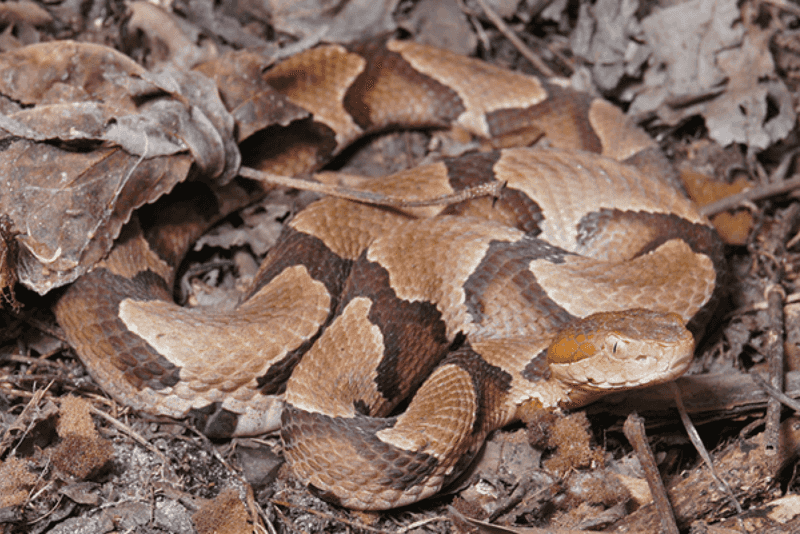
Identifying a snake from a safe distance is a reasonable goal. Reaching closer to confirm an identification is not.
Those two ideas need to stay clearly separated.
A North Carolina copperhead typically has a tan, brown, grayish, or pinkish background color with dark brown crossbands that narrow at the center of the back and widen at the sides, producing a shape that is often described as an hourglass or a Hershey’s Kiss. NC State Extension’s guide to pit vipers in North Carolina describes the pattern in detail and notes that juveniles have a bright yellow or greenish tail tip that fades as they mature.
You may have heard that a triangular head is a reliable indicator of a venomous snake. It is not, on its own.
Harmless species such as the eastern hognose or the banded water snake can flatten and widen their heads when threatened, mimicking that shape. NC Wildlife’s snake identification reference makes clear that identification should rely on the overall pattern, body shape, geographic range, and context rather than any single feature viewed in isolation.
Copperheads do have elliptical pupils and heat-sensing facial pits between the eye and nostril on each side, but neither of those features is a reason to move closer. If you are near enough to see a snake’s pupils clearly, you are already too close to a snake you have not identified.
NC Wildlife notes that copperheads occur statewide except for the Outer Banks, so geographic context supports but does not confirm an identification. When you are uncertain, back away.
Distance is always the correct response to uncertainty.
Use a safe protocol before clearing yard materials
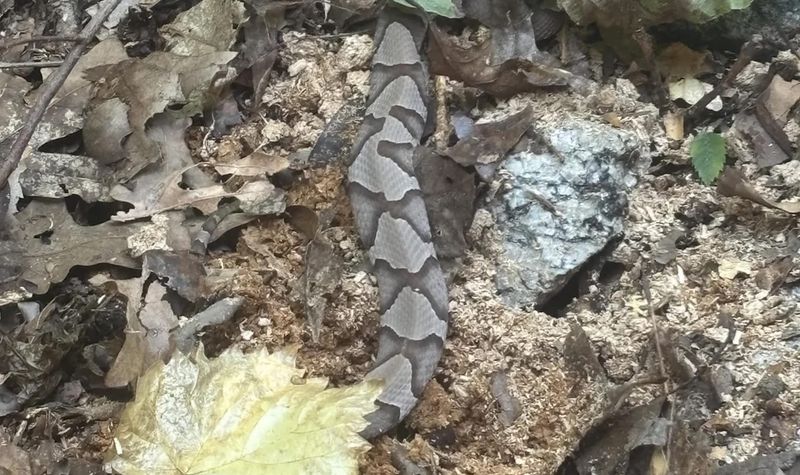
Clearing a wood pile, moving a brush pile, or turning a compost heap are ordinary yard tasks. They become higher-risk when done without any preparation in areas where snakes may be present.
A short routine before starting cuts that risk considerably.
Choose a time with good natural light. Working in dim conditions or at dusk makes it harder to see a snake before you are too close to it.
Before touching anything, stand back and scan the pile, the ground around it, and the surface of any cover objects nearby. CDC guidance for outdoor workers around venomous snakes recommends leather gloves, long pants, and boots as standard protective work clothing in snake habitat.
These items reduce the risk of a bite during routine work, but they do not make it safe to reach blindly into cover or to handle a snake you have spotted.
North Carolina Department of Labor guidance on hazardous animals recommends heavy gloves for debris removal and boots at least ten inches high, and specifically warns against putting bare hands beneath logs, boards, leaves, brush, or other debris. That instruction applies whether or not you think a snake is present, because the point is to avoid a surprise encounter rather than to manage one already in progress.
Keep children and pets away from the work area before you begin. CDC healthy pets and wildlife guidance advises keeping pets on a leash and away from brush and debris where wildlife may shelter.
Do not allow a dog or cat to put its face into a log pile or dense ground cover.
Avoid climbing onto unstable wood or rock piles. Use a long-handled tool to move the top layers of a pile rather than reaching in from the side.
If you see a snake at any point, stop, back away, and follow the encounter guidance rather than continuing to work around it.
Give an encountered snake room to leave
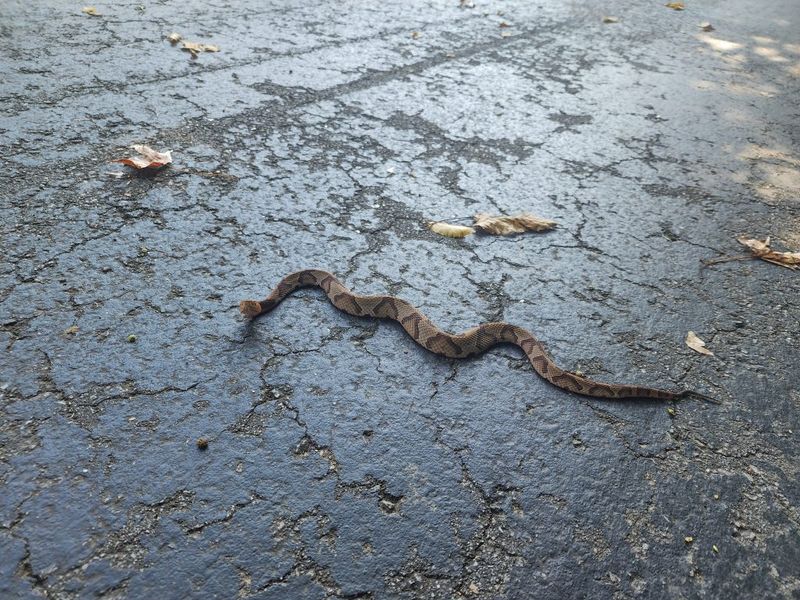
Spotting a snake near a wood pile or in the garden does not require an immediate decision about what the snake is. The first move is always the same: stop moving toward it, back away to a safe distance, and keep everyone else clear of the area.
Cornering a snake, trying to identify it by getting closer, or attempting to move it with a stick, shovel, or any improvised tool dramatically increases the chance of a bite. NC Wildlife notes that most copperhead bites occur when someone places a hand or foot too close, or attempts to capture, kill, or handle the animal.
The snake is not hunting the homeowner. Given room and an exit, it will typically move on.
If the snake is in an open area with a clear path away from people and structures, the most effective response is simply to wait. NC Wildlife’s seasonal snake guidance mentions that a garden hose used from a distance can sometimes encourage a snake to move, without requiring anyone to approach or chase it.
That option works only when the homeowner stays well back and does not attempt to direct the snake toward a specific location.
Do not attempt to capture, trap, kill, or relocate the snake yourself. NC State Extension’s snake resource and CDC wildlife guidance both recommend contacting a qualified wildlife or animal-control professional when a snake is in a location where it genuinely cannot be left undisturbed, such as inside a structure, near a child’s play area with no escape route, or in a situation where a pet is at immediate risk.
A professional has the tools and training to handle removal safely.
Reduce cover and prey opportunities without promising a snake-free yard
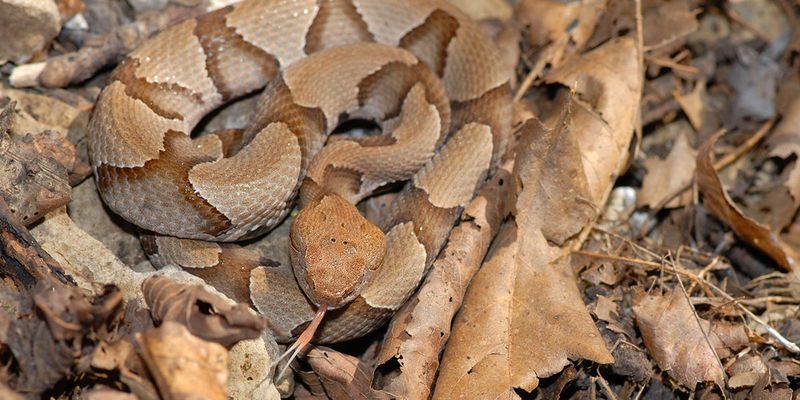
Managing your yard to reduce the features that make it more welcoming to snakes is practical and worthwhile. Just be realistic about what it can accomplish.
No yard management strategy guarantees that a copperhead will never pass through, but several low-effort changes can reduce the number of spots where an encounter is likely.
Start with clutter. Boards, scrap metal, tarps, old pots, and piles of debris left on the ground create the kind of artificial cover that snakes use readily.
Removing or consolidating those items takes away shelter opportunities. NC Wildlife’s snake awareness guidance recommends keeping wood and brush piles away from high-use areas of the yard, particularly near doors, play equipment, and frequently walked paths.
Rodent control matters more than many homeowners expect. Mice and voles around a shed, garage, or compost bin draw snakes into those areas over time.
University of Florida IFAS guidance connects rodent activity around compost and wood piles directly to increased snake presence. Sealing gaps in foundations and outbuildings, securing compost bins, and storing birdseed in rodent-proof containers all help reduce the prey base that makes a yard more attractive.
Vegetation management near structures also helps. Keeping grass trimmed and shrubs pruned back from the foundation reduces the sheltered edges that snakes use as travel corridors.
NC State Extension’s snake resource recommends sealing openings into buildings and managing ground-level cover near entry points.
Skip the commercial repellents. NC Wildlife’s venomous snake reference states directly that sulfur applications are ineffective as snake deterrents.
The National Pesticide Information Center notes that mothballs must be used only according to their pesticide labels and are not a general-purpose snake repellent. Save the effort and focus on structural changes that actually reduce shelter and prey.
Treat a bite as a medical emergency

If a copperhead bite occurs, the priority is immediate medical care. Everything else is secondary to getting the person to a hospital or emergency room as quickly as possible.
Keep the person as calm and still as possible. Movement speeds circulation and can increase venom spread through the body.
Remove rings, watches, and any tight clothing or jewelry near the bite site before swelling begins, since swelling can make removal difficult or impossible later. If it is practical, wash the wound gently and cover it loosely.
CDC healthy pets and wildlife guidance recommends calling emergency services or going directly to an emergency medical facility without delay.
CDC guidance for outdoor workers is explicit about what not to do: do not apply ice or a cold pack, do not use a tourniquet, do not cut the wound, do not attempt to suction out venom, and do not use electric shock. None of these measures help, and several cause additional harm.
Do not attempt to capture, kill, or photograph the snake for identification purposes. Medical staff treating a snakebite do not need the snake to administer care, and pursuing it puts another person at risk of a second bite.
Poison Control guidance on snakebites confirms that a description of the snake is sufficient and that attempting to retrieve or kill it is unnecessary and dangerous. Call Poison Control at 1-800-222-1222 or 911, and focus entirely on keeping the patient calm and getting them to care.
Inspect visually, manage the yard, and give snakes space
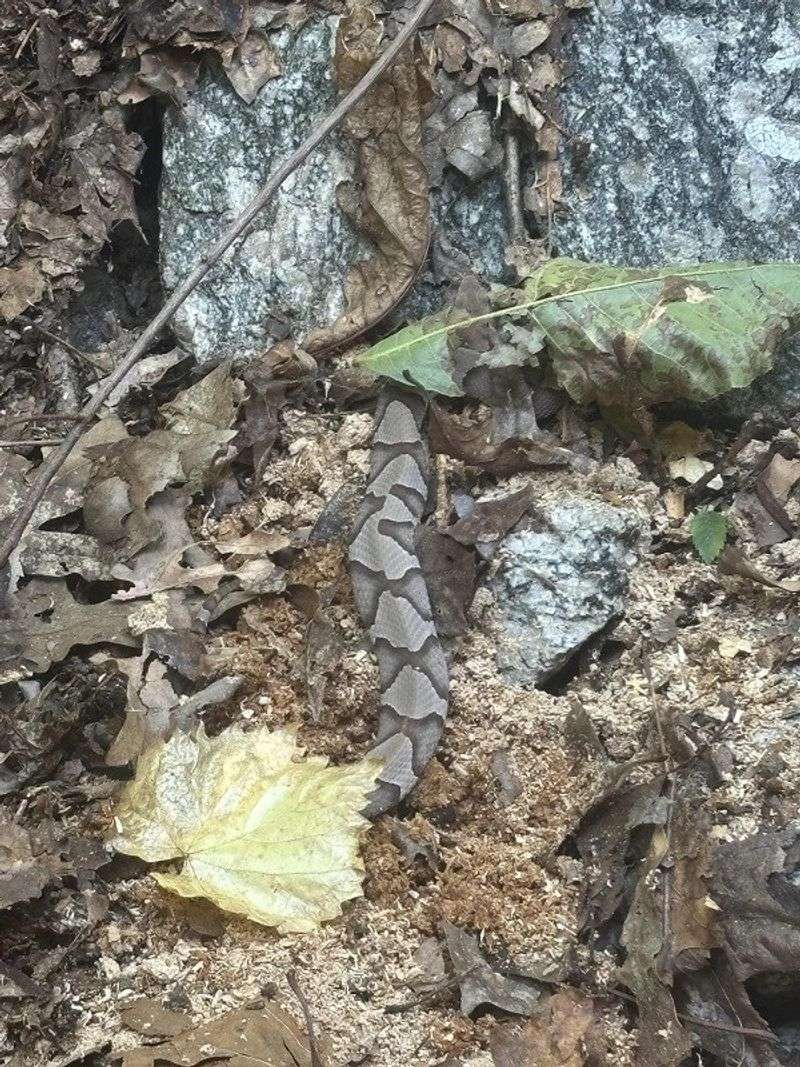
Suitable fall weather can bring copperheads into more visible spots around a North Carolina yard, particularly near sheltered cover like wood piles, brush, logs, rocky areas, and deeply piled debris. Finding mulch or a wood pile in your yard is not evidence of a snake problem, and a single sighting does not mean a group of snakes is nearby.
The practical habits that matter most are straightforward: look before you reach, reduce clutter and prey opportunities, keep children and pets away from dense cover during mild weather, and contact a wildlife professional rather than attempting any kind of hands-on removal. NC Wildlife and NC Wildlife’s seasonal snake guidance consistently point to distance and avoidance as the most effective tools a homeowner has.
Copperheads have lived in North Carolina’s woodlands and residential edges for a long time. Sharing the landscape with them safely is mostly a matter of paying attention before you reach in, and giving them room to leave when they show up.