
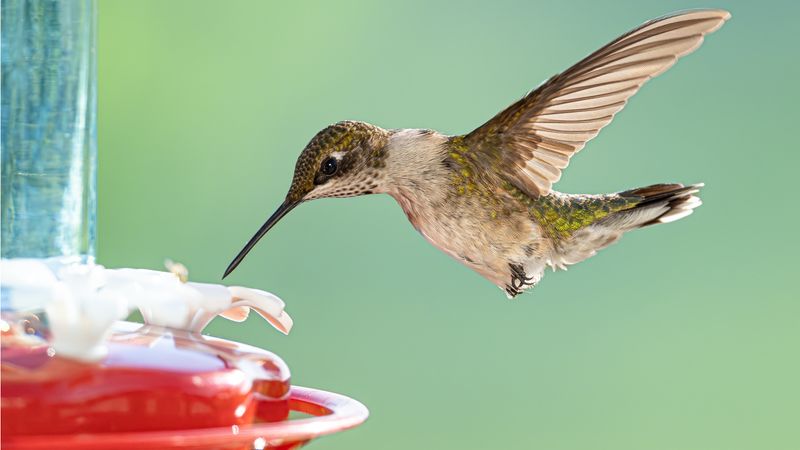
Hanging a hummingbird feeder and watching nothing happen is one of the more puzzling moments in backyard wildlife care. Your neighbors seem to have birds sipping away all day, and yours just swings in the breeze.
Placement may be part of the answer, but it is rarely the whole story. Working through the likely causes, from where the feeder hangs to what is inside it, gives you a much clearer picture than assuming one thing went wrong.
Placement may matter, but it does not explain every quiet feeder
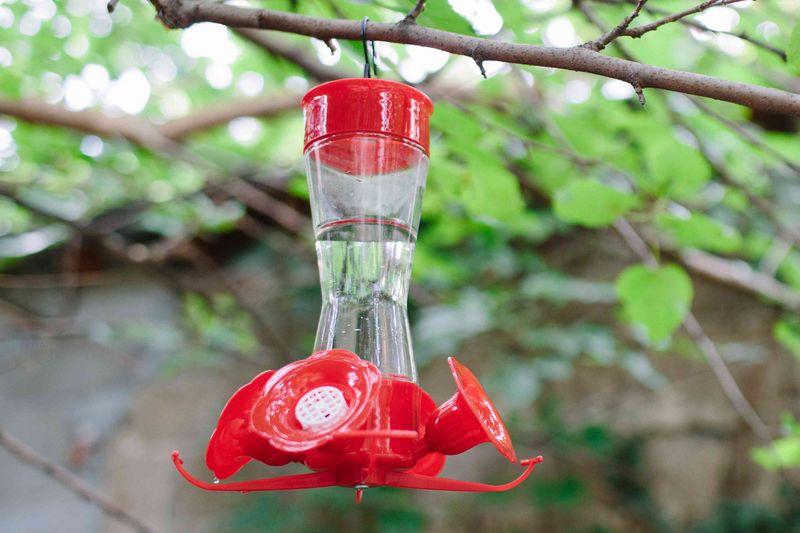
Staring at an empty feeder and wondering what you did wrong is a familiar feeling for backyard wildlife watchers, and the honest answer is that the cause is rarely obvious right away. An untouched feeder does not prove that birds were scared off, that you chose the wrong location, or that something is wrong with the nectar.
Placement is a plausible contributor, but so are seasonal population changes, an abundance of natural flowers in the area, a territorial bird blocking access, a feeder that has not yet been discovered, or simply a stretch of time when local hummingbird numbers are lower than usual.
Hummingbirds rely heavily on visual information and spatial memory when returning to rewarding food sites, as documented in research on hummingbird spatial learning. A feeder that is hard to see from typical flight paths, blocked by foliage, or placed where the nectar spoils quickly may get fewer visits, but these are contributing factors rather than confirmed diagnoses.
Cornell Lab guidance also notes that natural flower abundance and normal seasonal fluctuations can reduce feeder visits even when everything else is done right.
The sections that follow walk through placement, shade, shelter, predator safety, window hazards, territorial behavior, and maintenance as separate checkpoints. Working through each one gives you a more complete picture than any single fix could provide.
Visibility can help hummingbirds find and revisit a feeder
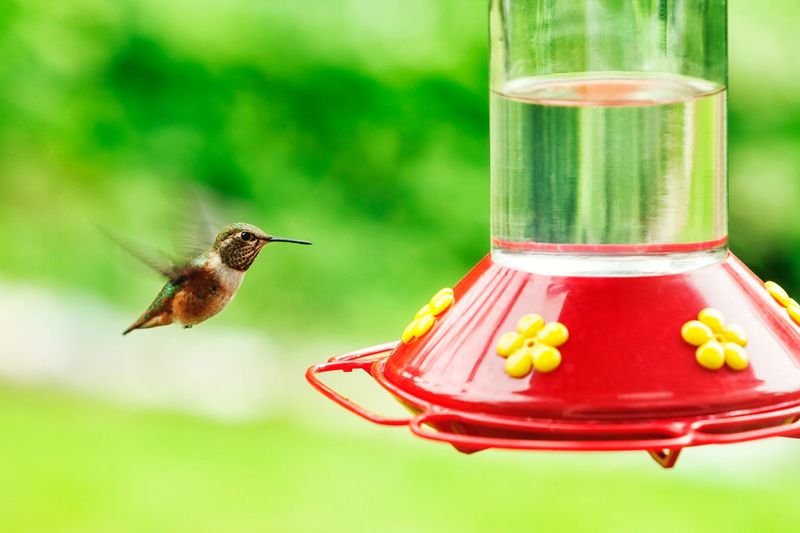
Walk to the far edge of your yard and look back at where the feeder hangs. If it disappears into leaves or blends into a cluttered background, birds approaching from typical flight paths may pass right by it.
A feeder that is easy to spot from open airspace gives hummingbirds a better chance to notice it on a scouting pass and return to it later.
Hummingbirds use visual landmarks and spatial memory to locate food sources they have visited before, according to published research on their learning and memory. Keeping the feeder conspicuous, with the red parts of the feeder unobstructed, often makes it easier for birds to find and return to it.
Red dye added to the nectar is unnecessary and should be skipped; the feeder’s own red components provide sufficient visual contrast.
Around the ports themselves, clear hovering and approach space matters. Cornell Lab recommends unobstructed space around the feeder so birds can hover, approach from multiple angles, and leave quickly if startled.
Nearby shrubs or trees at a short distance can serve as perches and resting spots without blocking the feeder itself. The goal is a feeder that stands out in the landscape and gives birds room to maneuver, not one tucked so far into vegetation that it becomes difficult to reach.
Choose a spot that stays cool, dry, and steady
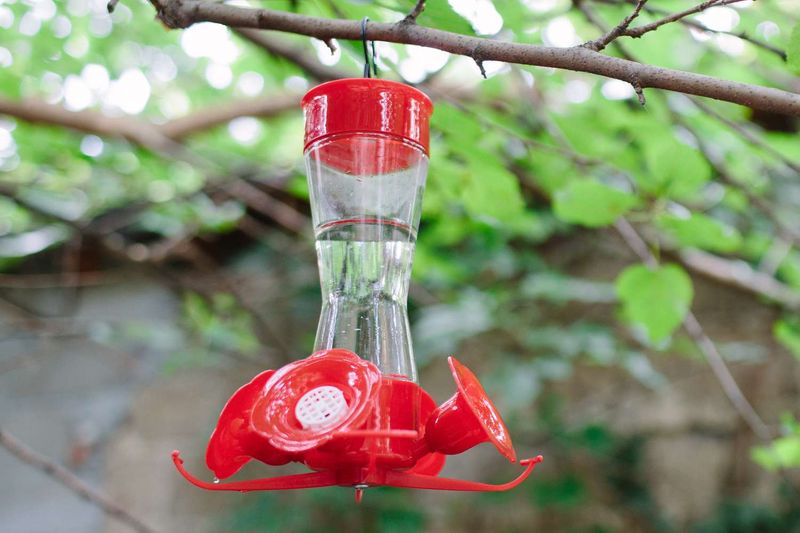
Southern heat creates a problem that gardeners in cooler states rarely face at the same intensity. When a feeder hangs in direct afternoon sun all day, the nectar warms quickly, and warm sugar water ferments, grows mold, and becomes unsafe for birds faster than most people expect.
In Florida and Texas, that can happen within a day during the hottest months, well before the three-to-five-day replacement window that works fine in milder climates.
Partial shade is a practical solution, and it does not have to mean a dark or hidden location. A covered porch, the shaded side of the house, a tree canopy that filters morning light but blocks harsh afternoon sun, or an eave overhang can all reduce heat exposure while keeping the feeder easy to see and approach.
University of Florida IFAS guidance on hummingbirds supports partial shade as a practical strategy for reducing spoilage in hot Southern conditions, and Cornell Lab similarly recommends shade or partial shade to slow nectar degradation.
Rain and wind add two more reasons to think about shelter. A feeder exposed to heavy rain gets diluted nectar, which may reduce its appeal and accelerate spoilage.
A feeder that sways and spills in wind becomes harder to use and messier to maintain. Audubon’s hummingbird feeding guidance notes that in very hot weather, nectar may need daily or every-other-day replacement.
The test for any new location is simple: does it stay protected without becoming so enclosed that the feeder is hard to see or reach?
Offer nearby shelter without creating an ambush site
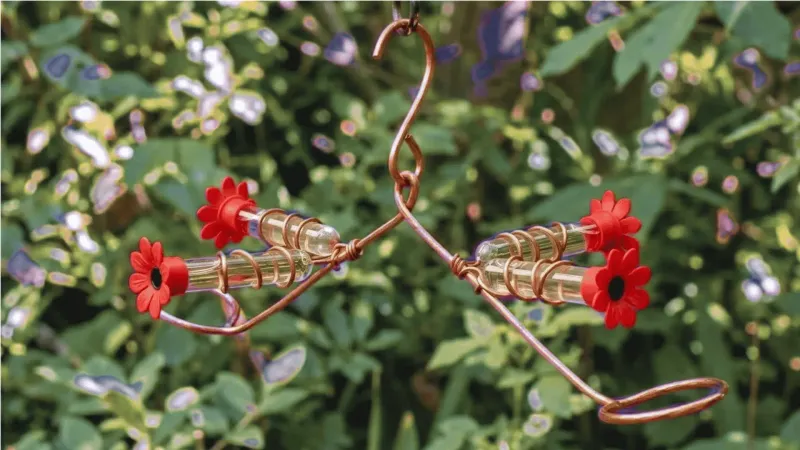
One of the more confusing pieces of feeder advice is that birds need cover nearby, yet the feeder should also be away from cover. Both statements are true, and the difference comes down to distance and type of vegetation.
Hummingbirds benefit from shrubs and trees that give them a place to rest between feedings, watch for rivals, and escape quickly if a predator appears. What they do not benefit from is a feeder buried inside dense vegetation where they cannot maneuver freely and where a cat could crouch undetected within striking distance.
Cornell Lab advises nearby cover while warning against vegetation so close that predators can hide within reach. The practical distinction is between accessible shelter nearby, such as a shrub or small tree a few feet away, and concealed low cover immediately around the feeder base.
Open sightlines around the feeder itself let birds spot a threat and react before it gets too close.
Free-roaming cats are a serious and documented hazard for small birds at feeders. The International Hummingbird Society identifies cats as one of the primary predator threats to hummingbirds.
Keeping cats indoors or supervised is more reliable than trying to find a feeder height that puts the birds out of reach. Dense, low ground cover directly beneath the feeder is worth removing or trimming back, not because all shrubs are bad, but because concealed launch points close to the feeder give an ambush predator an advantage that open sightlines would otherwise deny.
Treat nearby windows as a separate safety problem
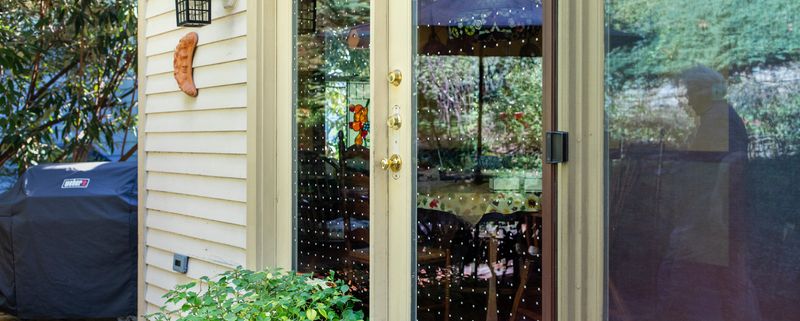
Moving a feeder away from a window feels like a logical safety step, and distance does reduce some collision risk. The problem is that reflective or clear glass can remain hazardous regardless of where the feeder hangs, because birds flying through the yard may strike the pane while navigating between perches, feeders, and flower beds rather than flying directly toward the feeder itself.
Older guidance often recommended placing feeders either within three feet of a window or beyond roughly 25 to 30 feet away. Cornell Lab’s current window-collision guidance explains that the distance rule alone is not sufficient and recommends treating hazardous glass with dense, visible exterior markings or another bird-safe treatment across the hazardous pane.
Closely spaced dots, tape strips, or dedicated window film applied to the outside of the glass break up the reflection and help birds recognize the surface as a solid barrier.
When a feeder is near reflective glass and birds are striking the window, relocating the feeder addresses only part of the hazard. Making the glass itself bird-safe across the problem area is the more complete solution.
A clear feeder approach path and an unmarked window nearby can work against each other, so both need attention at the same time.
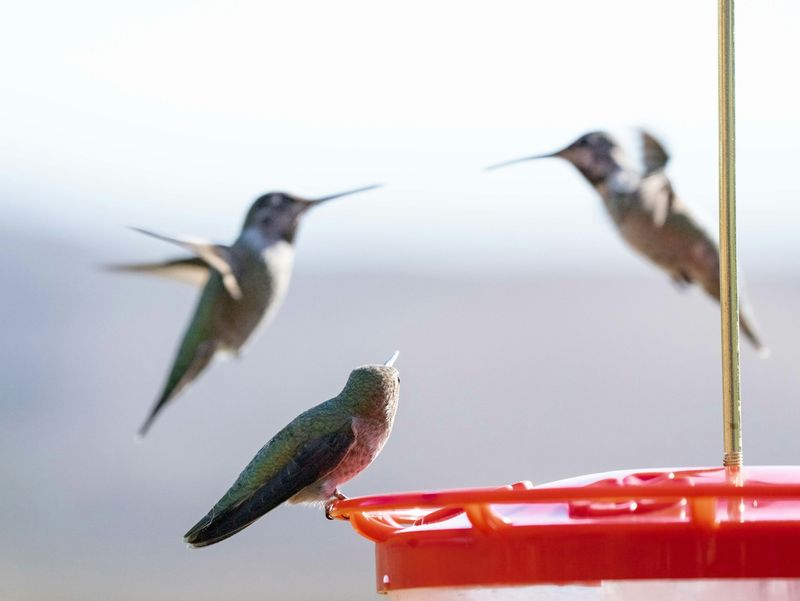
A territorial bird can make a busy feeder look empty
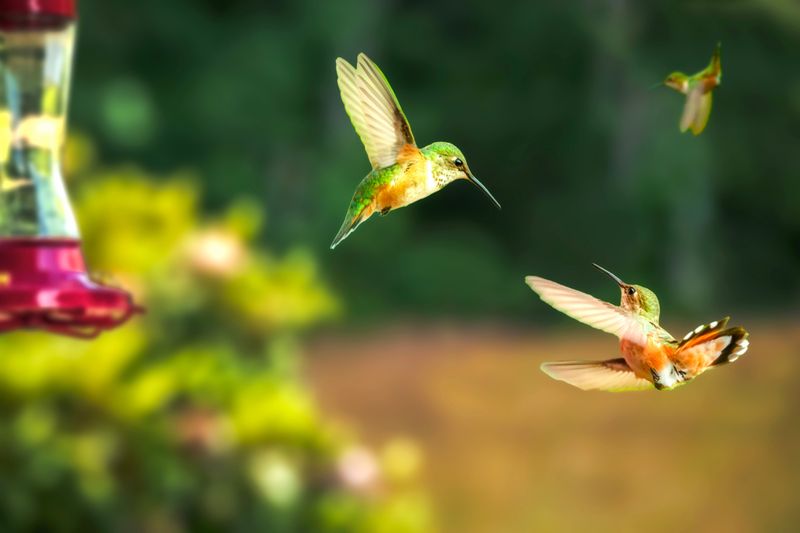
Sometimes the feeder is not being ignored at all. One bird is visiting constantly while chasing every other hummingbird away before they can land.
From inside the house, the result looks like an empty feeder, but the real situation is a single dominant bird that has claimed the feeding station as its territory.
Hummingbirds are famously aggressive about food sources. One bird can patrol a single feeder and drive off competitors so efficiently that the yard appears birdless between its own visits.
Watching from a distance for a few minutes, especially in the early morning, often reveals the guarding behavior: a bird perched on a favored branch, making short aggressive flights toward any approaching hummingbird, then returning to its post. Cornell Lab notes that multiple smaller feeders can help reduce territorial dominance, particularly when they are positioned so that no single bird can monitor all of them from one perch.
University of Florida IFAS guidance commonly recommends placing additional feeders at least 10 feet apart, though the more important principle is visual separation rather than any fixed distance. A second feeder around the corner of the house, behind a privacy hedge, or on the opposite side of the yard may give subordinate birds a chance to feed without the dominant bird noticing immediately.
Treat this as a practical experiment rather than a guaranteed fix, since a determined territorial bird can sometimes patrol surprisingly large areas.
Make the feeder easy to inspect, clean, and refill
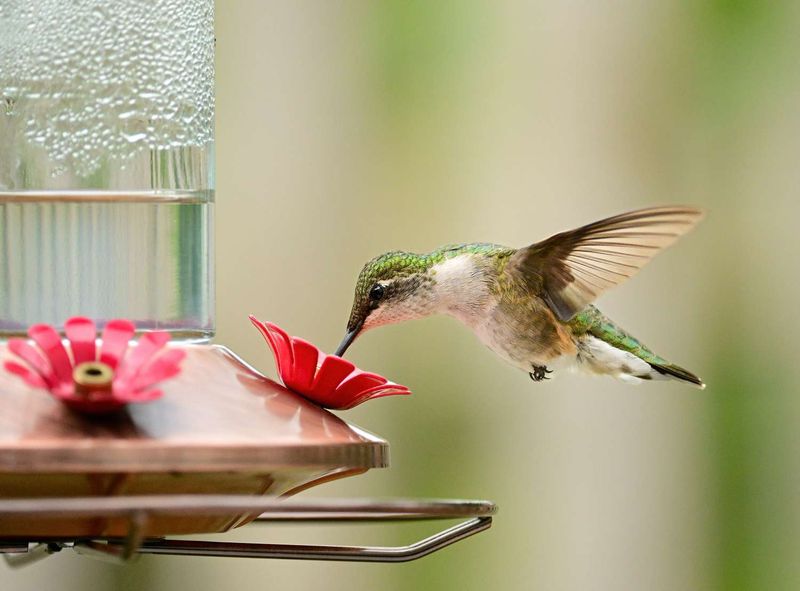
Feeder placement affects maintenance more than most people realize. A feeder hung in a spot that is awkward to reach, difficult to see clearly, or requires moving furniture to access is a feeder that tends to go longer between cleanings.
In Southern heat, that delay can turn safe nectar into a cloudy, fermented, or moldy liquid that may actually deter birds rather than attract them.
The nectar formula itself is straightforward: one part ordinary white granulated sugar dissolved in four parts water. University of Florida IFAS guidance advises against honey, artificial sweeteners, extra-sweet mixtures, and red food coloring, all of which either carry health risks for hummingbirds or are simply unnecessary.
The red parts of the feeder provide enough visual contrast without dye in the liquid.
In hot weather, nectar may need replacing daily or every other day rather than on a weekly schedule. Cloudy nectar, visible mold, or a sour smell requires immediate removal and a thorough cleaning before refilling.
Cornell Lab recommends following the feeder manufacturer’s cleaning instructions, rinsing extremely thoroughly, and never refilling a feeder that still contains residue or moisture. Different sources favor different cleaning agents, so the safest approach is to use what the manufacturer recommends and rinse until no trace remains.
Feeders supplement rather than replace natural food. Audubon notes that hummingbirds also rely on natural nectar and small insects for protein and other nutrients.
Native flowering plants suited to Florida or Texas conditions can make the yard more attractive year-round and reduce how much pressure falls on a single feeder to carry the whole food supply.
If visits stay low, look beyond the feeder’s location
After relocating the feeder to a visible, partially shaded spot with open approach space, checking for predator hazards and window risks, adding a second feeder to address territorial behavior, and keeping the nectar fresh, a reasonable next step is simply to wait. Discovery takes time.
A hummingbird that has not passed through your yard yet cannot visit a feeder it has not seen, and even birds that have used the feeder before may be temporarily absent due to migration timing, breeding behavior, or a shift in their home range.
Cornell Lab points out that seasonal population fluctuations and abundant natural flowers can reduce feeder visits even when the feeder is clean, well-placed, and stocked with fresh nectar. In parts of coastal Texas, hummingbirds may be present year-round in small numbers, while Florida’s warm-season window brings its own timing patterns that do not match a single national calendar.
Cornell also notes that local hummingbird numbers vary by region and season, so a quiet feeder in one yard may reflect local abundance rather than anything the caretaker did or did not do.
The practical action sequence is: move the feeder into visible partial shade with open approach space, remove or reduce predator and window hazards, make the location easy to maintain, and observe before making another change. A well-placed, well-maintained feeder creates the conditions for visits rather than guaranteeing them, and that distinction is worth holding onto when the wait feels long.
The goal is a safer, more usable feeding site; what the birds do with it is, ultimately, up to them.