
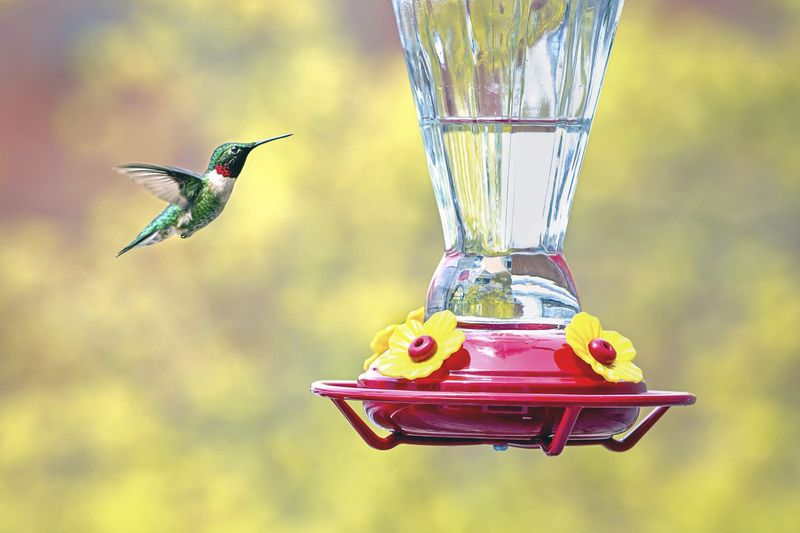
Plenty of Southern gardeners hang a feeder, fill it with sugar water, and then watch hummingbirds zip right past without stopping. Before you reach for a new ingredient or a fancier recipe, the fix is almost never about what is in the feeder.
Troubleshooting an ignored feeder comes down to freshness, placement, timing, and the yard around it – and understanding each piece can make a real difference.
The feeder does not need a secret ingredient
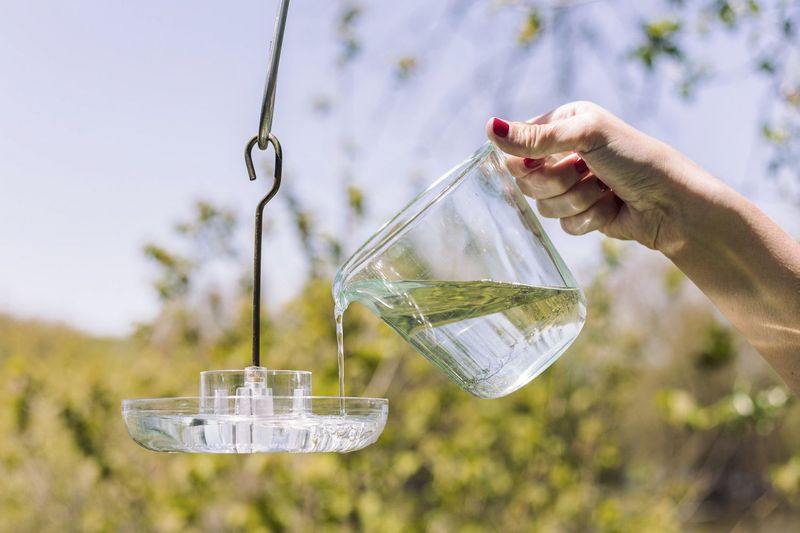
Somewhere along the way, the idea took hold that an untouched hummingbird feeder must need a better ingredient – something darker, sweeter, or more “natural” than plain sugar water. That assumption leads gardeners toward honey, brown sugar, molasses, maple syrup, fruit juice, sports drinks, and artificial sweeteners, none of which belong in a hummingbird feeder.
Cornell Lab of Ornithology guidance on feeding hummingbirds is direct on this point: refined white sugar dissolved in water is the right choice, and the alternatives are either risky or nutritionally useless.
Honey is a specific concern. When diluted and left in a warm feeder, it can encourage fungal and bacterial growth that harms the birds.
Artificial sweeteners provide no usable energy at all, since hummingbirds run on sucrose. Brown sugar, molasses, and similar products contain compounds that plain white sugar does not, and those extras are not appropriate for routine feeder nectar.
The recipe itself is simple: mix one part refined white sugar with four parts water. For a practical batch, that works out to one-quarter cup of sugar stirred into one cup of water, or one cup of sugar into four cups of water for a larger fill.
Boiling the water first helps the sugar dissolve completely; just let the solution cool to room temperature before pouring it into the feeder. Audubon’s hummingbird feeding FAQ confirms this standard ratio and advises against any coloring or additives.
Clear nectar, made correctly and kept fresh, is what the feeder actually needs.
Fresh nectar matters more than novelty
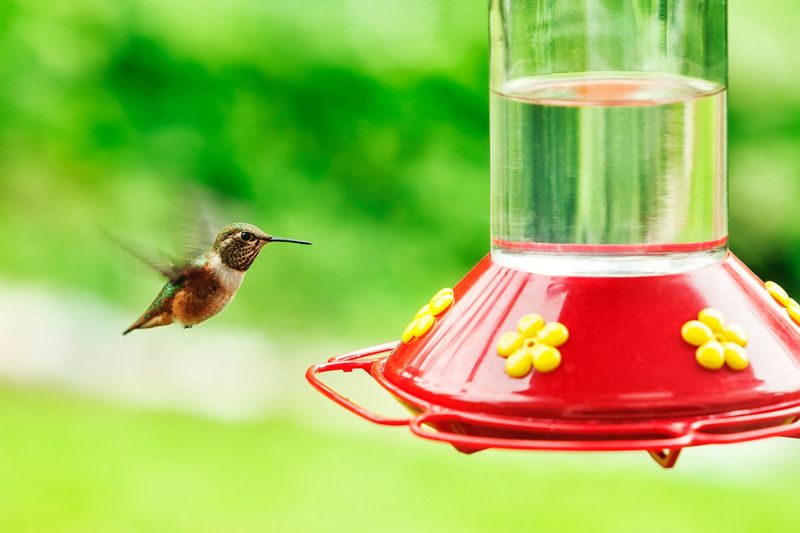
Getting the recipe right is only the beginning. A correctly made batch of nectar can still cause harm if it sits in the feeder too long, especially in the heat that Florida and Texas gardeners deal with for most of the year.
Change the nectar every two to three days during warm weather, and bump that schedule up to daily or every other day when temperatures climb into the upper 90s or beyond. Discard any batch that has turned cloudy, smells fermented, or shows any sign of mold – do not wait until the feeder is empty before refilling.
Cornell Lab’s hummingbird feeding guidance notes that heat accelerates bacterial growth in nectar, which is why Southern gardeners need to be especially diligent about turnover. Keeping the feeder in shade or partial shade slows spoilage and reduces how fast the liquid heats up.
A location sheltered from rain also helps, since rainwater dilutes the nectar and can carry contaminants through the ports.
Cleaning before every refill is non-negotiable. Scrub away any residue, biofilm, or mold from the reservoir, ports, and feeding perches, then rinse thoroughly before adding fresh nectar.
UF/IFAS guidance on hummingbirds in Florida and other extension sources differ slightly on whether hot water with vinegar, mild soap, or diluted bleach works best – the consistent message across all of them is to scrub well, rinse completely, and follow the feeder manufacturer’s instructions. Choose a feeder model that comes apart fully and has ports you can actually reach, so cleaning stays manageable rather than something to put off.
Why do hummingbirds pass a perfectly good feeder?
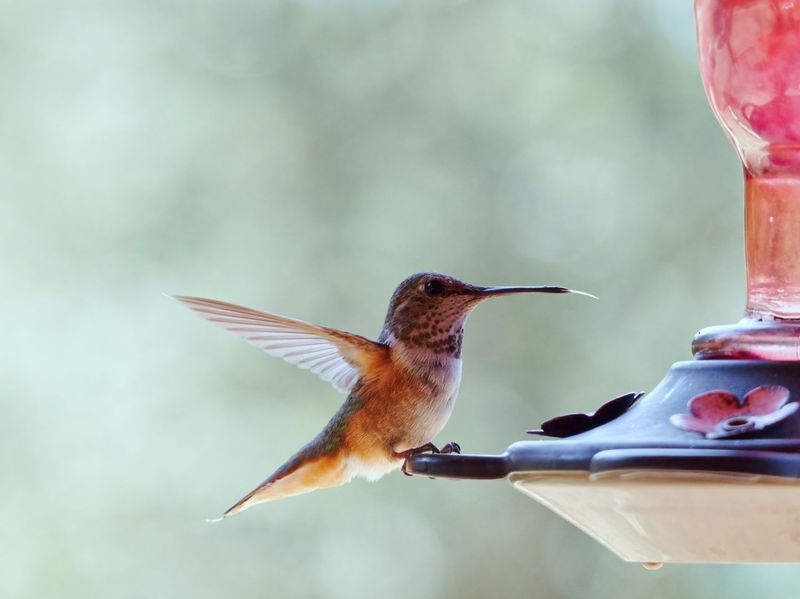
A clean feeder with fresh 1:4 nectar can still go untouched for days or weeks, and that does not mean anything is wrong with the recipe. Local conditions and timing often explain an ignored feeder far better than any ingredient swap would.
Audubon’s hummingbird FAQ makes clear that feeders can be discovered within minutes or passed over for weeks, depending on what else is happening in the yard and the surrounding area.
Migration timing is one of the biggest variables. In much of Texas, ruby-throated hummingbirds move through in pulses during spring and fall, with peak activity concentrated in certain weeks.
Florida gardeners may have birds present for longer stretches, but that still depends on local habitat and which species are moving through. If the feeder goes up before or after the local peak, it may simply sit there with no one around to find it.
Nearby natural blooms can also pull birds away from a feeder. When a neighbor’s trumpet vine or a roadside stand of coral honeysuckle is in full flower, hummingbirds may prefer those sources and ignore a feeder entirely.
Insects clogging the ports are another overlooked problem – ants, bees, or wasps can block access or make the feeder unappealing. Territorial behavior adds another layer: one dominant bird may be chasing others away so effectively that the feeder appears unused when it is actually being controlled.
None of these situations require a new filling, just a clearer look at what is actually going on in the yard.
Make the feeder easy to discover without coloring the nectar
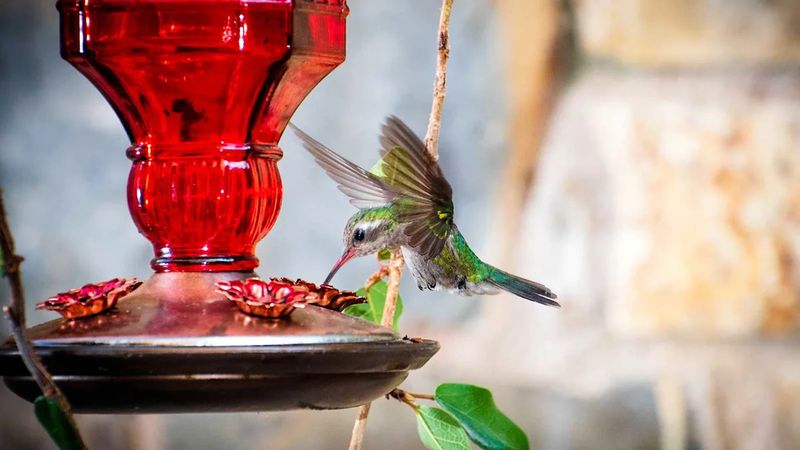
Placement and visual cues do more for discovery than any additive in the liquid. Hummingbirds scan for color as they move through a yard, and red or orange feeder parts act as a signal that something worth investigating is nearby.
Positioning the feeder close to – but not buried inside – clusters of red, orange, or pink tubular flowers gives birds two reasons to approach: familiar bloom shapes and a clearly visible feeder waiting beside them.
Audubon’s look at hummingbird color attraction and dye safety explains that the pull toward red and bright colors is at least partly learned – birds associate those colors with nectar sources over time, not because red liquid is inherently superior. Adding red food coloring to the nectar is unnecessary and potentially harmful, and Cornell Lab’s guidance on red dye in hummingbird food agrees: skip the dye entirely and let the feeder’s own color and the surrounding flowers do the visual work.
Shade and rain protection matter for discovery too, but not in an obvious way. A feeder tucked under dense foliage may be cooler but harder to spot from a distance.
Aim for a shaded spot that still has a clear sightline from above or across the yard, and keep the feeder clean enough that its red or orange parts stay bright rather than faded or coated in grime. Audubon’s feeding FAQ suggests placing the feeder near tubular flowers when first introducing it, which gives a newly arriving bird multiple cues pointing to the same spot.
None of these steps guarantee a visit, but they improve the odds that a passing bird will notice what is there.
A dominant bird can hide the real problem
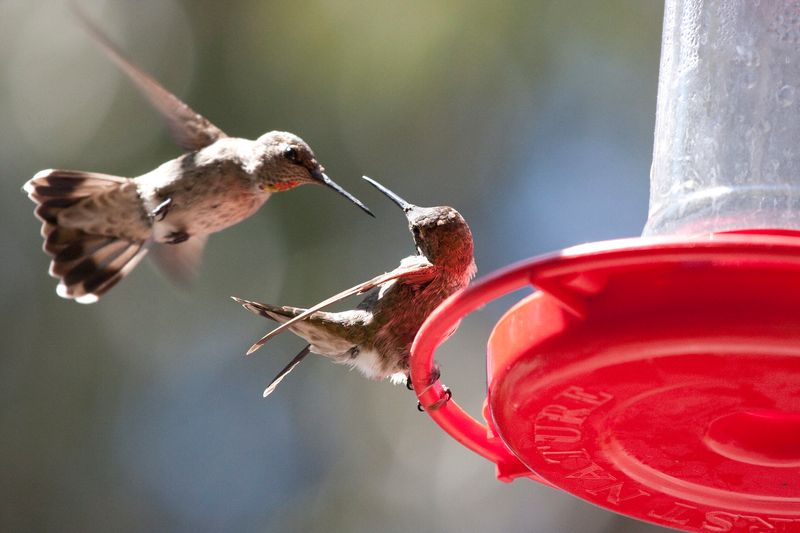
Sometimes the feeder is not being ignored – it is being controlled. Hummingbirds are famously territorial, and a single dominant bird, often a male, may spend more energy chasing rivals away than actually drinking.
From inside the house, this looks like an untouched feeder. Outside, a resident bird is doing laps around the yard to keep every other hummingbird at a distance.
Texas Parks and Wildlife information on the ruby-throated hummingbird notes that territorial behavior is a consistent part of how these birds operate, particularly around reliable food sources. The practical fix is to add a second feeder positioned out of the first bird’s line of sight.
A dominant bird can realistically guard one station, but guarding two that it cannot see simultaneously is much harder.
Spacing feeders at least 10 feet apart is a reasonable starting point, though many yards benefit from placing them farther apart or around a corner, behind a shrub, or on a separate side of the house entirely. The goal is to break the sightline so the territorial bird cannot patrol both locations at once.
Adding a third feeder in a third location can open up access even further. None of this changes the recipe or the feeder itself – it addresses the real bottleneck, which is access rather than attraction.
Sugar water is only one part of a hummingbird yard
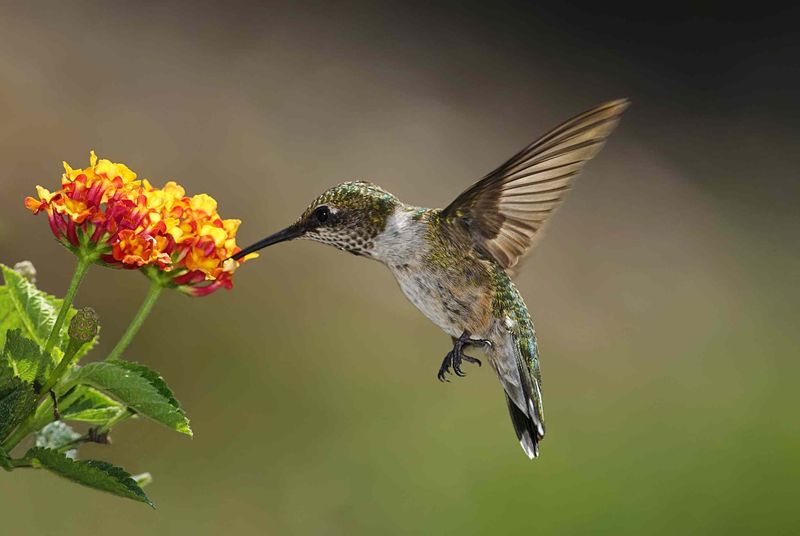
A feeder supplies quick energy, but it does not come close to everything a hummingbird needs to survive and thrive. Cornell Lab’s life history account for the broad-tailed hummingbird describes how hummingbirds hunt small insects and spiders for protein and other nutrients that nectar simply cannot provide.
A yard with only a feeder is like a gas station with no grocery store – it covers fuel but nothing else.
Pesticide use is one of the quieter threats to a hummingbird-friendly yard. Broad-spectrum insecticides reduce the insect populations that hummingbirds depend on for protein, and birds that forage in treated areas may be exposed to chemicals directly.
Where possible, cutting back on pesticide use and allowing some areas of the yard to support natural insect life gives hummingbirds a more complete food supply alongside the feeder.
Native or well-adapted nectar plants add another layer of support beyond what sugar water alone provides. They offer natural nectar with varying sugar concentrations, physical perches for resting between feeding bouts, shelter from predators, and nesting material in some cases.
Audubon’s guide to creating a hummingbird-friendly yard describes habitat as providing more complete resources than a feeder alone, while stopping short of promising that any combination of plants and feeders will guarantee visits. That framing is exactly right: these additions make the yard more suitable, not irresistible.
Perches near the feeder, some shrub cover, and a mix of blooming plants across seasons give hummingbirds more reasons to stay once they arrive, but local abundance and migration patterns still set the ceiling on how many birds show up.
Build the Southern invitation around your site
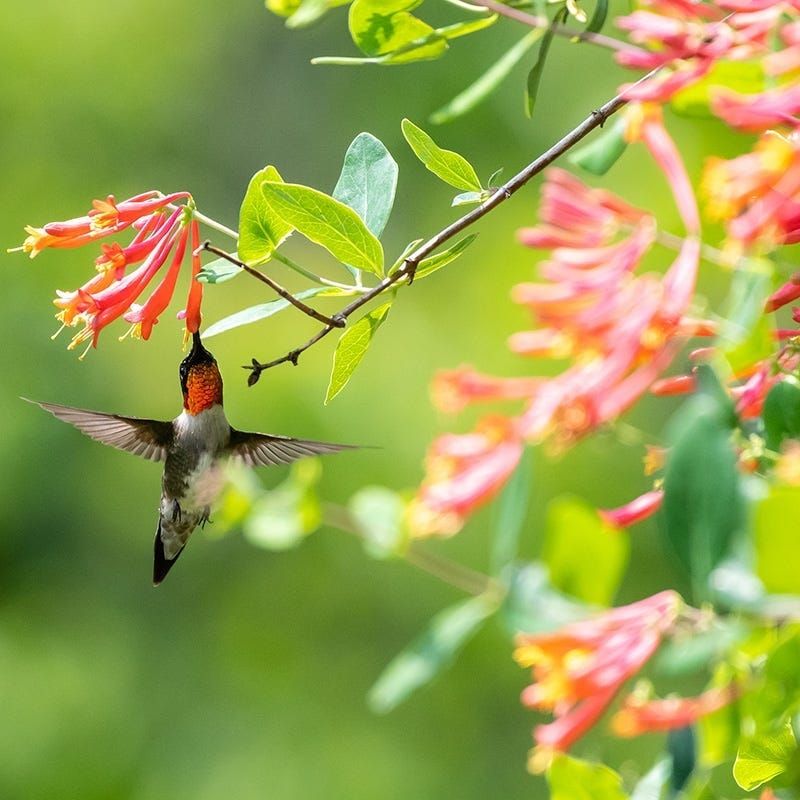
Plant choices matter most when they actually suit the site. A Texas gardener working with thin, alkaline soil in full sun is looking at a very different plant palette than a Florida gardener dealing with sandy coastal soil and afternoon humidity.
Texas Parks and Wildlife’s guide to selected food plants for Texas hummingbirds lists autumn sage, flame acanthus, coral honeysuckle, Turk’s cap, native hibiscus, crossvine, trumpet vine, lantana, and yellow bells as plants with a track record of supporting hummingbirds in Texas conditions. Each of those still needs to be matched to the specific sun exposure, soil type, and moisture level of the planting spot – a plant that thrives in the Hill Country may struggle in Houston’s clay and humidity.
UF/IFAS guidance on hummingbirds in Florida recommends groupings of red, orange, or pink tubular flowers and highlights site-adapted choices over generic recommendations. Firebush is one Florida native with red tubular flowers that works well in many parts of the state, though it still requires the right light and drainage conditions to perform.
Planting in clusters rather than scattering individual plants makes blooms more visible from a distance and gives hummingbirds a more rewarding stop.
Water is another piece that often gets overlooked. Hummingbirds are more likely to interact with a mister, a dripper aimed at leaves, or a very shallow basin with moving water than a standard deep birdbath.
Audubon’s hummingbird yard guide recommends shallow, clean moving water as the appropriate option, noting that hummingbirds bathe by flying through mist or rubbing against wet foliage. Keep any water feature clean and shallow, and change the water frequently in warm weather to prevent mosquito breeding.
These additions may make the yard more appealing to passing birds, but site-matching every element to actual local conditions is what determines whether they take hold.
Keep the recipe simple and give the yard time
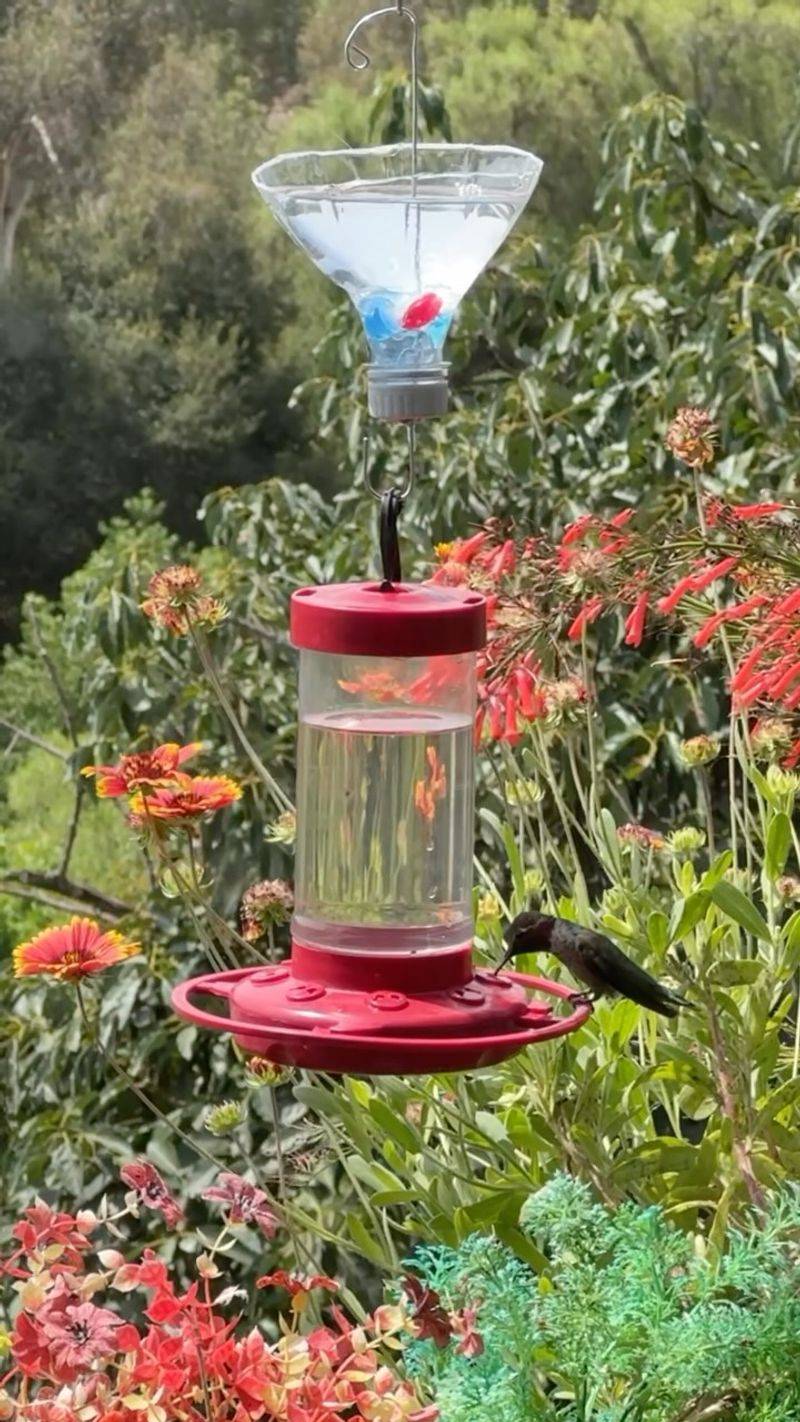
When a feeder has been sitting untouched, the practical rescue sequence is straightforward: empty and scrub the feeder, refill with fresh 1:4 nectar, move it to a shaded spot with a clear sightline near some tubular blooms, and check whether one territorial bird may be controlling access. Add suitable plants and a shallow water source as the yard allows, and keep up the maintenance schedule regardless of whether visits have started yet.
Audubon’s hummingbird feeding FAQ is clear that some feeders attract birds within minutes while others go weeks without a visitor, and that migration timing and local hummingbird abundance shape those outcomes more than any single yard adjustment. Audubon’s habitat guidance reinforces that feeders work best as part of a yard that also offers natural food, cover, and water.
The best answer to an ignored feeder is better maintenance and a more complete habitat – not a novelty ingredient. A yard that supports hummingbirds well is one worth visiting; whether birds arrive on your schedule is a different matter entirely.