
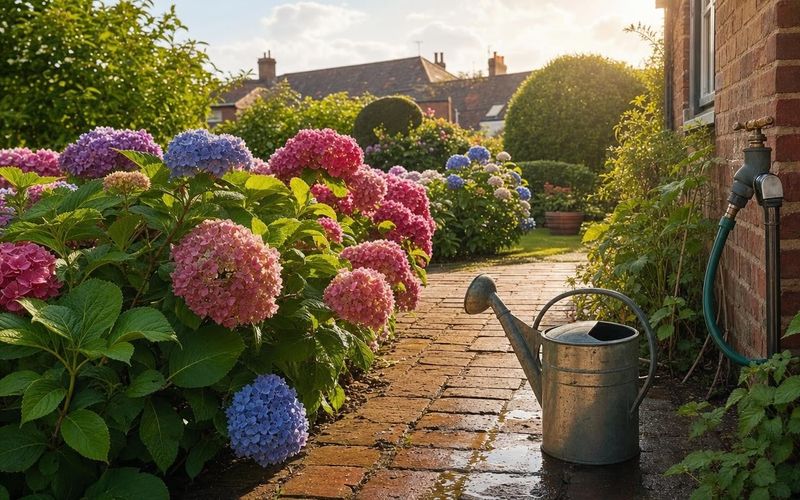
If your hydrangeas droop like wet socks every afternoon, you might assume you’re watering them at the wrong time. The truth is a little more complicated, and understanding it can save you from making the problem worse.
Afternoon wilting in hydrangeas is common in the South, and the fix depends on what’s actually happening at the root zone, not just on the clock.
Afternoon wilt does not prove you watered wrong
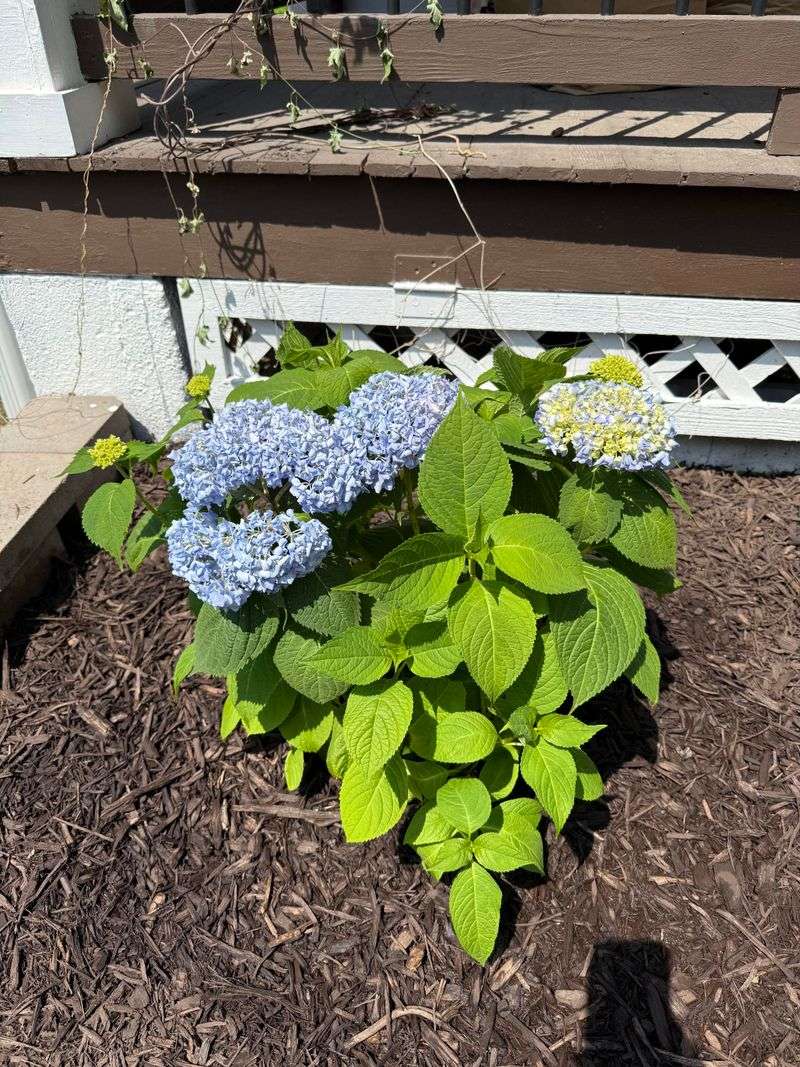
Walk outside at 2 p.m. on a July afternoon in Georgia or Texas, and a drooping hydrangea looks like an emergency. Before you drag out the hose, though, consider that the plant may not actually need more water at that moment.
Large hydrangea leaves lose moisture to the air faster than roots can pull it up from the soil during intense heat, and that mismatch causes wilting even when the root zone is perfectly moist.
According to University of Maryland Extension guidance on hydrangea problems, afternoon wilting can occur even when the soil remains adequately moist, and a plant that firms up by morning and sits in moist soil likely does not need additional irrigation. Overnight recovery paired with a moist root zone points toward heat and exposure as the more probable explanation, not a watering-timing mistake.
That said, afternoon wilt is a symptom, not a complete diagnosis. Genuinely dry soil, poor drainage, root damage, and disease can all cause the same drooping appearance.
The goal of this guide is to help you figure out which situation you are actually facing, so you can respond in a way that helps the plant rather than adding stress to it.
Bigleaf hydrangeas struggle most in hot afternoon exposure
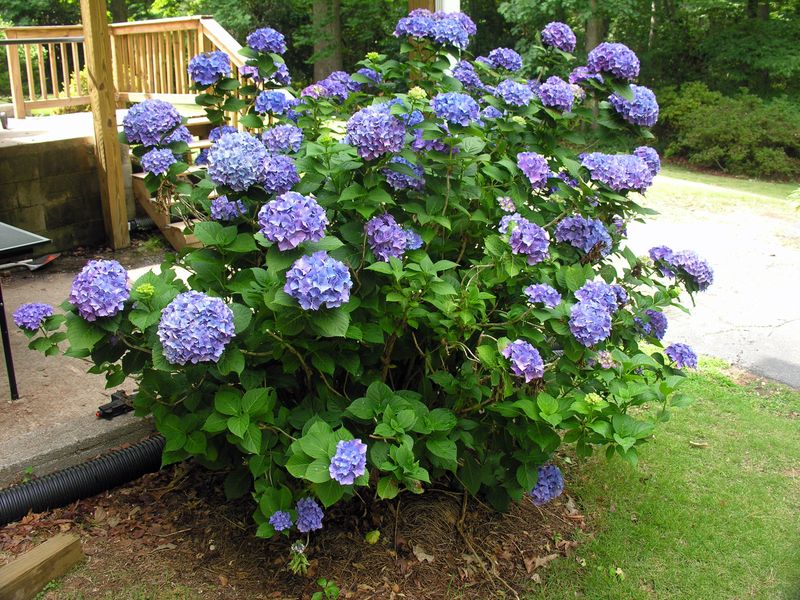
Not every hydrangea reacts to Southern summer heat the same way. Bigleaf hydrangeas (Hydrangea macrophylla), the classic mopheads and lacecaps common in Southern yards, are particularly sensitive to hot, exposed conditions.
UGA Cooperative Extension’s guide to growing bigleaf hydrangea notes that this species performs best in morning sun with afternoon shade and consistently moist, well-drained soil. Put one in a west-facing bed that bakes from noon onward, and afternoon wilt becomes almost predictable regardless of how carefully you water.
Wind makes things worse. A breezy, exposed location pulls moisture from leaves even faster, shortening the window before wilt sets in on hot days.
Newly planted shrubs are especially vulnerable because their root systems haven’t spread enough to keep up with the water demand of the foliage above.
Panicle hydrangeas (Hydrangea paniculata), by contrast, tolerate considerably more sun and heat than bigleaf types, and the same afternoon droop is far less common with them. University of Maryland Extension points out that species and cultivar differences are meaningful, so advice that fits a bigleaf hydrangea in a shaded Charlotte bed may not apply to a panicle hydrangea in a sunny San Antonio landscape.
Knowing which type you are growing is the first step toward understanding why it wilts and what, if anything, needs to change.
Check the root-zone soil before you reach for the hose
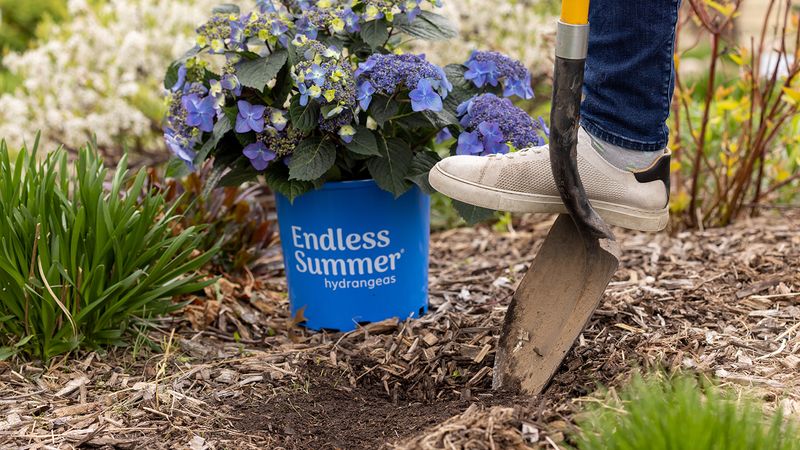
The most reliable piece of information you can gather about a wilting hydrangea has nothing to do with the time of day you last watered. Push your finger or a hand trowel into the soil several inches down, near the plant’s root zone but not pressed directly against the stem.
What you find there tells you far more than the appearance of the leaves.
UGA Extension guidance on watering frequency recommends checking the root zone and irrigating when the soil is dry several inches below the surface rather than following a fixed daily schedule. If the soil at that depth feels cool and slightly moist, the plant may simply be responding to heat, and adding water could push a moist root zone toward saturation.
UGA’s DeKalb County newsletter similarly advises digging around the root zone to assess moisture before irrigating during heat waves.
Maryland Extension reinforces the same principle: judge irrigation need by root-zone moisture, not by afternoon leaf appearance alone. The practical decision rule is straightforward.
Water when the soil is beginning to dry out at root depth. Hold off when it still feels adequately moist.
And if the soil is soggy or waterlogged, do not add water at all, because that condition can damage roots and worsen the wilt you are trying to solve.
Use early morning as the routine watering window
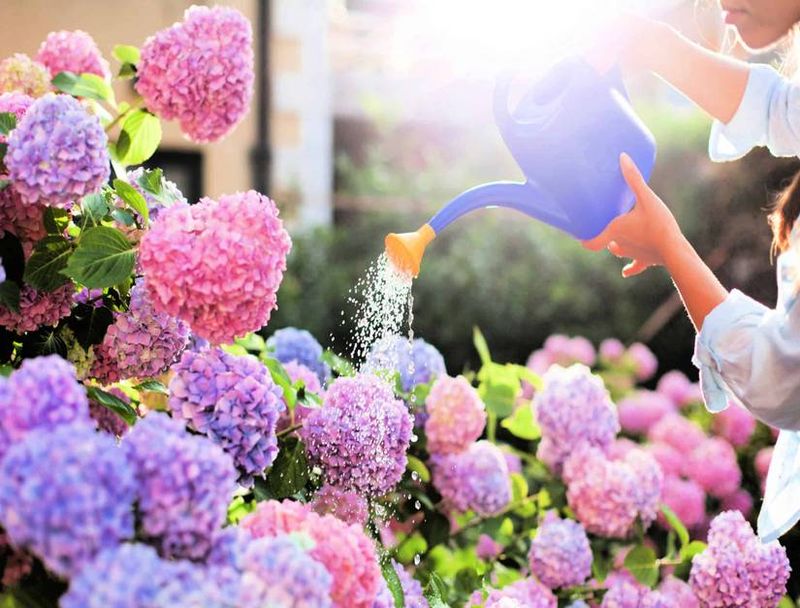
Early morning is the best default window for routine hydrangea irrigation, and the reason is practical rather than arbitrary. Watering before temperatures climb gives roots access to moisture right when the plant needs it most, before peak heat arrives.
Foliage that gets wet during irrigation also has hours of daylight to dry out, which matters for disease prevention.
UGA’s Best Management Practices in the Landscape identifies early morning as the preferred irrigation timing for exactly these reasons: reduced evaporation loss and time for leaves to dry before nightfall. Keeping foliage dry is particularly relevant for bigleaf hydrangeas, which are susceptible to several fungal leaf diseases that thrive in prolonged wet conditions, as noted by Penn State Extension’s guide to hydrangea diseases.
Morning timing also cannot compensate for underlying soil problems. A compacted bed, a poorly draining site, or a root zone that never fully dried out will cause trouble regardless of when you turn on the hose.
And morning is a preferred routine, not a rigid rule. UF/IFAS guidance on efficient irrigation notes that during severe heat, checking plants in the morning or evening is wise, and a plant whose root zone is genuinely dry during an intense heat event may need water when the problem is discovered rather than waiting until the next morning.
The goal is a healthy root zone, not perfect clock discipline.
Deep watering supports roots better than shallow sprinkling
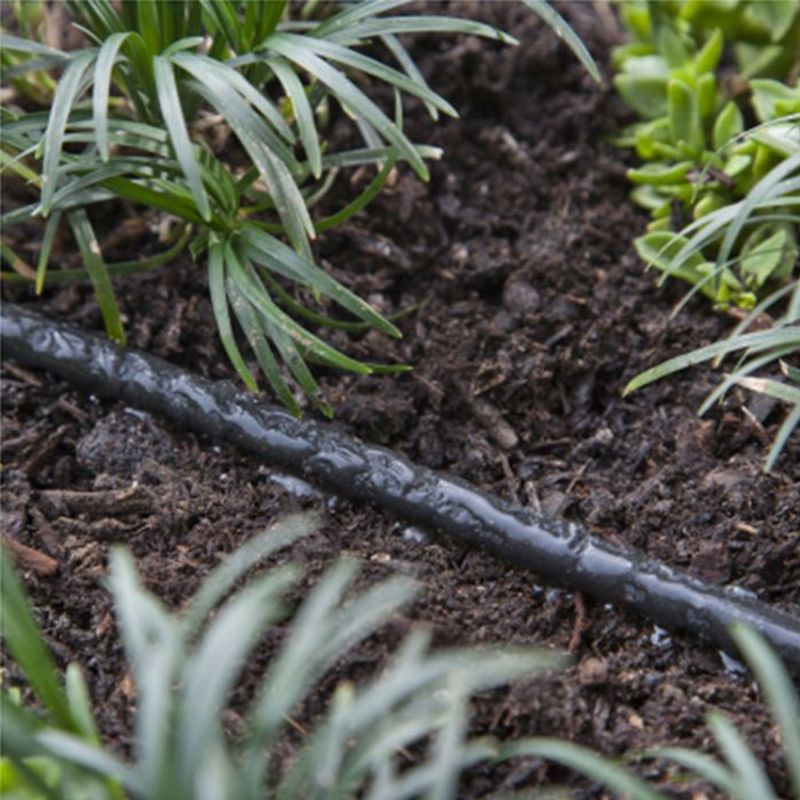
Once you have confirmed that the root zone is actually drying out and irrigation is needed, how you apply the water matters as much as when. The goal is to move moisture down to where the roots are, and that requires slow, thorough application at the base of the plant rather than a quick spray across the surface.
Texas A&M AgriLife Extension’s Earth-Kind water efficiency guidance recommends deep soaking over light daily applications, explaining that frequent shallow sprinkling wets only the uppermost inches of soil and encourages roots to stay near the surface rather than growing deeper. Shallow roots make a plant more vulnerable during dry spells because they are the first zone to dry out.
A soaker hose or drip system laid at the soil line is an effective and practical option for hydrangeas. Both methods deliver water directly to the root zone with minimal foliage wetting, which also helps reduce leaf-disease risk.
University of Maryland Extension similarly recommends soil-line irrigation over routine overhead sprinkling, particularly when leaf-spot problems are present. How long to run the water depends on your soil type, the irrigation output, and the plant’s size, so resist any fixed number of minutes or gallons as a universal answer.
Instead, check the root zone after watering to confirm that moisture has penetrated several inches down.
Site conditions determine how often the soil dries
Hydrangeas growing in different spots across the same yard can have completely different watering needs, even if they are the same variety. A shrub in partial shade with heavy clay soil holds moisture far longer than one planted in a full-sun bed with sandy loam and a breeze coming through.
Checking the root zone rather than following a fixed daily schedule is the only way to account for that variation.
Newly planted hydrangeas deserve particular attention. Their root systems are still confined close to the original root ball, which means they cannot draw from a wide area of soil yet and dry out more quickly than an established shrub.
Container hydrangeas face similar pressure because the limited soil volume in a pot heats up faster and loses moisture faster than an in-ground bed. UGA Extension emphasizes that watering frequency depends on plant size, soil, drainage, weather, wind, sun exposure, and establishment status rather than a universal schedule.
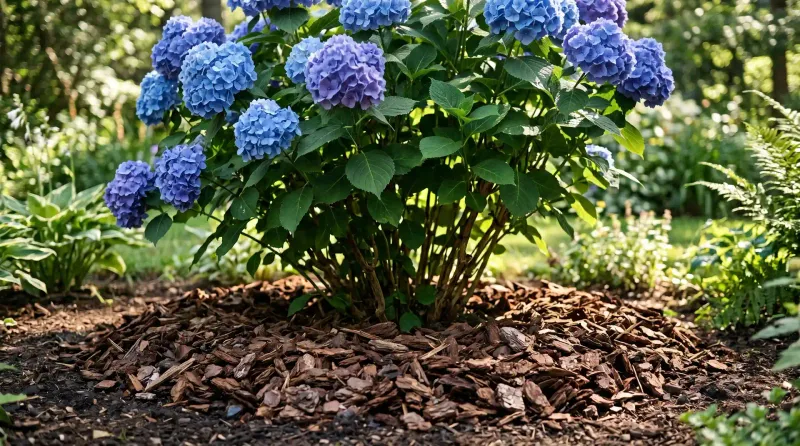
Organic mulch is one of the most practical tools for moderating how fast the root zone dries out. UGA’s bigleaf hydrangea guide recommends roughly 3 to 5 inches of organic mulch to conserve soil moisture and keep root-zone temperatures cooler during summer heat.
Pull the mulch back an inch or two from the base of the stem to avoid trapping moisture against the wood, which can encourage rot. Shrubs growing under large trees face the added challenge of root competition for water and may need more frequent monitoring during dry stretches.
Soggy soil can cause the same wilt you are trying to fix
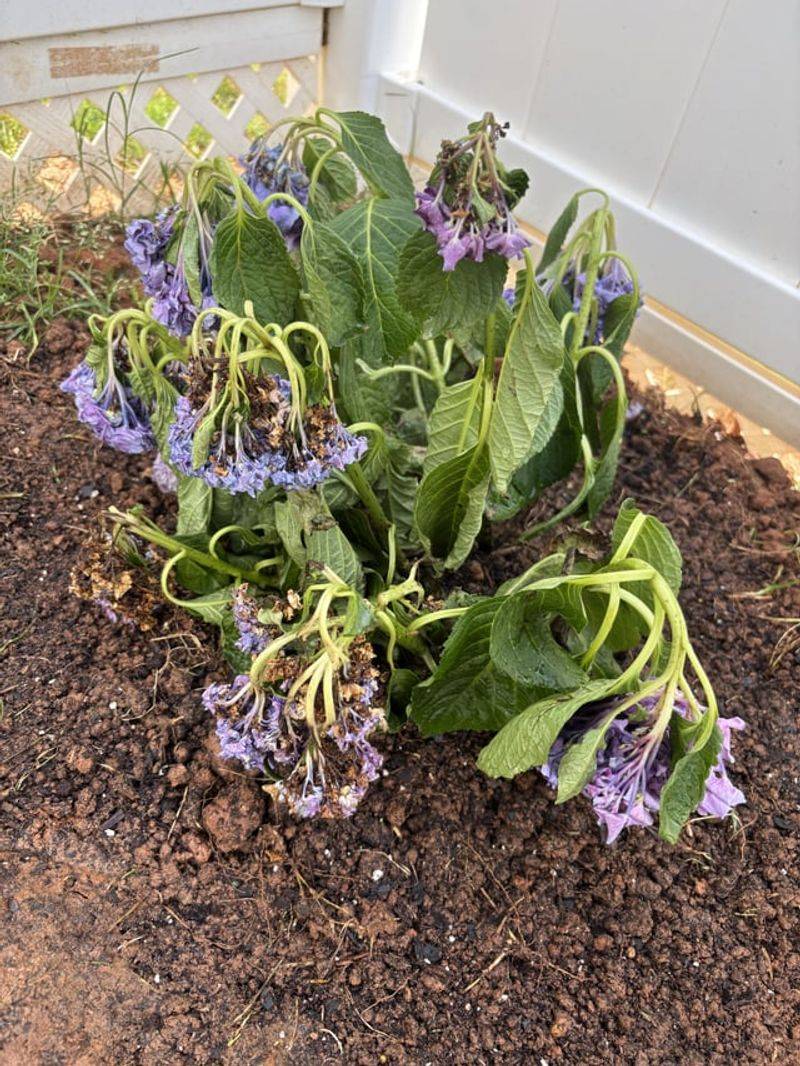
Pouring more water onto a wilting hydrangea feels like the obvious response, but it can make things considerably worse when the real problem is too much moisture rather than too little. Saturated soil squeezes out the oxygen that roots need to function.
When roots are deprived of oxygen for extended periods, they begin to break down, losing their ability to absorb water even as the soil around them stays wet. The result looks identical to drought stress: drooping leaves, flagging stems, and a plant that does not perk back up.
Texas A&M AgriLife’s water efficiency guidance notes that overwatering is a common cause of plant decline and that its symptoms can mirror those of underwatering. UF/IFAS irrigation guidance similarly warns that overwatering can produce symptoms similar to underwatering, a point especially relevant in Florida and other parts of the South where heavy summer rains can saturate beds that already drain slowly.
Before increasing irrigation on a wilting plant, press your hand into the soil several inches down. If it feels wet or you can squeeze water from a handful, the plant does not need more water.
University of Maryland Extension advises inspecting drainage and root-zone conditions before adjusting irrigation frequency. A bed that stays soggy after rain likely needs a drainage solution, such as amending the soil with organic matter or relocating the plant, rather than a change in watering schedule.
Persistent wilt requires a broader diagnosis
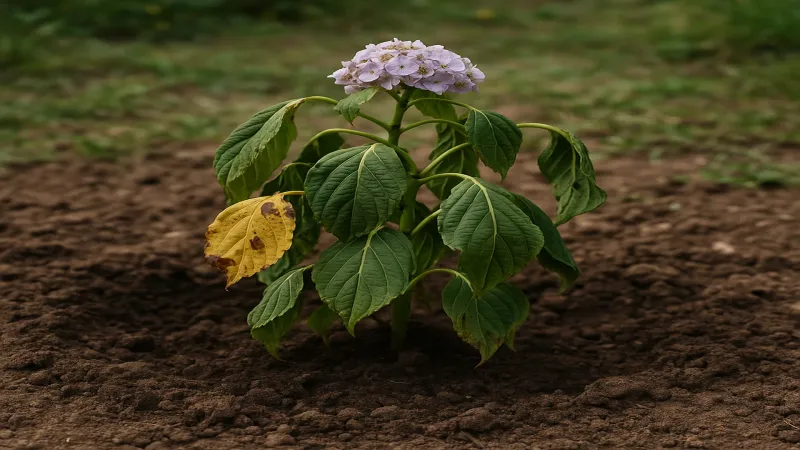
A hydrangea that droops at 3 p.m. and stands up straight by the next morning is behaving differently from one that stays limp through the night, develops brown or crispy edges along the leaves, or begins to decline one branch at a time. That distinction matters because overnight recovery strongly suggests heat or exposure stress, while persistent wilt points toward a problem that extra water or a different watering schedule will not solve.
University of Maryland Extension’s resource on drought and excessive heat stress explains that plants failing to recover from wilt after temperatures drop may be dealing with root damage, disease, or site problems rather than simple heat response. Penn State Extension’s hydrangea disease guide identifies fungal diseases including Botrytis blight and Cercospora leaf spot as conditions that can cause dieback and decline that resembles drought stress from a distance.
Transplant stress is another common culprit in newly planted shrubs. A hydrangea moved or planted within the past season may have root damage that limits water uptake even when the surrounding soil is moist.
Poor drainage, compacted soil, and competition from nearby tree roots can all contribute as well. Maryland Extension’s hydrangea problem guide lists root rot, disease, pests, and unsuitable exposure as conditions that warrant investigation when wilt is persistent or accompanied by other symptoms.
If your plant is not recovering overnight, start by examining drainage, roots, and foliage for signs of disease or physical damage before adjusting irrigation.
Follow the soil, not a rigid watering clock
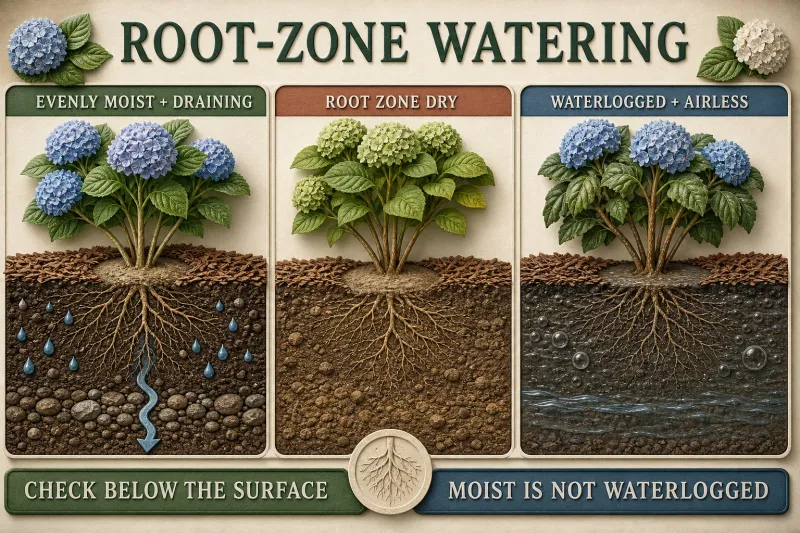
A workable routine for Southern hydrangea care comes down to a short sequence. Check the root zone soil several inches down before deciding whether to water.
If the soil is beginning to dry at that depth and the plant genuinely needs moisture, apply water slowly and thoroughly at the base until you are confident it has reached the root zone. Make early morning your normal window for that irrigation so the plant has moisture available before the hottest part of the day and foliage can dry before nightfall.
UGA Extension’s watering guidance and UGA’s Best Management Practices in the Landscape both support soil-moisture monitoring over fixed schedules, and Maryland Extension’s hydrangea guidance reinforces that afternoon appearance alone is not a reliable irrigation trigger. If your plant droops at midday but recovers by morning and the soil is moist, heat and exposure are the likely explanation, and the answer may be shade, mulch, or a better-suited planting spot rather than more water.
When wilt persists overnight, the soil stays soggy, or the plant shows crispy margins and branch-by-branch decline, investigate drainage, roots, disease, and site conditions before reaching for the hose again. Shifting your watering to 7 a.m. is a sensible habit, but it cannot substitute for what the soil is actually telling you.