
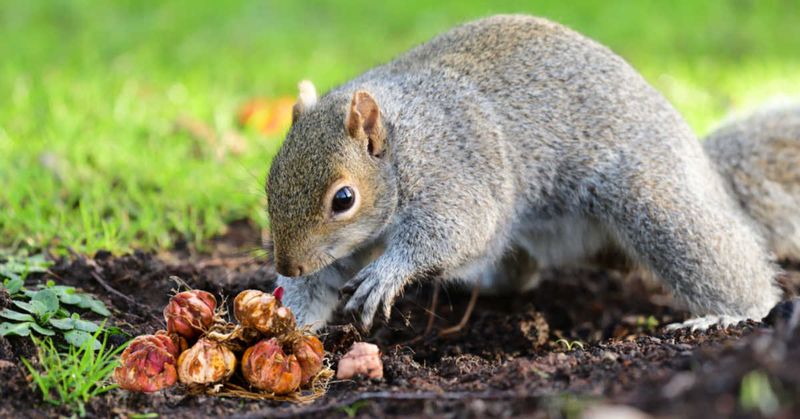
You spend a weekend tucking tulip and crocus bulbs into freshly turned soil, then walk out a few days later to find the bed ripped apart and the bulbs gone. Before you blame the squirrels, the real picture is a little more complicated, and the fix is more practical than most gardening advice lets on.
A firmly secured metal-mesh barrier placed over the bed right after planting is the most dependable first step you can take, and this guide walks you through exactly how to use it.
Missing bulbs do not identify the culprit
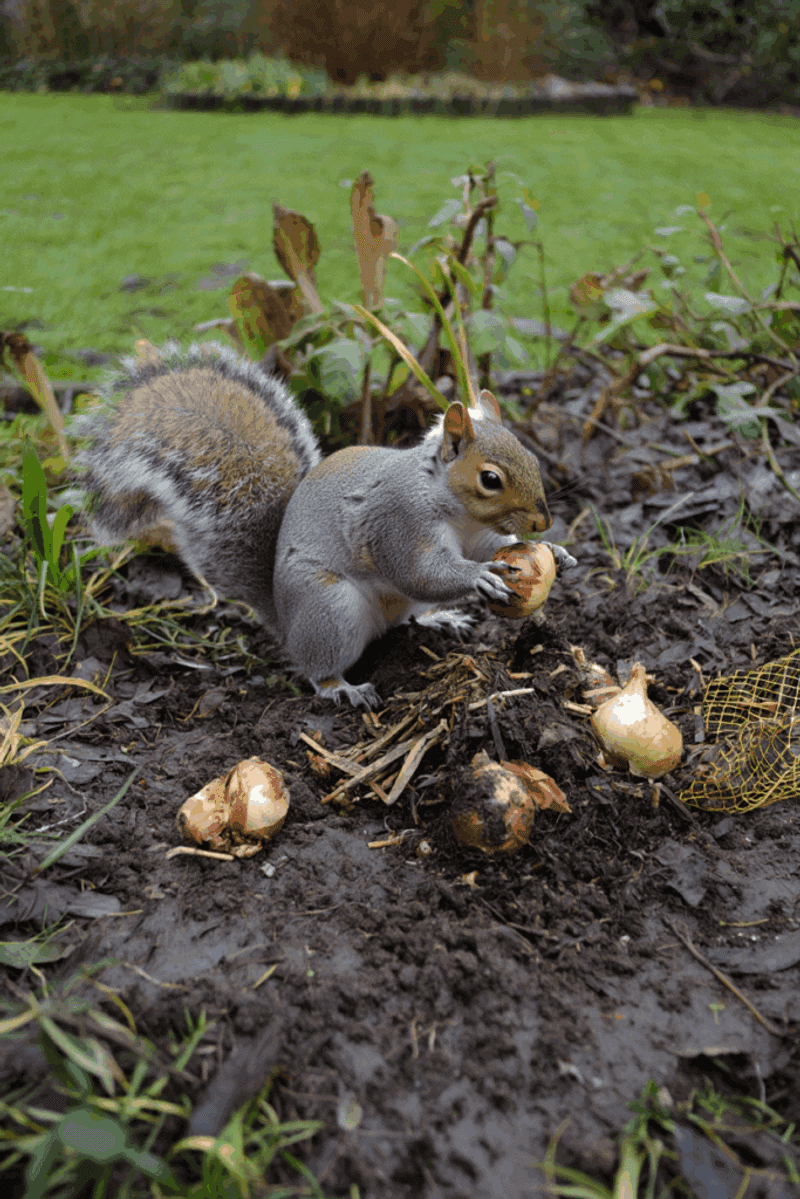
Freshly disturbed soil and a bed full of holes can feel like an open-and-shut case, but the list of animals that dig up or consume newly planted bulbs is longer than most gardeners expect. Squirrels may carry bulbs away from the planting site entirely, leaving little behind except an empty hole and loose soil.
Voles and mice, by contrast, tend to eat bulbs in place, so you might find a gnawed remnant sitting right where you planted it.
Skunks and raccoons can tear up a bed while hunting for grubs or earthworms, with no interest in the bulbs at all. Chipmunks, rabbits, ground squirrels, and even birds can also disturb or consume freshly planted material.
Utah State University Extension wildlife guidance notes that tracks, digging patterns, and gnaw marks are more reliable clues than the simple fact that bulbs went missing.
Look at how the damage is distributed. A single excavated hole with no other disturbance points to a different animal than a bed that has been systematically turned over in rows.
Checking the soil surface for paw prints after a light rain, or placing a thin layer of sand around the bed to capture impressions, can help narrow the field. Identifying the likely culprit helps you size your mesh correctly, but a bed-scale barrier is worth installing regardless, because it protects the planting whether you ever confirm the animal or not.
Use exclusion as the practical first-line defense
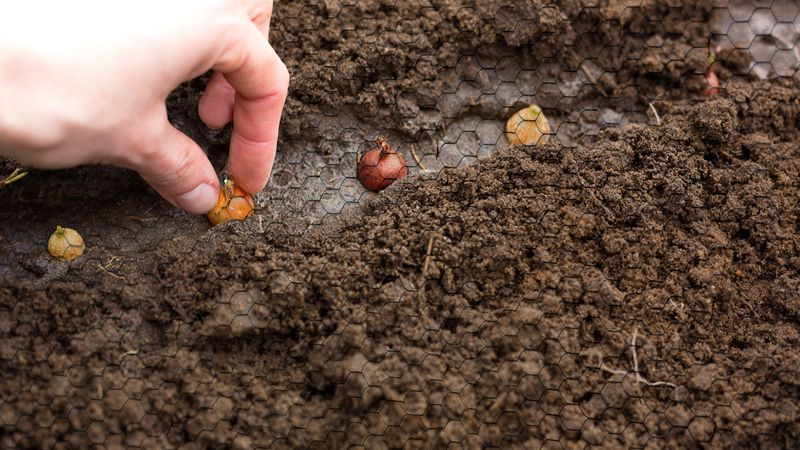
A firmly secured metal-mesh cover placed over a newly planted bulb bed is the most practical first-line measure available to home gardeners. The goal is straightforward: block animals from reaching the disturbed soil where bulbs are located during the period when the bed is most vulnerable.
That is a different goal from squirrel-proofing an entire yard, and keeping the two goals separate helps set realistic expectations.
Scent and taste products can lose effectiveness quickly after rain or regular irrigation, which is a real limitation in Southern gardens where watering schedules are frequent. University of Maryland Extension describes physical barriers as more dependable than repellents for protecting bulb beds, and University of Minnesota Extension similarly notes that exclusion tends to outlast scent-based products in practical garden settings.
Physical barriers have their own limits. Animals can exploit gaps, dig around unsecured edges, lift loose material, or acclimate to deterrents over time.
Presenting exclusion as a practical measure rather than an absolute guarantee is honest and useful. A well-installed, properly anchored mesh cover that stays in place while the soil remains disturbed can significantly reduce the chance of losing a freshly planted bed, which is exactly what most gardeners need.
Install and anchor the cover immediately after planting
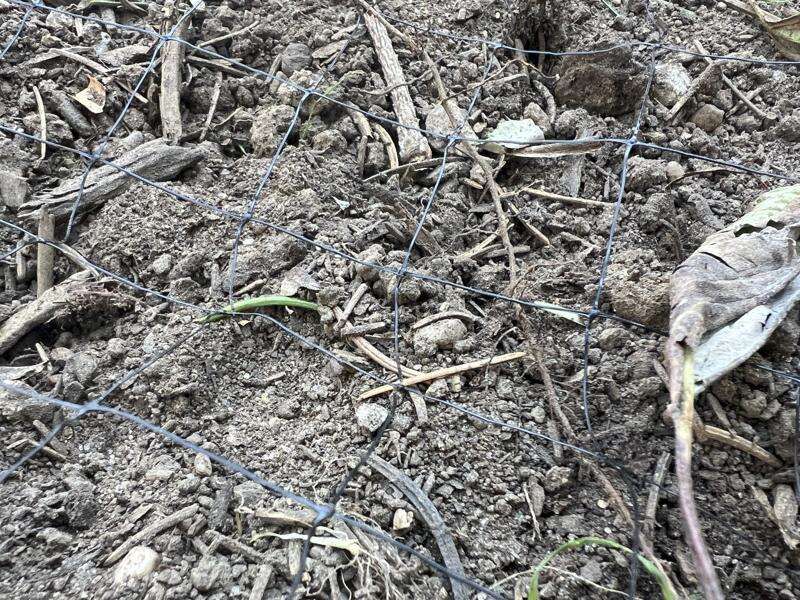
Timing the installation matters as much as the method. The period immediately after planting is when the soil is freshest, the scent of disturbed earth is strongest, and the bulb locations are easiest for animals to detect and excavate.
Getting the cover in place before that first disturbance is the most effective move you can make.
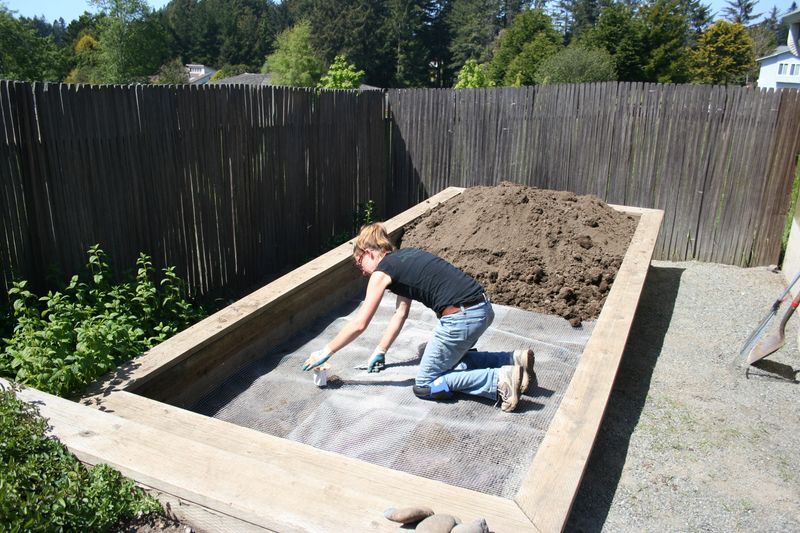
University of Maryland Extension recommends covering the bed with chicken wire and extending it at least one foot beyond the flower-bed edge, then covering the wire with a thin layer of soil so it stays in place. Wisconsin Horticulture Extension describes spreading poultry wire just under the soil surface as a practical option for discouraging digging in a newly planted bed.
Whichever placement you choose, securing every exposed edge is non-negotiable. Loose mesh that animals can lift or shift provides little real protection.
Use landscape staples pressed firmly into the soil along the perimeter, supplement with stakes, and add rocks or bricks along any edge that staples alone may not hold. Wisconsin Horticulture Extension specifically recommends weighting chicken wire with rocks or bricks to prevent animals from pulling it up.
A cover that can be nudged aside is not a barrier, so take the extra few minutes to anchor it thoroughly before stepping away from the bed.
Match the mesh to the animal and the planting scale
Chicken wire and hardware cloth are both metal mesh, but they are not interchangeable for every situation. The opening size makes a meaningful difference depending on which animals are active in your yard.
Roughly 1-inch poultry wire works reasonably well as a bed-scale deterrent against squirrel excavation, but smaller animals like mice, voles, and chipmunks can pass through those openings without difficulty.
When smaller burrowing rodents are the concern, Illinois Extension recommends a cage made from approximately half-inch mesh screen, buried at the correct planting depth so that roots and emerging shoots can grow through while rodents cannot chew through the sides. Quarter-inch hardware cloth offers even more protection but can be harder to install and less flexible for covering an irregularly shaped bed.
For individual bulbs or small clusters, a buried cage is often the most practical approach.
One material to avoid is loose plastic garden netting. Illinois Extension cautions that plastic mesh can entangle wildlife, including snakes and birds, in ways that rigid metal mesh typically does not.
Rigid chicken wire or hardware cloth avoids that risk and holds its shape better over a season. University of Maryland Extension also points to rigid metal barriers as the more reliable choice for protecting bulb beds from wildlife pressure.
Keep the barrier secured while the soil remains vulnerable
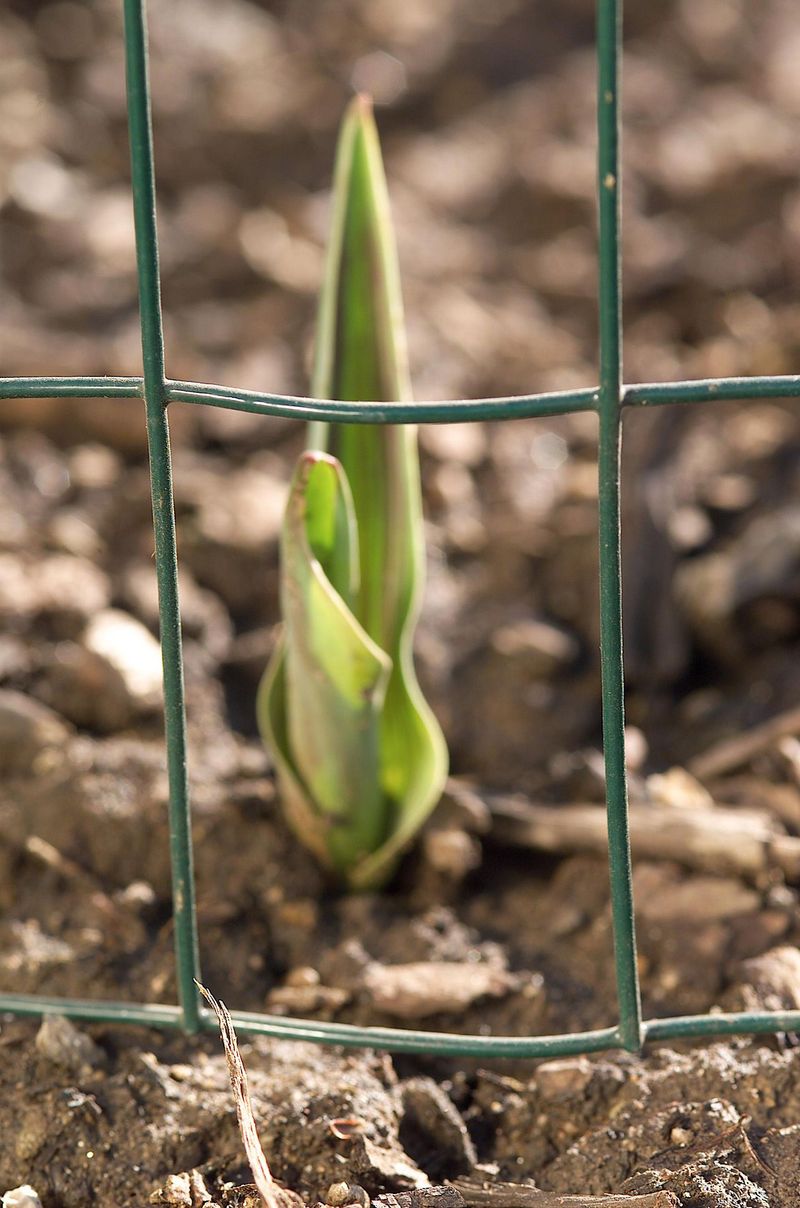
The question of when to remove or reposition the barrier does not have one universal answer. The highest-risk window begins right after planting, when freshly turned soil exposes bulb locations, but vulnerability does not end on a fixed calendar date.
Following the installation method you chose and keeping edges secured while the soil can still be excavated is the practical standard to use.
Colorado State University Extension describes a burlap cover method with a seasonal removal schedule tied to late winter or early spring conditions, while a mesh cover designed with openings wide enough for stems to pass through can often stay in place longer without interfering with plant growth. If your mesh has openings large enough for shoots to emerge, repositioning may only become necessary when stems need more room.
If the cover sits on the soil surface and would physically block emerging growth, plan to lift or remove it when that growth begins.
Planting depth adds a layer of passive protection that complements the barrier. Wisconsin Horticulture Extension notes that bulbs are generally planted at roughly two to three times the bulb’s height, though local soil conditions affect the specific recommendation.
Deeper planting makes excavation more effort-intensive for most animals, but extension sources are consistent on one point: depth alone is not a substitute for a physical barrier when wildlife pressure is high. Use both together for the best chance of keeping the bed intact through the vulnerable establishment period.
Treat bulb choice and attractant control as supporting measures
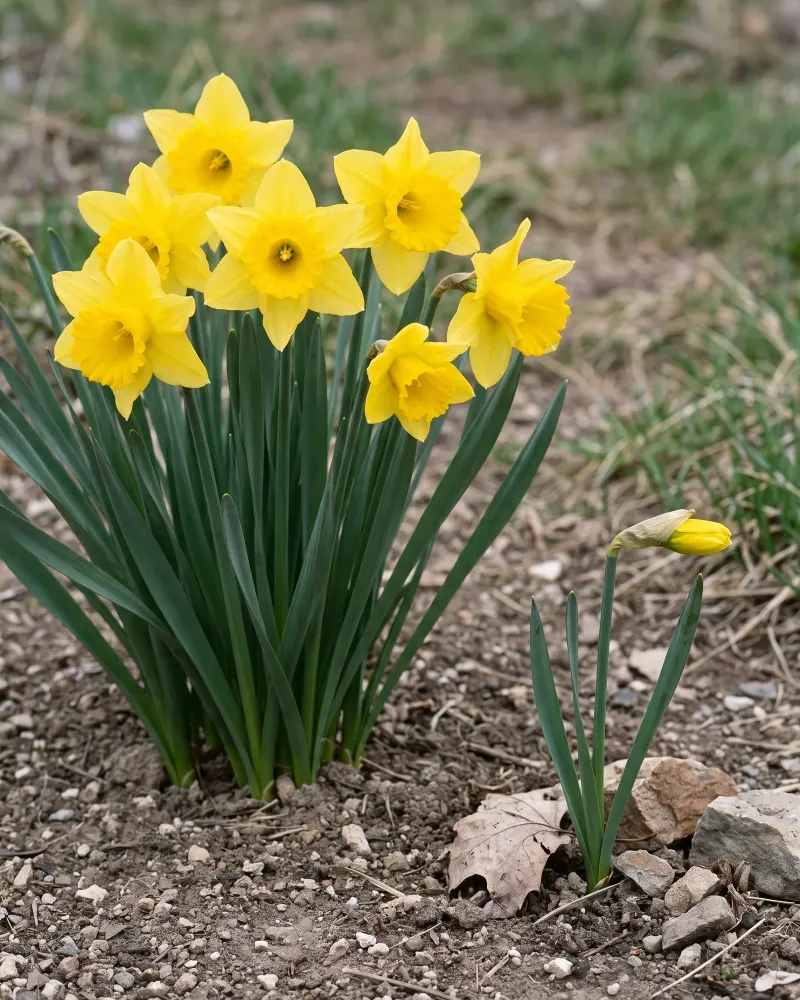
Some bulbs are less appealing to wildlife than others, and choosing them strategically can reduce the odds of disturbance. Daffodils, hyacinths, alliums, and certain other species contain compounds that make them less attractive to squirrels, voles, and most rodents.
Wisconsin Horticulture Extension lists these as lower-risk options compared to tulips and crocuses, which tend to be more palatable and therefore more frequently targeted.
That said, no bulb is truly animal-proof. A hungry animal, an unfamiliar species, or a yard with very high wildlife pressure can result in damage to even the less-palatable choices.
Mixing daffodils and alliums into a bed that also contains tulips is a reasonable risk-reduction strategy, not a guarantee. Pairing that choice with a secured physical barrier gives you two layers of protection instead of one.
Reducing concentrated food sources near the bed is the other supporting move worth making. Spilled birdseed, unsecured feeders, pet food left outdoors, and compost with food scraps can all draw wildlife closer to your garden.
Florida Fish and Wildlife Conservation Commission recommends securing attractants as a core part of preventing wildlife conflicts around the home. For Southern gardeners in Florida and Texas, bulb selection also carries a climate dimension: tulips and crocuses may require pre-chilling and may not perform reliably in warm winters, so local extension guidance on timing, chilling hours, and variety selection should take priority over any single regional planting calendar.
Skip weather-sensitive and unsafe shortcuts
After finding a damaged planting, the temptation to reach for a quick fix is understandable. Cayenne pepper, blood meal, predator urine, soap bars, dryer sheets, and various frightening devices all circulate as popular remedies.
The problem is consistency: most of these options are sensitive to weather, and a single rain event or irrigation cycle can wash away or dilute whatever effect they had.
Utah State University Extension notes that commercial repellents and dried blood may lose effectiveness after rain or regular watering, making them unreliable in any garden that gets irrigated or receives regular rainfall. Illinois Extension similarly describes blood meal and comparable materials as short-lived rather than durable deterrents.
Frightening devices can work inconsistently and often lose their effect as animals acclimate to them over days or weeks.
Commercial repellent products vary significantly by active ingredient, permitted application site, and legal use. University of Florida IFAS guidance on wildlife deterrents makes clear that the product label, not a general gardening recipe, controls how any product may legally be applied.
The EPA emphasizes reading the label first for any pesticide used in a garden setting. Mothballs should never be used as an outdoor wildlife deterrent, and toxicants or rodenticides are not appropriate for ordinary bulb-bed protection.
As for relocation, Florida Fish and Wildlife Conservation Commission explains that off-site release of nuisance wildlife is restricted by state rules, can harm the captured animal, and can create new conflicts elsewhere.
Protect the bed without promising a foolproof fix
A reliable protection plan starts before you assume you know what animal caused the damage. Check for tracks, digging patterns, and gnaw marks, and use that information to choose the right mesh size.
Plant bulbs at the depth appropriate for your local soil conditions, generally around two to three times the bulb’s height, and cover the bed with suitable rigid metal mesh right after planting.
University of Maryland Extension recommends extending the mesh at least one foot beyond the bed edge and weighting or staking every exposed edge so animals cannot lift or shift it. Keep the cover in place while the soil remains vulnerable, and follow the specific removal or repositioning guidance for whichever installation method you used.
Wisconsin Horticulture Extension and Colorado State University Extension both support secured physical mesh as a practical first-line measure for the establishment period.
Mixing in less-palatable bulbs and reducing food attractants near the bed can support the plan, while repellents remain a secondary and weather-dependent option. No barrier guarantees complete protection, and Southern gardeners in Florida, Texas, and similar climates should consult local extension resources for guidance on bulb timing, pre-chilling requirements, variety selection, and realistic performance expectations.
The most useful mindset here is layered reduction of risk, not elimination of it.