
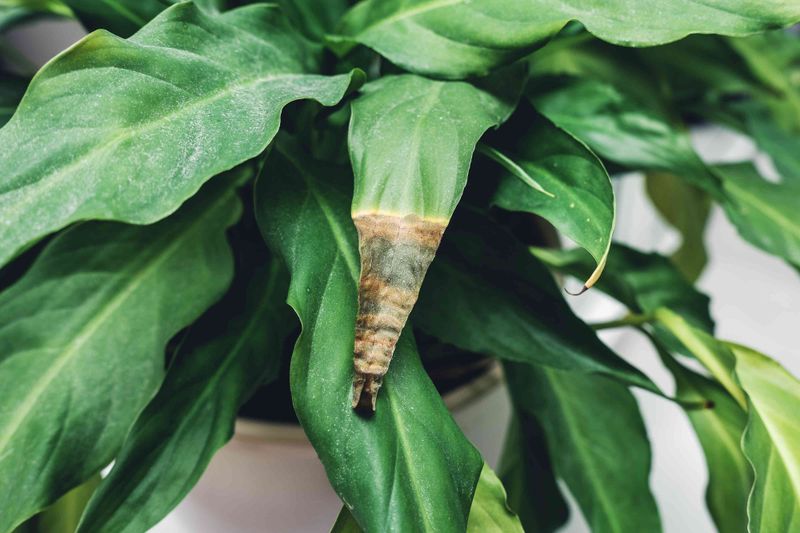
Few things are more alarming than watching a peace lily’s glossy leaves turn black almost overnight. That darkening is a real distress signal, but it doesn’t always point to the same problem, and guessing wrong can make things worse.
Saturated soil from frequent watering or poor drainage is a common cause, though cold drafts, leaf disease, and salt buildup can create nearly identical damage. Knowing how to read the clues before you act is the fastest way to give your plant a real chance at recovery.
Black leaves signal stress, not one guaranteed cause
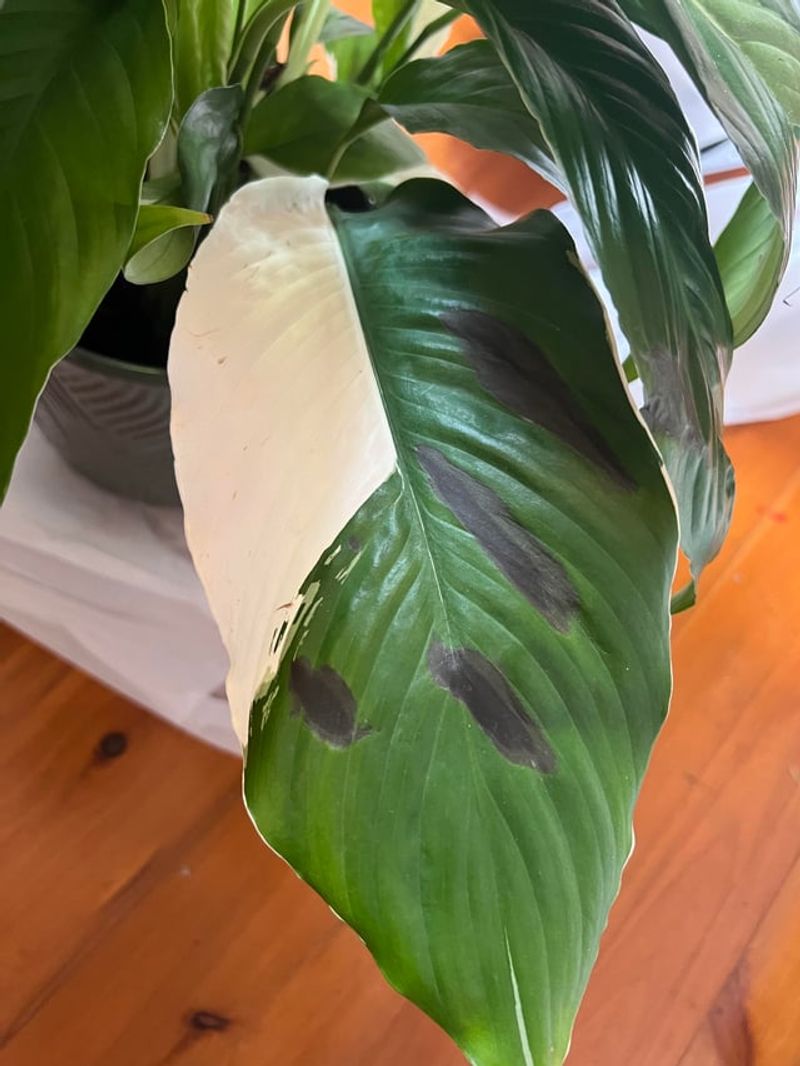
Blackened peace lily leaves mean tissue has been seriously stressed or killed, but the color alone cannot tell you what went wrong. Before you change your watering routine, reach for a spray bottle, or move the plant, take a moment to look at where and how the damage appears.
The pattern gives you far more information than the color does.
Black tips or margins that trace the outer edges of a leaf point toward different causes than random, wet-looking spots that expand across the leaf surface. UF/IFAS commercial production guidelines for Spathiphyllum identify salt and fluoride injury as causes of tip and marginal damage, while spreading, irregular dark lesions suggest a disease problem.
Timing matters too: damage that appeared right after a cold night, a car ride, or a spell near an air-conditioning vent is more consistent with chilling injury than with a watering problem.
A dramatic droop is another clue that confuses many growers. Wilting can mean the plant is thirsty, but it can also mean roots have been damaged and can no longer move water, even when the potting mix is completely wet.
UC IPM’s houseplant problem guidance notes that overwatering and underwatering can produce nearly identical above-ground symptoms. Check the moisture in the potting mix and, if needed, the roots themselves before deciding what to do next.
Saturated soil can damage roots before leaves turn black
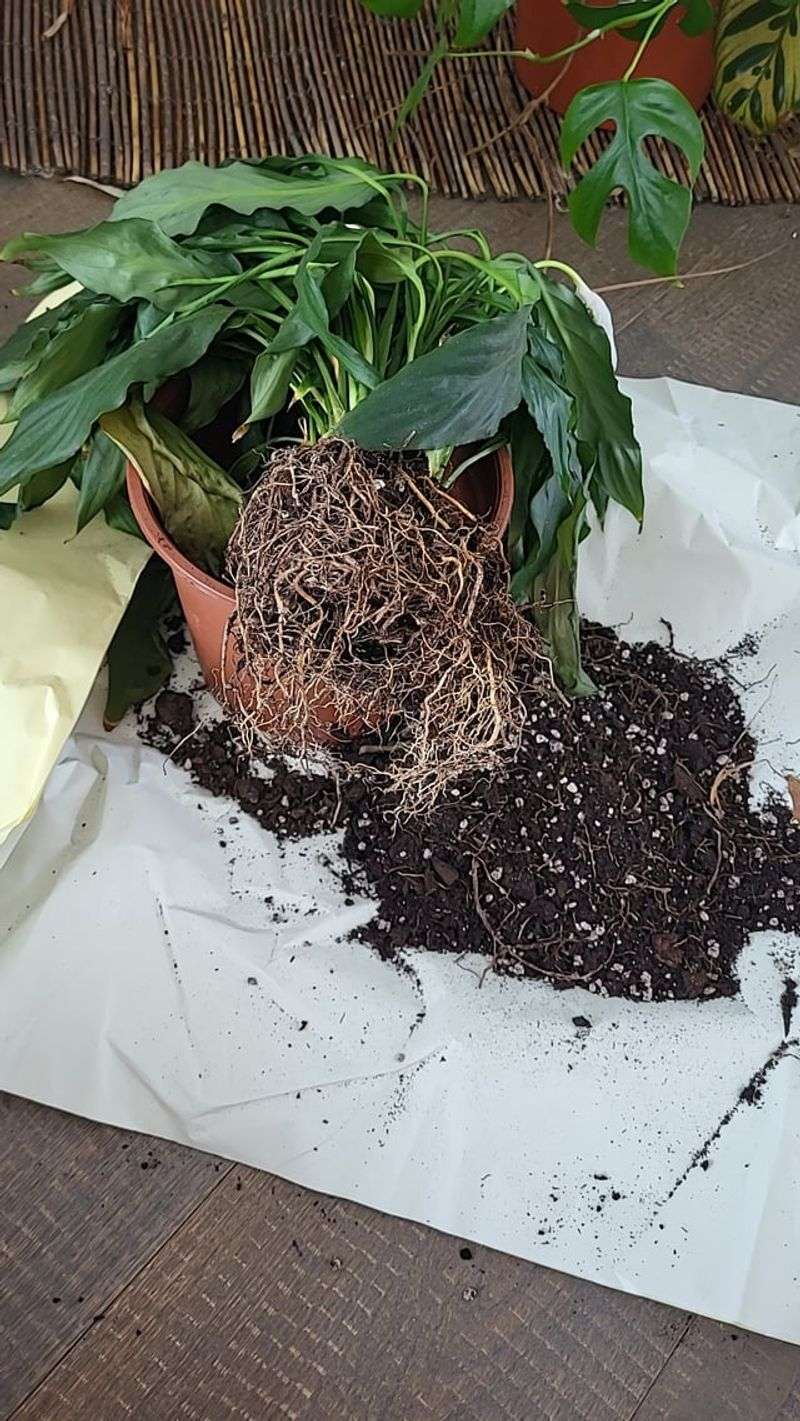
Chronic wetness around the roots is one of the most common reasons peace lily leaves eventually blacken, and the damage often builds quietly underground long before the leaves show any sign of trouble. When soil stays saturated, oxygen gets pushed out of the pore spaces around the roots.
Without oxygen, fine root tissue breaks down, and the plant’s ability to absorb water and nutrients collapses even though the potting mix is still soaking wet.
University of Maryland Extension’s overwatering resource explains that this oxygen deprivation leads to root rot, which can cause wilting, yellowing, browning, and eventually blackening of leaves while the soil remains moist. The sequence is counterintuitive: the plant looks thirsty precisely because its damaged roots cannot do their job.
Watering again at that point only deepens the problem.
Peace lilies generally prefer consistently moist but not soggy conditions. UF/IFAS guidance on Spathiphyllum home care advises keeping the medium moist while preventing the plant from sitting in water, and the NC State Extension plant profile recommends allowing the mix to partially dry between waterings.
Watering on a fixed weekly calendar can easily keep the root zone saturated, especially in cooler months or lower-light conditions when the plant uses water more slowly. Frequency should follow the plant’s actual moisture needs, not the calendar.
Inspect the soil and roots before watering again
A fingertip pressed one to two inches into the potting mix tells you more than a quick look at the soil surface ever will. If the mix feels wet at that depth and the leaves are still declining, the problem is unlikely to be thirst.
Dry soil at that same depth, combined with drooping leaves, points toward a plant that genuinely needs water.
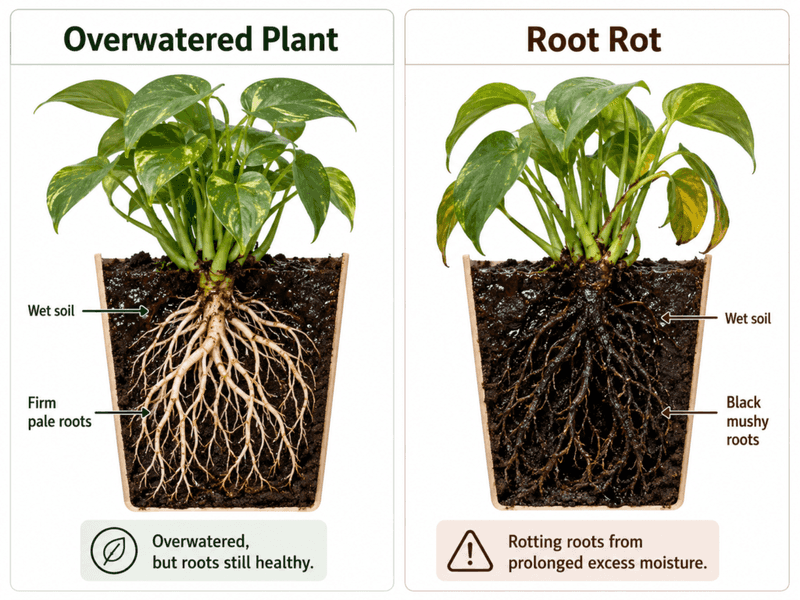
When wet soil and worsening symptoms suggest that root damage may already be underway, the next step is to slide the plant carefully out of its container and look at the roots directly. University of Maryland Extension’s indoor plant diagnostic guide describes healthy roots as light-colored and firm.
Damaged roots from root rot are typically dark, soft, mushy, or fall apart when touched. A plant with a significant proportion of rotted roots may wilt even when the potting mix is saturated, because the surviving roots simply cannot move enough water to the leaves.
Not every case of black leaves requires immediate repotting. If the soil is appropriately moist, not waterlogged, and the roots look healthy and intact, the blackening may have a different cause entirely.
University of Maryland Extension’s winter plant problem resource reinforces that both root rot and underwatering can cause wilting, so the inspection step is what separates a useful diagnosis from a guess. Work through moisture and root checks before committing to any treatment.
Repot damaged roots and remove dead tissue carefully
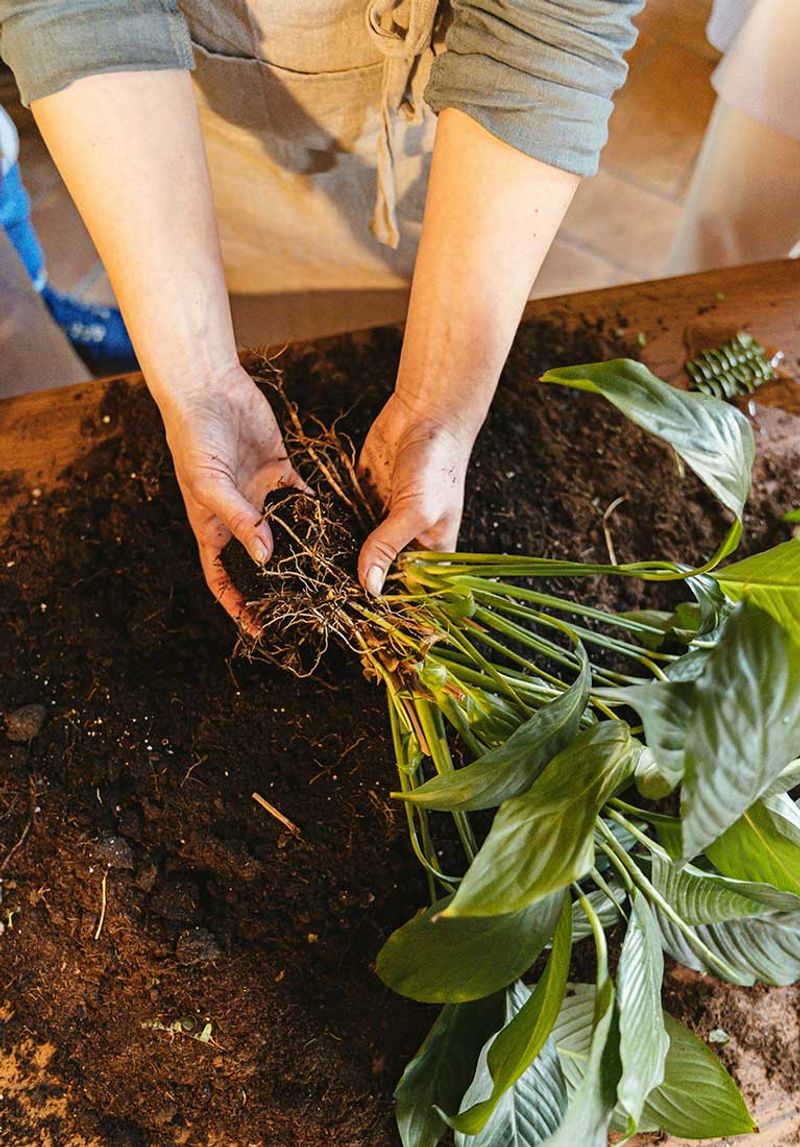
When root inspection confirms soft, dark, or mushy tissue, the most useful next action is to remove the damaged portions with clean cutting tools before they spread further into the healthy root system. Cut back to where the root tissue is firm and light-colored, and discard the removed material rather than leaving it in or near the pot.
Sanitize your pruning shears with 70% isopropyl alcohol before and after cutting diseased tissue, a practice recommended by both UC IPM and Penn State Extension to prevent spreading pathogens to healthy plant tissue.
After trimming the roots, repot the remaining healthy root system into a clean container with a drainage hole, using fresh, well-drained soilless houseplant mix. Do not reuse the old potting mix or the old pot without thorough cleaning, since disease organisms can persist in both.
Remove any fully black, dead, or clearly diseased leaves at their base rather than repeatedly snipping only the visibly dark tips. Leaving partial dead tissue attached to the plant does little for recovery and can harbor disease organisms.
Pruning and repotting improve the plant’s situation, but they are not a cure on their own. University of Maryland Extension notes that severely infected plants may not be salvageable and may need to be discarded.
If most of the root system is already rotted and the remaining healthy roots are very few, realistic expectations matter: recovery is possible for plants with meaningful healthy root tissue remaining, but it is not guaranteed for every plant.
Build a container and watering routine that prevents saturation
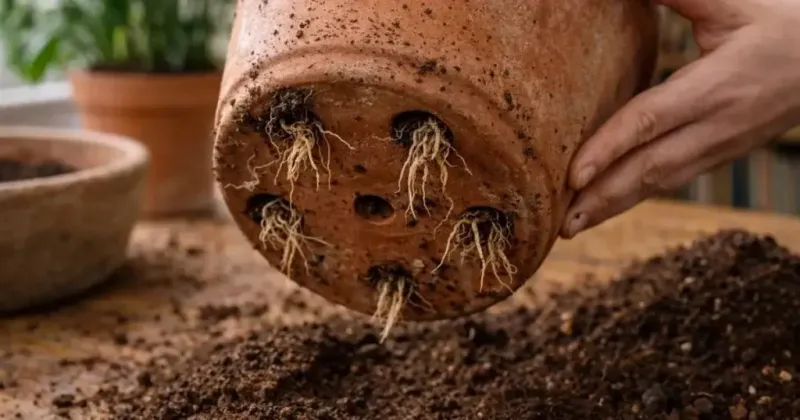
The right container setup makes every other watering decision easier. A pot with at least one drainage hole is non-negotiable: without one, excess water has nowhere to go and the root zone stays saturated no matter how carefully you water.
Penn State Extension’s repotting guide and University of Georgia Cooperative Extension’s indoor plant publication both recommend a well-drained soilless houseplant mix rather than garden soil, which compacts and holds far too much moisture indoors.
Pot size also matters more than most people expect. An oversized container holds a large volume of mix that the plant’s roots may not reach quickly, and that extra wet mix stays damp for a long time.
University of Minnesota Extension’s winter houseplant tips flag oversized containers as a factor that increases root-rot risk. Choose a container that fits the plant’s current root system with modest room to grow, not one that dwarfs it.
Replace any fixed watering schedule with a root-zone moisture check. Press a finger one to two inches into the mix; water when it feels close to dry at that depth but before the plant wilts.
When watering is needed, apply enough water to wet the root ball thoroughly and let excess drain completely from the bottom. University of Maryland Extension’s watering guide is clear that standing water left in saucers or cachepots should be emptied promptly.
The goal is moist conditions throughout the root zone, not prolonged dryness and not standing water.
Use the damage pattern to rule out cold, disease, and salts
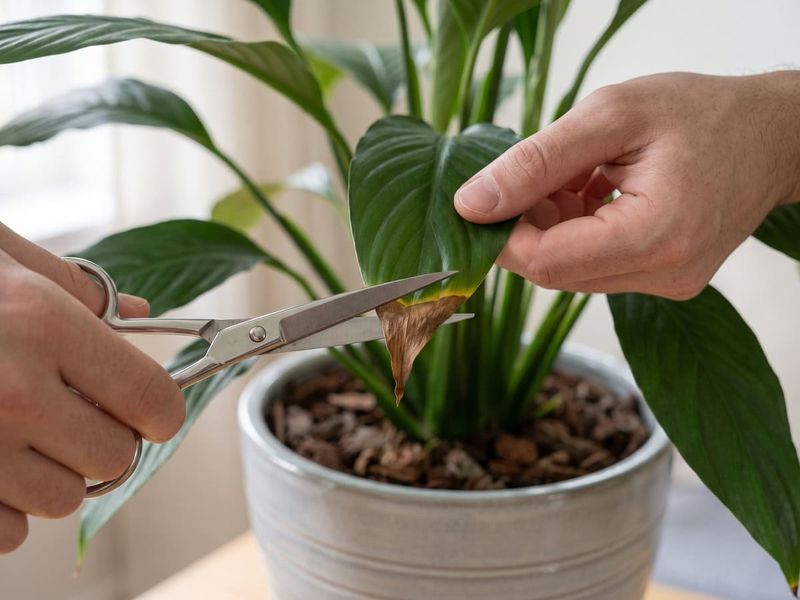
Saturated roots are not the only path to black peace lily leaves, and treating a cold-injured or disease-affected plant as though it has root rot can waste critical recovery time. Reading the damage pattern carefully is what separates an effective response from a frustrating one.
Blackening that appeared shortly after the plant sat near a cold window, was brought in from outdoors during a cool spell, spent time in a vehicle, or was positioned near an air-conditioning vent is more consistent with chilling injury than with a watering problem. UF/IFAS research on chilling injury in Spathiphyllum documents that symptoms can begin at leaf tips and edges, progress inward, and turn tissue black, with some cultivars showing injury after brief exposure to 38 degrees Fahrenheit.
Symptoms may continue developing for several days after the cold event. If chilling is the likely cause, moving the plant to a consistently warm spot away from the exposure is the first corrective step.
Wet-looking, irregular spots that expand across the leaf surface suggest a leaf disease rather than a watering or temperature problem. A University of Hawaii publication documents that Phytophthora foliar blight of Spathiphyllum produces large, dark brown to black expanding lesions, especially under wet conditions.
Isolate any plant showing spreading spots from your other houseplants, avoid overhead watering, and reduce leaf wetness. Routine fungicide use is not advised without a sound diagnosis, since UMass Extension notes that fungicide drenches do not cure already-infected tissue.
Black tips or margins that are dry rather than wet-looking, and that appear without any cold event, often reflect salt or fluoride injury, watering stress, or excess direct light. UF/IFAS Spathiphyllum production guidelines identify peace lilies as sensitive to soluble salts and fluoride, which can cause tip and marginal damage that resembles other problems.
Periodic leaching of the potting mix and avoiding excessive fertilizer applications can help reduce salt accumulation over time.
Give the plant stable conditions while it recovers
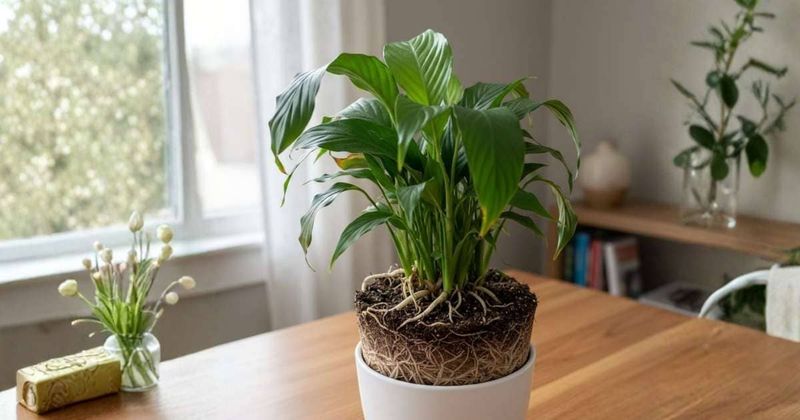
Once you have identified the most likely cause and made the necessary corrections, stable growing conditions are what give a peace lily the best environment to push out new growth. Keep the plant in bright, indirect light rather than direct sun, and away from cold windows, exterior doors, and air-conditioning vents.
UF/IFAS home care guidance for Spathiphyllum lists approximately 75 to 85 degrees Fahrenheit as a preferred temperature range, and the NC State Extension plant profile reinforces the preference for warm, stable indoor conditions.
Continue monitoring the root-zone moisture rather than following a calendar, and remove any new dead or diseased tissue promptly using clean tools. Cutting off black leaves improves appearance and removes dead tissue, but it cannot fix saturated roots, cold injury, salt buildup, or an active disease on its own.
The underlying condition has to be corrected for the plant to stabilize.
UC IPM’s houseplant guidance and University of Maryland Extension both make clear that recovery depends on how much healthy root tissue remains and whether the stressor has been removed. A plant with a different symptom pattern, cold-related, disease-driven, or salt-related, needs a response matched to that cause.
Catching wet-root conditions early and acting on the right diagnosis gives the plant its best realistic chance.