
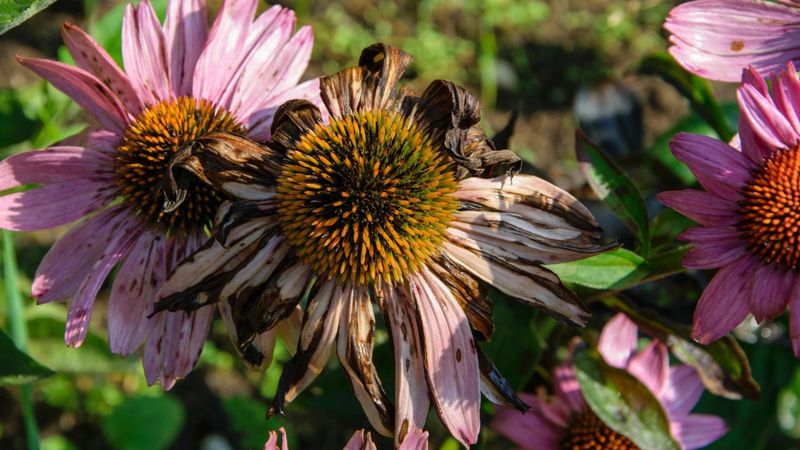
Purple coneflowers are supposed to be reliable summer bloomers, so it is genuinely frustrating to watch them push out lush, leafy growth while producing almost no flowers. Several things can cause this, and one of the most worth checking first is whether the plant has been getting too much fertilizer.
This guide walks through how to spot that possibility, pause unnecessary feeding, and then inspect the other conditions that can quietly suppress blooms.
When lush growth raises a fertilizer question
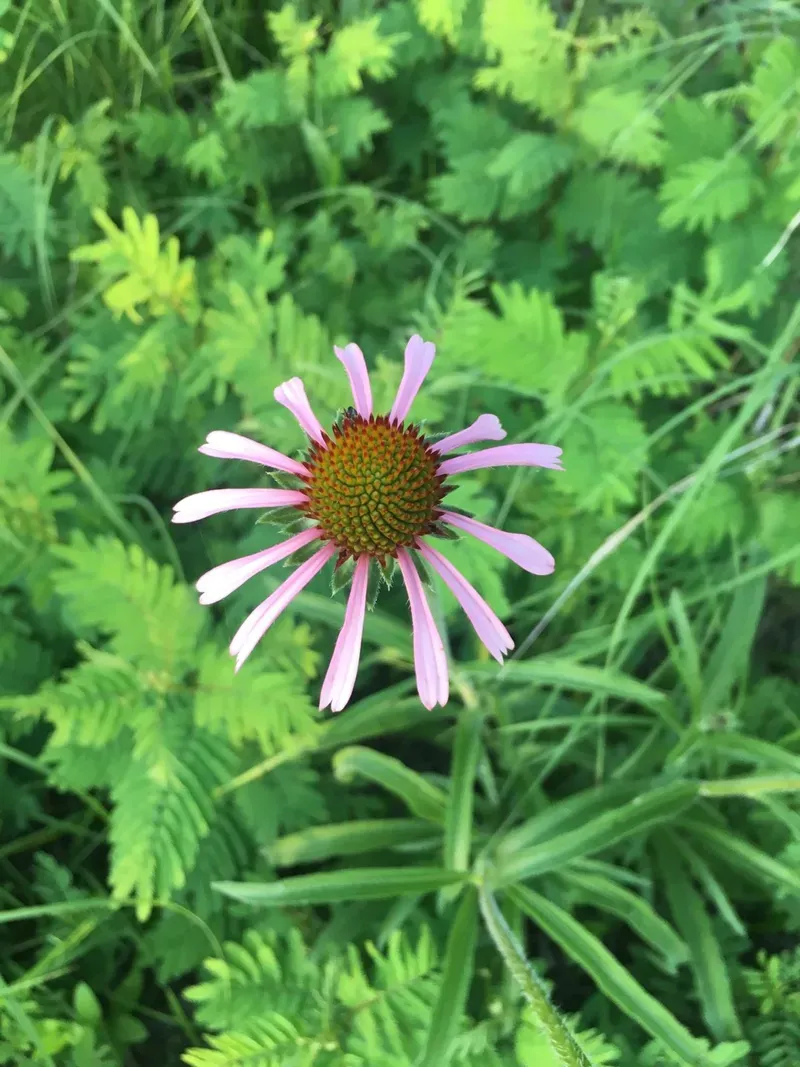
A purple coneflower that pushes out thick, dark-green stems and wide leaves but produces only a handful of flowers is showing a pattern worth paying attention to. When those stems are also unusually tall, soft, or leaning without much wind to blame, excess nitrogen becomes a reasonable suspect.
Illinois Extension guidance on purple coneflower specifically notes that heavy fertilization can make plants tall and floppy rather than flower-rich, which matches this symptom picture closely.
The logic behind this is straightforward. Nitrogen encourages vegetative growth, and when a plant has more available nitrogen than it needs, it tends to invest energy in leaves and stems rather than buds.
Established perennials generally require little routine fertilizer to perform well, and Penn State Extension’s perennial care guidance reinforces that point, noting that most established perennials thrive without regular feeding.
That said, lush growth with few flowers does not prove fertilizer is the culprit in every case. It is a useful clue, not a confirmed diagnosis.
Shade, drought, waterlogged soil, recent planting, cultivar differences, and disease can all suppress flowering without producing the same leafy, leggy look. Keep those possibilities open while you work through the investigation.
Pause fertilizer before adding a bloom booster
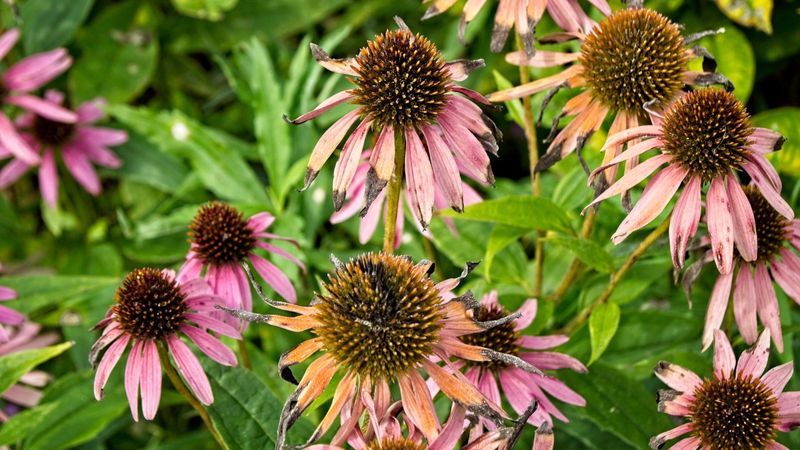
The safest first move when you suspect excess fertilizer is simply to stop. Hold off on any routine feeding and take a few minutes to recall what has been applied to the bed in recent months.
Liquid fertilizers applied repeatedly, slow-release granules worked into the soil, or even fertilizer drifting in from a nearby lawn treatment can all contribute more nitrogen than a purple coneflower actually needs.
One tempting but counterproductive response to poor flowering is reaching for a high-phosphorus “bloom booster.” Skip that step for now. University of Minnesota Extension’s garden checklist cautions against applying phosphorus without evidence of a deficiency, and Penn State’s soil fertility guidance makes clear that extra fertilizer can injure plants or make unbalanced growth worse rather than better.
A soil test is the most reliable way to know whether any nutrient is actually short. Most cooperative extension services offer testing at low cost, and the results tell you what the soil genuinely needs rather than what a product label suggests.
Pausing unnecessary feeding while you investigate is the right call, and it does not commit you to a diagnosis yet.
Check light, drainage, and moisture next
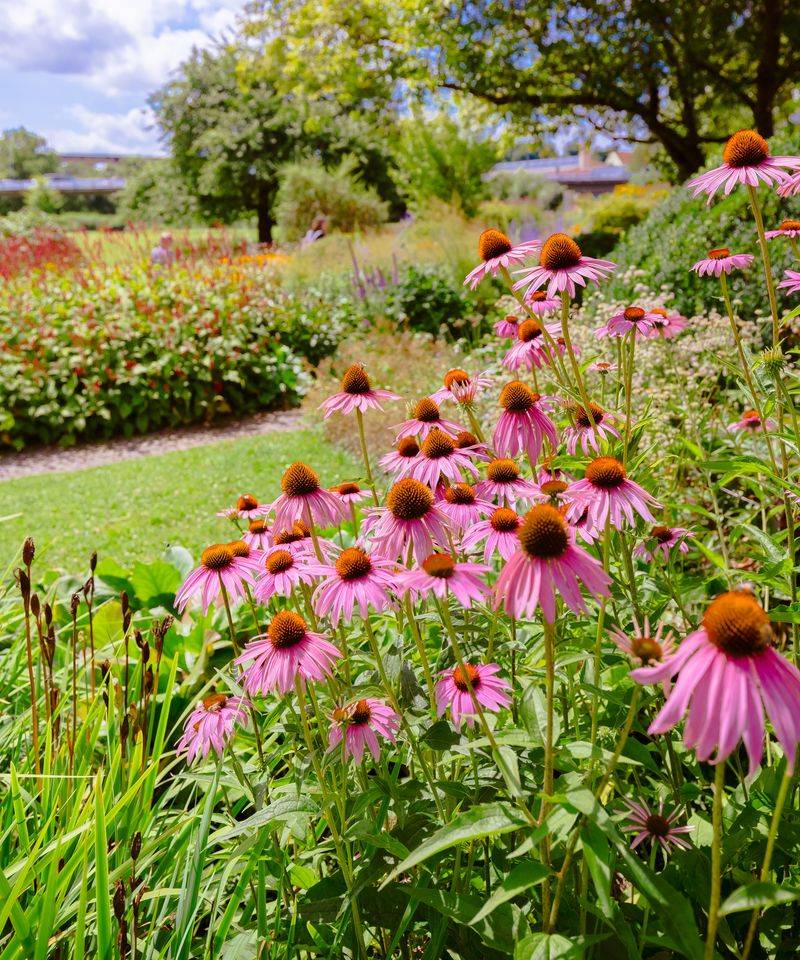
After pausing fertilizer, turn your attention to the site itself. Stand near the coneflower bed at different points in the day and count how many hours of direct sun the plants actually receive.
Purple coneflower generally flowers best with at least six hours of direct light daily, and NC State Extension’s profile of Echinacea purpurea confirms full sun as the preferred condition. Shade from a nearby tree, fence, or building that has grown or shifted over the years can quietly reduce flowering without any other obvious symptom.
Next, check the soil. Push a trowel a few inches in after a rain and see whether water sits or drains away.
Soil that stays soggy stresses roots and limits the plant’s ability to bloom. Also look at whether neighboring plants have grown in and are crowding the coneflower, which can reduce both light and air circulation around the stems.
Moisture is a separate question from drainage. Established coneflowers are reasonably drought tolerant once settled in, but a plant that was recently installed or recently stressed by heat still benefits from thorough, deep watering rather than frequent shallow sprinkles.
Penn State’s plant health diagnostic guidance recommends working through site conditions systematically before choosing a remedy, and that sequence applies here. Correct what you actually find rather than treating for what you assume.
Allow for establishment and cultivar differences
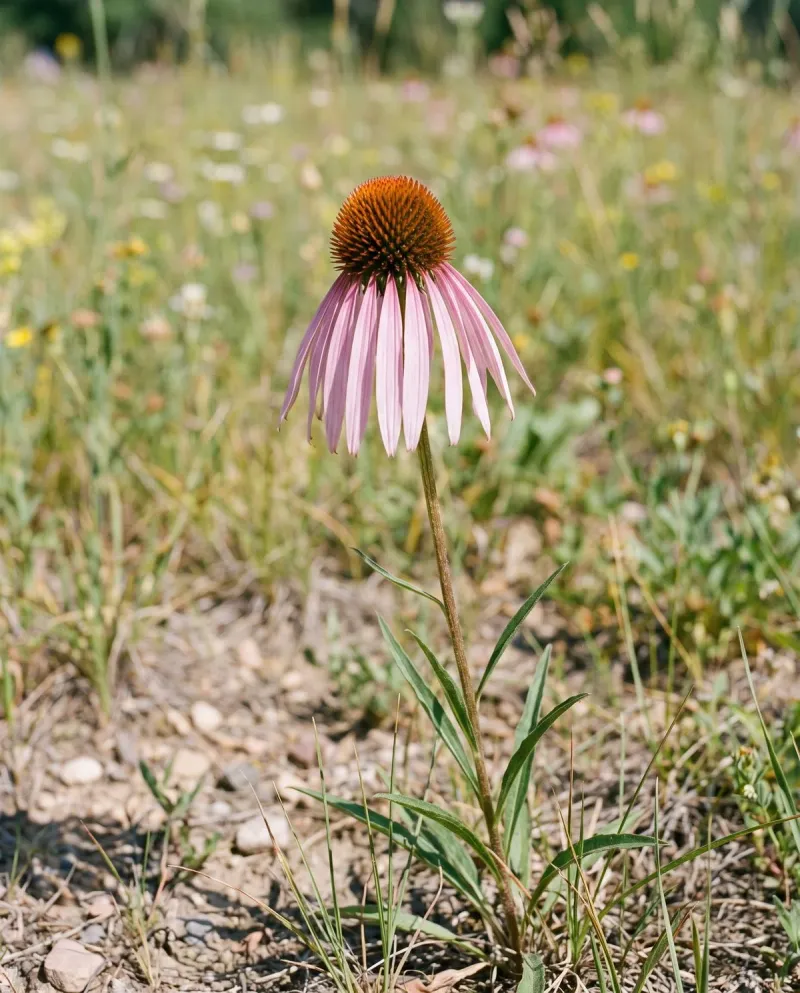
Not every sparse display points to a care mistake. A coneflower planted this season or last may simply need more time to settle in before it flowers freely.
Missouri Botanical Garden native plant guidance notes that perennial flowers can take a year or more to establish, so a thin first-season display is not automatically a sign that something has gone wrong. The exact pace varies by plant, site, soil quality, and the conditions at planting time, so there is no single schedule that fits every situation.
Cultivar choice can also shape the outcome in ways that have nothing to do with fertilizer or sunlight. Illinois Extension’s Garden Scoop coverage of coneflowers points out that some newer Echinacea hybrids and cultivars may perform poorly or decline after a season or two.
That does not mean all newer selections are unreliable, but it does mean that a plant labeled as a compact, heavily branched bloomer might simply not live up to its description in your specific conditions.
Before settling on fertilizer as the explanation, think through the plant’s full history. How long has it been in the ground?
Has it ever bloomed well at this site? Was it a named hybrid with an especially complex flower form?
Matching those answers to the current conditions gives a much clearer picture than any single-factor diagnosis.
Recognize symptoms that need a different response
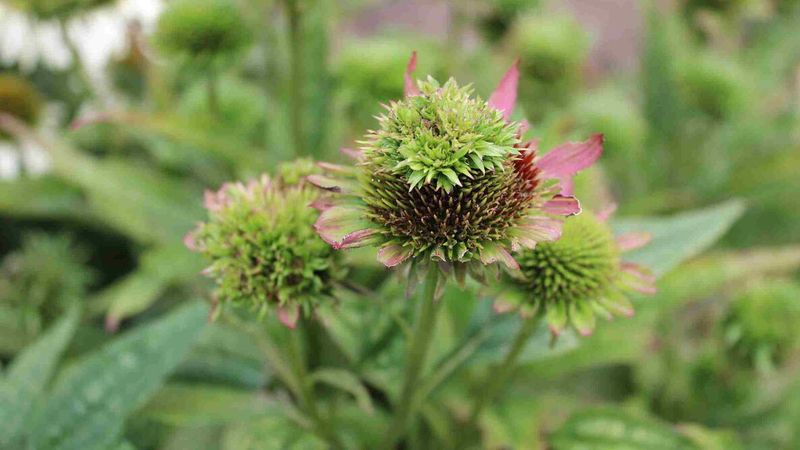
Sparse flowering looks different from certain warning signs that point toward a more serious problem. If your coneflower has small, misshapen, or green-tinged flowers, yellowing or stunted foliage, or dense tufts of brush-like shoots growing from the center of the plant, those symptoms do not match a fertilizer or light problem.
University of Minnesota Extension’s Echinacea diagnostic tool identifies these as warning signs associated with aster yellows, a phytoplasma infection spread by leafhoppers.
Aster yellows does not respond to feeding, pruning, or any spray. Infected plants do not recover.
The right response is to remove and dispose of the plant away from the garden, not to compost it, and to avoid replanting a susceptible host in the same spot right away. UF/IFAS plant disease guidance emphasizes correct diagnosis before any treatment decision, and that principle matters here because fungicides, insecticides, and neem oil have no verified effect on a phytoplasma infection.
The key distinction to remember is this: ordinary sparse flowering tends to come with otherwise normal-looking foliage and flower structure. Distorted growth, unusual coloring, and deformed buds are a separate category that requires a separate response.
Identifying which situation you are actually dealing with protects both your garden and your time.
Correct conditions without promising an instant rebound

Once the inspection points to a likely stressor, the goal shifts to correcting it thoughtfully rather than quickly. For a recently installed plant or one showing signs of drought stress, deep and thorough watering is the right starting point.
Water until the soil is moist well below the surface, then let the soil and the weather guide when you water again. Penn State Extension’s perennial maintenance guidance recommends deep, less frequent watering over constant shallow sprinkling, which encourages roots to grow deeper and improves long-term resilience.
There is no fixed schedule that works for every site, so use the soil itself as your guide.
If the light assessment revealed a genuinely shaded spot, think carefully before moving an established plant. Transplanting during heat or while a plant is trying to bloom adds stress that can set it back further.
A better approach is to mark the location, plan a move for early fall or the following spring when temperatures are cooler, and consider whether thinning or pruning nearby plants could improve light in the meantime. NC State Extension notes that full sun generally supports the strongest flowering, but local climate, humidity, heat, cultivar, and drainage all shape actual results.
Across warm climates generally, good drainage and adequate sun remain the most consistent supports for flowering, though performance still varies by site and selection. Penn State’s purple coneflower profile and other regional sources agree that correcting the underlying cause is the goal now, while a meaningful bloom response may come in the current season or the next, depending on when in the bloom window the correction happens.
Deadhead for your goal, not as a cure
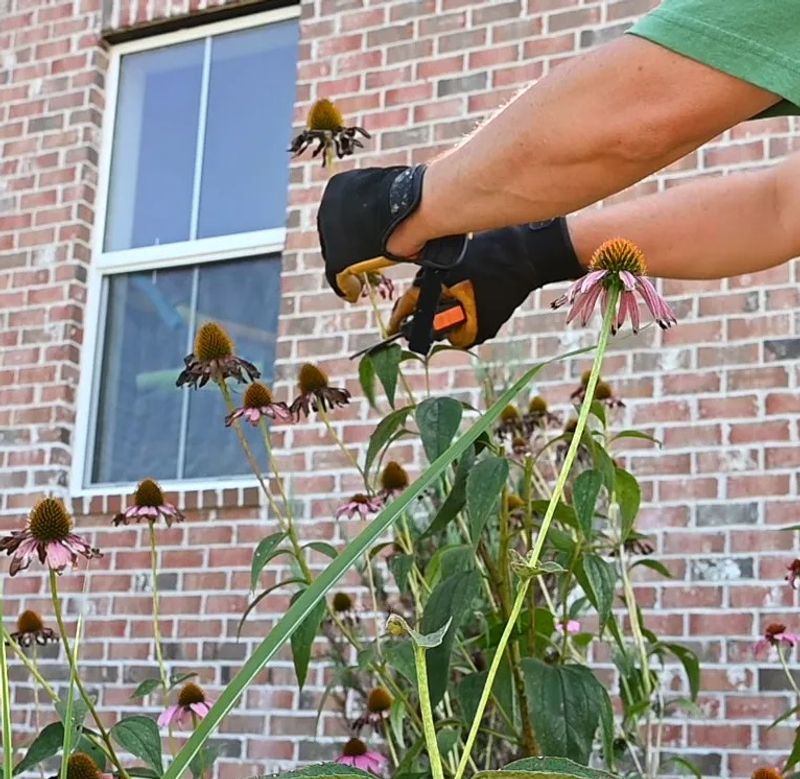
Deadheading is a useful tool with a specific, limited job. Removing spent flower stems back to a healthy leaf or, on bare stems, back to the plant’s base can tidy the bed and may encourage some additional flowering in purple coneflower.
Illinois Extension’s coneflower guidance supports selective deadheading as a way to extend the display, and Missouri Botanical Garden’s deadheading FAQ explains the general technique clearly. The key word is selective.
What deadheading cannot do is fix an excess nitrogen problem, compensate for too much shade, resolve drainage issues, rescue an unsettled plant, or address cultivar decline or disease. Treating it as a cure for those conditions wastes time and delays the real fix.
Think of it as a finishing step rather than a first response.
The other side of this choice involves wildlife and garden ecology. NC State Extension and Illinois Extension’s Garden Scoop both note that coneflower seedheads attract goldfinches and other birds, support natural reseeding, and add late-season structure to the garden.
Removing every spent head trades those benefits for a tidier appearance. If birds and reseeding matter to you, leave a portion of the seedheads in place and deadhead only the stems you want to redirect toward more blooms.
Use the next season to judge the correction
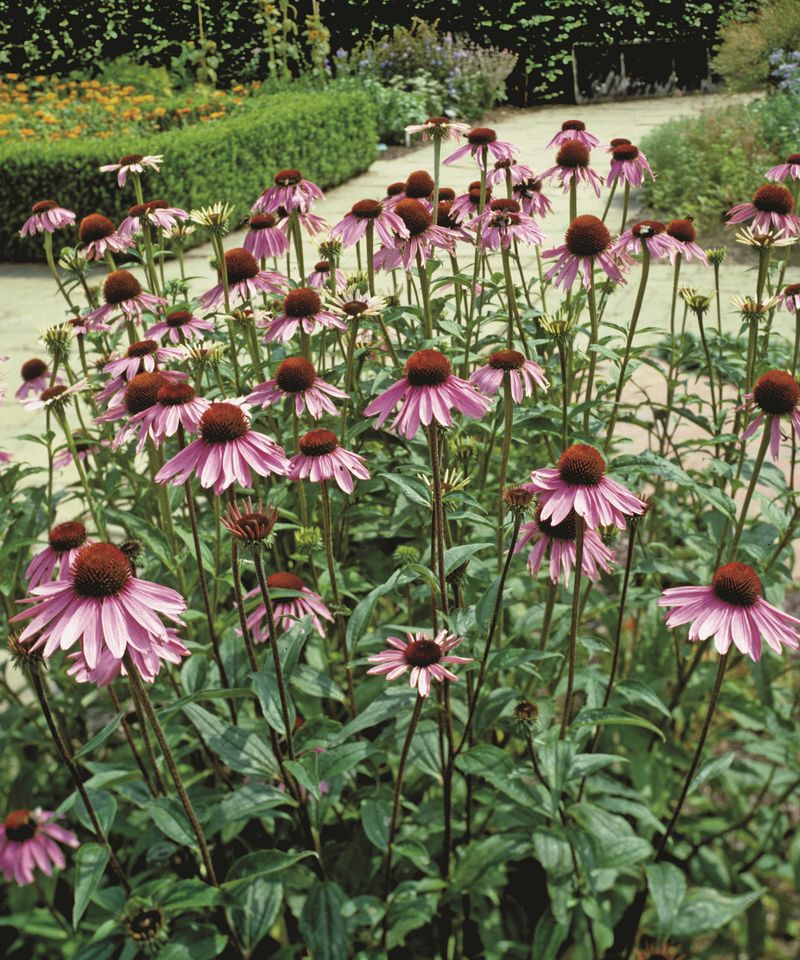
Pulling together what you have learned, the path forward is a short, practical sequence. Pause routine fertilizer and note anything applied to the bed recently.
Check light, drainage, and moisture, then correct what the site actually needs rather than defaulting to another product. Look carefully at the flowers and foliage for distorted growth or unusual coloring that might suggest aster yellows, and remove any infected plant promptly.
Penn State’s plant health diagnostic guidance and Illinois Extension’s purple coneflower resource both support this inspect-then-correct approach over automatic intervention.
Deadhead selectively based on whether you want a tidier display or prefer to leave seedheads for birds and reseeding. If the plant is lush, tall, and leggy with few buds, excess fertilizer is worth investigating first.
If growth looks otherwise normal but the plant is young, cultivar performance or establishment timing may be the better explanation.
Penn State Extension reminds gardeners that correcting the cause is the realistic goal, not triggering an immediate flush of new blooms. A coneflower that has been relieved of an unnecessary stressor is better positioned to flower well when next season arrives.