
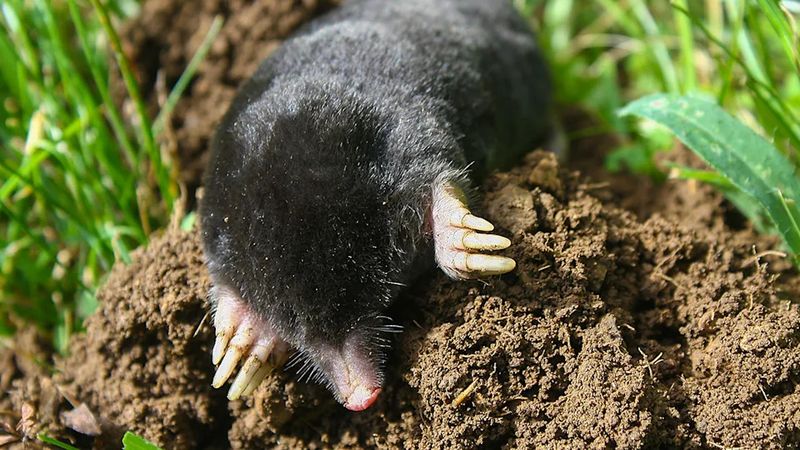
Those raised ridges snaking across your lawn are not just an eyesore – they show up fast, and once you spot one, you start noticing them everywhere. A lot of Southern homeowners reach for a quick fix before they even know for sure what animal is causing the damage.
Castor-oil-based repellents get mentioned often as a simple solution, but the real story is more nuanced than the label might suggest. Understanding what the evidence actually says can save you time, money, and frustration.
Start by confirming that moles made the tunnels
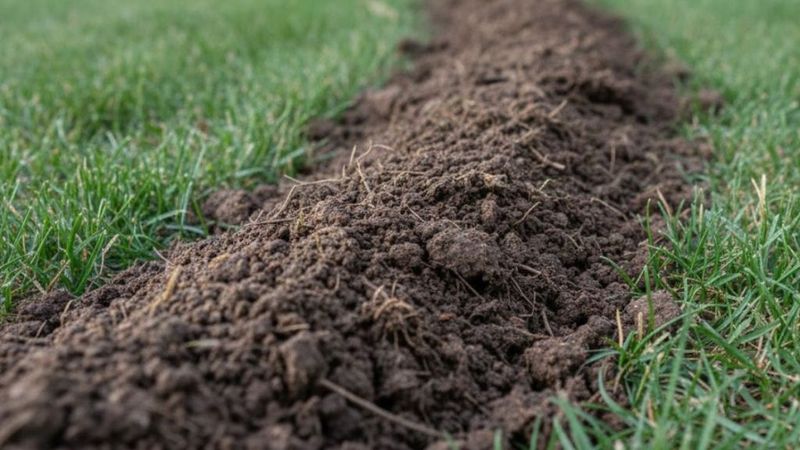
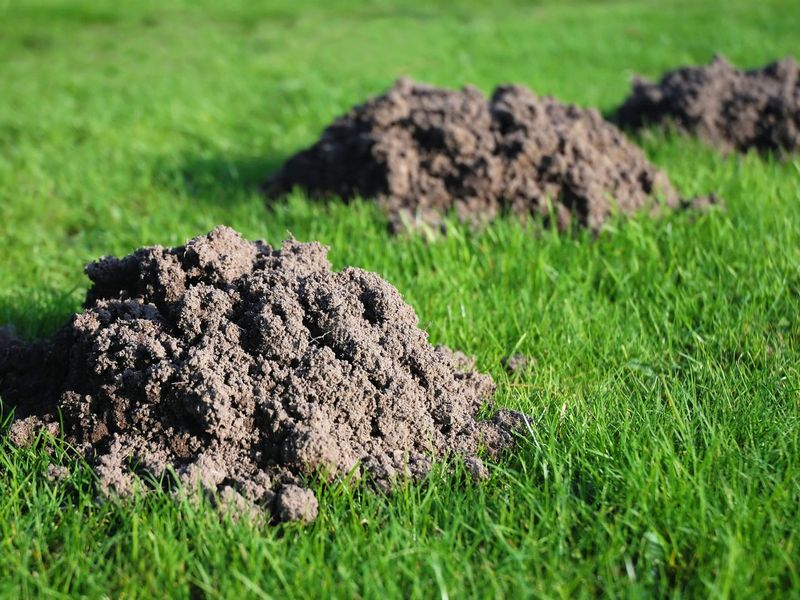
Before spending a dollar on any treatment, take a few minutes to read what the ground is telling you. Moles create two very recognizable signs: raised ridges just beneath the lawn surface where they travel through shallow feeding tunnels, and small, volcano-shaped mounds of loose soil pushed up from below.
According to University of Maryland Extension guidance on animals digging in lawns, moles eat earthworms, grubs, insects, and other soil invertebrates – they are not chewing on your grass roots.
Other animals leave very different clues. Voles create narrow, well-worn surface runways at ground level and feed on plant material, including grass stems and roots.
Skunks and raccoons typically leave separate tapered holes or patches of torn-up turf while digging for grubs just below the surface. If you see chewed plant material or entry points into the soil rather than raised ridges, the culprit is likely something other than a mole.
Florida readers should also know that mole crickets – a damaging lawn insect common in the state – can cause surface disturbance that looks superficially similar to early mole activity, but the two require completely different responses. Treating for the wrong animal wastes your time and can harm non-target wildlife.
Confirming the animal first is the most important step in the whole process.
Mole damage is often primarily cosmetic, though tunneling can dry or expose grass roots and make mowing uneven. That context matters when you are deciding how much effort a response is worth.
What the castor-oil evidence actually shows
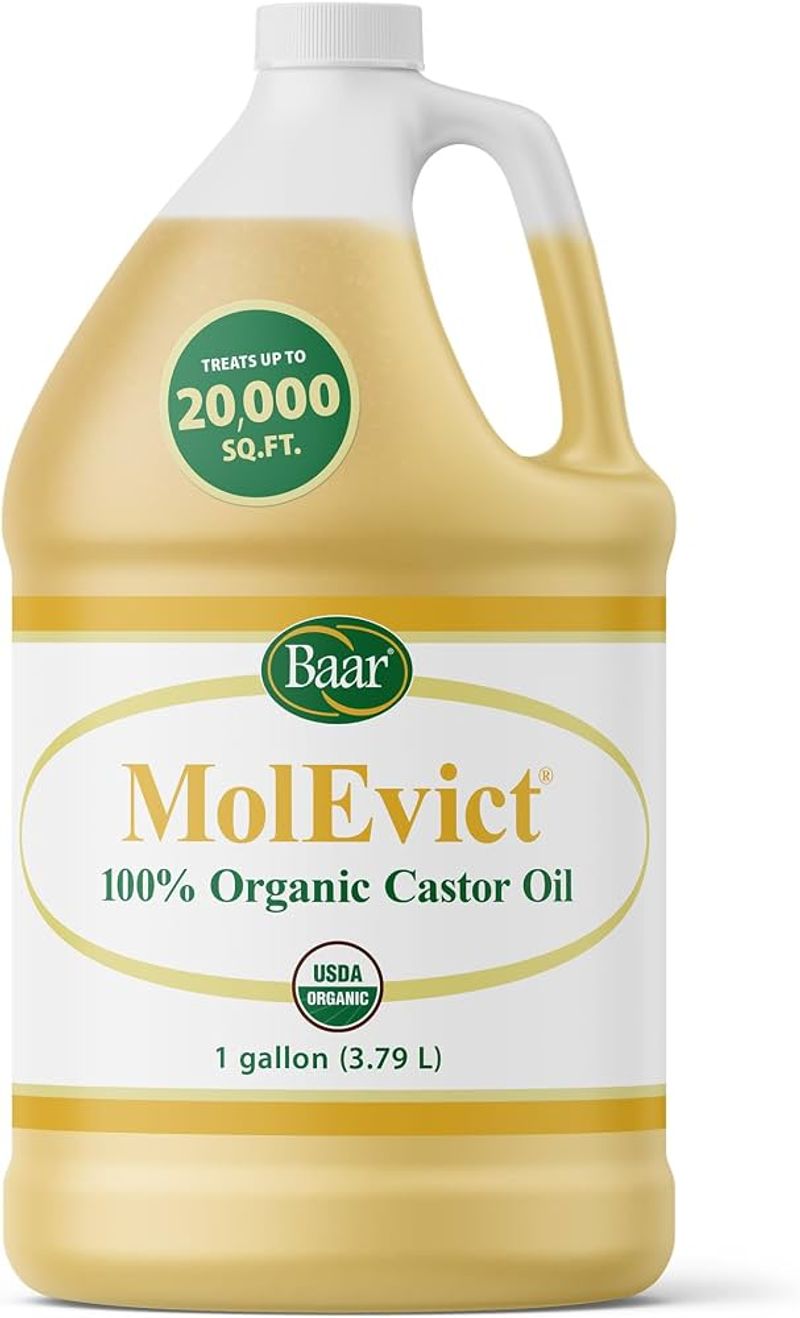
Castor oil is the ingredient most often cited when people talk about a natural mole deterrent, and there is some field research behind that claim – but the results are more limited than the buzz around it suggests. A 1995 field trial published through the University of Nebraska-Lincoln reported that a product containing 65% castor oil stopped visible mole activity on treated lawns for roughly 30 to 65 days.
That sounds promising until you consider that the study was small and preliminary.
A later study out of the University of Kentucky found some reduction in tunneling activity over six weeks after treatment, but found no statistically significant difference between the application rates tested. In other words, using more of the product did not produce a clearly better result.
Iowa State University Extension describes those early castor-oil results as inconsistent, and Missouri Extension considers trapping the most proven control method available to homeowners.
The practical takeaway is this: a castor-oil repellent may reduce visible tunneling in the treated area for a period of weeks, but that is different from removing the mole. If the animal shifts its route or moves into an untreated section of your yard, the tunnels simply reappear somewhere else.
Reduced activity in one spot is a sign of possible deterrence, not proof that the mole has permanently left your property.
Choose a labeled product, not a kitchen-cabinet recipe
The phrase “castor oil repels moles” gets repeated so often that many homeowners assume mixing household castor oil with dish soap and spraying it on the lawn is a tested, reliable fix. That assumption is not backed by strong evidence.
A University of New Hampshire Extension response describes the homemade castor-oil-and-soap mixture as anecdotal and suggests testing a small area rather than treating it as an established method. The field studies that produced actual mole-deterrence data used commercial, emulsified formulations – not kitchen-cabinet recipes.
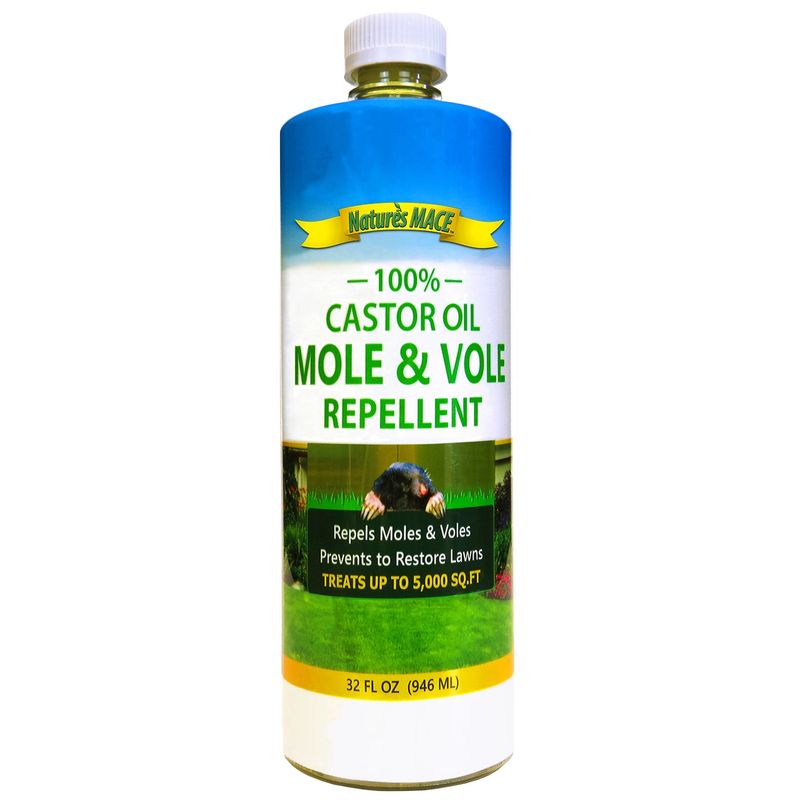
Commercial castor-oil repellents are available in liquid concentrate or granular form, and they are specifically formulated and labeled for mole control. That distinction matters because the EPA registration process requires a product to meet standards for both efficacy and safety when used as directed.
Penn State Extension also notes that castor-bean plants are not an established mole-control method, and the seeds of Ricinus communis are toxic – so planting castor beans as a deterrent introduces a new hazard without delivering a proven benefit.
When shopping, look for a product whose label specifically lists moles as the target pest. If the label does not mention moles, the product has not been registered or tested for that use.
UF/IFAS Gardening Solutions confirms that commercially formulated emulsified castor-oil repellents are available for mole control, giving Florida homeowners a starting point for finding a legitimate option at a garden center or hardware store.
Apply the repellent according to its label
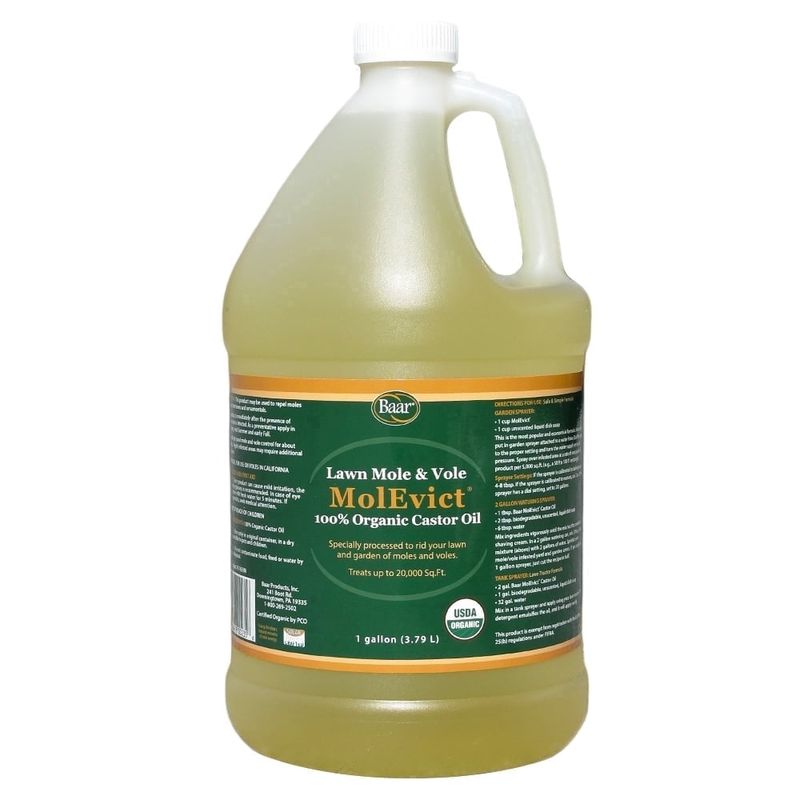
Once you have a commercial castor-oil product labeled for moles in hand, the label itself is the most important document you have. Follow it for application rate, coverage area, watering instructions, reapplication timing, and any precautions involving pets and children.
The EPA emphasizes that reading the pesticide label before use is not optional – it is the law, and using a product in a way that contradicts the label can create safety risks and may also reduce effectiveness.
Field testing noted in University of Nebraska-Lincoln Extension guidance involved watering castor-oil products into the lawn after application, which helps move the active ingredient into the soil where moles travel. That detail is worth knowing, but it does not replace the directions on the product you actually purchase – formulations differ, and the rate and method that worked in a study may not match what your product requires.
After application, give it a few days and then monitor the treated area. Flatten a visible raised ridge by pressing it down with your foot.
Check it again in 24 to 48 hours. UF/IFAS notes that reduced mole activity is a possible outcome of treatment, but fewer new tunnels in the treated zone only confirms reduced visible activity – it does not prove the mole has left the property or that untreated areas are protected.
Keep watching the full lawn, not just the spot you treated.
Account for Southern soil, rain, and state rules
Southern lawns are not all alike, and the conditions in Florida and Texas affect how well a castor-oil repellent can perform. UF/IFAS reports that commercially formulated emulsified castor-oil repellents may perform better in clay or loam soils than in sandy soil, and that rainfall can shorten how long the treatment remains effective.
Both of those factors are especially relevant in Florida, where sandy soils are common across much of the peninsula and summer rainfall can be heavy and frequent.
UF/IFAS Extension guidance specifically notes that emulsified castor-oil products may need more frequent reapplication during rainy periods in Florida. Florida homeowners also need to verify that any product they plan to use is registered with the Florida Department of Agriculture and Consumer Services – a product sold legally in another state or online may not be approved for use in Florida.
Check the Florida Department of Agriculture and Consumer Services pesticide registration database before purchasing.
Texas guidance takes a noticeably different approach. Texas A&M AgriLife Extension emphasizes proper trap placement, cultural controls, and habitat modification as the primary response to mole damage, rather than leading with repellents.
Eastern moles are found through much of the eastern two-thirds of Texas, and the state’s guidance reflects a realistic view of what repellents can and cannot do.
Reducing unnecessary irrigation is a supporting step worth considering in both states. Moles favor moist soil because it supports higher populations of earthworms and other invertebrates.
UF/IFAS Gardening Solutions notes that moles are attracted to moist, well-irrigated lawns, so cutting back on excess watering may make the yard slightly less hospitable – though water reduction alone is not a reliable control method.
Use trapping when tunneling persists

A castor-oil repellent may quiet things down for a few weeks, but if tunnels keep reappearing or spread to new areas, it is time to move to a more dependable method. Trapping active runs is generally the most reliable way to actually remove a nuisance mole, and the process starts with confirming which tunnels are in active use.
Press down a section of raised ridge with your foot so it is level with the surrounding lawn. Come back in 24 to 48 hours.
If the tunnel has been pushed back up, the mole is using that run regularly. Penn State Extension explains that traps should be placed in active, frequently traveled runs for the best chance of success.
Traps set in abandoned tunnels or shallow exploratory ridges will sit untouched.
University of Missouri Extension’s guide to controlling nuisance moles walks through trap types and placement in detail. Follow the product instructions and check local regulations before trapping, since some states and counties have specific rules about when and how wildlife trapping may be conducted.
Texas A&M AgriLife Extension also recommends trap-based removal as a primary control option for persistent mole activity.
Habitat adjustments – like reducing irrigation and avoiding unnecessary grub treatments that could push moles to tunnel more while searching for food – support the effort but do not replace it. Missouri Extension is direct: trapping remains the best option for removing nuisance moles when other methods fall short.
Set a realistic goal for the lawn
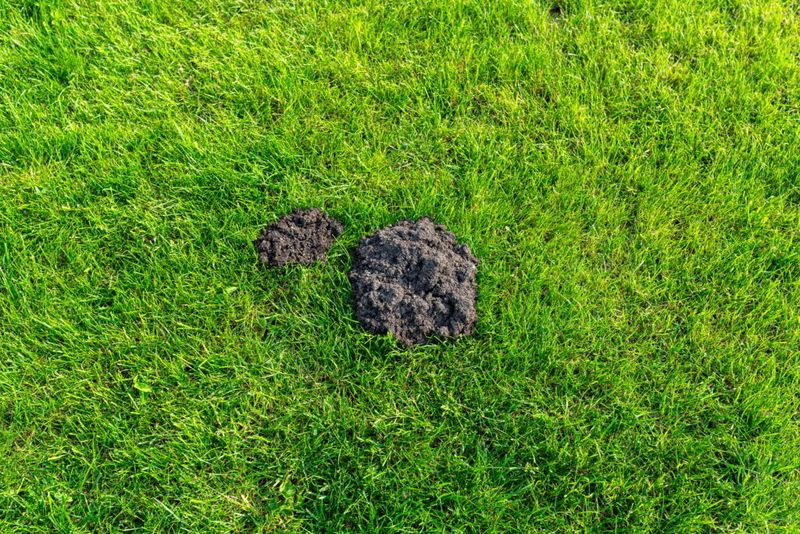
A workable plan for mole damage follows a clear sequence. First, confirm the animal by looking for raised subsurface ridges and volcano-shaped mounds – not surface runways or tapered dig holes.
Then, if temporary deterrence fits your goal, choose a commercial castor-oil product that is specifically labeled for moles, follow the label carefully, and monitor for reopened tunnels after treatment.
Account for where you live. UF/IFAS guidance is clear that sandy soil and heavy rainfall can shorten how long a castor-oil repellent remains effective in Florida, which means reapplication may be needed sooner than the label’s maximum interval.
When tunneling continues despite treatment, trapping active runs is the more dependable removal step.
Moles are not automatically lawn-destroying pests. UF/IFAS notes that moles can benefit soil by consuming some turf pests and aerating the ground.
The realistic goal here is a better-looking, more manageable lawn – and knowing when to escalate from a repellent to a trap is what gets you there.