
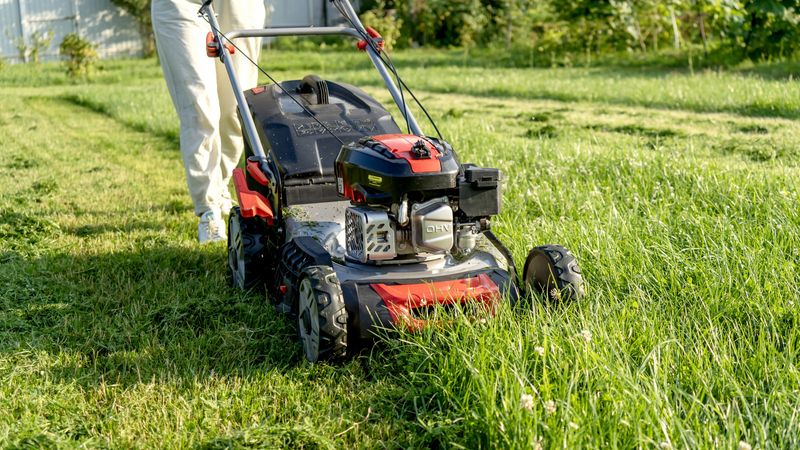
Every summer, crabgrass shows up in the same tired spots, and most homeowners blame the weather or bad luck. The real culprit might be hiding in plain sight: the way you run your mower each week.
Cutting your lawn too short, or waiting so long between mows that you take off a huge chunk at once, can thin out your desirable grass and leave bare patches where crabgrass is happy to move in. Understanding this connection is the first step to breaking the cycle for good.
Mowing can weaken the lawn without making crabgrass grow faster
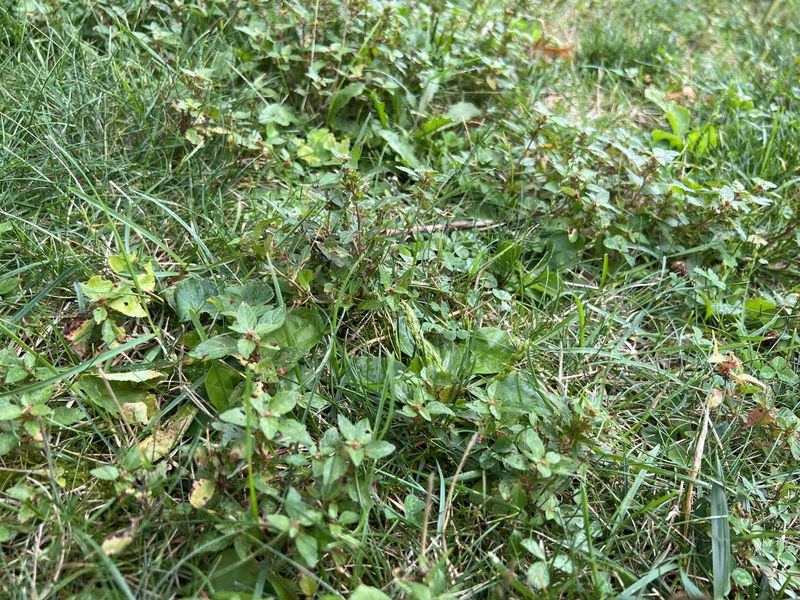
The title of this article makes a punchy claim, but the real story is a bit more nuanced. Cutting your lawn too short, or letting the grass grow tall and then shearing off a large portion at once, can leave your desirable turf stressed, thin, and less able to compete.
That creates openings where crabgrass can move in. The mower does not directly make crabgrass grow faster, but it can make life harder for the grass you actually want.
Crabgrass is remarkably tolerant of low mowing. Penn State Extension’s crabgrass guide notes that crabgrass can tolerate mowing heights of one-half inch or less, which means cutting lower will not chase it away.
The weed simply survives cuts that would punish a lawn like St. Augustinegrass or bahiagrass. Chasing crabgrass with shorter and shorter cuts is one of the fastest ways to make a turf problem worse.
The practical correction is to maintain your lawn at the right height for your specific grass species, consistently and frequently enough that no single mowing removes too much at once. UF/IFAS lawn management guidance is clear that mowing below a turfgrass’s recommended height stresses the grass and leaves it vulnerable to weed invasion.
Getting the height right is more useful than trying to out-cut the weed.
Short mowing leaves desirable turf with less competition
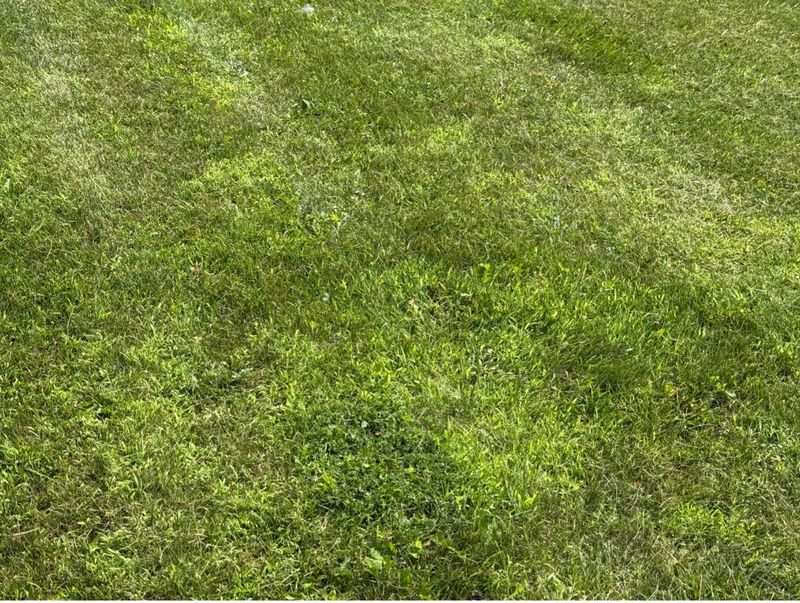
When you drop the mower deck below the recommended range for your grass type, you remove a significant portion of the leaf area that the plant depends on for photosynthesis. Less leaf tissue means less energy, shallower roots over time, and a thinner canopy overall.
That thinning is where the problem starts, because bare or exposed soil in a weakened lawn is exactly the kind of opening crabgrass can exploit.
Crabgrass does not receive a guaranteed growth boost from the act of mowing. What it gets is reduced competition.
UF/IFAS guidance on mowing Florida lawns explains that taller turf shades the soil, improves rooting, and increases a lawn’s ability to outcompete weeds. When that canopy gets stripped down by a too-short cut, crabgrass seeds already in the soil find the light and space they need to germinate and establish.
You can often see this pattern at work in your own yard. Thin patches, light-colored areas, or spots where the soil shows through are frequently the same places where crabgrass appears first.
Purdue University’s large crabgrass resource confirms that crabgrass establishes readily in thinned or bare areas of turf. Addressing those weak spots is just as important as adjusting the mower deck.
Crabgrass survives the short cut and keeps producing seed
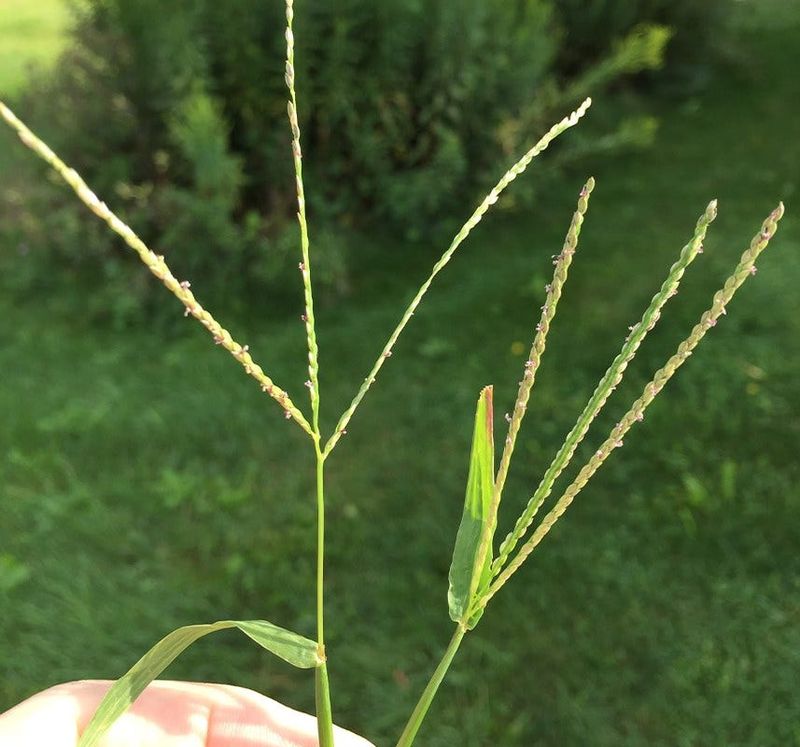
Here is the biological contrast that makes crabgrass so frustrating. Your desirable lawn grasses struggle when the mower removes too much leaf tissue, but crabgrass shrugs it off.
Penn State Extension reports that crabgrass can tolerate mowing at one-half inch or less and can still produce seed at heights as low as one-quarter inch. Lowering the deck to fight it does not work and often makes the turf around it weaker.
Crabgrass is a summer annual, meaning it germinates in warm soil, grows through summer, sets seed, and then dies with the first cold. What keeps it coming back year after year is not an underground root network spreading across your lawn.
The real culprit is the seed it leaves behind. University of Minnesota’s large crabgrass identification resource notes that the plant can root at nodes and produce stolon-like growth, but its primary mechanism for returning season after season is seed production and a persistent soil seedbank.
Seed output varies considerably by species and site conditions, but a single plant can produce a substantial number of seeds. Penn State’s guide on summer annual grass weeds places seedhead production from July through September.
That seedbank is why crabgrass reappears even after you pull every visible plant: the next generation is already waiting in the soil.
The one-third rule prevents a routine mowing from becoming scalping
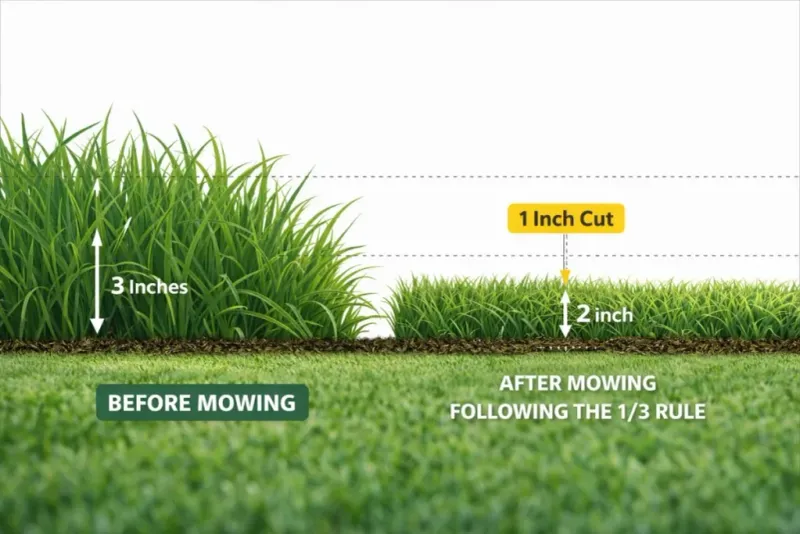
One mowing habit does more damage than most homeowners realize: waiting too long between cuts and then dropping the deck to get the lawn back under control in a single pass. That approach removes far more leaf tissue than the grass can handle at once, and the result is scalping: a stressed, discolored lawn that is suddenly much more vulnerable to weeds and drought.
The fix is the one-third rule. University of Minnesota’s mowing guide recommends never removing more than one-third of the grass blade in a single mowing session.
If your target height is 3 inches, you should mow before the lawn reaches about 4.5 inches. That means mowing more frequently during fast-growth periods rather than waiting until the lawn looks overgrown and then making a severe cut.
The Texas A&M St. Augustinegrass management guide reinforces this approach for warm-season lawns in the South.
Clipping management matters here too. Ordinary, finely chopped clippings that are evenly distributed across the lawn can stay right where they fall.
They break down and return nutrients to the turf without causing crabgrass problems. The Texas A&M bermudagrass management calendar advises returning clippings when they are fine and even, but recommends collecting them when weeds are flowering or when clumps are heavy enough to smother the grass beneath.
Set the mower for the turf species you actually grow

Before changing your mower height, identify what you are actually growing. Southern lawns are not all the same, and the right mowing height depends entirely on the turf species and sometimes the specific cultivar.
A height that keeps St. Augustinegrass healthy would stress bermudagrass, and vice versa. Getting this wrong is one of the most common reasons homeowners inadvertently weaken their lawn.
For Florida homeowners, UF/IFAS mowing height guidance recommends approximately 3 to 4 inches for bahiagrass, about 1.5 to 2 inches for centipedegrass, and roughly 2.5 to 4 inches for St. Augustinegrass depending on cultivar. Florida bermudagrass home lawns are generally maintained around 1 to 1.5 inches, and coarse-type zoysiagrass is commonly kept around 2 to 2.5 inches.
UF/IFAS centipedegrass guidance provides further detail on that species.
Texas ranges follow a similar pattern. Texas A&M’s St. Augustinegrass page recommends approximately 2.5 to 3.5 inches for home lawns, while the Texas A&M bermudagrass page places common home bermudagrass around 1 to 2 inches.
Texas A&M’s mowing publication notes that cultivar, shade, mower type, and management level can all shift the appropriate setting within a species range. Bermudagrass is the most important exception to any generic advice to mow higher: raising it to 3 or 4 inches does not suit the plant and can create a poorly adapted lawn.
For the species that tolerate it, staying toward the upper end of the recommended range generally gives crabgrass less opportunity by keeping the canopy denser. UF/IFAS bermudagrass guidance provides Florida-specific detail for that species.
A dense lawn closes more openings than mowing height alone
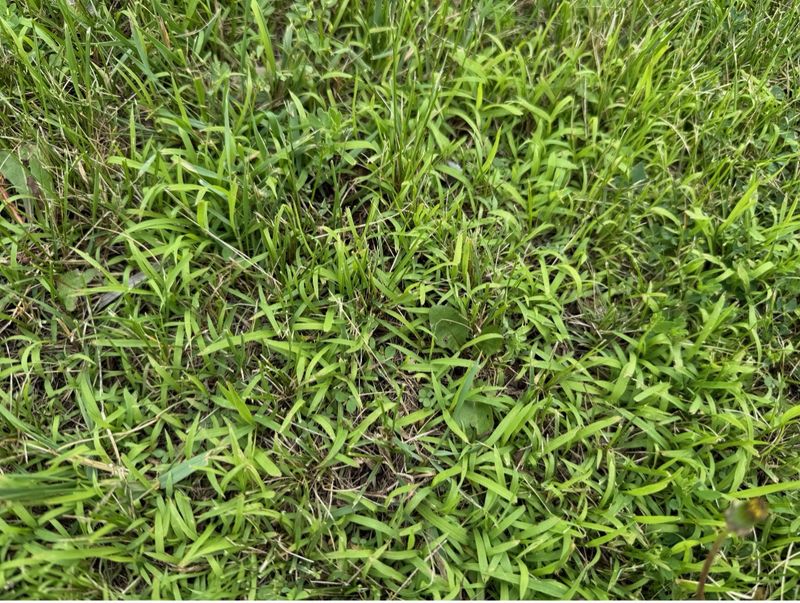
Mowing height is a meaningful piece of the puzzle, but a lawn that is thin for other reasons will keep inviting crabgrass no matter how carefully you set the deck. Soil compaction, drought stress, poor fertility, excessive shade, or a turf variety that is not well suited to your site can all produce the same thin, weak canopy that allows crabgrass to establish.
Purdue’s large crabgrass resource identifies thinned or damaged turf as a primary establishment site for the weed.
Consistent mowing at the correct height supports a denser canopy over time, but it cannot fix compaction or drought stress on its own. If your lawn has areas that stay thin even when you mow properly, look for the underlying cause.
Compacted soil may benefit from core aeration. Drought stress often reflects irrigation that is too shallow or infrequent.
The Texas A&M bermudagrass management calendar connects turf density directly to integrated management practices rather than any single adjustment.
A persistent soil seedbank also means that even after visible crabgrass plants disappear, new ones can emerge from seeds already in the ground. Penn State’s summer annual weed control guide reinforces that a dense, competitive lawn is the most reliable long-term cultural defense.
Closing off bare spots through overseeding, aeration, or better irrigation reduces the number of places crabgrass can gain a foothold each season.
Mowing can reduce new seed, but timing determines what it accomplishes
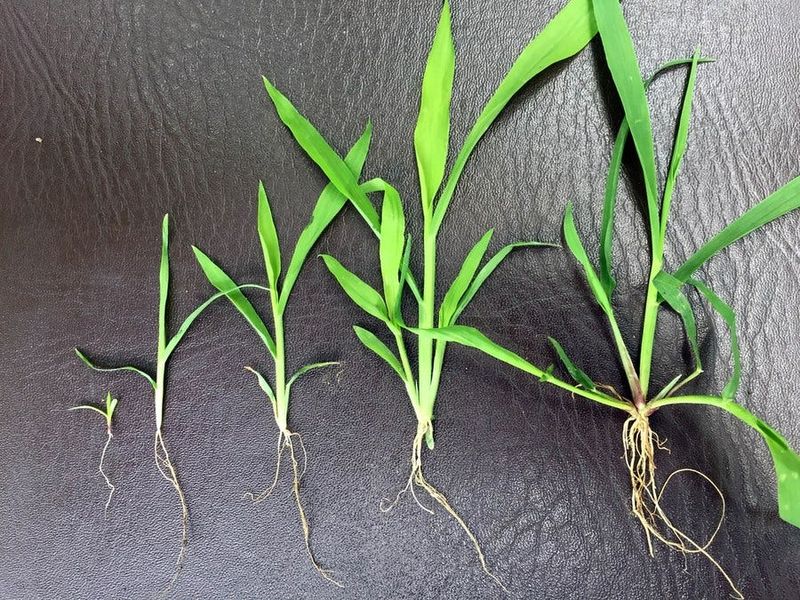
Mowing plays a limited but real role in the crabgrass life cycle, and timing is everything. Removing or mowing small crabgrass plants before they flower or set seed can reduce the number of new seeds added to the soil each season.
Penn State Extension notes that seedheads typically appear from July through September, so catching plants before that window matters. Once mature seed is present on the plant, mowing may stop further production but cannot remove seeds already formed or eliminate seeds already in the soil.
Prevention and treatment are separate tools with different timing requirements. Preemergence herbicides must be applied before crabgrass seeds germinate.
Texas A&M extension timing guidance notes that germination typically begins when soil temperatures at a 2-inch depth reach about 55 degrees Fahrenheit for several consecutive days, with that threshold arriving as early as late February in Houston and later in northern parts of the state. Florida timing varies similarly between South Florida and the Panhandle.
Soil temperature and local extension calendars are more reliable than any fixed date. Texas A&M’s turfgrass weed and pest control guide provides further regional timing context.
Postemergence options work best when crabgrass plants are still young and small. Identification is required before any treatment, because goosegrass, dallisgrass, foxtail, and other grassy weeds can look similar to crabgrass but may not respond to the same products.
University of Minnesota’s weed identification tool is a useful starting point, and UF/IFAS weed management guidance details product options and turf-specific safety considerations for Florida lawns. Always confirm that a product is labeled for both your turf species and your target weed before applying.
University of Minnesota’s crabgrass guide also provides useful context on the weed’s life cycle and control timing.
Use a mowing routine instead of relying on one rescue cut
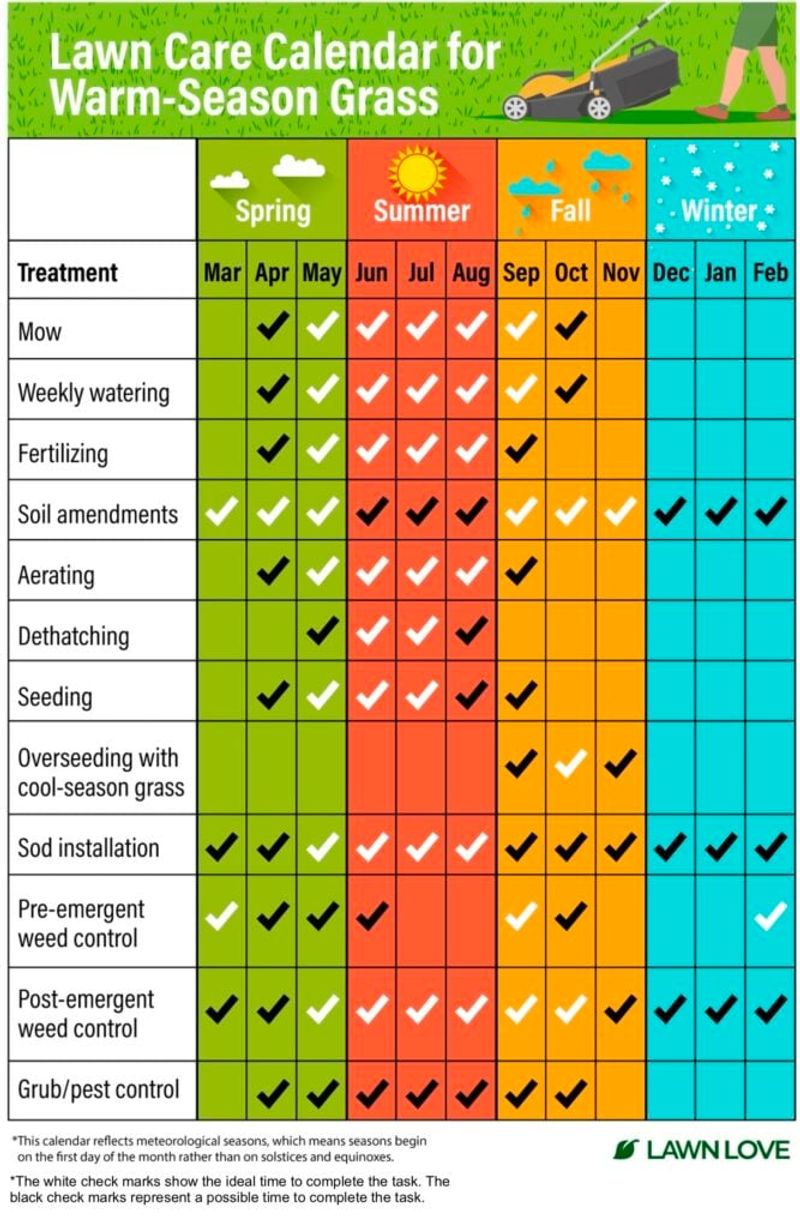
Building a consistent mowing routine does more for crabgrass reduction than any single corrective cut. Start by identifying your turf species so you know the right height range, then set the mower deck accordingly and mow often enough that you never need to remove more than one-third of the blade at once.
University of Minnesota’s mowing practices guide frames this frequency-and-height combination as the foundation of healthy turf rather than an optional upgrade.
Keep the lawn dense by addressing compaction, drought stress, and bare spots as they appear. When crabgrass does show up, remove or mow small plants before they set seed when you can catch them early enough.
Correctly timed and turf-labeled herbicides can supplement these cultural steps, but they work best alongside a healthy lawn rather than as a substitute for one. The goal is to reduce openings and lower future seed production, not to promise that every plant disappears overnight.
Any herbicide you consider must be labeled for your specific grass and target weed. Follow every instruction on the label, observe reentry intervals, and keep children and pets away as directed.
EPA pesticide label guidance explains that the label is a legally enforceable document, and EPA safety tips for children and pesticides covers protective steps every household should take. A well-timed routine mowing schedule, repeated season after season, quietly does more for a crabgrass problem than any single dramatic intervention.