
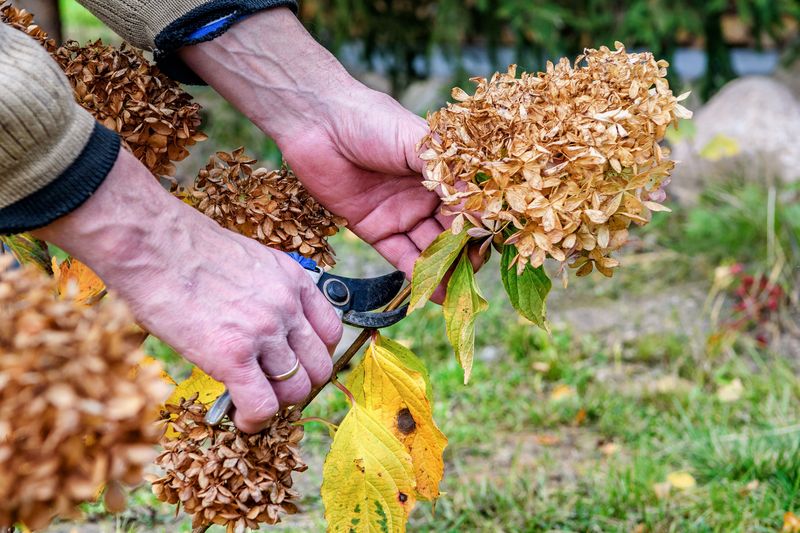
Fall is a turning point for many hydrangeas, but not because of any single treatment you apply. For old-wood types like traditional bigleaf hydrangeas, the flower buds that will open next summer are already forming on this year’s stems, which means a wrong cut now can mean no blooms later.
Knowing which type of hydrangea you have is the single most important step you can take before doing anything else this fall.
Fall matters differently for each hydrangea
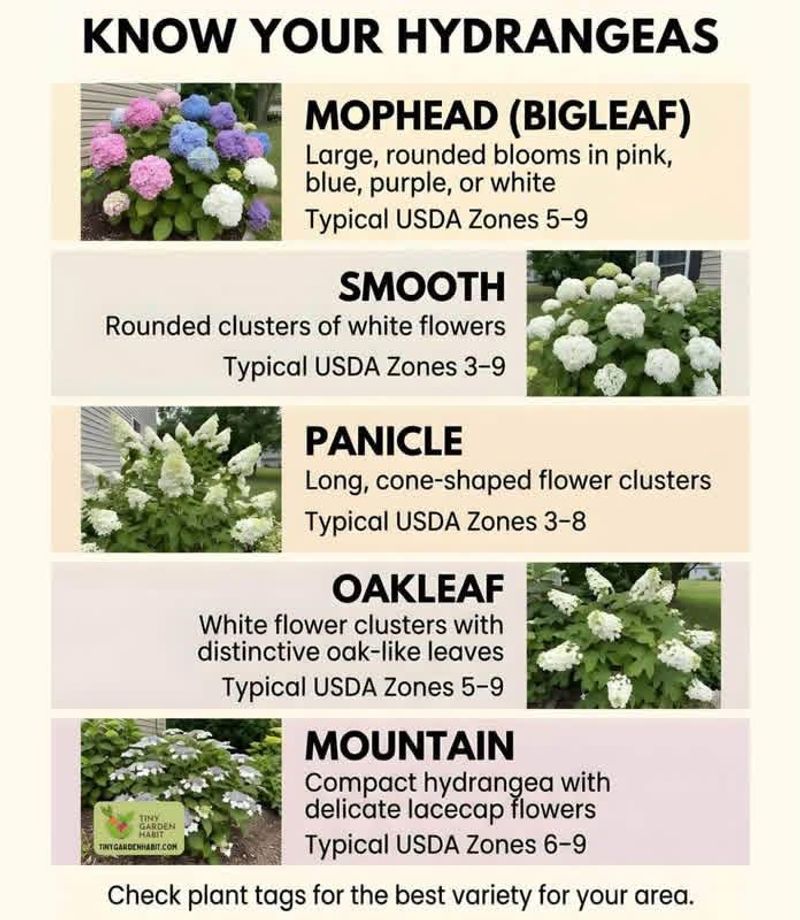
Hydrangeas are not one plant with one pruning calendar. Common names like “mophead,” “snowball,” or “bigleaf” can point to very different species with very different needs, so the plant tag or botanical name matters more than the name your neighbor uses.
Penn State Extension guidance on pruning deciduous shrubs notes that misleading common names make it easy to apply the wrong advice to the wrong plant.
The category that matters most is whether your hydrangea blooms on old wood or new wood. Old-wood bloomers, mainly bigleaf and oakleaf hydrangeas, carry next year’s flower buds on stems that grew this season.
Cutting those stems in fall removes the buds along with them, which is why fall pruning can leave these plants flowerless the following summer.
New-wood bloomers, including panicle and smooth hydrangeas, develop their flower buds on fresh growth that emerges in spring. University of Minnesota Extension explains that for these types, major pruning generally belongs in late winter or early spring, not fall.
A third group, reblooming bigleaf cultivars, can flower on both old and new wood, but they still have cultivar-specific care requirements that matter.
Before reaching for pruners this fall, check the tag, look up the botanical name, or compare the flower and leaf shape to a reliable reference. That identification step determines every decision that follows.
Bigleaf hydrangeas carry next year’s flower potential into winter
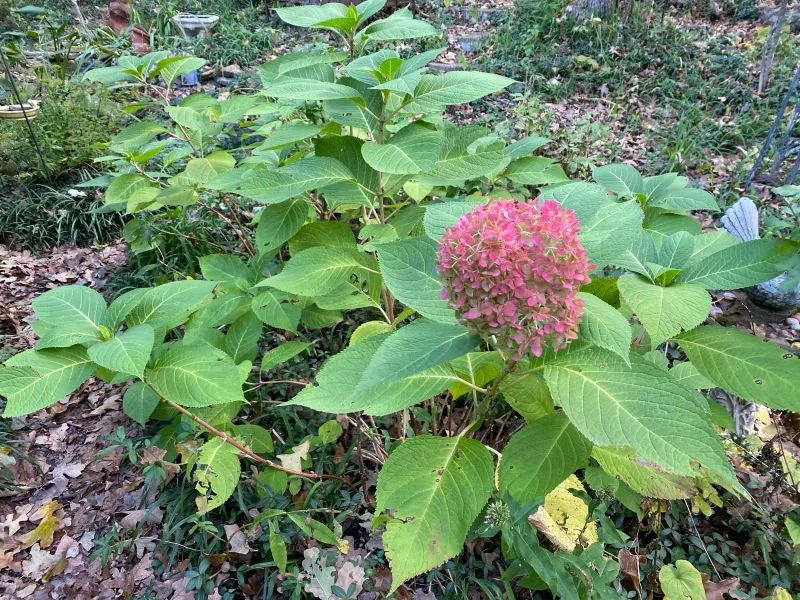
Traditional bigleaf hydrangeas, including most mophead and lacecap types, form next year’s flower buds on old wood in late summer or fall. By the time leaves drop, those buds are already sitting on the stems, waiting out winter.
UGA Extension’s bigleaf hydrangea guide states that heavy pruning from late summer through winter can remove these buds and result in little or no bloom the following season.
Fall care for bigleaf hydrangeas is mostly about protection, not transformation. Leaving the stems intact gives those buds the best chance of surviving to spring.
Gardeners who cut their bigleaf plants back hard in October, hoping for a tidier look or bigger flowers, are often the same ones wondering why the shrub leafed out beautifully in April but produced almost no flowers.
Oakleaf hydrangeas share the old-wood trait but follow a somewhat different schedule. UGA Extension’s Forsyth County identification guide recommends pruning oakleaf hydrangeas shortly after flowering rather than in fall or winter, when cutting can cost next year’s blooms.
The two plants are related in their old-wood dependency, but the specific timing of bud formation in oakleaf hydrangeas is not as well-documented as it is for bigleaf types, so treating them with the same fall restraint is the safer approach.
The practical rule for both: if the stems are alive and healthy, leave them alone until you have a clear reason and the right timing to act.
Oakleaf, panicle, and smooth hydrangeas follow different schedules
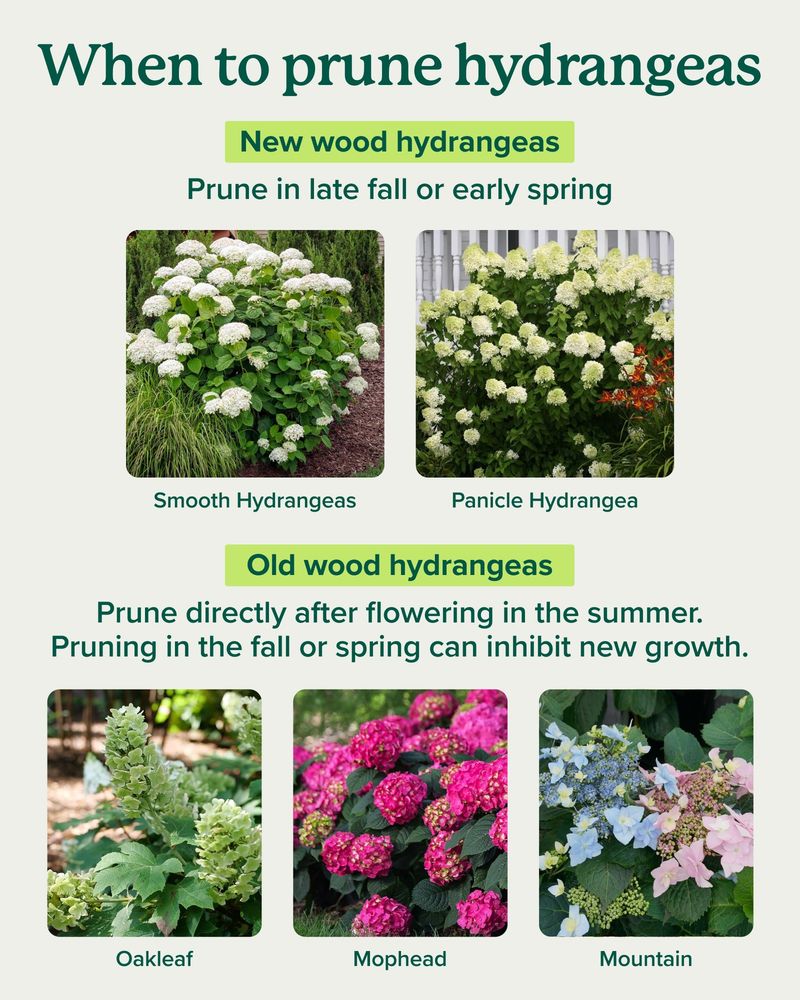
Oakleaf hydrangeas are native to the Southeast and well-loved for their four-season interest, but they belong firmly in the old-wood category. Pruning them in fall or winter risks removing next year’s flower buds.
Penn State Extension’s species-by-species pruning guide recommends pruning oakleaf hydrangeas shortly after they finish blooming, which typically means early to midsummer, not fall.
Panicle hydrangeas, the group that includes popular Limelight-type plants with their large cone-shaped flower clusters, work on a completely different timeline. These bloom on new wood, so they can handle and often benefit from major pruning in late winter or early spring before fresh growth begins.
The same applies to smooth hydrangeas, including Annabelle-type plants with their wide, round white heads. University of Minnesota Extension confirms that both panicle and smooth hydrangeas are pruned on new wood, making late-winter or early-spring timing appropriate for significant cuts.
Reblooming bigleaf cultivars, such as those in the Endless Summer series, sit in their own category. They can produce flowers on both old and new wood, which means a harsh winter that kills old-wood buds will not necessarily end the season entirely.
UGA Forsyth Extension notes that reblooming types are more forgiving but still respond to cultivar-specific care, and Penn State Extension cautions that winter injury can still reduce their earliest blooms even when new-wood flowering provides a backup later in the season.
Use selective cleanup instead of a dramatic fall cut
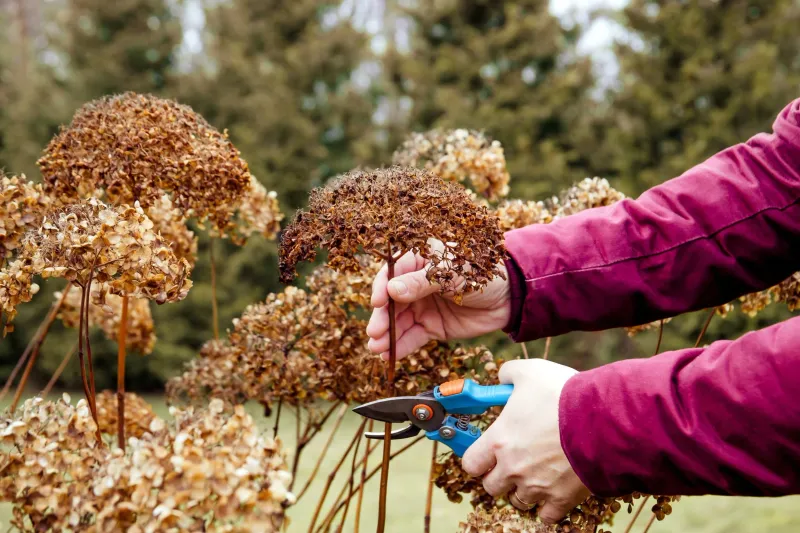
When you are not certain which hydrangea species you have, restraint is the right tool. The safest fall approach is removing only wood that is clearly dead, broken, or showing signs of disease, while leaving healthy green or tan stems alone.
UGA Extension’s Forsyth County pruning guide supports this conservative approach, noting that timing and plant identification matter before any significant pruning takes place.
Shearing a hydrangea into a neat mound, cutting it to the ground, or reducing its height by half are all actions that can strip an old-wood plant of every flower bud it set over the summer. Those cuts might feel productive, but they can translate directly into a bloomless spring.
Penn State Extension is direct on this point: fall pruning on old-wood types can remove the following season’s flowers entirely.
Sharp, clean tools make every cut cleaner and reduce tearing on stems. If you are removing wood that shows signs of disease, disinfecting your pruners between cuts helps prevent spreading pathogens to healthy tissue.
UF/IFAS guidance on tool sanitation recommends appropriate disinfection practices when disease is a concern. A diluted bleach solution or isopropyl alcohol wipe between cuts is a practical option.
Think of fall cleanup as maintenance, not renovation. Removing a few dead stubs and crossing branches keeps the plant tidy without gambling next year’s flowers on a type you have not yet confirmed.
Support the plant with water, mulch, and targeted cold protection
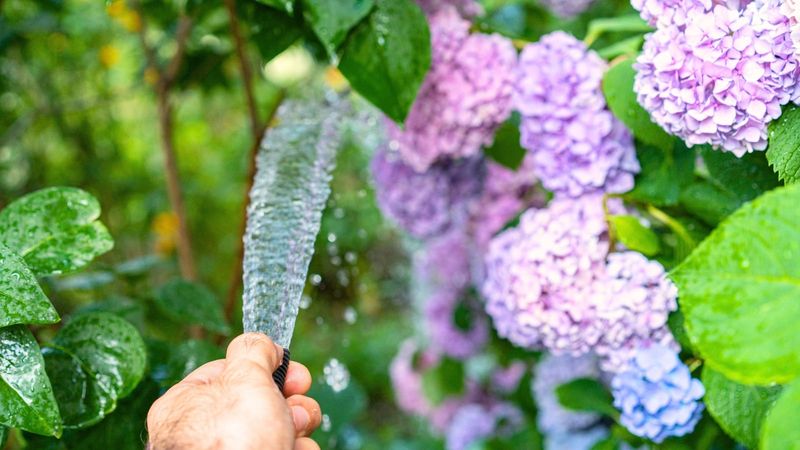
Fall watering is easy to overlook once temperatures drop, but hydrangeas still need consistent moisture, especially if the season runs dry. Newly planted shrubs and those growing in sandy Southern soils are particularly vulnerable during extended dry spells.
UGA Extension recommends keeping soil moist but well-drained rather than saturated, since persistent wetness around roots can cause its own problems.
Organic mulch applied around the base of the plant helps retain soil moisture, moderates temperature swings, and suppresses weeds through fall and into winter. UF/IFAS mulching guidance recommends roughly a 2- to 3-inch layer for landscape beds, while UGA’s bigleaf hydrangea guide suggests 3 to 5 inches at planting.
Keep the mulch pulled back a few inches from the stem to avoid trapping moisture against the crown, which can encourage rot. A ring of mulch that extends out to the drip line is far more useful than a thick mound packed against the base.
For bigleaf hydrangeas growing where freezes are possible, a light temporary covering with a sheet, old blanket, or frost cloth can protect vulnerable flower buds during a cold snap. UF/IFAS and UGA both note that bigleaf flower buds can be killed by freezing temperatures even when the rest of the plant survives.
This kind of protection is most relevant for bigleaf types and is not a universal requirement for every hydrangea species. Remove the covering once temperatures rise above freezing to prevent heat buildup.
Adjust fall care to Florida, Georgia, and Texas conditions
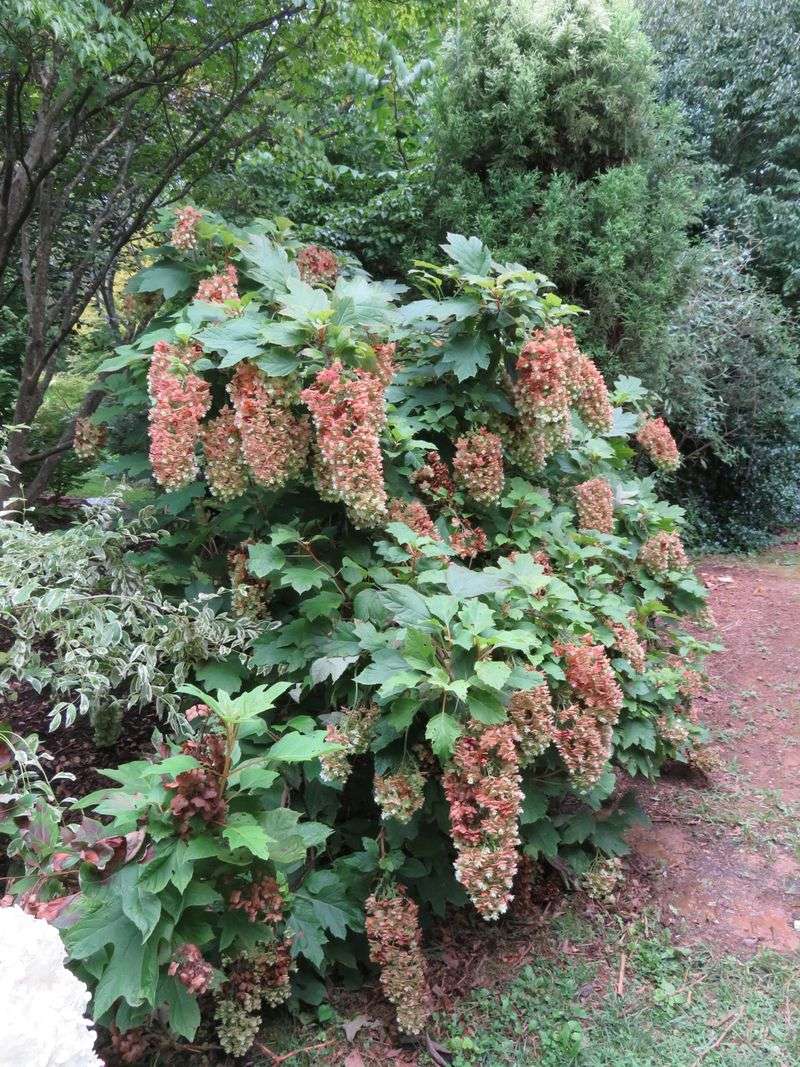
A single fall pruning calendar does not transfer cleanly across Florida, Georgia, and Texas. Warm fall temperatures in the Deep South can push hydrangeas into tender new growth well into October or November, leaving that soft tissue exposed when a sudden cold snap arrives.
UGA Extension’s ornamental pruning guide cautions that late-season cuts can stimulate growth that has no time to harden before cold weather hits.
Florida gardeners face the additional challenge of regional variation within the state. UF/IFAS places bigleaf hydrangeas specifically in North and Central Florida, where they benefit from shade, consistent moisture, and winters cool enough to satisfy their needs.
South Florida’s climate generally does not suit them well. Oakleaf hydrangeas can also work in Florida, but UF/IFAS oakleaf guidance emphasizes that they need adequate shade in the Florida heat rather than a full-sun planting.
Texas presents its own range of conditions. Rather than making broad statewide recommendations, the more honest approach is site-specific guidance.
Texas SmartScape lists dwarf oakleaf hydrangea as a partial- to full-shade plant with medium water demand in North Central Texas, which reflects the careful, location-aware approach that Texas gardeners need. What works in a shaded East Texas yard may not work in a hot, exposed Central Texas garden.
Knowing your microclimate matters as much as knowing your plant type.
Poor flowering can have causes beyond fall pruning
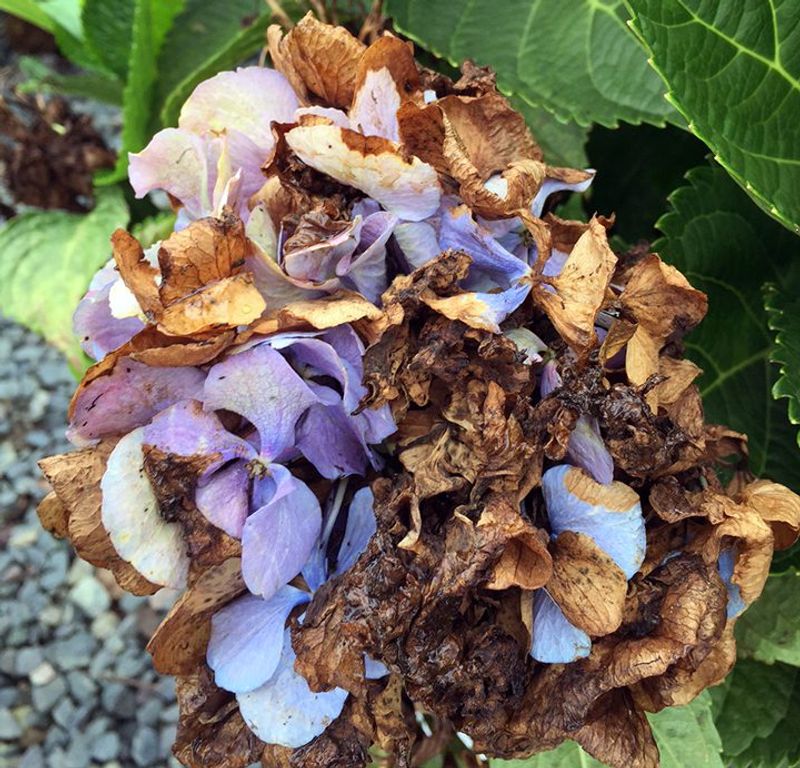
A hydrangea that barely bloomed last summer does not automatically mean you pruned it wrong. Winter injury is one of the most common hidden culprits, especially for bigleaf types.
Penn State Extension’s guide to hydrangea bloom failure explains that bigleaf flower buds can be killed by freezing temperatures even when the shrub itself survives and leafs out normally in spring, leaving gardeners confused about why a healthy-looking plant produced almost nothing.
Beyond winter damage, bloom quality and quantity are shaped by cultivar genetics, plant age, light exposure, soil moisture, deer browsing, and overall site conditions. A bigleaf hydrangea planted in too much sun or too little water will struggle regardless of how carefully you prune it.
Young plants often put energy into root and stem development before producing heavy bloom, so patience matters in the first few seasons after planting.
Fall fertilizer is not a reliable fix for poor flowering. UGA Extension lists excess nitrogen among possible contributors to poor bigleaf bloom, since high nitrogen can push vegetative growth at the expense of flowers.
UF/IFAS Florida-Friendly landscaping principles warn that overfertilizing can stimulate excessive growth, worsen certain pest problems, and contribute to nutrient runoff. If you want to fertilize, follow soil test results and apply during the growing season rather than in fall.
The most productive fall habit is straightforward: identify your plant, protect old-wood stems when applicable, hold off on major cuts until the right season, and focus on stable moisture and mulch. A well-supported hydrangea going into winter is already ahead of one that was cut back hard and left to fend for itself.