
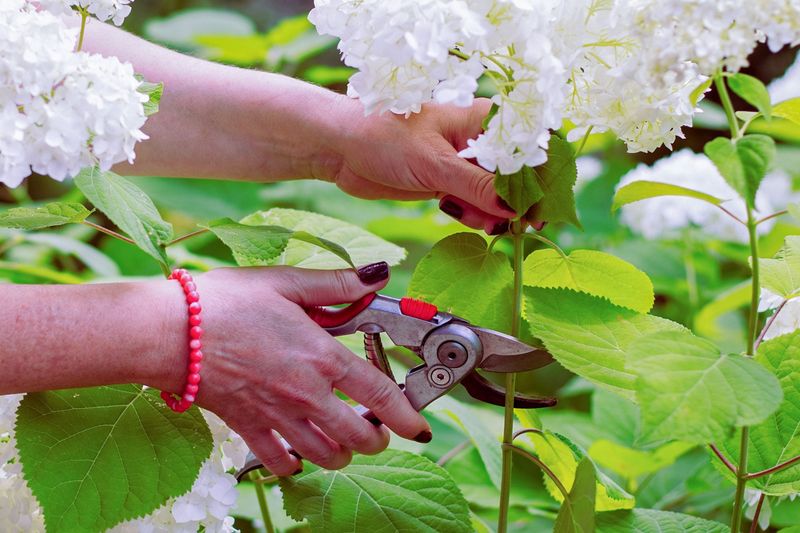
Fall is the season when a lot of gardeners feel the urge to cut everything back and tidy up the yard, but with hydrangeas, that instinct can backfire badly. Many common hydrangeas have already set next season’s flower buds on their old stems by late summer, so a well-meaning fall trim can quietly wipe out months of potential blooms.
The good news is that knowing your hydrangea type and making a few careful choices right now can protect those buds through winter. No single task guarantees a showstopping display, but avoiding the wrong cut at the wrong time gives your plant its best realistic shot.
Fall pruning can remove next season’s flower buds
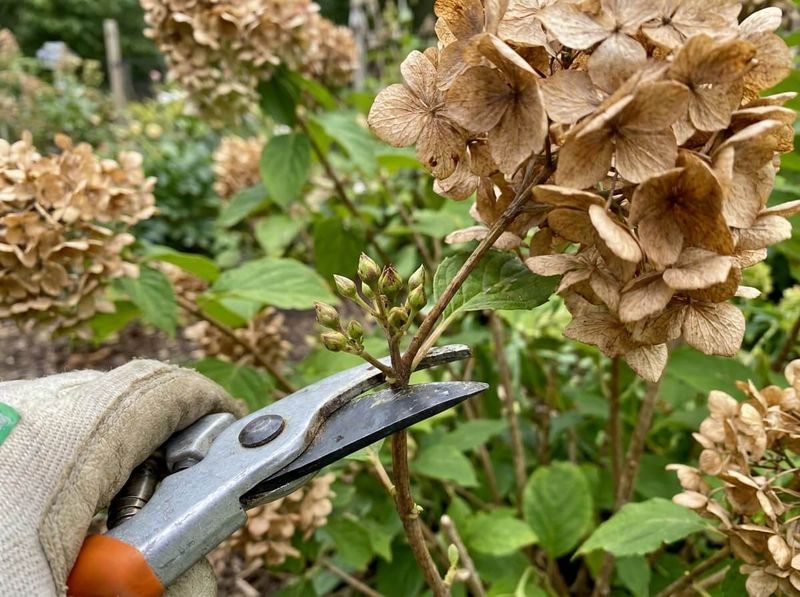
Here is the part that surprises many gardeners: a hydrangea can look completely done for the season while still carrying next year’s flowers. UGA Cooperative Extension guidance on bigleaf hydrangea explains that traditional bigleaf types form their following year’s flower buds in late summer or early fall on the same stems that just finished blooming.
Cutting those stems in fall or winter does not just remove old growth. It removes the buds that were ready to open next season.
The same principle applies to oakleaf and mountain hydrangeas. All three are what growers call old-wood bloomers, meaning the plant builds next season’s flowers on existing, mature stems rather than on fresh growth it will push in spring.
A fall cleanup that seems harmless can strip away that stored potential before the first freeze ever arrives.
None of this means fall care is off the table. Mississippi State University Extension’s hydrangea guide reinforces that identifying the hydrangea type before reaching for pruners is the most important first step.
The key correction to the popular fall-pruning advice is this: protecting old-wood buds can improve the odds of next-season flowers, but no single action guarantees the biggest or most numerous blooms. Cultivar, light, water, winter injury, and plant age all factor into the final result.
Identify the hydrangea before you reach for pruners
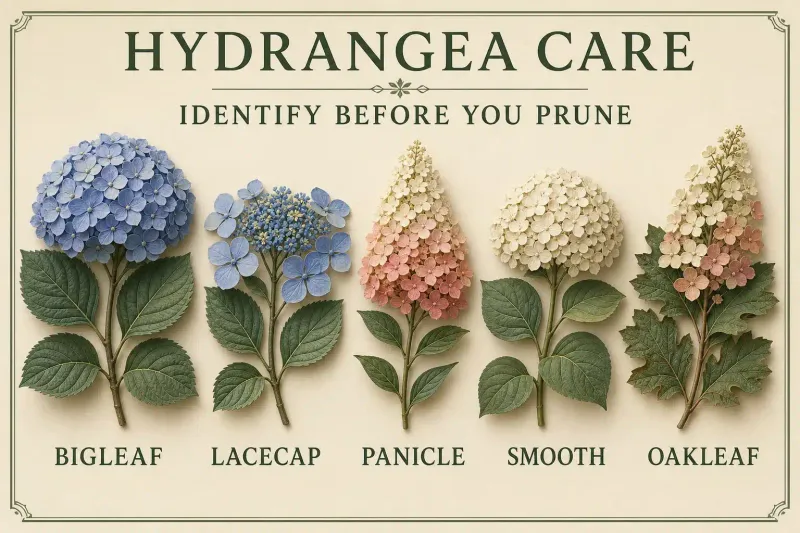
Knowing which hydrangea you have is not just a botanical detail. It is the single most practical thing you can do before fall cleanup begins.
UGA Extension’s identification guide makes the dividing line clear: old-wood bloomers need a completely different approach than new-wood bloomers, and treating them the same way is where most pruning mistakes happen.
Bigleaf hydrangeas (Hydrangea macrophylla), which include both the round mophead and the flatter lacecap forms, are the most common type in Southern yards and are old-wood bloomers. Oakleaf hydrangeas (Hydrangea quercifolia), recognizable by their deeply lobed leaves and elongated white flower clusters, are also old-wood bloomers.
Mountain hydrangeas (Hydrangea serrata) fall into the same category. All three set next season’s buds on the stems they grew this year, so pruning after late summer puts those buds at risk.
Reblooming cultivars, including many sold under names like Endless Summer, can flower on both old and new wood. University of Minnesota Extension’s pruning guide notes that while these types are more forgiving of pruning mistakes and winter bud loss, their flexibility does not make aggressive fall pruning automatically a good idea.
Panicle hydrangeas (Hydrangea paniculata), such as Limelight, and smooth hydrangeas (Hydrangea arborescens), such as Annabelle, are new-wood bloomers. Mississippi State Extension confirms that panicle and smooth types form buds on current-season growth, which puts them on a very different pruning schedule from the old-wood group.
Leave old-wood hydrangeas mostly alone
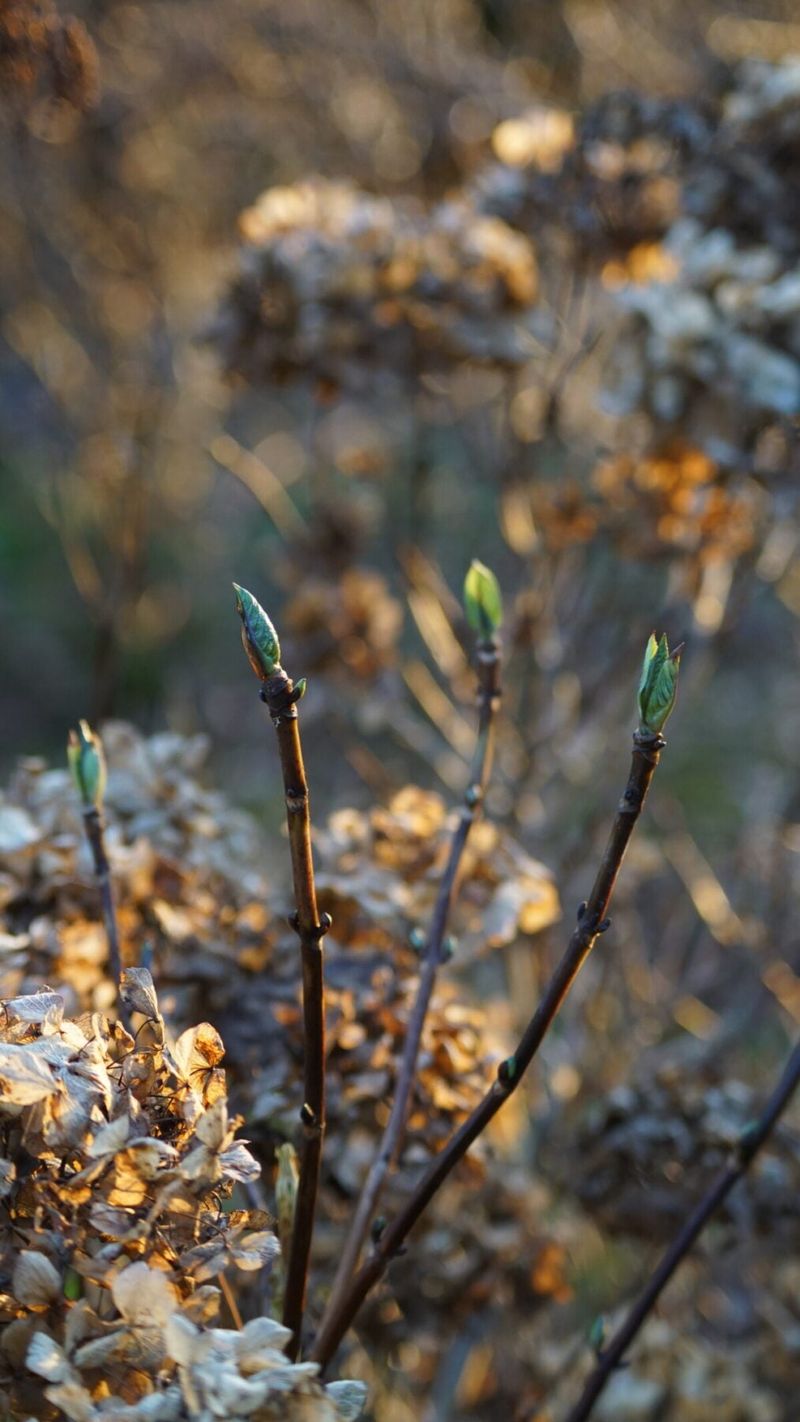
Once you have confirmed that your hydrangea is a bigleaf, oakleaf, or mountain type, the most protective fall plan is also the simplest one: leave the healthy stems alone. Mississippi State University Extension is clear that these types should be pruned shortly after flowering when pruning is necessary, not as part of a routine fall cleanup.
Any shaping done in fall or winter on old-wood types risks cutting off buds that are already in place for the following season.
That does not mean you cannot touch the plant at all. Removing wood that is clearly dead, diseased, broken, or poses a safety concern is always appropriate and does not conflict with bud preservation.
The test is straightforward: if a stem is firm, intact, and shows no sign of damage or disease, leave it. Dead wood will often feel hollow or snap easily, and diseased stems may show discoloration, cankers, or unusual spots.
Remove those. Leave everything else.
If you are not sure which type of hydrangea you have, the conservative move is to stop after that limited cleanup. UGA Cooperative Extension and University of Minnesota Extension both emphasize identifying the species or cultivar before any substantial shaping.
An unidentified plant that looks dormant may still be carrying next season’s buds on every stem. Waiting costs nothing.
Cutting at the wrong time can cost a full season of flowers.
Prune new-wood types in late winter
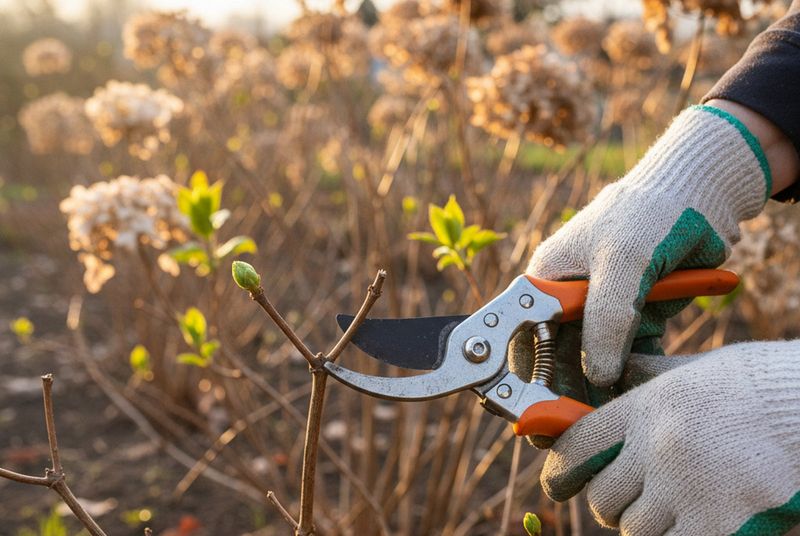
Panicle and smooth hydrangeas follow a completely different calendar, and understanding that difference opens up real pruning flexibility without any risk to next season’s flowers. Both types form their buds on new growth they push each spring, so removing old stems does not eliminate the following season’s blooms.
Mississippi State University Extension confirms that panicle and smooth hydrangeas bloom on new wood, which means pruning can be done without the same caution required for old-wood types.
Late winter or early spring is the preferred window for most gardeners. Waiting until then lets you see exactly where winter damage occurred, so you can make cleaner, more accurate cuts.
Proven Winners’ hydrangea pruning guide notes that leaving dried flower heads on panicle types through winter also adds visual interest to the garden before you cut back. Fully dormant panicle hydrangeas may tolerate fall pruning, but late winter remains the easier and more informative timing for most home gardeners.
Smooth hydrangeas come with a specific tradeoff worth knowing before you cut. Ask Extension guidance on smooth hydrangea pruning explains that hard pruning tends to produce fewer, larger flower heads, while leaving more of the woody framework in place tends to produce more numerous clusters that are somewhat smaller but sturdier and less likely to flop under their own weight.
University of Minnesota Extension reinforces this tradeoff: neither approach is wrong, but the outcome differs depending on your goal. Decide whether you want a dramatic statement or a fuller, more self-supporting shrub, then prune accordingly.
Support the plant with water and mulch
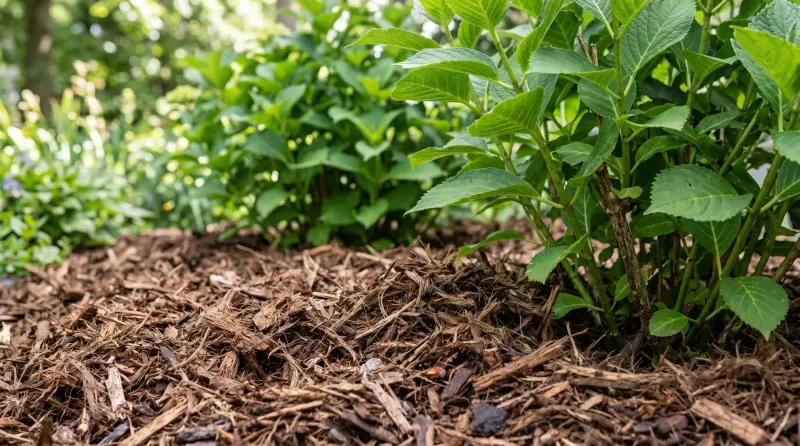
Pruning decisions get most of the attention in fall hydrangea care, but what happens between now and spring matters just as much. Keeping the plant adequately watered during dry fall and winter periods is one of the most straightforward things you can do to support it.
Mississippi State Extension’s hydrangea research identifies drought in late fall or winter as a possible contributor to poor flowering, and drought-stressed plants are also more vulnerable to winter damage when cold weather arrives.
Applying organic mulch around the base of the plant helps on two fronts: it slows moisture loss from the soil and moderates soil temperature swings. UGA Cooperative Extension recommends roughly 3 to 5 inches of mulch for bigleaf hydrangea, while other extension sources commonly suggest 2 to 3 inches as a workable range.
Whichever depth you use, keep the mulch pulled back a few inches from direct contact with the stems to avoid creating conditions that invite rot or pests.
Two things to skip in fall: heavy nitrogen fertilizer and any assumption that deadheading is essential for next season. UGA Extension’s winter freeze guidance warns that late-season nitrogen can push tender new growth right before cold weather arrives, making the plant more vulnerable.
Excess nitrogen can also reduce flower production rather than increase it. As for deadheading, University of Maryland Extension describes it as an optional cosmetic choice.
Removing spent flower heads does not protect or produce next season’s buds, and leaving dried clusters on the plant through winter is a perfectly reasonable decision.
Match freeze protection to your Southern climate
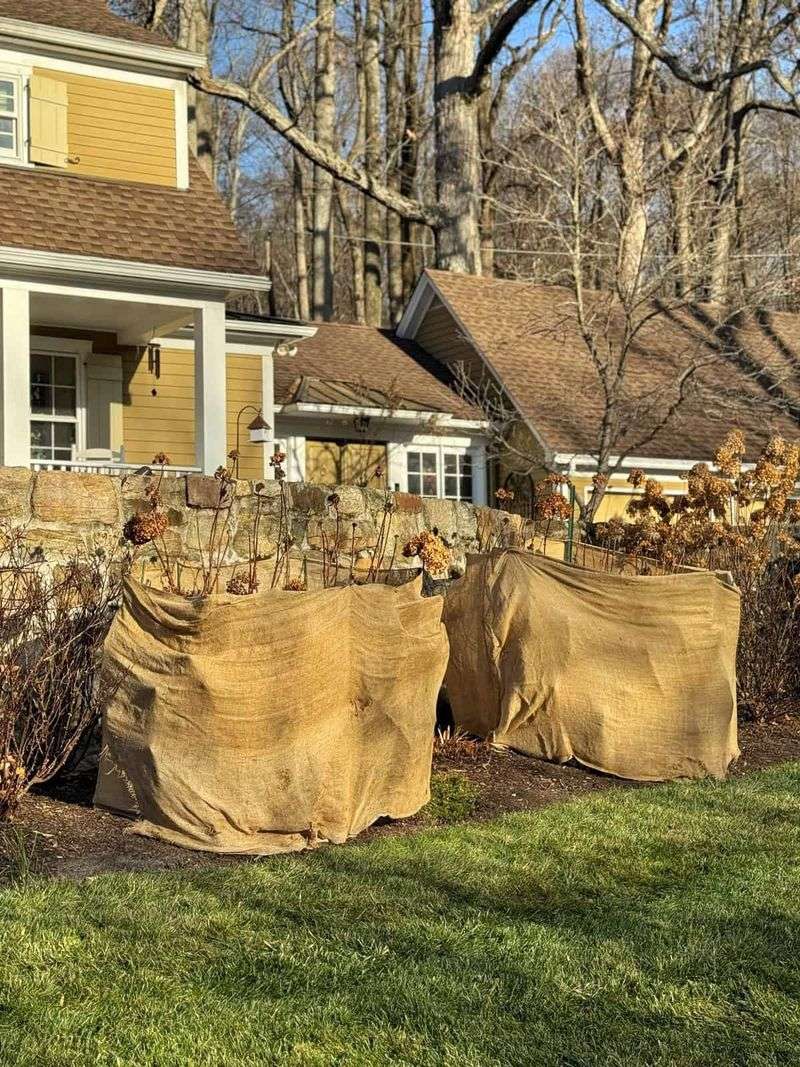
Southern winters are not one climate. A gardener in Gainesville, Florida faces a very different freeze risk than one in the Texas Panhandle or even in Houston, and the advice for each situation should reflect that.
For gardeners in areas where hard freezes are occasional rather than routine, protecting vulnerable bigleaf hydrangeas during an expected cold snap can reduce the chance of losing the flower buds those stems are carrying.
UGA Extension’s freeze protection guidance recommends sheets, blankets, cardboard, or a wire cylinder filled with leaves as appropriate covers when temperatures are forecast to drop hard. The cover should go over the plant before the freeze arrives and come off or be vented once temperatures rise during the day.
Never leave plastic sheeting over a plant in daytime sun. Plastic heats rapidly and can damage or kill foliage that survived the freeze itself.
For Florida gardeners, UF/IFAS Gardening Solutions notes that bigleaf hydrangeas perform best in North and Central Florida, where winters are cool enough to meet the plant’s chilling requirements. Much of South Florida is simply too warm for reliable bigleaf performance, and oakleaf hydrangea has its own shade and regional performance considerations across the state.
For Texas readers, Texas A&M AgriLife Extension emphasizes that pruning timing for old-wood bloomers should follow local climate and freeze dates rather than a fixed calendar, since conditions vary substantially from the Panhandle to the Gulf Coast.
Covers, mulch, and adequate moisture can all reduce freeze risk, but they cannot guarantee bud survival through a severe or prolonged cold event.
Protect the opportunity for blooms, not a guaranteed result
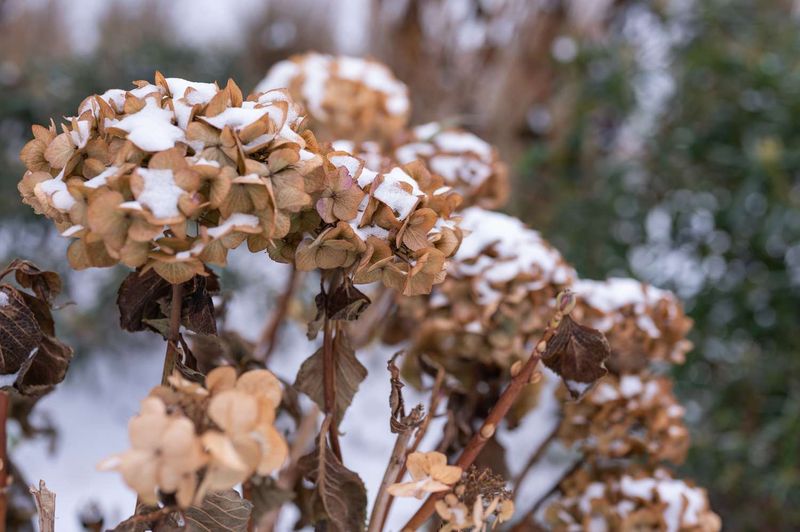
All of the fall steps covered here – identifying the hydrangea type, leaving old-wood stems intact, keeping the plant watered, applying mulch, and covering against damaging freezes – work together to protect the opportunity for next-season flowers. That is the honest framing.
University of Maryland Extension’s pruning guide is direct on this point: bloom size and abundance depend on more than pruning alone. Cultivar, light levels, water availability, soil fertility, winter injury, and plant age all shape what actually opens in the garden.
UGA Cooperative Extension notes that even well-protected bigleaf hydrangeas can lose buds to a late frost, an unusually severe winter, or drought stress that built up quietly during the fall. Preserving old-wood buds raises the odds, but it does not eliminate risk.
University of Minnesota Extension similarly reminds gardeners that reblooming cultivars may recover from bud loss more readily, but that flexibility is not a reason to skip the identification step or treat any hydrangea carelessly in fall.
The practical decision sequence is short: identify first, cut sparingly on old-wood types, maintain soil moisture through dry periods, apply mulch before winter, and cover vulnerable plants when a hard freeze is forecast. Save major shaping for the right season and the right plant.
A hydrangea that keeps its buds through winter still has to contend with spring weather, but it starts with something to work with. That is the real payoff of doing things right now.