
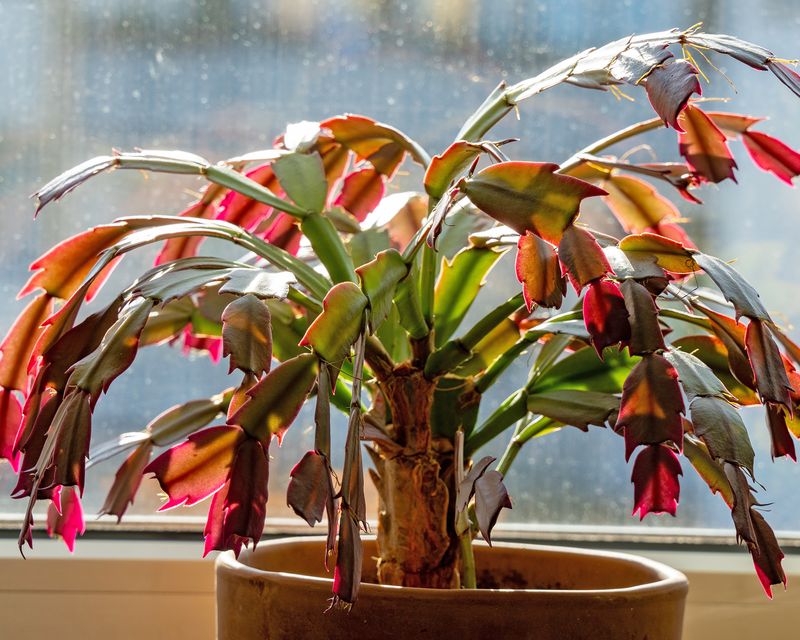
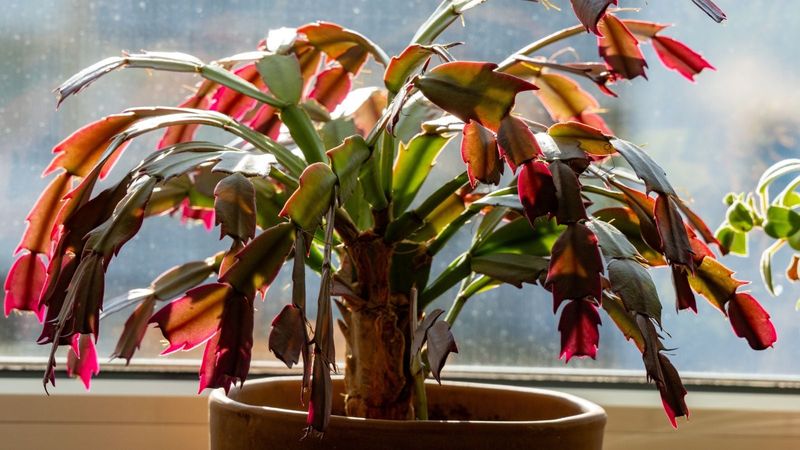
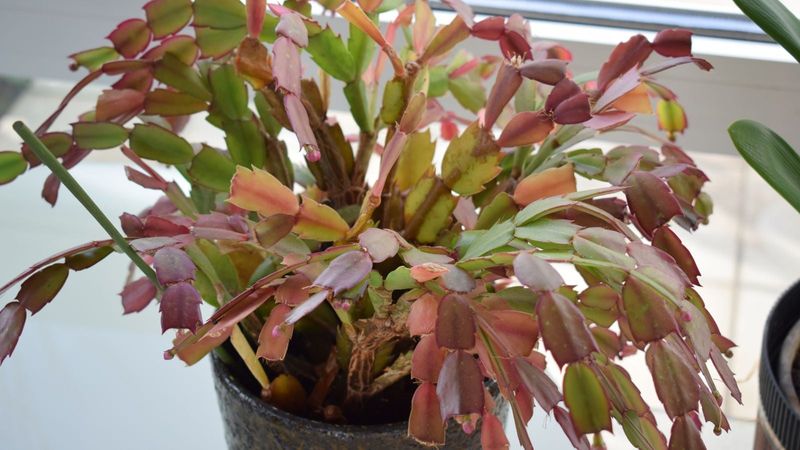
Holiday cactus owners across Florida and Texas often spot their plant’s flat, jointed stem segments turning red or purplish and immediately worry something is terribly wrong. That color shift is worth paying attention to, but it rarely points to one single cause.
Several different care conditions can push a holiday cactus into that stress response, and sorting out which one is actually at work makes all the difference between a quick fix and a wasted effort.
Red segments signal stress, not one diagnosis
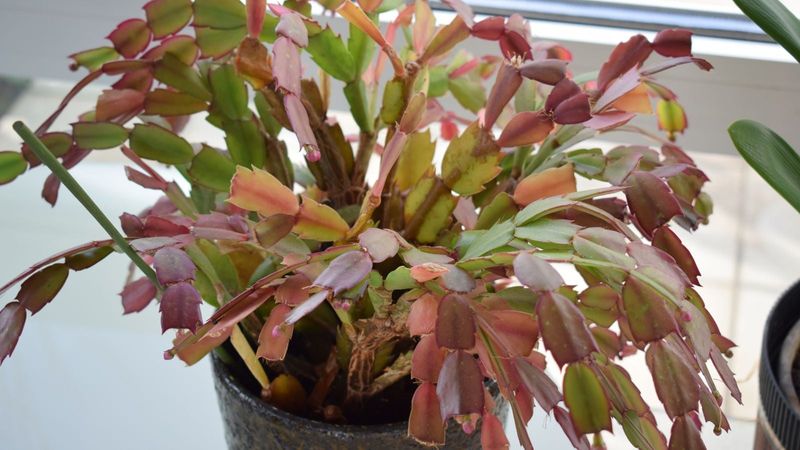
Reddish or purplish stem segments on a holiday cactus are a stress signal worth investigating, but they do not point automatically to a single cause. Gardeners often call these flat, jointed structures “leaves,” and that is fine, but the technical term is stem segments, and understanding what they are helps explain why they respond to so many different pressures.
The color change tells you something is off; it does not tell you exactly what.
Strong direct light is a reasonable first thing to check, especially when red or purplish color appears mainly on segments facing the window or the sun. UC Master Gardeners of Sacramento County identify too much sun and sunburn, along with overwatering, as recognized causes of red foliage in holiday cacti.
That list alone shows why treating light as the only answer misses important possibilities.
Drought stress, root damage from saturated soil, the physical strain of a heavy bloom cycle, excess fertilizer salts, and in less common cases disease can all produce related discoloration. Broad reddish or purplish coloring across otherwise firm segments is a different situation than discrete sunken lesions, blackened patches, or rapidly collapsing growth, and those distinctions matter when you start troubleshooting.
Approach the symptom as a starting point, not a finished diagnosis.
Bright filtered light suits holiday cacti
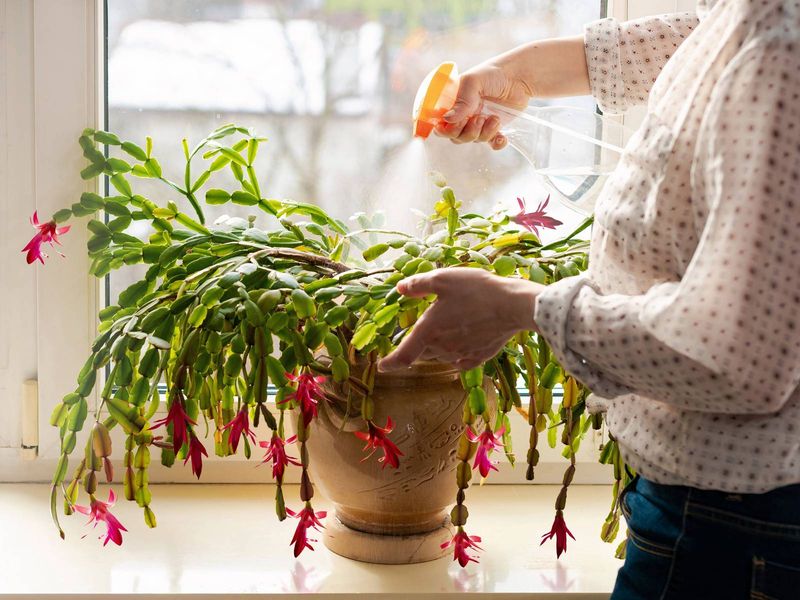
Holiday cacti are not desert plants. They originate in the cloud forests of southeastern Brazil, where they grow as epiphytes clinging to tree bark and rocky outcroppings, receiving filtered light through the forest canopy and drawing moisture from humid air and organic debris.
UNH Extension confirms that these plants prefer bright, indirect light rather than the intense, unfiltered sun that a true desert cactus tolerates without trouble.
That rainforest background explains why a south- or west-facing window without any buffer can work against the plant, especially during the long, blazing afternoons common across Florida and Texas. UF/IFAS Gardening Solutions specifically warns that direct or strong sunlight can scorch holiday-cactus stems, and recommends positioning plants where they receive bright light without full-force sun exposure.
Practical fixes include hanging a sheer curtain across a sunny window, moving the pot a few feet back from the glass, or placing the plant on a covered porch where it gets open sky brightness without direct rays. Afternoon sun is generally more intense than morning sun, so an east-facing spot or a lightly shaded porch often works better than unprotected south or west exposure.
None of this means that every red plant has a light problem, but for a plant sitting in direct sun, adjusting that exposure is a sensible first step.
Use segment position and firmness to assess light stress
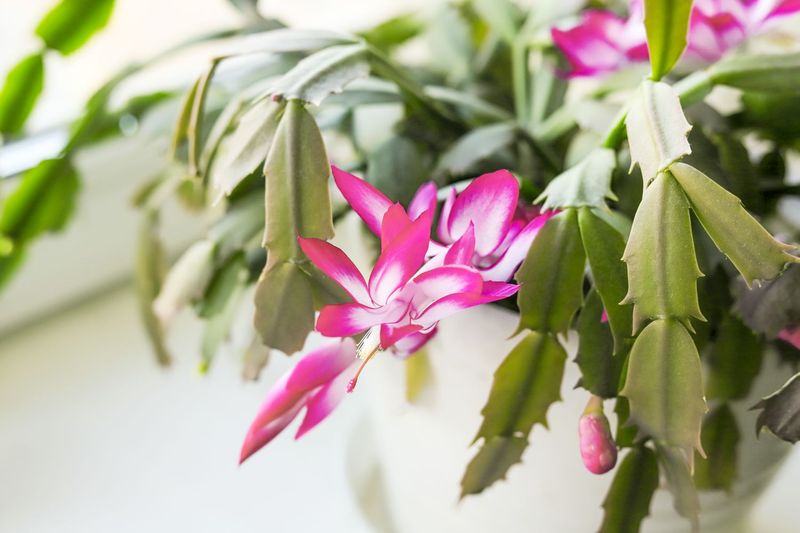
Before changing anything about how you care for your plant, spend a few minutes simply looking at it and touching it. Compare the segments that face the window or brightest light source with the segments on the shaded side of the same plant.
If the reddish or purplish color is concentrated on the sun-exposed portions while the shaded segments remain green, that pattern is consistent with light stress. It does not prove it, but it makes light a reasonable place to start.
Next, feel the segments gently between your fingers. UC Master Gardeners note that overwatering is among the recognized causes of red coloration, which means firm, plump segments with only surface discoloration carry a different message than segments that feel soft, shriveled, or limp.
Firm segments with color only on the sun-facing side suggest the plant’s structure is still intact and the issue may be environmental rather than internal. UF/IFAS guidance on direct sunlight reinforces that light-stressed segments can show surface color changes before physical deterioration sets in.
Limp or collapsing growth, widespread discoloration that does not follow the light pattern, or segments that feel mushy require checking soil moisture and drainage next rather than assuming the light is the culprit. This observation sequence is a practical way to narrow down possibilities, not a validated clinical test.
Use it to form a hypothesis, then confirm by checking the growing medium.
Check the medium before you add water
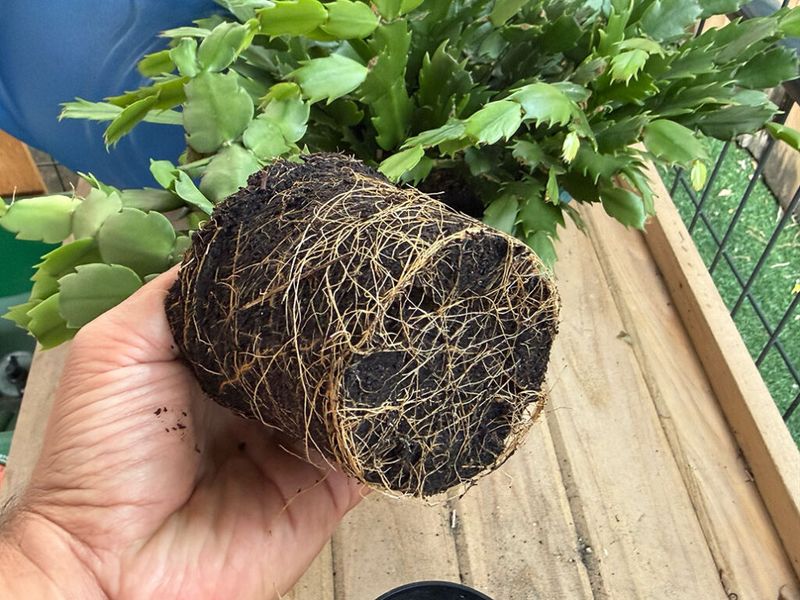
Soil moisture is the next checkpoint after light, and it matters enormously before you pour a single drop of water. Press your finger about an inch into the growing medium.
If it feels dry at that depth and the segments look slightly shriveled or limp, drought stress is a plausible contributor. If the medium feels wet or soggy and the plant still looks wilted or discolored, that is a different and more urgent situation.
UF/IFAS Gardening Solutions recommends watering holiday cacti thoroughly when the top inch of medium feels dry, then letting excess drain completely from the pot and emptying any standing water from the saucer. That approach prevents both prolonged dryness and prolonged saturation, two conditions that pull the plant in opposite harmful directions.
University of Minnesota Extension identifies root rot from excess water as a cause of wilting in holiday cacti even when the soil is wet, which means adding more water to a soggy pot can worsen root damage rather than fix anything.
A fixed weekly watering schedule rarely fits every plant in every home. UNH Extension emphasizes that the right watering frequency depends on the pot size, container material, drainage quality, light level, temperature, and the plant’s current growth stage.
A clay pot on a sunny porch in August dries out faster than a plastic pot in an air-conditioned room in December. Let the medium, not the calendar, guide you.
Avoid fertilizer and repotting reflexes
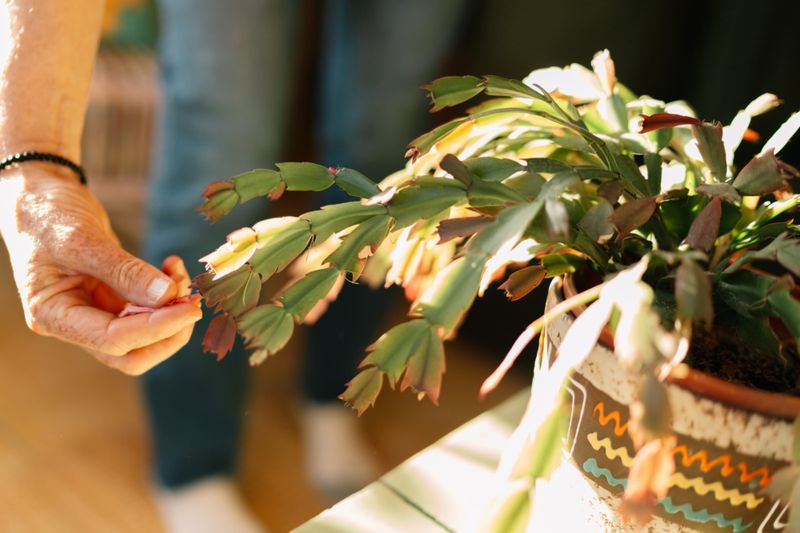
Red or purplish segments can tempt gardeners toward two quick fixes that may do more harm than good: reaching for fertilizer or rushing to repot. Washington State University Extension explains that red or purple leaf coloration is frequently and mistakenly attributed to phosphorus deficiency, but this explanation is often overapplied and rarely the actual problem in home gardens.
Adding phosphorus fertilizer without evidence of a nutrient problem or a growing-medium test is not a reliable response to unexplained red segments.
Excess fertilizer salts can injure roots, so fertilizer should not be the first move when the cause of discoloration is still unclear. UF/IFAS recommends using a balanced houseplant fertilizer at reduced strength during active growth and following the product label, rather than applying it as an emergency measure.
If you do fertilize, wait until you have addressed light and watering conditions first.
On the repotting question, Iowa State University Extension notes that holiday cacti often grow and flower well while somewhat pot-bound, and recommends repotting only after the plant has clearly outgrown its container, preferably in spring or early summer when it is not in bloom. Moving to an oversized pot can keep the medium wet for too long, raising the risk of root damage.
The strain of a heavy bloom cycle can also show up as temporary segment discoloration, but that is a separate condition from chronic light or watering stress, not a single explanation for red color. UC Master Gardeners include heavy flowering as one of several recognized stressors, which reinforces that no single cause covers every situation.
Adjust care without creating new stress
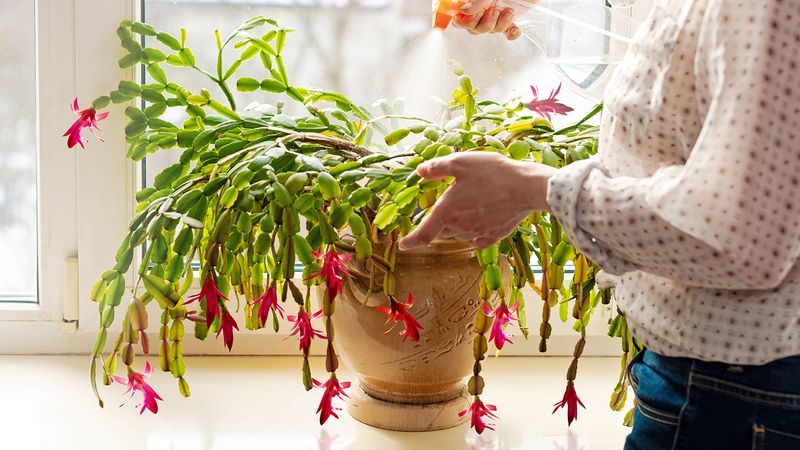
Once your observations point toward a likely cause, adjust one thing at a time rather than overhauling the plant’s entire care routine at once. If sun-exposed segments are red and the plant is sitting in direct afternoon sun, moving it to bright filtered light or adding a sheer curtain is a low-risk first step.
UF/IFAS Gardening Solutions warns that direct or strong sunlight can scorch stem segments, so reducing that exposure when it fits the symptom pattern makes practical sense.
For Southern gardeners keeping holiday cacti on a porch or patio, UF/IFAS Bay County Extension specifically advises protecting plants from full summer sun and bringing them indoors before temperatures drop below 50 degrees Fahrenheit. Florida and Texas summers combine intense light with heat that accelerates soil drying and amplifies the stress on segments already struggling.
Shade cloth, a covered porch, or a north-facing outdoor wall can all provide the filtered brightness these plants prefer without the damaging intensity.
After addressing light, correct watering and drainage based on what the soil check revealed. Iowa State Extension and University of Minnesota Extension both emphasize well-drained soil and caution against excess watering.
Changing one factor at a time is a practical way to avoid unnecessary overcorrection, but if you find saturated soil, poor drainage, root decline, or collapsing growth, address those conditions promptly rather than waiting to see whether one small adjustment helps.
Lesions and collapse call for closer assessment
Broad reddish or purplish coloring across otherwise firm segments is a very different picture from what you see when disease or severe rot is involved. Reddish-orange sunken spots, blackened areas, segments that collapse or feel mushy at the base, or rapid unexplained shedding of otherwise intact segments all call for a more cautious look.
These are not simply a deeper version of environmental stress coloration.
UMass Extension’s commercial holiday cactus production guide describes Fusarium and other rot-related conditions that produce lesioning, segment discoloration, and segment loss distinct from the diffuse reddening associated with light or watering stress. Recognizing those warning signs helps you understand when ordinary care adjustments are unlikely to be enough.
University of Minnesota Extension also identifies root rot from overwatering as a cause of wilting that goes beyond surface discoloration.
Spotting these symptoms is useful information, but it does not translate into an automatic recommendation to apply fungicide or other treatments. Disease identification from visual symptoms alone is genuinely difficult, and disease-management products require accurate identification and label-compliant use.
If discrete lesions, rapid collapse, or spreading blackened areas appear alongside the reddish coloration, consult your local cooperative extension service before reaching for any treatment. The distinction between surface stress color and structural damage is the key judgment call at this stage.
Judge progress by future growth, not instant color change
After correcting the most likely stressor, resist the urge to judge results by whether the already-discolored segments turn green again. UC Master Gardeners treat red foliage as a stress sign, but no extension source establishes a guaranteed timetable for color reversal.
The more reliable signal is what happens next: new growth that emerges green and firm after a care adjustment is a good sign that the plant is stabilizing.
Keep checking segment firmness, soil moisture, and light exposure periodically rather than making one change and walking away. UF/IFAS guidance on drainage and watering applies as an ongoing habit, not a one-time fix.
Firm segments without lesions, stable soil moisture, and appropriate light suggest manageable environmental stress that the plant can recover from over time. Worsening wilt in wet soil, spreading lesions, segment collapse, or rapid shedding are signs that the situation needs additional attention, possibly from your local extension office.
A holiday cactus that has been stressed is not necessarily a lost cause, but it also will not snap back overnight. Protecting the growth that comes next is a more realistic goal than reversing what has already changed.
Plants that receive consistent, appropriate care tend to show their recovery in new segments, not in old ones.