
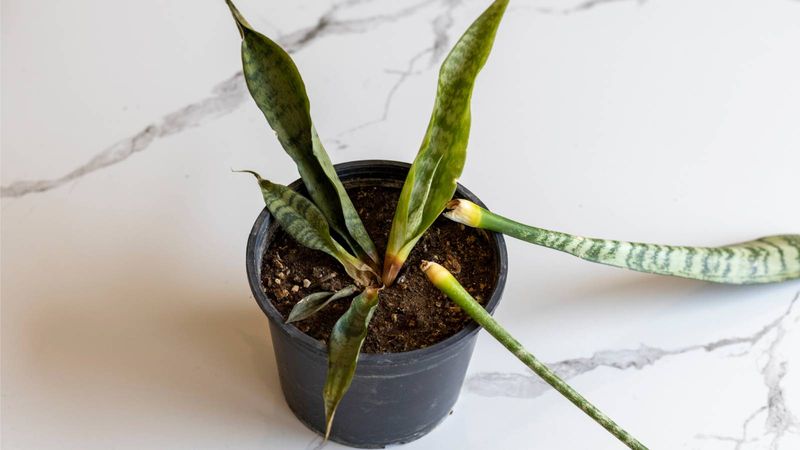
A drooping snake plant can stop you in your tracks, especially when you thought you were doing everything right. Known scientifically as Dracaena trifasciata and still widely called Sansevieria trifasciata, this resilient plant sends up a clear distress signal when something is off, but drooping alone does not tell you what that something is.
Before you grab the watering can, take a closer look, because adding water to the wrong problem can make things worse. This guide walks through the most likely causes and the safest next step for each one.
Start with the soil, not the watering calendar
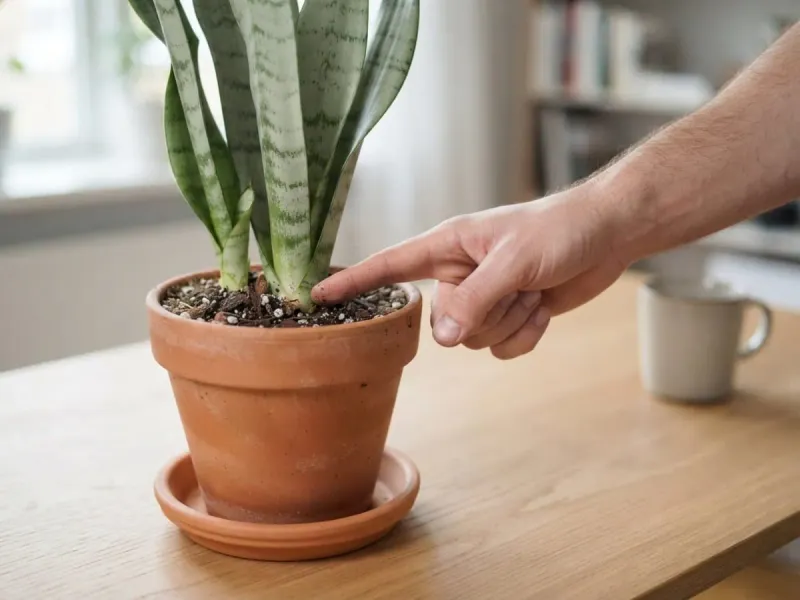
Drooping leaves are a symptom, not a verdict. Dracaena trifasciata, still widely referenced by its former name Sansevieria trifasciata, can droop for several different reasons, and the safest first move is to feel the potting mix before doing anything else.
Push a finger about one to two inches into the soil. What you find there will point you toward the most likely cause and the safest next step, even if it cannot guarantee a final diagnosis.
Pay attention to a few things at once. Is the mix bone dry and pulling away from the pot edges, or does it feel cool and wet well below the surface?
Does the pot feel unusually light when you lift it? Is there a drainage hole at the bottom?
Iowa State Extension notes that both excessively dry and excessively wet conditions can cause wilting, so neither watering nor withholding water is automatically the right answer.
Also look closely at the leaves themselves. Firm, green leaves that lean outward may reflect the cultivar’s natural habit, top-heaviness, or low light rather than a root emergency.
Soft, collapsing leaf bases with yellowing or a foul smell point toward something more serious. NC State Extension notes that snake-plant cultivars vary substantially in height, leaf form, and growth habit, so knowing your plant’s normal shape helps you read these clues more accurately.
Wet soil can damage the roots
Overwatering is frequently misunderstood. The problem is rarely that a gardener used too much water in a single session.
More often, roots stay wet too long because of frequent watering, a pot without a drainage hole, compacted potting mix, or a decorative outer pot that holds drainage water against the root ball. Any of these conditions can suffocate roots and create the environment where rot develops.
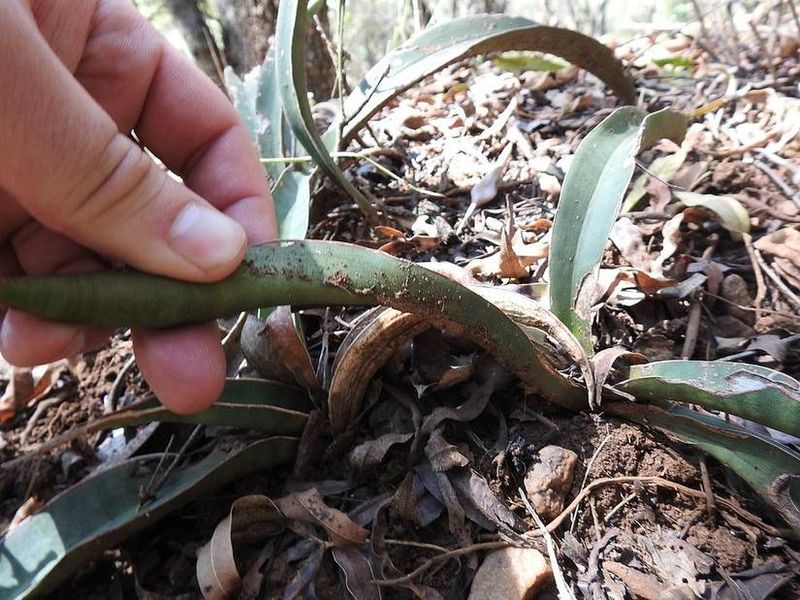
When the mix is wet but the plant is drooping, resist the urge to water again. Remove the plant from its pot and inspect the roots.
Iowa State Extension describes healthy roots as generally firm and light-colored, while rotted roots appear soft, brown or reddish, collapsed, and may smell bad. Yellowing leaves, soft leaf bases, and a sour or foul odor from the mix all support the possibility of root rot, though drooping alone is not enough to confirm it.
The safe response is to remove contaminated wet mix, trim away clearly soft or decayed roots with clean tools, and repot into fresh, well-drained commercial potting mix in a container with a drainage hole. Empty any saucer or decorative outer pot after watering so the roots never sit in standing water.
University of Wisconsin Extension emphasizes moisture reduction and prevention over routine fungicide use, and notes that gravel or rocks placed in the pot base can actually inhibit drainage rather than improve it. Use a porous mix and a draining container instead.
Dry roots need a thorough drink when the mix is dry
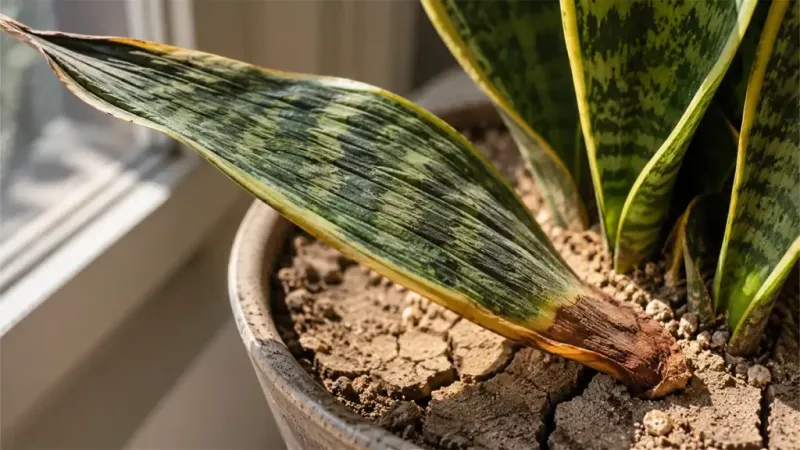
Severe dryness is just as capable of causing drooping as prolonged wetness. When the root ball dries out completely, roots lose their ability to move moisture up into the leaves, and the plant wilts.
The fix sounds simple, but the method matters.
Water thoroughly only when the mix is dry and the pot feels noticeably light. Pour slowly and evenly until water exits the drainage hole, then empty the saucer or decorative outer pot so the roots are not sitting in pooled water.
Iowa State Extension distinguishes one thorough watering followed by adequate drainage from repeated small drinks that leave parts of the root zone chronically moist, and the difference matters for root health. Frequent small amounts can leave some areas dry while others stay damp, preventing the roots from recovering evenly.
No fixed weekly or monthly schedule applies to every situation. University of Connecticut Extension explains that water needs shift with pot size, potting mix, light level, temperature, season, and whether the plant is actively growing.
A snake plant on a sunny Florida patio in July will dry out far faster than the same plant sitting in a dim corner in December. Let the soil and the weight of the pot guide your timing, not the calendar.
Light can weaken leaves or scorch them
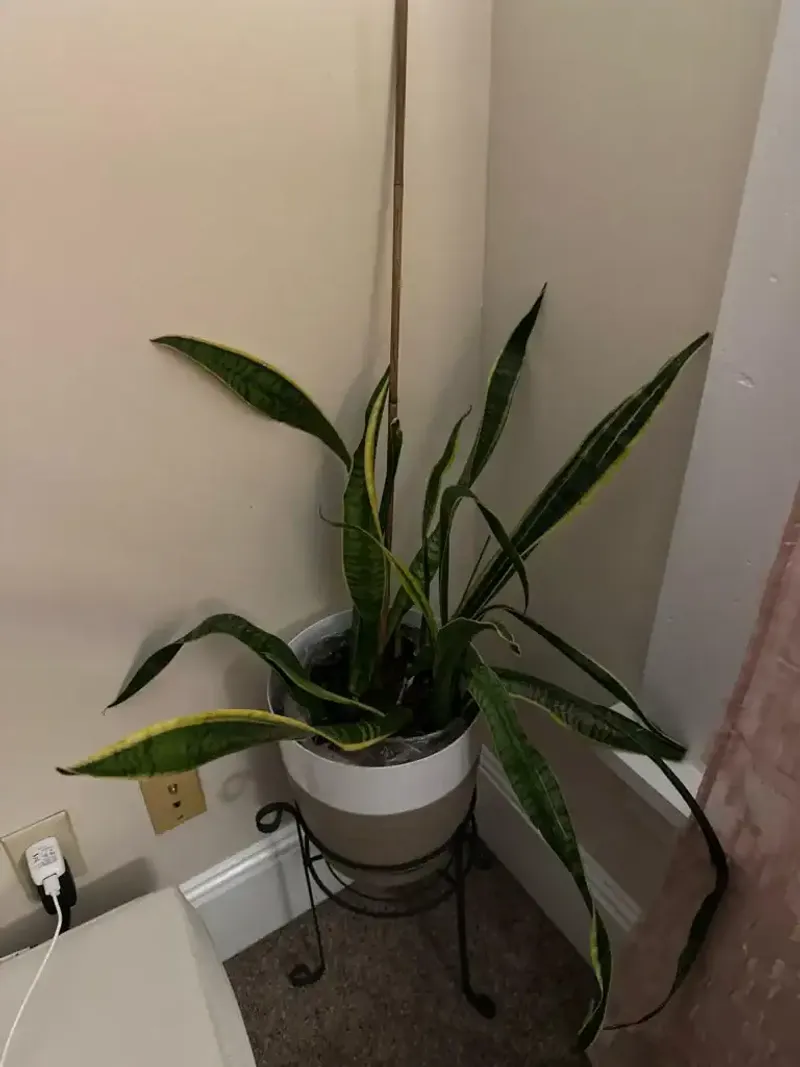
Light problems produce two very different kinds of damage, and telling them apart helps you choose the right correction. A snake plant living in too little light may develop long, pale, weak, or stretched leaves that eventually lean or flop because the tissue lacks the density to hold itself upright.
This is not a watering problem, and adding water will not firm those leaves.
Moving the plant abruptly into intense direct sun creates a separate issue. Tissue that has adapted to low light can bleach, brown, or develop dry scorched patches within days of a sudden move outdoors or to a south-facing window.
University of Connecticut Extension recommends bright, indirect light as a reliable target and advises moving the plant gradually rather than placing it directly in intense sun. Scorched tissue will not recover its original color or texture regardless of what you do afterward.
Realistic expectations matter here. Penn State Extension notes that direct sun can scorch snake-plant foliage, especially after a move from lower-light conditions, and that removing badly damaged leaves can improve the plant’s appearance while the rest of the plant recovers.
Not every leaning plant needs more light, either. Cultivar habit and top-heaviness can explain outward leaning just as easily as light stress, so check the soil and roots before assuming light is the only factor.
Protect the plant from cold and sudden temperature changes
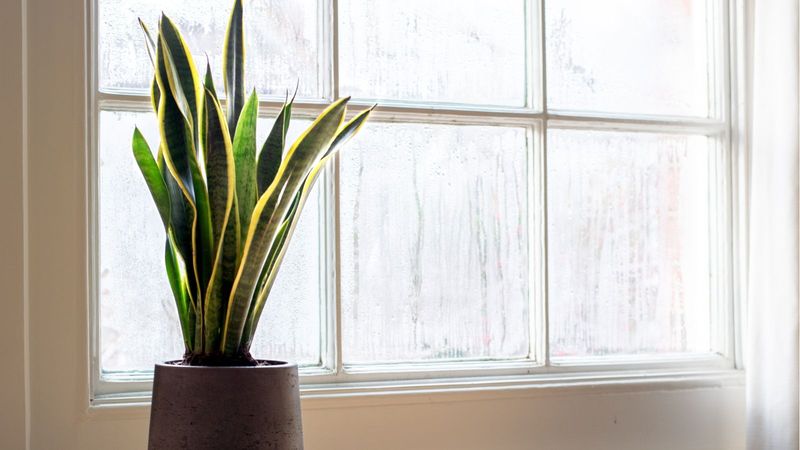
Cold exposure can cause a snake plant to droop, yellow, or develop soft, water-soaked patches on its leaves, and the damage sometimes appears hours or days after the cold event rather than immediately. Common sources of harmful cold include drafty single-pane windows, doors that open to outdoor air, air-conditioning vents blowing directly on the plant, and outdoor placements on patios in Florida or Texas during an unexpected cold snap.
Extension guidance gives differing temperature thresholds for snake plants and related Dracaena production, which is why this article avoids presenting one universal cold-damage number. UF/IFAS production guidance for Dracaena recommends keeping plants above 60 degrees Fahrenheit to avoid chilling injury, while other extension sources list tolerances as low as 50 degrees for some cultivars.
Conditions vary by cultivar, pot size, exposure, and how quickly temperatures drop.
The practical response is straightforward regardless of the exact threshold. Move the plant away from cold glass, drafts, and air-conditioning blasts.
Penn State Extension advises protecting snake plants from rapid temperature swings and choosing a stable indoor placement. Southern gardeners who keep plants on patios should bring them inside before cold weather is forecast, since even a brief cold snap can cause lasting damage to tissue that was otherwise healthy.
Inspect leaves and soil for pests
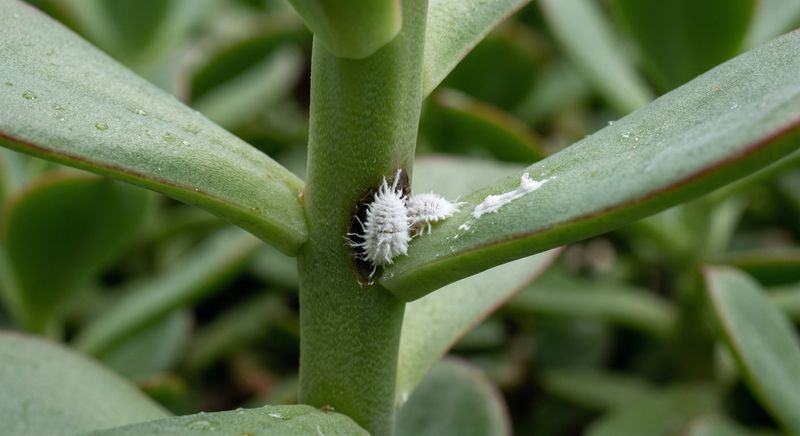
Pests rarely announce themselves with obvious drama. By the time a snake plant is drooping from pest pressure, the infestation has usually been building for a while in spots that are easy to overlook.
Make a habit of checking leaf undersides, the tight spaces where leaves meet the base, and the surface of the potting mix before concluding that the problem is watering.
Mealybugs are small, cottony white insects that cluster at leaf bases and joints. Their feeding can cause yellowing, general weakness, and wilting that looks deceptively like a moisture problem.
Spider mites are harder to spot without magnification, but their presence often shows up as fine stippling or bronzing on leaf surfaces, dry or crispy leaf edges, and delicate webbing between leaves or near the soil line. UC Statewide IPM Program recommends washing foliage when appropriate and using only products labeled for the specific plant and pest rather than applying a general homemade treatment to an unidentified infestation.
Matching the treatment to the confirmed pest protects the plant and avoids making the situation worse. A single inspection may not catch every life stage, so check again in one to two weeks after any treatment.
If the plant is not improving or you cannot identify a pest clearly, reassess whether a different cause, such as root moisture or light, may be contributing alongside or instead of the pest pressure.
Root-bound growth can limit water uptake
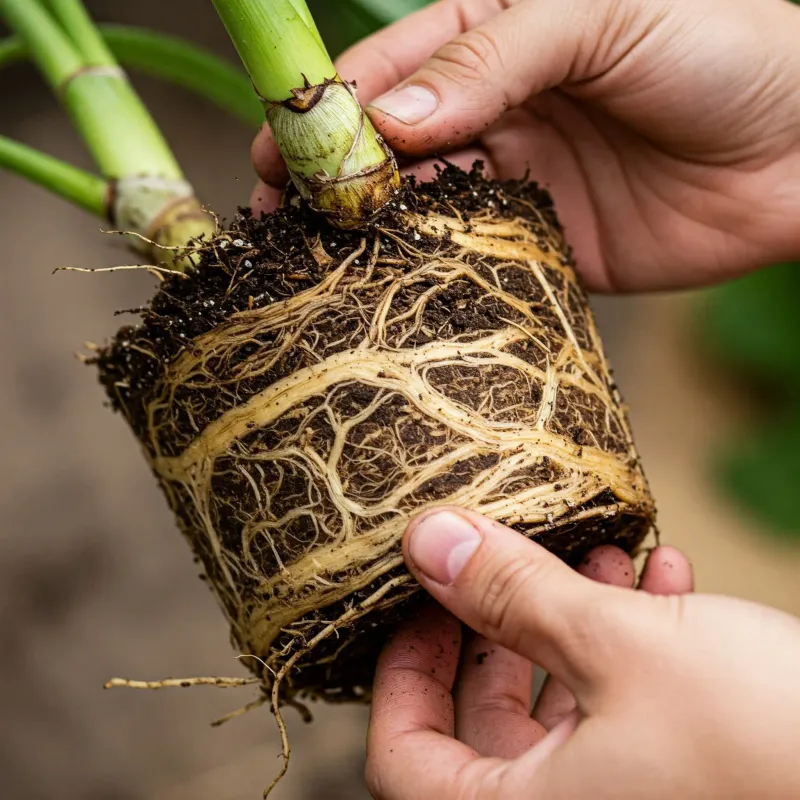
A plant can wilt shortly after watering when its roots have become so crowded that they can no longer absorb and distribute moisture efficiently. This is different from either overwatering or underwatering, and the fix is different too.
Adding water more often will not solve a root-bound problem and may actually increase rot risk if the dense root mass is also trapping moisture.
Several clues suggest a root-bound situation. Roots circling densely around the outside of the root ball, roots emerging from drainage holes, soil that dries out unusually fast between waterings, and wilting that appears even when the mix seems adequately moist are all worth noting.
Penn State Extension recommends repotting only when root-bound signs are clearly present, using a container just one size larger than the current one. Jumping to a much larger pot is counterproductive because excess soil around the roots holds moisture longer than the plant can use, which raises the risk of rot.
When you repot, use fresh, well-drained commercial potting mix suited to the plant. Gently loosen the root mass if it is tightly compacted, and make sure the new container has at least one drainage hole.
After repotting, water thoroughly once and then allow the mix to dry appropriately before watering again. Recovery from a root-bound situation tends to be gradual, so judge progress by firmer leaves and the appearance of healthy new growth rather than by an immediate return to upright posture.
Compacted mix, fertilizer salts, and top-heaviness need different fixes
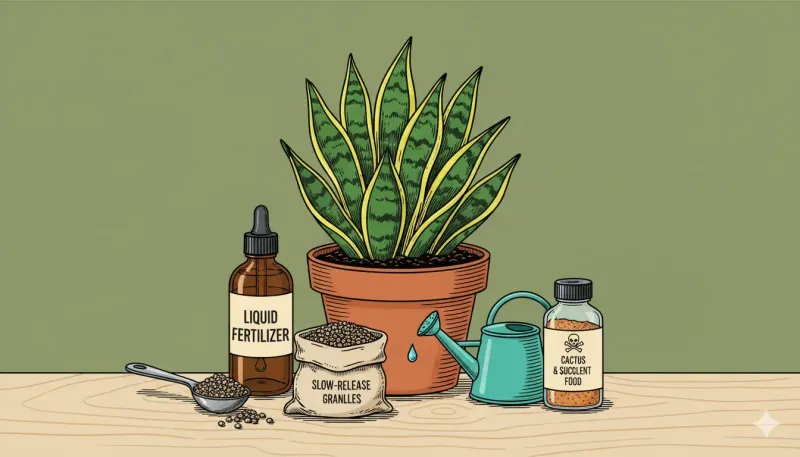
These three possibilities are grouped together in many plant guides, but they are distinct problems that call for different responses. Treating them as interchangeable can lead to the wrong fix and a plant that continues to decline.
Compacted or poorly draining potting mix creates a root environment that is either too wet or too poorly aerated, depending on how it behaves when watered. Mix that has broken down over several years can form a dense, almost water-repellent layer that channels water around the root ball rather than through it.
Refreshing the mix during repotting, rather than simply adding water or fertilizer, addresses this directly.
Fertilizer-salt injury is a less obvious possibility that is easy to overlook. Excess fertilizer builds salts in the mix over time, and those salts can damage roots and cause browning, yellowing, wilting, or leaf drop.
A visible white crust on the soil surface or pot rim may support this diagnosis. Iowa State Extension advises reducing or stopping fertilizer and, if the plant is otherwise healthy and the mix drains freely, flushing the medium with clear water so excess salts drain out.
Fertilizer is not a rescue treatment for a drooping plant and can worsen root damage if applied to a plant already under stress.
Top-heaviness is the simplest of the three. Penn State Extension recommends a heavy pot for taller snake-plant cultivars because leaf weight can cause the plant to lean or tip.
A firm, green, leaning plant in a lightweight pot may simply need physical support or a heavier container, not root treatment or extra water. NC State Extension notes that cultivars vary considerably in height and leaf form, so a naturally tall variety in a small pot is a reasonable suspect when leaning is the primary symptom and the roots and soil appear healthy.
Correct the cause and watch for healthy new growth
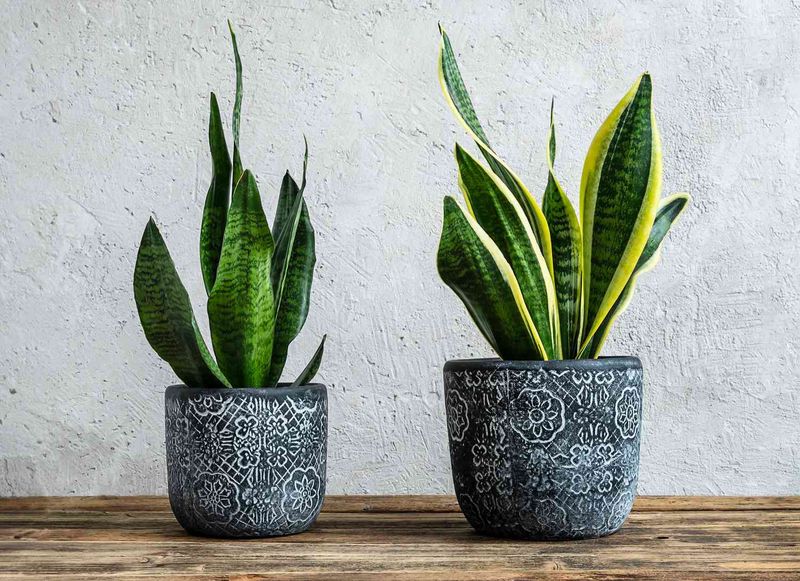
Once you have identified the most likely cause, the next job is to correct it and then step back. Resist the temptation to layer multiple interventions at once.
Changing the watering, repotting, and applying a pest treatment simultaneously makes it impossible to know which fix worked, and it can add stress to a plant that is already struggling.
A few things are safe to avoid across the board. Standing water in saucers, gravel in the pot base, ice cubes, misting as a rescue measure, and fertilizer applied to a wilting plant all conflict with University of Wisconsin Extension guidance on drainage and moisture management.
Remove leaves only when they are badly damaged or unsightly, and understand that bent or scorched leaves may not straighten or regain their original color. Iowa State Extension confirms that corrected conditions primarily improve future growth rather than restoring damaged tissue.
Judge recovery by firmer remaining leaves and the emergence of healthy new growth at the base, not by whether old leaves return to their previous shape. If the plant does not improve after a few weeks, reassess whether a second problem may be present alongside the first.
One last note for households with cats or dogs: the ASPCA identifies saponins as the toxic principle in snake plants and lists nausea, vomiting, and diarrhea among possible signs of ingestion, so keep pruned leaves and repotting debris out of reach. A recovering plant is worth protecting on both ends.