
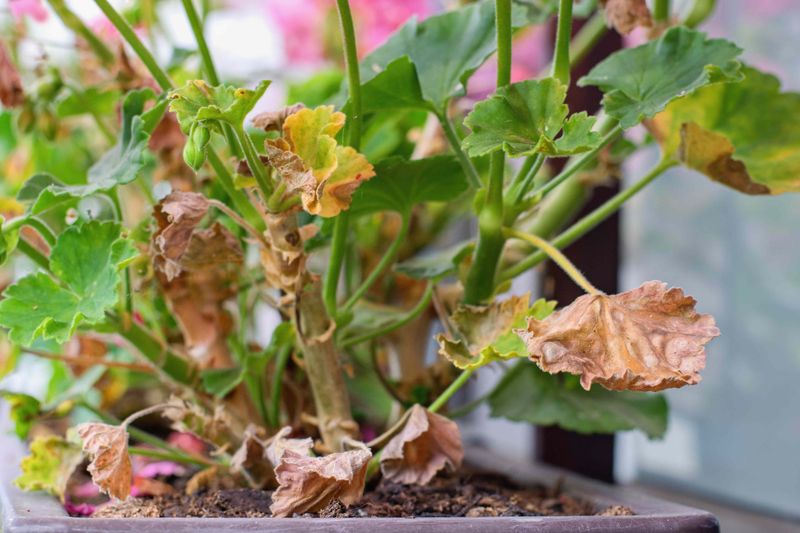
Seeing yellow leaves on your garden geraniums can feel alarming, especially when the plants looked healthy just a week ago. The honest answer is that yellow leaves alone do not point to one single cause – moisture and drainage are important first things to check, but light, nutrition, pests, and disease can all produce the same symptom.
Getting the right fix means taking a closer look at your soil, roots, and growing conditions before you reach for a watering can or a bag of fertilizer. Working through a simple checklist now can be the difference between a plant that bounces back and one that keeps declining.
Yellow leaves do not identify one cause
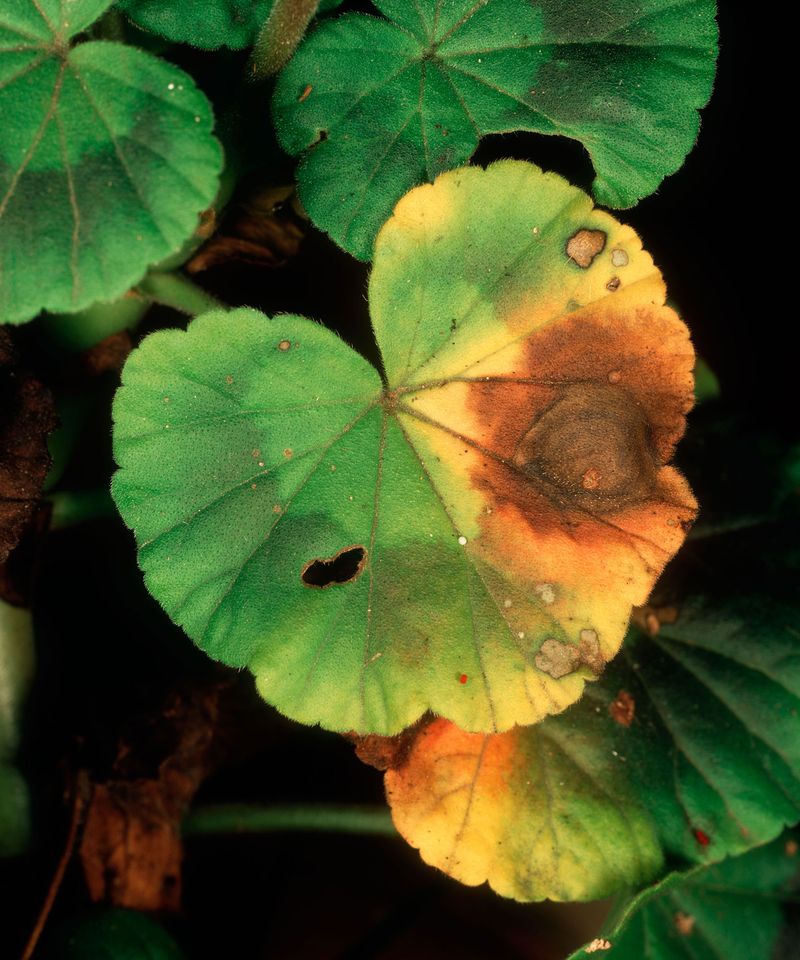
Garden geraniums, sold under the name Pelargonium at most garden centers, are not the same as true Geranium cranesbills, and that distinction matters when you are trying to interpret care advice. Both prolonged dryness and persistently wet soil can stress a Pelargonium, but yellow leaves by themselves cannot tell you which problem you are dealing with – or whether moisture is the issue at all.
UC IPM plant-problem guidance lists poor light, inadequate nutrition, pests, root disease, temperature stress, and salt injury as additional causes that can produce nearly identical symptoms.
Drought stress does have one recognizable pattern worth watching. UF/IFAS geranium guidance notes that plants allowed to become too dry may develop yellow lower leaves that eventually drop, while the rest of the plant may still look acceptable.
That pattern is useful, but it is not a guaranteed identifier because overwatering and root damage can also cause lower-leaf decline.
The practical starting point is to treat yellow leaves as a signal to investigate, not a diagnosis on their own. Check the root zone and overall growing conditions before you add fertilizer, change your watering schedule, or assume disease.
UGA Extension advises monitoring soil moisture and drainage as early steps, and that sequence – observe first, respond second – is the organizing idea behind every section that follows.
Use soil moisture as a first checkpoint, not a final diagnosis
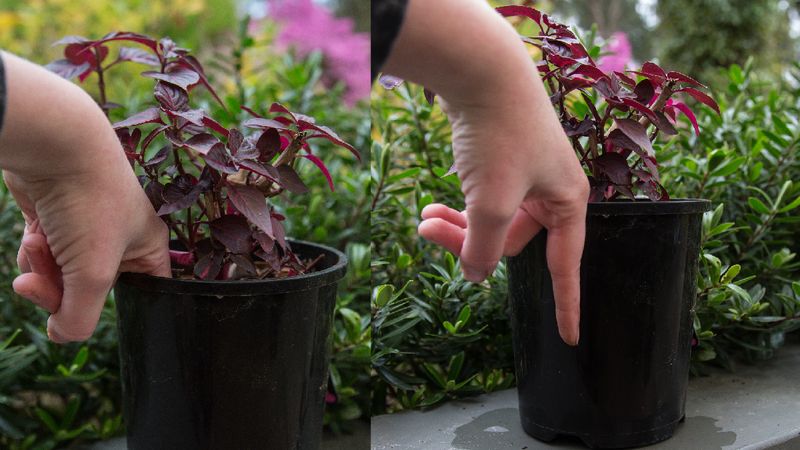
Feeling the soil is a faster and more reliable guide than any watering calendar. Push a finger about an inch into the potting mix and notice what you find.
Dry, crumbly soil paired with limp or drooping foliage supports the idea that moisture stress may be at work. Persistently wet, soggy soil combined with yellowing or wilting raises a different concern: waterlogged media can deprive roots of oxygen, and damaged roots cannot absorb water even when plenty is available.
Iowa State Extension geranium guidance and UGA Extension both recommend watering when the soil surface becomes dry rather than on a fixed schedule, because container size, potting mix, plant size, sunlight, and outdoor heat all change how quickly a pot dries out. That last point matters especially in Florida and Texas, where summer heat can dry a small container in a day or two.
Even so, heat alone is not a reason to water without checking. A pot that drained poorly last time, or one sitting in a saucer full of water, can still be wet at the root zone even when the surface looks dry.
The soil check identifies a condition worth investigating; it does not confirm that moisture caused the yellowing. UF/IFAS plant-diagnosis guidance makes clear that wet soil and wilting can occur together when root damage is already present, which is why the next step after noticing soggy soil is a closer look at the roots.
Match the watering correction to the soil you find
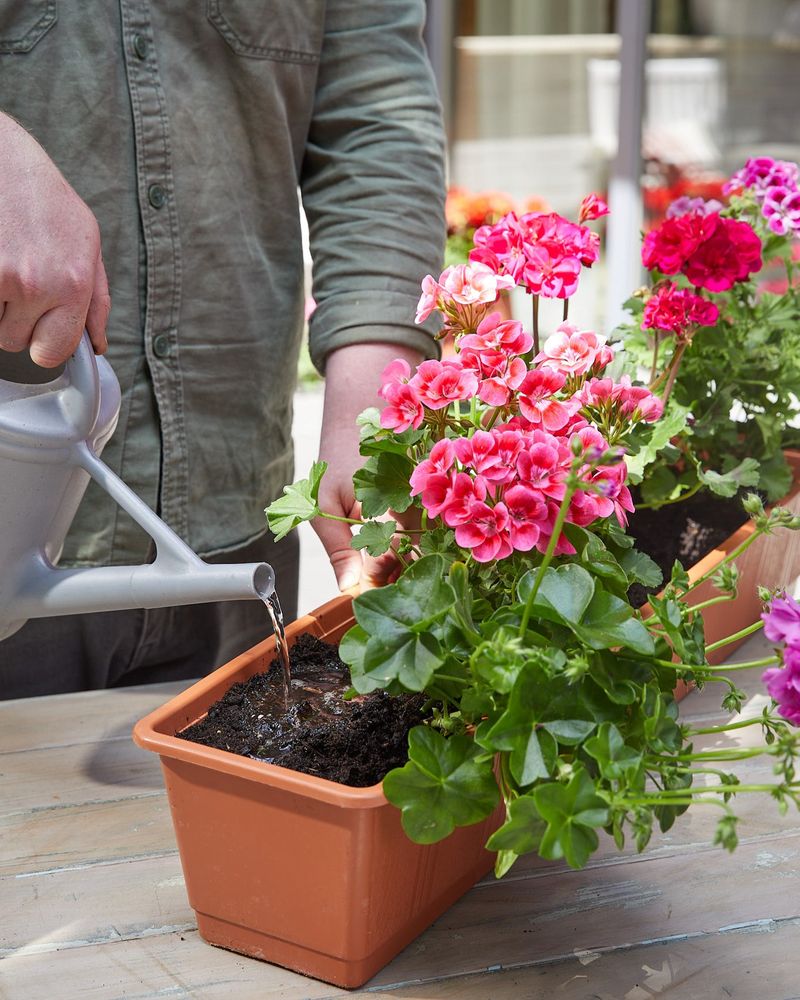
When the soil is genuinely dry and the plant is limp, the right move is a thorough, deep watering rather than a series of shallow sprinkles. Water until you see it run freely from the drainage holes, which helps flush the entire root zone and avoids the dry pockets that shallow watering can leave behind.
UGA Extension recommends wetting landscape soil to roughly 10 to 12 inches during dry periods; container plants generally need more frequent monitoring than geraniums growing in garden beds because pots lose moisture faster and have a smaller reservoir.
For persistently wet soil, the correction runs in the opposite direction. Pause routine watering, check that the container has working drainage holes, and remove the pot from any saucer that has been holding standing water.
Clemson Extension recommends a well-drained potting mix and a container with adequate drainage as basic requirements for healthy Pelargonium growth. If your mix is dense or compacted, repotting into a lighter, airier medium can help prevent the problem from repeating.
UF/IFAS houseplant-diagnosis guidance points out that improving drainage alone cannot instantly reverse root damage that has already occurred. One watering adjustment can correct a dry or wet soil condition, but it does not guarantee that yellowing will stop if root tissue has been lost or if another factor is also at work.
Treat the correction as a first step and continue monitoring rather than expecting immediate results.
Inspect the roots when wet soil and decline occur together
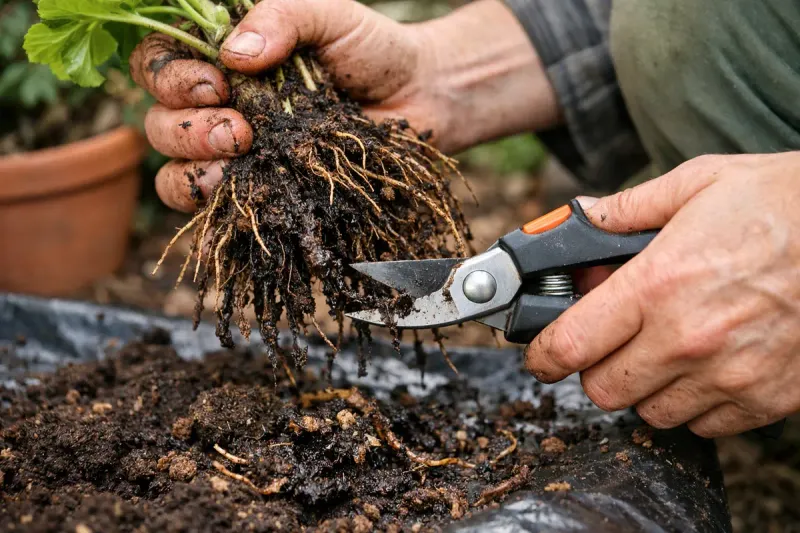
A root inspection becomes worth the effort when your geranium is yellowing or wilting while the soil stays soggy, when drainage remains poor despite your efforts, or when reasonable moisture corrections have not produced any improvement after a week or two. Gently slide the root ball out of the container and look at what you find.
Healthy roots should feel firm and appear light-colored or white; roots that are brown or black, soft, and mushy are evidence of serious damage.
UF/IFAS plant-diagnosis guidance describes this distinction clearly: firm, light-colored roots suggest the root system is still functional, while dark, decayed roots indicate that the plant’s ability to absorb water and nutrients has been compromised. That compromised absorption explains why a plant can wilt and yellow even when the soil is wet – the roots simply cannot do their job.
Letting the soil surface dry does not instantly restore roots that have already rotted. Recovery depends on how much functional root tissue remains and whether conditions improve quickly enough to let new roots develop.
Clemson Extension notes that root rot can be severe enough to require discarding the plant rather than attempting rescue. Root appearance can tell you how serious the situation is, but it does not identify the specific organism or disease responsible, so keep your observations focused on what you can see rather than drawing a firm diagnosis from color alone.
Check light and nutrition before reaching for fertilizer
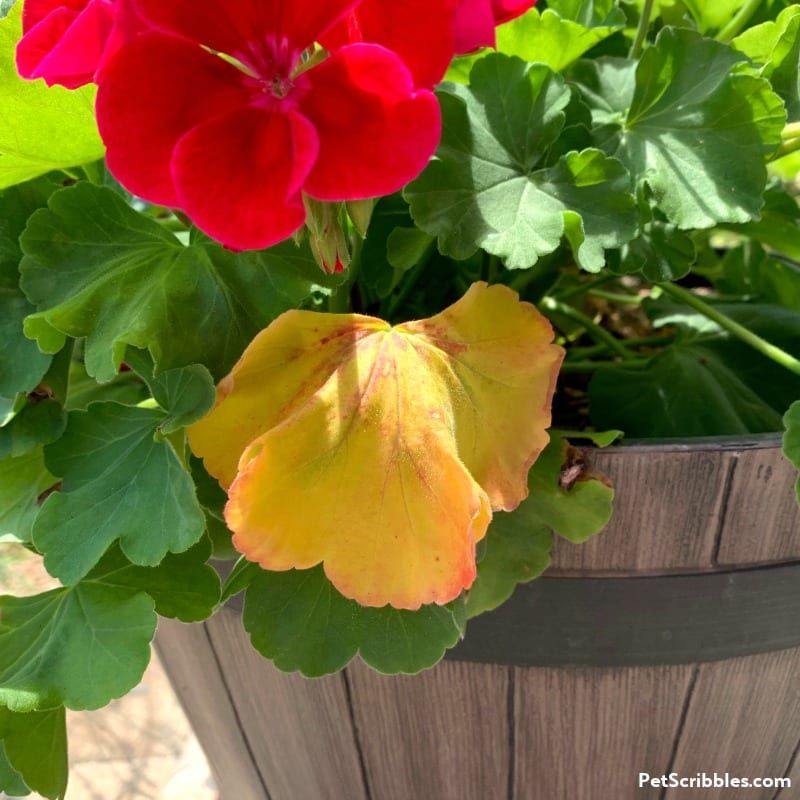
Light is one of the easier variables to evaluate, and it deserves a look before you assume a nutrition problem. Clemson Extension and Iowa State Extension both recommend roughly four to six hours of direct sun for good geranium performance, with some protection from intense midday heat in the hottest locations.
Pale or washed-out foliage paired with weak flowering can reflect insufficient light, but excessive heat and intense afternoon sun can also stress plants and affect leaf color. Think of the cited light range as a practical starting point, not a universal prescription that applies identically to every cultivar or location.
Nutrition is more complicated to evaluate at home. Yellowing throughout the plant, especially with stunted growth, can suggest inadequate nitrogen, but the same pattern appears with water stress, root damage, and low light.
Interveinal yellowing on newer leaves can point toward a micronutrient or pH-related issue rather than a simple nitrogen shortage. UNH Extension guidance on nutrient problems advises ruling out water, root, and light issues before concluding that symptoms are nutritional, because those problems overlap substantially.
UMass Extension geranium production guidance and NC State fertilizer management research both note that excess fertilizer and soluble-salt buildup can injure feeder roots and produce yellowing or brown leaf margins that look similar to drought injury. If fertilizer is actually warranted after you have checked water, roots, and light, follow the product label rather than increasing the dose in hopes of faster results.
Recognize symptoms that need a different diagnosis
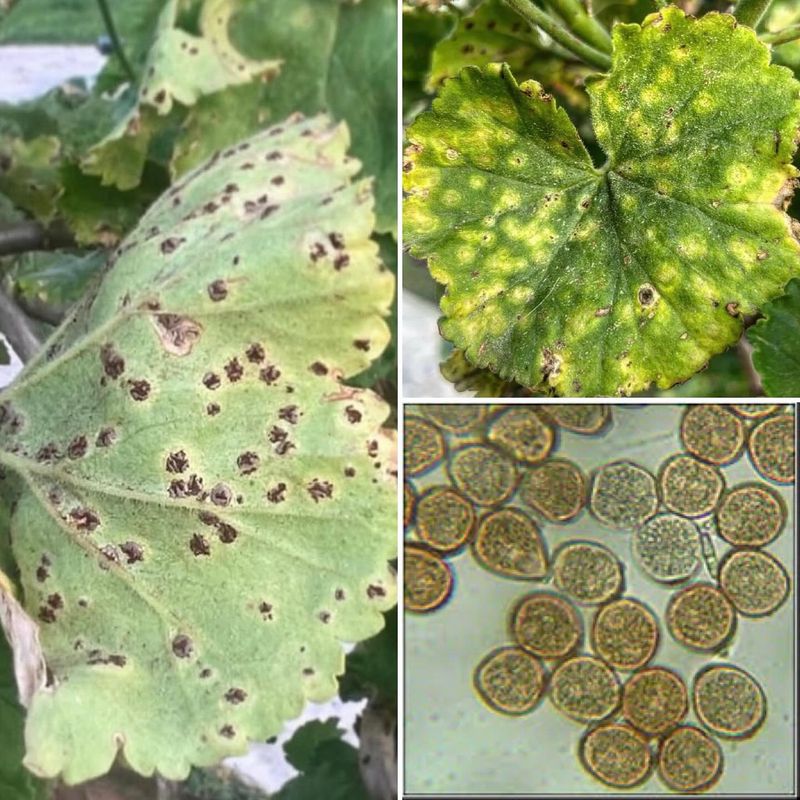
Some symptoms on geraniums signal problems that routine watering adjustments will not fix. Rust-colored pustules on the undersides of leaves are a recognizable sign of geranium rust, a fungal disease that requires a different response from changing how often you water.
Connecticut Agricultural Experiment Station disease guidance and Penn State Extension on geranium diseases both describe water-soaked or angular spots, blackened stems, and wedge-shaped yellow areas as symptoms that raise concern for bacterial disease rather than ordinary moisture stress.
Edema is a separate situation worth understanding because it is easy to confuse with disease. It is a physiological disorder, not a contagious infection.
Penn State Extension on geranium edema and WSU HortSense edema fact sheet explain that edema can produce small yellow areas followed by watery blisters or corky lesions, particularly when warm, wet soil is paired with cool, humid, and poorly ventilated conditions. Reducing excess moisture, improving drainage, and increasing air movement are the relevant steps for edema – not fungicide treatment.
Rapidly progressing wilt combined with suspicious stem or vascular symptoms is a different matter entirely. USDA APHIS information on Ralstonia and Cornell Cooperative Extension geranium disease resources note that bacterial wilt cannot be reliably diagnosed from yellow leaves alone and may require laboratory confirmation.
If a plant is wilting rapidly and the stem shows darkened tissue, isolate it immediately, contact a plant diagnostic service, or discard it rather than continuing to treat it as a moisture problem.
Track new growth instead of waiting for old leaves to recover
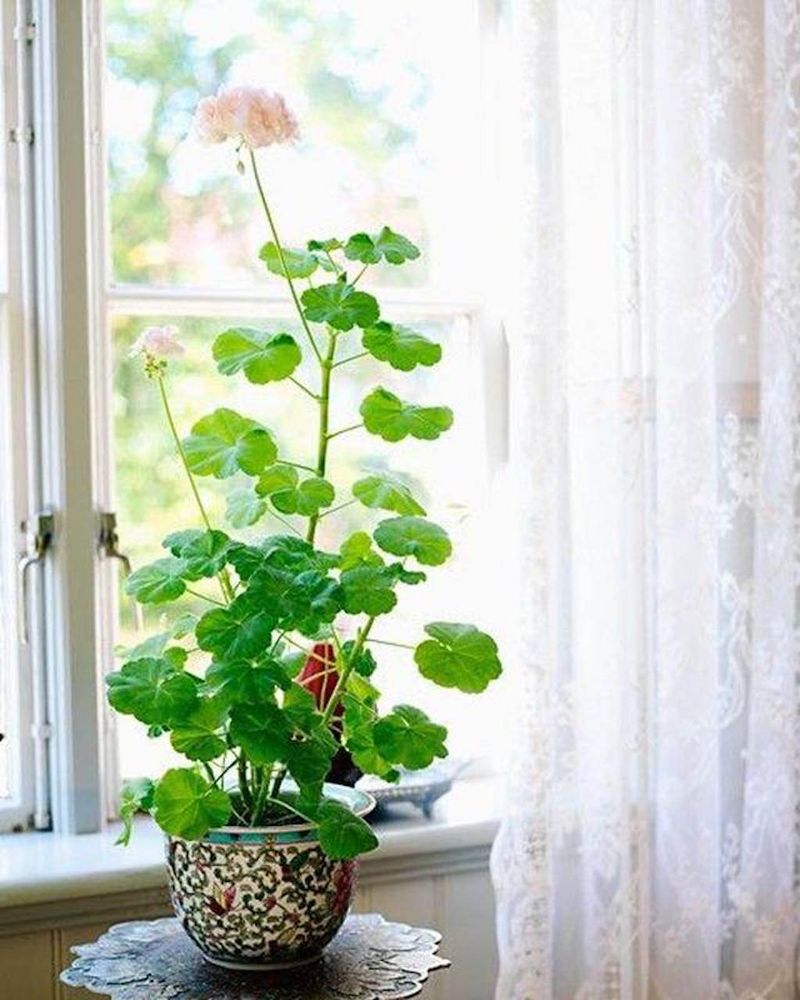
Old yellow leaves on a geranium are unlikely to turn green again once the color has shifted. UF/IFAS geranium guidance notes that leaves yellowed by drought stress may drop even after conditions improve, so waiting for discolored foliage to recover is not a reliable way to judge whether your plant is responding.
New growth, stronger vigor, and the absence of further decline are better indicators that conditions have improved enough for the plant to move forward.
Removing badly yellowed or dead leaves is worthwhile for appearance and sanitation, but treat it as a cosmetic step rather than a cure. Clemson Extension and UGA Extension both recommend keeping foliage as dry as possible and improving air circulation around plants, since wet leaves and poor airflow favor several geranium diseases.
Deadheading spent flowers and removing damaged foliage reduces surface area where pathogens can establish, but it does not repair root damage, correct a light deficit, or address a disease already present in the tissue.
Continue checking the soil before each watering, confirm that drainage is working, and watch for any new symptoms that suggest disease rather than stress. Penn State Extension geranium disease guidance is a useful reference if unusual spots, lesions, or rapid decline appear after conditions have otherwise improved.
The clearest sign that your geranium is genuinely recovering is a plant that keeps producing new, healthy leaves – because that is something no amount of pruning can fake.