
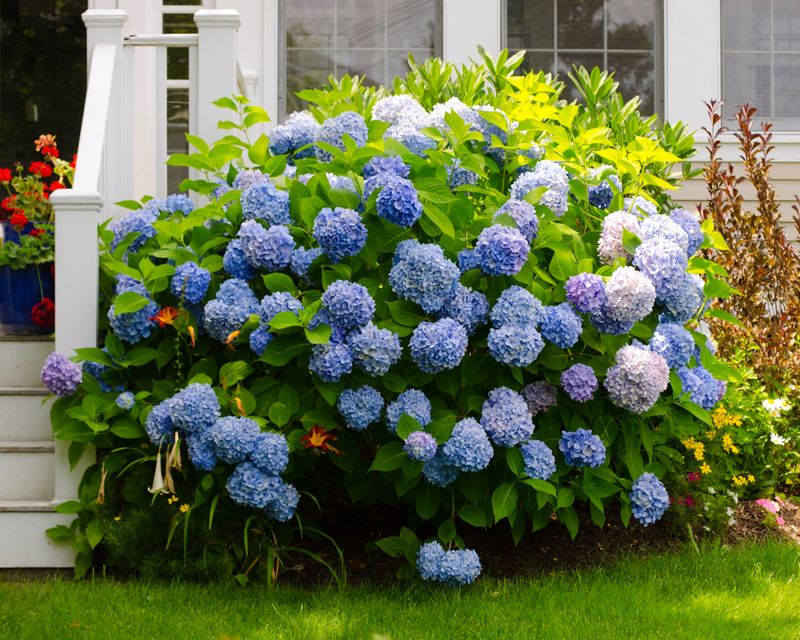
Hydrangeas are one of the most beloved flowering shrubs in Southern yards, but they are also one of the most commonly misplaced. When a plant keeps wilting, scorching, or refusing to bloom, the instinct is to water more or fertilize harder, but the real problem is often where the plant is sitting.
A closer look at the site, including afternoon heat, drainage, and root competition, can reveal mismatches that no amount of extra care will fix. Before you give up or reach for a shovel, a simple site audit can tell you whether the spot itself is working against your plant.
Identify the plant before changing its pruning or care
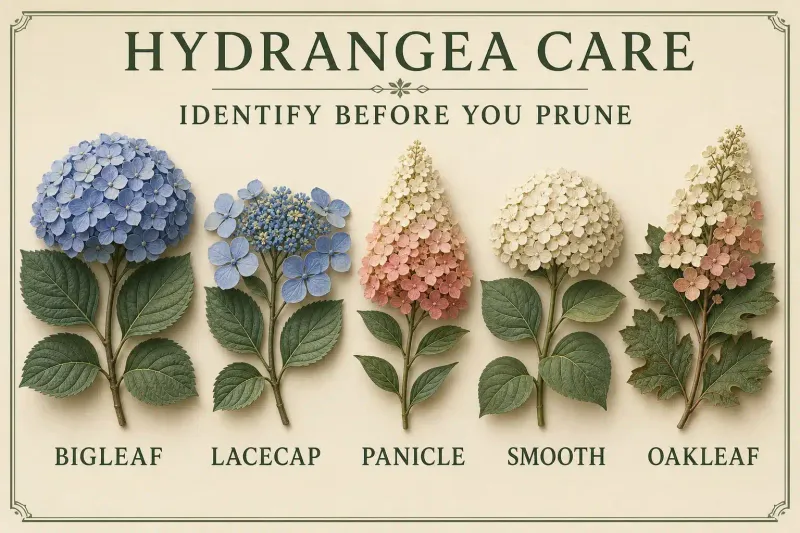
Knowing what kind of hydrangea you have matters more than most gardeners expect, and not just for bragging rights at the garden center. The four most common types, bigleaf (Hydrangea macrophyllaH. quercifoliaH. arborescensH. paniculata), oakleaf (), smooth (), and panicle (), differ in their preferred light levels, moisture needs, mature size, and, critically, whether they flower on old wood or new wood.
UGA Extension guidance on identifying hydrangeas makes clear that getting the type wrong before pruning can cost you an entire season of blooms.
That said, you do not need a positive ID before looking at the site. Light exposure, afternoon heat, drainage, wind, and available space can all be observed and evaluated without knowing the exact cultivar.
Start the site audit now, and work on identification in parallel by checking old plant tags, nursery receipts, or comparing leaf shape and bloom form against reference photos.
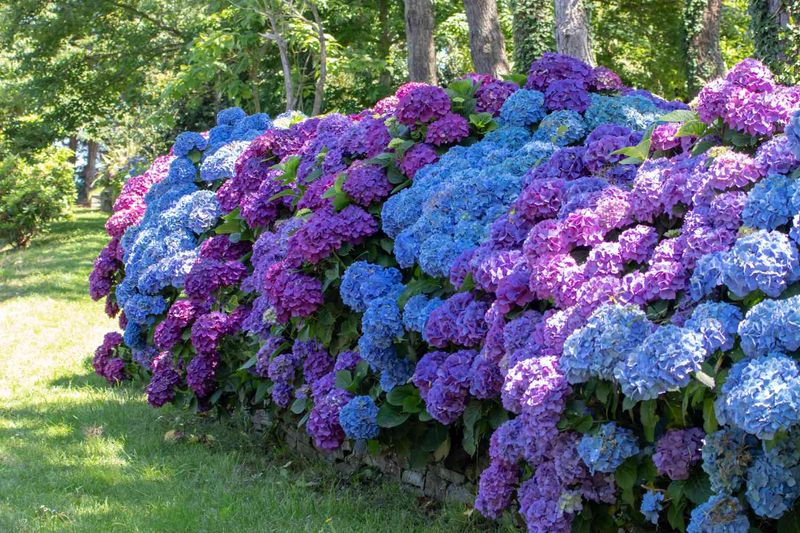
Bigleaf hydrangeas have large, rounded flower clusters and broad, glossy leaves. Oakleaf types have distinctly lobed leaves resembling oak foliage and cone-shaped blooms.
Smooth hydrangeas produce big, round white flower heads and tend toward a more upright, open shape. Panicle hydrangeas have elongated, cone-shaped flower clusters and are generally the most cold- and sun-tolerant of the group.
If the plant’s identity remains uncertain, Oklahoma State Extension recommends removing only dead or winter-killed wood rather than hard-pruning an unknown plant at the wrong time.
Read the site’s afternoon heat, not just its sun total
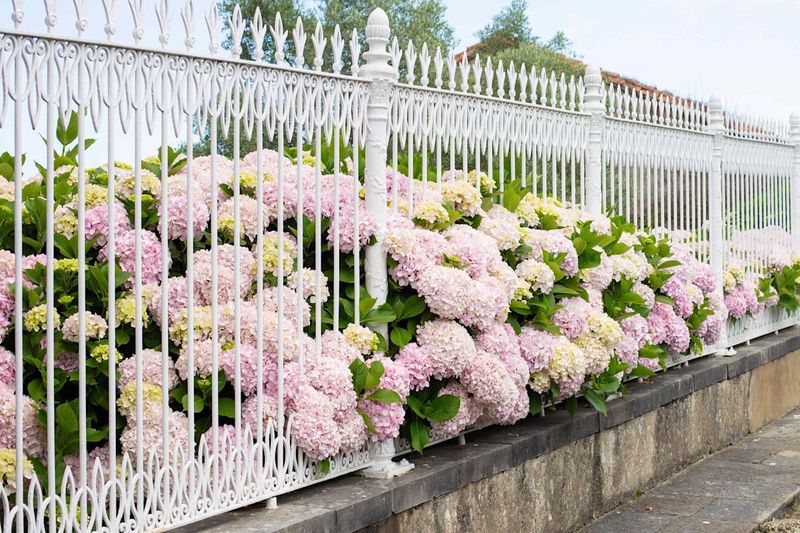
A simple count of daily sun hours tells only part of the story. Two sites can both receive six hours of direct sun while delivering completely different growing conditions, because the timing and intensity of that light changes everything for a hydrangea.
Morning sun is generally gentler and less damaging than the heat that builds between noon and late afternoon, especially in Texas and Florida where reflected heat from fences, driveways, and south- or west-facing walls can push root-zone temperatures well beyond what a shaded thermometer would suggest. UGA Cooperative Extension’s bigleaf hydrangea guide specifically warns against hot, dry, exposed sites and recommends morning sun with afternoon protection as a practical Southern default for bigleaf types.
Mountain hydrangeas share similar preferences.
Deep shade is not the answer, either. Mississippi State Extension notes that roughly five hours of direct sunlight supports stronger flowering and that too much shade can reduce bloom production and produce weak, leggy growth.
Treat that five-hour figure as a Mississippi-derived benchmark and a useful starting point, not a rule that applies equally to a humid Gulf Coast garden and a hot, dry West Texas yard.
When you observe the site, note whether the plant is receiving afternoon sun amplified by a reflective surface nearby. A hydrangea beside a white stucco wall or a concrete patio can experience conditions far more intense than the sun-hour count suggests.
Drying wind compounds the effect, pulling moisture from large, soft leaves faster than roots can replace it.
Match the hydrangea type to a workable location
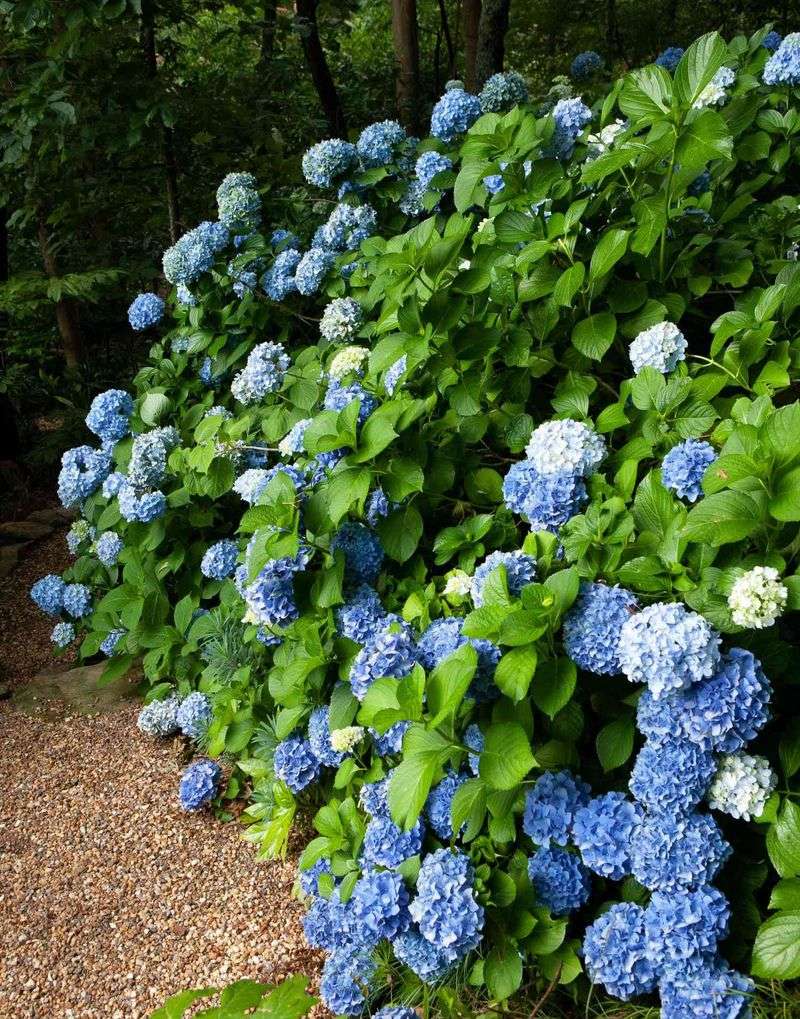
Once you have a working identification, even a tentative one, you can start matching what the plant needs to what the site actually provides. The goal is not to memorize a rigid formula but to recognize the conditions each type handles well and the conditions that will wear it down over time.
Bigleaf and mountain hydrangeas generally perform best with morning sun and protection from harsh afternoon heat and dry wind. Placing them on the east or north side of a structure, or beneath high-branching trees that provide filtered afternoon light, addresses the most common heat-related complaints.
Mississippi State Extension describes oakleaf hydrangeas as needing moist, well-drained soil and protection from hot, dry exposure, with an added caution that saturated soils can lead to root rot, so drainage matters just as much as shade.
Smooth hydrangeas have a bit more flexibility. University of Illinois Extension notes that smooth hydrangeas tolerate more sun when supplied with regular moisture, though they still prefer moist, well-drained conditions.
Panicle hydrangeas are the most sun-tolerant of the group and can generally handle full to part sun as long as the soil does not dry out excessively between waterings.
Mature size is a factor that gets overlooked until the plant is already crowded. Some cultivars stay compact at three to four feet; others can reach eight feet or more.
UGA Extension’s landscape hydrangea overview points out that planting a large cultivar beneath windows, against narrow walls, or in cramped foundation beds creates chronic crowding and airflow problems that no amount of pruning fully corrects. In Florida, UF/IFAS shade-landscaping guidance identifies oakleaf hydrangea as a shade-tolerant option suited to north and central Florida, but that suitability does not extend automatically to hot, exposed South Florida sites.
Build a root zone that stays moist but drains
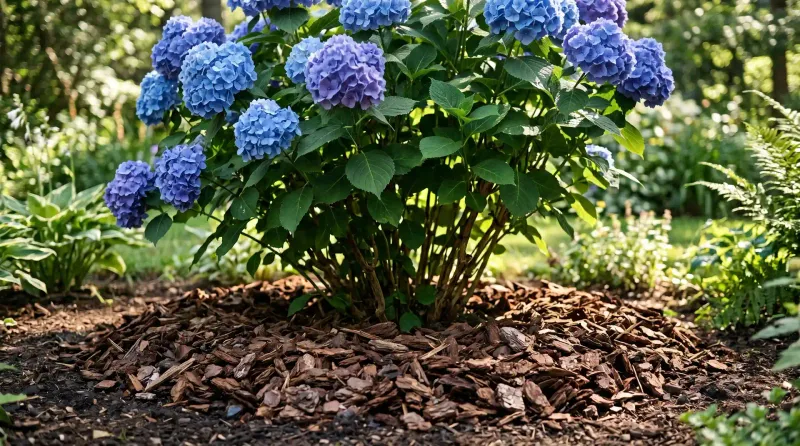
What happens below the soil surface often explains symptoms that look like a sun or heat problem from above. Hydrangeas need soil that stays consistently moist without becoming waterlogged, and achieving that balance depends on texture, drainage, organic matter, and how water is applied.
Mississippi State Extension gives approximately one inch of water per week from rainfall or irrigation as a general health and productivity guideline, with the clear note that newly planted shrubs need closer monitoring. Treat that figure as an adjustable starting point, not a watering schedule.
Actual frequency depends on rainfall, soil type, temperature, plant size, and any local irrigation restrictions. Check soil moisture before adding more water, because hydrangea leaves can wilt rapidly in afternoon heat even when the root zone is already adequately moist, and adding water to saturated soil can worsen root disease.
Mulch does real work here. A two- to three-inch layer of organic mulch conserves moisture, moderates root-zone temperature, and reduces the speed at which the surface dries out between rain events.
Keep mulch pulled back from direct contact with the stems to avoid rot at the crown.
Sandy soils common in much of Florida present a specific challenge. UF/IFAS guidance on soil organic matter explains that sandy soils have low water-holding capacity, which means both water and nutrients can leach away quickly after rain or irrigation.
Adding organic matter improves retention more reliably than increasing fertilizer or watering more frequently in shallow pulses. Where the native soil drains poorly rather than too fast, Mississippi State recommends considering a raised planting bed as a practical way to keep roots out of standing water.
Audit the site before you dig
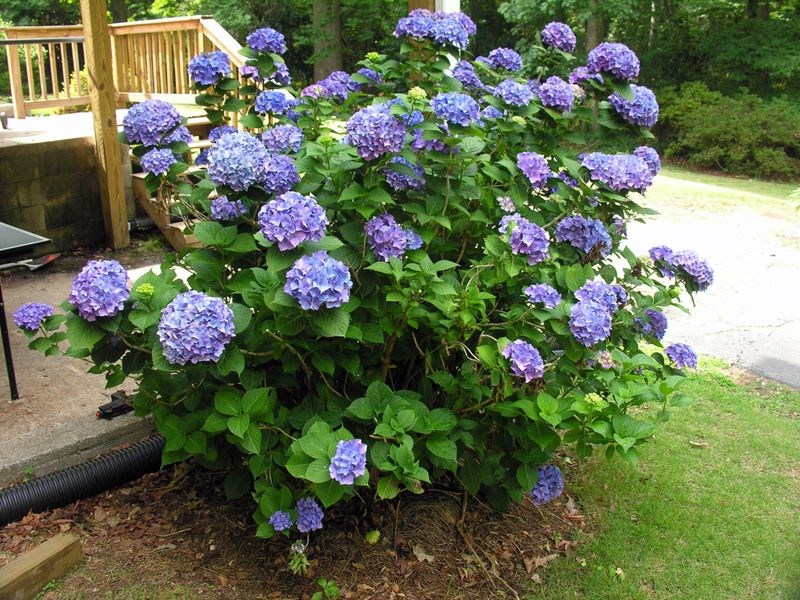
A structured site observation takes less than an hour and can prevent months of guesswork. You do not need to know the exact cultivar to complete it, because the conditions you are measuring affect every hydrangea regardless of type.
Start by recording how many hours of direct sun the plant receives and, more specifically, whether that sun arrives in the morning or the afternoon. Note any nearby walls, fences, pavement, or light-colored surfaces that could be amplifying heat.
Check whether drying wind reaches the plant regularly, since exposed corners and gaps between structures can funnel air across large leaves and accelerate moisture loss. Extension guidance on shrub site selection identifies sun exposure, wind, soil drainage, and root competition as core factors that determine whether a planting location will support long-term shrub health.
After a normal rain, check how long the soil stays wet. Standing water that persists for more than a few hours after a moderate rain points toward a drainage problem, not a watering deficit.
Probe for nearby tree roots, which compete aggressively for moisture and can leave a hydrangea chronically dry even in a well-irrigated bed. Mississippi State Extension treats root competition and drainage as primary site factors alongside light and heat.
Finally, assess whether the plant has enough room to reach its mature size without crowding structures or neighboring plants. Some problems that look like sun or water stress are actually the result of restricted airflow and root competition in an undersized space.
Each observation you make points toward a specific correction, and several of those corrections can be made without moving the plant at all.
Modify the current spot before relocating
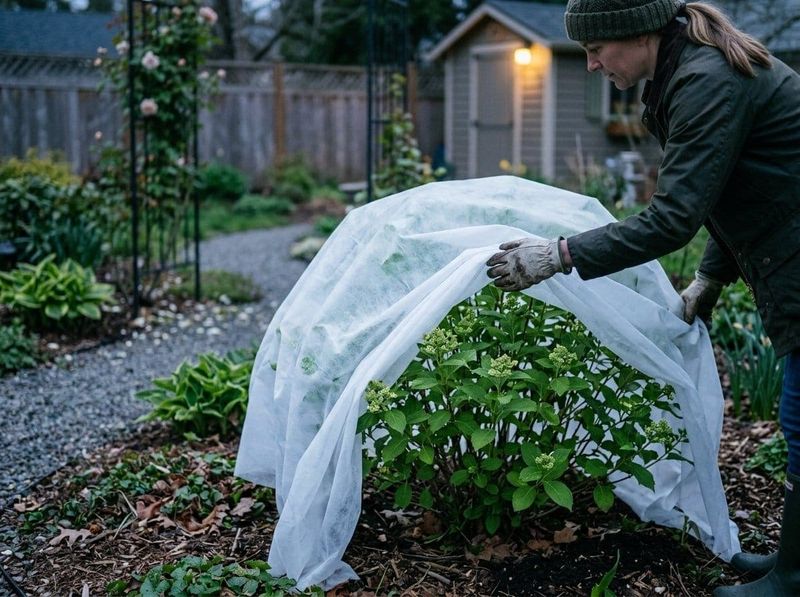
Moving a hydrangea should be the last option, not the first. Most site problems can be at least partially corrected without digging up the plant, and a stressed root system handles transplanting poorly.
Match the correction to the specific mismatch you found during the audit. If afternoon heat is the primary problem, a shade cloth, a strategically placed trellis with a fast-growing vine, or a nearby shrub planted to cast afternoon shadow can reduce stress without disturbing the roots.
If moisture consistency is the issue, a drip line or soaker hose targeted at the root zone works better than overhead watering, which wets foliage and evaporates quickly in hot conditions. Two to three inches of fresh mulch over the root zone is one of the highest-return improvements you can make at almost any site.
Drainage problems are more involved but still addressable in place. Improving soil organic matter, creating a slightly raised planting mound, or installing a simple French drain can change how long roots sit in wet conditions.
A full raised bed may be the practical solution when the native soil is heavy clay or compacted fill.
When the current site genuinely cannot supply adequate light, moisture, drainage, or space regardless of modifications, relocation makes sense. Mississippi State Extension identifies fall as generally the best transplanting window because roots can establish before the next growing season, with early spring as a reasonable alternative for temperate Southern areas.
Florida and Texas gardeners should adjust that timing to local conditions, taking into account heat, rainfall patterns, dormancy, and advice from Texas A&M’s Earth-Kind Plant Selector or local extension offices. Summer moves are possible but require especially attentive watering.
Moving the plant will not reverse existing freeze injury, disease damage, or the effects of wrong-time pruning, so manage expectations before committing to the effort.
Check pruning, weather, and plant health before blaming the site
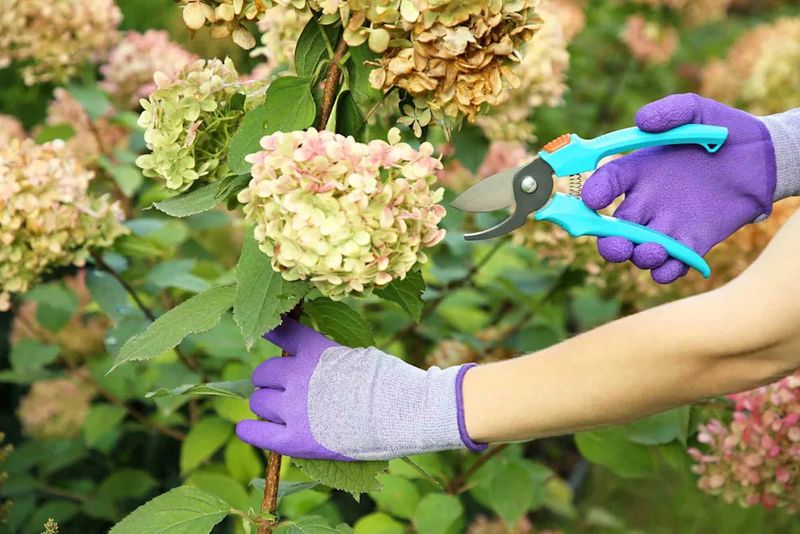
A thorough site audit is a valuable first step, but placement is not the only reason hydrangeas fail to bloom or decline. Several other problems produce symptoms that look identical to a location mismatch, and correcting the site will not fix them.
Missing flowers are the complaint extension offices hear most often, and wrong-time pruning is near the top of the cause list. Bigleaf and oakleaf hydrangeas flower on old wood, meaning the buds that open in summer were set on stems from the previous year.
Cutting those stems back in fall, winter, or early spring removes the buds before they ever open. UGA Extension’s pruning identification guide explains this distinction clearly and connects it directly to why identification matters before making any cuts.
Panicle and smooth hydrangeas flower on new wood and can be pruned in late winter or early spring without sacrificing blooms.
Winter and early-spring temperature swings can kill flower buds on old-wood types even when the stems survive, which is a common frustration in the upper South and occasionally in north Florida and north Texas after an unusual cold event. Oklahoma State Extension recommends removing only dead or winter-killed wood from any plant whose type is uncertain, rather than attempting a harder pruning that could remove viable buds.
Beyond pruning and cold injury, Penn State Extension’s bloom troubleshooting guide and University of Minnesota’s hydrangea diagnostic tool both identify excess nitrogen, prolonged drought, root disease, herbicide drift, and pest damage as additional causes of poor flowering or general decline. Excess nitrogen pushes leafy growth at the expense of blooms.
Root rot from saturated soil can mimic drought stress. Herbicide drift from nearby lawn treatments can distort new leaves and stunt growth in ways that look like a nutrient problem.
Correcting the site is a worthwhile first step, but a plant that continues to struggle after placement improvements deserves a closer look at these alternative explanations.
Use a right-plant, right-place rescue sequence
Putting the steps together into a working sequence makes the process manageable. Start by gathering whatever identification clues are available, then conduct a site audit regardless of whether you have a confirmed cultivar name.
Observe afternoon conditions specifically, not just total sun hours.
Test soil moisture and drainage before adjusting irrigation, and apply mulch as an early, low-risk improvement. Correct the most specific mismatch you found before considering any others, and give the plant a full growing season to respond before concluding that the site cannot work.
Mississippi State Extension and UGA Extension’s bigleaf hydrangea guide both frame good performance as a function of matching plant type to site conditions rather than forcing any hydrangea into a fixed formula.
Relocate only when the current site cannot be reasonably improved. Use regional resources such as the Texas A&M Earth-Kind Plant Selector to match cultivar to local conditions before planting anything new.
The goal is not to push every hydrangea into deep shade or full sun, but to align plant type with what the site honestly provides. Placement is often the most productive place to start an investigation, not proof that the spot caused every problem.