
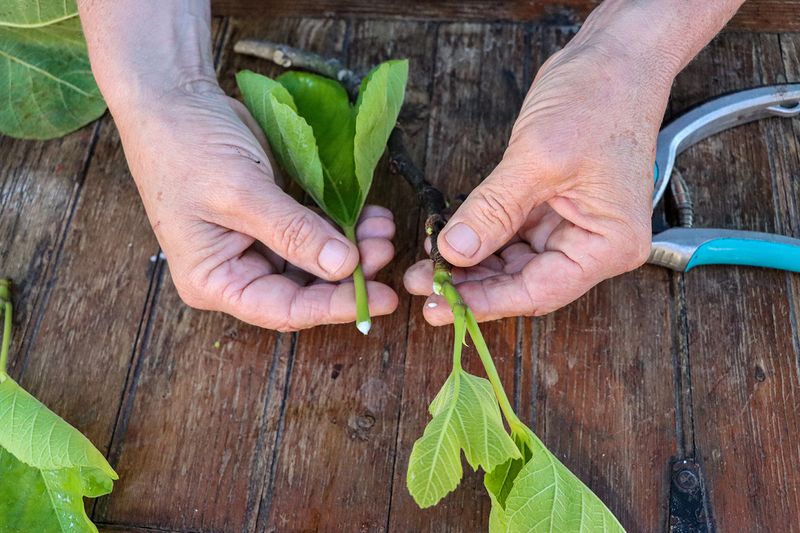
If you have a fig tree producing fruit you love, you can grow more of the same tree from cuttings taken during its dormant season. Fig propagation is one of the more approachable tasks in the home orchard, but the timing and technique matter more than most guides let on.
Getting the window right, preparing the wood correctly, and giving the cutting a proper rooting environment all affect whether you end up with a thriving new tree. This guide walks Southern gardeners through the whole process, with honest notes on what to expect along the way.
Start with the right seasonal window
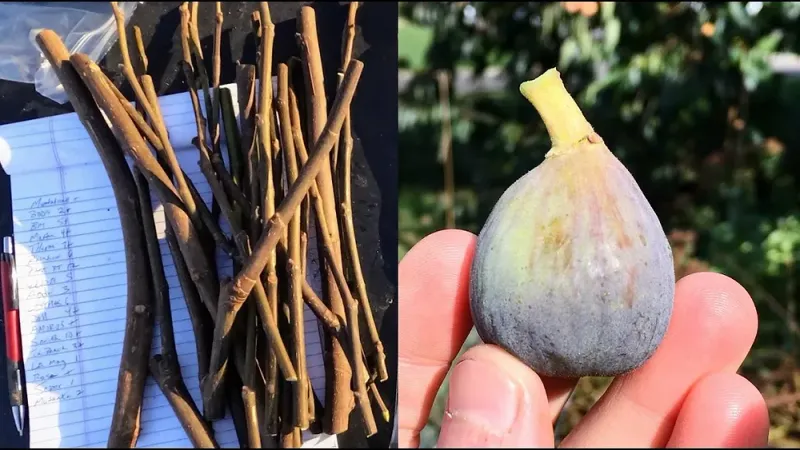
Timing fig propagation well means paying attention to what the tree is doing, not just what the calendar says. The most reliable cuttings come from wood collected as the tree approaches or enters dormancy, typically after leaves have dropped and the plant has slowed down for the season.
That window usually falls somewhere in late fall through winter, but the exact timing shifts depending on where you garden.
Cool temperatures are not the enemy of dormant hardwood cuttings. UC guidance on temperate-zone fruit propagation places hardwood cutting collection after leaf drop, from late fall through early spring, which means the dormant season as a whole is your opportunity rather than a race against cold.
The key question is whether your tree’s wood has matured and the plant has begun to rest, not simply whether temperatures have started to fall.
Regional differences matter here. Gardeners in Florida and other mild-winter areas may find fall a reasonable collection window once shoots have hardened and the tree is winding down.
University of Florida guidance recommends dormant cuttings and suggests callusing at around 50 to 60 degrees F. In Georgia and much of the upper South, University of Georgia extension often points to late February or March for field planting.
Texas A&M guidance focuses on collecting dormant wood after the plant has entered rest. Let your local temperatures and the tree’s own dormancy status guide your decision.
A cutting copies the parent fig
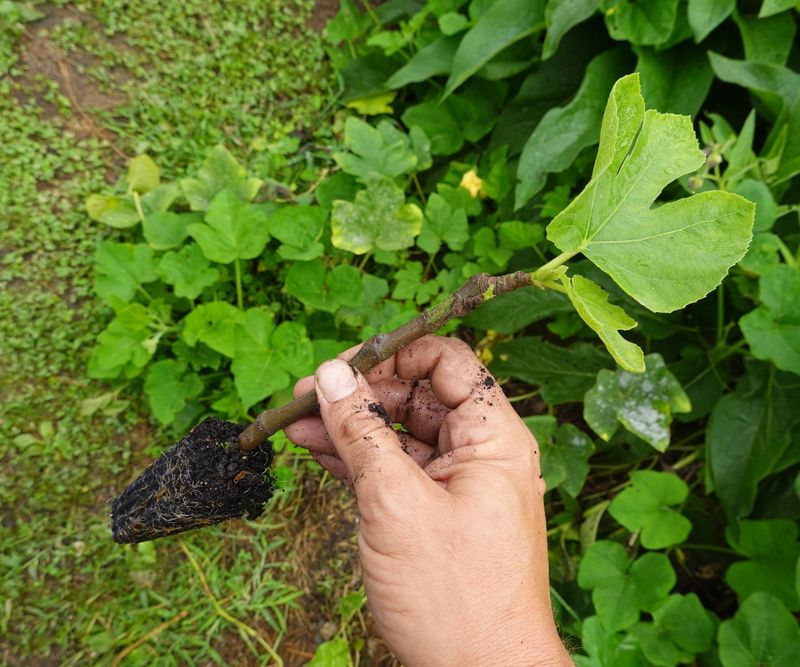
One of the strongest reasons to propagate from cuttings rather than seed is what you actually get at the end. A cutting produces an own-rooted plant that generally preserves the parent cultivar, so if your tree has fruit you enjoy, the new plant should too.
Texas A&M’s fig propagation guidance notes that fig trees are commonly grown on their own roots, making cuttings a practical way to reproduce a named variety.
Seedlings do not offer the same reliability. New Mexico State University extension material confirms that seeds do not reliably produce true-to-type plants, whereas vegetative cuttings clone the parent.
That distinction matters when you have a tree with a known track record in your yard or neighborhood.
Selecting the right wood is the next step. Choose vigorous, disease-free growth from a parent tree that is already performing well and is suited to your local climate.
University of Florida guidance notes that the basal portion of a cutting may be two-year-old wood, while Rutgers extension supports using one- to three-year-old material. Aim for cuttings roughly six to ten inches long, ranging from pencil thickness up to somewhat thicker stems, and avoid wood that looks diseased, weak, or undersized.
Prepare and orient each cutting correctly
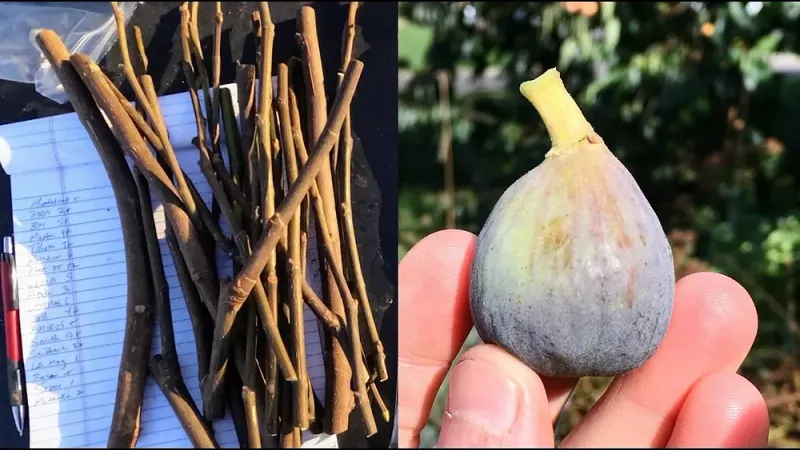
Before the first cut, put on gloves. The milky latex that seeps from fig stems when cut can irritate skin and eyes, and UC Master Gardener guidance specifically cautions against letting the sap contact your skin.
Keep your face away from the cut end, and wash any exposed skin promptly if contact happens.
Clean tools are equally non-negotiable. UF guidance on fig sanitation recommends sterilizing cutting utensils during propagation and pruning, and Texas A&M identifies sanitation as especially critical in fig plantings to prevent spreading disease between trees.
Wipe blades with a disinfectant solution between cuts and between trees.
Make the basal cut just below a node and the top cut just above one, so at least one node will sit below the rooting medium and at least one will remain above it. University of Georgia extension and Iowa State University extension both describe node placement as a key step in preparing hardwood cuttings correctly.
Mark the basal end of each cutting with a rubber band or a small scratch before you set it down, because an upside-down cutting will not root no matter how good the conditions are around it.
Build a simple, well-drained rooting setup
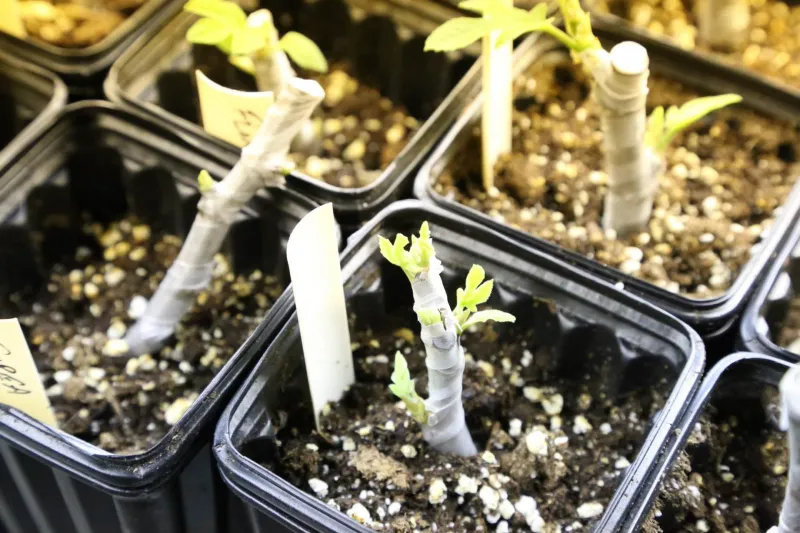
A modest setup works well for rooting fig cuttings at home. Start with a clean container that has drainage holes at the bottom, then fill it with perlite or a porous propagation mix that holds some moisture without staying soggy.
University of Florida extension recommends a moist, well-drained medium, and the principle behind that choice is straightforward: roots need both water and oxygen, and a saturated mix cuts off the air supply while creating conditions that favor rot.
Insert the cutting with the basal end down, making sure at least one node is buried in the medium and at least one sits above it. Firm the mix gently around the stem so the cutting stands upright without wobbling.
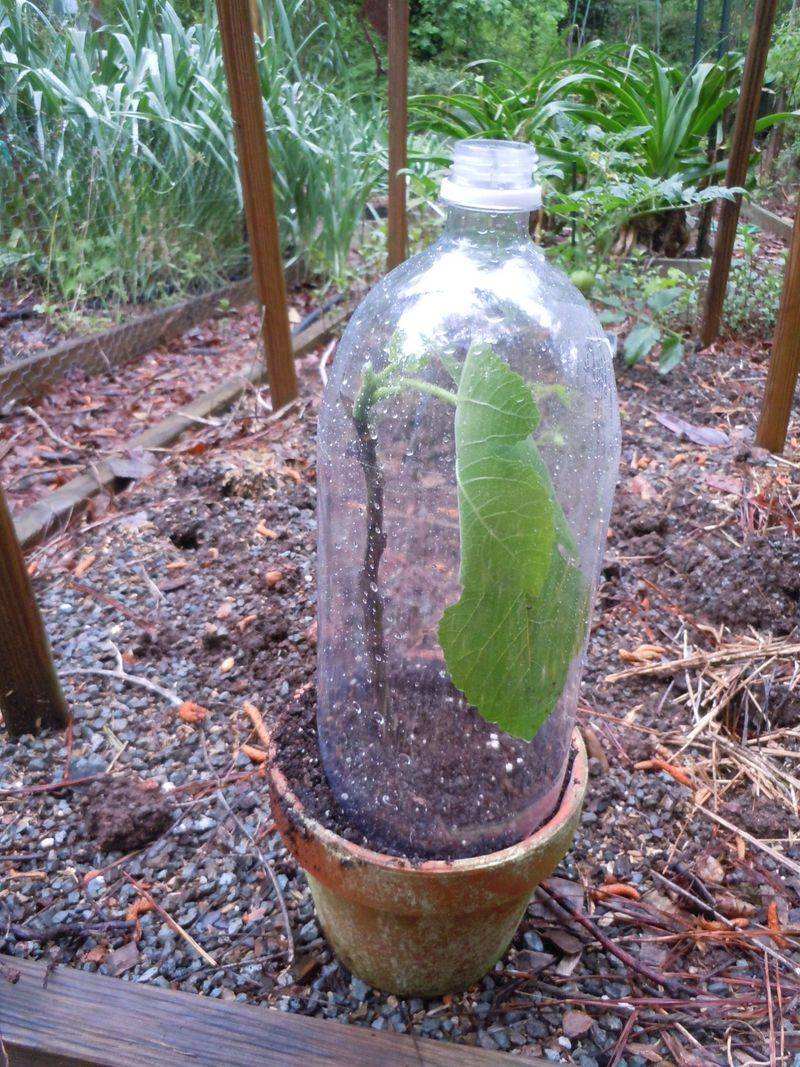
North Carolina State University extension guidance on fig hardwood cuttings describes a simple pot-and-cover approach as a workable home method.
A clear plastic bag or overturned clear container placed loosely over the pot can reduce moisture loss around the cutting. Iowa State University extension cautions that any cover needs monitoring: lift it periodically to let fresh air in, wipe away heavy condensation, and move the setup out of direct sun if you notice the interior heating up.
A sealed, stagnant enclosure can cause more problems than it prevents.
Maintain steady moisture while roots develop
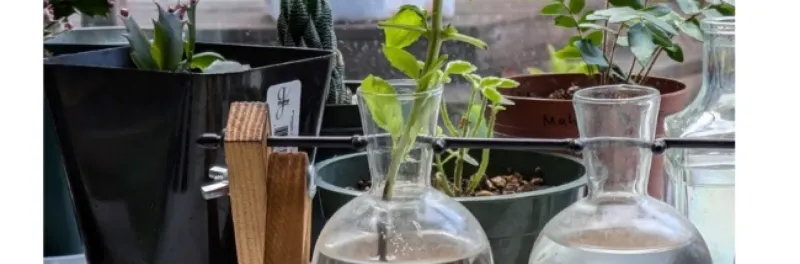
Once the cutting is in place, the main job is keeping conditions steady without overdoing anything. Bright, indirect light is safer than intense direct sun at this stage.
Iowa State University extension notes that hardwood cuttings still need protection from drying out even though they have no leaves, and strong sun can stress the stem before any roots have formed to support it.
Check the medium regularly and water when the top inch begins to dry, but stop short of keeping it constantly wet. Dormant hardwood cuttings require much less humidity management than leafy softwood cuttings, which typically need mist systems or tight humidity enclosures to prevent wilting.
University of Georgia extension notes that softwood fig cuttings under intermittent mist can root in three to four weeks, but that setup and timeline does not apply to dormant hardwood material rooted in a home setting.
Rooting hormone is optional for dormant hardwood cuttings. UF guidance says rooting efficiency can be improved with hormone treatment, so dipping the basal end in a powder or gel formulated for hardwood cuttings is worth trying if you want to improve your odds.
On timing, expect a possible callus to form after roughly two to three weeks under suitable conditions, with visible root development following several weeks or more after that. Patience is part of the process.
Leaves do not prove that a cutting has rooted
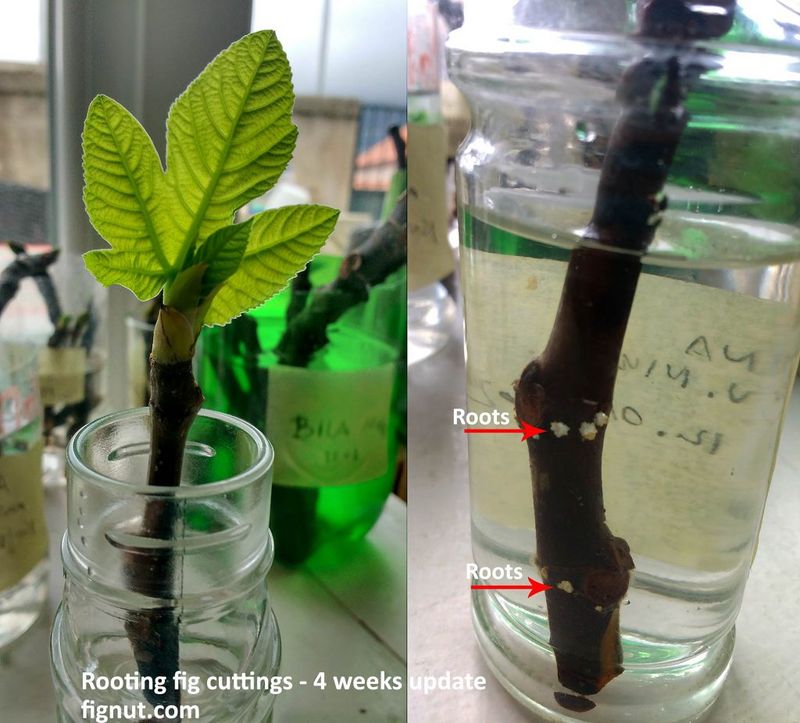
New leaves on a cutting are encouraging, but they are not proof that roots have formed. Dormant wood stores enough energy to push out foliage before any root system exists, which means a cutting can look alive and healthy above the soil while still being entirely unrooted below it.
Moving a cutting to a larger pot or outdoor bed at this stage often ends in failure.
NC State University extension guidance on fig hardwood cuttings advises waiting for genuine root development before transplanting. A gentle tug test can give you a clue: if the cutting resists being pulled from the medium, roots are likely anchoring it.
You can also slide the cutting carefully out of a small pot to check, then return it undisturbed if roots are still sparse.
Once roots are established, pot the cutting into a slightly larger container with a good potting mix and begin hardening it gradually. Iowa State extension recommends acclimating young plants slowly to stronger outdoor light, wind, and less frequent watering before permanent placement.
How quickly any cutting reaches that point depends on cultivar, wood maturity, temperature, moisture, and handling. Published research on fig propagation outcomes confirms that results vary and no single success rate applies across all conditions.
Let local winter weather set the outdoor schedule
Rooting a cutting successfully is only part of the journey. Getting a young plant into the ground at the right time is a separate decision, and rushing that step can undo weeks of careful work.
A newly rooted cutting with a limited root system is more vulnerable to cold damage, drought stress, and transplant shock than an established tree, which is why many extension programs recommend letting it grow in a container or nursery row for a full season before permanent planting.
Where you garden changes that calculus considerably. University of Florida guidance notes that container-grown figs can be planted throughout the year in Florida as long as irrigation is available, while bare-root plants are generally moved during the dormant season from December through late February.
That flexibility is specific to Florida’s mild winters. University of Georgia extension places field planting in late February or March for much of the Southeast, which is more cautious timing suited to areas that experience freezes.
Texas and other parts of the South with variable winter cold call for similar caution. NC State extension guidance supports holding young plants in containers until conditions are stable enough for outdoor placement.
One more reminder worth keeping: cloning a parent fig preserves its traits, but it does not make that cultivar better suited to a location’s winter temperatures, humidity, rainfall, or disease pressures documented by Texas A&M. Choose a cultivar adapted to your area from the start.
Expect a healthy young tree before expecting fruit
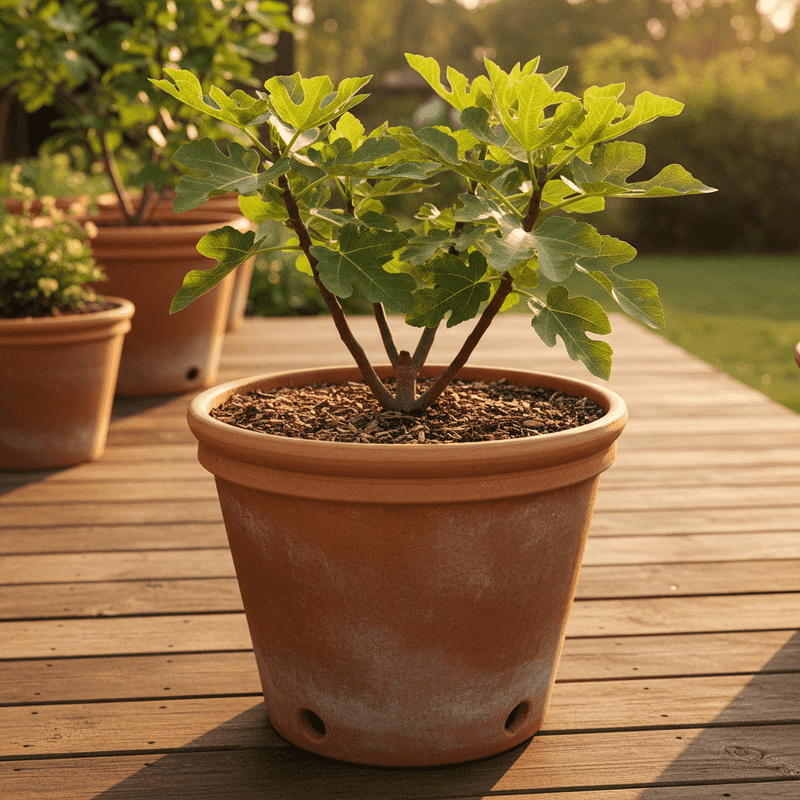
Pulling the whole process together comes down to a clear sequence: collect healthy, mature wood during the locally appropriate late-fall-through-dormant window, mark and preserve the cutting’s orientation, insert it correctly into a clean porous medium, keep that medium evenly moist without saturating it, and wait for genuine root development before moving the plant anywhere. Iowa State University extension guidance on hardwood cuttings reinforces the value of gradual hardening once roots are confirmed, so give the young plant time to adjust before exposing it to full outdoor conditions.
On fruit, reset your expectations early. UC Master Gardener guidance on figs notes that young trees commonly take three to five years to begin producing edible fruit in meaningful quantities.
A cutting started this winter is not likely to yield a harvest next summer, and that is normal. University of Florida extension supports the same patient outlook for newly established fig plants in the South.
Fig propagation is genuinely practical for a home gardener willing to follow the steps carefully. The reward is a tree that carries the same traits as a parent you already trust, growing on its own roots in your own yard.