
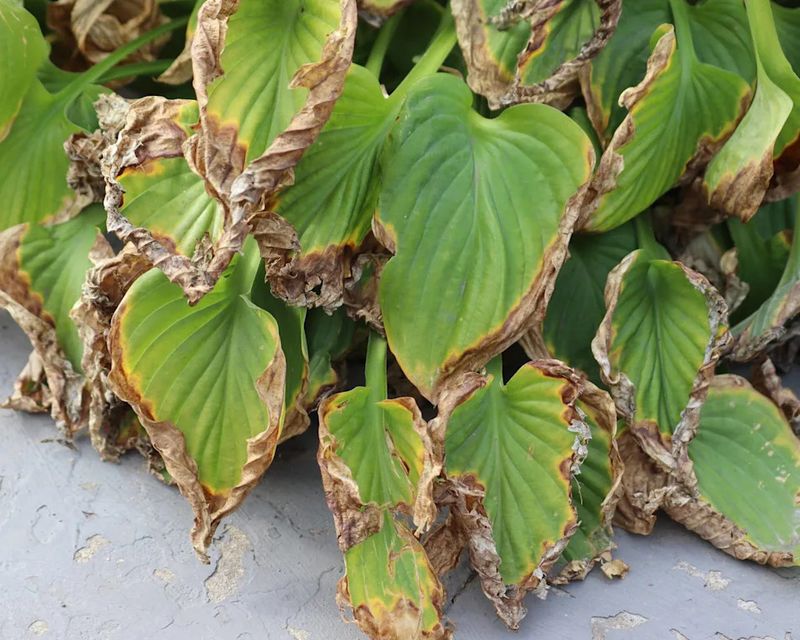
Hostas are supposed to make shady spots look lush, but they can turn ragged fast when a few small care problems pile up. If your plants have scorched leaves, torn edges, or a tired, droopy look, the cause is often simpler than it seems.
In Southern yards, especially in places like Florida and Texas, heat and moisture can make those mistakes show up even faster. The good news is that once you spot the real problem, hostas often start looking better with fairly basic changes.
1. Too Much Sun, Especially Afternoon Sun
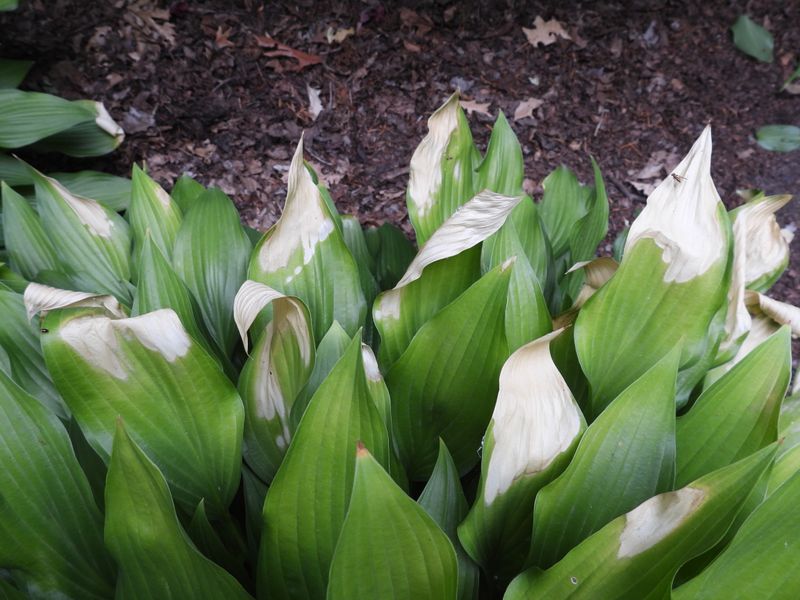
One of the sneakiest hosta problems starts with a spot that seems shaded enough, until summer really arrives. A bed that looks gentle in spring can turn harsh by June or July, especially in Florida and Texas where sunlight stays intense and heat builds against walls, fences, and pavement.
Hostas may survive there, but the leaves often tell the truth with bleached patches, brown edges, and a rough, papery look.
Morning sun is usually easier for hostas to handle than hot afternoon exposure. Blue-leaved types are often the first to look bad because their waxy coating can fade, while variegated kinds may scorch along pale leaf margins.
If your plants perk up overnight but look wilted and tired by late day, light and heat are likely part of the trouble.
Try moving hostas to bright shade or a place with only early sun. If transplanting is not practical, nearby shrubs, taller perennials, or even a patio umbrella during heat waves can help reduce stress.
In Southern gardens, the best hosta locations often get filtered light, protection from reflected heat, and a little more shelter than many gardeners first expect.
2. Shallow Or Inconsistent Watering
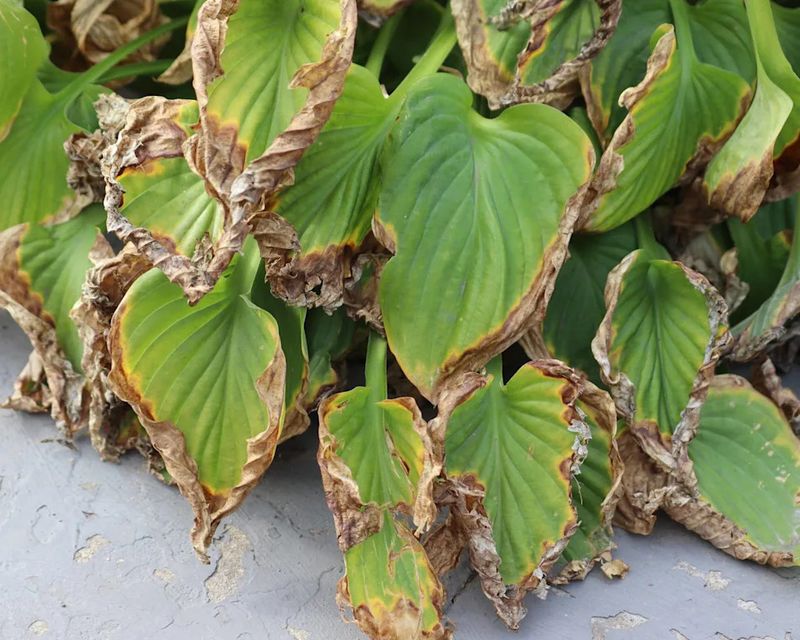
Plenty of gardeners water hostas often and still end up with shabby plants. The catch is that quick splashes on the surface do not help much when the root zone stays dry a few inches down.
Hostas have large leaves that lose moisture fast, and in warm Southern weather they can slide from lush to limp in a hurry.
Inconsistent watering usually shows up as drooping in the afternoon, brown tips, split-looking edges, and slower growth. Sandy Florida soils dry out especially fast, while many Texas beds can bake hard on top and shed water before it sinks in.
A plant may look thirsty even after watering if most of that moisture never reached the roots.
Deep watering is usually more helpful than frequent light watering. Soak the soil so moisture reaches several inches down, then let the top begin to dry slightly before watering again.
A two- to three-inch layer of mulch can also help hold moisture and keep roots cooler. If your hostas sit under trees, remember they are competing for water, so they may need extra attention even when rainfall seems decent.
3. Crowded Planting And Poor Airflow
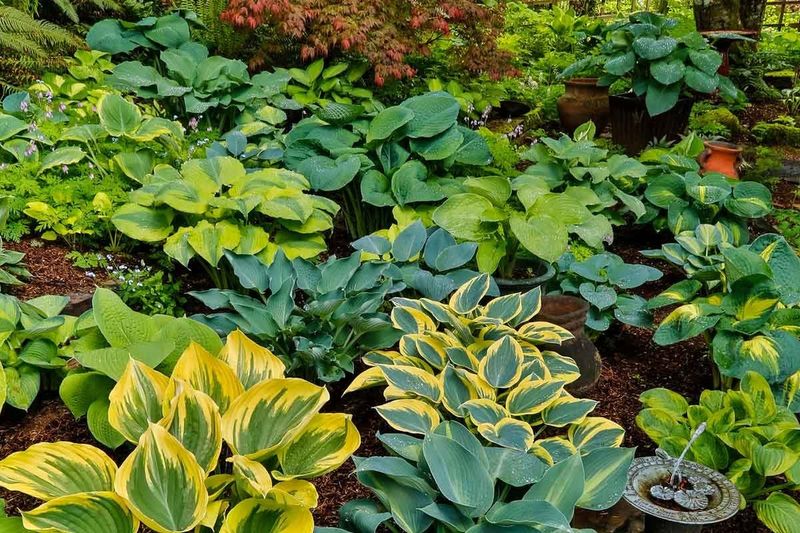
Sometimes the bed looks full and healthy from a distance, yet the hostas hidden in the middle are quietly struggling. When plants are packed too tightly, air stops moving well around the leaves and moisture lingers longer than it should.
That combination can leave hostas looking battered, spotted, or limp, particularly during muggy stretches in the South.
Crowding also creates a second problem that is easy to overlook. Roots from nearby shrubs, trees, and other perennials compete for space, water, and nutrients, so hostas may never quite fill out the way you expected.
Instead of broad, smooth leaves, you get smaller foliage, more ragged edges, and a plant that always seems one step behind.
If your hostas have been in place for a few years, check whether clumps have grown together or become boxed in by neighboring plants. Dividing large clumps and giving each plant more elbow room can improve leaf quality and reduce lingering dampness on the foliage.
Pruning back surrounding growth may also help light and air reach the plants. In humid regions, a little breathing room often does more for appearance than extra fertilizer ever will.
4. Ignoring Slugs, Snails, And Chewing Pests Early
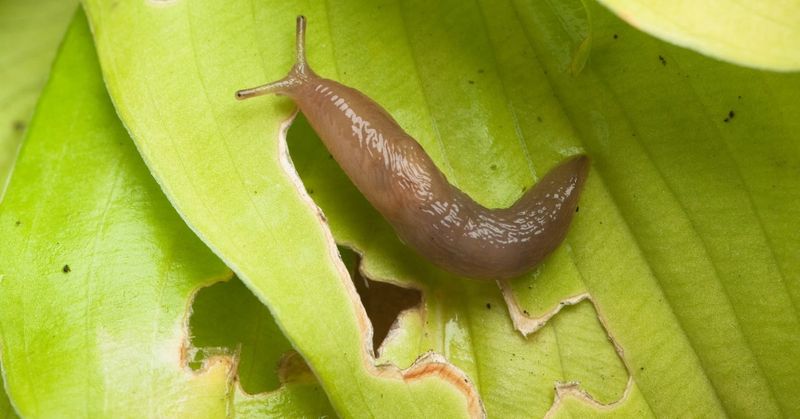
Nothing makes a hosta look rough faster than leaves that seem to get shredded overnight. Many gardeners blame weather first, but chewing pests are often behind the mess.
Slugs and snails are classic culprits, and in damp, shady beds they can turn smooth foliage into hole-punched leaves before you notice what is happening.
Early damage matters because hostas do not hide it well. Once a leaf is chewed, it stays scarred for the season, even if the plant is otherwise healthy.
In wetter parts of the South, especially after rain or heavy irrigation, pests may stay active longer than expected. Earwigs and occasional caterpillars can also add to the tattered look, so it helps to inspect rather than guess.
Head out in the early morning or after dark and check under leaves, mulch, and edging stones. Reducing excess moisture on the soil surface, thinning crowded areas, and cleaning up hiding places can help lower pressure.
Gardeners also often use slug baits labeled for home landscapes, but follow the product directions carefully. Catching the problem early will not repair old holes, yet it can protect the fresh new leaves that give hostas their best look.