
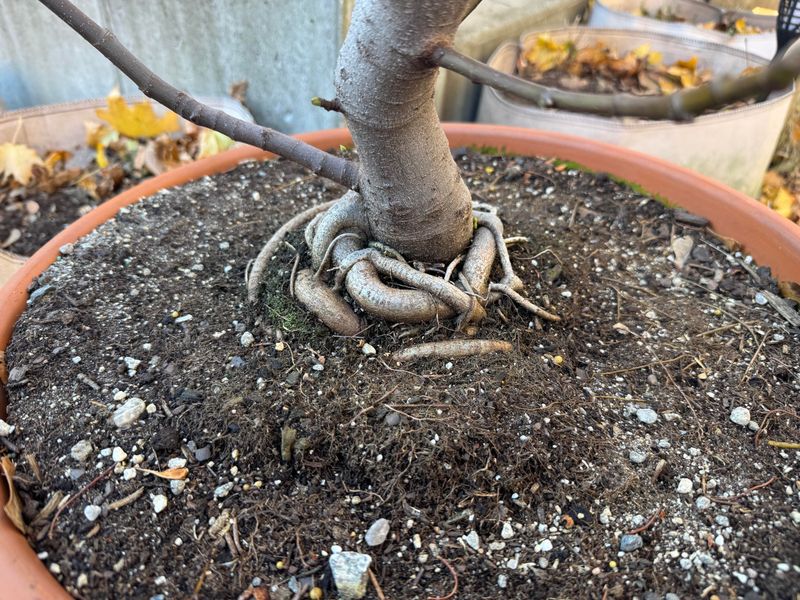
A potted fig that suddenly stops pushing out new shoots can be genuinely puzzling, especially when you are watering regularly and the tree looked fine not long ago. The container is worth investigating, but it is only one of several possible reasons your tree has gone quiet.
Drought, excess moisture, salt buildup, low light, disease, and even normal dormancy can all produce the same sluggish appearance. Working through a quick inspection before you repot or prune will save you time and protect the tree.
Slow growth is a clue, not a diagnosis
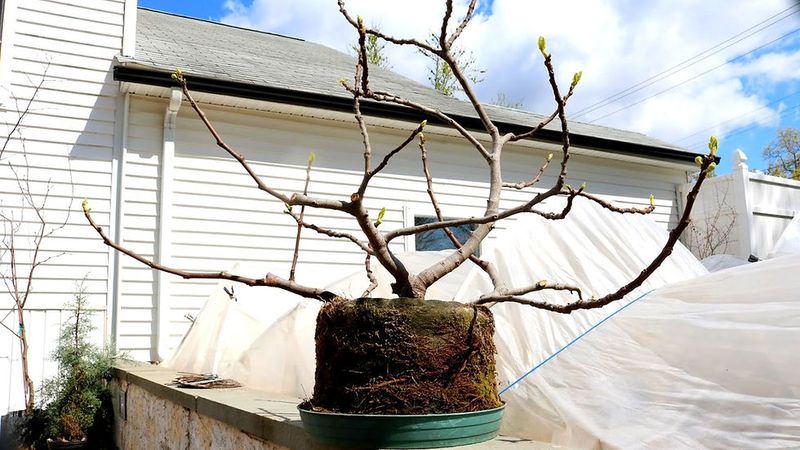
A fig that has stopped pushing new growth deserves attention, but the container is not automatically the culprit. Before pulling the tree out of its pot, consider how many different problems can produce the same sluggish picture.
Drought stress, waterlogged roots, fertilizer-salt buildup, and too little direct sun can each put a fig into a near-standstill, and none of those problems require a new pot to fix.
University of New Hampshire Extension guidance on container figs notes that figs need consistently moist but well-drained growing medium, full sun, and proper feeding to thrive in pots. When any of those conditions slips, growth slows in ways that can look identical to root restriction.
Regional threats add more possibilities. UF/IFAS fig guidance highlights fig rust and root-knot nematodes as causes of reduced growth and poor appearance in Florida, while Alabama Cooperative Extension’s fig production guide points to cold injury and seasonal dormancy as common reasons figs appear to stall, especially after a hard winter.
Dormancy can delay visible growth for weeks after temperatures rise, leaving growers convinced something is wrong when the tree is simply waking up on its own schedule. Use slow growth as a prompt to investigate, not as a verdict.
The root ball provides the evidence
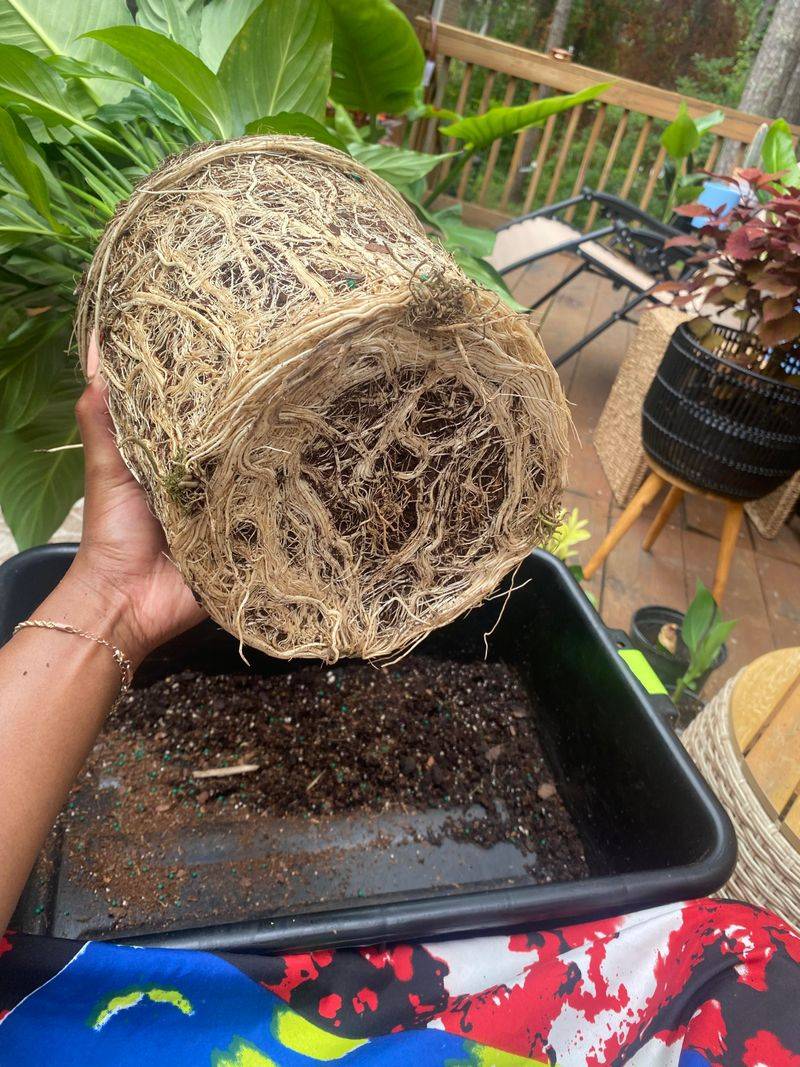
Checking the root ball directly is the only way to know whether the container is actually limiting your fig. Tilt the pot on its side, support the trunk near the base, and gently work the root ball free. Wear gloves throughout this process: fig stems and roots contain a milky latex that can irritate skin, and you should keep sap away from your eyes entirely.
Once the root ball is out, examine the whole thing, not just the bottom. University of Maryland Extension’s pot-bound plant resource describes the clearest warning signs: roots that wrap densely around the outer edge of the ball, a compacted mass that holds the shape of the container, and very little visible potting mix remaining between the roots.
Roots poking through drainage holes are a prompt to look closer, but they are not proof on their own that the tree is severely restricted.
Penn State Extension’s container tree root guidance reinforces this point: a few escaping roots may simply reflect vigorous growth rather than a crisis. What matters is whether the interior of the ball is a solid, impenetrable mass with roots visibly circling the container wall.
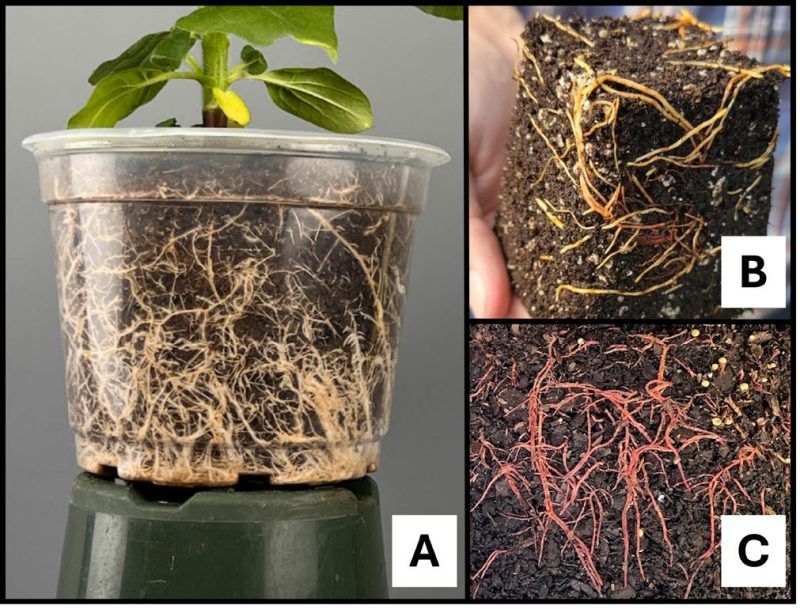
If the roots look white or tan, feel firm, and spread through a reasonable amount of growing medium, the container may not be the problem at all. A healthy-looking root ball shifts your attention to watering, nutrition, light, or regional threats instead.
A crowded container can create a watering paradox
One of the more confusing signs of a genuinely root-bound fig is a plant that looks thirsty within hours of being watered. When the root ball becomes a dense, compacted mass, there is very little open potting mix left to hold moisture.
Water poured at the top tends to travel around the outer edge of the ball or run straight through the drainage holes before it can soak into the center where most of the roots are.
The result is a fig that wilts in the afternoon even though the grower is watering it regularly. Maryland Extension’s pot-bound resource specifically identifies this pattern as a characteristic symptom of severe root restriction.
The tree is not getting the water it needs because the root mass itself is acting as a barrier.
The opposite problem can look almost identical from the outside. NC State Extension’s container plant handbook explains that constantly saturated growing medium reduces oxygen around the roots and can cause root decline even while the plant shows drought-like symptoms such as wilting and yellowing.
A pot that drains slowly, sits in a full saucer, or uses a dense medium that holds too much moisture creates a different kind of root damage. Distinguishing between these two patterns requires checking both the root ball structure and the moisture level of the medium before deciding on a remedy.
Choose the least disruptive root correction
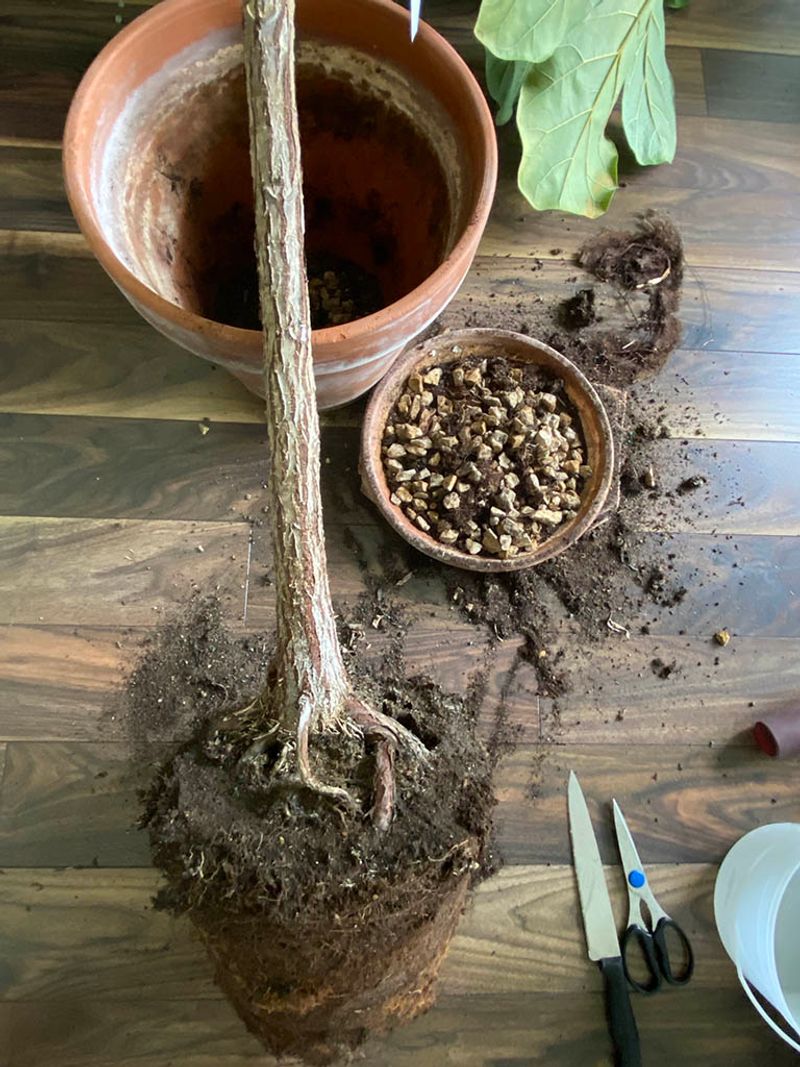
Once the inspection confirms that crowded or circling roots are genuinely limiting the tree, the next step is picking the correction that causes the least additional stress. For a root ball that is crowded but still has some visible growing medium and roots that look healthy, moving the fig into a somewhat larger container is usually the better starting point.
Cutting away a large portion of healthy roots when the tree is already under stress adds a new injury on top of the existing one.
University of Maryland Extension’s fig-growing resource notes an important nuance here: mild root restriction in containers may actually support earlier or heavier fruiting compared with a very large pot. The useful boundary is between controlled restriction, where the tree can still take up water and nutrients, and severe root binding, where the dense mass impairs those basic functions.
Repotting into a modestly larger container preserves some restriction while giving roots room to function properly again.
For a root ball with severely circling roots along the outer wall, cautiously shaving or cutting those problem roots before repotting can help prevent future girdling. Penn State Extension and research on root pruning in container-grown woody plants support addressing circling roots rather than leaving them, though that evidence comes from woody plants generally rather than figs specifically.
When the tree is genuinely root-bound and has been in the same container for several years, Tennessee Extension guidance on container figs recommends root pruning at roughly three- to four-year intervals, removing about one-third of the root ball and replacing the removed medium with fresh mix. That is a recurring management interval, not an annual task, and root pruning always carries some temporary stress, so pair it with shade, consistent moisture, and a lighter fruit load while the tree recovers.
The new container must solve drainage, not just add volume
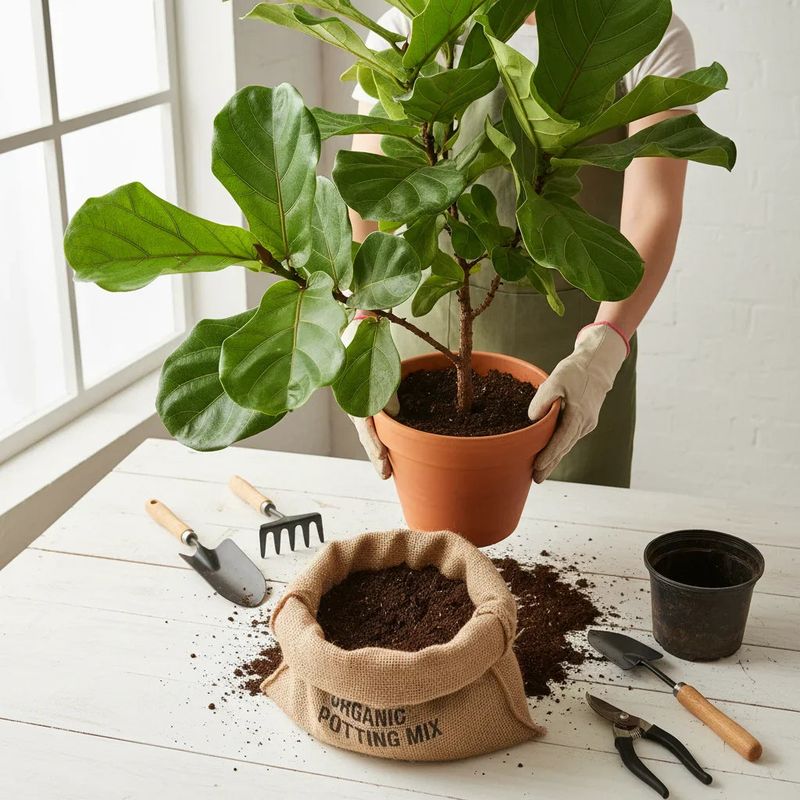
Moving a fig into a larger pot only helps if the new setup actually drains properly. The container must have drainage holes, full stop.
A pot without them will trap excess water around the roots no matter how carefully you water, and root decline can follow even when the plant looks like it needs more moisture.
Skip ordinary garden soil as a potting medium. NC State Extension’s container handbook explains that native soil compacts in pots, reduces aeration, and drains poorly compared with a quality potting mix formulated for containers.
Also skip the common advice to add a gravel layer at the bottom of the pot: UC ANR guidance clarifies that a gravel layer actually raises the saturated zone inside the pot rather than improving drainage, which is the opposite of the intended effect.
UNH Extension recommends a well-drained potting medium and a container with adequate drainage as foundational requirements for container figs. On container size, Maryland Extension places the useful minimum around 10 to 15 gallons, noting that larger containers support a larger tree and potentially more fruit.
Larger pots also become heavier and harder to move, which matters in Texas and Florida where growers may need to shift trees for freeze protection or storm cover. Choosing a size that fits your management reality is more practical than chasing the largest pot available.
Reset water and fertilizer only after checking the roots
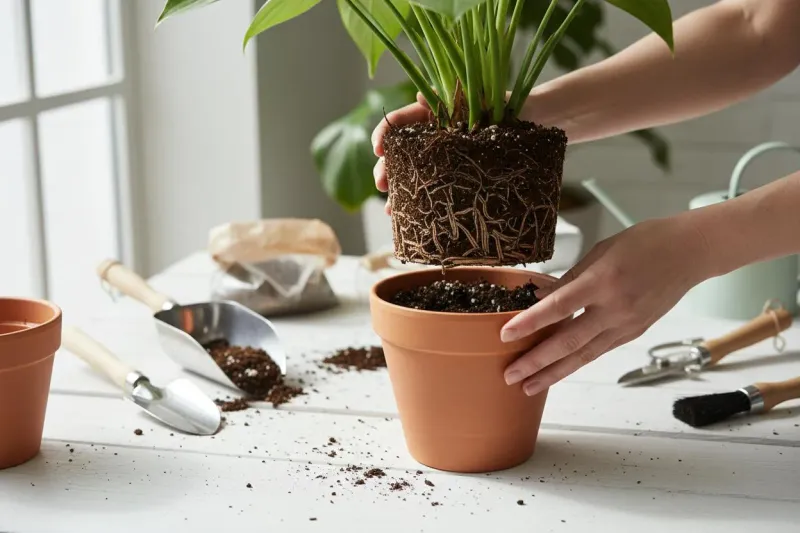
After confirming what the root ball actually looks like, you can set up a watering and feeding routine that matches what the tree genuinely needs. Water thoroughly each time, letting the water run freely from the drainage holes, and then empty the saucer so the pot is not sitting in standing water.
UNH Extension’s container fig guidance recommends waiting until the upper 1 to 2 inches of mix have dried before watering again, and notes that container figs may need watering daily during hot weather, particularly while fruit is developing.
Before reaching for fertilizer, check for salt buildup in the potting mix. A white crust on the surface of the medium or along the rim of the pot, combined with brown leaf margins, yellowing, or stunted growth, points to excess soluble salts.
Maryland Extension’s guidance on fertilizer-salt deposits recommends flushing the medium from the top with several pot volumes of clean water and allowing it to drain completely. Severely affected mix may need to be replaced rather than flushed.
Adding more fertilizer on top of existing salt buildup can worsen root and leaf injury rather than fix it. NC State Extension notes that potting media lose nutrients through regular watering, so feeding is necessary, but the rate and product should follow the label rather than a generic schedule.
Controlled-release granules and complete liquid fertilizers are both accepted approaches for container plants. Maryland Extension recommends fertilizing container figs in spring and again in midsummer, which gives a reasonable seasonal framework without locking you into a rate that may not suit your cultivar, pot size, or climate.
When the roots look fine, investigate light, weather, and regional threats
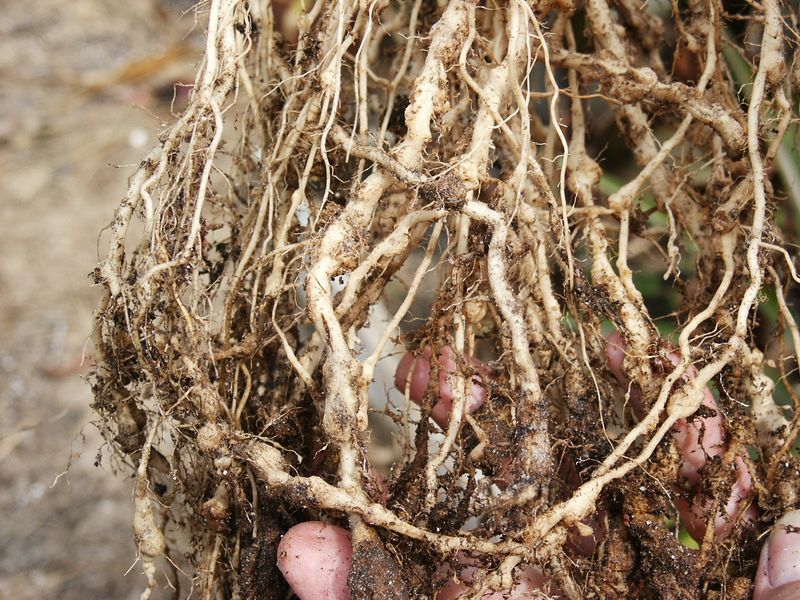
Pulling the fig from its pot and finding a healthy, well-distributed root ball is actually useful information: the container is not the problem, and you can move on to other explanations without repotting or pruning anything. Sun is the first thing to check.
Figs need full sun, generally at least eight hours of direct light daily, and a tree moved to a shadier spot or blocked by a new structure will slow down noticeably even with perfect roots and moisture.
Yellow leaves are one of the most diagnostically ambiguous symptoms a container fig can show. They can reflect nutrient shortage, excess water, salt injury, root damage, disease, or normal seasonal leaf drop.
The color pattern, the moisture level of the medium, the condition of the root ball, and the presence of spots or pustules on the leaf surface all carry more meaning than the color alone.
Florida growers should specifically watch for fig rust, which causes yellow-brown or rusty spots on leaves and can trigger premature defoliation and reduced yields. UF/IFAS fig guidance and Arkansas Extension’s fig rust notes both describe the characteristic rusty pustules on leaf undersides.
UGA Extension identifies root-knot nematodes as a significant threat in sandy soils, and IFAS St. Lucie County Extension highlights Florida’s nematode pressure as distinct from conditions in other states. In Texas, the picture shifts: Texas A&M’s fig resource emphasizes supplemental irrigation in drier regions and cold protection in northern and western parts of the state, where freeze damage can kill stems back to the ground and delay new growth for weeks into spring.
Let the inspection determine the rescue
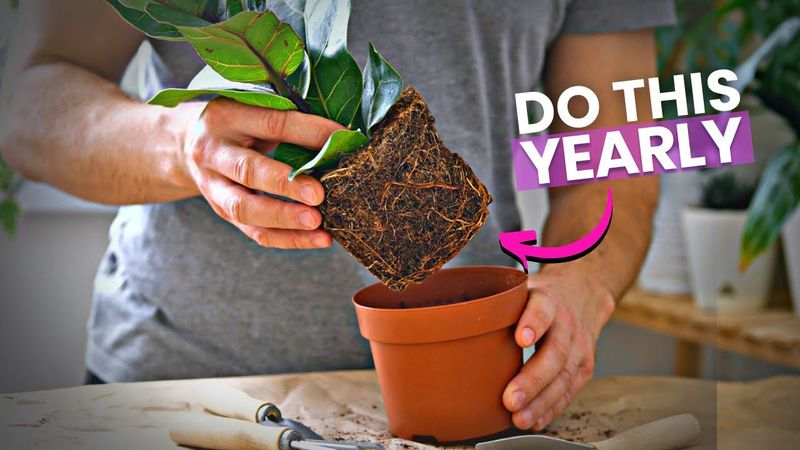
A practical rescue starts with one action: remove the fig from its container and look at the whole root ball before doing anything else. If the roots are densely circling, the medium has nearly disappeared, and water runs through the pot without slowing, the container is likely the bottleneck.
Correct it with the least disruptive method available, whether that means repotting into a modestly larger container, carefully shaving circling outer roots, or both, and then rebuild sound drainage and moisture management from the ground up.
If the root ball looks healthy, redirect your attention to light, watering consistency, salt buildup, fertilizer timing, disease signs, nematode risk, cold injury, or dormancy as the evidence points. Maryland Extension, fig-specific Maryland guidance, NC State’s container handbook, and recent research on root management in container woody plants all reinforce the same principle: the correction should match the confirmed problem, not the most obvious guess.
A container can genuinely stall a fig without explaining every slow-growing tree on every porch in the South. Root correction, when it is warranted, improves conditions but does not guarantee an immediate flush of new shoots.
Give the tree time, keep conditions steady, and let the inspection lead the way.