
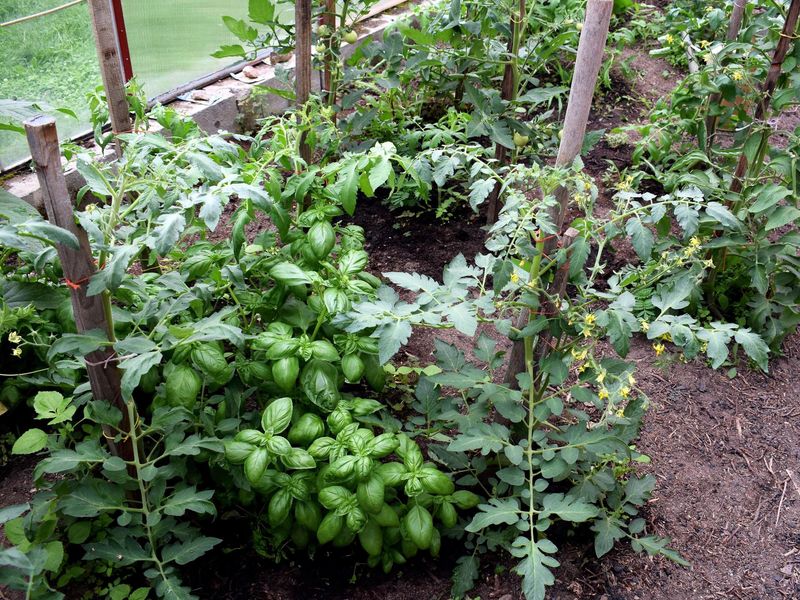
If your tomato plants look weak, yellow, or just plain tired, the problem might be growing right next to them. Crowded beds, pushy weeds, or a tall neighbor blocking the sun can quietly drain the resources your tomatoes count on.
Understanding what real competition looks like, and what it does not look like, is the first step to turning things around.
When nearby plants actually compete with tomatoes
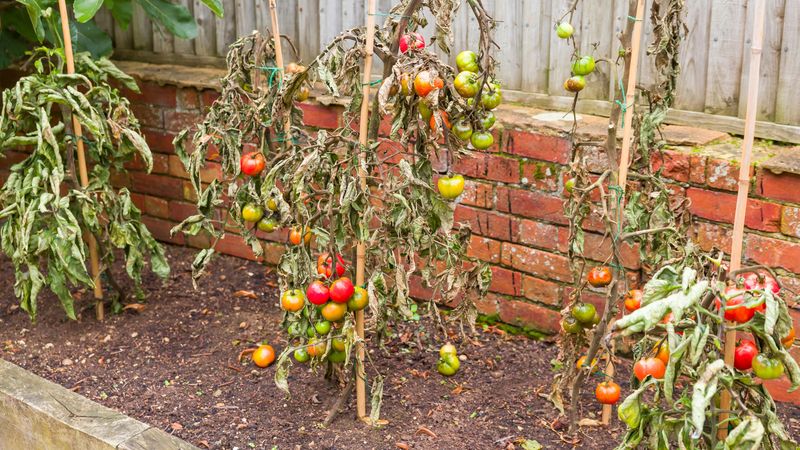
Not every plant growing near your tomato is causing harm. A properly spaced companion crop with enough water, light, and fertility can coexist without hurting your harvest.
The real trouble starts when nearby plants limit what your tomato actually needs to grow: sunlight reaching the canopy, water soaking into the root zone, nutrients available in the soil, enough physical room for roots to spread, and moving air around the leaves.
Four separate problems can develop when a planting gets crowded or poorly planned. Root-zone competition happens when neighboring plants tap the same pocket of water and nutrients your tomato is relying on.
Canopy competition happens when a taller plant blocks meaningful sunlight. Physical crowding reduces the airflow around leaves, keeping foliage wet longer and making it harder to spot problems early.
Irrigation mismatch happens when one plant in a shared bed or container receives water while another stays dry.
Disease exposure from shared host plants or infected debris is a different issue entirely. Oregon State University Extension’s companion planting guidance notes that mixed plantings can work well when spacing and resources are adequate, but shared hosts or contaminated soil can spread disease even when water, light, and nutrients are plentiful.
The strongest candidates for genuine competition are usually weeds and grasses rooted inside the tomato’s bed, tomatoes planted too close together, large plants or trellised crops shading the canopy, and vigorous plants sharing a small container or confined raised bed.
Which neighboring plants deserve inspection first?
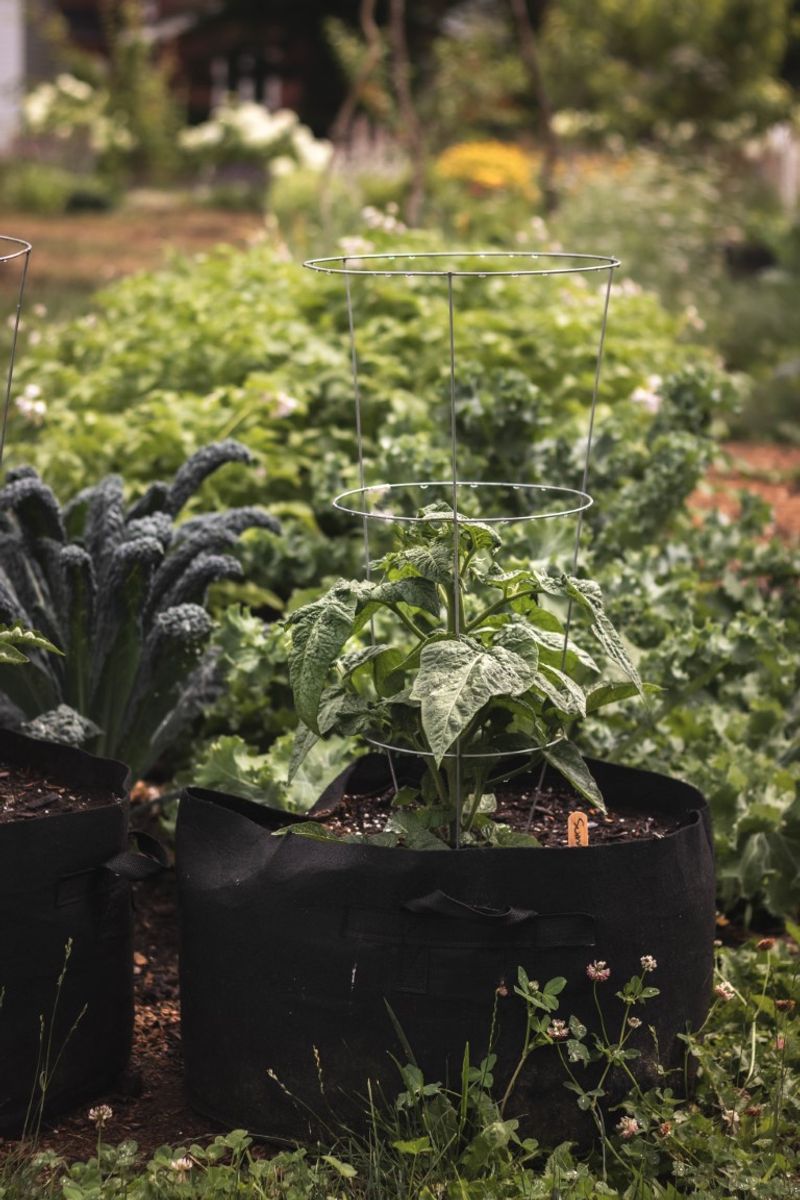
Start your inspection at ground level, not by reading the label on whatever is growing nearby. Weeds and grasses rooted inside or immediately beside the tomato’s bed are almost always the first problem worth addressing.
University of Minnesota Extension’s weed guidance confirms that weeds compete directly for light, water, nutrients, and space while also harboring pests and reducing airflow. A single fast-growing weed clump can claim a surprising share of available moisture in a raised bed or sandy Southern soil during a hot week.
Tomatoes planted too close to each other are the next thing to check. Two plants crowding each other create the same resource squeeze as any other competitor, and the problem compounds when both are actively fruiting and demanding water.
After that, look up: a tall shrub, a corn stalk, a large squash vine trained up a shared trellis, or even a neighboring fence can cut off meaningful sunlight for part of the day.
Containers and small raised beds deserve extra attention because confined soil limits how far roots can travel to find water and nutrients. Texas A&M AgriLife’s High Plains tomato guidance notes that root spread depends on soil type, irrigation, variety, and cultivation practices, so actual crowding in your bed matters more than any fixed measurement.
Judge by what you observe: compacted surface soil, roots circling a container, or wilting that returns quickly after watering are all signs worth acting on.
Reduced light can weaken tomato growth
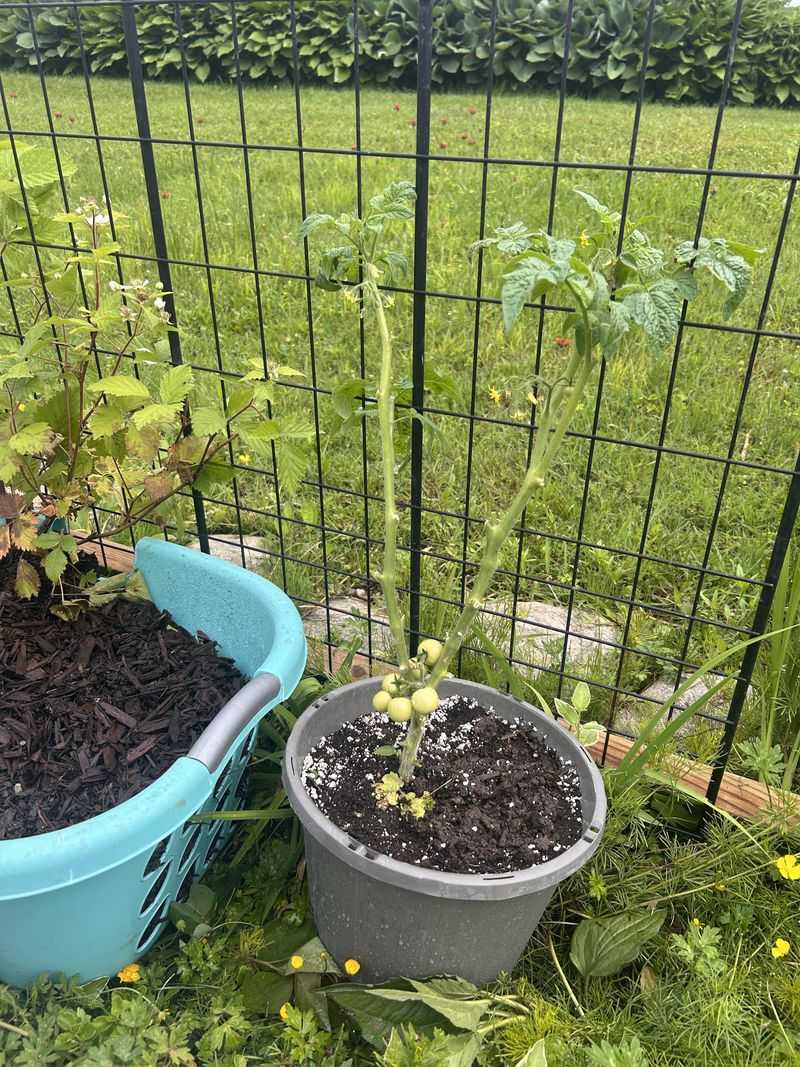
Tomatoes are sun-hungry plants, and a tall neighbor cutting off that supply can quietly push growth in the wrong direction. Leggy stems, pale green leaves, and noticeably fewer flowers are common signs that a plant is not receiving enough direct light each day.
Texas A&M AgriLife Extension recommends at least six hours of direct sun daily, while UGA’s Georgia Homegrown Tomatoes guide recommends six to eight hours and advises choosing a site with roughly eight hours where possible.
Walk around your bed at different times of day, around 9 a.m., noon, and 3 p.m., and watch where shade falls on the tomato canopy. A neighbor’s large shrub, a corn planting, a trellised bean crop, or even a tall fence can block direct sun for several hours without you realizing it during a quick morning check.
When you identify a shading problem, the fix depends on what is casting the shade. Cutting back overgrown shrubs, relocating a portable trellis, or replanting the tomato in a sunnier spot are all reasonable responses.
Southern gardeners sometimes assume that afternoon shade helps during brutal summer heat, and while some protection from extreme late-afternoon sun can reduce heat stress, it does not replace the strong morning and midday light tomatoes need to photosynthesize and produce fruit reliably.
Crowding restricts airflow and complicates disease checks
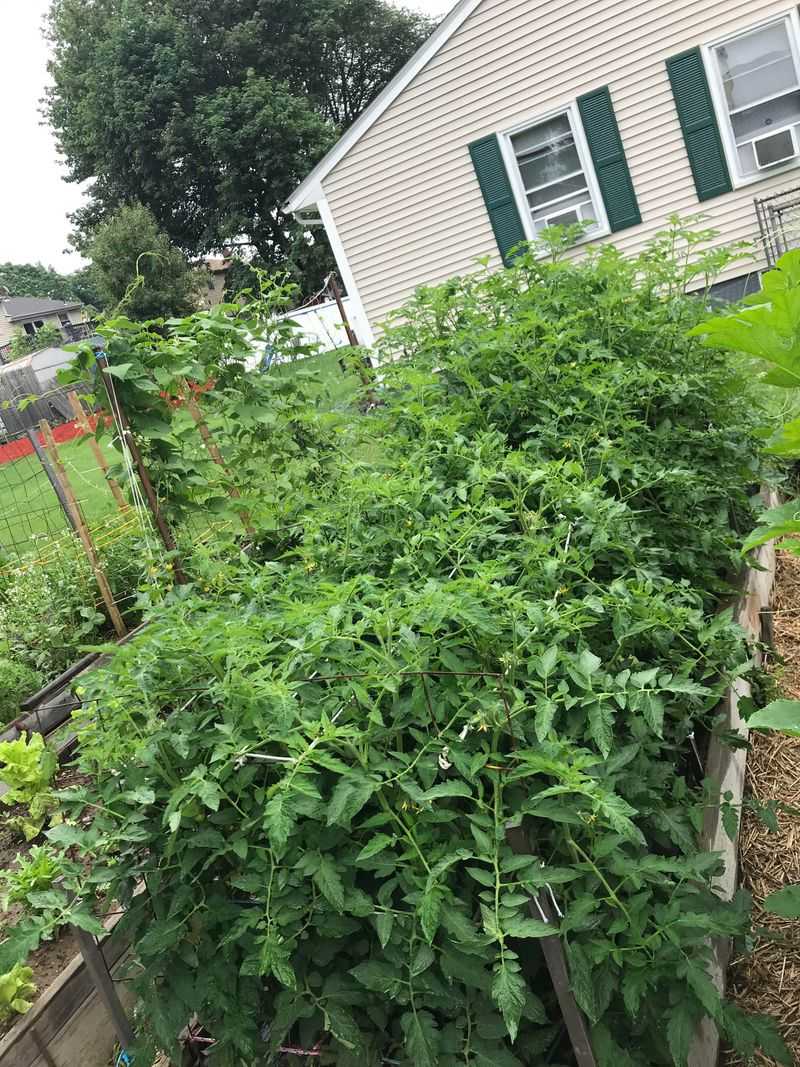
Tight spacing between tomato plants does more than create resource competition. When foliage overlaps and air cannot move through the canopy, leaves stay wet longer after rain or irrigation, and that extended moisture creates favorable conditions for fungal diseases.
University of Minnesota Extension’s tomato growing guide identifies proper spacing, staking, selective pruning, and soil-line watering as standard practices for reducing disease pressure, not just for improving resource access.
Dense plantings also make it harder to spot problems early. Yellowing lower leaves, dark lesions on stems, or root discoloration can go unnoticed for days when the plant is buried in surrounding foliage.
By the time symptoms become obvious, a disease may already be well established. That is a separate concern from competition for water or nutrients, and removing a neighboring plant will not reverse an infection that is already active.
UGA’s Troubleshooting Cultural Problems in Tomatoes emphasizes inspecting leaves, stems, roots, and fruit as part of any diagnosis. Check the undersides of leaves for insects, look at the base of the stem for discoloration or soft tissue, and pull back mulch near the crown to examine the soil surface.
Crowding may have created the conditions for a problem, but the problem itself needs to be identified before you can treat it correctly.
Start the rescue at the soil line
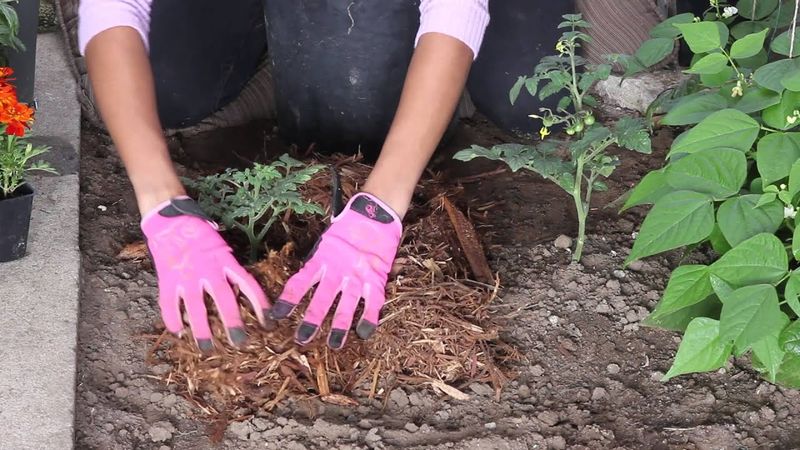
One focused garden visit can address the most common competition problems before they compound further. Begin by pulling or cutting weeds and grasses rooted inside or immediately beside the tomato bed.
UMN Extension’s weed control guidance recommends removing weeds before they flower and set seed, so you are not just solving today’s problem but also reducing next season’s weed bank. Get the roots out when the soil is moist enough to allow it.
After clearing weeds, check any neighboring plant that casts shade on the tomato canopy and cut it back or relocate it if practical. Then push a finger or a trowel several inches into the soil near the tomato’s base and feel for actual moisture.
If the root zone is dry several inches down, water thoroughly enough to wet that zone rather than applying a quick surface sprinkle. UGA’s guidance on home tomato care recommends thorough soakings rather than frequent light waterings, with actual frequency depending on heat, rainfall, soil type, mulch, and plant size.
Finish by applying two to three inches of mulch across the bed surface to slow evaporation and suppress new weeds. Keep the mulch pulled back an inch or two from the tomato stem so the crown stays dry and air can circulate at the base.
UMN Extension specifically warns against piling mulch against the stem, which can hold moisture against the crown and encourage rot. Completing these steps in a single visit gives you a clean baseline to judge whether the plant responds over the following week or two.
Match spacing and irrigation to the tomato
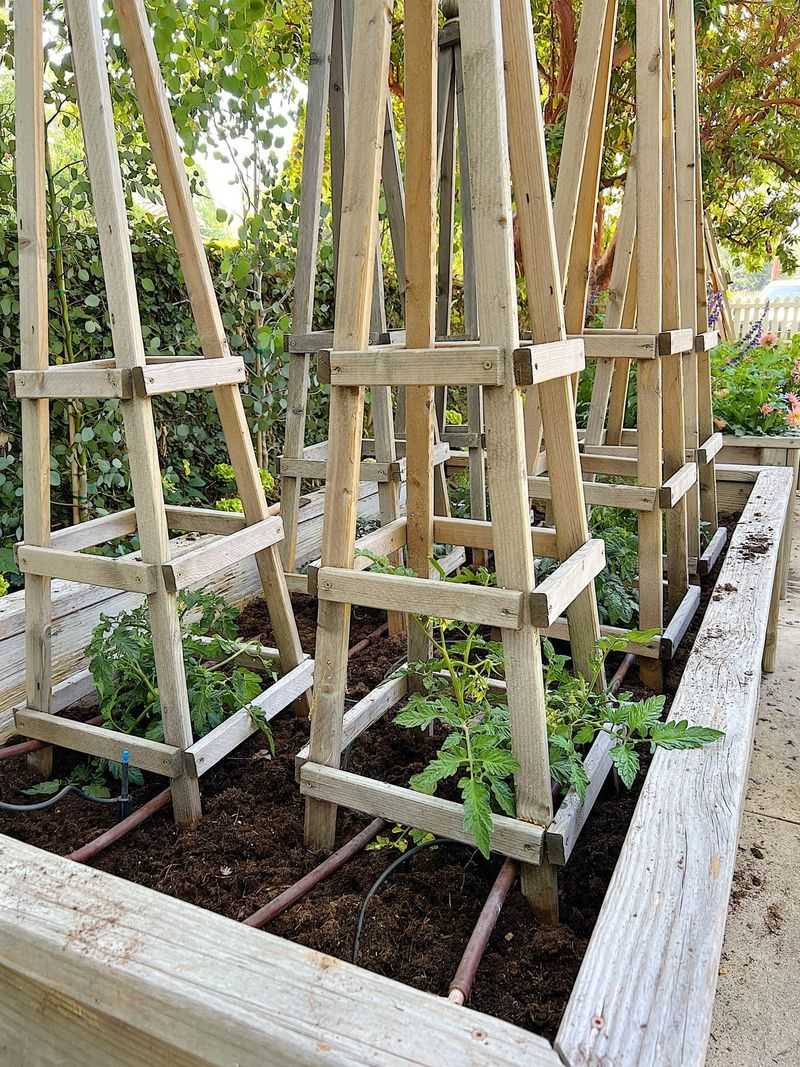
Spacing recommendations exist for good reasons, but they are not one-size-fits-all measurements. The right distance between tomato plants depends on the variety, whether you are using a cage, stake, trellis, or letting plants sprawl, your soil, your climate, and how you water.
Texas A&M AgriLife Extension gives a general home-garden range of two to four feet between bush-type plants and at least three feet between rows for staked or caged varieties.
Florida’s vegetable gardening guide from UF/IFAS lists approximately 18 to 32 inches between supported plants within a row and 48 inches between rows, while Texas High Plains guidance suggests about 24 inches between trellised plants and four to six feet between rows. These differences reflect real variation in production systems, cultivars, and climate, so check your seed packet or transplant tag and cross-reference your local extension office’s recommendations rather than applying one number to every situation.
Water competition becomes especially acute in sandy Southern soils, small containers, and compact raised beds during hot weather. UGA’s home tomato care notes highlight that inconsistent moisture can reduce yield and fruit quality even when spacing looks adequate on paper.
If two plants share a container or a very small bed section, one will almost certainly lose access to water during a heat spike, regardless of how compatible they are supposed to be as companions.
Yellow leaves and poor fruit set need a diagnosis
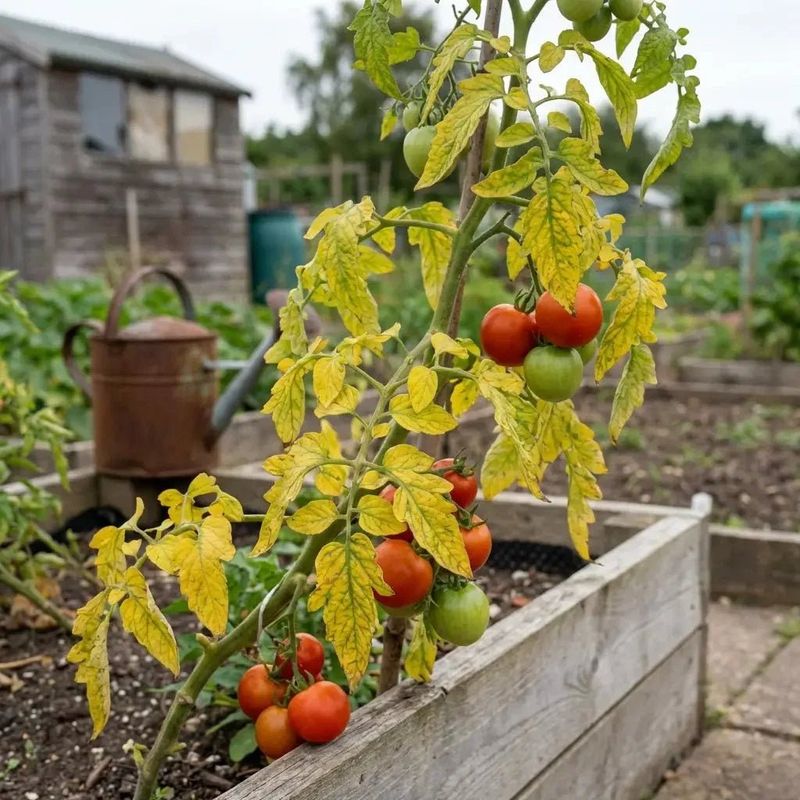
Yellowing leaves, wilting that comes back after watering, weak growth, and poor fruit set are symptoms, not a diagnosis. Blaming nearby plants for nutrient theft is tempting when the bed looks crowded, but those same symptoms can come from inconsistent watering, poor drainage, excessive heat, root damage, nematodes, Fusarium or Verticillium wilt, viral disease, insect feeding, or nutrient imbalance.
UGA’s Troubleshooting Cultural Problems in Tomatoes and Colorado State University Extension’s tomato pest and pathogen guide both emphasize symptom assessment as the starting point rather than jumping straight to fertilizer or other amendments.
Work through a short checklist before reaching for any product. Which leaves are affected, the lower older ones or new growth at the tips?
Is the soil actually moist several inches down, or has it dried out between waterings? Does the stem show any brown or dark streaking near the base?
Are there tiny insects on the undersides of leaves or sticky residue on the foliage? Are fruits showing blossom end rot, cracking, or cat-facing?
Each answer narrows the possible causes.
Adding fertilizer without a soil test can make some problems worse rather than better. UGA’s Commercial Tomato Production Handbook notes that excess nitrogen produces tall, dark-green, leafy plants with fewer flowers and fruits, higher water demand, and increased vulnerability to certain pests and diseases.
Never use weed-and-feed lawn products near tomatoes or other vegetables, as herbicide residues can injure or kill the plants. If symptoms persist after correcting obvious competition and watering problems, a soil test and a call to your local extension office are the most reliable next steps.
Keep compatible companions in perspective
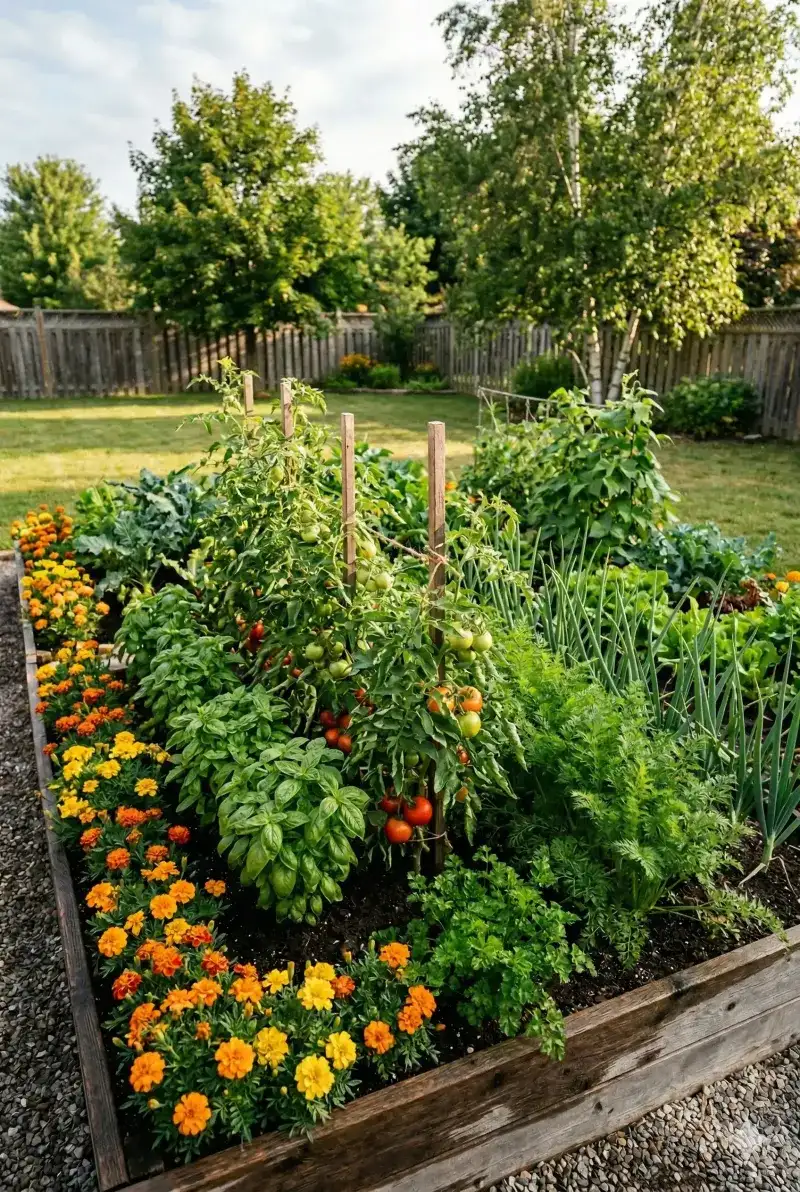
Companion planting can fit into a well-managed tomato bed, but the results depend on how the planting is actually set up. When plants have adequate light, consistent moisture, enough fertility, and room to grow without crowding each other, a mixed bed can work without harming the tomato.
Oregon State University Extension’s companion planting overview notes that many popular scent-based pairing claims lack strong research support, while UMN Extension’s companion planting guide summarizes specific studies suggesting that basil or marigolds may reduce certain pest pressures under particular conditions. Those findings are pest-specific and not guaranteed for every garden or every season.
Basil will not automatically make your tomatoes grow faster or produce more fruit. Marigolds will not repel every pest in the bed.
What both plants can do is take up water, root space, and light if they are planted too close or left to grow unchecked in a small bed.
The practical decision rule is straightforward: remove genuine competition first, restore light and root-zone access, correct spacing and moisture, and then watch the tomato over the following two weeks. If symptoms ease, the crowding was likely a contributing factor.
If they persist or worsen, shift your focus toward disease, pest, drainage, heat stress, or soil diagnosis rather than looking for another companion-planting adjustment. A struggling tomato that has been freed from competition but still looks sick needs a closer look at its roots, its soil, and the weather it has been living through.