
Gravel paths, driveways, and borders can look sharp one week and sprout a fresh batch of weeds the next, no matter how many times you pull them. The frustrating truth is that several different things can keep weeds coming back, and clearing the surface is just one piece of the puzzle.
Understanding why weeds return, and tackling the problem in the right order, can make your routine a lot more manageable.
Surface cleanup helps, but it does not explain every recurring weed
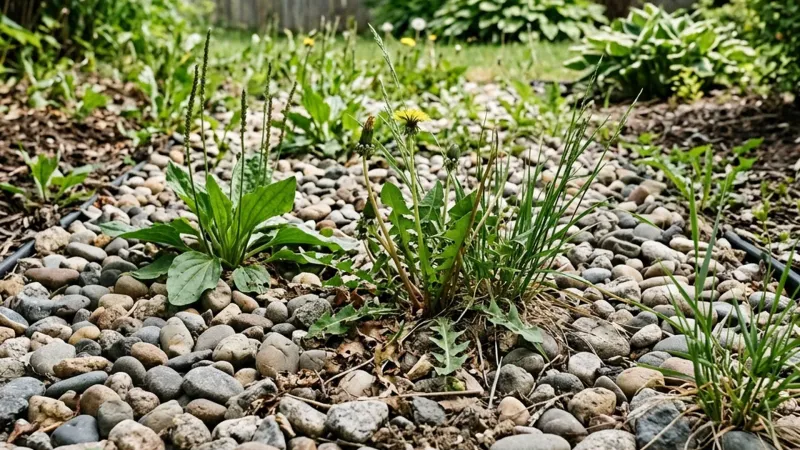
Gravel does not stay bare on its own. Wind drops seeds between the stones, rain washes in fine soil and plant fragments, and nearby plants shed leaves and debris that slowly decompose and form a thin, fertile layer right on top of the stones.
University of Florida IFAS research on mulch and ground cover management notes that organic material can accumulate above landscape fabric or within a gravel layer, creating conditions where seeds germinate even when the soil below was originally covered. Clearing that layer is a practical place to start, but it is not a cure-all.
Recurring weeds can come from several directions at once. Seeds blow in from a neighbor’s yard, a nearby fence line, or an unmowed lawn edge.
Perennial weeds that were only cut at the surface can regrow from roots, crowns, or underground structures that were never disturbed. Landscape fabric that is torn, poorly overlapped, or simply old may allow weeds to push through at weak points.
Penn State Extension guidance on landscape weed control also points to runoff and debris accumulation as ongoing contributors to reinfestation.
Surface cleanup is a strong starting point and an often-overlooked step, but managing gravel weeds over the long term means addressing the seed sources, root systems, and site conditions that keep feeding the problem.
Determine whether you are seeing new seedlings or returning perennials
Before pulling a single weed, take a moment to look at what you actually have. Small, soft-stemmed plants with shallow roots that come out cleanly are usually annual seedlings.
They sprouted from a seed that landed in the debris between your stones, and prompt removal, especially before they flower and set seed, can genuinely reduce their numbers over time. Utah State University Extension’s weed management principles recommend removing weeds before they reach the flowering stage to limit seed additions to the site.
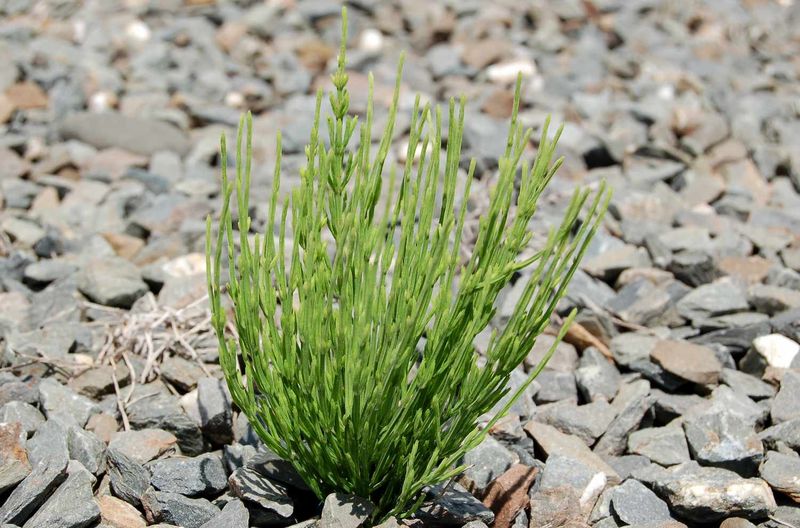
Perennial weeds tell a different story. Plants like nutsedge, bindweed, bermudagrass, and others with rhizomes, tubers, or deep root crowns may look removed after you pull the visible top, but the underground structure is still alive and ready to send up new growth within days.
Florida IFAS guidance on weed identification and management explains that perennial weeds can resprout from crowns or vegetative structures when only the aboveground portion is removed.
The distinction matters because the response is different. Sanitation and a preventive product can do a lot against annual seedlings.
Persistent perennials require repeated, root-focused removal or a product that is specifically labeled for that weed and that site. University of Georgia Cooperative Extension’s ornamental pest management handbook reinforces that weed type should guide the choice of management strategy.
Remove existing weeds before they add more seed
Getting weeds out before they flower is one of the most effective things you can do to slow reinfestation. A single annual weed that goes to seed can scatter hundreds of viable seeds across the gravel around it, and those seeds can stay dormant in the debris layer for months or longer.
Catching plants when they are young and small makes the job physically easier and prevents that seed load from building up year after year.
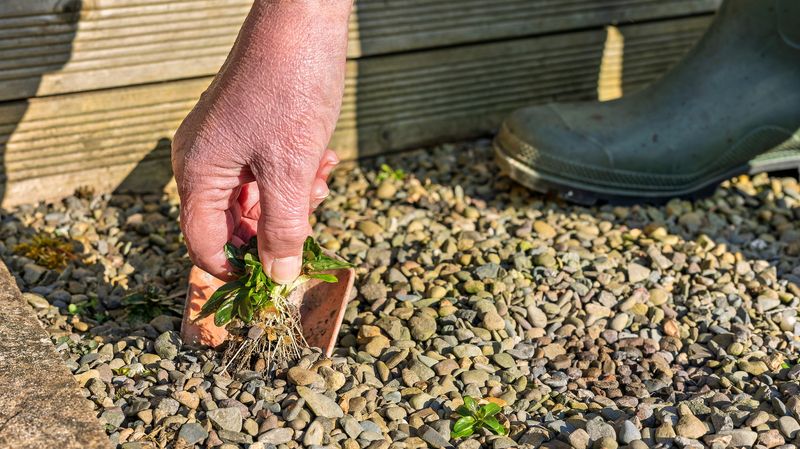
For annual weeds, hand-pulling while the soil is moist works well. The goal is to get the entire root so the plant cannot recover.
For perennial weeds, the job is harder. Florida IFAS weed management guidance cautions that simply cutting or snapping off the visible top of a perennial weed, without disturbing the crown, rhizome, tuber, or stolon, often results in regrowth.
Work a hand cultivator or narrow trowel around the base to loosen and extract as much of the root system as practical.
Avoid leaving pulled plant material on top of the gravel. Some perennial fragments can reroot if left in contact with moist soil or debris.
Bag or dispose of weeds that have already flowered or are close to setting seed. Penn State Extension notes that installing fresh gravel or a new barrier over existing weeds only hides the problem temporarily, so this removal work should happen before any new material goes down.
Clear leaves and soil from between the stones
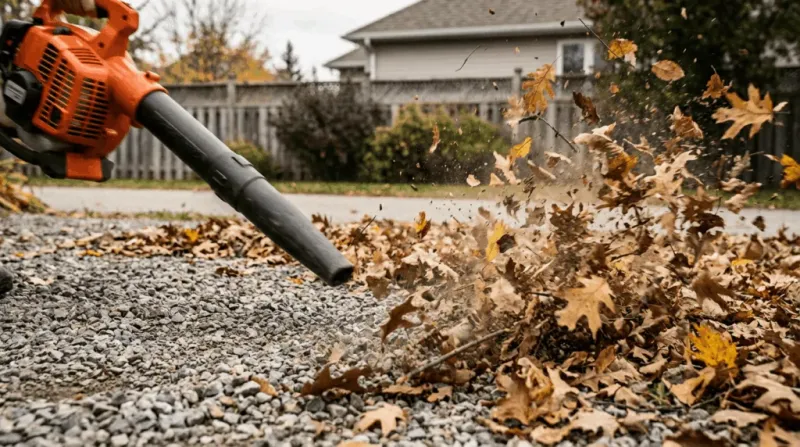
Once the live weeds are out, the next job is clearing the debris that made it easy for them to grow in the first place. Leaves, dust, windblown soil, and dead plant material settle into the gaps between stones and break down over time into a thin layer of organic matter.
That layer does not need to be deep to support a seedling. Even a shallow accumulation can hold enough moisture and nutrients to let a wind-borne seed germinate and take hold.
Extension weed and landscape FAQ guidance identifies accumulated debris as a key factor in weeds establishing above fabric or within a gravel surface. A leaf blower works well for lighter material and moves debris quickly without disturbing the stones much.
A stiff rake pulls out heavier buildup and lets you direct the debris to one spot for collection. Sweeping works on paths with finer gravel.
When clearing, be deliberate about where the debris goes. Blowing or raking weed fragments and seed-bearing material into adjacent beds or lawn edges just relocates the problem.
Bag the debris, especially anything that contains weed seed heads. A cleaner gravel base also improves how well any subsequent barrier or preventive treatment performs, though debris will begin accumulating again with the next wind or rain, making this a periodic task rather than a one-time fix.
Use landscape fabric for the right site, not as a permanent seal
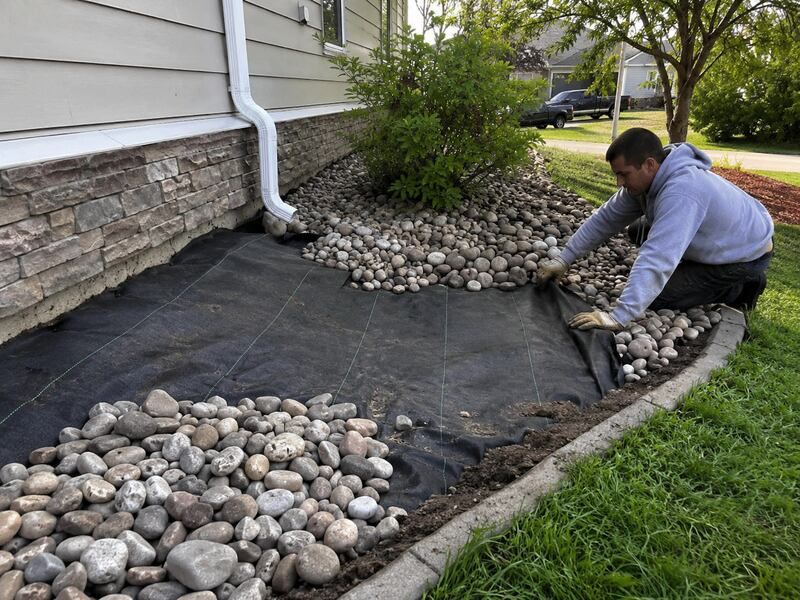
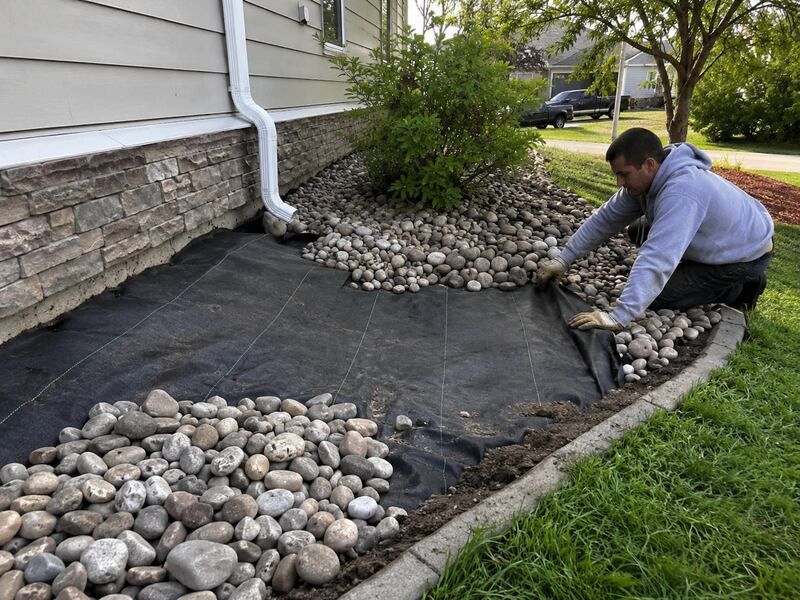
Landscape fabric can reduce weed emergence from the soil below a gravel surface, and for paths or gravel-only hardscape areas it can be a reasonable part of the plan. The key is starting with a clean, weed-free base.
Installing fabric over existing weeds, roots, or a heavy debris layer does not eliminate those plants; it just puts a cover over them. Florida IFAS weed management research notes that some persistent weeds, including nutsedge, can penetrate thinner landscape fabrics and continue to grow above them.
Even well-installed fabric has a limited lifespan as a weed barrier. Soil and organic matter accumulate on top of the fabric over time, and once that layer is deep enough, seeds can germinate in it just as they would in open ground.
Weeds also emerge at seams, tears, and edges, particularly where the fabric was cut to fit around an obstacle or where two pieces were not overlapped adequately. Penn State Extension landscape weed guidance describes fabric as a suppressive measure rather than a permanent solution.
For planted beds, fabric is harder to justify. Penn State Extension soil health guidance explains that fabric can interfere with soil biology, complicate replanting, and become clogged or buried under organic matter in ways that cause more problems than it solves.
Save fabric for gravel paths and hardscape areas where you do not plan to plant, and inspect it each season for damage that could let weeds through.
Add preventive treatment only when the label and timing fit
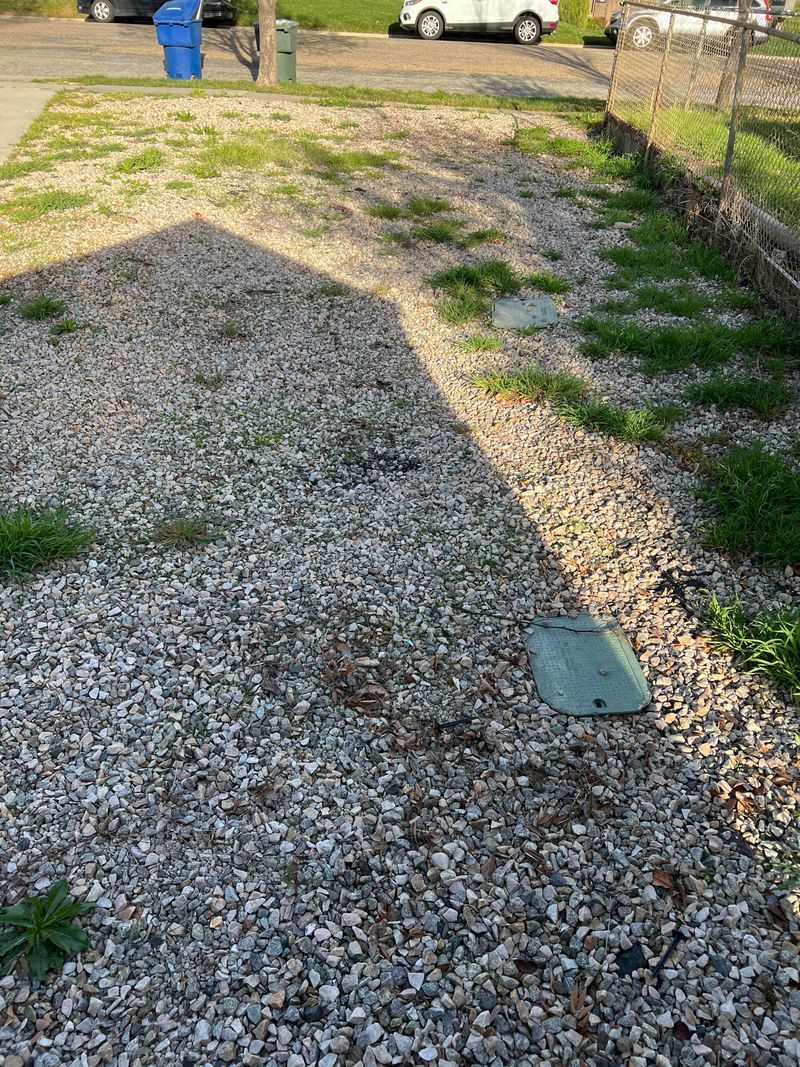
Pre-emergence herbicides are preventive tools, not weed killers for plants already growing in your gravel. They work by preventing or suppressing many weed seeds as they germinate, and they generally have no effect on established plants or on weeds that are sprouting from underground structures like rhizomes or tubers.
University of Georgia Cooperative Extension’s pest management handbook for ornamentals is clear that pre-emergence products should follow, not substitute for, the removal of existing weeds and debris.
Timing matters considerably. These products need to be applied before target weed seeds begin to germinate, and many require rainfall or irrigation to activate and move into the soil or debris layer where seeds are waiting.
Florida IFAS pre-emergence herbicide guidance for lawns gives approximate early-season windows of February 1 in south Florida, February 15 in central Florida, and March 1 in north Florida as reference points for warm-season weed management. Texas A&M AgriLife Extension’s bermudagrass calendar ties some timing to soil temperatures reaching around 55 degrees Fahrenheit for several consecutive days.
These are lawn-specific references for certain weed types, not universal schedules for every gravel yard in the South.
The product label is the legal document that governs use. EPA pesticide label guidance requires that users follow the label for approved sites, application rates, timing, activation requirements, protective equipment, and runoff restrictions.
Use only a product labeled for gravel or hardscape areas, and pay close attention to restrictions near desirable plants, drainage paths, and water features.
Control the edges and protect nearby plants
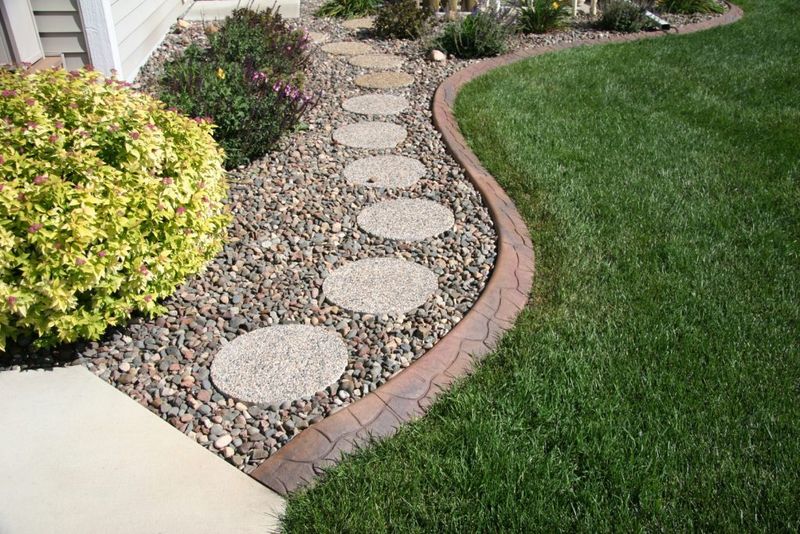
Gravel does not exist in isolation. The lawn edge, planting beds, fence lines, and drainage channels surrounding a gravel area are all potential sources of new seeds and roots.
An unmowed grass strip next to your path can shed hundreds of seeds per square foot into the gravel with a single gust of wind. Managing those adjacent areas regularly reduces the incoming seed load, though no amount of edge work will stop every weed from arriving.
Penn State Extension recommends keeping nearby lawn, beds, and fence lines managed as part of an integrated approach to gravel weed control.
Trees and shrubs near gravel areas deserve extra attention before applying any product. Rock mulch can retain heat and may affect soil moisture and root conditions differently than organic mulch.
Utah State University Extension’s tree mulching guidance notes that the material around the base of a tree can influence root health and soil temperature in meaningful ways. Herbicides applied near trees and shrubs carry additional risk: if a product contacts foliage, soil, or surface roots in a way the label does not permit, it can injure or kill desirable plants.
Florida IFAS guidance on herbicide use near landscape plants cautions that root uptake and soil movement of certain products can damage nearby trees and shrubs even when the application appears to be confined to the gravel surface. Read the label carefully and give yourself a meaningful buffer around any plant you want to keep.
Repeat the routine before weeds mature
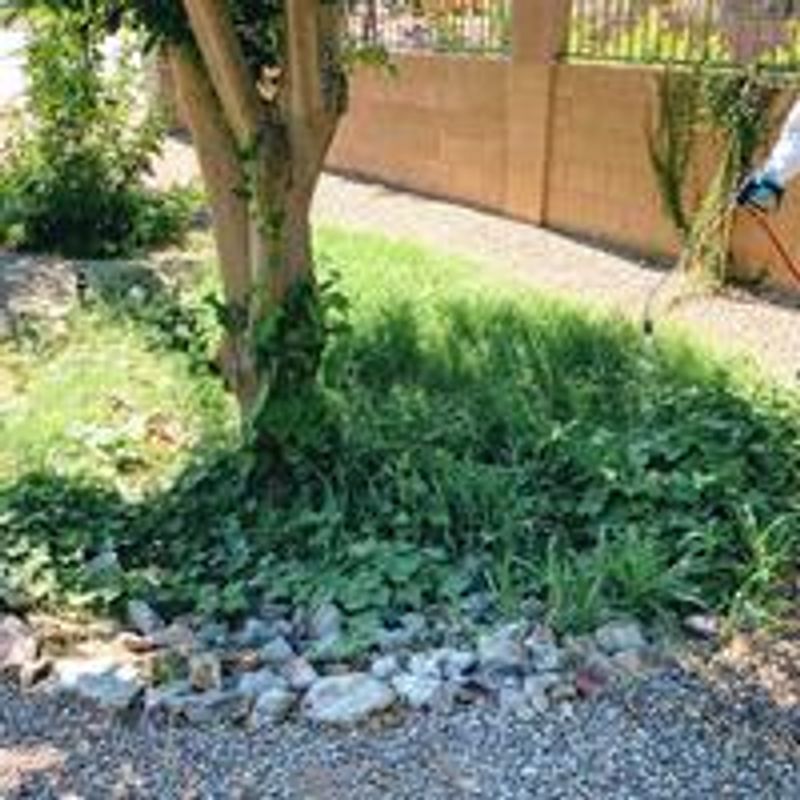
Gravel weed control works best as a repeating cycle rather than a single project. The practical sequence is straightforward: check the surface before any weeds have a chance to flower, remove plants and as much root material as practical, clear out accumulated leaves and debris, restore gravel depth or repair the barrier where needed, and apply any preventive product strictly according to its label and timing requirements.
Utah State University Extension’s integrated weed management principles emphasize that consistent, timely intervention is more effective than sporadic heavy-effort cleanups.
Catching weeds early, before they set seed or push deeper roots, keeps each session shorter and the surface looking better between visits. Penn State Extension and Florida IFAS ground cover research both note that new seeds will continue to arrive from surrounding areas, so no gravel surface stays permanently clear.
The goal is reducing reinfestation and making each round of maintenance easier than the last. A surface that gets regular attention rarely becomes the overwhelming problem that a neglected one does.