
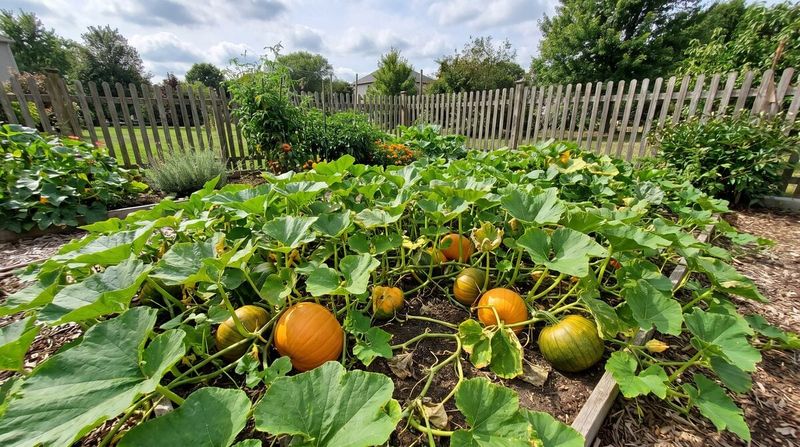
A raised bed can make gardening easier, but it does not fix every crop problem. Some plants look like great choices at planting time, then crowd the bed, drain the soil, or give back less food than the space they take.
That matters even more in Florida and Texas, where long hot seasons can push plants to grow fast and compete hard. Picking better crops for that small space can turn a disappointing bed into one that stays productive for months.
1. Corn
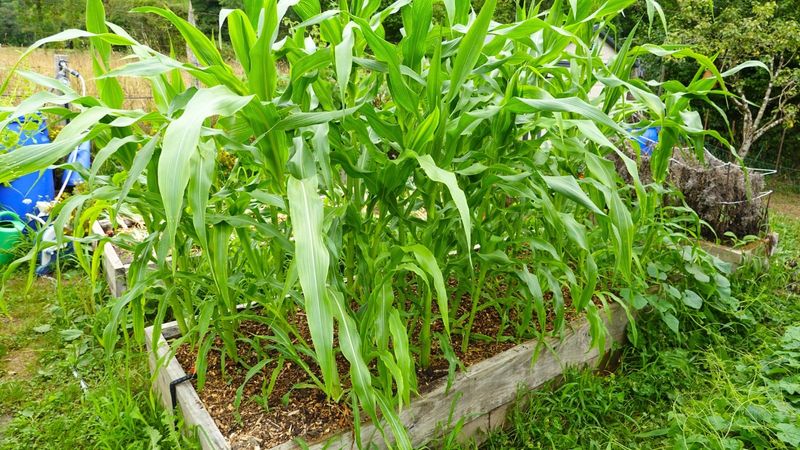
Nothing looks more hopeful than a row of young corn, but small raised beds often turn that excitement into a weak harvest. Corn needs company, space, and steady moisture to produce full ears.
In a compact bed, gardeners usually plant too few stalks, and pollination suffers fast.
Wind carries corn pollen, so a short single row rarely performs as well as a block planting. Many home gardeners give corn a narrow strip, then wonder why ears fill unevenly or stay partly bare.
Raised beds also dry faster than in-ground rows, which can stress corn during tasseling and ear development.
Another problem is simple math. A bed that could grow several productive pepper plants, bush beans, or cucumbers may only hold a small patch of corn that yields a handful of ears.
For Southern gardeners dealing with summer heat, that tradeoff can feel expensive in both water and space.
If you love fresh corn, plant it in a larger square block outside the main raised bed system, or dedicate one bigger bed just to it. In smaller beds, compact crops usually return far more food per square foot and keep the harvest basket fuller for longer.
2. Pumpkins
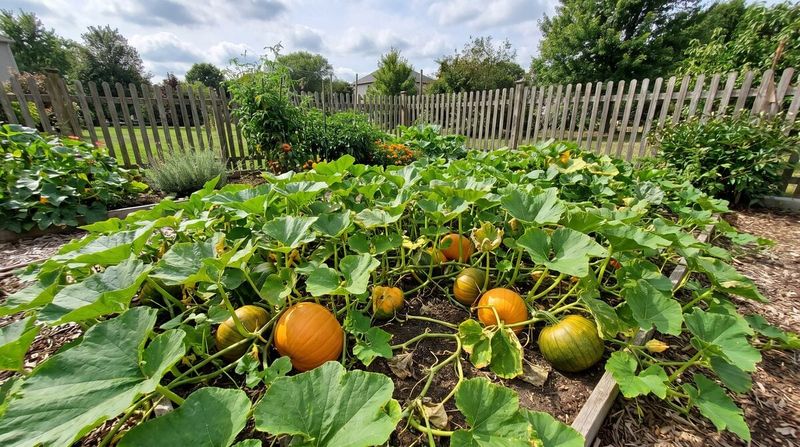
One pumpkin plant can behave like it rented the whole yard. In a raised bed, that big, cheerful seedling quickly turns into a sprawling mass of vines, broad leaves, and thirsty roots that crowd out everything nearby.
The problem is not that pumpkins are bad crops. They are just oversized tenants for a small, high-value space.
Gardeners often picture a tidy hill with a few fruits, but healthy pumpkin vines can run far beyond the frame of the bed. They block walkways, shade lower crops, and make watering awkward.
Once humidity rises, especially in Southern summers, dense foliage may also increase the chance of mildew and airflow problems.
The harvest math is not usually kind. A raised bed that could hold several rounds of salad greens, peppers, or basil may end up producing only a few pumpkins after months of space use.
That can be worth it for fun, but it often shrinks the total amount of food you gather.
Better options for raised beds include bush squash, compact cucumbers on a trellis, or even smaller pie pumpkin varieties grown where vines can spill into open ground. Give pumpkins room to roam elsewhere, and your raised bed can stay productive instead of becoming a one-plant jungle.
3. Watermelons
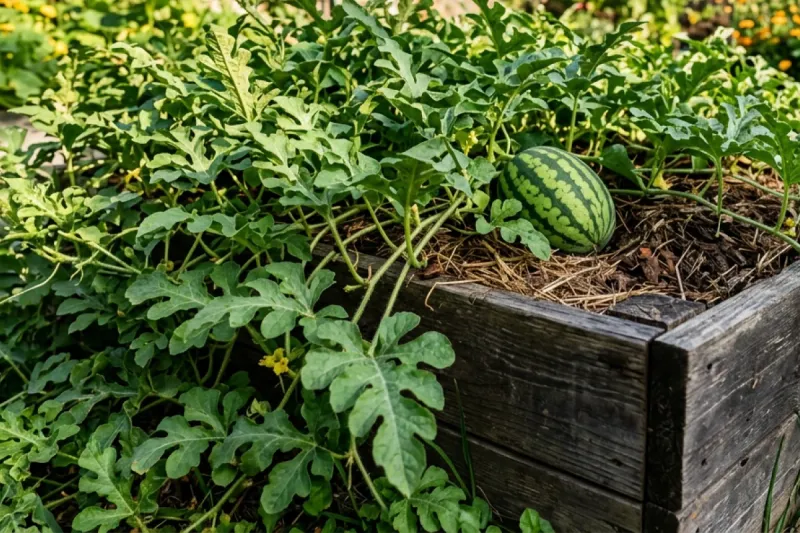
Few garden dreams beat slicing open a homegrown watermelon on a hot day, yet raised beds are often the wrong stage for that dream. Watermelons ask for elbow room, deep feeding, and consistent moisture over a long season.
When space is tight, they can give surprisingly little back.
Each vine wants to wander, and the fruit itself becomes a space issue. Melons spill over the sides, tangle through nearby crops, and make routine care harder.
In hot regions like Texas and much of Florida, raised beds can also heat and dry quickly, which may stress vines during flowering and fruit swelling.
Another catch is timing. A watermelon plant may occupy prime bed space for months while yielding only a few fruits, especially if heat stress, poor pollination, or uneven watering get in the way.
That same bed could produce repeated harvests of peppers, eggplant, basil, or southern peas across the season.
If you still want melons, grow a small-fruited variety on the edge of a larger bed with room to run, or train vines outward into open ground. For many home gardeners, it makes more sense to reserve raised beds for crops that stay contained and reward every square foot more generously.
4. Asparagus
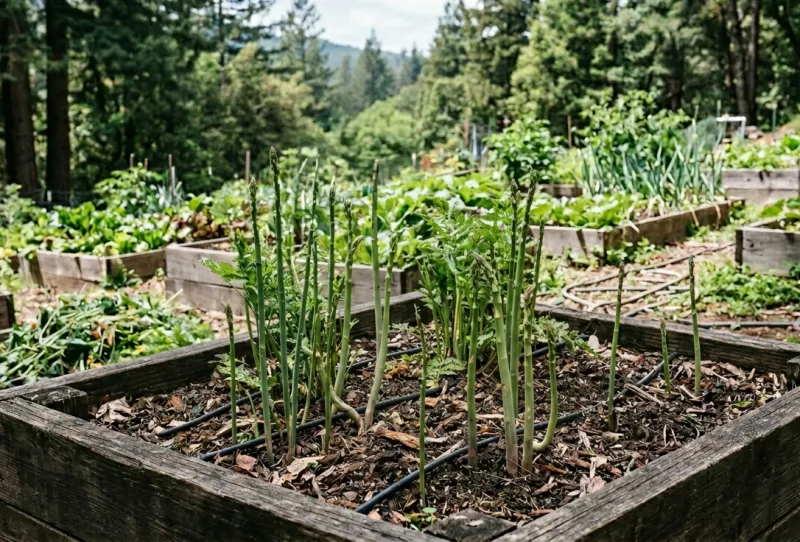
Patience pays with asparagus, but a raised bed is not always the best place to spend that patience. Unlike quick seasonal vegetables, asparagus settles in for years.
Once established, it turns that bed into a permanent planting, which can quietly reduce your flexibility and annual harvest choices.
Many gardeners build raised beds to rotate tomatoes, cucumbers, lettuce, beans, and peppers through the year. Asparagus interrupts that plan because it should not be disturbed each season.
You also need to resist harvesting heavily at first, so the bed can feel occupied long before it feels productive.
There is a care issue too. Ferny top growth sticks around after spear season and can shade or complicate nearby plantings.
In warm Southern climates, where long growing windows let gardeners replant beds again and again, tying up one whole bed for a single perennial crop may not be the best trade.
Asparagus can still be wonderful, just not always in your prime raised bed real estate. A separate dedicated strip, border, or larger out-of-the-way bed usually makes more sense.
Save the most accessible raised beds for crops that earn their keep month after month with steady harvests and easier seasonal rotation.
5. Sweet Potatoes
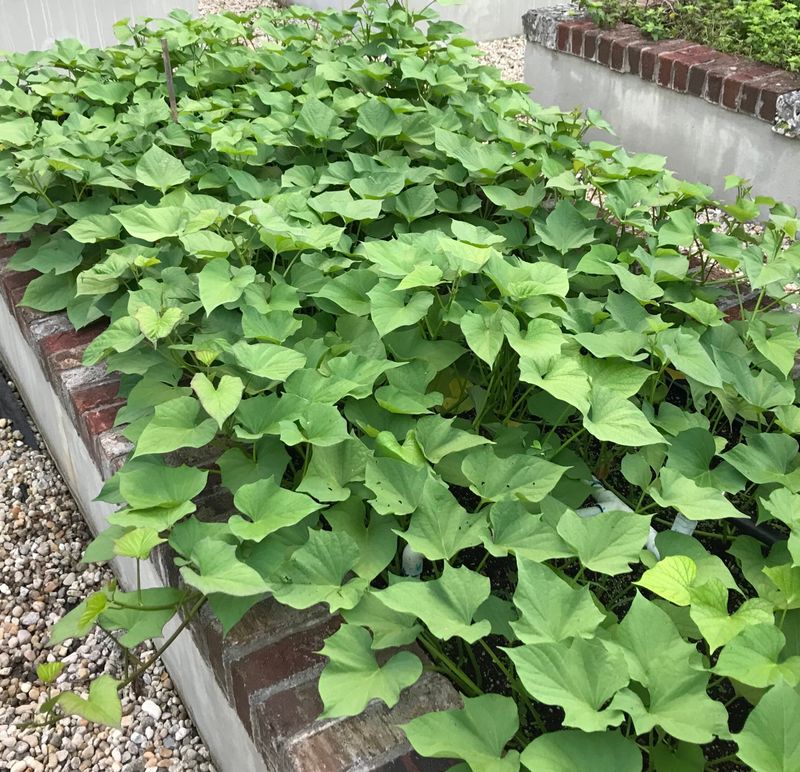
At first, sweet potatoes seem like a smart Southern crop because they love heat and keep growing when other plants sulk. Then the vines start racing.
Before long, a tidy raised bed can vanish under a leafy blanket that hides the soil, shades neighbors, and turns harvesting into a guessing game.
The main issue is efficiency. Sweet potatoes need time and room underground to make a worthwhile crop, and the vines often claim far more surface space than new gardeners expect.
In a small raised bed, that means fewer chances to tuck in fast growers or succession plant around them.
Harvest can be awkward too. Digging roots from a packed raised bed may disturb bed structure and damage nearby crops if you tried to mix plantings.
In warm states, where raised beds are valuable for repeated seasonal use, a long sweet potato run can block better-performing choices for months.
None of that means you should skip sweet potatoes altogether. They often do better in a larger dedicated patch, fabric grow bags, or a roomy bed used just for them.
If your goal is frequent harvests from limited space, compact peppers, bush beans, or basil will usually make that bed feel much more productive.
6. Okra
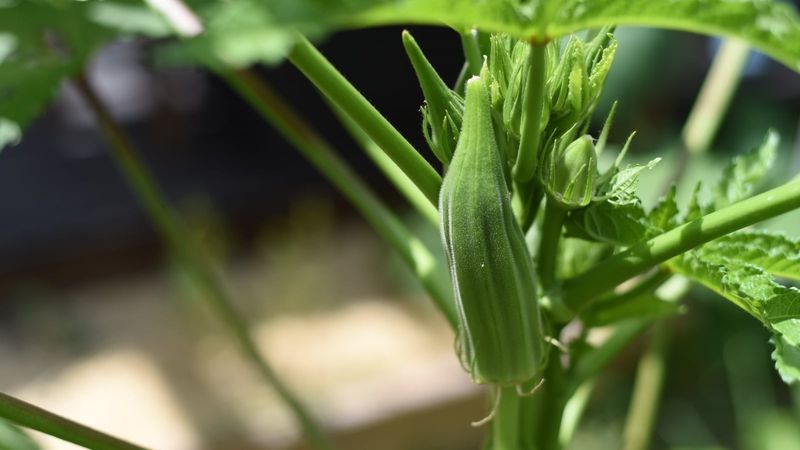
Okra grows like it means business, especially in Southern heat. A small seedling can soon become a tall, sturdy plant that throws shade, drinks deeply, and dominates a narrow raised bed.
Gardeners who tuck in too many plants often end up with a crowded jungle and fewer useful neighbors.
Height is the first surprise. Some varieties stretch well above the crops around them, which matters in tight spaces where sun angles and airflow are already limited.
Once the canopy thickens, smaller peppers, herbs, or greens nearby may slow down from lost light and increased competition.
Harvest rhythm matters too. Okra is generous only when pods are picked often and plants have enough room to stay productive.
In cramped raised beds, reaching through dense stems can be annoying, and missed pods turn woody fast. Meanwhile, the bed may be giving less total food than a more balanced planting would.
Okra can still earn a place in the garden, just not always in the smallest raised bed. One or two plants in a larger bed, or a row in the ground, often works better than filling valuable box space with a crop that grows big so quickly.
Raised beds usually shine brightest with medium-size, repeat-harvest vegetables.
7. Indeterminate Tomatoes
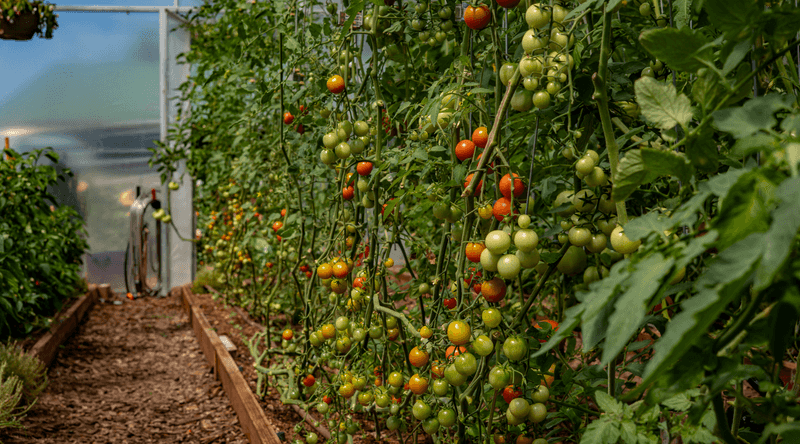
Tomatoes are raised bed favorites, but indeterminate varieties can quietly become the wrong tomato for the space. Left to their natural habit, they keep climbing, branching, and demanding support for months.
In a compact bed, one vigorous plant may start acting like three.
That size creates several headaches at once. Heavy vines reduce airflow, which can be a real problem in humid Southern gardens where foliar disease pressure rises fast.
Roots also compete hard for water and nutrients, and raised beds can dry out quickly during the hottest stretch of summer.
There is also a yield trap here. Gardeners often assume bigger vines mean bigger harvests, yet an oversized tomato can crowd out peppers, basil, onions, or beans that together might produce more food across the season.
If pruning slips or cages fail, the bed can turn messy fast and fruit quality may drop.
Raised beds usually perform better with determinate, dwarf, or carefully managed indeterminate tomatoes spaced generously and supported early. Pick varieties that match the bed instead of forcing the bed to serve a giant plant.
When tomatoes fit their space, they stay healthier, easier to harvest, and far more rewarding in the long run.