
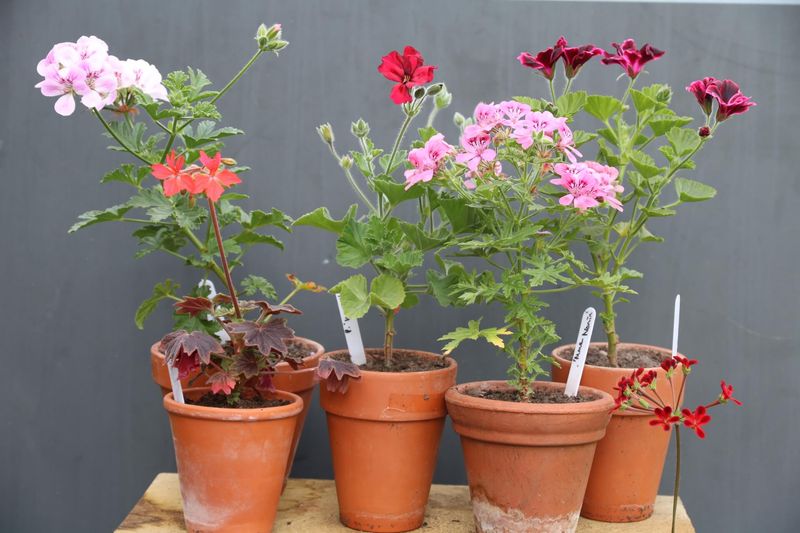
Potted geraniums are one of the most rewarding plants you can grow on a porch or patio, but when they start looking pale, weak, or flowerless, it’s easy to blame a missed feeding and reach for the fertilizer bag. The truth is a little more complicated.
An inconsistent feeding routine can be part of the problem, especially in a container where nutrients deplete faster than in garden beds, but heat, watering habits, drainage, and salt buildup can all produce the same tired look. Sorting out the real cause first will save your plant and keep you from accidentally making things worse.
A Feeding Miss Is Only One Possible Cause
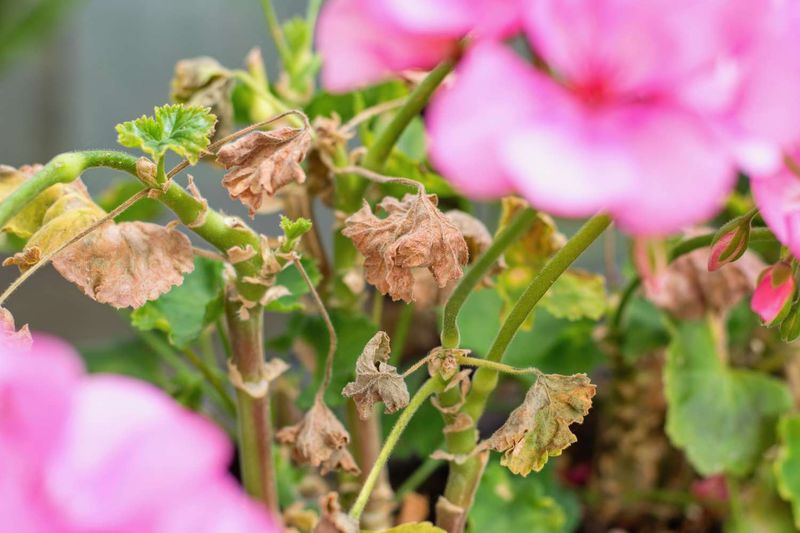
Blaming a slow geranium on a missed feeding is understandable, but the real picture is almost always more complicated. An inconsistent fertilizer routine can contribute to weaker growth when a container plant has used up or lost available nutrients, yet it is rarely the sole explanation and does not reliably cause a rapid collapse on its own.
Several other conditions produce the same faded look: prolonged drought, waterlogged roots, poor drainage, low light, intense heat, pest pressure, salt buildup in the growing medium, pH problems, and crowded or damaged roots can all slow a plant that would otherwise be thriving.
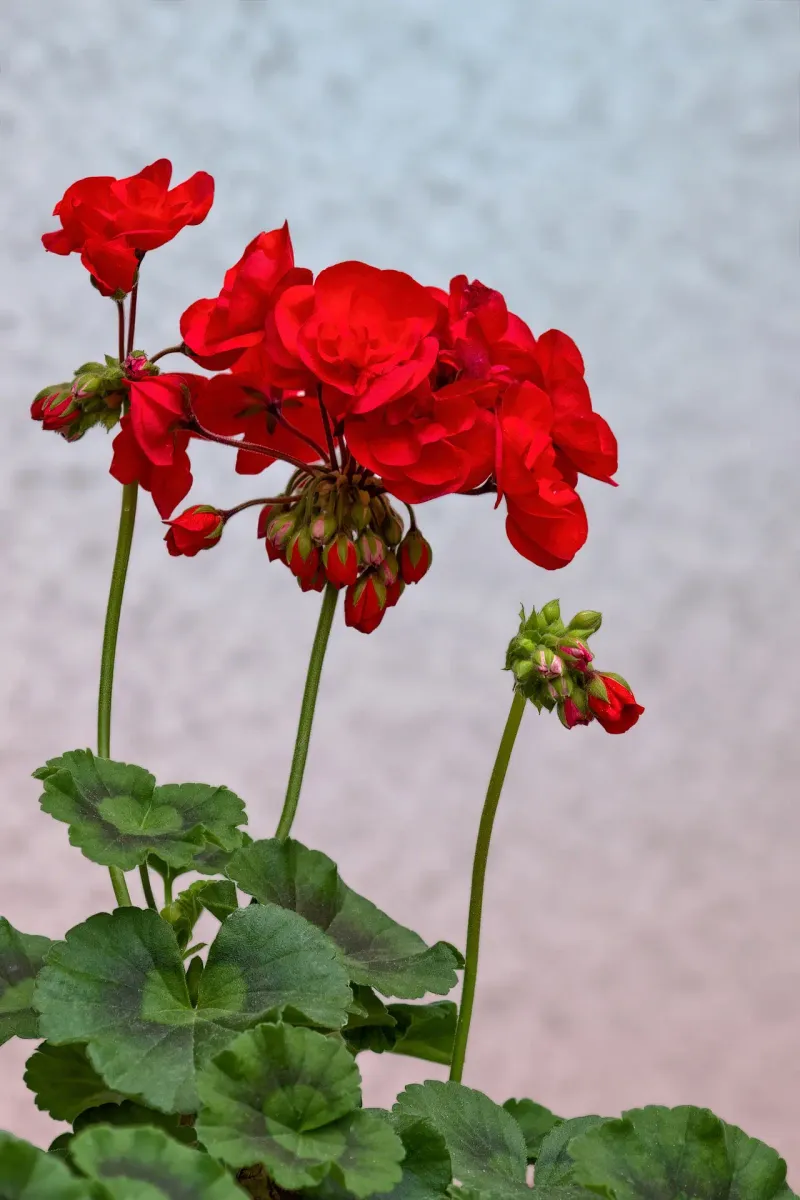
Before anything else, it helps to know what you are actually growing. The familiar red, pink, salmon, or white bloomer sold as a “geranium” at garden centers is almost always a Pelargonium, most often Pelargonium x hortorum, rather than a true Geranium species.
UF/IFAS identifies the familiar potted geranium as Pelargonium x hortorum, and that distinction matters because different Pelargonium types, including zonal, ivy-leaf, regal, and scented varieties, can respond differently to heat, pH, and fertilizer salts. Throughout this guide, “geranium” refers to those common retail Pelargoniums.
As UGA Cooperative Extension notes for container plants, multiple factors interact to affect plant health in a pot. Your practical task right now is to figure out whether depleted nutrients are actually the issue before adding any fertilizer.
UC IPM lists multiple overlapping causes for weak growth and yellow foliage, which is exactly why a quick inspection beats an immediate trip to the fertilizer shelf.
Why Pots Can Lose Available Nutrition
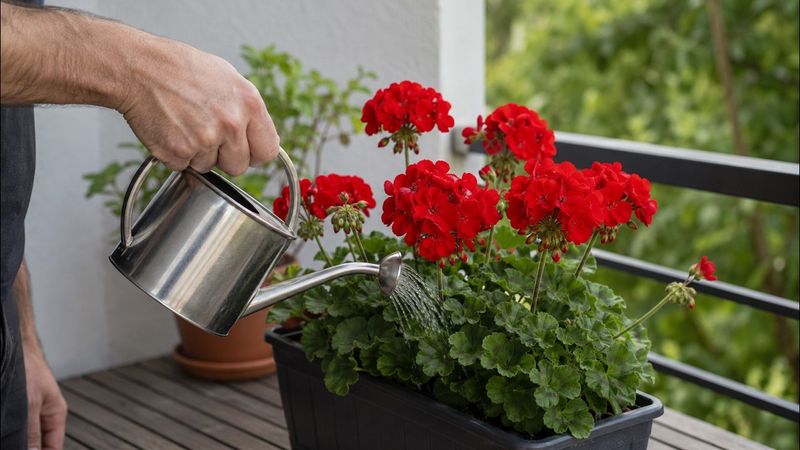
Container growing changes the nutrition equation in a way that in-ground gardening does not. A pot holds a limited volume of growing medium, so a plant’s roots can work through available nutrients much faster than roots spreading through open soil.
Every time you water thoroughly, which is the right thing to do, some of those dissolved nutrients move through the mix and exit with the drainage water. Frequent watering in warm Southern climates means that cycle repeats often, and a small pot loses nutrients faster than a large one simply because there is less medium to buffer the loss.
UGA Cooperative Extension explains that container plants whose mix was amended with fertilizer generally do not need feeding for the first two to three weeks after planting, because the mix starts with a supply. After that initial window, plant uptake and repeated watering steadily reduce what is available, and a feeding routine becomes genuinely useful for maintaining active growth.
Timing matters more than a fixed calendar date. UGA’s geranium guidance recommends fertilizing during active growth rather than on a rigid year-round schedule, because a plant that is resting due to heat or low light has less use for added nutrients.
Whether the potting mix already contains a controlled-release product also changes the schedule significantly. UF/IFAS notes that container nutrient readings are influenced by fertilizer release, environmental conditions, and water management, so the condition of your specific mix and growing environment always shapes how quickly nutrition declines.
Inspect the Plant and Pot Before Feeding
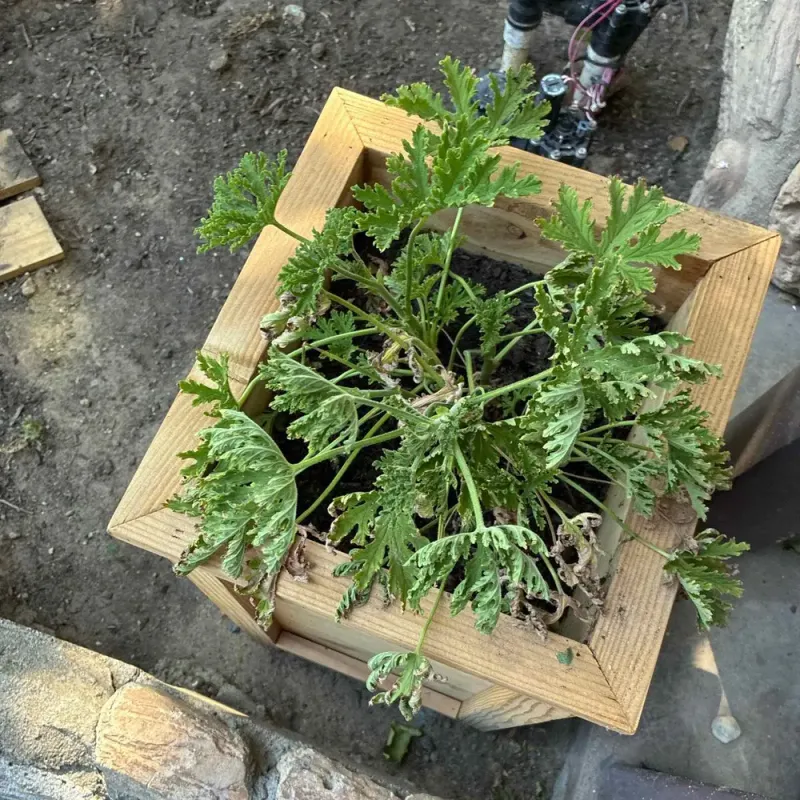
Running through a quick inspection before fertilizing can prevent a wrong first move that makes your plant worse instead of better. Start by looking at the plant itself: is it actively pushing new growth, or has it stalled completely?
A geranium in active growth can use added nutrients productively; one that has gone dormant from heat or stress may not respond the way you expect.
Next, check the growing medium. Push a finger an inch or two into the mix.
If it is bone-dry all the way through, the plant needs water before anything else. If it feels soggy and the surface has been wet for days, you may have a drainage or overwatering problem that fertilizer will not fix.
Confirm that the pot has open drainage holes at the bottom and that water actually exits when you pour it in. UGA’s container gardening guidance warns that poor drainage and waterlogged media can damage roots and cause weak growth or yellow leaves, symptoms that look almost identical to underfeeding.
Check whether the mix already contains a controlled-release or starter fertilizer, which is common in bagged potting mixes. If it does, the plant may still be drawing on that supply.
Gently slide the root ball partway out if you can: roots that are tightly circling the inside of the pot or appear brown and mushy point to restriction or root damage rather than hunger. Clemson Extension notes that stunted and yellowed geraniums can result from insufficient nitrogen, but only treat that as a working hypothesis, not a confirmed diagnosis, until you have ruled out the structural problems above.
UC IPM confirms that yellowing and weak growth have many possible causes, so uniform pale older foliage and reduced vigor support an underfeeding hypothesis without proving it. Feed only a hydrated, actively growing plant in a pot that drains freely.
Restore Nutrition With a Measured Routine
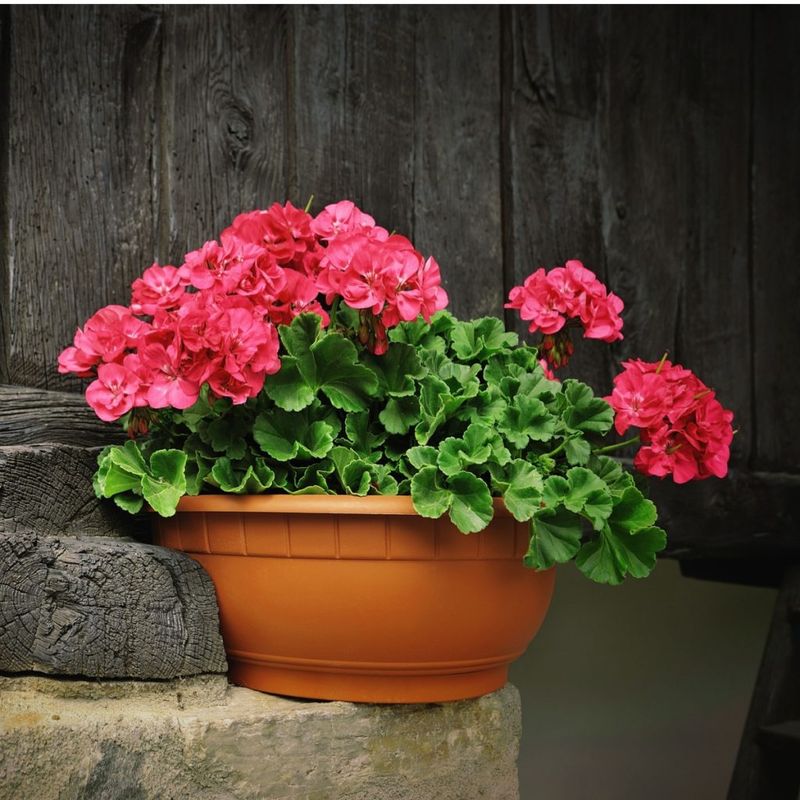
Once your plant passes the inspection, restoring a consistent feeding routine is straightforward. Extension recommendations across the country give a range rather than a single fixed interval, because fertilizer type, label concentration, pot size, watering frequency, and growth rate all affect how quickly nutrients are used or lost.
As a general framework, dilute water-soluble fertilizers are often applied roughly every two to four weeks during active growth, while liquid fertilizers may be used about every three weeks and some dry or granular products every three to six weeks. UGA recommends fertilizing container geraniums with liquid fertilizer at least every three weeks or dry fertilizer every three to four weeks, while Clemson Extension suggests additional fertilizer every four to six weeks during the growing season.
The product label controls the actual rate and interval for whatever you purchase. Do not guess at a tablespoon measurement or use a commercial greenhouse concentration as a homeowner guide; those rates are calibrated for production systems with professional monitoring and frequent substrate testing.
UGA’s container guidance specifies that soluble fertilizer should be mixed according to its label and applied as a normal watering. If the potting mix you used already contains a controlled-release product, factor that into your schedule so you are not doubling up on nutrients.
Apply fertilizer solution to the growing medium, never directly onto leaves or stems. Iowa State Extension recommends every two to four weeks with dilute water-soluble fertilizer for container geraniums during active growth.
Keep your goal focused on restoring adequate nutrition to support healthy leaves and stems; fertilizer alone cannot force flowers if heat, light, or seasonal timing are working against bloom development.
Match Fertilizer to Sound Watering
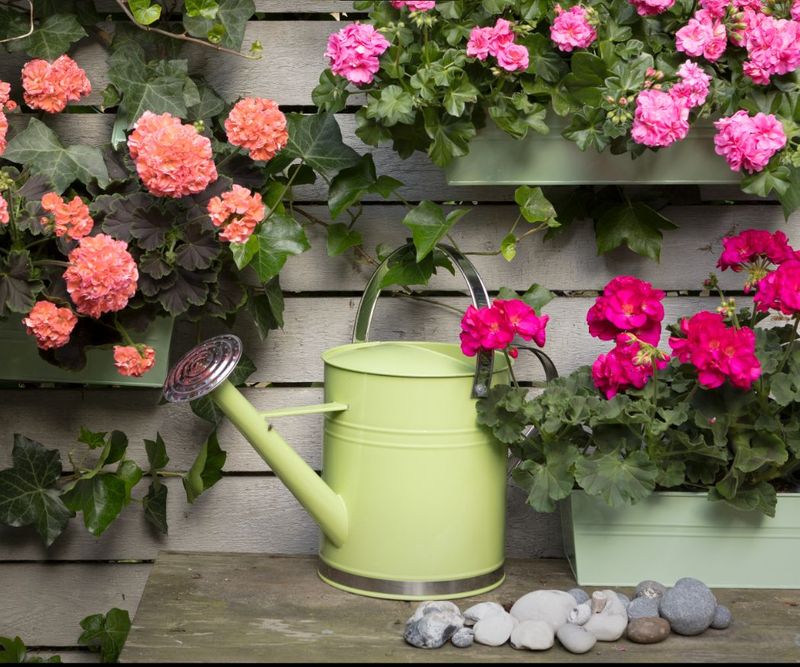
Fertilizer works best when the root zone is properly hydrated and the container drains the way it should. Allow the surface of the potting mix to dry out somewhat between waterings, then water thoroughly enough that some liquid exits from the drainage holes at the bottom.
That pattern distributes fertilizer through the root zone and helps move accumulated soluble salts downward and out, rather than letting them concentrate near the roots. Do not leave the container sitting in a saucer full of runoff, because roots that stay in standing water can develop rot, and waterlogged media produces weak growth and yellow leaves that look a lot like underfeeding.
UGA’s geranium guidance recommends watering as the medium becomes dry and warns that drought can cause yellowing and leaf drop, so the goal is to keep moisture consistent without letting the pot stay soggy. In hot Southern summers, a small pot on a sunny porch may need water every day or two, which means nutrients can leach out faster and a feeding routine becomes more important to maintain.
When a plant arrives severely wilted or the root ball is completely dry and pulling away from the pot walls, do not apply fertilizer as the first rescue step. Extension floriculture guidance cautions that drought-stressed roots with little or no active tissue are more vulnerable to fertilizer injury and salt damage.
Rehydrate the root ball with plain water, allow the excess to drain fully, and wait until the plant looks turgid and is actively growing again before resuming your regular feeding routine.
Treat Salt Damage Differently From Hunger
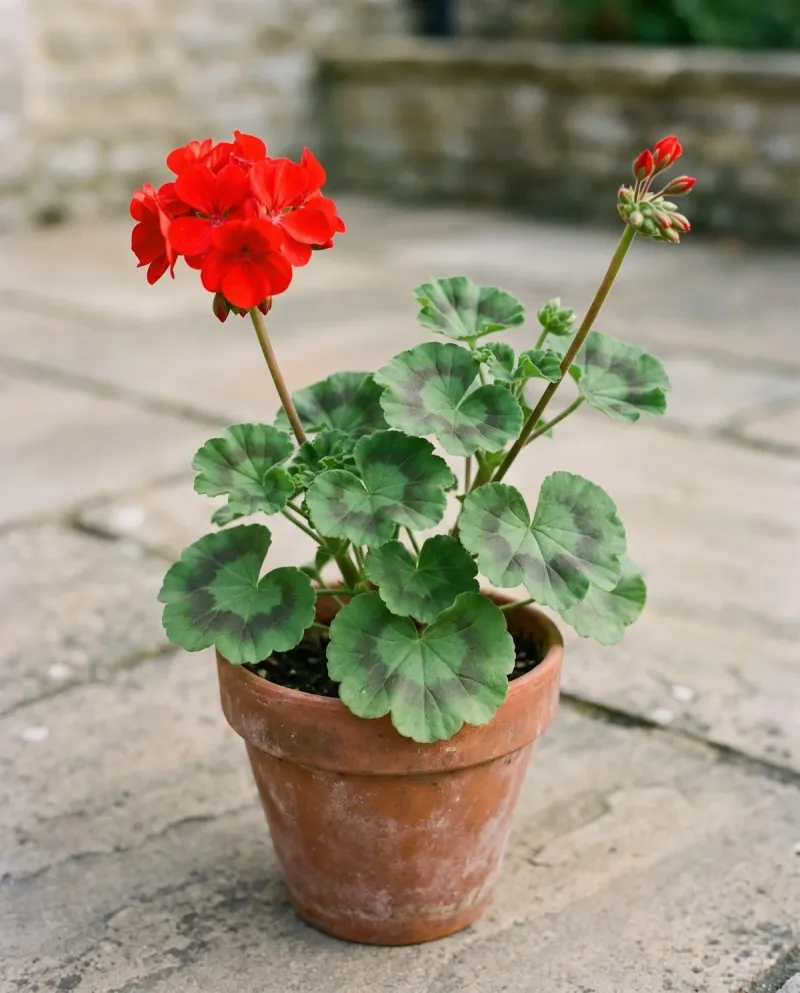
Not every struggling geranium is hungry. When symptoms point toward too many soluble salts rather than too few nutrients, adding more fertilizer is the wrong move and will make the plant worse.
Learning to read the difference between these two problems can save a plant that fertilizer alone would finish off.
Gradual, uniform paling of older leaves combined with reduced vigor fits the underfeeding picture reasonably well. Salt injury tends to look different: brown tips or margins on leaves, a crusty white or yellowish deposit on the surface of the growing medium or the outside of a clay pot, sudden decline shortly after a feeding, or symptoms that keep getting worse even though you are watering adequately.
UMass Extension notes that geraniums are considered salt-sensitive, which means they can show injury at salt concentrations that other plants tolerate without trouble.
When salt injury seems likely, stop routine feeding temporarily. Flush the container thoroughly with good-quality water, pouring slowly and steadily until substantial drainage exits the bottom, then repeat the process once or twice.
UF/IFAS recommends leaching container media with high-quality water when electrical conductivity is excessive, and Texas A&M AgriLife Extension recommends allowing sufficient water to leach through the container when salts are excessive. Verify that the pot drains freely after flushing.
Adding a bloom booster, Epsom salt, or any other supplement on top of a salt or pH problem will not help and can deepen the damage. UF/IFAS container nutrient guidance supports diagnosis through symptoms, EC testing, and root inspection rather than routine supplementation when the cause is unclear.
Southern Heat Can Limit Flowers Even With Good Nutrition
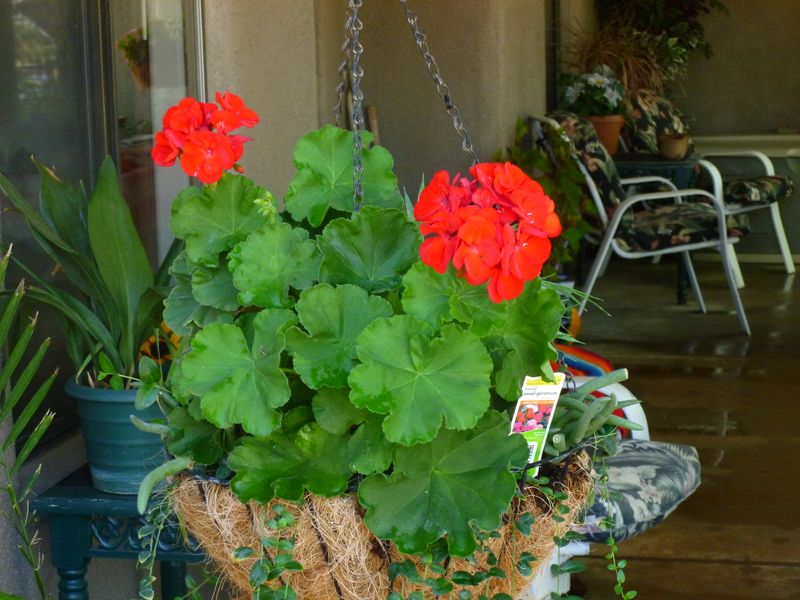
Florida and Texas gardeners face a challenge that no fertilizer schedule can fully overcome: geraniums are cool-weather performers, and the deep summer heat common across the South can reduce or stop flowering even when nutrition is perfectly adequate. Recognizing this seasonal pattern prevents a frustrating cycle of repeated feeding that does not produce the blooms you are hoping for.
UF/IFAS describes geraniums as performing best during cooler weather in central and southern Florida, with flowering often fading by mid- to late summer. UMass Extension reports that prolonged day temperatures above 85 degrees F can sharply reduce growth and development even in well-fed plants.
Before escalating your fertilizer routine in July or August, check whether your plant is getting relief from afternoon sun, whether watering has been consistent during hot spells, and whether the lack of flowers matches the typical summer slowdown for your area.
Texas A&M AgriLife Extension describes common geraniums as better treated as cool-season annuals in San Antonio unless heat-tolerant cultivars are selected, which puts the heat limitation in clear practical terms for Texas readers. For Florida gardeners, UF/IFAS advises a seasonal reset approach: protect plants from excessive summer heat, then consider cutting them back in north Florida in early fall and fertilizing to stimulate fresh growth as temperatures become more favorable.
Fertilizer can support that fall recovery, but it cannot remove the temperature barrier that is limiting your plant right now in peak summer. Shade cloth, a more sheltered porch position, and consistent moisture management are more useful tools than extra nutrients when heat is the primary driver of the slowdown.
Use Diagnosis to Decide Whether to Feed
Pulling together everything in this guide comes down to a practical sequence you can run through before reaching for the fertilizer. Confirm you are working with a Pelargonium, the common retail geranium, and note which type it is, since zonal, ivy-leaf, and regal varieties can differ in their heat response and salt sensitivity.
Check the mix for moisture and drainage, verify that the pot has open drainage holes, and look for signs of salt crust or root problems before assuming hunger is the issue.
If the plant is severely wilted, rehydrate it first with plain water and let it recover before feeding. UGA geranium guidance and UGA container guidance both support feeding only an actively growing, well-hydrated plant with a draining container.
When you do feed, follow the product label for rate and interval, apply to the growing medium rather than the foliage, and water so the container drains fully afterward.
If symptoms do not improve after a consistent feeding routine is restored, pause and investigate further: salts, pH, root condition, light levels, or seasonal heat may be the real limiting factor. UC IPM and UF/IFAS guidance both reinforce that symptom-based diagnosis is provisional, and the safest rescue always starts with understanding the cause rather than adding more inputs.