
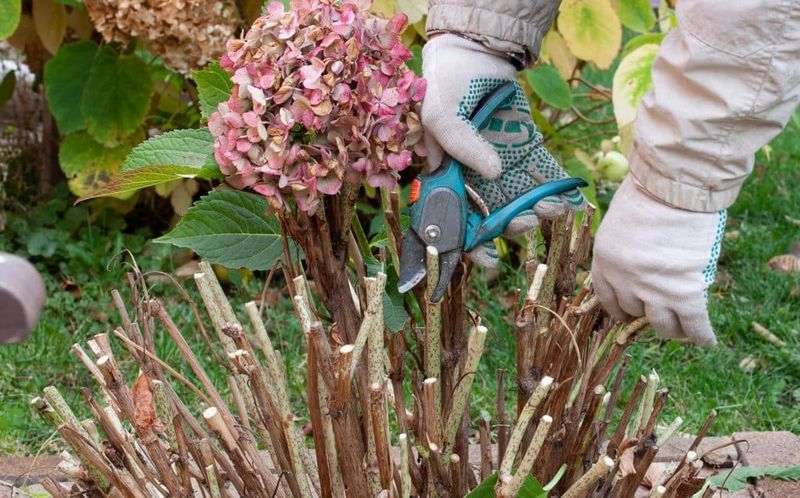
Every fall, well-meaning gardeners grab their pruners and cut their hydrangeas back hard, then wonder the following summer why nothing bloomed. The truth is that fall pruning can wipe out next year’s flower buds on many common hydrangea types, but not all of them follow the same rules.
Knowing which type you have is the one step that changes everything about how you handle these plants in autumn.
Why a hard fall cut can cost next year’s flowers
No single fall decision controls every hydrangea’s flowering the following year, and that distinction matters before you pick up a pair of pruners. Many traditional bigleaf, mountain, oakleaf, and climbing hydrangeas develop next season’s flower buds on older, existing stems, often beginning that process in late summer or early autumn.
A hard structural cut made after those buds have formed can remove them entirely, leaving the plant healthy but flowerless the following season.
According to University of Georgia Extension guidance on hydrangeas, these old-wood types should generally be pruned right after flowering, not in fall or winter when buds may already be in place on the stems. The University of Maryland Extension similarly notes that fall pruning of old-wood bloomers can reduce or eliminate the next year’s display.
If you are not certain which type you have, the safest immediate fall choice is to avoid any hard cuts or significant size reduction.
That said, not every hydrangea follows this pattern. Smooth hydrangeas and panicle hydrangeas produce flower buds on current-season growth, so the old-wood warning does not apply to them in the same way.
Some reblooming cultivars can also flower on both old and new wood, though fall pruning can still trim away early-season buds. The key is identifying what you have before making any cuts that could cost you a summer’s worth of blooms.
Identify the hydrangea before you reach for pruners
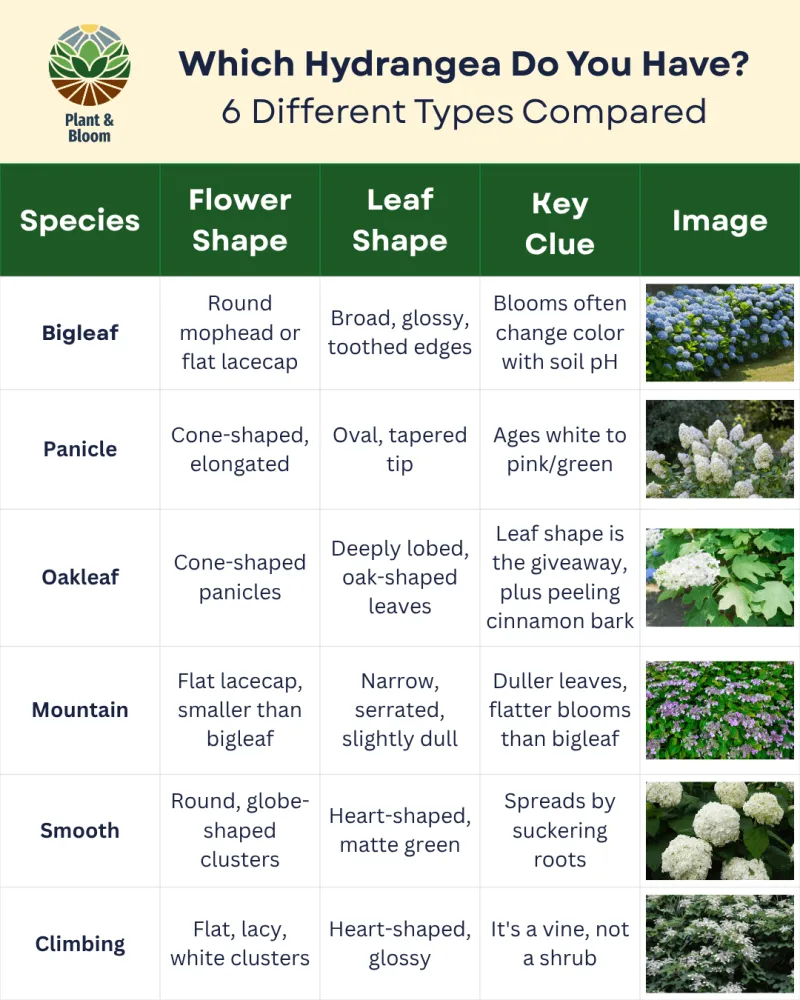
The word hydrangea covers a wide family of plants that do not share one pruning schedule, so identifying your specific type before fall arrives is genuinely useful information. Many traditional bigleaf hydrangeas, which include both mophead and lacecap forms, mountain hydrangeas, oakleaf hydrangeas, and climbing hydrangeas are old-wood bloomers.
University of Maryland Extension’s pruning guide places all four of these groups in the old-wood category and recommends pruning them immediately after flowering.
Smooth hydrangeas and panicle hydrangeas work differently. Their flower buds develop on new growth produced each season, which means major pruning belongs in late winter or early spring rather than fall.
Learning to tell these groups apart by sight can help you make faster decisions in the garden.
A few visual clues go a long way. Leaves shaped like an oak’s, with deep lobes and a slightly rough texture, point to oakleaf hydrangea, an old-wood type.
Large, broad, serrated leaves paired with rounded mophead or flat lacecap flowers usually indicate bigleaf hydrangea, also an old-wood bloomer. Cone-shaped flower clusters that often age from white or green toward pink are a strong signal of panicle hydrangea, a new-wood type.
As UGA Extension’s Forsyth County identification guide notes, cultivar identification is ultimately more reliable than appearance alone, so checking a plant tag or contacting your local extension office can save a season’s worth of blooms.
Prune traditional old-wood types after flowering
Timing is everything with old-wood hydrangeas, and the window that works best is right after the plant finishes flowering. For most traditional bigleaf, mountain, oakleaf, and climbing hydrangeas, that means making any shaping or size-reduction cuts in early to midsummer, well before late summer when next season’s buds typically begin forming on those same stems.
Waiting until fall puts you past the safe window on many plants.
UF/IFAS guidance on bigleaf hydrangeas supports pruning after flowering and before late summer when shaping is needed, which aligns with what UGA and the University of Maryland recommend for these old-wood groups. The practical takeaway: if the blooms are done, that is your signal to act, not the arrival of cooler fall weather.
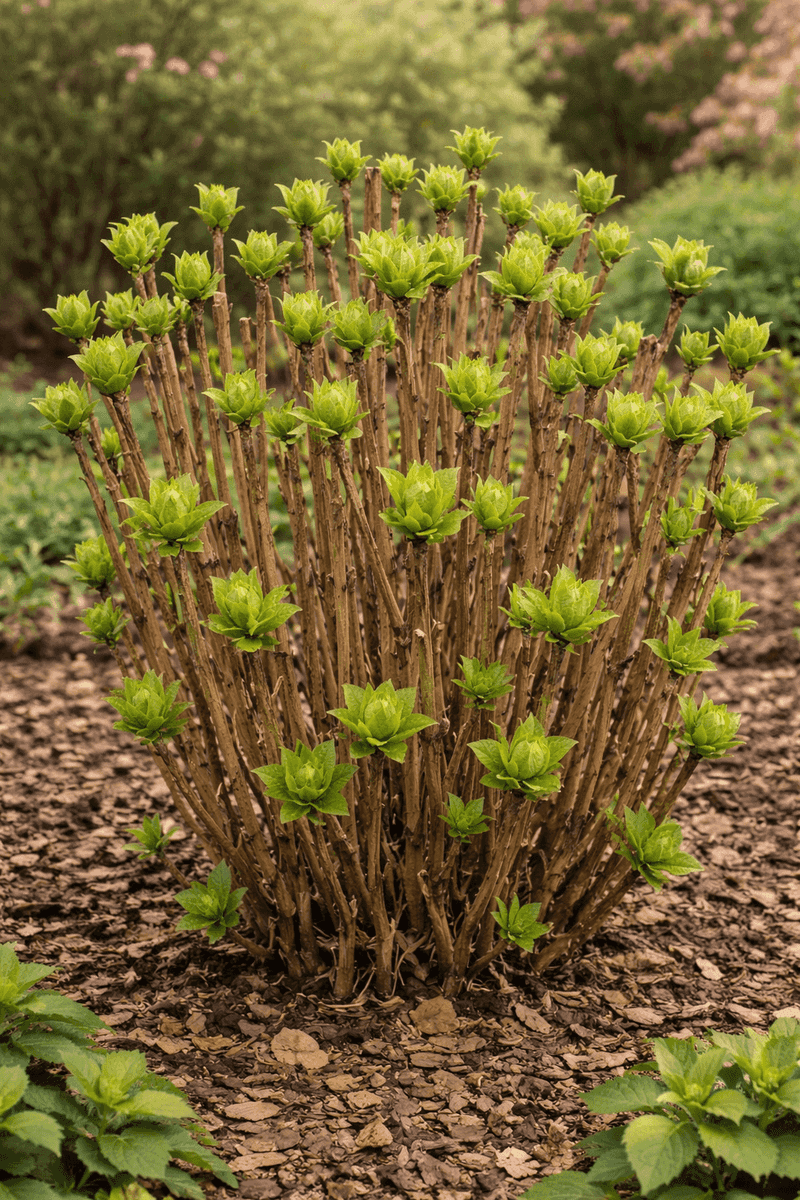
When fall does arrive and the plant looks bare or straggly, resist the impulse to tidy it up with a hard cut. Live structural stems on deciduous hydrangeas can look completely bare in autumn while still carrying next year’s buds.
Pruning does not automatically produce more flowers either; cutting back too many stems can actually reduce the total number of flower sites the following season. The immediate goal of preserving those older stems is to protect potential bloom locations, not to reshape the plant or encourage a flush of new growth before winter.
New-wood hydrangeas use a later pruning schedule
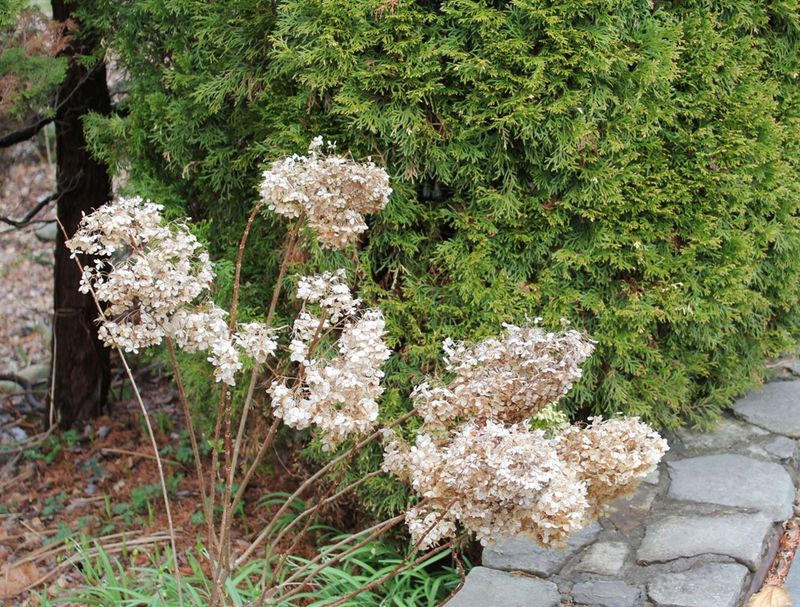
Smooth hydrangeas, including the widely grown ‘Annabelle,’ and panicle hydrangeas, including ‘Limelight,’ operate on a completely different schedule from the old-wood types described above. Because their flower buds form on current-season growth, cutting them back in late winter or early spring does not remove next year’s flowers.
University of Illinois Extension’s pruning guide places both smooth and panicle hydrangeas in the new-wood category and recommends late-winter to early-spring pruning for these types.
Minnesota Extension reinforces that point, noting that panicle and smooth hydrangeas tolerate harder pruning because their buds have not yet formed when dormant-season cuts are made. For Southern gardeners, this means a ‘Limelight’ or ‘Annabelle’ left alone in fall is not being neglected; it is simply waiting for its correct pruning window.
Even so, if you cannot confirm which type you have, postponing any major fall size reduction remains the cautious call. Removing a few dead or clearly broken stems causes little harm on new-wood types, but accidentally cutting back an old-wood bloomer in fall can mean no flowers the following summer.
When the plant’s identity is uncertain, patience costs nothing and could save an entire season’s display.
Use a conservative plan for unknown and reblooming plants
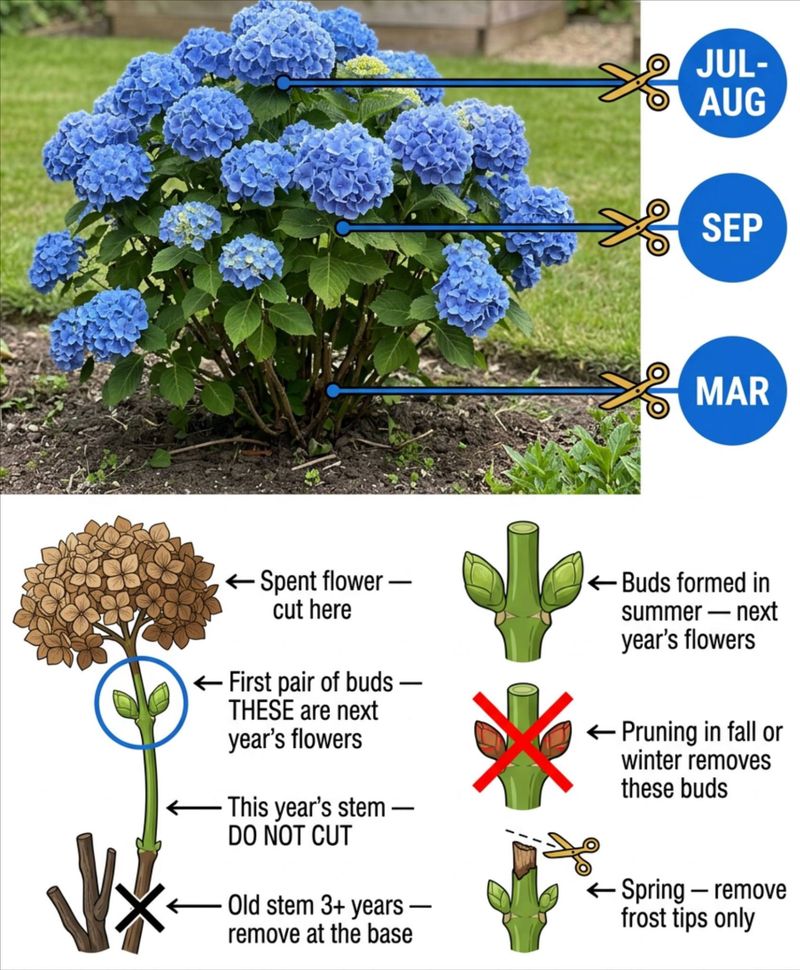
Standing in front of a hydrangea you cannot identify calls for a simple, low-risk approach: skip the hard cuts and broad size reduction entirely. Remove only material that is clearly dead, visibly diseased, or physically broken, and hold off on any shaping until you can confirm the plant’s bloom habit.
University of Maryland Extension’s pruning resource recommends exactly this conservative strategy when the hydrangea type is uncertain.
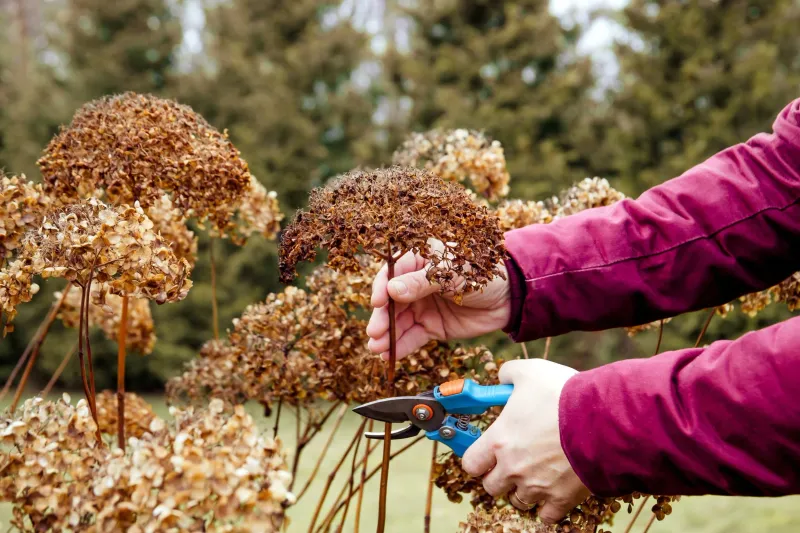
Deadheading the spent flower heads is optional and will not meaningfully affect plant health either way. If you do choose to remove them on a plant you suspect is an old-wood type, clip only the dried flower cluster itself rather than cutting several inches down into the stem.
Cutting deeply into the stem risks removing buds that are already forming just below the surface, which is the same mistake as a hard fall prune.
Reblooming cultivars deserve a specific note here. Some Endless Summer, BloomStruck, Let’s Dance, and Tuff Stuff varieties can produce flowers on both old and new wood, making them more forgiving when some old buds are lost.
However, University of Illinois Extension warns that fall pruning can still remove part of the early-season display on these cultivars, reducing the first flush of blooms even if a second round follows later. As the UGA Forsyth County guide on identifying hydrangeas for pruning notes, reblooming types are more forgiving but are not immune to the effects of poorly timed cuts.
Treat them with the same caution you would give a confirmed old-wood plant until you know exactly what you have.
Check Southern weather and growing conditions before blaming pruning
Poor bloom performance does not always trace back to a pruning mistake. Winter or late-spring freezes rank among the most common culprits in the South, particularly for bigleaf and mountain hydrangeas whose buds can be killed by cold even when the rest of the plant survives.
University of Maryland Extension’s hydrangea problem guide lists freeze damage, drought, excessive shade, deer browsing, and excess nitrogen as additional reasons a hydrangea may fail to flower regardless of how carefully it was pruned.
Southern climates are not uniform, and that variability matters. North Florida, Central Florida, coastal Texas, and northern Texas all carry different freeze risks and growing-season lengths.
A rigid calendar date for fall pruning or winter protection makes little sense across that range. Use your plant’s bloom type and your local freeze history as the primary guides rather than a fixed date on a calendar.
Site conditions play a significant role as well. Bigleaf hydrangeas generally perform best with morning sun or partial shade, moist but well-drained soil, and protection from hot, dry afternoon exposure.
UGA Extension recommends roughly 3 to 5 inches of organic mulch kept away from direct contact with stems to help conserve soil moisture and moderate soil temperature. Mulch and consistent moisture support overall plant vigor, but they cannot promise flowers if a late freeze, heavy deer browsing, deep shade, or poor drainage is the real problem.
One more point worth making: bigleaf hydrangeas sometimes wilt on hot afternoons even when the soil holds adequate moisture. Checking soil before adding extra water is smarter than assuming drought stress, because consistently soggy soil can harm the roots and weaken the plant over time.
Correct conditions improve the odds of blooming; they do not guarantee it.
Use the plant’s bloom habit as your fall decision rule
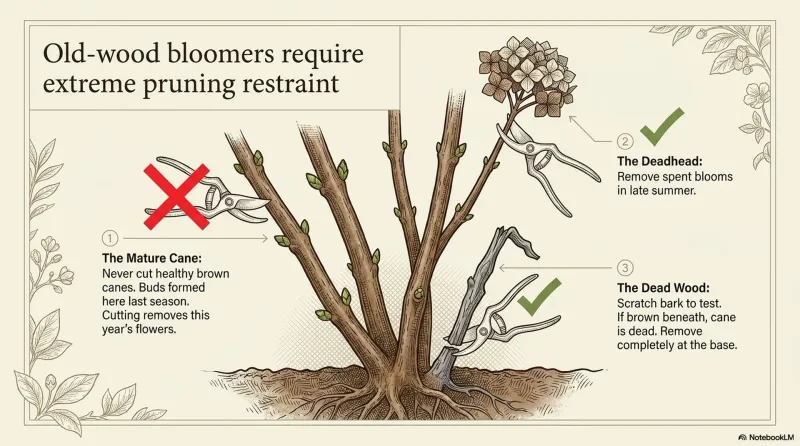
The clearest fall rule for hydrangeas comes down to one question: does this plant bloom on old wood or new wood? University of Maryland Extension’s pruning guidance and Minnesota Extension’s hydrangea pruning resource both point to bloom habit as the determining factor, and that holds true for Southern gardens as well.
For traditional old-wood and reblooming types, preserve older stems through fall and winter. For smooth and panicle hydrangeas, reserve major pruning for late winter or early spring.
For any plant whose type you cannot confirm, remove only clearly damaged material and wait. This approach does not promise a spectacular bloom season, because weather, deer, light, moisture, and plant health all shape the final outcome, but it keeps the buds you have intact rather than trading a season’s flowers for a tidier-looking shrub in November.